Wooden Container Manufacturing Industry in Indonesia
KBLI 1623 — how pallets, crates, drums, and wooden packaging move Indonesian goods from plantation gate to export container
KBLI 1623 covers manufacturers that turn sawn timber into pallets, crates, drums, barrels, cable reels, and other wooden packaging used to move agricultural produce, manufactured goods, chemicals, and export cargo. This report explains how the industry is structured around West Java packaging clusters and plantation-timber regions, where margin lives, and why SVLK and ISPM-15 compliance defines who can sell.
Industry boundary, KBLI scoping, and what's excluded from 1623
Raw material flows from HTI plantations, rubberwood estates, and Perhutani logs
Business archetypes from ISPM-15 pallet manufacturers to artisan cooperage
Ecosystem layers: core, extension, and enabling actors across the timber chain
Porter's Five Forces, substitution pressure from plastic and cardboard, and entry barriers
Cost structure, ISPM-15/SVLK compliance load, and export channel economics
Executive Summary
KBLI 1623 sits at the unromantic but indispensable layer of Indonesia's manufacturing and export economy: the wooden packaging that protects and palletizes almost everything else. Operators turn sawn timber — increasingly plantation-grown sengon, acacia, rubberwood, and pine — into one-way pallets, returnable crates, ammunition-style boxes, chemical drums, cable reels, and bespoke export packaging for furniture, electronics, ceramics, and machinery shipments.
The industry is structurally a small-and-medium-enterprise universe orbiting two value pulls. The first is plantation timber availability, which anchors mills and assemblers in West Java (Bekasi, Karawang, Tasikmalaya, Sukabumi, Majalengka), East Java (Surabaya–Pasuruan), Lampung, and parts of Riau. The second is buyer concentration: a handful of large pallet customers — automotive plants, electronics exporters, palm oil mills, fertilizer producers, and logistics integrators — drive the bulk of standardized pallet volume, while fragmented agribusiness and fisheries demand drives crate and box volume.
Compliance is the central differentiator. SVLK (Sistem Verifikasi Legalitas Kayu) is mandatory for legal timber sourcing, and ISPM-15 heat-treatment certification is a hard gate for any pallet that crosses a border. These rules eliminate a long tail of informal sawmill–assembler operators from the export-grade market and concentrate that segment among accredited manufacturers.
KBLI 1623 is two businesses under one code: high-volume standardized pallets and drums (industrial, B2B, ISPM-15-gated for exports) and lower-volume custom crates and packaging (agribusiness, fisheries, project cargo). They differ on customer concentration, working capital, and the role of skilled labor.
Raw material economics dominate the cost stack. Timber (sengon, acacia, rubberwood, pine, meranti offcuts) typically runs 55–70% of COGS, and operators who control or pre-contract plantation supply enjoy a structural advantage when log prices spike.
Plastic and corrugated substitutes are eating into specific sub-segments — closed-loop retail pallets, returnable beverage crates, and lightweight produce — but wooden pallets remain dominant in export logistics where one-way ISPM-15 economics still favor wood.
SVLK and ISPM-15 are the most underestimated competitive moats. Both require auditable chain-of-custody, treatment facilities, registered stamps, and renewals; non-compliant operators are locked out of export packaging entirely and increasingly out of MNC and listed-company buyer rosters.
The industry is regionally bifurcated: Java clusters serve manufacturing and export packaging at scale, while Sumatra and Kalimantan operators sit closer to plantation timber and serve resource-industry customers (palm oil, paper mills, mining).
Why this industry matters in Indonesia
Wooden packaging is a derived-demand industry that scales with everything Indonesia exports and most of what it manufactures domestically. The competitiveness of furniture exporters from Jepara, electronics assemblers in Batam, fruit shippers from West Java, and chemical producers in Cilegon all depend on a wooden-packaging supply that meets ISPM-15 standards at a workable price.
The industry is also one of the more direct downstream consumers of plantation timber, which makes it a meaningful economic outlet for sengon and acacia smallholders and for HTI plantation operators. A healthy KBLI 1623 channel converts plantation log volume into manufactured value that stays in Indonesia.
Finally, it is one of the few manufacturing categories where SME and informal operators still compete credibly with larger players — meaning policy choices on SVLK enforcement, log prices, and ISPM-15 access have outsized effects on rural employment in West Java and Lampung.
So what: Practical implications
Operators: Earn ISPM-15 accreditation and lock in plantation-timber off-take agreements before chasing volume — both are gates that determine which customers you can sell to.
Buyers: Audit suppliers on SVLK chain-of-custody and treatment-facility integrity, not just price; a stamp without operational discipline behind it creates real legal and shipment-rejection risk.
Investors: Distinguish industrial pallet manufacturers (scale-driven, contract-anchored) from crate and bespoke packaging operators (project-driven, working-capital-light) before pricing — their economics are different.
Policymakers: SVLK enforcement is the lever that determines whether plantation timber gets formalized value-add at home or leaks into low-margin grey channels; consistency matters more than periodic crackdowns.
Indonesia at a Glance
Republic of Indonesia: A derived-demand market shaped by plantations, ports, and SME clusters
Indonesia is one of Southeast Asia's largest manufacturing and commodity-export economies, and that scale generates a constant pull for wooden packaging that travels with goods rather than being noticed by end consumers. Demand follows the export book and the domestic supply chain rather than household consumption, which makes KBLI 1623 a structurally B2B and B2G industry.
The plantation forestry estate (HTI), community forests (HR), and rubberwood by-products from estate-crop renovation provide a large but uneven raw-material base. Sengon and acacia from Java and Sumatra dominate the light-pallet and fruit-crate end; rubberwood from estate replanting cycles in Sumatra and Kalimantan is increasingly used for furniture-grade packaging.
Operator structure is heavily SME. A few hundred mid-to-large players run mechanized pallet lines for industrial customers; thousands of small workshops produce crates, fish boxes, and project packaging on a job-shop basis. This fragmentation is partly a function of low minimum efficient scale and partly a function of how SVLK and ISPM-15 sorted operators into formal and informal lanes.
Geographic concentration is real. The greater Bekasi–Karawang–Bandung axis dominates industrial pallet supply because it sits next to automotive, electronics, FMCG, and chemical buyers; East Java's Surabaya–Pasuruan corridor mirrors this role on the eastern half of Java. Outside Java, operators in Lampung, Riau, and Kalimantan serve plantation, paper, and resource industries more than manufacturing.
Hyperlocalization: one industry, several regional logics
West Java is the manufacturing-packaging engine. Pallet and crate plants in Bekasi, Karawang, Cibitung, and Cikarang sit inside the country's largest industrial corridor and serve automotive OEMs, electronics manufacturers, FMCG plants, and the Tanjung Priok export gateway. Pricing here is contract-led, volumes are predictable, and ISPM-15 capacity is concentrated.
Tasikmalaya, Sukabumi, Majalengka, and Garut anchor the SME crate and bespoke-packaging tier. These workshops sit closer to West Java's horticultural belts, supplying fruit and vegetable crates for traditional markets, modern retail produce flows, and seasonal export shipments of mangosteen, salak, mango, and dragon fruit. Margins are thinner, but design flexibility and short-run economics are strong.
Surabaya, Pasuruan, and Sidoarjo form East Java's parallel hub, leaning heavier on consumer goods exports (furniture from Jepara feeds in via long-distance logistics), tobacco-industry packaging, fertilizer drums, and Tanjung Perak-routed exports. Lampung and Riau host pallet and chemical-drum operators that ride plantation timber availability and serve palm oil mills, pulp and paper plants, and chemical producers.
Opportunities extend well beyond Jakarta and Surabaya
Unlike most consumer industries, KBLI 1623 is almost entirely off-metro. Its demand is generated at plantation gates, industrial estates, fish landing centers, and inland horticulture belts, and its production sits next to timber. Operators who optimize around urban logistics rather than industrial-estate or plantation logistics misread the channel.
Tier-2 industrial cities — Cikampek, Cilegon, Gresik, Pasuruan, Karawang, Bandar Lampung, Pekanbaru, Balikpapan — are where the volume sits. These cities concentrate manufacturers and processors that consume pallets and crates in bulk and reward suppliers who can run a kitting and just-in-time delivery program.
Outer-island opportunity exists where resource industries dominate. Palm oil mills in Riau and Central Kalimantan, pulp and paper mills in Sumatra, mining-services hubs in East Kalimantan and Sulawesi, and fishing ports in Sulawesi and the Maluku islands all generate packaging demand, although service economics and inter-island shipping cost favor regional rather than national suppliers.
Rising furniture and home-decor exports through Jepara, Sukabumi, and Cirebon clusters generating sustained export-pallet demand
PSR palm-oil replanting and HTI plantation harvest cycles releasing sengon, acacia, and rubberwood log supply at workable prices
MNC and listed-company buyer policies tightening SVLK and ISPM-15 audit requirements, formalizing demand toward accredited manufacturers
Cold-chain investment for tropical fruit and seafood export expanding demand for ventilated wooden crates with food-grade specs
Industrial-estate expansion in Subang, Karawang, Batang, and the JIIPE corridor seeding a new generation of captive pallet and packaging suppliers
Construction and project cargo (EPC, energy, infrastructure) generating lumpy but high-margin demand for custom wooden crates and reels
Distribution realities: timber-in, pallets-out, and the ISPM-15 stamp gate
Inbound logistics for KBLI 1623 is a timber problem. Sengon and acacia move by truck from smallholder and HTI plots to nearby sawmills, then to assemblers. Rubberwood arrives from estate replanting cycles, often through specialized concentrator yards. Imported softwood (radiata pine, NZ pine) enters through Tanjung Priok, Tanjung Perak, and Belawan and serves higher-grade pallet and export-crate buyers. Inland trucking distance from log to assembler is one of the strongest cost determinants.
Outbound logistics splits along buyer type. Industrial pallet flows are typically captive-truck deliveries to nearby manufacturing plants on a just-in-time schedule; missing a delivery slot can halt a production line, which is why proximity-based pricing dominates. Bespoke crates flow on ad-hoc orders to project sites or export-packing yards, with rush-order premiums baked into the quotation.
Export-grade pallets carry an additional ISPM-15 gate. Each pallet must be heat-treated (typically 56°C core temperature for 30 minutes) in a Badan Karantina–registered facility and stamped with a registered mark. The treatment facility, not the assembly line, is the binding constraint for export volume — and the cost of running it (energy, depreciation, certification renewal) is what differentiates export-capable operators from purely domestic ones.
Locate near timber supply — assembler proximity to sawmills materially compresses freight cost on a category where logistics is a large share of landed value
Co-locate or partner on ISPM-15 treatment capacity early; subcontracting heat treatment introduces lead-time risk on export-deadline shipments
Treat large industrial customers as scheduled rather than transactional accounts; missing a plant's pallet window damages relationships more than price
Build dual books for one-way export pallets and returnable crate pools — the second is a working-capital business with different unit economics
Industry Definition
What is KBLI 1623, and where does the boundary sit?
Industry Definition
KBLI 1623 covers the manufacture of wooden containers and packaging: pallets, crates, boxes, cable drums, barrels, casks, vats, tubs, and similar products made primarily of sawn or processed wood. The defining activity is converting sawn timber into engineered packaging units rather than producing the timber itself or finished furniture from it.
Excluded: sawmilling and primary wood processing (KBLI 1610), manufacture of veneer, plywood, particleboard, and engineered wood panels (KBLI 1621), manufacture of builders' joinery and carpentry such as doors, windows, and prefab buildings (KBLI 1622), manufacture of wooden furniture (KBLI 3100 group), manufacture of paper, plastic, and metal containers (different KBLI), and wholesale of timber and wooden packaging (different KBLI under retail and wholesale chapters).
The clarifying test is purpose: if the wooden product exists to contain, support, or move other goods, it belongs in 1623; if it exists as the final consumer good or as building material, it belongs elsewhere.
Indonesia in Focus
In Indonesia, the wholesale-grade pallet and industrial crate segment is concentrated in West Java and East Java industrial clusters, where it sits inside a tight ecosystem of sawmills, treatment facilities, and large manufacturing buyers. The SME crate and bespoke packaging segment is more dispersed and follows horticultural and fishing geographies.
Plantation forestry — particularly sengon (Paraserianthes falcataria) on community plots, acacia and eucalyptus from HTI estates, and rubberwood (Hevea brasiliensis) from replanting cycles — provides the dominant raw-material base. Pine and meranti remain relevant for higher-grade and export segments.
SVLK chain-of-custody and ISPM-15 heat-treatment certification are the binding regulatory architecture. They split the industry into formalized export-capable operators and a long tail of informal workshops serving local markets, with periodic enforcement waves pushing the boundary.
Industry Classification
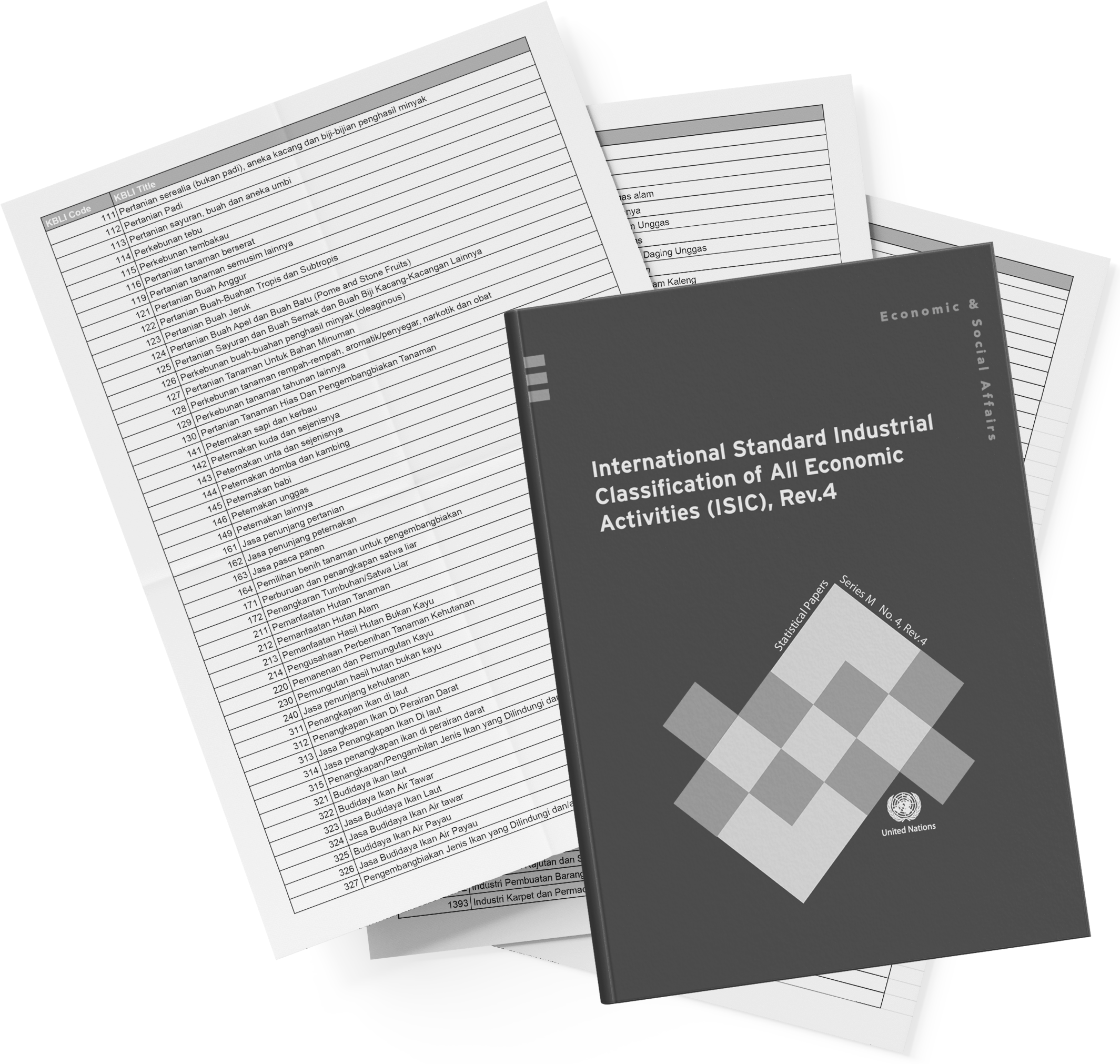
KBLI 1623 (2020 revision) — Industri Wadah dan Kemasan dari Kayu — covers manufacture of wooden cases, boxes, crates, drums and similar packaging; pallets, box pallets and other load boards; barrels, casks, vats, tubs and other coopers' products; and cable-drum spools.
Closest ISIC mapping: ISIC Rev.4 1623 — Manufacture of wooden containers. Direct equivalence at four-digit level.
NAICS comparable: 321920 (Wood Container and Pallet Manufacturing). One-to-one alignment in the US classification, simplifying cross-border comparison.
Operators may overlap with KBLI 1610 (sawmilling) when vertically integrated, with 1622 (builders' joinery) when running custom-carpentry side products, and with 1629 (other wood products) when producing decorative or specialty wooden goods alongside packaging.
Industry Terms that actually matter
Vocabulary in wooden packaging is deceptively dense — the same English label often hides different operational economics. The terms below are the ones that determine pricing, compliance, and customer fit in the Indonesian context.
SVLK (Sistem Verifikasi Legalitas Kayu)
Indonesia's mandatory timber legality verification system, administered under Ministry of Environment and Forestry rules, requiring chain-of-custody documentation from forest to finished product.
Without an SVLK certificate, an operator cannot legally market packaging into the formal export channel and is increasingly locked out of MNC and listed-company buyers; SVLK is the de facto licence to operate at scale.
ISPM-15 (International Standard for Phytosanitary Measures No. 15)
Global IPPC standard requiring solid-wood packaging used in international trade to be heat-treated (HT) or fumigated (MB) and stamped with a registered mark.
Pallets and crates without ISPM-15 are rejected at most destination ports. Treatment facility access (a Badan Karantina–registered chamber) is the hard infrastructure gate for export business.
Heat Treatment (HT)
Process of bringing wood core temperature to at least 56°C for a minimum of 30 minutes in a registered chamber, killing pests and pathogens.
The dominant compliant treatment route in Indonesia; methyl bromide fumigation is increasingly restricted on environmental grounds, so HT capacity is the long-run binding constraint.
Sengon / Albasia (Paraserianthes falcataria)
Fast-growing tropical tree species widely cultivated on Java and Sumatra community forests; harvest cycles as short as five years.
The workhorse raw material for light pallets, fruit crates, and packaging core in Indonesia; its smallholder cultivation footprint shapes rural employment dynamics.
Acacia mangium / Eucalyptus pellita
Plantation hardwood species grown on HTI estates (managed by APRIL, APP, Inhutani, and others), used for higher-strength pallet and crate components.
Density and strength favor industrial-pallet customers with weight-loading or stacking requirements; supply is tied to HTI harvest scheduling.
Rubberwood (Karet)
Wood recovered from rubber estate replanting cycles, primarily in Sumatra and parts of Kalimantan.
Increasingly used for higher-grade packaging and furniture-grade containers; supply is a by-product of estate renovation cycles, so volume fluctuates with rubber economics.
EPAL / Euro-Pallet
European Pallet Association standardized pallet design (1200 × 800 mm) used in cross-border logistics, often licensed and quality-controlled.
Premium export-pallet specification with stricter tolerance and load-rating requirements; commands higher prices but requires investment in jigs, fasteners, and inspection.
Returnable Plastic Crate (RPC)
Substitute product for fruit, vegetable, and beverage crates, manufactured under plastic-pool models (CHEP, IFCO equivalents).
Direct competitor to wooden crate volume in modern retail produce flows and beverage logistics; cost-of-ownership math depends on return logistics and loss rates.
TPL / TPT-KO / TDP
Forest-product licensing categories under Indonesian forestry law covering primary processing, processing of wood products, and trade registration.
Determines what kinds of timber an operator can legally take in, how it must be documented, and which downstream channels it can supply.
Industry Overview – Business Archetypes
KBLI 1623 hosts several distinct operating archetypes that share the code but not the business model. They differ on capital intensity, customer concentration, regulatory load, and where competitive advantage actually lives. Misreading the archetype is the most common error in valuing or competing against an operator in this category.
Industrial Pallet Manufacturer (Ecosystem Anchor)
Runs mechanized assembly lines producing standardized one-way and returnable pallets in volume for automotive plants, electronics manufacturers, FMCG factories, chemical producers, and 3PL integrators. Holds SVLK certification and operates its own ISPM-15 heat-treatment facility.
Customer relationships are contract-anchored, with annual price re-negotiations and just-in-time delivery schedules. Volume predictability is the structural advantage and the operational obligation; missing a JIT slot is a relationship-destroying event.
Annual or rolling supply contracts with industrial buyers, priced on cost-plus or input-index formulas with quarterly true-ups
Premium margin on ISPM-15 export pallets where domestic competition is thinner due to treatment-capacity scarcity
Pallet pool services and refurbishment revenue from returnable fleets, generating recurring fees and lifecycle margin
Capital-intensive by industry standards: nail guns, automated saws, kiln-drying and HT chambers, forklifts, and racking systems
Working-capital management is real; raw-timber inventory plus net-30 to net-60 receivables on industrial accounts tie up significant cash
Loss of a single anchor customer can erase 20–40% of revenue, so account concentration is monitored carefully by lenders
Custom Crate and Project-Cargo Workshop (Specialist Operator)
Produces bespoke wooden crates, machinery boxes, and project-cargo packaging on order, often for one-off shipments — generators, transformers, oil and gas equipment, art and ceramics, large machinery. Design and engineering capability matters more than scale.
Operates on a job-shop basis with short lead times, premium pricing, and significant hand-finishing. Strong reliance on skilled carpenters and a small management team that handles quotation, engineering, and logistics coordination.
High per-unit margin on engineered crates with bracing, foam padding, and moisture barriers tuned to the specific cargo
Rush-order premiums on project-cargo and EPC packaging where deadline pressure overrides price sensitivity
Bundled packaging services including loading supervision, container stuffing, and export documentation support
Working-capital-light; inventory is timber and hardware, not finished goods, since most builds are made-to-order
Skilled-labor dependency is severe; losing key carpenters compromises delivery capability faster than losing a machine
Lumpy revenue tied to EPC, infrastructure, and project cycles; a slow year for capex translates directly to a slow year for project-cargo packaging
Agribusiness Crate Producer (Inclusion Engine)
Mass-produces ventilated fruit and vegetable crates, fish boxes, and slatted produce containers for traditional markets, modern retail produce supply chains, and cold-chain operators. Often clustered in West Java and around fishing ports.
Volume-driven with seasonal swings tied to harvest peaks (mango, salak, mangosteen, durian) and fishing seasons. Customers are typically wholesalers, packing houses, and cooperatives rather than end farmers.
Volume contracts with packing houses and produce wholesalers, priced on a per-piece basis with seasonal premiums during harvest peaks
Direct sales to fishing companies and fish-landing stations for ice-box and crate volume
Ad hoc sales into modern retail produce flows where ventilated crates compete with returnable plastic crates
Working-capital cycle tied to harvest seasonality; pre-positioning timber and inventory ahead of harvest windows is the operational challenge
Margin compression from RPC substitution in modern retail is real, especially for closed-loop fruit and vegetable supply chains
Labor-intensive assembly with limited automation; clusters often rely on shared supplier networks for nails, hardware, and timber
Cooper and Drum Specialist (Niche Specialist)
Produces wooden barrels, drums, vats, casks, and tubs — used for chemicals, cooking oil, palm kernel oil, certain food-processing flows, and traditional fermentation applications. A smaller and more specialized segment than pallets and crates.
Combines traditional cooperage skills with modern hoop-fitting and lining techniques. Customers are typically food-processing plants, chemical producers, and specialty industrial buyers.
Per-unit margin on specialty drums and casks at meaningfully higher price points than commodity pallets
Reconditioning and re-cooperage services for industrial customers running closed-loop drum fleets
Service-and-spec engagements where the cooperage provides ongoing maintenance and replacement to a customer fleet
Highly skilled labor pool, often family-trained, with limited new entry; aging cooper workforce is an underappreciated risk
Long lead times and made-to-order economics; not suited to mass-pallet competition
Substitution pressure from metal and plastic drums is constant but incomplete; wooden cooperage still wins on traditional and specialty applications
Vertically Integrated Plantation-Linked Operator (Bridge Model)
Combines sawmilling, drying, treatment, and packaging assembly under one corporate roof, often anchored on plantation timber supply (HTI off-take or owned plantation). Common in Lampung, Riau, and East Java plantation belts.
Captures vertical margin from log to finished pallet, with internal supply assurance and quality control. Often the dominant pallet supplier into a regional cluster of plantation-adjacent buyers (palm oil mills, paper mills, chemical producers).
Internal-margin capture across sawmilling, drying, treatment, and assembly stages
Long-term supply agreements with plantation and resource customers anchored on geographic proximity
Premium for guaranteed supply during log-shortage cycles, where standalone assemblers face raw-material constraints
Capital-intensive across the full chain; multi-year investment cycles in mill and treatment infrastructure
Exposed to plantation cycle and log-price swings, partially hedged by internal procurement at controlled prices
Strong fit for resource-industry buyers; less natural fit for manufacturing customers in distant urban clusters
Industry Performance & Outlook
Steady derived-demand growth, with substitution risk on specific edges and compliance-led concentration
Headline performance in KBLI 1623 tracks the broader Indonesian manufacturing and export economy rather than any consumer signal. Pallet and packaging volume rises when factories run hot and exports clear, and softens when commodity prices collapse or manufacturing PMI weakens. The industry is a classic derived-demand business, with volume elasticity higher than price elasticity.
Two structural tailwinds shape the medium-term outlook. The first is continued formalization driven by SVLK enforcement and MNC buyer audits, which steadily reallocates volume from informal workshops toward accredited operators and lifts the average operator's effective margin even when industry volume is flat. The second is plantation timber availability, particularly sengon and rubberwood, which expanded as community-forestry plantations matured and continues to underwrite the cost competitiveness of Indonesian pallet supply against regional alternatives.
Two headwinds are equally real. Plastic and corrugated substitution is eating into specific sub-segments — closed-loop returnable crates, hygiene-sensitive food packaging, and lightweight retail produce — and the substitution math is increasingly favorable as plastic-pool operators scale. Rising log prices during HTI harvest gaps and rubber estate replanting troughs create periodic margin compression that smaller operators absorb poorly.
Looking forward, the most credible growth pockets are export-pallet volume tied to furniture and electronics shipments, palm oil and plantation-industry pallet demand on the outer islands, project-cargo packaging linked to EPC and infrastructure spending, and refurbishment and pool-management revenue as more buyers shift to returnable pallet models.
Performance indicators that matter for KBLI 1623
Manufacturing PMI and industrial production index
Direct demand signal for industrial pallets
When PMI is above expansion threshold, pallet volume into Bekasi–Karawang plants moves with it on a near one-month lag
Furniture, electronics, and palm oil export volume
Pull-through demand for ISPM-15 export pallets
Indonesia's top export categories generate the dominant share of treated-pallet volume; export softness shows up first in this book
Plantation log prices (sengon, acacia, rubberwood)
Cost-side pressure on pallet manufacturers
Sengon log spot price in West Java is the single most-watched input indicator; spikes compress margins for non-integrated assemblers
Returnable plastic crate (RPC) penetration in modern retail produce
Substitution pressure on agribusiness crate volume
RPC pool operators expanding via modern retail and quick-commerce supply chains; wooden crate share declines in this channel
Number of SVLK-certified and ISPM-15-registered operators
Channel formalization and supply concentration
Both certifications have grown, narrowing the export-grade competitive set toward a few hundred mid-to-large operators
EPC and infrastructure capex pipeline
Project-cargo packaging demand
Major energy, transport, and industrial-estate projects drive lumpy but high-margin custom-crate volume
Outlook: what to watch over the next 24–36 months
Pace of SVLK enforcement and MNC buyer audit tightening, which directly redistributes volume away from informal operators
RPC pool expansion in modern retail produce and beverage logistics, which compresses wooden-crate volume in those specific sub-segments
HTI harvest scheduling and plantation timber availability, particularly sengon and acacia, which determine raw-material cost stability
Furniture and electronics export demand from Indonesia, the primary pull-through for ISPM-15 export pallets
Infrastructure and EPC project pipelines (industrial estates, transport, energy), which determine project-cargo packaging volume
Energy and methyl-bromide regulatory shifts that influence the relative economics of HT versus MB treatment routes
Industry Growth Drivers
Growth in KBLI 1623 is the compound of several derived-demand pulls and a regulatory current that keeps reshaping who can serve which buyer. The drivers below are the ones with material effect on operator volume and margin in the Indonesian context.
Manufacturing and export volume expansion
Every additional container loaded for export and every additional pallet of finished goods leaving an Indonesian factory generates demand somewhere in this industry. Furniture, electronics, automotive components, food and beverages, chemicals, and palm oil derivatives all rely on wooden packaging in some part of their outbound chain.
This pull is direct and quantitative. A 10% rise in manufacturing exports translates almost linearly into wooden-packaging volume, with some absorption into existing pallet inventories. It is the single most reliable driver and the one that most strongly correlates with overall industry performance.
Manufacturing PMI and industrial production index from BPS and Bank Indonesia
Indonesia's monthly export data by category from BPS and Ministry of Trade
Plantation timber expansion and rubberwood by-product availability
Sengon, acacia, and rubberwood supply underwrite cost competitiveness in the pallet and crate book. Continued growth in community-forestry sengon plots in Java, ongoing HTI plantation cycles in Sumatra and Kalimantan, and rubber estate replanting in Sumatra all add raw-material volume that flows into 1623.
Plantation timber expansion is not just a cost story — it is also a story about which species and what specifications the Indonesian pallet supply chain can credibly offer. As acacia and rubberwood volumes grow, operators can compete on higher-strength specifications that previously required imported pine.
BPS forestry-product statistics and HTI plantation production indices
Sengon spot prices in Java timber markets and rubberwood concentrator yards in Sumatra
SVLK and ISPM-15 formalization
SVLK certification and ISPM-15 heat-treatment registration both work to formalize the industry and concentrate volume among compliant operators. MNC buyer audit policies and procurement guidelines for listed companies reinforce this concentration by hard-coding accreditation as a supplier requirement.
For accredited operators, formalization is a sustained tailwind: it shifts addressable volume toward them at the expense of informal competitors. For non-compliant operators, it is an existential pressure that drives consolidation or shutdown over time.
Ministry of Environment and Forestry SVLK accreditation rolls and renewal data
Badan Karantina ISPM-15 facility registration counts and renewal updates
Infrastructure, EPC, and industrial-estate development
Major infrastructure and EPC projects — new industrial estates, energy plants, transport infrastructure, manufacturing capacity expansions — generate substantial demand for project-cargo crates and custom wooden packaging during their build phases. Industrial-estate development adds permanent pallet demand from new factories once operational.
The demand shape is lumpy but high-margin. A single large EPC project can absorb thousands of custom crates over its construction window, often with significant rush-order premium content. Operators with engineering and project-execution capability disproportionately benefit.
Government and BKPM announcements on national strategic projects and PSN list updates
Industrial estate development announcements (Subang, Batang, JIIPE corridor, Kendal)
Furniture and tropical-fruit export growth
Indonesia's positioning as a furniture export base (Jepara, Cirebon, Sukabumi clusters) and its expanding tropical fruit export footprint (mango, mangosteen, salak, dragon fruit, durian) both create steady pull-through demand for ISPM-15 pallets and ventilated wooden crates.
These categories have growth profiles that exceed Indonesia's overall manufacturing index because they ride structural global demand shifts — Asian premium fruit consumption, hardwood furniture preference rebounds, and Southeast-Asian sourcing diversification away from concentrated risk markets.
HIMKI (Indonesian Furniture and Craft Industry Association) export data and outlook releases
Ministry of Agriculture and Ministry of Trade tropical-fruit export statistics
Returnable pallet and pool-management adoption
A growing slice of large Indonesian manufacturers and 3PL integrators is shifting from one-way wooden pallets toward returnable pallet pools, often with manufacturer-managed inspection and refurbishment cycles. This creates a new revenue stream — pool management, sortation, and refurbishment — that did not exist at scale a decade ago.
For operators that build pool-management capability, this is a recurring, sticky revenue stream that smooths the lumpiness of one-way pallet sales. For operators that do not, it is a slow erosion of their addressable volume.
MNC and listed-company supplier-policy announcements on returnable packaging
3PL and contract-logistics-provider announcements on pallet-pool services
Industry Trends & Development
Industry Development: how the channel reached its current shape
From general wood workshops to a compliance-formalized, plantation-fed industrial supply chain
Indonesia's wooden container industry evolved through three structural shifts: the move from natural-forest timber to plantation-grown raw material, the imposition of SVLK chain-of-custody rules, and the integration of ISPM-15 certification into export logistics. Each shift redrew the line between formal and informal operators and reshaped where margin lived.
The arc has been one of compliance becoming the dominant determinant of where volume flows. Two decades ago, capacity and proximity to timber were the central competitive variables; today they are necessary but not sufficient, and the operator without SVLK and ISPM-15 is structurally locked out of the most attractive customer cohorts.
Natural-forest reliance and pre-formalization SME landscape
The industry sourced heavily from natural-forest timber via concession-holders and informal channels. SME workshops dominated, mostly serving domestic agribusiness and small manufacturing. Export packaging existed but was less formalized; ISPM-15 was new and adoption was uneven. Plantation forestry was expanding but not yet the dominant raw-material source.
SVLK introduction and plantation-timber shift
SVLK was rolled out as Indonesia's mandatory timber legality system, reshaping the procurement side of the industry. Accredited operators gained access to FLEGT-aligned European buyers and stricter MNC supply chains. Plantation-grown sengon and acacia volume scaled significantly, displacing natural-forest timber in mainstream pallet and crate production.
ISPM-15 capacity build-out and export-pallet specialization
Heat-treatment chambers proliferated in West Java and East Java industrial clusters as more operators sought ISPM-15 registration. Methyl-bromide fumigation faced increasing environmental restriction, accelerating HT adoption. Industrial-pallet manufacturers consolidated around Bekasi–Karawang as automotive and electronics customers expanded production capacity in the corridor.
Pandemic supply shocks and packaging-demand volatility
COVID disrupted demand sharply for some categories (industrial pallets dropped when factories scaled back) and surged others (export packaging for food and personal protective equipment). Log price volatility compressed margins. The pandemic also accelerated some buyer shifts toward returnable pallet pools as JIT supply-chain pressure pushed inventory discipline.
Compliance audit tightening, RPC competition, and pool-management emergence
MNC and listed-company buyers tightened SVLK and ISPM-15 audit requirements, further formalizing supplier rosters. Returnable plastic crate operators expanded in modern retail produce and beverage logistics, taking share in those specific channels. Pool-management and refurbishment services emerged as a recognized revenue stream for industrial pallet manufacturers.
Key Trends — what's changing in the business model
The trends below are the ones changing how money is actually made in KBLI 1623. They sit inside specific Business Model Canvas dimensions rather than describing macro narratives, and each carries a concrete implication for operator strategy.
Plantation-timber supply locking displacing spot procurement (Key Resources)
Operators with long-term off-take agreements with HTI plantations, community-forestry cooperatives, and rubber estates are increasingly outperforming spot buyers when log prices move. Resource access is shifting from a commodity sourcing function to a strategic capability that determines cost stability across the cycle.
The strategic implication is that vertical integration toward plantation supply — through equity stakes, multi-year contracts, or smallholder aggregation programs — is becoming a defensive necessity for operators that want to compete on long-term contracts with industrial buyers.
Industrial pallet manufacturers and vertically integrated operators
HTI plantation companies and community-forestry cooperatives
Spot-market timber traders losing relevance in formalized channels
ISPM-15 capacity as a customer-acquisition gate (Key Activities)
Heat-treatment chamber capacity is no longer a back-office compliance item — it has become a front-end commercial asset. Operators with reliable, high-throughput ISPM-15 capacity win export-pallet contracts that operators without it cannot serve at scale.
The activity to invest in is therefore treatment infrastructure and Badan Karantina registration maintenance, not just assembly throughput. Several mid-sized operators have rebuilt their cost stack around dedicated treatment lines and inspection protocols rather than around assembly capacity.
Export-pallet manufacturers and vertically integrated operators
Furniture, electronics, and food exporters dependent on treated packaging
Subcontract treatment-service operators serving smaller manufacturers
Returnable-pool services as recurring revenue (Revenue Streams)
A new revenue stream is emerging in pool-pallet management — operators rent pools to customers, manage rotation, inspect, sort, refurbish, and replace damaged units. The economics differ sharply from one-way sales: lower unit revenue but recurring, with embedded service margin.
Operators who build this capability are converting a transactional pallet sale into a multi-year service contract. Those who do not are exposed to gradual share loss as large customers convert their fleets to returnable models.
Large industrial pallet manufacturers
MNC and listed-company logistics teams shifting to returnable models
3PL and contract logistics providers offering integrated pallet services
Plastic and corrugated substitution in specific channels (Value Proposition)
Returnable plastic crates are taking share in modern retail produce, beverage distribution, and certain hygiene-sensitive food applications. Corrugated and honeycomb cardboard are taking share in lightweight retail packaging. Wooden packaging is not losing the war, but it is losing specific battles where total-cost-of-ownership math favors plastics.
The value proposition for wooden operators must therefore be defended on the segments where wood still wins — heavy-load industrial pallets, ISPM-15 export pallets, ventilated tropical-fruit crates with seasonal economics, and project-cargo packaging. Trying to retain hygiene-sensitive retail produce volume is mostly a losing fight.
Agribusiness crate producers losing modern retail produce volume
Industrial pallet manufacturers defending heavy-load and export pallets
Modern retailers and FMCG companies running TCO math on RPC vs wood
MNC and listed-company supplier audits formalizing the buyer relationship (Customer Relationships)
Large industrial buyers increasingly run formal supplier-audit programs covering SVLK chain-of-custody, ISPM-15 facility integrity, safety standards, and worker welfare. Passing these audits is the relationship qualifier; failing them ends the relationship regardless of price.
This shifts the buyer relationship from transactional purchasing to a longer-term supplier-development engagement. Operators that build audit-ready operations enjoy stickier accounts; those that do not face periodic supplier-roster turnover.
Industrial pallet manufacturers serving MNC and listed-company accounts
MNC procurement and sustainability teams enforcing supplier audits
Informal operators losing access to formal supply channels
Skilled-carpenter pipeline tightening with automation partial substitute (Key Resources)
Vocational and on-the-job carpenter supply is tightening as younger workers prefer factory and gig-economy work. Custom crate workshops and cooperages feel this acutely because their work depends on hand skills that are hard to automate.
Partial automation — nail guns, automated saws, CNC routers — has compressed the labor requirement at the standardized end of the industry but cannot fully substitute for craftsmanship at the custom end. Wage inflation in skilled carpentry is therefore a structural cost driver.
Custom crate and cooper workshops
SME pallet producers with limited automation capability
Vocational schools (SMK) supplying carpentry talent
Impact and Sustainability
Sustainability in KBLI 1623 is unusually material because the industry sits at the intersection of forestry, manufacturing, and export logistics. Its environmental footprint, the durability of its skilled-labor base, and the integrity of its compliance architecture all shape the long-run viability of the channel.
Plantation timber and forest-stewardship impact
Demand from this industry is one of the more direct economic outlets for plantation-grown sengon and acacia, which supports rural smallholders and HTI plantation operators alike. A well-functioning SVLK system channels timber demand away from illegal natural-forest harvest and into legitimate plantation supply.
The trade-off is that pallet-grade demand has historically tolerated lower-spec timber, which can encourage short-rotation plantation models that prioritize volume over biodiversity. Stewardship matters for the long-run plantation health that the industry depends on.
Demand for low-spec plantation timber supports rural employment but can incentivize monoculture cycles that reduce biodiversity
Tight SVLK enforcement formalizes the supply chain but raises smallholder compliance costs that some cannot afford alone
Substitution and lifecycle environmental considerations
Wooden packaging has a more favorable embedded-carbon profile than plastic alternatives if sourced from sustainably managed plantation timber and if it gets multiple use-cycles via repair and pool management. Once treated as a one-way disposable, that advantage thins.
Methyl-bromide fumigation, historically a common ISPM-15 treatment route, has serious ozone-depletion implications and is being phased back in favor of heat treatment. Operators that have already shifted to HT are better positioned for the next regulatory tightening.
Wood's embedded-carbon advantage depends on plantation sustainability and lifecycle reuse, both of which require active management
Heat treatment uses energy (diesel, biomass, or grid power) — a meaningful emissions contributor that operators must manage as treatment volume grows
Skilled-labor durability and rural economic impact
The industry employs significant numbers in rural and peri-urban areas, often in clusters that anchor local economies (Tasikmalaya, Sukabumi, Majalengka, Cirebon, parts of Lampung). The viability of skilled-carpenter pipelines through SMK and on-the-job training matters not only to operators but to the regions themselves.
Cooperage and custom-crate skills are a particular concern. The workforce is aging, formal training pipelines are thin, and skill loss would close off the high-margin specialty end of the industry.
Cluster employment is valuable but creates concentration risk if a key buyer or input source shifts away from the region
Investing in vocational training has multi-year payback and weak appropriability — competitors poach trained workers
Industry Segmentation
Industry Segmentation – Wooden packaging product categories
The product segmentation below reflects how Indonesian operators actually break the business apart. Pallets carry the most volume; crates and bespoke packaging carry higher per-unit margin; drums and cooperage carry niche specialty economics. Each category has different unit economics, customer concentration, and growth profile.
Segmentation by product category
Standardized industrial pallets (one-way)
Mass-produced pallets to standard dimensions (Euro-pallet 1200×800, US-pallet 1200×1000, local variants); typically nailed sengon or pine boards
Automotive plants, electronics manufacturers, FMCG factories, chemicals, 3PL integrators
Single largest volume category by far; supports the bulk of Indonesia's manufacturing and export logistics
ISPM-15 export pallets
Heat-treated, registered, and stamped pallets used for international shipments
Furniture exporters, electronics assemblers, ceramics, food and beverage exporters, automotive parts shippers
Mandatory for crossing borders into ISPM-15-aligned markets; commands premium pricing due to treatment-capacity gating
Returnable pallet pools
Pallets managed as a circulating fleet with inspection, refurbishment, and replacement services
MNC manufacturers, modern retailers, 3PL pool-operators
Lower unit price but recurring service margin; aligned with corporate sustainability commitments and JIT supply chains
Ventilated fruit and vegetable crates
Slatted wooden crates designed for produce stacking and airflow
Packing houses, produce wholesalers, fishing companies, modern retail produce supply chains
Critical for tropical fruit and vegetable logistics where ventilation prevents spoilage; competes increasingly with RPC in modern retail
Custom industrial crates and project-cargo packaging
Bespoke wooden crates with bracing, padding, and moisture protection for machinery and project cargo
EPC contractors, machinery manufacturers, oil and gas service companies, art and antiques exporters
High per-unit margin engineering work tied to project cycles; demand is lumpy but rewards specialized capability
Cable drums and reels
Large wooden reels for cable, wire, rope, and similar coiled materials
Power-cable manufacturers, telecom infrastructure suppliers, rope and twine producers
Specialized format with engineered load-bearing structure; serves utility and infrastructure supply chains
Barrels, casks, vats, and tubs (cooperage)
Staved wooden containers with hoops for liquids and bulk solids
Chemical producers, palm kernel oil and cooking oil packers, traditional food processors, fermentation operators
Specialty niche where wooden cooperage retains advantages in specific applications; competes with metal and plastic drums
Volume concentrates in standardized industrial pallets; value concentrates in ISPM-15 export pallets and custom project-cargo packaging; margin concentrates in pool-management services and bespoke engineering work.
Substitution pressure varies by segment — strongest in retail-facing produce crates, weakest in heavy-load industrial pallets and project-cargo packaging.
Industry Segmentation – Operating model and channel orientation
Beyond product, KBLI 1623 segments meaningfully by operating model and channel orientation. The split below is what most often determines which buyers an operator can credibly serve and what kind of returns to expect.
Segmentation by operating model and channel orientation
Industrial captive supplier
Operator located adjacent to an industrial estate, supplying a small cluster of large manufacturing accounts on contract
Automotive OEMs, electronics manufacturers, FMCG plants
Proximity and JIT-delivery economics favor co-located suppliers; account concentration is high but volume is predictable
Export-grade ISPM-15 specialist
Operator with registered heat-treatment capacity and SVLK chain-of-custody serving export-pallet demand
Furniture exporters, electronics, food and beverage exporters, palm oil derivatives
Compliance certification is the gate; specialists capture margin tied to treatment-capacity scarcity
Plantation-integrated regional operator
Vertically integrated sawmill–assembler–treatment operator anchored on plantation timber supply
Palm oil mills, paper mills, chemicals, regional logistics in Sumatra and Kalimantan
Internal-supply economics and proximity to plantation buyers favor integrated operators on the outer islands
Agribusiness SME workshop
Cluster-based SME producing crates and boxes for traditional produce, fisheries, and local manufacturing
Packing houses, fishing companies, traditional markets, local manufacturers
Low minimum efficient scale and proximity to harvest centers; competes on price and short-run flexibility
Project-cargo and bespoke packaging shop
Job-shop workshop building custom wooden crates and packaging engineering for one-off project shipments
EPC contractors, machinery manufacturers, art and antiques exporters, oil and gas service companies
Engineering and craftsmanship-led; reward design capability, deadline reliability, and packaging engineering
Pool-management and refurbishment service operator
Operator running circulating pallet pools with inspection, sortation, and refurbishment as the core service
MNC manufacturers, modern retailers, 3PL pool-operators
Service-led recurring revenue model; aligned with corporate sustainability commitments and JIT supply chains
These operating-model segments are not mutually exclusive; mid-to-large operators often combine two or three (e.g., industrial captive + ISPM-15 specialist + pool-management).
The segmentation also predicts working-capital intensity: pool-management requires recurring fleet investment, while bespoke project-cargo workshops can run very lean.
Customer Segmentation: who actually buys and what they need
Customer segmentation matters because the same product (a pallet) is sold under very different terms to very different buyers. An automotive OEM treats pallets as a strategic JIT input; a packing house treats fruit crates as a seasonal consumable; an EPC contractor treats project-cargo packaging as a one-off engineering job.
Customer segments and what they value
Automotive and electronics manufacturers
Large plants in West Java and Batam with high-volume, JIT-driven production lines
Maintain uninterrupted material flow with audited, compliant packaging
JIT delivery reliability, SVLK and ISPM-15 compliance, consistent dimensional tolerance, total-cost-of-ownership transparency
Direct contracts with co-located industrial pallet manufacturers, supplier-development engagements
FMCG and consumer-goods plants
Mid-to-large factories producing food, beverage, personal care, and home care products
Pallet inbound finished goods and outbound to distribution centers
Volume-pricing, returnable pallet pool participation, hygiene-compatible materials, scheduled replenishment
Direct contracts, occasionally via 3PL or pallet-pool intermediary
Furniture and ceramics exporters
Cluster-based exporters in Jepara, Cirebon, Sukabumi, and East Java industrial belt
Get finished goods to overseas customers in compliant export packaging
ISPM-15 stamped pallets, ventilated crates, bespoke packaging for high-value pieces, export-documentation support
Specialist ISPM-15 manufacturers, project-cargo packaging shops
Palm oil and plantation industries
Mills and estates in Sumatra and Kalimantan
Pallet outbound finished products (CPO, kernel, derivatives) and inbound chemicals, plus drum and barrel needs
Heavy-load pallets, chemical drums, plantation-grade durability, regional supply reliability
Plantation-integrated regional operators, drum and cooperage specialists
EPC contractors and machinery manufacturers
Project-driven buyers with episodic but high-value packaging needs
Move large, heavy, fragile, or specialized equipment to project sites domestically and internationally
Engineering-led packaging design, deadline reliability, bracing and moisture protection, load supervision
Project-cargo and bespoke packaging shops, occasionally export-grade ISPM-15 specialists
Packing houses and produce wholesalers
Mid-sized buyers in West Java, East Java, and Sumatra handling fruit, vegetable, and seafood flows
Move perishable produce to markets and exporters with airflow and stacking protection
Ventilated wooden crates at workable price points, seasonal supply scaling, durable but cheap-to-replace units
Agribusiness SME workshops, cluster-based suppliers
3PL and pool-management operators
Logistics providers running circulating pallet pools for multiple manufacturer accounts
Maintain a clean, audited pallet fleet with predictable rotation and replacement
Refurbishment capability, sortation, pool-management software integration, ISPM-15 compliance for export legs
Direct contracts with industrial pallet manufacturers and pool-service operators
Chemical and food processors (cooperage demand)
Specialized industrial buyers with traditional or specialty container needs
Container chemicals, oils, fermentation flows, and similar specialty applications
Food-grade or chemical-resistant lining, traditional cooperage craftsmanship, reconditioning services
Cooper and drum specialists, plantation-integrated operators
Key Players
Ecosystem Mapping: core, extension, and enabling actors
KBLI 1623 sits inside a layered ecosystem rather than a linear value chain. Core wholesalers and assemblers depend on extension actors for distribution, treatment, and aggregation, and on enabling actors for capital, compliance, and timber supply. Reading an operator's position requires identifying which layer it sits in and where it depends on others.
Core — wood container manufacturers and assemblers
The primary value creators in KBLI 1623: operators that take sawn timber and convert it into pallets, crates, drums, and packaging units. They carry inventory, labor, treatment infrastructure, and compliance obligations.
Industrial pallet manufacturers serving manufacturing and export buyers
Custom crate and project-cargo workshops
Agribusiness crate producers in West Java and East Java clusters
Cooper and drum specialists serving chemical and food-processing customers
Vertically integrated plantation-linked operators in Lampung, Riau, and East Java
Extension — sawmills, treatment facilities, distributors, and pool operators
Actors that extend the assembler's reach and capabilities — providing primary timber processing, certified heat treatment, distribution into buyer industrial estates, and pool-management services that enable returnable-pallet business models.
Sawmills and primary wood processors supplying graded sawn timber
Independent Badan Karantina–registered ISPM-15 treatment facilities
Pallet-pool service operators running circulating fleets
Distributors and trading houses serving SME manufacturing accounts
Refurbishment and inspection service providers for returnable pallet fleets
Industrial-estate logistics integrators offering captive pallet supply
Enabling — plantations, regulators, finance, and knowledge institutions
Actors that do not assemble packaging but make the channel possible. They provide raw material, regulatory approval, capital, and the technical and stewardship infrastructure on which the industry depends.
HTI plantation companies (APRIL, APP, Inhutani, Sinar Mas Forestry) supplying acacia and eucalyptus
Community-forestry cooperatives and smallholder sengon producers in Java and Sumatra
Rubber estate operators releasing rubberwood from replanting cycles
Perhutani as a state-owned forestry operator on Java
Ministry of Environment and Forestry (KLHK) administering SVLK and forestry licensing
Badan Karantina (Indonesian Agricultural Quarantine Agency) registering ISPM-15 facilities
Banks, multifinance companies, and specialist trade-finance providers
Industry associations (APKINDO, GAPKINDO, HIMKI, Asmindo) shaping policy and standards
SMK Kehutanan and vocational schools supplying carpentry and woodworking talent
Port and inland logistics operators (Pelindo, JICT, and trucking fleets)
How value flows across the ecosystem
Physical value flows from plantation gate through sawmill to assembler to ISPM-15 treatment chamber to industrial buyer or export packer. Each step adds processing, quality, and certification margin, and each step is audited by the next in the chain when SVLK and buyer-audit programs are operating effectively.
Financial value flows in the opposite direction. Industrial buyers and exporters pay assemblers; assemblers pay sawmills and treatment subcontractors; sawmills pay plantation operators and smallholders. Working-capital lags accumulate at each step, with the assembler typically carrying the largest receivables exposure.
Information and trust flow in both directions. SVLK chain-of-custody documentation moves with timber as it passes through each operator; audit findings, supplier-development feedback, and rejection events flow upward from buyers through assemblers and ultimately influence plantation procurement practices.
Leading Players: who shapes the market and how
Market leadership in KBLI 1623 is not concentrated in a small set of recognizable brands. It is distributed across mid-to-large industrial-pallet manufacturers in West Java and East Java, plantation-integrated regional operators in Sumatra and Kalimantan, and a long tail of SME crate and bespoke-packaging workshops. The players table below describes the meaningful archetypes by competitive role, with representative examples where defensible, rather than fabricating false precision on market shares.
Leading player archetypes — positioning, strengths, and constraints
Large industrial pallet manufacturers in Bekasi–Karawang corridor
Anchor suppliers to automotive OEMs, electronics, and FMCG plants in West Java's industrial belt
Co-located with major buyers, ISPM-15 capacity at scale, SVLK accreditation, JIT-delivery capability, contract-led volume predictability
High customer concentration with two to four anchor accounts, FX exposure on imported softwood, exposure to PMI swings
East Java industrial pallet operators (Surabaya–Pasuruan corridor)
Mirror role on Java's eastern half serving FMCG, automotive parts, tobacco-industry packaging, and chemical buyers
Proximity to Tanjung Perak gateway, integrated sawmilling capacity in many cases, established furniture-cluster relationships
More fragmented competitive landscape than Bekasi–Karawang, regional logistics costs to inland buyers
Vertically integrated plantation-linked operators (Lampung, Riau, East Java)
Combine sawmilling, drying, treatment, and assembly anchored on plantation timber supply
Internal cost control through full-chain integration, durable relationships with palm oil mills, paper mills, and chemical buyers
Multi-year capital cycles, exposure to plantation timber price swings, less natural fit for distant urban manufacturing accounts
Specialist ISPM-15 export-pallet manufacturers
Focus on heat-treated export pallets for furniture, electronics, food and beverage exporters
Treatment-capacity scarcity advantage, premium pricing on compliance-gated volume, audit-ready operations
Demand tied to export volume cycles, energy-cost exposure on heat-treatment operations, periodic FX-driven export softness
Agribusiness crate SMEs in West Java clusters (Tasikmalaya, Sukabumi, Majalengka, Garut)
Cluster-based SME workshops serving packing houses, fishing companies, traditional produce wholesalers
Short-run flexibility, low cost base, proximity to harvest centers, design adaptability for crop-specific specs
Margin compression from RPC substitution in modern retail, exposure to seasonal demand swings, capital constraints
Pallet-pool service operators
Operate circulating pallet fleets for MNC manufacturers and modern retail distribution centers
Recurring service-margin model, sustainability alignment with corporate buyer commitments, embedded customer relationships
Capital-intensive fleet investment, rotation-management complexity, dependent on continued buyer-side returnable adoption
Project-cargo and bespoke packaging workshops
Engineering-led custom crate and project-packaging specialists serving EPC, machinery, and specialty exporters
High per-unit margin, deep packaging engineering capability, project-deadline reliability, design flexibility
Lumpy demand tied to EPC and project cycles, skilled-labor dependency, narrow customer base with high concentration
Cooper and drum specialists
Specialty cooperage operators producing barrels, casks, vats, and tubs for chemical, palm oil, and food applications
Traditional craft skills, niche-defensible positions in specialty applications, reconditioning service revenue
Aging skilled workforce, substitution pressure from metal and plastic drums, small total addressable market
How competition typically plays out in this industry
Concentration varies sharply by sub-segment. Industrial pallet supply in the Bekasi–Karawang corridor is moderately concentrated among a few mid-to-large operators serving anchor MNC accounts; the SME crate end of the industry is highly fragmented. ISPM-15 export-pallet supply is concentrated among accredited operators because treatment-capacity is the gating constraint, while cooperage and specialty drums sit in a small specialist niche.
The competitive moat that travels best is compliance plus customer-proximity. Operators with SVLK, ISPM-15, and physical proximity to anchor industrial accounts win on contract renewals more than on quoted unit price. Brand recognition matters relatively little — buyers know operators by audit history, on-time-delivery rate, and rejection-rate metrics.
Substitution competition is real but channel-specific. RPC operators are taking share in modern retail produce and beverage logistics; metal and plastic drum makers are taking share in some chemical applications; corrugated and honeycomb cardboard are taking share in lightweight retail. Wooden packaging defends its position best in heavy-load industrial pallets, ISPM-15 export pallets, project-cargo crates, and ventilated tropical-fruit packaging.
Operating Conditions
Operating Model, Cost Structure, and Competitive Intensity
Operating economics in KBLI 1623 are timber-and-labor heavy, with compliance overhead acting as a fixed-cost moat that shapes the competitive set. The shape of the cost stack and the intensity of the five Porter forces together determine whether a given operator is structurally attractive or structurally squeezed.
Competitive intensity at the industry level is Medium-High overall, with sharp variation by segment. ISPM-15 export-pallet supply is structurally less intense (treatment capacity is gated); commodity industrial pallets are highly contested; SME crate production is hyper-fragmented and price-pressured. The Porter assessment below sits alongside the cost structure because the two cannot be read separately.
What creates advantage in this industry is rarely cheaper assembly — labor cost differences across credible operators are small. It is the combination of plantation-timber access, ISPM-15 capacity, customer-proximity, and SVLK audit integrity. Operators with three of those four can defend against competitors with only one or two.
Raw materials (timber and fasteners)
Sawn timber (sengon, acacia, rubberwood, pine, meranti), nails, screws, glue, and bracing materials
Sengon and acacia log prices in West Java and Sumatra markets
Rubberwood availability from estate replanting cycles
Imported softwood (radiata pine) landed cost and FX
Hardware and fastener prices, often imported steel-based
By far the largest line item, typically 55–70% of COGS for assemblers
Spot-market exposure can compress margins sharply during HTI harvest gaps and replanting troughs
Heat treatment and drying energy
Energy cost for kiln drying and ISPM-15 heat-treatment cycles in registered chambers
Diesel, biomass, gas, or electricity input prices
Treatment chamber utilization rate and batch sizing
Cycle time discipline and throughput optimization
Maintenance and depreciation on chamber infrastructure
Strategic cost: investment here creates ISPM-15 export-pallet capacity, but underutilization is expensive
Operators with their own biomass supply (often from offcuts and sawdust) enjoy a structural cost advantage
Labor — assembly and skilled carpentry
Direct assembly labor, skilled carpentry for custom work, and supervisory staff
Provincial minimum wage and skilled-carpenter premium
Assembly-line automation level (nail guns, automated saws)
Custom-work mix versus standardized assembly
Training and retention costs in tight-labor clusters
Labor share of cost is higher for custom crate and cooperage workshops than for industrial pallet lines
Skilled-carpenter retention is a real operational risk, especially in West Java SME clusters
Compliance, certification, and audit
SVLK certification, ISPM-15 facility registration, internal audit, customer-audit response, and supplier-side documentation
SVLK certification body fees and renewal cycles
Badan Karantina ISPM-15 registration and inspection costs
Customer audit preparation and response capacity
Documentation systems for chain-of-custody and treatment records
Real fixed-cost overhead with no immediate revenue but a hard prerequisite for export and MNC buyer access
Underrated barrier to entry — small operators routinely underestimate the cost of compliance discipline
Working capital and logistics
Timber inventory, finished-goods inventory, dealer and customer receivables, and inbound–outbound logistics
Days of timber inventory needed to buffer harvest-cycle gaps
Receivables aging on industrial customer accounts (typically net-30 to net-60)
Trucking and inter-island freight costs
Cost of working-capital lines and supply-chain financing
Material driver for industrial pallet manufacturers; less binding for project-cargo workshops
Pool-management adds a circulating-fleet capital line on top of standard receivables
Corporate overhead and capability investment
Management, finance, IT, ERP and inventory systems, sales force, and capability building (training academies, treatment maintenance)
Headcount and salary structure
Digital systems for inventory, dispatch, and audit-trail management
Sales force coverage of industrial-estate accounts
Strategic capability investment in vocational training and treatment maintenance
Scale-sensitive; SME workshops run lean overhead, larger operators run more elaborate systems
Digital investment increasingly differentiates mid-sized operators competing for MNC accounts
Porter's Five Forces — competitive intensity in KBLI 1623
Threat of new entrants
Medium
Standard pallet and crate production has low minimum efficient scale, which keeps new entry constant at the SME end. ISPM-15 export and large industrial accounts are gated by treatment capacity, SVLK accreditation, MNC audit history, and customer-proximity assets, which materially raise the entry bar for that segment.
Bargaining power of customers
Medium to High
Large industrial buyers (automotive, electronics, FMCG) have High power on commodity pallets via contract re-negotiations and supplier-development pressure. Packing houses and agribusiness customers have Medium power. Project-cargo and specialty buyers have lower power because design and deadline matter more than price.
Bargaining power of suppliers
Medium to High
Plantation timber suppliers (HTI estates, smallholders, Perhutani) have meaningful power during harvest gaps and replanting troughs. Hardware suppliers have Low–Medium power. The dominant supplier dynamic is timber-price volatility rather than any single concentrated supplier.
Threat of substitutes
Medium to High
Returnable plastic crates take share in modern retail produce and beverages; corrugated and honeycomb cardboard substitute for lightweight retail; metal and plastic drums substitute for cooperage in selected applications. Wooden packaging retains structural advantages in heavy-load, export-grade, and project-cargo segments where total-cost-of-ownership math still favors wood.
Rivalry among existing competitors
High in commodity pallets and SME crates; Medium in ISPM-15 export and project-cargo
Commodity pallets and agribusiness crates see intense price competition with thin differentiation. ISPM-15 export and project-cargo packaging see less direct rivalry because compliance and engineering capability create real differentiation. The industry's overall rivalry profile is therefore segment-specific rather than uniform.
Gross margins for industrial pallet manufacturers typically sit in the low teens to mid-teens, with ISPM-15 export pallets running higher because of treatment-capacity scarcity. Project-cargo and bespoke packaging carry materially higher per-unit margin but lower throughput.
Working-capital cycle for industrial accounts runs 30–60 days; pool-management adds a circulating-fleet investment on top. Project-cargo workshops can run nearly working-capital-light because builds are made-to-order.
Timber cost is the single most important profitability driver. A 10% sengon log price spike compresses assembler margin by several hundred basis points unless pass-through is contractually possible.
Compliance overhead (SVLK, ISPM-15) is a real fixed-cost burden but functions as an entry moat; once amortized over volume, accredited operators enjoy structurally cleaner margins than informal competitors.
What creates lasting competitive advantage: plantation-timber access, ISPM-15 treatment capacity, SVLK audit integrity, customer-proximity to industrial estates, and an audit-ready operating discipline that supports MNC and listed-company relationships.
Regulation & Compliance: where rules actually bite
Regulation in KBLI 1623 is operationally heavy on the input and treatment sides. The two binding rules — SVLK for legal timber sourcing and ISPM-15 for export-pallet treatment — define which operators can serve which customers. Everything else (business licensing, tax, labor) is routine compliance overhead by comparison.
Operational regulation and compliance touchpoints
Business licensing and NIB (Nomor Induk Berusaha)
OSS-based business identification number covering KBLI 1623 and related KBLI codes for sawmilling and treatment
Determines legal scope, including multi-code coverage for vertically integrated operators
Maintain valid NIB, update KBLI coverage as activities evolve, comply with OSS risk-based licensing
SVLK (Sistem Verifikasi Legalitas Kayu)
Mandatory timber legality verification covering chain-of-custody from forest source through processing
Defines who can legally process timber and supply formal export and MNC buyer channels
Engage accredited certification body, maintain chain-of-custody documentation, undergo audits and renew certification
ISPM-15 heat treatment (Badan Karantina registration)
International phytosanitary standard requiring registered HT or fumigation for wood packaging used in export
Gates access to export-pallet demand entirely; non-registered operators cannot supply formal export channels
Register treatment facility with Badan Karantina, maintain treatment records, control stamp usage, manage renewals
Forestry licensing (TPL, TPT-KO, TDP)
Forest product licensing for primary processing and trade in wood products under Ministry of Environment and Forestry
Determines what kinds of timber and processing activities are legally permitted under each license type
Hold appropriate license tier, file periodic production reports, comply with category-specific rules
EU Timber Regulation and FLEGT VPA alignment
EU import requirements for legality verification; Indonesia's FLEGT VPA provides automatic recognition for SVLK-certified product
Required for furniture and packaging exports into European markets
Maintain SVLK V-Legal documentation, manage export-side documentation chain, monitor EU and FLEGT regulatory updates
Customs and HS code compliance
Indonesian customs documentation, HS code classification, export documentation including ISPM-15 verification
Routine but material; documentation errors cause shipment holds and customer issues
Maintain accurate HS code classification, manage export documentation, coordinate with freight forwarders
Health, safety, and environmental rules
Workplace safety in sawmilling and assembly, B3 handling for treatment chemicals where applicable, environmental impact
Determines workshop layout, training, and incident-response obligations
Comply with K3 standards, maintain treatment-chemical handling protocols, document environmental compliance
Taxation (PPN, PPh, withholding)
Indonesian VAT, corporate income tax, withholding obligations on transactions including timber procurement
Routine compliance overhead with specific PPN treatment of timber procurement and export refunds
Maintain tax invoicing discipline, manage PPN reconciliation, comply with withholding on supplier and contractor payments
Labor and provincial minimum wage
Indonesian labor law including provincial minimum wage (UMP/UMK) and overtime rules
Direct cost-base driver; West Java and Banten wage levels materially affect assembly economics
Maintain labor compliance, manage productivity and overtime carefully, engage with vocational training where applicable
SVLK rule updates and audit-frequency changes can reshape compliance overhead and competitive distribution within the industry; staying current matters.
Methyl-bromide phase-out under Montreal Protocol and Indonesian implementation accelerates the shift toward heat-treatment-only ISPM-15 routes, raising the bar on energy and chamber capacity.
Plantation timber supply policy (HTI licensing, smallholder forestry program expansion) shifts the raw-material base over multi-year horizons; operators with locked plantation supply are better positioned than spot buyers.
EU Deforestation Regulation (EUDR) implementation places new traceability and risk-assessment obligations on operators exporting wood-containing goods to the EU; alignment with SVLK helps but does not fully substitute for due-diligence systems.
Industrial-estate logistics-rule changes and minimum-wage cycles in West Java and East Java are the operational regulatory items that most often surprise newer entrants.
FAQs & Sources
FAQs
What exactly does KBLI 1623 cover, and what is excluded?
KBLI 1623 covers manufacture of wooden containers — pallets, crates, boxes, drums, barrels, vats, tubs, cable reels, and similar packaging. It excludes sawmilling and primary wood processing (1610), engineered wood panels (1621), builders' joinery (1622), wooden furniture (3100 group), and packaging made of paper, plastic, or metal (different KBLI). The clarifying test is purpose: if the wooden product is built to contain or move other goods, it sits in 1623.
Why are SVLK and ISPM-15 treated as the central compliance items?
SVLK is Indonesia's mandatory timber legality verification system; without it, an operator cannot legally market processed wood into the formal export channel or to most MNC and listed-company buyers. ISPM-15 is the international phytosanitary standard for solid-wood export packaging; without registered heat-treatment capacity and the official stamp, pallets and crates are rejected at most destination ports. Both function as licences-to-operate at scale rather than nice-to-have certifications.
How concentrated is the market?
Concentration varies sharply by sub-segment. Industrial pallet supply in the Bekasi–Karawang corridor is moderately concentrated among a few mid-to-large operators serving anchor accounts. ISPM-15 export-pallet supply is concentrated among accredited operators because treatment capacity gates the segment. SME crate and bespoke-packaging workshops are highly fragmented. Cooperage and specialty drums sit in a small specialist niche with few operators.
What does it take to enter this industry as a new operator?
It depends on which segment. Becoming an SME crate producer in a West Java cluster requires a workshop, timber supplier relationships, and a small workforce — entry is realistic but margins are thin. Becoming an industrial pallet manufacturer serving MNC accounts is far harder: SVLK accreditation, ISPM-15 treatment capacity, customer-proximity to an industrial estate, and audit-ready operations are all prerequisites. Project-cargo and bespoke packaging is engineering-led and depends on skilled-labor pipelines.
How does substitution from plastic and cardboard actually play out?
Substitution is real but channel-specific. Returnable plastic crates take share in modern retail produce, beverage logistics, and closed-loop fruit and vegetable supply chains where return-rate economics favor plastic. Corrugated and honeycomb cardboard take share in lightweight retail packaging. Metal and plastic drums substitute for wooden cooperage in selected chemical applications. Wooden packaging defends its position in heavy-load industrial pallets, ISPM-15 export pallets, project-cargo crates, and ventilated tropical-fruit packaging — segments where wood's cost-per-trip math and ISPM-15 alignment still win.
What drives raw-material cost volatility?
Sengon and acacia log prices are driven by HTI harvest scheduling, community-forestry rotation cycles, and competing demand from pulp and paper, biomass, and other downstream industries. Rubberwood supply is a by-product of rubber estate replanting, so its volume tracks rubber-industry economics. Imported softwood (radiata pine) is FX-sensitive. Spot exposure to any of these inputs compresses assembler margin during supply gaps.
How does Indonesia compare to neighboring markets like Vietnam and Malaysia?
Indonesia has a larger total addressable market because its manufacturing and export base is larger and more diversified. Vietnam's pallet industry is similar in formalization but more export-dependent. Malaysia is smaller and more import-oriented for pallets. Indonesia's structural advantages are plantation timber availability (sengon, acacia, rubberwood) and proximity to large internal manufacturing demand; its structural disadvantages are inter-island logistics costs and a more fragmented operator landscape.
What are the biggest risks to a wholesaler operating in KBLI 1623?
Customer concentration risk for industrial-pallet operators tied to two or three anchor accounts; timber-price volatility for non-integrated assemblers; substitution risk in retail and modern-trade channels; energy-cost risk for heat-treatment-heavy operators; SVLK and audit failure risk that can lock an operator out of formal channels; and EPC project cycle volatility for project-cargo specialists. Diversification across product, customer, and geography is the standard structural hedge.
Where are the most credible growth pockets over the next several years?
ISPM-15 export-pallet demand tied to furniture and electronics exports, project-cargo packaging linked to EPC and infrastructure spending, pool-management and refurbishment services as more buyers shift to returnable models, and ventilated wooden crates aligned with tropical-fruit and seafood export growth. SME crate volume in modern retail produce is the segment most exposed to RPC substitution and is the least credible growth pocket.
Sources & Notes
This report is a synthesized industry analysis based on desk research, public regulatory frameworks, and structural reasoning from the KBLI 1623 definition. Where specific market shares, financials, or unit-volume figures are uncertain, the report uses qualitative phrasing rather than fabricating precision.
BPS (Statistics Indonesia)
KBLI 2020 classification reference, manufacturing and forestry sector statistics, industrial production indices.
Ministry of Environment and Forestry (KLHK)
SVLK system documentation, forestry licensing rules (TPL, TPT-KO, TDP), plantation forestry policy.
Badan Karantina Indonesia
ISPM-15 facility registration framework, heat treatment standards, fumigation and treatment compliance updates.
Ministry of Industry (Kementerian Perindustrian)
Industrial sector statistics, KBLI classification updates, TKDN and industrial policy releases relevant to packaging.
Ministry of Trade (Kementerian Perdagangan)
Export data by category, trade-policy updates relevant to wood and wood-packaging trade.
HIMKI (Indonesian Furniture and Craft Industry Association)
Furniture sector export data and outlook, ISPM-15 and SVLK supply-side context.
APKINDO and APHI
Indonesian wood-panel and forestry-industry associations for plantation timber and downstream context.
FAO and IPPC ISPM-15 documentation
International phytosanitary standards for wood packaging, methyl-bromide phase-out updates.
Plantation forestry corporate disclosures
Public disclosures from HTI plantation companies (APRIL, APP, Sinar Mas Forestry, Inhutani) for raw-material supply context.
Credible business press
Kontan, Bisnis Indonesia, Tempo, and Katadata coverage of wood-products industry, SVLK enforcement, and export packaging dynamics.
This report is for informational and strategic-context purposes. It is not legal, regulatory, or investment advice. Market structure, regulatory rules, and company positions evolve; readers should validate specific data points against primary sources before acting on them.