Wireless Telecommunications Industry in Indonesia
KBLI 6120 — how Telkomsel, Indosat Ooredoo Hutchison, XL Axiata, and Smartfren run Indonesia's mobile internet on a consolidating three-player market
KBLI 6120 covers wireless telecommunications — mobile voice, SMS, and data services delivered over cellular networks (2G–5G), plus fixed wireless access (FWA), satellite, and selected machine-to-machine connectivity. The market has consolidated to three meaningful national mobile operators after the 2022 Indosat–Hutchison 3 merger, with infrastructure increasingly carried by independent tower companies and fiber backhaul providers. This report unpacks how revenue, cost, and competitive moats actually work in Indonesia's mobile market.
Industry boundary, KBLI scoping, and what's excluded from 6120
Indonesia's three-player operator structure after IOH consolidation
Spectrum allocation, 5G rollout economics, and FWA expansion
Ecosystem layers: operators, TowerCos, fiber backhaul, content/digital partners
Porter's Five Forces, ARPU dynamics, and competitive intensity
Cost structure, spectrum payments, infrastructure-sharing economics, and regulatory pressure points
Executive Summary
Indonesia's wireless telecommunications industry runs on three national operators — Telkomsel, Indosat Ooredoo Hutchison (IOH), and XL Axiata — supplemented by Smartfren as a smaller fourth, all sitting on top of a deep infrastructure layer of independent tower companies (Mitratel, Protelindo, Tower Bersama, Solusi Tunas Pratama, IBS), fiber backhaul providers, and a growing FWA and enterprise digital-services business. This is one of the largest mobile markets in the world by subscriber count, with smartphone penetration deep enough that the modal Indonesian consumer experiences the internet primarily through a 4G connection on an Android device.
The structural state is a market that has finished one round of consolidation (Indosat + Hutchison Tri in 2022) and is now in execution mode — extracting synergies, refarming spectrum, expanding 5G in city cores, and selectively pushing FWA into homes that fiber operators cannot reach economically. Telkomsel retains a clear market leadership built on the deepest tower and spectrum footprint and an outsized rural reach via Telkom Indonesia's broader infrastructure base. IOH and XL Axiata compete most actively on data pricing and digital propositions in Java's metros.
Outlook is shaped by three forces. Data ARPU is the central revenue lever and rising gradually as customers move up plans and consume more video and gaming; voice and SMS continue their managed decline. Capex remains heavy as 5G coverage extends and 4G is densified, even as tower-sharing has materially reduced per-bps unit cost. Regulation — spectrum allocation, USO obligations, data-protection rules under UU PDP, and ongoing tower-sharing policy — continues to shape both the cost stack and the competitive ceiling.
KBLI 6120 is structurally a three-and-a-half-player market after the IOH consolidation. Telkomsel leads on coverage, spectrum, and rural ARPU; IOH and XL Axiata compete actively on data pricing and digital adjacencies; Smartfren occupies a focused FWA + data niche.
Indonesia's mobile industry is unusually infrastructure-light at the operator level because most physical towers are owned by independent TowerCos (Mitratel, Protelindo, Tower Bersama). Operators rent capacity, not towers — which has cut capex intensity and reshaped competitive economics.
Data is the dominant revenue stream, voice and SMS the managed-decline legacy. ARPU rises mostly through data-package upgrades, video and gaming monetization, and enterprise solutions rather than headline price hikes.
5G rollout is real but commercially narrow — concentrated in metro coverage with use cases tied to enterprise, smart manufacturing, and selected consumer fixed wireless rather than a mass-market consumer story. Mass 5G monetization is a multi-year wait.
Regulation is consequential. Spectrum auctions, USO contributions, data-protection compliance under UU PDP, content-blocking obligations, and Kominfo's content registration rules collectively impose meaningful operating overhead and shape product design.
Why this industry matters in Indonesia
Wireless telecommunications is the backbone of Indonesia's digital economy. E-commerce, fintech, ride-hailing, food delivery, online learning, content streaming, and government digital services all run over the mobile network — meaning operator coverage, capacity, and pricing translate directly into the productivity and accessibility of every other digital industry.
It is also a major economic and fiscal contributor. Operators pay substantial spectrum fees, USO contributions, taxes, and regulatory levies; they employ tens of thousands directly and indirectly across customer service, network operations, retail, and partner ecosystems. The industry's investment cycle drives demand for tower construction, fiber backhaul, equipment imports, and downstream digital services.
Finally, in an archipelago of more than 17,000 islands, wireless is often the only practical access medium. The reach of mobile networks defines the boundary between Indonesians who participate in the digital economy and those who do not — making coverage policy a real economic-inclusion lever.
So what: Practical implications
Operators: ARPU growth, not subscriber growth, is the central lever now; data-package optimization, gaming and video bundles, and enterprise solutions outperform headline price competition.
Investors: Recognize the structural split between operators (cyclical, data-ARPU-driven) and TowerCos (utility-like, recurring rental). Their economics, multiples, and risk profiles are different.
Enterprise buyers: 5G enterprise propositions are real but rollout-limited; assess private 5G, IoT, and edge use cases against actual 5G coverage at the site, not headline coverage maps.
Policymakers: USO funding mechanisms and spectrum auction design materially affect operator incentives to extend rural coverage; predictability matters more than headline rates.
Indonesia at a Glance
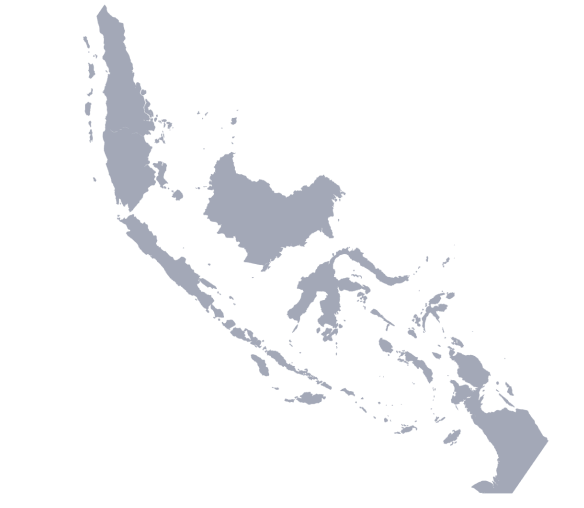
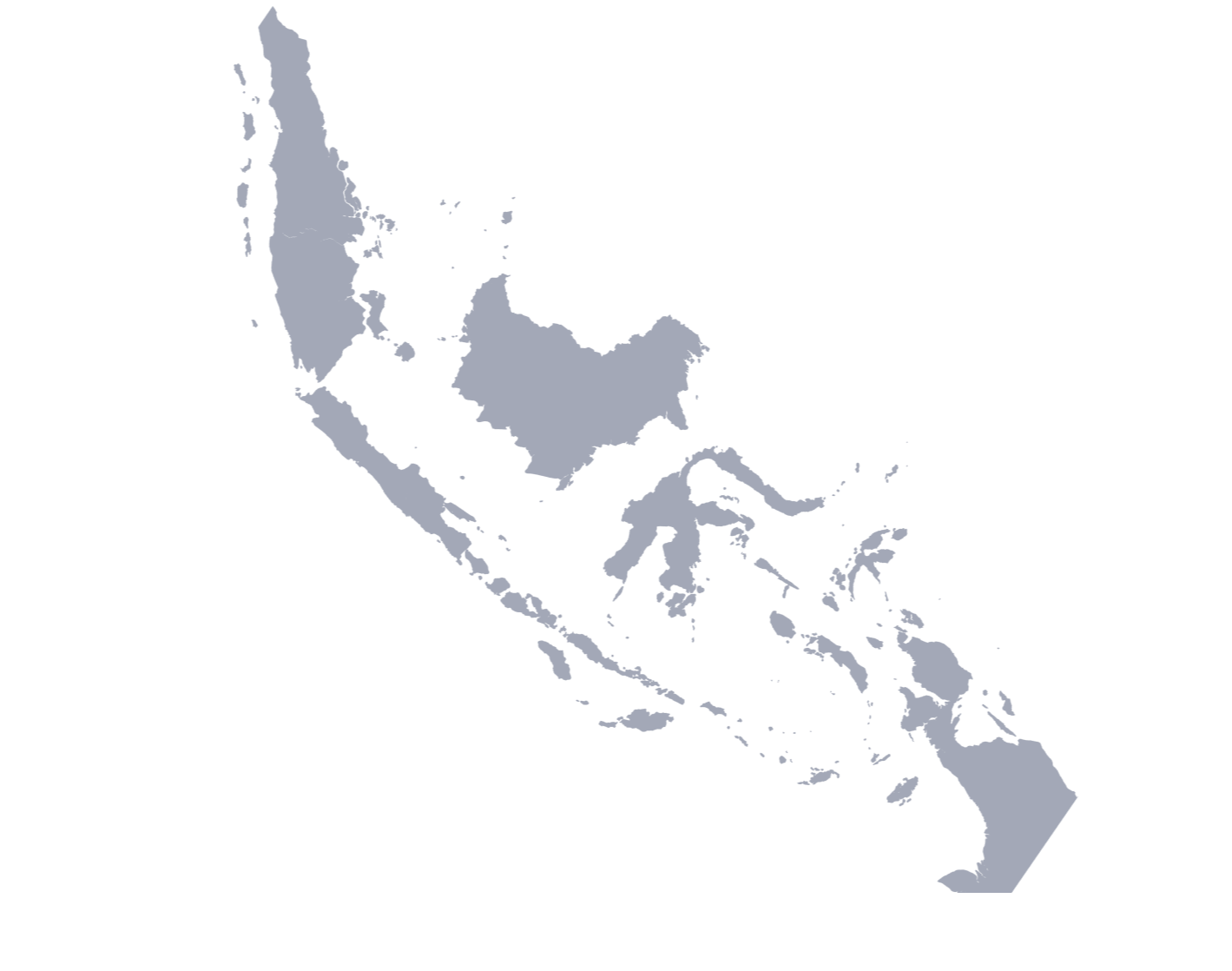
Republic of Indonesia: A massive, mobile-first market with deep but uneven coverage
Indonesia has roughly 270 million people, but active mobile subscriptions run higher because multi-SIM and dual-SIM smartphone usage is widespread, particularly to optimize across operators with different data-pricing windows. The modal Indonesian internet user accesses the network through a prepaid 4G plan on an Android smartphone, almost always at the lower end of the device price spectrum.
Smartphone penetration is deep, and 4G coverage is geographically extensive though uneven in capacity and speed. 5G coverage exists in metro cores (Jakarta, Surabaya, Bandung, Medan, Denpasar) but is far from universal even within tier-1 cities. 2G is still relevant for legacy feature-phone users in some rural regions and for IoT applications.
The market is structurally bifurcated by geography and price-point. Java carries the majority of revenue, ARPU, and data traffic; outer islands carry meaningful subscribers but at lower ARPU and with more challenging unit economics for the operator. Telkomsel's rural reach is a real structural advantage; IOH and XL Axiata are concentrated more heavily in urban Java.
Revenue mix has shifted decisively from voice-and-SMS toward data over the last decade. Data now contributes the dominant majority of operator revenue, with enterprise solutions and digital adjacencies (mobile money, content bundling, B2B IoT) as growing but still smaller contributors. Subscriber growth is approaching saturation; growth now comes from ARPU, not subscriber count.
Hyperlocalization: Java metros, secondary cities, and outer-island reach
Jakarta, Surabaya, Bandung, Medan, Semarang, Makassar, and Denpasar are the metro cores where 5G coverage is deepest, ARPU is highest, and competitive intensity between operators is sharpest. These cities also absorb the majority of enterprise mobile spend — corporate plans, mobile workforce solutions, and IoT pilots concentrate here.
Tier-2 and tier-3 cities — Pekanbaru, Palembang, Batam, Banjarmasin, Balikpapan, Manado, Mataram, Kupang, Jayapura — host most of Indonesia's subscriber base outside Java, with 4G coverage that is generally good in city cores but thinner in surrounding regencies. Pricing in these markets is highly elastic; promotional packages and prepaid voucher distribution shape competitive share.
Outer-island and rural Indonesia is where coverage economics get hard. Telkomsel's dominant rural position is built on a denser BTS (base transceiver station) footprint than competitors maintain. USO (Universal Service Obligation) program funding through Bakti, Kominfo's universal-service vehicle, helps extend coverage into commercially unviable areas — but rural ARPU remains a fraction of metro ARPU.
Opportunities beyond Jakarta: enterprise, FWA, and rural coverage gaps
Consumer mobile is approaching saturation, with ARPU and data-package upgrades carrying most of the growth. The more interesting future-growth pockets sit outside the consumer headline. Enterprise mobile — corporate plans, mobile workforce solutions, private networks, IoT — is growing fast as Indonesian businesses digitize operations. FWA (Fixed Wireless Access) is extending broadband into homes that fiber cannot economically reach. Rural and remote coverage continues to expand under USO and BAKTI programs.
Enterprise services and B2B digital adjacencies (mobile money, cloud, cybersecurity, IoT platforms, vertical SaaS) are the segments where operators are competing increasingly aggressively, often through dedicated B2B subsidiaries (Telkomsel Enterprise, Indosat Business, XL Axiata Business). Margins are stronger and customer churn is lower than in consumer.
5G enterprise use cases — smart manufacturing, port automation, oil and gas remote operations, mining-site connectivity, smart cities — are commercially material but rollout-limited. Operators that can credibly deliver private-5G or campus-5G solutions are winning early enterprise relationships that translate into multi-year contracts.
Enterprise B2B digital services (cloud, IoT, cybersecurity, mobile workforce) growing meaningfully faster than consumer mobile
FWA expansion filling home-broadband gaps where fiber rollout economics are unworkable
5G enterprise and private-5G campus solutions for manufacturing, mining, ports, oil and gas
Mobile money and embedded fintech (Telkomsel LinkAja, DANA, Indosat) building adjacency revenue
USO and BAKTI rural-coverage programs sustaining capex and reach expansion in eastern Indonesia
Government digital identity, e-government, and digital-services initiatives generating B2G revenue
Network and distribution realities: towers, fiber, channels, and devices
Network architecture in Indonesia is unusually tower-sharing-heavy by global standards. Most physical towers are owned by independent TowerCos — Mitratel (Telkom subsidiary), Protelindo (Sarana Menara Nusantara), Tower Bersama Infrastructure (TBIG), Solusi Tunas Pratama (STP), IBS, and others — with operators renting space and capacity. This has dramatically reduced operator capex intensity and accelerated coverage expansion.
Fiber backhaul is the next binding constraint. As 4G traffic grows and 5G rolls out, microwave backhaul increasingly cannot carry the capacity; fiber-to-the-tower is now a major operator and TowerCo capex priority. Independent fiber providers, Telkom's IndiHome/fiber infrastructure, and TowerCo-owned fiber are all expanding.
Retail distribution remains heavily prepaid and physically intermediated. Voucher distribution through tens of thousands of small retailers, kiosks (warung), and modern trade channels still drives a meaningful share of recharge volume even as digital top-up via mobile money, e-wallets, and banking apps grows. Smartphone distribution sits in modern electronics retail (Erafone, iBox, Samsung Experience Stores) and a long tail of independent counters.
Operators are effectively service businesses sitting on a separated infrastructure stack — analyzing them like vertically integrated telcos misreads the cost economics
Fiber backhaul and 5G rollout are joint capex decisions; operators that secure backhaul early gain capacity flexibility that competitors cannot match short-term
Distribution remains channel-intensive; physical voucher distribution and modern retail co-exist with digital top-up rather than being displaced
Device ecosystems (Android dominance, lower-end smartphone economics) shape data-plan design more than European or US precedents suggest
Industry Definition
What is KBLI 6120, and where does the boundary sit?
Industry Definition
KBLI 6120 covers wireless telecommunications activities — provision of mobile voice, SMS, and data services over cellular networks (2G–5G), fixed wireless access (FWA), wireless data and broadband services, satellite-based telecommunications, and selected wireless machine-to-machine connectivity. The defining activity is operating a wireless network to deliver communication services to customers.
Excluded: fixed-line telecommunications (KBLI 6110), including fiber-to-home and copper-based services; manufacture of telecommunications equipment (KBLI 2630); telecommunications infrastructure rental such as tower leasing and fiber-co-location (KBLI 6190); satellite manufacturing and launching (other KBLI); retail sale of telecommunications products such as handsets and SIM cards (Division 47 codes); information services and content (KBLI 63xx).
The clarifying test is operations: if the operator runs wireless network infrastructure (spectrum, base stations, core network) to provide telecommunications services, it sits in 6120 regardless of whether services are sold to consumers, businesses, or governments.
Indonesia in Focus
In Indonesia, the wireless market is dominated by three national operators after the 2022 IOH consolidation: Telkomsel (Telkom Indonesia subsidiary, market leader), Indosat Ooredoo Hutchison (IOH, post-merger Indosat + Hutchison Tri entity), and XL Axiata. Smartfren is the smaller fourth player with strong FWA positioning.
The market is structurally separated from passive infrastructure — most towers belong to independent TowerCos. This makes Indonesia's operator landscape less capital-intensive at the operator level than vertically integrated peer markets but more dependent on tower-sharing economics.
Regulation under Kominfo and BRTI is consequential. Spectrum allocation, USO obligations administered through BAKTI, data-protection rules under UU PDP, content-registration requirements, and ongoing tower-sharing policy collectively shape the operating environment.
Industry Classification
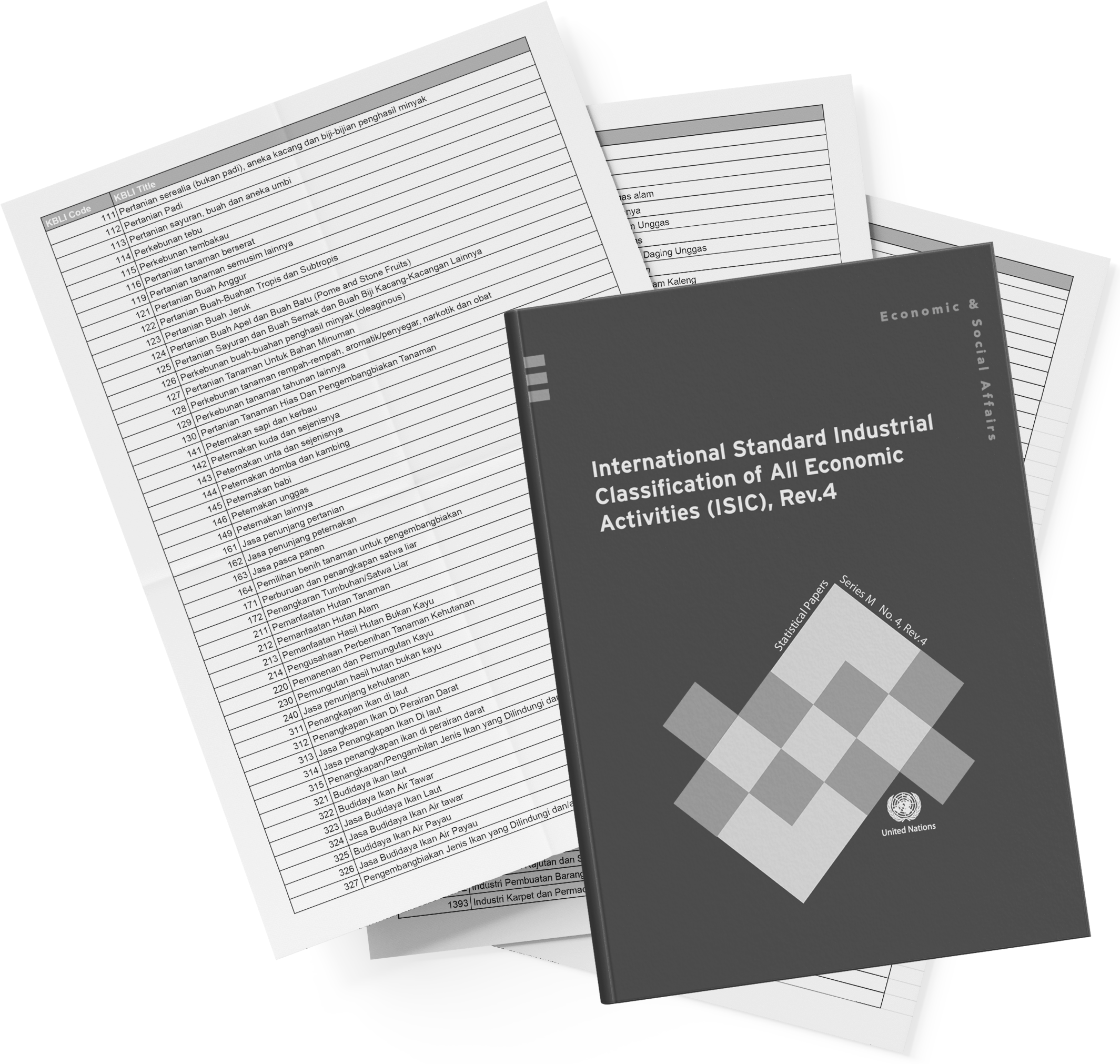
KBLI 6120 (2020 revision) — Aktivitas Telekomunikasi Tanpa Kabel — covers wireless telecommunications activities including mobile cellular services, paging, wireless internet, satellite-based services, and selected M2M/IoT connectivity.
Closest ISIC mapping: ISIC Rev.4 6120 — Wireless telecommunications activities. Direct equivalence at four-digit level.
NAICS comparable: 517112 (Wireless Telecommunications Carriers, except Satellite) — close one-to-one mapping with US classification.
Operators frequently sit alongside KBLI 6110 (wired telecom), 6190 (other telecom — towers, fiber leasing), and 6311 (data processing and hosting) depending on integrated service portfolios.
Industry Terms that actually matter
Mobile telecom vocabulary is dense but the terms below are the ones that shape revenue, cost, regulation, and competition in Indonesia.
ARPU (Average Revenue Per User)
Average monthly revenue per active subscriber; reported per operator with prepaid and postpaid breakdowns.
The single most-watched operator KPI. Indonesia's ARPU is low globally but rising as data consumption grows; ARPU trajectory determines operator equity stories more than subscriber count.
Spectrum (MHz)
Frequencies licensed by Kominfo for wireless service delivery (700, 900, 1800, 2100, 2300, 2600 MHz, 3.5 GHz for 5G).
Spectrum is operator lifeblood; auctions are capital events, and refarming flexibility is a competitive variable. Indonesia's 700 MHz digital dividend and 3.5 GHz 5G band allocations are particularly consequential.
TowerCo (Tower Company)
Independent operator of passive tower infrastructure renting space to multiple wireless operators.
Mitratel, Protelindo, TBIG, STP, IBS together carry most of Indonesia's tower footprint; tower-sharing has materially reduced operator capex and accelerated coverage rollout.
USO / BAKTI
Universal Service Obligation funding mechanism (1.25% of operator revenue) administered by BAKTI (Telecommunications and Information Accessibility Agency) to fund rural and remote coverage.
Real cost line for operators and a real coverage extension mechanism; BAKTI Palapa Ring and Sinyal programs have pushed coverage into eastern Indonesia.
FWA (Fixed Wireless Access)
Provision of broadband internet to fixed locations (typically homes) over cellular networks, often 4G or 5G.
Growth segment competing with fiber in markets where fiber rollout is uneconomic; Smartfren and increasingly Telkomsel and IOH are pushing FWA propositions.
5G NSA / SA
Non-Standalone (NSA) 5G uses existing 4G core; Standalone (SA) 5G uses a dedicated 5G core for full feature set including network slicing.
Indonesia's 5G is currently NSA with selective SA deployment; SA enables enterprise propositions (network slicing, low-latency private networks) that NSA cannot fully support.
PSE (Penyelenggara Sistem Elektronik)
Electronic System Provider registration under Kominfo requiring digital-service providers to register and comply with Indonesian content and data rules.
Applies to operators' digital services and to OTT/content partners; PSE rules affect content-blocking obligations and product design.
RAN / Open RAN
Radio Access Network connecting devices to the operator core; Open RAN refers to disaggregated, vendor-interoperable RAN architectures.
Indonesia's operators are mostly traditional Ericsson/Nokia/Huawei/ZTE RAN; Open RAN pilots exist but are early. Architecture choices shape vendor relationships and long-run capex.
MVNO (Mobile Virtual Network Operator)
Operator that resells mobile services on top of a host network operator's spectrum and infrastructure.
Limited MVNO activity in Indonesia compared to mature markets; regulatory permission and host-operator wholesale terms have constrained the segment.
Industry Overview – Business Archetypes
KBLI 6120 hosts a small number of structurally distinct operating archetypes. The Indonesian market is concentrated enough that nearly every operator is in one of a few clear categories — but the categories matter for competitive positioning, capital intensity, and growth strategy.
National Tier-1 Mobile Operator (Ecosystem Anchor)
Operates a nationwide mobile network covering most of Indonesia's populated territory, with the broadest spectrum holdings and deepest tower and fiber backhaul footprint. Telkomsel is the clearest example, with Indosat Ooredoo Hutchison (post-merger) and XL Axiata as direct competitors in this tier.
Drives revenue through consumer prepaid and postpaid plans, enterprise B2B services, FWA, IoT, and digital adjacencies. Margin profile is meaningful and capex is heavy but increasingly tilted toward 5G, fiber backhaul, and IT/digital rather than tower-build.
Consumer prepaid and postpaid mobile plans with data as the dominant revenue component
Enterprise B2B services including corporate plans, IoT, cloud, mobile workforce, and digital solutions
FWA (Fixed Wireless Access) for home broadband and small-business connectivity
Digital adjacencies including mobile money (LinkAja, Indosat-DANA), content bundling, and B2B SaaS
Wholesale to MVNOs and interconnect with other operators
Capex-heavy on RAN modernization, 5G rollout, and fiber backhaul; tower-sharing has compressed passive-infrastructure capex
Working capital cycle is relatively short on the prepaid book but extends on enterprise contracts and government
Regulatory overhead is significant — spectrum payments, USO contributions, content compliance, data protection
FWA and Niche Mobile Operator (Specialist Operator)
Smaller national operator with focused positioning on Fixed Wireless Access, urban data, and selected niche segments rather than competing on nationwide coverage. Smartfren is the clearest example in Indonesia.
Competes on price-point and FWA value proposition rather than ubiquitous coverage. Often partners with larger operators on tower-sharing and selectively roams to extend coverage outside its core network footprint.
FWA home and SME broadband packages at competitive price points
Urban mobile consumer plans focused on heavy data users
Selected enterprise propositions
Wholesale and partner arrangements with larger operators
Lower spectrum holdings and tower footprint than tier-1 operators; cost structure more concentrated on core network and FWA equipment
Vulnerable to spectrum scarcity if regulators reallocate; partnership/M&A optionality always relevant
Strong fit for urban data and FWA segments where capex per subscriber is workable
Enterprise B2B Telecommunications Specialist (Inclusion Engine)
B2B unit or subsidiary within a national operator focused on corporate, government, and SME enterprise sales. Often operates with semi-distinct branding (Telkomsel Enterprise, Indosat Business, XL Axiata Business) and a dedicated sales and engineering team.
Sells mobile plans, IoT, private networks, cloud, cybersecurity, and digital workforce solutions. Customer relationships are multi-year, contracted, and increasingly bundled across mobile and digital services.
Corporate mobile plans with volume pricing and managed services
IoT and M2M connectivity for fleet management, smart metering, asset tracking, smart agriculture
Private 4G/5G networks for industrial sites (manufacturing, ports, mining)
Cloud, cybersecurity, and managed-IT services bundled with connectivity
Government contracts including digital identity, e-government, and smart-city projects
Higher-margin and lower-churn than consumer, but smaller in absolute revenue
Contract sales cycles are long (6–18 months for large enterprise)
Capability-intensive — engineering, integration, and customer-success staffing matter more than mobile-channel scale
Satellite and Specialty Wireless Provider (Niche Specialist)
Provides satellite-based telecommunications, VSAT, maritime connectivity, and specialty wireless services for remote, mobile, and high-availability use cases. Operates within KBLI 6120 alongside terrestrial mobile.
Includes domestic satellite operators (PSN, Telkomsat, IOH satellite assets) and resellers of foreign satellite capacity (Starlink as a new entrant via local partnerships). Serves maritime, energy, government, defense, and remote-enterprise customers.
Satellite bandwidth leases for VSAT terminals and remote connectivity
Maritime and aviation connectivity packages
Government and defense contracts for backbone and remote-area service
Backhaul services for terrestrial operators in remote areas
Capital-intensive with long satellite-asset depreciation cycles; LEO entrants like Starlink are reshaping economics
Regulatory access — landing rights, spectrum coordination, content-rules application — matters more than for terrestrial mobile
Niche but durable; remote and maritime use cases will remain underserved by terrestrial for the foreseeable future
MVNO and Resale Operator (Bridge Model)
Mobile Virtual Network Operator reselling mobile services on top of a host operator's network without owning spectrum or RAN infrastructure. Indonesia has limited MVNO activity relative to mature markets, with selected niche players in specific verticals.
Competes on brand, customer experience, or vertical specialization rather than network coverage. Constrained by host-operator wholesale terms and Kominfo regulatory framework.
Resale margin between wholesale rate from host operator and retail price
Vertical or niche-segment pricing optimized for specific use cases
Bundled or branded service propositions
Asset-light but margin-thin; dependent on host-operator wholesale terms
Indonesian regulatory framework has not historically been MVNO-friendly compared to Europe or US
Future relevance depends on wholesale-access rules and operator willingness to host
Industry Performance & Outlook
Subscriber saturation, ARPU-led growth, 5G coverage extension, and enterprise as the highest-growth segment
Subscriber growth is approaching saturation; the headline industry growth story is no longer adding millions of new SIMs. ARPU growth, data-package upgrades, enterprise revenue, and FWA expansion are now the primary growth levers. Indonesia's mobile market is maturing into a developed-market revenue dynamic even as nominal incomes remain emerging-market.
The IOH consolidation in 2022 has materially changed competitive dynamics. With three meaningful national operators (plus Smartfren) instead of four, pricing competition has moderated, and operators are extracting consolidation synergies — particularly on tower rationalization, spectrum refarming, and IT-stack consolidation. Telkomsel's structural leadership has strengthened in some ways but is now contested more capably by a larger, better-capitalized IOH.
5G is real but commercially narrow. Mass-consumer 5G monetization is a multi-year prospect; the immediate value is in enterprise, FWA, and selected dense-urban capacity offloading. Operators are calibrating 5G capex carefully against return economics rather than racing for coverage headlines.
Outlook drivers over the next 24–36 months: continued ARPU lift through data-plan optimization, enterprise B2B revenue growth, FWA expansion into fiber-uneconomic markets, spectrum auction outcomes (particularly 700 MHz digital dividend), and regulatory clarity on tower-sharing rules and data protection.
Performance indicators that matter for KBLI 6120
ARPU (Average Revenue Per User)
Operator revenue-per-subscriber trajectory
Single most-watched KPI; rising gradually as data consumption grows; varies sharply by operator and prepaid/postpaid mix
Data traffic growth (TB/month)
Network utilization and data-revenue base
Strong continued growth driven by video, gaming, social, and quick-commerce traffic
Postpaid share and enterprise revenue mix
Quality of revenue base and growth runway
Postpaid penetration in Indonesia remains low globally; enterprise B2B is the higher-growth segment
5G coverage and 5G subscriber count
Investment and monetization trajectory of next-generation network
Coverage extending in metros; subscribers and monetization still small relative to total base
Tower-sharing density and TowerCo tenancy ratios
Infrastructure economics and capex efficiency
High tenancy ratios already (often 2+ tenants per tower); TowerCos benefit from densification and 5G rollouts
Capex intensity (capex/revenue)
Investment cycle position and FCF generation
Operator capex intensity moderating versus the 4G build phase; TowerCo capex remains elevated
USO contribution and BAKTI program flow
Rural coverage extension and operator cost
1.25% revenue contribution funds rural extension; BAKTI Palapa Ring and Sinyal Indonesia Bagus programs continue extending coverage
Outlook: what to watch over the next 24–36 months
Continued IOH consolidation synergies, particularly tower rationalization and IT-stack integration, and competitive response from Telkomsel and XL Axiata
5G enterprise propositions maturity, including private 5G networks for manufacturing, mining, ports, and oil and gas
Spectrum auctions for digital-dividend bands and additional 5G capacity; auction design and pricing materially shape operator economics
FWA growth and its competition with fiber in suburban and small-city markets
UU PDP (Personal Data Protection Law) implementation phase rolling forward, requiring operator compliance investment
Open RAN trials and deployment pace; vendor consolidation in the Indonesian market versus traditional Ericsson/Nokia/Huawei/ZTE incumbents
Industry Growth Drivers
Growth in KBLI 6120 has shifted from subscriber-count expansion to ARPU, enterprise, and adjacency revenue. The drivers below are the ones with material effect on operator volume and margin in the Indonesian context.
Data consumption growth driving ARPU upgrades
Video streaming (YouTube, TikTok, Netflix, Vidio, Disney+ Hotstar, WeTV), mobile gaming (Mobile Legends, PUBG, Free Fire), social media, and quick-commerce drive sustained data traffic growth. As consumers move up data plans to support these uses, ARPU rises even without headline price increases.
This is the largest near-term growth lever for operators. Plan-tier engineering, gaming bundles, and video-streaming partnerships are the practical mechanisms through which operators capture this growth.
Operator quarterly ARPU disclosure and data-traffic growth
OTT video and gaming subscriber penetration in Indonesia
Enterprise B2B digital services expansion
Indonesian enterprises are digitizing operations — corporate mobile, IoT, private networks, cloud, cybersecurity, mobile workforce solutions. Operators with credible B2B capability are growing this segment faster than consumer and capturing higher-margin revenue.
Government digital initiatives (digital identity, e-government, smart-city programs) add B2G demand that complements private B2B and tends to be sticky.
Operator B2B segment revenue disclosure and growth rates
Government digital and smart-city program announcements
FWA expansion into fiber-uneconomic markets
Fixed Wireless Access provides broadband to homes and small businesses in markets where fiber rollout is uneconomic. Smartfren has been an early leader; Telkomsel and IOH are expanding propositions. FWA growth is meaningful for both consumer broadband revenue and for filling capacity utilization on 4G and 5G networks.
FWA also competes with fiber directly in some suburban and small-city markets where the cost-per-home math favors wireless. The competitive dynamic with IndiHome (Telkom fiber) and other fiber operators is actively evolving.
FWA subscriber additions in operator disclosures
Fiber-coverage and competitive announcements from Telkom IndiHome, Biznet, MyRepublic, FirstMedia
5G coverage extension and enterprise monetization
5G rollout in Indonesia is selective — concentrated in metro cores and enterprise sites rather than national mass-coverage. Commercial monetization comes from enterprise propositions (private 5G, low-latency networks, network slicing) and selected dense-urban capacity offloading.
Mass-consumer 5G ARPU lift is a multi-year prospect; near-term 5G economics depend on enterprise revenue and FWA capacity. Operators that build credible 5G enterprise capabilities are positioning for the next monetization wave.
Spectrum auctions for 5G bands (3.5 GHz, 26 GHz mmWave, 700 MHz)
Enterprise 5G case studies and private-network deployments
IoT, M2M, and connected-vehicle growth
Smart metering, fleet management, asset tracking, smart agriculture, smart-city sensors, and connected vehicles all generate IoT connectivity demand. Indonesian IoT is still at early stage by global benchmark but growing structurally as digitization extends across industries.
Operators offering vertical IoT platforms (not just connectivity) capture more value than pure connectivity providers. This is an emerging differentiator among the three tier-1 operators.
Operator IoT subscriber and revenue disclosure
Vertical IoT deployment announcements (smart cities, fleet, smart manufacturing)
Mobile money and embedded fintech adjacencies
Mobile money services (Telkomsel LinkAja, DANA association with Indosat, GoPay/Telkomsel partnerships) and embedded fintech (insurance, lending, savings) build adjacent revenue on top of the operator subscriber base. The economics are different from connectivity but the customer base overlap is high.
These adjacencies do not always sit inside the KBLI 6120 entity but they affect operator group economics meaningfully and influence subscriber stickiness.
OJK mobile money and e-wallet activity data
Operator group disclosures on fintech adjacencies
Industry Trends & Development
Industry Development: how the channel reached its current shape
From four-player voice market to consolidated three-player data-led industry with separated infrastructure
Indonesia's wireless industry evolved through four structural shifts: the transition from voice-and-SMS to data as the dominant revenue stream, the separation of passive infrastructure into independent TowerCos, the rollout of 4G as the default consumer experience, and the 2022 IOH consolidation that reduced the market from four full-scale national operators to three plus Smartfren.
The current shape — three big operators on a separated infrastructure stack with data as the dominant revenue and 5G in early enterprise rollout — is the result of these four shifts compounding over twenty years.
GSM expansion and four-operator competitive build-out
Telkomsel, Indosat, XL Axiata, and Hutchison Tri (later) competed on coverage and price; voice and SMS dominated revenue; smartphone penetration was minimal. Tower deployment was operator-owned. Subscriber growth was the headline story.
Independent TowerCo emergence and 3G data inflection
Operators sold tower portfolios to independent TowerCos (Mitratel, Protelindo, TBIG, STP); tower-sharing emerged as standard. Smartphones reached mass affordability; 3G drove the first wave of mobile internet use. Data revenue began rising as a meaningful share.
4G rollout, data revenue dominance, and prepaid SIM registration
4G coverage extended nationwide; data became the dominant operator revenue stream. Mandatory prepaid SIM registration formalized the subscriber base. Indosat–Ooredoo brand consolidated; XL Axiata maintained tier-2 positioning; Smartfren built FWA niche.
Pandemic data surge and IOH consolidation
COVID-driven remote work, online learning, and streaming surged data traffic. Indosat merged with Hutchison Tri to form Indosat Ooredoo Hutchison (IOH) in 2022, reducing the market to three big operators. Telkomsel completed Mitratel listing, separating tower business. 5G commercial launch in select metros.
Consolidation synergies, 5G enterprise focus, FWA expansion
IOH extracted merger synergies — tower rationalization, spectrum refarming, IT consolidation. 5G expanded selectively. FWA growth accelerated. UU PDP (Personal Data Protection Law) implementation tightened compliance. Enterprise B2B emerged as the highest-growth segment. Open RAN trials began.
Key Trends — what's changing in the business model
The trends below are changing how money is actually made in KBLI 6120 — shifts inside specific Business Model Canvas dimensions rather than macro narratives.
Enterprise B2B as the highest-growth revenue segment (Customer Segments)
Operators are systematically building dedicated B2B units and propositions (Telkomsel Enterprise, Indosat Business, XL Axiata Business) because enterprise revenue grows faster than consumer, carries higher margin, and exhibits lower churn.
The strategic implication is that operator competitiveness increasingly depends on engineering, integration, and customer-success capability — not just network coverage and consumer marketing.
All three tier-1 operators with dedicated B2B units
Indonesian enterprises digitizing operations
Equipment vendors and IT services providers partnering on B2B propositions
Tower and infrastructure separation as standard operating model (Key Resources)
Indonesia's operator industry runs structurally separated from passive infrastructure. TowerCos own most physical towers; operators rent space and capacity. This has compressed operator capex intensity and accelerated coverage, but also means operator economics are increasingly software, spectrum, and core-network led rather than tower-build led.
Operators that optimize their relationship with TowerCos — co-investing on fiber backhaul, negotiating multi-year tenancy agreements, and aligning 5G rollout plans — extract better economics than those that treat tower rental as a commodity expense.
All operators and Indonesian TowerCos
Fiber backhaul providers and TowerCo subsidiaries
Equipment vendors selling RAN and core network equipment
5G monetization as enterprise-led, not consumer-led (Value Proposition)
The 5G monetization story in Indonesia is increasingly enterprise — private networks for manufacturing, mining, ports, oil and gas; network slicing for low-latency applications; FWA capacity offload. Consumer 5G ARPU lift is real but slow.
Operators that build credible 5G enterprise propositions — including private-5G capability, network slicing, and edge compute partnerships — are positioning for the next monetization wave. Those that rely on consumer 5G to drive ARPU will wait longer.
All operators investing in 5G capex
Enterprise customers in manufacturing, mining, ports, oil and gas
Edge-compute and cloud providers partnering on 5G
FWA filling the broadband gap (Channels and Revenue Streams)
Fixed Wireless Access is becoming a real broadband channel where fiber economics do not work. Smartfren pioneered the proposition; Telkomsel and IOH have built significant FWA books. FWA competes with fiber operators (IndiHome, Biznet, FirstMedia) in suburban and small-city markets.
FWA also generates a meaningful revenue stream that smooths the cyclicality of consumer mobile and supports 4G/5G capacity utilization.
All mobile operators with FWA propositions
Fiber operators competing in overlapping markets
Households and small businesses in fiber-underserved areas
UU PDP compliance and content-registration regulation (Cost Structure)
Indonesia's Personal Data Protection Law (UU PDP) and Kominfo's content-registration rules (PSE) impose meaningful compliance overhead on operators — data-protection officer roles, audit systems, content-blocking obligations, breach-notification procedures.
Compliance is not optional and shapes both product design (consent flows, data minimization) and cost structure. Operators with mature compliance programs handle this more efficiently than those treating it as one-off projects.
All operators
Operator compliance and legal teams
Customers benefiting from data-protection rights
Mobile money and embedded fintech adjacencies (Revenue Streams)
Operators are increasingly running or partnering with mobile money and fintech adjacencies — LinkAja (Telkomsel), DANA (Emtek/Indosat-related), GoPay partnerships. These adjacencies generate ancillary revenue and increase customer stickiness, though they operate under separate regulatory frameworks (Bank Indonesia, OJK).
Operator economics now require thinking about lifetime value across mobile, FWA, and adjacent fintech services rather than mobile alone.
Operator group corporate strategy
Mobile money and e-wallet competitors
Bank Indonesia and OJK regulating financial services
Impact and Sustainability
Sustainability in KBLI 6120 is operationally significant because the industry sits at the intersection of digital inclusion, energy consumption, and rural development. The next round of sustainability questions is about energy efficiency in the network, the durability of universal-service mechanisms, and how the industry supports digital-economy inclusion at scale.
Digital inclusion and rural coverage impact
Wireless networks are the practical mechanism through which Indonesians outside major cities access the digital economy. USO/BAKTI programs (Palapa Ring fiber backbone, Sinyal Indonesia Bagus mobile coverage extension) are extending reach into eastern Indonesia and remote areas.
The economic and educational implications are real — coverage access correlates with e-commerce participation, fintech access, and digital learning availability. Operator decisions on rural coverage have direct impact on regional economic inclusion.
Rural coverage extension is uneconomic on pure commercial terms; USO funding and BAKTI program co-investment are required
Coverage equity versus capex efficiency is a recurring tension in operator capital allocation
Network energy consumption and emissions
Mobile networks consume substantial energy, particularly in radio access network (RAN) operations. 5G densification adds energy load even as per-bit efficiency improves. Operator commitments on renewable energy and energy efficiency are increasingly visible.
Indonesian operators have begun reporting Scope 1–3 emissions and pursuing renewable energy procurement for base stations, but the path to meaningful decarbonization is multi-year.
Renewable energy procurement is real opex with multi-year payback
Energy-efficient RAN modernization competes with other capex priorities like 5G and coverage
Data protection, content moderation, and customer trust
Indonesia's UU PDP raises the bar on operator data-protection practices. Customer trust depends on credible compliance programs, breach response, and transparent consent practices. Content-moderation obligations (PSE rules, lawful intercept, content blocking) sit alongside privacy obligations and require careful balance.
Operators with mature compliance programs are better-positioned for the long run than those treating each regulation as a one-off compliance project.
Strong data-protection investment adds cost but builds trust and reduces breach and regulatory risk
Content-moderation and blocking obligations balance public-policy goals against customer-experience friction
Industry Segmentation
Industry Segmentation – Service categories
Service segmentation in KBLI 6120 reflects how operators actually package and sell wireless capacity. Consumer prepaid dominates volume; postpaid and enterprise carry higher ARPU and margin; FWA and specialty wireless are growth pockets.
Segmentation by service category
Consumer prepaid mobile
Pay-as-you-go mobile voice, SMS, and data plans recharged via vouchers or digital top-up
Mass-market consumers, dual-SIM users, lower-income segments
Dominant volume segment in Indonesia by far; aligned with cash-economy and pay-per-use preference
Consumer postpaid mobile
Monthly billed mobile plans with bundled data, voice, and sometimes content
Affluent consumers, professional users, family-plan adopters
Higher ARPU and lower churn than prepaid; growing but still a smaller share than in mature markets
Fixed Wireless Access (FWA)
Wireless broadband to homes and small businesses via 4G or 5G
Households and SMEs in fiber-underserved markets, second-home connectivity
Competes with fiber where fiber economics are uneconomic; growing capacity-utilization driver
Enterprise B2B mobile and connectivity
Corporate mobile plans, dedicated APN, managed connectivity, mobile workforce solutions
Mid-to-large corporations, government, professional services
Higher-margin, lower-churn segment; growing as Indonesian enterprises digitize
IoT and M2M connectivity
Cellular connectivity for IoT devices, smart meters, fleet management, asset tracking
Industrial buyers, logistics, utilities, smart-city operators
Emerging segment with strong unit-volume growth; complements vertical SaaS and platform plays
Private 4G/5G networks
Dedicated cellular networks for industrial sites with operator-provided or self-managed cores
Manufacturing plants, mining sites, ports, oil and gas operators
Premium enterprise segment tied to 5G enterprise propositions; rewards engineering capability
Wholesale and roaming
Wholesale interconnect, MVNO hosting, international roaming arrangements
Other operators, MVNOs, foreign telcos via roaming agreements
Recurring B2B revenue stream supporting other segments
Satellite and VSAT
Satellite-based connectivity for maritime, remote-area, and high-availability use cases
Energy and resource industries, maritime, defense, remote enterprise
Niche segment where terrestrial wireless cannot reach; LEO entrants reshaping economics
Volume concentrates in consumer prepaid; value concentrates in postpaid, enterprise B2B, and private networks; margin concentrates in B2B and specialty wireless.
Cross-segment bundling (mobile + FWA + content; enterprise + cloud + cybersecurity) is increasingly common and reshapes the customer-relationship model.
Industry Segmentation – Pricing models and channel orientation
Beyond service category, KBLI 6120 segments by pricing model and channel orientation. The split below shapes operator economics and customer-relationship dynamics.
Segmentation by pricing model and channel
Prepaid voucher and physical-retail
Pay-as-you-go service recharged via physical voucher distribution through warung, kiosks, and modern retail
Mass-market consumers, lower-income segments, rural consumers
Aligned with cash-economy preferences; physical voucher distribution remains material despite digital alternatives
Prepaid digital recharge
Pay-as-you-go service recharged via mobile money, e-wallets, and bank apps
Digital-native consumers, urban middle-class
Growing share of prepaid recharge; lowers operator distribution cost per recharge
Postpaid contract
Monthly billed plans with credit-checked customers and bundled benefits
Affluent consumers, professionals, family-plan customers
Higher ARPU and stickier customer base; depends on credit infrastructure and modern-retail acquisition
Enterprise contract sales
Negotiated multi-year corporate contracts with dedicated account management and SLAs
Mid-to-large corporations, government, multinationals
Long sales cycles but high lifetime value; aligned with enterprise digitization
Direct digital channel and self-service
Online-only service activation, plan management, and recharge via operator apps
Younger consumers, digital-native users, SME buyers
Lower-cost channel that aligns with consumer behavior shift to digital
Bundled content and OTT partnerships
Mobile plans bundled with video, music, or gaming subscriptions from OTT partners
Heavy data users, video and gaming consumers
Differentiates plan offerings, builds stickiness, and shares revenue with content partners
Prepaid still dominates Indonesian mobile by subscriber count; postpaid and enterprise concentrate revenue and margin.
Channel orientation also predicts operating cost — physical distribution carries voucher commissions and trade overhead; digital channels carry lower variable cost but higher platform-build investment.
Customer Segmentation: who actually buys and what they need
Customer segmentation matters because the same SIM card is sold under very different terms to very different buyers. A mass-market prepaid user, a postpaid professional, an enterprise CIO, and a smart-meter network operator all behave differently and value different things.
Customer segments and what they value
Mass-market prepaid consumer
Lower-to-middle-income individual, often dual-SIM, primarily uses social, messaging, video
Get adequate data at lowest workable cost; stay reachable for calls and messages
Affordable data packages, reliable signal, easy recharge, promotional bundles
Physical voucher retail, mobile money recharge, operator apps
Middle-class postpaid consumer
Professional or family-plan user with stable income and credit access
Maintain reliable connectivity for work, family, content with predictable monthly cost
Reliable network coverage, postpaid billing, bundled content, family-plan options, customer service
Modern retail, online activation, operator apps, customer service
Heavy data user / gamer / streamer
Young consumer with high data consumption from video, gaming, social
Sustained high-quality data experience at workable cost
Large data packages, gaming-optimized network, content bundles, 5G where available
Operator apps, gaming platforms, social media, modern retail
SME and small-business owner
Owner of small business with mobile-driven workflow
Run business operations on mobile — communication, payments, logistics, e-commerce
Reliable connectivity, mobile money, business SIM with usage data, simple billing
Direct operator sales, modern retail, online activation
Mid-to-large corporate buyer
CIO or IT procurement team for company with mobile workforce and digital operations
Procure mobile and connectivity for workforce and digital operations with audit and cost control
Corporate plans, managed connectivity, IoT, cybersecurity, SLAs, account management
Direct enterprise sales, account managers, RFP processes
Government and B2G buyer
Ministry or local government with digital-services or smart-city initiative
Procure connectivity, digital identity, and smart-city solutions for public service delivery
Compliance, SLAs, integration with government systems, audit-friendly procurement
Government tender processes, direct operator B2G sales
Industrial enterprise (manufacturing, mining, oil and gas)
Industrial operator with site connectivity, IoT, and private-network needs
Run operational technology and IoT on reliable, secure cellular connectivity
Private 4G/5G networks, IoT platforms, low-latency for critical applications, dedicated SLAs
Direct enterprise sales, technical sales engineering, integration partners
Rural and remote consumer
Lower-income individual in eastern Indonesia or remote area
Get basic connectivity for communication, social media, and government services access
Adequate coverage where alternatives do not exist, affordable entry-level data
Physical voucher retail, USO-funded coverage areas
Key Players
Ecosystem Mapping: core, extension, and enabling actors
KBLI 6120 sits inside a layered ecosystem where core wireless operators depend on extension actors for infrastructure, distribution, and content, and on enabling actors for regulation, spectrum, capital, and talent.
Core — wireless network operators
The primary value creators in KBLI 6120: operators that hold spectrum licenses and run wireless networks to deliver communication services.
Telkomsel (PT Telkomsel, subsidiary of Telkom Indonesia)
Indosat Ooredoo Hutchison (PT Indosat Tbk, post 2022 merger with Hutchison Tri)
XL Axiata (PT XL Axiata Tbk, Axiata Group subsidiary)
Smartfren (PT Smartfren Telecom Tbk)
Satellite and specialty wireless providers (PSN, Telkomsat, regional VSAT operators)
Limited MVNO operators in selected niches
Extension — TowerCos, fiber, distribution, devices, content
Actors that extend operator reach and capability — passive infrastructure, fiber backhaul, retail and digital distribution, devices, and content services.
TowerCos (Mitratel, Protelindo/Sarana Menara Nusantara, Tower Bersama Infrastructure, Solusi Tunas Pratama, IBS)
Fiber backhaul providers (independent fiber operators, TowerCo fiber subsidiaries, Telkom fiber assets)
Modern retail (Erafone, iBox, operator-owned stores) and traditional voucher retail
Smartphone OEMs (Samsung, Oppo, Vivo, Xiaomi, Apple) and distribution chains
OTT and content partners (Netflix, Disney+ Hotstar, Vidio, WeTV, Spotify, gaming partners)
Mobile money and fintech partners (LinkAja, DANA, GoPay, OVO)
Enterprise integrators and managed-service partners
Enabling — regulators, finance, knowledge, vendors
Actors that do not provide service directly but make the channel possible — regulation, capital, equipment, and knowledge.
Kominfo (Ministry of Communication and Informatics) administering spectrum and PSE rules
BRTI (Telecommunications Regulatory Body) and BAKTI (Universal Service Obligation administrator)
Equipment vendors (Ericsson, Nokia, Huawei, ZTE, Samsung Networks) and Open RAN ecosystem players
Banks, multi-finance, and capital markets supporting operator and TowerCo finance
OJK overseeing fintech adjacencies and IDX listings
Industry associations (ATSI Indonesian Telecommunications Association, MASTEL)
Universities and ITB/IT Telkom supplying engineering talent
Satellite operators and international submarine cable consortia providing international backhaul
How value flows across the ecosystem
Service value flows from operator network through distribution to subscribers; payment flows reverse. Operators monetize spectrum and network capacity by converting it into consumer and enterprise services with adjacent revenue from content bundling, mobile money, and B2B solutions.
Infrastructure value flows from TowerCos and fiber providers to operators via rental and capacity agreements. Spectrum value flows from Kominfo (via auction) to operators (via license) and on to subscribers via service.
Regulatory and policy signals flow downward from Kominfo, BRTI, BAKTI, and OJK to operators and through them to subscribers via product design, pricing, and service availability.
Leading Players: who shapes the market and how
Leading-player concentration in KBLI 6120 is unusually high after the 2022 IOH consolidation. Three operators carry most of the volume and revenue, with Smartfren as a smaller fourth and a long tail of satellite, specialty, and selected MVNO operators.
Leading players — positioning, strengths, and constraints
Telkomsel (PT Telkomsel)
Market leader; widest coverage, deepest spectrum, strongest rural footprint; Telkom Indonesia subsidiary
Largest subscriber base, broadest geographic reach, deepest tower and spectrum footprint, integrated with Telkom group fiber assets, strong ARPU on postpaid
Maturity of consumer growth; navigating regulatory scrutiny that comes with market leadership; competitive response to IOH and XL
Indosat Ooredoo Hutchison (IOH, PT Indosat Tbk)
Post-merger second player; combined Indosat + Hutchison Tri footprint
Scale jump from merger, strong urban Java presence, aggressive data pricing, parent backing from Ooredoo and CK Hutchison
Execution risk on merger synergies, debt load from merger, competition with Telkomsel for share gains
XL Axiata (PT XL Axiata Tbk)
Third-tier national operator; Axiata Group subsidiary
Solid Java metro position, capable data network, established postpaid and enterprise propositions, content-bundling expertise
Smaller scale than Telkomsel and IOH; spectrum scarcity in some bands; growth pressure
Smartfren (PT Smartfren Telecom Tbk)
Fourth-tier operator with FWA and urban-data niche; Sinar Mas group
Pioneer FWA position, focused operating model, distinct branding, urban data competitiveness
Limited national coverage versus tier-1, spectrum holdings smaller, future M&A optionality always relevant
Mitratel (PT Dayamitra Telekomunikasi Tbk)
Largest TowerCo, Telkom Indonesia subsidiary, IDX-listed
Largest tower portfolio, strong tenant relationships, integrated with Telkom group, growing fiber backhaul presence
Tenant concentration on Telkomsel, competitive intensity from other TowerCos, 5G capex requirements
Protelindo / Sarana Menara Nusantara (TOWR)
Second-largest TowerCo, IDX-listed
Large tower portfolio, strong tenancy ratios, fiber expansion
Tenant concentration on Indosat and others; 5G investment cycle
Tower Bersama Infrastructure (TBIG)
Major TowerCo, IDX-listed
Established tower portfolio, multi-tenant capability, fiber backhaul investment
Tenant diversification across operators; capex intensity for 5G
Solusi Tunas Pratama (STP) and IBS
Mid-tier independent TowerCos
Specialized tower portfolios and regional positioning
Smaller scale; need to maintain tenant relationships against larger TowerCos
Satellite operators (PSN, Telkomsat)
Domestic satellite operators serving maritime, remote, and enterprise customers
Domestic satellite assets, government and energy-industry relationships, regulatory access
Pressure from LEO satellite entrants; capital intensity of satellite assets
How competition typically plays out in this industry
Concentration is high and rising. Telkomsel, IOH, and XL Axiata together carry the majority of revenue and subscribers; Smartfren is the focused fourth. Post-merger consolidation has moderated price competition relative to the four-operator era, but data-package competition in Java metros remains intense.
The most durable competitive moats are spectrum holdings and coverage breadth (Telkomsel's structural advantage), customer relationship continuity in postpaid and enterprise (all three tier-1 operators), and adjacent-revenue ecosystems (mobile money, content, B2B digital). TowerCo separation has removed tower-build as a competitive variable for most operators.
Competitive intensity varies by segment. Consumer prepaid is hyper-competitive on data pricing; postpaid is moderately competitive with bundle differentiation; enterprise B2B is competitive on capability and relationship; FWA is growing competitive with both mobile peers and fiber operators.
Operating Conditions
Operating Model, Cost Structure, and Competitive Intensity
Operating economics in KBLI 6120 are spectrum-, infrastructure-rental-, and compliance-heavy. The cost stack reflects an industry that has separated passive infrastructure from operations and now lives primarily in service operations, IT, customer acquisition, and regulatory overhead.
Competitive intensity at the industry level is Medium after the IOH consolidation, with Higher intensity in consumer prepaid data pricing and Lower intensity in postpaid, enterprise, and FWA where differentiation is more meaningful. The Porter assessment below sits alongside the cost structure because the two cannot be read separately.
What creates lasting advantage is rarely cheaper unit cost — operators' cost structures converge — but spectrum holdings, customer-relationship continuity, enterprise capability depth, and adjacent-ecosystem participation (mobile money, content, B2B digital). Operators with three or four of these defend against operators with only one or two.
Spectrum and regulatory payments
One-time spectrum auction fees, annual frequency usage fees (BHP), USO contribution (1.25% of revenue), and other regulatory levies
Auction outcomes and spectrum holdings
Annual BHP fees by band and region
USO contribution as a revenue percentage
Other Kominfo-administered levies
Material recurring cost line that escalates with revenue growth
Spectrum auction outcomes shape competitive position for a decade or more
Network operations — tower rental, fiber backhaul, energy
TowerCo rental for passive infrastructure, fiber backhaul services, base station energy consumption, network maintenance
Tower tenancy agreements and pricing
Fiber backhaul and transport costs
Energy prices and renewable procurement
Network maintenance and field operations
Tower rental is a fixed cost that benefits TowerCos but reduces operator capex intensity
Energy is a meaningful and growing cost as networks densify
Equipment and capex (RAN, core, transmission, IT)
Radio access network equipment, core network systems, transmission, IT and BSS/OSS infrastructure, and ongoing modernization
RAN vendor contracts (Ericsson, Nokia, Huawei, ZTE, Samsung)
5G rollout capex and FWA equipment
IT and BSS/OSS modernization
FX exposure on imported equipment
Capex intensity has moderated since the 4G build phase but remains material
Open RAN ecosystem trials are early but could reshape vendor economics long-term
Sales, marketing, and customer acquisition
Brand marketing, customer acquisition campaigns, voucher distribution commissions, retail channel cost, modern-retail trade marketing
Marketing campaign intensity
Voucher and retail commission structures
Digital channel acquisition costs
Sales force headcount (especially B2B)
Trade marketing and voucher commission are material in prepaid-dominant Indonesia
B2B sales force is a meaningful headcount investment that pays back over multi-year contracts
Customer service and operations
Call centers, digital service, in-store customer service, complaint resolution, billing operations
Subscriber base size and complexity
Self-service digitization rate
Billing systems and dispute volumes
Service level commitments (especially enterprise)
Digital self-service reduces variable cost but requires platform investment
Enterprise SLA obligations carry dedicated service overhead
Compliance, data protection, and content moderation
UU PDP compliance, PSE content registration, lawful intercept, breach response, customer KYC and prepaid SIM registration
UU PDP implementation phase and audit obligations
PSE registration and content-blocking compliance
Prepaid registration and KYC verification
Data-protection officer and compliance team headcount
Material and growing fixed-cost overhead
Underestimating compliance load is a common mistake for new market entrants
Corporate overhead and digital adjacencies
Management, finance, IT, strategic capability building, and investment in mobile money, content, and B2B digital adjacencies
Headcount and salary structure
Digital adjacency investment (fintech, content)
B2B capability investment (engineering, integration)
Strategic capability building
Scale-sensitive; tier-1 operators run more elaborate corporate functions than smaller peers
Digital adjacency investments often generate group-level returns even if operator-level revenue contribution is modest
Porter's Five Forces — competitive intensity in KBLI 6120
Threat of new entrants
Low
Spectrum licenses, capital intensity, and tower-network requirements create very high entry barriers. New national operator entry is realistically impossible without acquisition; MVNO entry is permitted but constrained by wholesale rules and host-operator economics.
Bargaining power of customers
Medium to High
Consumer prepaid users have high pricing power individually through multi-SIM and switching; major enterprise customers (government, multinationals, large corporates) have high power through annual contract negotiations. Postpaid retail customers have Medium power balanced by switching friction.
Bargaining power of suppliers
Medium
RAN equipment vendors (Ericsson, Nokia, Huawei, ZTE) have moderate power balanced by competitive vendor dynamics. TowerCos have Medium power tempered by long-term contracts and multi-tenancy. Content and OTT partners have growing power on bundling negotiations.
Threat of substitutes
Medium
Fixed broadband (fiber) substitutes for FWA and mobile data in home use; OTT communication apps (WhatsApp, Telegram, Zoom) substitute for voice and SMS; Wi-Fi substitutes for mobile data in offices. None fully substitute for mobile, but each takes share in specific use cases.
Rivalry among existing competitors
Medium to High
Three tier-1 operators plus Smartfren compete intensely on consumer data pricing and selectively on enterprise. Post-IOH consolidation has moderated price competition somewhat, but Java metro data-plan pricing remains aggressive.
Operator EBITDA margins are robust by sector standards, reflecting consolidated market structure and tower-sharing economics; capex intensity moderating from the 4G build phase.
ARPU is the central unit-economics driver; rising data consumption and plan-tier engineering drive incremental ARPU growth.
Working capital cycle is short on prepaid (almost real-time recharge) and longer on enterprise (contract receivables).
Spectrum and USO payments are material recurring cost lines that scale with revenue; auction outcomes shape competitive position for years.
What creates lasting competitive advantage: spectrum holdings and coverage breadth, customer-relationship depth in postpaid and enterprise, adjacent-ecosystem participation (mobile money, content, B2B), and operational efficiency in network and IT.
Regulation & Compliance: where rules actually bite
Regulation in KBLI 6120 is consequential and broad. Spectrum, USO, content, data protection, and prepaid registration collectively shape both cost structure and product design. The compliance load is material and growing as UU PDP implementation matures.
Operational regulation and compliance touchpoints
Spectrum licensing and auction
Kominfo-administered spectrum auctions, license terms, and annual BHP fees
Defines operator network capability for 10–20 year horizons
Participate in auctions strategically, manage BHP payments, plan refarming
Business licensing and NIB
OSS-based business identification covering KBLI 6120 and related codes
Determines legal scope including multi-code coverage for adjacent services
Maintain valid NIB, update KBLI coverage as services evolve
Telecommunications operator licensing
Sector-specific operator licensing under UU Telekomunikasi and Kominfo regulations
Mandatory licence to operate as a wireless operator
Hold appropriate operator license, comply with reporting and audit requirements
USO (Universal Service Obligation) / BAKTI
1.25% revenue contribution to USO fund administered by BAKTI for rural coverage extension
Material recurring cost; BAKTI programs co-fund rural expansion
Calculate and remit USO contribution, coordinate with BAKTI on co-investment programs
UU PDP (Personal Data Protection Law)
Indonesia's Personal Data Protection Law with multi-year implementation phase
Imposes data-protection obligations, consent management, breach notification, DPO role
Implement data-protection program, appoint DPO, conduct DPIAs, train staff, manage consents
PSE (Penyelenggara Sistem Elektronik) registration
Kominfo Electronic System Provider registration with content compliance obligations
Applies to operator digital services; affects content blocking and product design
Register relevant services, comply with content-takedown obligations
Prepaid SIM registration
Mandatory KYC registration of prepaid SIM cards using NIK and family ID
Material customer-onboarding overhead and ongoing verification
Maintain registration systems, integrate with Dukcapil identity verification, manage compliance audits
Lawful intercept and content blocking
Operator obligations to support lawful intercept and Kominfo content-blocking orders
Requires lawful intercept systems and content-blocking infrastructure
Maintain LI systems, respond to blocking orders, coordinate with Kominfo and BSSN
Foreign ownership rules
DNI (Daftar Negatif Investasi) and successor rules governing foreign ownership in telecom
Shapes operator group structure and M&A possibilities
Comply with ownership thresholds, manage foreign-shareholder reporting
Tower-sharing and infrastructure-sharing policy
Kominfo rules on tower-sharing and infrastructure-sharing obligations
Determines TowerCo and operator dynamics, including tenancy and pricing rules
Coordinate with TowerCos, comply with sharing obligations, manage tenancy contracts
Taxation (PPN, PPh, withholding)
Indonesian VAT, corporate income tax, and withholding obligations
Routine compliance overhead; specific telecom-related tax treatments
Maintain tax discipline, manage PPN on prepaid and postpaid sales, withholding on supplier payments
UU PDP implementation phase rollout and enforcement guidance — adds compliance load over the next several years
Spectrum auction outcomes for 700 MHz digital dividend and 5G bands — shapes operator capability for a decade
Tower-sharing rule updates that affect operator–TowerCo dynamics
Content-moderation obligations under PSE rules and political content management cycles
Foreign ownership rule changes affecting operator group structure
Data-localization debates and potential cross-border data-flow restrictions
FAQs & Sources
FAQs
What exactly does KBLI 6120 cover, and what is excluded?
KBLI 6120 covers wireless telecommunications activities — mobile cellular services, SMS, mobile data, FWA, satellite-based services, and selected M2M/IoT connectivity. It excludes fixed-line telecom (KBLI 6110), telecom equipment manufacturing (KBLI 2630), tower and infrastructure rental (KBLI 6190), retail of mobile devices and SIMs (Division 47), and content/information services (KBLI 63xx).
How concentrated is the market after IOH consolidation?
Highly concentrated. Telkomsel, Indosat Ooredoo Hutchison, and XL Axiata together carry the dominant share of subscribers and revenue, with Smartfren as the focused fourth player. The 2022 IOH merger reduced the market from four full-scale national operators to three plus Smartfren, moderating price competition relative to the prior era.
What does it take to enter this industry as a new operator?
Realistically, new national operator entry in Indonesia is closed — spectrum licenses, tower infrastructure, capital, and regulatory approval requirements are prohibitive. The realistic entry paths are acquisition of an existing operator, MVNO partnership with a tier-1 host, or satellite/specialty wireless under different regulatory frameworks.
How does ARPU compare to neighboring markets?
Indonesia's ARPU is low by global standards — substantially lower than Singapore, Malaysia, or Thailand — reflecting price-sensitive mass-market consumer base, dual-SIM behavior, and prepaid dominance. ARPU is rising gradually as data consumption grows and postpaid penetration increases, but mass-market price elasticity remains high.
What is the realistic 5G monetization story?
5G monetization in Indonesia is primarily enterprise-led in the near term — private 5G networks for manufacturing, mining, ports, oil and gas; network slicing for low-latency applications; FWA capacity offload. Mass-consumer 5G ARPU lift is a multi-year prospect; operators are calibrating 5G capex carefully against return economics rather than racing for coverage.
How does tower-sharing work and why does it matter?
Indonesia's industry runs on independent TowerCos (Mitratel, Protelindo, TBIG, STP, IBS) that own passive tower infrastructure and rent space to multiple operators. This has dramatically reduced operator capex intensity, accelerated coverage rollout, and created a separate utility-like business in TowerCos. Operator economics now look more like service-business economics than vertically integrated telco economics.
How does Indonesia compare to neighboring markets like Vietnam, Thailand, and the Philippines?
Indonesia is larger by subscriber count than most ASEAN peers but with lower ARPU. Vietnam has higher ARPU and stronger postpaid penetration; Thailand is more mature and 5G-deployed; the Philippines has similar smartphone penetration but lower data consumption. Indonesia's structural advantages include scale and growth; structural disadvantages include geographic fragmentation, lower ARPU, and rural coverage economics.
What are the biggest risks to an operator in KBLI 6120?
Spectrum auction outcomes and pricing; regulatory changes (USO rates, tower-sharing rules, UU PDP enforcement, foreign ownership); aggressive data-price competition compressing ARPU; capex cycle pressure from 5G rollout; cybersecurity and breach risk; substitution from OTT communication apps; and execution risk on enterprise B2B and digital adjacencies. Operator-group structure with adjacent fintech and content adds both opportunity and complexity.
Where are the most credible growth pockets over the next several years?
Enterprise B2B digital services (corporate mobile, IoT, private networks, cloud, cybersecurity), FWA expansion into fiber-uneconomic markets, ARPU growth from data-package upgrades and content bundling, mobile money and embedded fintech adjacencies, and selective 5G enterprise propositions. Consumer mobile subscriber growth is largely saturated; growth now comes from ARPU and adjacencies.
Sources & Notes
This report is a synthesized industry analysis based on desk research, public regulatory frameworks, and structural reasoning from the KBLI 6120 definition. Where specific market shares, financials, or unit-volume figures are uncertain, the report uses qualitative phrasing rather than fabricating precision.
BPS (Statistics Indonesia)
KBLI 2020 classification reference, telecommunications sector statistics, and household ICT usage data.
Kominfo (Ministry of Communication and Informatics)
Spectrum allocation, PSE rules, UU Telekomunikasi documentation, content registration framework.
BRTI (Telecommunications Regulatory Body) and BAKTI
Telecommunications regulatory framework, USO programs, BAKTI Palapa Ring and Sinyal Indonesia Bagus initiatives.
Operator annual reports and IDX disclosures
Telkomsel (via Telkom Indonesia), Indosat Ooredoo Hutchison (PT Indosat Tbk), XL Axiata (PT XL Axiata Tbk), Smartfren (PT Smartfren Telecom Tbk) financial and operational disclosures.
TowerCo annual reports and IDX disclosures
Mitratel (PT Dayamitra Telekomunikasi Tbk), Sarana Menara Nusantara/Protelindo (TOWR), Tower Bersama Infrastructure (TBIG), Solusi Tunas Pratama disclosures.
ATSI (Indonesian Telecommunications Association)
Industry data, policy positions, and sector outlook releases.
MASTEL (Indonesian Telematics Society)
Broader ICT sector advocacy and analysis.
UU PDP (Law No. 27 of 2022 on Personal Data Protection)
Indonesian Personal Data Protection Law with implementation phase guidance from Kominfo.
International regulators and research
ITU statistics on Indonesia, GSMA Intelligence reports, and Asia-Pacific telecom benchmarks for cross-country comparison.
Credible business press
Kontan, Bisnis Indonesia, Tempo, Katadata, and DealStreetAsia coverage of telecom industry developments.
This report is for informational and strategic-context purposes. It is not legal, regulatory, or investment advice. Market structure, regulatory rules, and company positions evolve; readers should validate specific data points against primary sources before acting on them.