Weapon and Ammunition Manufacturing Industry in Indonesia
A practical guide to Weapon and Ammunition Manufacturing Industry in Indonesia—market dynamics, operational realities, and strategic considerations in Indonesia
Manufacture of Weapons and Ammunition encompasses the precision engineering and assembly of military-grade firearms, artillery components, and explosive ordnance critical for national security. Operations involve machining metal parts, loading propellants into casings, integrating electronics for guidance, and rigorous testing to meet ballistic and safety standards. This industry turns imported raw materials, forgings, and licensed designs into deployable systems through controlled environments that prevent contamination, espionage, or defects, ensuring reliability in combat scenarios.
Clear industry definition and scope of activities
Operational realities across Indonesia's regions
Market segmentation and customer analysis
Ecosystem mapping and competitive dynamics
Cost structure and unit economics
Regulatory and compliance considerations
Executive Summary
Manufacture of Weapons and Ammunition encompasses the precision engineering and assembly of military-grade firearms, artillery components, and explosive ordnance critical for national security. Operations involve machining metal parts, loading propellants into casings, integrating electronics for guidance, and rigorous testing to meet ballistic and safety standards.
This industry turns imported raw materials, forgings, and licensed designs into deployable systems through controlled environments that prevent contamination, espionage, or defects, ensuring reliability in combat scenarios.
State dominance: Private participation is minimal due to national security restrictions, with all major facilities government-owned.
Core outputs: Small arms like assault rifles, 5.56mm and 7.62mm ammunition, grenades, and mortar rounds tailored for tropical operations.
Demand drivers: TNI modernization under Minimum Essential Force (MEF) pushes for 40% local content by 2026.
Export hurdles: Strict end-user certificates limit sales to approved allies, focusing growth on domestic needs.
Tech bottlenecks: Reliance on foreign licenses slows indigenous R&D, requiring skilled engineers from urban centers.
Why this industry matters in Indonesia
Indonesia's defense manufacturing capability is critical for maintaining sovereignty across its vast archipelago of 17,000+ islands, reducing dependency on foreign suppliers during geopolitical tensions.
The industry underpins 270,000+ TNI personnel modernization while creating high-skill employment in precision engineering, chemistry, and systems integration.
Local production capability ensures rapid response to emerging security threats in contested maritime zones like the Natuna Islands and South China Sea approaches.
So what: Practical implications
Map procurement cycles to anticipate demand surges during defense budget approvals and regional security events.
Develop partnerships with state-owned enterprises through Defend ID holding for technology transfer opportunities.
Invest in vocational training partnerships to address skilled labor shortages in machining and explosives handling.
Monitor regulatory changes in local content requirements that may create supplier opportunities.
Indonesia at a Glance
Republic of Indonesia: Large and fragmented market
Indonesia's weapons manufacturing centers on fulfilling TNI contracts for small arms and ammunition, with production peaking during defense budget cycles tied to geopolitical events like South China Sea disputes. Capacities are scaled for annual orders rather than mass export, balancing cost efficiency with security vetting.
Defend ID consolidation has streamlined procurement, but output remains constrained by technology access, serving primarily domestic forces across Java, Sumatra, and eastern islands.
Market dynamics continue to evolve with changing economic conditions.
Hyperlocalization is key to navigate Indonesia's market
Facilities cluster in West Java's Bandung-Turangga industrial belt for PT Pindad, leveraging proximity to vocational training institutes and secure transport links to Jakarta ports. Eastern plants like PT Dahana in Lampung adapt to local labor pools skilled in explosives handling from mining traditions.
Regional variations mean Java sites focus on high-precision rifle assembly, while outer island outposts handle simpler ammo filling to cut logistics costs.
Opportunities extend beyond cities
Supply chains extend to secondary industrial parks in Batam and Surabaya for component forging, drawing on shipyard synergies for maritime ordnance. Rural testing ranges in Central Java ensure environmental compliance during live-fire validations.
Vendor networks reach small machine shops in Yogyakarta for tooling, but quality inconsistencies force heavy in-house rework.
Defense budget increases averaging 8% annually under MEF modernization
Local content mandates rising from 35% to 50% by decade-end creating supplier gaps
Regional tensions driving ammunition stockpile expansion across ASEAN
Defend ID consolidation enabling shared R&D investments for advanced systems
Technology transfer agreements from European and Korean defense partners
Distribution realities: logistics, infrastructure, and channel reach
Secure convoys via guarded rail and sea routes deliver to TNI depots, with ammo segregated by hazard class to comply with UN transport standards adapted for inter-island ferries.
Cold chain proxies for propellant stability add complexity, as humidity fluctuations demand climate-controlled bunkers at forward bases.
Establish robust distribution partnerships covering both modern trade and traditional channels
Invest in localized supply chain capabilities to navigate logistics complexities and reduce costs
Develop region-specific market entry strategies accounting for local competitive dynamics
Build flexibility into operations to adapt to regulatory changes and infrastructure variations
Industry Definition
What is Weapon and Ammunition Manufacturing Industry in Indonesia?
Industry Definition
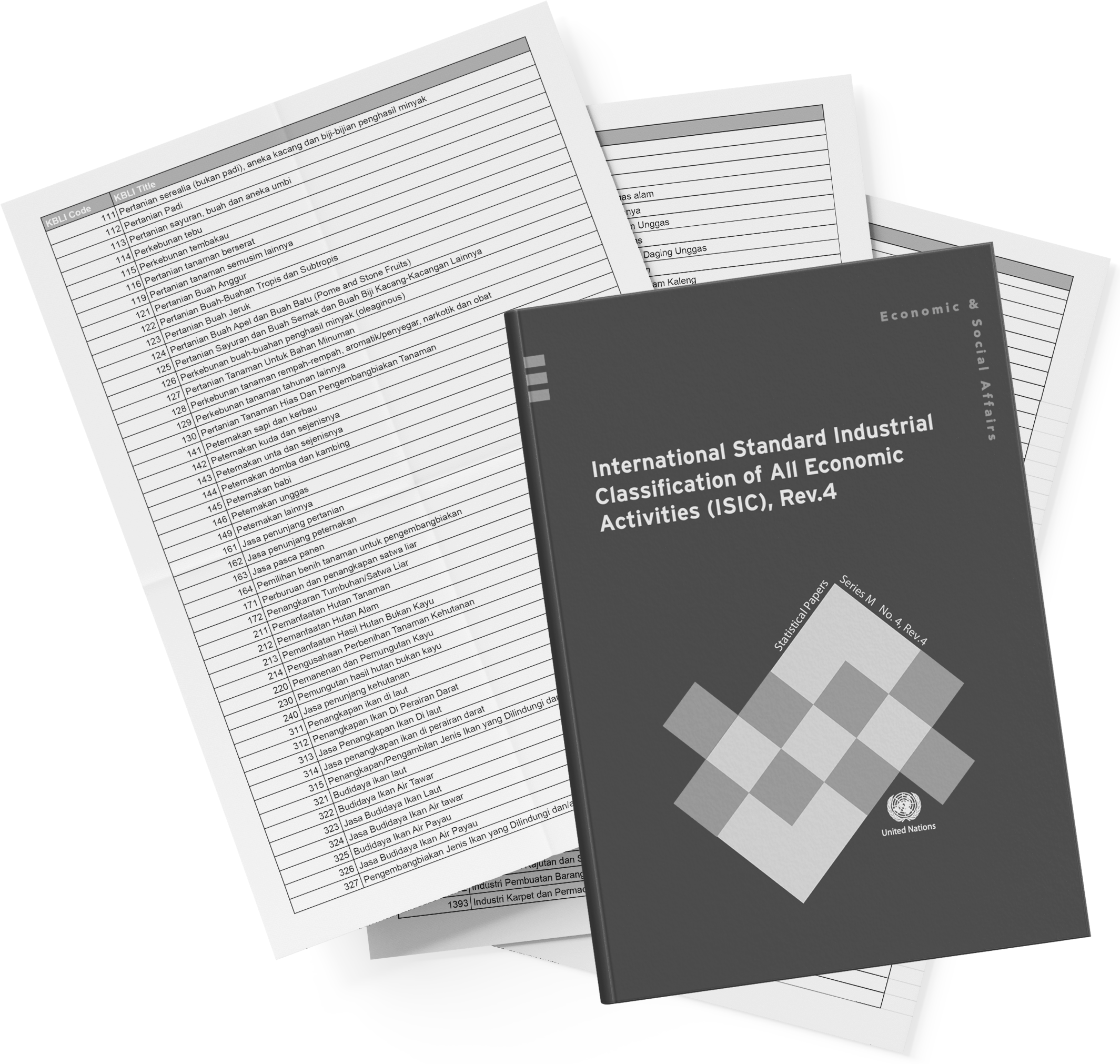
KBLI 2520 covers the industrial production of defense weaponry from raw metals and chemicals into finished small arms, heavy ordnance, and ammunition, excluding civilian sporting guns or commercial explosives. Boundaries include licensed assembly of foreign designs but exclude R&D or maintenance services.
Activities span forging barrels, crimping casings, fusing warheads, and ballistic testing, all under military-grade traceability to prevent proliferation.
Indonesia in Focus
Indonesia's weapons manufacturing operates under unique state control through Defend ID holding, with PT Pindad and PT Dahana as primary producers serving TNI and Polri exclusively.
The sector balances technological advancement with local content mandates, often requiring foreign partnerships for complex systems while building domestic assembly capabilities.
Industry Classification
By Activity Type: Firearms assembly, ammunition production, ordnance integration, and explosives manufacturing
By End User: Military (TNI-AD, TNI-AL, TNI-AU), Police (Polri), and limited government-to-government exports
KBLI: 2520: Weapon and Ammunition Manufacturing Industry in Indonesia
ISIC: Reference: International Standard Industrial Classification
NAICS: Comparable: North American Industry Classification System
Industry Terms
Key terminology for understanding the Weapon and Ammunition Manufacturing Industry in Indonesia industry.
Small Arms
Firearms designed for individual or crew use, such as rifles, pistols, and light machine guns under 20kg.
They form 70% of infantry needs; Indonesia prioritizes licensed copies like SS2 rifles for cost-effective scalability.
Ordnance
Explosive-filled projectiles like grenades, bombs, and mines delivered by launchers.
Requires dual expertise in chemistry and mechanics; defects risk mission failure in humid storage.
Propellant Loading
Filling cartridge cases with gunpowder or rocket fuel under pressure controls.
Determines muzzle velocity; Indonesia's tropical climate demands stabilizers to prevent degradation.
Industry Overview – Business Types
Different business models operate within the Weapon and Ammunition Manufacturing Industry in Indonesia industry.
Firearms Assembly
Receives milled receivers and barrels, fits triggers and stocks, then function-fires before serialization.
Precision tolerances under 0.1mm for jamming-free operation in sand and rain.
Standard industry practices apply.
Ammunition Production
Compounds chemicals into powder, presses brass cases, seats bullets, and seals primers in clean rooms.
Batch consistency for mixed-caliber training, avoiding costly field rejects.
Standard industry practices apply.
Ordnance Integration
Assembles fuzes to shells, adds guidance fins, and conducts drop tests per MIL-STD.
Safety interlocks prevent premature detonation during archipelago shipping.
Standard industry practices apply.
Industry Performance & Outlook
Performance outlook for Weapon and Ammunition Manufacturing Industry in Indonesia
Historical output tracks defense budgets, with surges during MEF upgrades; consolidation under Defend ID improves efficiencies but exposes to policy shifts.
Outlook ties to 2025-2029 RPJMN defense spending, emphasizing local content amid import substitution pressures.
Key performance indicators
Market growth
Industry expansion rate
Driven by domestic demand
Operational efficiency
Cost management
Key competitive factor
Outlook: what to watch
Monitor regulatory changes
Track infrastructure developments
Watch for technology adoption
Industry Growth Drivers
Key factors driving growth in Weapon and Ammunition Manufacturing Industry in Indonesia.
Growth Driver 1
Domestic consumption growth driven by expanding middle class and rising disposable incomes
Monitor industry reports and market data for trends.
Growth Driver 2
Infrastructure development reducing logistics costs and improving market access
Monitor industry reports and market data for trends.
Growth Driver 3
Government policy support including investment incentives and industrial development programs
Monitor industry reports and market data for trends.
Growth Driver 4
Technology adoption improving productivity and enabling new business models
Monitor industry reports and market data for trends.
Growth Driver 5
Regional economic integration expanding market access and supply chain opportunities
Monitor industry reports and market data for trends.
Growth Driver 6
Urbanization creating concentrated demand centers and distribution efficiencies
Monitor industry reports and market data for trends.
Industry Trends & Development
Industry Development
Evolution of Weapon and Ammunition Manufacturing Industry in Indonesia
From licensed replication in the 1980s to modular designs today, evolution mirrors Indonesia's push for strategic autonomy post-New Order.
Defend ID formation marks shift from siloed BUMNs to integrated holding, pooling ammo expertise with platforms.
Key Trends
Major trends shaping the Weapon and Ammunition Manufacturing Industry in Indonesia industry.
Digitalization and technology adoption
Industry trend shaping market dynamics.
Operators
Investors
Policymakers
Regulatory developments
Industry trend shaping market dynamics.
Operators
Investors
Policymakers
Impact and Sustainability
Sustainability and impact considerations for the manufacture of weapons and ammunition industry.
Economic Impact
Contribution to national economic development.
Balancing growth with sustainability.
Environmental Considerations
Industry practices and environmental impact.
Operational costs vs sustainability.
Industry Segmentation
Industry Segmentation – Product/Service A
Primary market segments based on service type.
Segmentation by offering
Primary Segment
Core offerings
Main market
Addresses primary demand
Secondary Segment
Supporting services
Niche markets
Specialized needs
Segments may overlap based on customer needs.
Industry Segmentation – Product/Service B
Alternative segmentation perspectives.
Segmentation by characteristics
Mass Market
Broad appeal
General consumers
Volume-driven
Premium
High-value offerings
Discerning buyers
Quality-focused
Segment boundaries are fluid.
Customer Segmentation
Different customer segments and their characteristics.
Customer segments and what they value
B2B customers
Various
Multiple needs
Different channels
B2C consumers
Various
Multiple needs
Different channels
Key Players
Ecosystem Mapping
Weapon and Ammunition Manufacturing Industry in Indonesia ecosystem includes various stakeholders.
Suppliers
Provide inputs and raw materials.
Primary producers
Input suppliers
Operators
Core industry participants.
Main industry operators
Service providers
Distribution
Channel to end customers.
Distributors
Retailers
How value flows across the ecosystem
Value is created through coordinated activities across the ecosystem.
Leading Players
Competitive landscape and key player archetypes.
Competitive archetypes
Market Leader
Dominant position
Scale, brand recognition
Market saturation
Specialist
Niche focus
Expertise, agility
Limited scale
How competition typically plays out
Competition is shaped by scale advantages, operational efficiency, and customer relationships.
Differentiation strategies vary by segment, with some players competing on price and others on service quality.
Operating Conditions
Operating Model & Cost Structure
Operating models in Weapon and Ammunition Manufacturing Industry in Indonesia vary by business type.
Direct costs
Primary operational expenses
Input costs
Labor
Utilities
Major cost component
Overhead
Indirect operational costs
Administration
Facilities
Marketing
Scale-dependent
Cost structure summary
Direct costs
Volume and input prices
Operations
Efficiency improvements
Overhead
Scale and complexity
Administration
Process optimization
Cost structure varies by business model and scale.
Regulation & Compliance Considerations
Regulatory framework and compliance requirements.
Common compliance topics
Business licensing
Operating permits
Legal operation
Maintain valid licenses
Quality standards
Product/service requirements
Market access
Quality control systems
Stay current with regulatory changes.
FAQs & Sources
FAQs
What is Weapon and Ammunition Manufacturing Industry in Indonesia?
Weapon and Ammunition Manufacturing Industry in Indonesia encompasses various business activities in the Indonesian market.
Sources & Notes
This report is a synthesized overview based on industry analysis and desk research.
BPS (Statistics Indonesia)
Official statistics and industry data.
Ministry of Industry regulations
Regulatory framework and compliance requirements.
This report is for informational purposes and should not be treated as legal, regulatory, or investment advice.