Tree and Bush Fruit and Nut Growing Industry in Indonesia
A practical guide to Tree and Bush Fruit and Nut Growing Industry in Indonesia—market dynamics, operational realities, and strategic considerations in Indonesia
This industry involves the cultivation of various tree and bush fruits and nuts, including durian, mangosteen, rambutan, salak, avocado, mango, and cashew nuts, through activities like land preparation, planting, irrigation, pest management, and harvesting. It covers post-harvest sorting and initial packing but excludes processing into juices or dried products.
Clear industry definition and scope of activities
Operational realities across Indonesia's regions
Market segmentation and customer analysis
Ecosystem mapping and competitive dynamics
Cost structure and unit economics
Regulatory and compliance considerations
Executive Summary
This industry involves the cultivation of various tree and bush fruits and nuts, including durian, mangosteen, rambutan, salak, avocado, mango, and cashew nuts, through activities like land preparation, planting, irrigation, pest management, and harvesting.
It covers post-harvest sorting and initial packing but excludes processing into juices or dried products.
Fragmented structure with over 90% smallholders under 2 hectares, relying on family labor and intercropping for risk mitigation.
Perishable produce demands rapid logistics, with cold chain adoption lagging outside export channels.
Export boom for durian to China has lifted prices but strained supply chains in producing regions.
Climate variability and pests like fruit flies pose ongoing threats, addressed via integrated pest management.
Government subsidies for seeds and fertilizers favor high-value varieties, spurring farm intensification.
Why this industry matters in Indonesia
Supports Indonesia's economic growth and development objectives.
Creates employment opportunities across diverse skill levels.
Critical for service delivery and value chain integration.
Enables Indonesia's competitiveness in regional and global markets.
So what: Practical implications
Operators: Focus on quality consistency and process standardization
Buyers: Evaluate supplier capabilities beyond pricing
Investors: Look for operational efficiency and scalability
Policymakers: Support infrastructure development
Indonesia at a Glance
Republic of Indonesia: Large and fragmented market
Diverse tropical fruits fuel domestic consumption and exports, with durian leading value growth due to premium overseas demand.
Sector supports millions of rural jobs, integral to Indonesia's horticultural exports alongside palm oil alternatives.
Market dynamics continue to evolve with changing economic conditions.
Hyperlocalization is key to navigate Indonesia's market
Varieties like 'Musang King' durian in Kalimantan or 'Gadung' mangosteen in Sumatra adapt to microclimates, enabling premium pricing.
Farmer groups in Java's salak belts share grafting techniques, boosting yields through localized knowledge.
Opportunities extend beyond cities
Core production hubs in rural West Java (salak), North Sumatra (mangosteen), and South Sulawesi (cashew), far from urban centers.
Remote Kalimantan orchards supply inter-island trade, highlighting rural economic anchors.
Growing middle class driving premiumization trends across product categories and services
Digital adoption accelerating with mobile-first consumer behavior creating new channel opportunities
Infrastructure investment improving connectivity and reducing logistics costs across the archipelago
Government initiatives supporting domestic industry development and foreign investment attraction
Regional economic integration through ASEAN creating expanded market access and trade opportunities
Sustainability and ESG considerations creating differentiation opportunities for responsible businesses
Distribution realities: logistics, infrastructure, and channel reach
Traditional truck transport from farms to local wet markets dominates, with reefer trucks emerging for exports via ports like Belawan.
Inter-island ferries handle bulk rambutan from Sumatra to Java, but spoilage risks high without expanded cold storage.
Establish robust distribution partnerships covering both modern trade and traditional channels
Invest in localized supply chain capabilities to navigate logistics complexities and reduce costs
Develop region-specific market entry strategies accounting for local competitive dynamics
Build flexibility into operations to adapt to regulatory changes and infrastructure variations
Industry Definition
What is Tree and Bush Fruit and Nut Growing Industry in Indonesia?
Industry Definition
KBLI 0125 covers cultivation of tree and bush fruits and nuts not elsewhere classified, such as durian, rambutan, mangosteen, avocado, mango, salak, and cashew nuts, from planting to initial handling.
Excludes citrus fruits (0124), bananas (0123), oleaginous fruits like oil palm (0126), and subsequent processing or nursery operations.
Indonesia in Focus
Indonesia's diverse agro-ecological zones across the equator create unique growing conditions, with operators needing to adapt to distinct climate patterns, soil types, and rainfall distribution between western and eastern archipelagic regions.
High humidity and tropical rainfall present both opportunities and challenges for crop cultivation, requiring careful water management during wet seasons and drought-resistant varieties during increasingly unpredictable dry periods exacerbated by climate change.
Industry Classification
Growing operations are classified by scale and land tenure: smallholder farmers cultivating less than 2 hectares, medium-scale commercial operations managing 2-25 hectares, and large plantation estates exceeding 25 hectares often with integrated processing facilities.
Secondary classification distinguishes by cultivation method: conventional farming using chemical inputs and mechanization, organic operations following certified standards, and agroforestry systems integrating crops with forestry practices for sustainability.
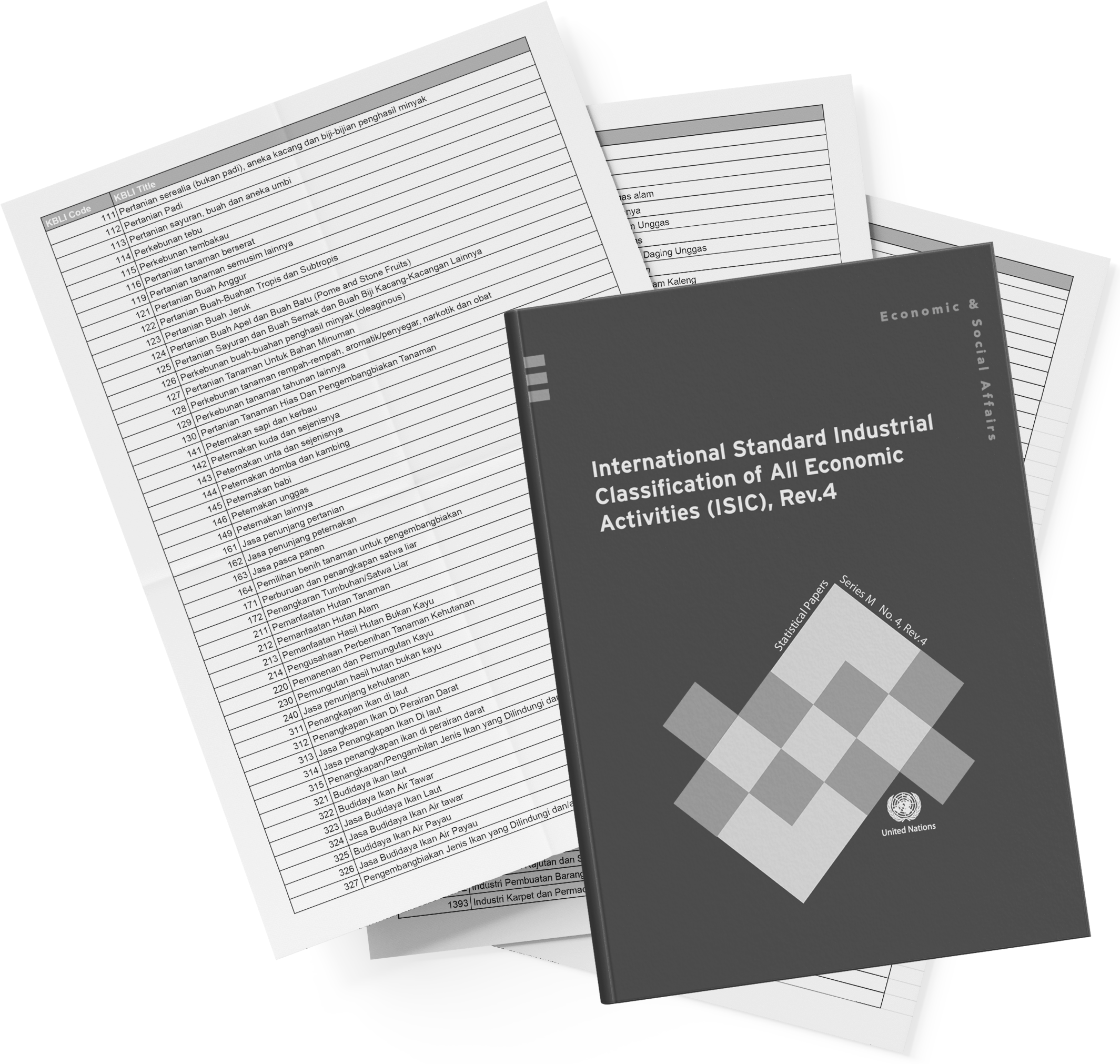
KBLI: 0125: Tree and Bush Fruit and Nut Growing Industry in Indonesia
ISIC: Reference: International Standard Industrial Classification
NAICS: Comparable: North American Industry Classification System
Industry Terms
Key terminology for understanding the Tree and Bush Fruit and Nut Growing Industry in Indonesia industry.
Durian
Large, spiky tropical fruit with creamy, custard-like flesh, known as the 'king of fruits'.
Dominates export revenues from Indonesia, with strict quality standards driving farm upgrades and price premiums.
Mangosteen
Small, purple-skinned fruit with sweet-tart white segments, called the 'queen of fruits'.
High perishability demands efficient logistics, positioning it as a niche export with strong margins for compliant growers.
Smallholder
Independent farmer managing plots typically under 2 hectares with limited mechanization.
Forms 90%+ of production base, influencing scalability through cooperatives and contract schemes.
Industry Overview – Business Types
Different business models operate within the Tree and Bush Fruit and Nut Growing Industry in Indonesia industry.
Smallholder Orchard
Family-operated plots intercropped with staples, selling harvests to local middlemen via cash trades.
Low input costs offset by diversified income, resilient to single-crop failures.
Standard industry practices apply.
Medium Estate
10-50 hectare operations with hired labor, drip irrigation, and direct wholesaler contracts.
Consistent volumes enable export packing facilities, commanding stable pricing.
Standard industry practices apply.
Contract Farming
Growers supplied inputs and buyback guarantees by exporters, adhering to GAP standards.
Risk transfer to sponsors reduces farmer exposure, accelerating variety adoption.
Standard industry practices apply.
Industry Performance & Outlook
Performance outlook for Tree and Bush Fruit and Nut Growing Industry in Indonesia
Sector shows resilient growth from export demand, tempered by weather disruptions and input inflation.
Outlook positive with durian-led expansion, targeting sustained double-digit value increases through 2030.
Key performance indicators
Market growth
Industry expansion rate
Driven by domestic demand
Operational efficiency
Cost management
Key competitive factor
Outlook: what to watch
Monitor regulatory changes
Track infrastructure developments
Watch for technology adoption
Industry Growth Drivers
Key factors driving growth in Tree and Bush Fruit and Nut Growing Industry in Indonesia.
Growth Driver 1
Domestic consumption growth driven by expanding middle class and rising disposable incomes
Monitor industry reports and market data for trends.
Growth Driver 2
Infrastructure development reducing logistics costs and improving market access
Monitor industry reports and market data for trends.
Growth Driver 3
Government policy support including investment incentives and industrial development programs
Monitor industry reports and market data for trends.
Growth Driver 4
Technology adoption improving productivity and enabling new business models
Monitor industry reports and market data for trends.
Growth Driver 5
Regional economic integration expanding market access and supply chain opportunities
Monitor industry reports and market data for trends.
Growth Driver 6
Urbanization creating concentrated demand centers and distribution efficiencies
Monitor industry reports and market data for trends.
Industry Trends & Development
Industry Development
Evolution of Tree and Bush Fruit and Nut Growing Industry in Indonesia
Evolution from subsistence plots to commercial orchards, fueled by export quotas and variety hybridization.
Integration of agroforestry with shade trees to enhance soil health and biodiversity.
Key Trends
Major trends shaping the Tree and Bush Fruit and Nut Growing Industry in Indonesia industry.
Digitalization and technology adoption
Industry trend shaping market dynamics.
Operators
Investors
Policymakers
Regulatory developments
Industry trend shaping market dynamics.
Operators
Investors
Policymakers
Impact and Sustainability
Sustainability and impact considerations for the growing of other tree and bush fruits and nuts industry.
Economic Impact
Contribution to national economic development.
Balancing growth with sustainability.
Environmental Considerations
Industry practices and environmental impact.
Operational costs vs sustainability.
Industry Segmentation
Industry Segmentation – Product/Service A
Primary market segments based on service type.
Segmentation by offering
Primary Segment
Core offerings
Main market
Addresses primary demand
Secondary Segment
Supporting services
Niche markets
Specialized needs
Segments may overlap based on customer needs.
Industry Segmentation – Product/Service B
Alternative segmentation perspectives.
Segmentation by characteristics
Mass Market
Broad appeal
General consumers
Volume-driven
Premium
High-value offerings
Discerning buyers
Quality-focused
Segment boundaries are fluid.
Customer Segmentation
Different customer segments and their characteristics.
Customer segments and what they value
B2B customers
Various
Multiple needs
Different channels
B2C consumers
Various
Multiple needs
Different channels
Key Players
Ecosystem Mapping
Tree and Bush Fruit and Nut Growing Industry in Indonesia ecosystem includes various stakeholders.
Suppliers
Provide inputs and raw materials.
Primary producers
Input suppliers
Operators
Core industry participants.
Main industry operators
Service providers
Distribution
Channel to end customers.
Distributors
Retailers
How value flows across the ecosystem
Value is created through coordinated activities across the ecosystem.
Leading Players
Competitive landscape and key player archetypes.
Competitive archetypes
Market Leader
Dominant position
Scale, brand recognition
Market saturation
Specialist
Niche focus
Expertise, agility
Limited scale
How competition typically plays out
Competition is shaped by scale advantages, operational efficiency, and customer relationships.
Differentiation strategies vary by segment, with some players competing on price and others on service quality.
Operating Conditions
Operating Model & Cost Structure
Operating models in Tree and Bush Fruit and Nut Growing Industry in Indonesia vary by business type.
Direct costs
Primary operational expenses
Input costs
Labor
Utilities
Major cost component
Overhead
Indirect operational costs
Administration
Facilities
Marketing
Scale-dependent
Cost structure summary
Direct costs
Volume and input prices
Operations
Efficiency improvements
Overhead
Scale and complexity
Administration
Process optimization
Cost structure varies by business model and scale.
Regulation & Compliance Considerations
Regulatory framework and compliance requirements.
Common compliance topics
Business licensing
Operating permits
Legal operation
Maintain valid licenses
Quality standards
Product/service requirements
Market access
Quality control systems
Stay current with regulatory changes.
FAQs & Sources
FAQs
What is Tree and Bush Fruit and Nut Growing Industry in Indonesia?
Tree and Bush Fruit and Nut Growing Industry in Indonesia encompasses various business activities in the Indonesian market.
Sources & Notes
This report is a synthesized overview based on industry analysis and desk research.
BPS (Statistics Indonesia)
Official statistics and industry data.
Ministry of Industry regulations
Regulatory framework and compliance requirements.
This report is for informational purposes and should not be treated as legal, regulatory, or investment advice.