Trade Union Activities Industry in Indonesia
A practical guide to Trade Union Activities Industry in Indonesia—market dynamics, operational realities, and strategic considerations in Indonesia
This industry encompasses the activities of labor organizations and trade unions that advocate for workers' interests, including negotiating collective bargaining agreements, representing members in labor disputes, and organizing strikes or protests when necessary. Unions provide services such as legal aid, training programs for members, and lobbying for labor policy changes to improve wages, working conditions, and job security.
Clear industry definition and scope of activities
Operational realities across Indonesia's regions
Market segmentation and customer analysis
Ecosystem mapping and competitive dynamics
Cost structure and unit economics
Regulatory and compliance considerations
Executive Summary
This industry encompasses the activities of labor organizations and trade unions that advocate for workers' interests, including negotiating collective bargaining agreements, representing members in labor disputes, and organizing strikes or protests when necessary.
Unions provide services such as legal aid, training programs for members, and lobbying for labor policy changes to improve wages, working conditions, and job security.
Union formation requires Ministry of Manpower registration, with enterprise unions needing at least 10 members and no employer interference.
Low union density—around 3% of the 140+ million workforce—stems from employer resistance, informal employment, and intra-union rivalries.
Collective bargaining coverage is limited outside large firms, often relying on tripartite wage councils for minimum wage hikes.
Digital tools are emerging for member mobilization, but face crackdowns during politically sensitive strikes.
Post-2020 Omnibus Law, unions shifted focus to gig economy organizing and judicial challenges against flexibility provisions.
Why this industry matters in Indonesia
Connects producers with Indonesia's vast consumer market.
Critical for price discovery and market efficiency.
Supports MSME distribution and market access.
Enables consumption-driven economic growth.
So what: Practical implications
Operators: Focus on quality consistency and process standardization
Buyers: Evaluate supplier capabilities beyond pricing
Investors: Look for operational efficiency and scalability
Policymakers: Support infrastructure development
Indonesia at a Glance
Republic of Indonesia: Large and fragmented market
Over 4 million workers are unionized across thousands of registered entities, concentrated in manufacturing and public sectors.
National confederations like KSPSI dominate membership, coordinating local branches amid annual labor dispute surges.
Market dynamics continue to evolve with changing economic conditions.
Hyperlocalization is key to navigate Indonesia's market
Unions customize strategies to local dynamics: militant tactics in West Java factories versus conciliatory approaches in Bali tourism amid seasonal layoffs.
Java accounts for 60%+ of active unions due to FDI-driven factories, requiring hyper-local knowledge of regency-level manpower offices.
Opportunities extend beyond cities
Rural and outer-island unions face logistical hurdles, relying on motorcycle couriers for membership drives in palm oil plantations of Kalimantan.
Informal sector penetration is minimal, with ad-hoc farmer-worker alliances filling gaps where formal unions falter.
Growing middle class driving premiumization trends across product categories and services
Digital adoption accelerating with mobile-first consumer behavior creating new channel opportunities
Infrastructure investment improving connectivity and reducing logistics costs across the archipelago
Government initiatives supporting domestic industry development and foreign investment attraction
Regional economic integration through ASEAN creating expanded market access and trade opportunities
Sustainability and ESG considerations creating differentiation opportunities for responsible businesses
Distribution realities: logistics, infrastructure, and channel reach
Coordination flows top-down from confederations in Jakarta to enterprise branches, using WhatsApp groups and provincial secretariats for strike logistics.
Physical distribution involves pamphlets and banners trucked to picket lines, with digital newsletters bridging remote sites.
Establish robust distribution partnerships covering both modern trade and traditional channels
Invest in localized supply chain capabilities to navigate logistics complexities and reduce costs
Develop region-specific market entry strategies accounting for local competitive dynamics
Build flexibility into operations to adapt to regulatory changes and infrastructure variations
Industry Definition
What is Trade Union Activities Industry in Indonesia?
Industry Definition
KBLI 9420 covers activities of worker organizations advocating for members' interests, including enterprise unions (serikat pekerja tunggal), branch unions, federations, and confederations—but excludes political parties or employer associations.
Core functions span representation in disputes, collective negotiations, and capacity-building, bounded by non-profit status and prohibition on business operations.
Indonesia in Focus
Indonesia's archipelago geography creates unique distribution challenges requiring adapted logistics and storage solutions.
High humidity and tropical climate demand specific technical approaches to quality preservation and product integrity.
Industry Classification
Conceptually, industry activities sit under specific regulatory frameworks with classification by operational scale and service model.
Operators may be classified by activity type, by service delivery model, and by end-use applications.
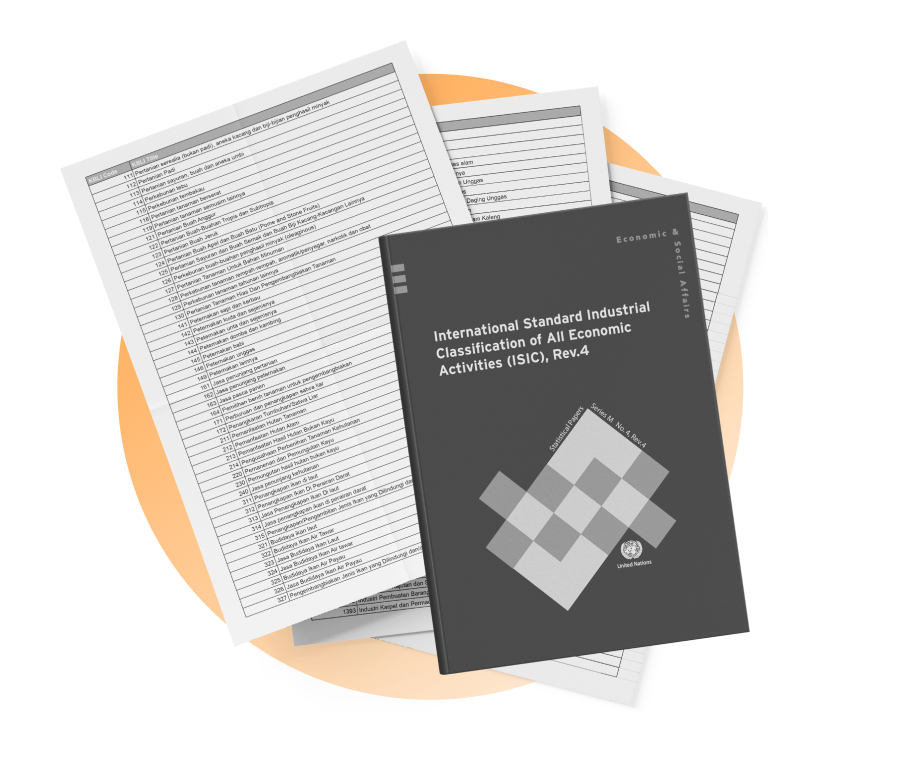
KBLI: 9420: Trade Union Activities Industry in Indonesia
ISIC: Reference: International Standard Industrial Classification
NAICS: Comparable: North American Industry Classification System
Industry Terms
Key terminology for understanding the Trade Union Activities Industry in Indonesia industry.
Serikat Pekerja Tunggal
Enterprise-level union formed by workers in a single company.
Forms the base of the pyramid, directly handling shop-floor grievances before escalating to higher federations.
Perjanjian Kerja Bersama (PKB)
Collective Labor Agreement negotiated between union and employer.
Legally binding for 1-3 years, it sets wages and conditions beyond minimums, but coverage is low outside SOEs.
Tripartit
Consultative mechanism involving unions, employers (APINDO), and government.
Channels wage policies and dispute mediation, tempering wildcat strikes with structured dialogue.
Industry Overview – Business Types
Different business models operate within the Trade Union Activities Industry in Indonesia industry.
Enterprise Union
Workers elect leaders to negotiate directly with plant management on daily issues like overtime.
Hyper-local focus yields quick wins but lacks leverage against corporate HQ.
Standard industry practices apply.
Sectoral Federation
Aggregates enterprise unions in one industry (e.g., textiles) for joint bargaining and strikes.
Sector-specific expertise amplifies pressure via coordinated actions.
Standard industry practices apply.
National Confederation
Oversees federations, lobbies in Jakarta for laws, and mobilizes mass protests.
Political clout trades autonomy for government alignment in some cases.
Standard industry practices apply.
Industry Performance & Outlook
Performance outlook for Trade Union Activities Industry in Indonesia
Activity surges with economic cycles: dispute filings rise during layoffs, stabilizing in booms via wage gains.
Outlook tied to formal job growth; gig platforms challenge traditional models, spurring hybrid organizing.
Key performance indicators
Market growth
Industry expansion rate
Driven by domestic demand
Operational efficiency
Cost management
Key competitive factor
Outlook: what to watch
Monitor regulatory changes
Track infrastructure developments
Watch for technology adoption
Industry Growth Drivers
Key factors driving growth in Trade Union Activities Industry in Indonesia.
Growth Driver 1
Domestic consumption growth driven by expanding middle class and rising disposable incomes
Monitor industry reports and market data for trends.
Growth Driver 2
Infrastructure development reducing logistics costs and improving market access
Monitor industry reports and market data for trends.
Growth Driver 3
Government policy support including investment incentives and industrial development programs
Monitor industry reports and market data for trends.
Growth Driver 4
Technology adoption improving productivity and enabling new business models
Monitor industry reports and market data for trends.
Growth Driver 5
Regional economic integration expanding market access and supply chain opportunities
Monitor industry reports and market data for trends.
Growth Driver 6
Urbanization creating concentrated demand centers and distribution efficiencies
Monitor industry reports and market data for trends.
Industry Trends & Development
Industry Development
Evolution of Trade Union Activities Industry in Indonesia
Evolution from Suharto-era state-controlled unions to multi-confederation pluralism post-1998.
Omnibus Law 2020 prompted consolidation and legal challenges, hardening anti-flexibility stances.
Key Trends
Major trends shaping the Trade Union Activities Industry in Indonesia industry.
Digitalization and technology adoption
Industry trend shaping market dynamics.
Operators
Investors
Policymakers
Regulatory developments
Industry trend shaping market dynamics.
Operators
Investors
Policymakers
Impact and Sustainability
Sustainability and impact considerations for the activities of trade unions industry.
Economic Impact
Contribution to national economic development.
Balancing growth with sustainability.
Environmental Considerations
Industry practices and environmental impact.
Operational costs vs sustainability.
Industry Segmentation
Industry Segmentation – Product/Service A
Primary market segments based on service type.
Segmentation by offering
Primary Segment
Core offerings
Main market
Addresses primary demand
Secondary Segment
Supporting services
Niche markets
Specialized needs
Segments may overlap based on customer needs.
Industry Segmentation – Product/Service B
Alternative segmentation perspectives.
Segmentation by characteristics
Mass Market
Broad appeal
General consumers
Volume-driven
Premium
High-value offerings
Discerning buyers
Quality-focused
Segment boundaries are fluid.
Customer Segmentation
Different customer segments and their characteristics.
Customer segments and what they value
B2B customers
Various
Multiple needs
Different channels
B2C consumers
Various
Multiple needs
Different channels
Key Players
Ecosystem Mapping
Trade Union Activities Industry in Indonesia ecosystem includes various stakeholders.
Suppliers
Provide inputs and raw materials.
Primary producers
Input suppliers
Operators
Core industry participants.
Main industry operators
Service providers
Distribution
Channel to end customers.
Distributors
Retailers
How value flows across the ecosystem
Value is created through coordinated activities across the ecosystem.
Leading Players
Competitive landscape and key player archetypes.
Competitive archetypes
Market Leader
Dominant position
Scale, brand recognition
Market saturation
Specialist
Niche focus
Expertise, agility
Limited scale
How competition typically plays out
Competition is shaped by scale advantages, operational efficiency, and customer relationships.
Differentiation strategies vary by segment, with some players competing on price and others on service quality.
Operating Conditions
Operating Model & Cost Structure
Operating models in Trade Union Activities Industry in Indonesia vary by business type.
Direct costs
Primary operational expenses
Input costs
Labor
Utilities
Major cost component
Overhead
Indirect operational costs
Administration
Facilities
Marketing
Scale-dependent
Cost structure summary
Direct costs
Volume and input prices
Operations
Efficiency improvements
Overhead
Scale and complexity
Administration
Process optimization
Cost structure varies by business model and scale.
Regulation & Compliance Considerations
Regulatory framework and compliance requirements.
Common compliance topics
Business licensing
Operating permits
Legal operation
Maintain valid licenses
Quality standards
Product/service requirements
Market access
Quality control systems
Stay current with regulatory changes.
FAQs & Sources
FAQs
What is Trade Union Activities Industry in Indonesia?
Trade Union Activities Industry in Indonesia encompasses various business activities in the Indonesian market.
Sources & Notes
This report is a synthesized overview based on industry analysis and desk research.
BPS (Statistics Indonesia)
Official statistics and industry data.
Ministry of Industry regulations
Regulatory framework and compliance requirements.
This report is for informational purposes and should not be treated as legal, regulatory, or investment advice.