Telephone and Facsimile Equipment Manufacturing Industry in Indonesia
A practical guide to Telephone and Facsimile Equipment Manufacturing Industry in Indonesia—market dynamics, operational realities, and strategic considerations in Indonesia
The Telephone and Facsimile Equipment Manufacturing Industry in Indonesia manufactures wired communication devices essential for voice calls and document transmission in non-digital environments. It assembles components into telephone handsets, fax machines that scan and send documents over phone lines, and answering machines that record messages automatically. Operations focus on ensuring reliable signal transmission, mechanical durability for office use, and integration with analog PBX systems, turning imported parts into certified products ready for fixed-line networks.
Clear industry definition and scope of activities
Operational realities across Indonesia's regions
Market segmentation and customer analysis
Ecosystem mapping and competitive dynamics
Cost structure and unit economics
Regulatory and compliance considerations
Executive Summary
The Telephone and Facsimile Equipment Manufacturing Industry in Indonesia manufactures wired communication devices essential for voice calls and document transmission in non-digital environments. It assembles components into telephone handsets, fax machines that scan and send documents over phone lines, and answering machines that record messages automatically.
Operations focus on ensuring reliable signal transmission, mechanical durability for office use, and integration with analog PBX systems, turning imported parts into certified products ready for fixed-line networks.
Demand persists in regulated sectors like banking and public administration needing compliant fax for legal documents.
Production relies 80-90% on imported PCBs and chips from China, exposing margins to forex fluctuations.
Batam FTZ hosts most capacity due to logistics proximity to Singapore suppliers.
Digital shift to VoIP erodes volumes, but customization for legacy systems provides niches.
E-waste compliance adds costs, as old fax units pile up without formal recycling.
Why this industry matters in Indonesia
Supports Indonesia's economic growth and development objectives.
Creates employment opportunities across diverse skill levels.
Critical for service delivery and value chain integration.
Enables Indonesia's competitiveness in regional and global markets.
So what: Practical implications
Operators: Focus on quality consistency and process standardization
Buyers: Evaluate supplier capabilities beyond pricing
Investors: Look for operational efficiency and scalability
Policymakers: Support infrastructure development
Indonesia at a Glance
Republic of Indonesia: Large and fragmented market
Production hubs in Batam and Greater Jakarta serve national B2B channels, with output skewed toward institutional buyers maintaining Telkom fixed-line setups. Fax machines hold outsized share due to persistent use in notary and court filings.
Inter-island distribution favors consolidated shipments to avoid fragmented logistics costs, with Java absorbing 70% of volume.
Market dynamics continue to evolve with changing economic conditions.
Hyperlocalization is key to navigate Indonesia's market
Java facilities produce standard office models, while Eastern Indonesia assemblers adapt casings for high-humidity resilience and integrate solar backups for power-unstable regions.
Sulawesi operations prioritize rugged telephones for mining camps, trading aesthetics for dust-proofing to meet site-specific tenders.
Opportunities extend beyond cities
Remote Papua outposts rely on durable fax-telephone combos shipped via slow sea routes, where email infrastructure falters.
Rural bank branches in Sumatra stock answering machines as VoIP backups, serviced through Telkom's nationwide depots.
Growing middle class driving premiumization trends across product categories and services
Digital adoption accelerating with mobile-first consumer behavior creating new channel opportunities
Infrastructure investment improving connectivity and reducing logistics costs across the archipelago
Government initiatives supporting domestic industry development and foreign investment attraction
Regional economic integration through ASEAN creating expanded market access and trade opportunities
Sustainability and ESG considerations creating differentiation opportunities for responsible businesses
Distribution realities: logistics, infrastructure, and channel reach
Equipment moves from Batam via RoRo ships to Java ports, then trucking or Pelni ferries for outer islands, with 2-4 week lead times factoring weather disruptions.
Air freight handles urgent govt orders but inflates costs 3x, prompting bulk pre-positioning in regional Telkom warehouses.
Establish robust distribution partnerships covering both modern trade and traditional channels
Invest in localized supply chain capabilities to navigate logistics complexities and reduce costs
Develop region-specific market entry strategies accounting for local competitive dynamics
Build flexibility into operations to adapt to regulatory changes and infrastructure variations
Industry Definition
What is Telephone and Facsimile Equipment Manufacturing Industry in Indonesia?
Industry Definition
KBLI 2631 covers manufacturing of telephone sets for analog voice transmission, facsimile machines for line-based document sending, and answering machines for message recording, excluding wireless handsets or modems classified under 2632 and 2612.
Boundaries emphasize end-user devices over components, with activities like circuit assembly, chassis molding, and functionality testing, but stop short of software development or network installation.
Indonesia in Focus
Indonesia's archipelago geography creates unique distribution challenges requiring adapted logistics and storage solutions.
High humidity and tropical climate demand specific technical approaches to quality preservation and product integrity.
Industry Classification
Conceptually, industry activities sit under specific regulatory frameworks with classification by operational scale and service model.
Operators may be classified by activity type, by service delivery model, and by end-use applications.
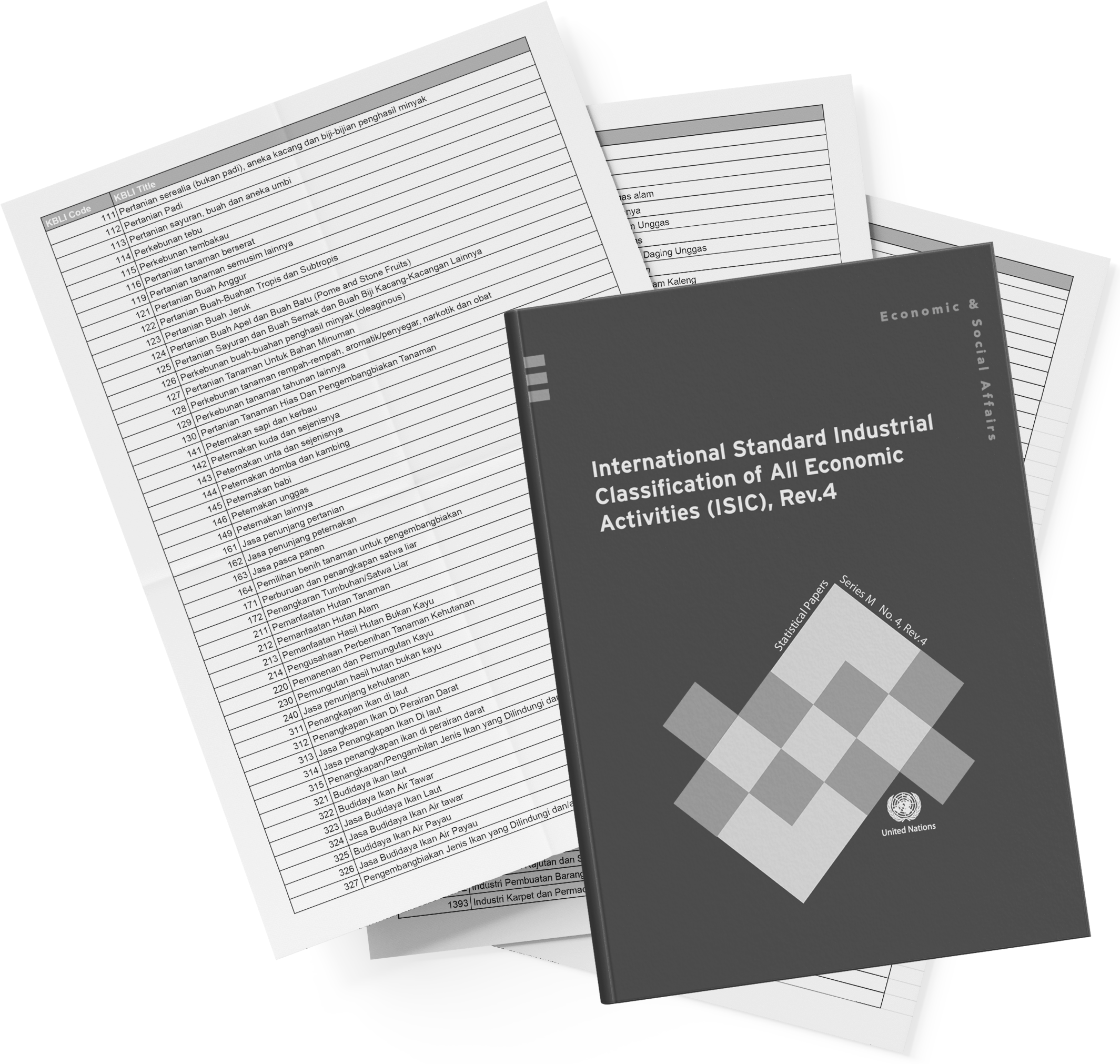
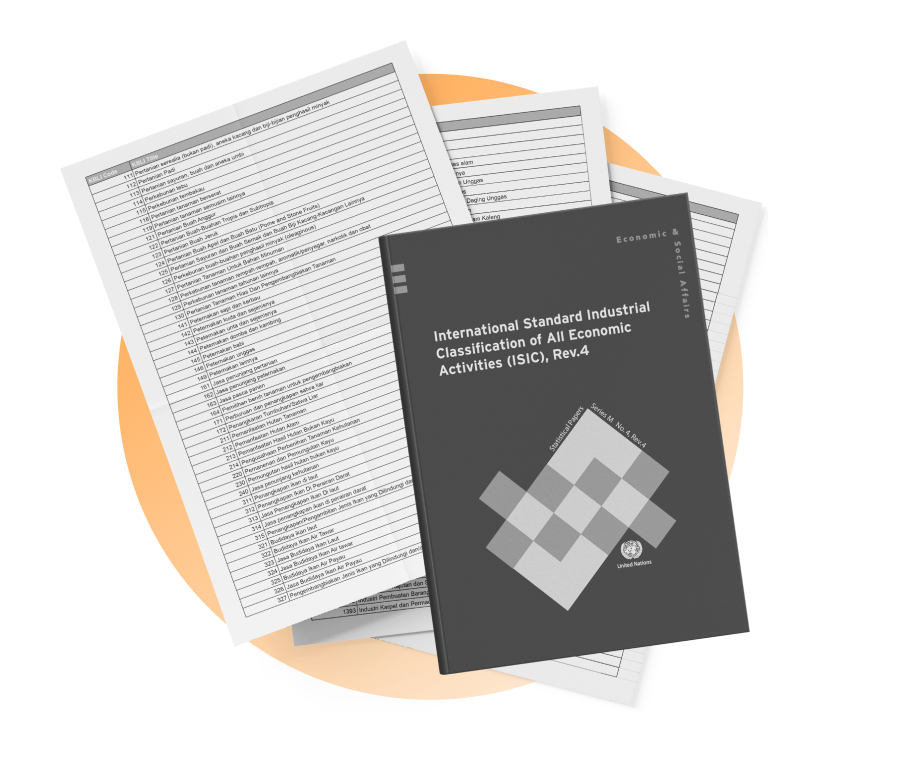
KBLI: 2631: Telephone and Facsimile Equipment Manufacturing Industry in Indonesia
ISIC: Reference: International Standard Industrial Classification
NAICS: Comparable: North American Industry Classification System
Industry Terms
Key terminology for understanding the Telephone and Facsimile Equipment Manufacturing Industry in Indonesia industry.
Facsimile (Fax) Machine
Device that scans paper documents and transmits them as modulated tones over phone lines to a receiving printer.
Serves as legal proof in Indonesian bureaucracy where digital signatures lag, sustaining demand despite email prevalence.
Answering Machine
Standalone or integrated recorder that captures caller messages on tape or digital storage when lines are unattended.
Provides redundancy in unreliable power grids, common in Indonesian SMEs without constant staffing.
PBX Integration
Compatibility with Private Branch Exchange systems routing multiple internal lines to external trunks.
Enables cost-efficient call handling in call centers and hotels, where Telkom trunk lines remain economical.
Industry Overview – Business Types
Different business models operate within the Telephone and Facsimile Equipment Manufacturing Industry in Indonesia industry.
Component Assembly Workshop
Imports semi-knocked-down kits from Asia, assembles via SMT lines and manual wiring, tests for basic functionality.
Low capex entry, focuses on high-volume plain telephones for distributors.
Standard industry practices apply.
Full-System Integrator
Designs custom casings locally, sources core electronics, certifies full units for Kominfo tenders.
TKDN compliance unlocks govt contracts, with margins from branding.
Standard industry practices apply.
Refurbishment Specialist
Overhauls used fax/telephones, replaces worn parts, recertifies for resale to budget-conscious users.
Circular model cuts new imports, appeals to green procurement policies.
Standard industry practices apply.
Industry Performance & Outlook
Performance outlook for Telephone and Facsimile Equipment Manufacturing Industry in Indonesia
Legacy demand stabilizes volumes in institutional channels, but overall contraction tracks fixed-line subscriber erosion.
Outlook hinges on govt digitization pace; niches in hybrid VoIP-legacy setups offer modest growth pockets.
Key performance indicators
Market growth
Industry expansion rate
Driven by domestic demand
Operational efficiency
Cost management
Key competitive factor
Outlook: what to watch
Monitor regulatory changes
Track infrastructure developments
Watch for technology adoption
Industry Growth Drivers
Key factors driving growth in Telephone and Facsimile Equipment Manufacturing Industry in Indonesia.
Growth Driver 1
Domestic consumption growth driven by expanding middle class and rising disposable incomes
Monitor industry reports and market data for trends.
Growth Driver 2
Infrastructure development reducing logistics costs and improving market access
Monitor industry reports and market data for trends.
Growth Driver 3
Government policy support including investment incentives and industrial development programs
Monitor industry reports and market data for trends.
Growth Driver 4
Technology adoption improving productivity and enabling new business models
Monitor industry reports and market data for trends.
Growth Driver 5
Regional economic integration expanding market access and supply chain opportunities
Monitor industry reports and market data for trends.
Growth Driver 6
Urbanization creating concentrated demand centers and distribution efficiencies
Monitor industry reports and market data for trends.
Industry Trends & Development
Industry Development
Evolution of Telephone and Facsimile Equipment Manufacturing Industry in Indonesia
From standalone devices to PBX hybrids: evolution integrates fax-telephones into office switches for shared lines.
Import assembly to local value-add: policy shifts emphasize TKDN, prompting casing and testing localization.
Key Trends
Major trends shaping the Telephone and Facsimile Equipment Manufacturing Industry in Indonesia industry.
Digitalization and technology adoption
Industry trend shaping market dynamics.
Operators
Investors
Policymakers
Regulatory developments
Industry trend shaping market dynamics.
Operators
Investors
Policymakers
Impact and Sustainability
Sustainability and impact considerations for the telephone and facsimile equipment industry industry.
Economic Impact
Contribution to national economic development.
Balancing growth with sustainability.
Environmental Considerations
Industry practices and environmental impact.
Operational costs vs sustainability.
Industry Segmentation
Industry Segmentation – Product/Service A
Primary market segments based on service type.
Segmentation by offering
Primary Segment
Core offerings
Main market
Addresses primary demand
Secondary Segment
Supporting services
Niche markets
Specialized needs
Segments may overlap based on customer needs.
Industry Segmentation – Product/Service B
Alternative segmentation perspectives.
Segmentation by characteristics
Mass Market
Broad appeal
General consumers
Volume-driven
Premium
High-value offerings
Discerning buyers
Quality-focused
Segment boundaries are fluid.
Customer Segmentation
Different customer segments and their characteristics.
Customer segments and what they value
B2B customers
Various
Multiple needs
Different channels
B2C consumers
Various
Multiple needs
Different channels
Key Players
Ecosystem Mapping
Telephone and Facsimile Equipment Manufacturing Industry in Indonesia ecosystem includes various stakeholders.
Suppliers
Provide inputs and raw materials.
Primary producers
Input suppliers
Operators
Core industry participants.
Main industry operators
Service providers
Distribution
Channel to end customers.
Distributors
Retailers
How value flows across the ecosystem
Value is created through coordinated activities across the ecosystem.
Leading Players
Competitive landscape and key player archetypes.
Competitive archetypes
Market Leader
Dominant position
Scale, brand recognition
Market saturation
Specialist
Niche focus
Expertise, agility
Limited scale
How competition typically plays out
Competition is shaped by scale advantages, operational efficiency, and customer relationships.
Differentiation strategies vary by segment, with some players competing on price and others on service quality.
Operating Conditions
Operating Model & Cost Structure
Operating models in Telephone and Facsimile Equipment Manufacturing Industry in Indonesia vary by business type.
Direct costs
Primary operational expenses
Input costs
Labor
Utilities
Major cost component
Overhead
Indirect operational costs
Administration
Facilities
Marketing
Scale-dependent
Cost structure summary
Direct costs
Volume and input prices
Operations
Efficiency improvements
Overhead
Scale and complexity
Administration
Process optimization
Cost structure varies by business model and scale.
Regulation & Compliance Considerations
Regulatory framework and compliance requirements.
Common compliance topics
Business licensing
Operating permits
Legal operation
Maintain valid licenses
Quality standards
Product/service requirements
Market access
Quality control systems
Stay current with regulatory changes.
FAQs & Sources
FAQs
What is Telephone and Facsimile Equipment Manufacturing Industry in Indonesia?
Telephone and Facsimile Equipment Manufacturing Industry in Indonesia encompasses various business activities in the Indonesian market.
Sources & Notes
This report is a synthesized overview based on industry analysis and desk research.
BPS (Statistics Indonesia)
Official statistics and industry data.
Ministry of Industry regulations
Regulatory framework and compliance requirements.
This report is for informational purposes and should not be treated as legal, regulatory, or investment advice.