Structural Metal Product Manufacturing Industry in Indonesia
A practical guide to Structural Metal Product Manufacturing Industry in Indonesia—market dynamics, operational realities, and strategic considerations in Indonesia
Manufacture of Structural Metal Products involves fabricating ready-to-assemble components like steel frameworks, beams, columns, trusses, doors, windows, gates, stairs, and storage tanks from sheet metal, plates, or profiles primarily for building and construction use. The process turns raw steel inputs into precision-cut, welded, and coated structures that provide skeletal support, enclosures, or containment, ensuring they meet load-bearing and durability standards before site delivery.
Clear industry definition and scope of activities
Operational realities across Indonesia's regions
Market segmentation and customer analysis
Ecosystem mapping and competitive dynamics
Cost structure and unit economics
Regulatory and compliance considerations
Executive Summary
Manufacture of Structural Metal Products involves fabricating ready-to-assemble components like steel frameworks, beams, columns, trusses, doors, windows, gates, stairs, and storage tanks from sheet metal, plates, or profiles primarily for building and construction use.
The process turns raw steel inputs into precision-cut, welded, and coated structures that provide skeletal support, enclosures, or containment, ensuring they meet load-bearing and durability standards before site delivery.
Demand ties directly to construction cycles, peaking with government tenders and private real estate booms.
TKDN (local content) rules prioritize domestic fabricators for public projects, but require certified quality to compete.
Raw steel prices fluctuate with global imports, squeezing margins unless hedged via long-term mill contracts.
Skilled welders and engineers are scarce outside Java, driving wage premiums and training investments.
Modular prefabrication shortens site timelines, appealing to cost-conscious developers in congested urban areas.
Why this industry matters in Indonesia
Supports Indonesia's economic growth and development objectives.
Creates employment opportunities across diverse skill levels.
Critical for service delivery and value chain integration.
Enables Indonesia's competitiveness in regional and global markets.
So what: Practical implications
Operators: Focus on quality consistency and process standardization
Buyers: Evaluate supplier capabilities beyond pricing
Investors: Look for operational efficiency and scalability
Policymakers: Support infrastructure development
Indonesia at a Glance
Republic of Indonesia: Large and fragmented market
The industry benefits from Indonesia's infrastructure push, with structural steel fabrication growing alongside a construction sector fueled by USD billions in public spending on highways, ports, airports, and IKN development.
Java dominates production with over 70% capacity near steel mills and ports, but Sumatra and Kalimantan facilities expand to serve local oil & gas and mining projects, reducing transit times from weeks to days.
Market dynamics continue to evolve with changing economic conditions.
Hyperlocalization is key to navigate Indonesia's market
West Java hubs like Bekasi and Karawang cluster fabricators near Krakatau Steel and toll access, enabling just-in-time delivery to Jakarta-Surabaya corridor megaprojects.
Eastern regions adapt designs for seismic zones and corrosion from humidity/salt, using galvanized coatings standard in coastal Sumatra plants versus painted finishes inland.
Opportunities extend beyond cities
Rural infrastructure like rural roads and irrigation dams demands smaller-scale fabricators in Central Java and Sulawesi, often customizing truss designs for local bamboo-steel hybrids to cut costs.
Mining sites in Papua and Kalimantan source heavy-duty platforms from on-island shops, bypassing Java shipments that risk delays from weather-disrupted ferries.
Growing middle class driving premiumization trends across product categories and services
Digital adoption accelerating with mobile-first consumer behavior creating new channel opportunities
Infrastructure investment improving connectivity and reducing logistics costs across the archipelago
Government initiatives supporting domestic industry development and foreign investment attraction
Regional economic integration through ASEAN creating expanded market access and trade opportunities
Sustainability and ESG considerations creating differentiation opportunities for responsible businesses
Distribution realities: logistics, infrastructure, and channel reach
Oversized beams and trusses travel by flatbed trucks on Java or RoRo ships inter-island, with costs doubling for remote deliveries due to port handling and inland haulage limits.
Prefabricated kits in containers streamline exports and domestic moves, but require precise nesting to fit 40ft dimensions without excess welds on-site.
Establish robust distribution partnerships covering both modern trade and traditional channels
Invest in localized supply chain capabilities to navigate logistics complexities and reduce costs
Develop region-specific market entry strategies accounting for local competitive dynamics
Build flexibility into operations to adapt to regulatory changes and infrastructure variations
Industry Definition
What is Structural Metal Product Manufacturing Industry in Indonesia?
Industry Definition
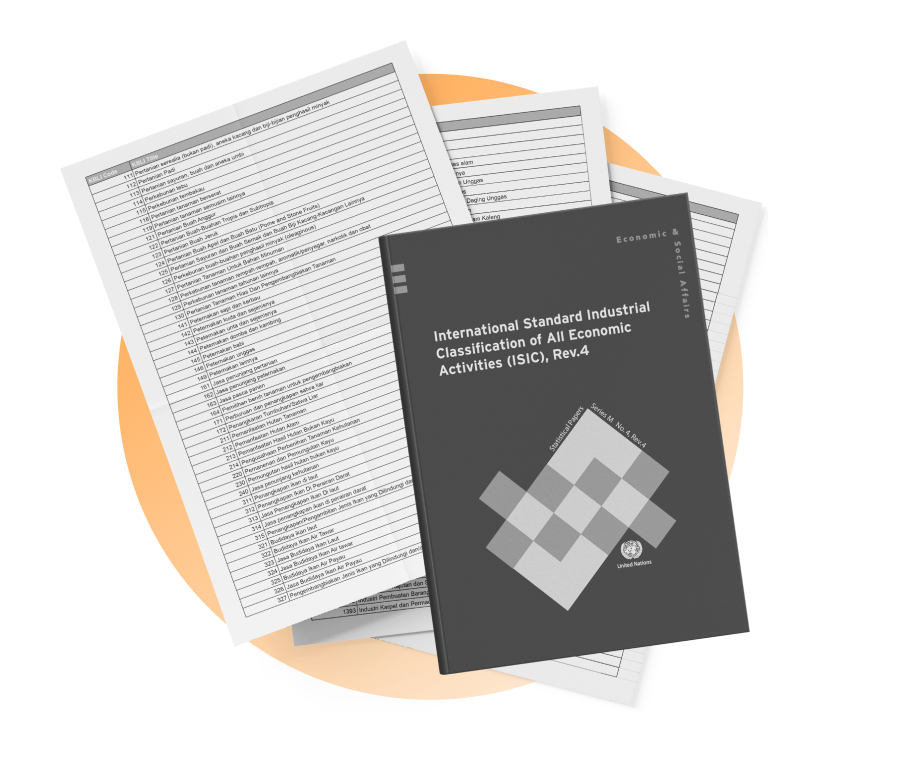
KBLI 2511 covers the fabrication of prefabricated structural metal products for buildings and civil works, including frameworks (beams, columns, trusses), doors/windows/frames/thresholds from metal, and non-pressurized tanks/reservoirs/vats from iron/steel sheet or plate.
It excludes finished machinery parts (KBLI 28), aluminum products (2513), pressure vessels (2520), and architectural metalwork like railings if not load-bearing (2599); focuses on ready-to-install components shipped to construction sites.
Indonesia in Focus
Indonesia's archipelago geography creates unique distribution challenges requiring adapted logistics and storage solutions.
High humidity and tropical climate demand specific technical approaches to quality preservation and product integrity.
Industry Classification
Conceptually, industry activities sit under specific regulatory frameworks with classification by operational scale and service model.
Operators may be classified by activity type, by service delivery model, and by end-use applications.
KBLI: 2511: Structural Metal Product Manufacturing Industry in Indonesia
ISIC: Reference: International Standard Industrial Classification
NAICS: Comparable: North American Industry Classification System
Industry Terms
Key terminology for understanding the Structural Metal Product Manufacturing Industry in Indonesia industry.
Welded Fabrication
Joining steel plates/profiles via arc welding, MIG/TIG processes to form trusses or frames.
Determines structural integrity; poor welds fail SNI inspections, blocking project approvals in Indonesia's seismic zones.
Galvanizing
Hot-dip zinc coating on fabricated steel to prevent corrosion.
Essential for humid/coastal Indonesia; extends lifespan 20+ years, mandated for public infra to avoid rust-induced failures.
TKDN (Tingkat Komponen Dalam Negeri)
Local content percentage calculated from domestic steel and labor in final product value.
Thresholds (25-40%) required for government contracts, favoring local fabricators over full imports.
Industry Overview – Business Types
Different business models operate within the Structural Metal Product Manufacturing Industry in Indonesia industry.
Project-Based Fabricator
Custom-builds per engineering drawings for specific tenders, sequencing cutting/welding/assembly around project milestones.
Flexibility for unique designs like bridge girders, but vulnerable to payment delays from contractors.
Standard industry practices apply.
Modular Component Supplier
Produces standardized panels/frames in batches for warehouse stock, shipped as kits for on-site bolting.
Faster delivery suits high-rise timelines, lower site labor costs in labor-short Jakarta.
Standard industry practices apply.
Integrated Steel Fabricator
Combines rolling mill output with downstream fab shops for seamless supply chains.
Cost edges via captive billets, scale for mega-projects like IKN pavilions.
Standard industry practices apply.
Industry Performance & Outlook
Performance outlook for Structural Metal Product Manufacturing Industry in Indonesia
Capacity utilization swings with construction tenders, averaging 70% but spiking to 100% during infra peaks; outlook brightens with Prabowo's continuity on IKN and housing programs.
Margins hover 8-12% post-material costs, pressured by steel price volatility but buoyed by anti-dumping duties on cheap Asian imports.
Key performance indicators
Market growth
Industry expansion rate
Driven by domestic demand
Operational efficiency
Cost management
Key competitive factor
Outlook: what to watch
Monitor regulatory changes
Track infrastructure developments
Watch for technology adoption
Industry Growth Drivers
Key factors driving growth in Structural Metal Product Manufacturing Industry in Indonesia.
Growth Driver 1
Domestic consumption growth driven by expanding middle class and rising disposable incomes
Monitor industry reports and market data for trends.
Growth Driver 2
Infrastructure development reducing logistics costs and improving market access
Monitor industry reports and market data for trends.
Growth Driver 3
Government policy support including investment incentives and industrial development programs
Monitor industry reports and market data for trends.
Growth Driver 4
Technology adoption improving productivity and enabling new business models
Monitor industry reports and market data for trends.
Growth Driver 5
Regional economic integration expanding market access and supply chain opportunities
Monitor industry reports and market data for trends.
Growth Driver 6
Urbanization creating concentrated demand centers and distribution efficiencies
Monitor industry reports and market data for trends.
Industry Trends & Development
Industry Development
Evolution of Structural Metal Product Manufacturing Industry in Indonesia
From manual welding yards to CNC plasma cutters and robotic weld lines, mechanization cuts labor 30% while hitting tighter tolerances for high-rises.
Shift to BIM-integrated design-fab workflows links shop drawings to site erection, minimizing field fixes costly in remote Indonesian projects.
Key Trends
Major trends shaping the Structural Metal Product Manufacturing Industry in Indonesia industry.
Digitalization and technology adoption
Industry trend shaping market dynamics.
Operators
Investors
Policymakers
Regulatory developments
Industry trend shaping market dynamics.
Operators
Investors
Policymakers
Impact and Sustainability
Sustainability and impact considerations for the manufacture of structural metal products industry.
Economic Impact
Contribution to national economic development.
Balancing growth with sustainability.
Environmental Considerations
Industry practices and environmental impact.
Operational costs vs sustainability.
Industry Segmentation
Industry Segmentation – Product/Service A
Primary market segments based on service type.
Segmentation by offering
Primary Segment
Core offerings
Main market
Addresses primary demand
Secondary Segment
Supporting services
Niche markets
Specialized needs
Segments may overlap based on customer needs.
Industry Segmentation – Product/Service B
Alternative segmentation perspectives.
Segmentation by characteristics
Mass Market
Broad appeal
General consumers
Volume-driven
Premium
High-value offerings
Discerning buyers
Quality-focused
Segment boundaries are fluid.
Customer Segmentation
Different customer segments and their characteristics.
Customer segments and what they value
B2B customers
Various
Multiple needs
Different channels
B2C consumers
Various
Multiple needs
Different channels
Key Players
Ecosystem Mapping
Structural Metal Product Manufacturing Industry in Indonesia ecosystem includes various stakeholders.
Suppliers
Provide inputs and raw materials.
Primary producers
Input suppliers
Operators
Core industry participants.
Main industry operators
Service providers
Distribution
Channel to end customers.
Distributors
Retailers
How value flows across the ecosystem
Value is created through coordinated activities across the ecosystem.
Leading Players
Competitive landscape and key player archetypes.
Competitive archetypes
Market Leader
Dominant position
Scale, brand recognition
Market saturation
Specialist
Niche focus
Expertise, agility
Limited scale
How competition typically plays out
Competition is shaped by scale advantages, operational efficiency, and customer relationships.
Differentiation strategies vary by segment, with some players competing on price and others on service quality.
Operating Conditions
Operating Model & Cost Structure
Operating models in Structural Metal Product Manufacturing Industry in Indonesia vary by business type.
Direct costs
Primary operational expenses
Input costs
Labor
Utilities
Major cost component
Overhead
Indirect operational costs
Administration
Facilities
Marketing
Scale-dependent
Cost structure summary
Direct costs
Volume and input prices
Operations
Efficiency improvements
Overhead
Scale and complexity
Administration
Process optimization
Cost structure varies by business model and scale.
Regulation & Compliance Considerations
Regulatory framework and compliance requirements.
Common compliance topics
Business licensing
Operating permits
Legal operation
Maintain valid licenses
Quality standards
Product/service requirements
Market access
Quality control systems
Stay current with regulatory changes.
FAQs & Sources
FAQs
What is Structural Metal Product Manufacturing Industry in Indonesia?
Structural Metal Product Manufacturing Industry in Indonesia encompasses various business activities in the Indonesian market.
Sources & Notes
This report is a synthesized overview based on industry analysis and desk research.
BPS (Statistics Indonesia)
Official statistics and industry data.
Ministry of Industry regulations
Regulatory framework and compliance requirements.
This report is for informational purposes and should not be treated as legal, regulatory, or investment advice.