Steam Generator Manufacturing Industry in Indonesia
A practical guide to Steam Generator Manufacturing Industry in Indonesia—market dynamics, operational realities, and strategic considerations in Indonesia
Manufacture of Steam Generators, Except Central Heating Hot Water Boilers, focuses on fabricating heavy-duty pressure vessels and systems that heat water to produce high-pressure steam for industrial processes like power generation, drying, and sterilization, distinct from simpler hot water systems. Operations center on precision welding of thick steel plates, assembly of fire-tube or water-tube heat exchangers, burner installation for fuels like biomass or gas, and embedding instrumentation for pressure relief and water level control to ensure safe operation.
Clear industry definition and scope of activities
Operational realities across Indonesia's regions
Market segmentation and customer analysis
Ecosystem mapping and competitive dynamics
Cost structure and unit economics
Regulatory and compliance considerations
Executive Summary
Manufacture of Steam Generators, Except Central Heating Hot Water Boilers, focuses on fabricating heavy-duty pressure vessels and systems that heat water to produce high-pressure steam for industrial processes like power generation, drying, and sterilization, distinct from simpler hot water systems.
Operations center on precision welding of thick steel plates, assembly of fire-tube or water-tube heat exchangers, burner installation for fuels like biomass or gas, and embedding instrumentation for pressure relief and water level control to ensure safe operation.
Units are oversized and custom, making transport via RoRo ships or barges critical, with East Java ports like Surabaya serving as key dispatch points.
Fuel flexibility—biomass for palm oil, gas for urban plants—drives design trade-offs between efficiency and maintenance.
Safety hinges on hydrostatic testing and certifications like SNI or ASME stamps, as failures risk explosions in high-pressure ops.
Demand peaks with industrial expansions tied to commodity booms, creating seasonal fabrication rushes.
Retrofits for emissions control are rising as factories face provincial air quality regs.
Why this industry matters in Indonesia
Supports Indonesia's economic growth and development objectives.
Creates employment opportunities across diverse skill levels.
Critical for service delivery and value chain integration.
Enables Indonesia's competitiveness in regional and global markets.
So what: Practical implications
Operators: Focus on quality consistency and process standardization
Buyers: Evaluate supplier capabilities beyond pricing
Investors: Look for operational efficiency and scalability
Policymakers: Support infrastructure development
Indonesia at a Glance
Republic of Indonesia: Large and fragmented market
Indonesia's steam generator manufacturing remains niche within fabricated metals, serving domestic industries like palm oil (over 800 mills needing replacements every 15-20 years) and captive power plants, with production concentrated in West and East Java for proximity to steel mills and skilled welders.
Growth tracks industrial output, buoyed by downstreaming mandates but challenged by cheap imports; operators balance low-volume custom runs with standardized designs for repeat palm oil clients.
Market dynamics continue to evolve with changing economic conditions.
Hyperlocalization is key to navigate Indonesia's market
Java dominates with clusters in Sidoarjo and Bekasi leveraging steel from Krakatau and welders from vocational programs, enabling quick prototyping for local specs like biomass handling.
Sumatra facilities emerge near palm hubs in Riau, prioritizing corrosion-resistant designs for humid, salty air and integrating auto-feed for palm kernel shells.
Opportunities extend beyond cities
Outer islands like Sulawesi and Papua see mobile fabrication teams or modular units shipped from Java, as full plants struggle with power-unreliable sites and remote logistics.
Kalimantan palm operators often opt for on-site assembly from imported kits, trading quality control for speed in greenfield mills.
Growing middle class driving premiumization trends across product categories and services
Digital adoption accelerating with mobile-first consumer behavior creating new channel opportunities
Infrastructure investment improving connectivity and reducing logistics costs across the archipelago
Government initiatives supporting domestic industry development and foreign investment attraction
Regional economic integration through ASEAN creating expanded market access and trade opportunities
Sustainability and ESG considerations creating differentiation opportunities for responsible businesses
Distribution realities: logistics, infrastructure, and channel reach
Oversized units (up to 20m long) move via flatbed trucks to ports, then inter-island ferries or heavy-lift vessels, with delays common during monsoon-disrupted schedules.
Post-sale, service networks rely on regional agents for tube cleaning and burner tuning, as full replacements cost millions and tie up capex.
Establish robust distribution partnerships covering both modern trade and traditional channels
Invest in localized supply chain capabilities to navigate logistics complexities and reduce costs
Develop region-specific market entry strategies accounting for local competitive dynamics
Build flexibility into operations to adapt to regulatory changes and infrastructure variations
Industry Definition
What is Steam Generator Manufacturing Industry in Indonesia?
Industry Definition
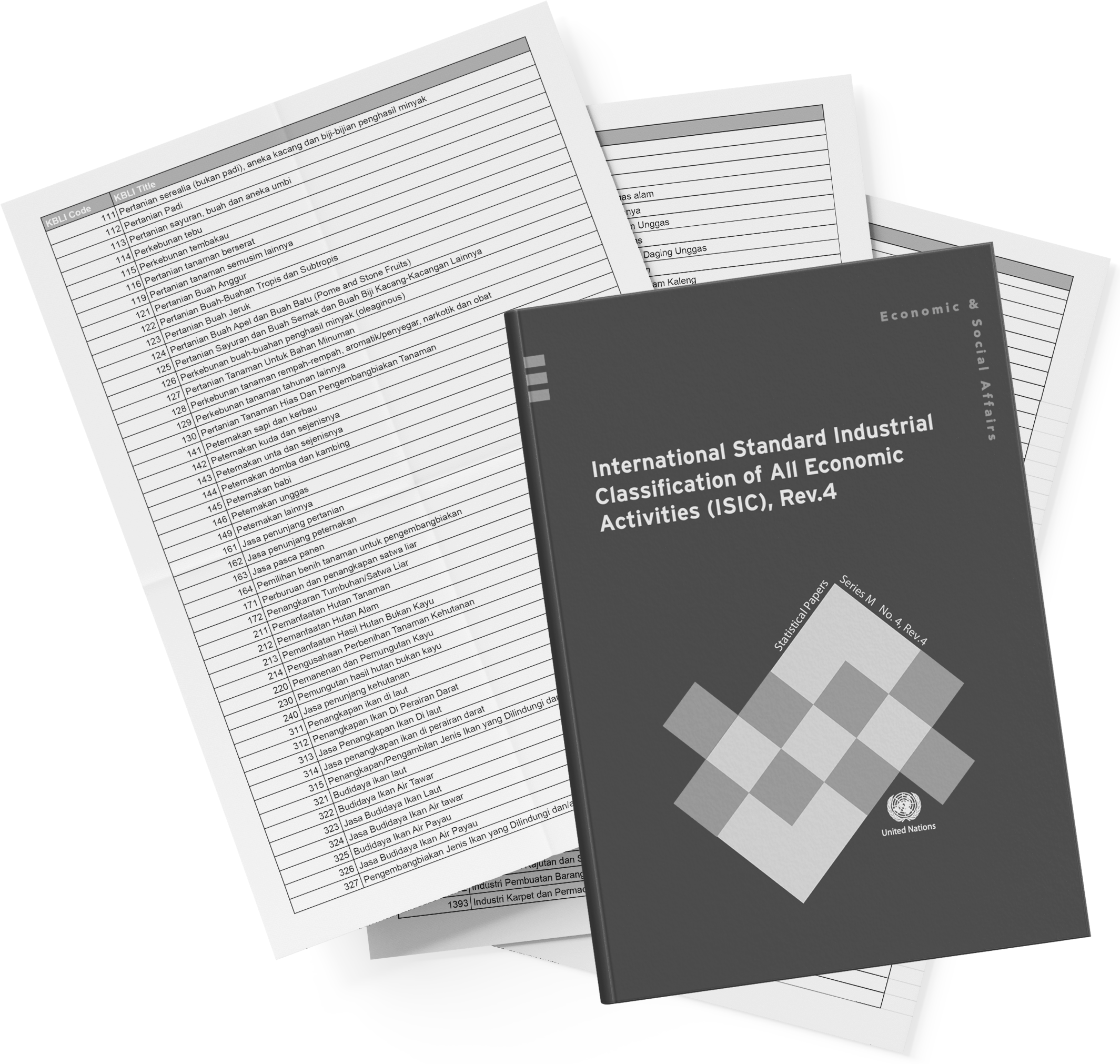
KBLI 2513 covers the manufacture of steam generators—pressure vessels producing saturated or superheated steam via direct firing (fire-tube/water-tube) or electric resistance—intended for industrial process heat or auxiliary power, explicitly excluding hot water boilers for building heating (KBLI 2520) and nuclear/power plant main boilers (often 2813).
Boundaries include full assembly from plate rolling to controls integration but stop at turbine or economizer add-ons; repair/refurb is separate under maintenance services.
Indonesia in Focus
Indonesia's archipelago geography creates unique distribution challenges requiring adapted logistics and storage solutions.
High humidity and tropical climate demand specific technical approaches to quality preservation and product integrity.
Industry Classification
Conceptually, industry activities sit under specific regulatory frameworks with classification by operational scale and service model.
Operators may be classified by activity type, by service delivery model, and by end-use applications.
KBLI: 2513: Steam Generator Manufacturing Industry in Indonesia
ISIC: Reference: International Standard Industrial Classification
NAICS: Comparable: North American Industry Classification System
Industry Terms
Key terminology for understanding the Steam Generator Manufacturing Industry in Indonesia industry.
Fire-tube boiler
Design where hot gases pass through tubes surrounded by water in a drum, simpler for smaller capacities.
Cheaper to fabricate locally with basic welding, suits palm oil mills' intermittent loads but limits pressure to under 20 bar.
Water-tube boiler
Tubes containing water circulate through a furnace, generating steam externally for higher pressures and faster response.
Essential for steady industrial steam at 40+ bar, but demands precise tube bending and expansion joints, raising entry barriers in Indonesia.
Blowdown
Controlled discharge of boiler water to remove dissolved solids preventing scaling.
Critical for longevity in Indonesia's variable water quality, with automated systems cutting manual labor in remote sites.
Industry Overview – Business Types
Different business models operate within the Steam Generator Manufacturing Industry in Indonesia industry.
Custom fabricator
Builds one-off units from client blueprints, sourcing plates and tubes locally while importing burners.
Flexibility for unique footprints in crowded factories, though longer lead times.
Standard industry practices apply.
Standardized assembler
Produces modular frames in batches, customizing internals, leveraging steel yards for scale.
Faster delivery for repeat palm oil specs, lower unit costs via semi-automation.
Standard industry practices apply.
JV tech licensee
Partners foreign OEMs to localize high-end designs, transferring welding codes and controls.
Access to efficiency patents for premium power plant bids, offsetting royalty fees with export potential.
Standard industry practices apply.
Industry Performance & Outlook
Performance outlook for Steam Generator Manufacturing Industry in Indonesia
Performance ties to industrial capex waves, with steady replacement demand from aging mill boilers amid energy efficiency pushes.
Outlook positive from localization in renewables like biomass and geothermal steam systems, though import price wars cap margins.
Key performance indicators
Market growth
Industry expansion rate
Driven by domestic demand
Operational efficiency
Cost management
Key competitive factor
Outlook: what to watch
Monitor regulatory changes
Track infrastructure developments
Watch for technology adoption
Industry Growth Drivers
Key factors driving growth in Steam Generator Manufacturing Industry in Indonesia.
Growth Driver 1
Domestic consumption growth driven by expanding middle class and rising disposable incomes
Monitor industry reports and market data for trends.
Growth Driver 2
Infrastructure development reducing logistics costs and improving market access
Monitor industry reports and market data for trends.
Growth Driver 3
Government policy support including investment incentives and industrial development programs
Monitor industry reports and market data for trends.
Growth Driver 4
Technology adoption improving productivity and enabling new business models
Monitor industry reports and market data for trends.
Growth Driver 5
Regional economic integration expanding market access and supply chain opportunities
Monitor industry reports and market data for trends.
Growth Driver 6
Urbanization creating concentrated demand centers and distribution efficiencies
Monitor industry reports and market data for trends.
Industry Trends & Development
Industry Development
Evolution of Steam Generator Manufacturing Industry in Indonesia
From basic welded drums in 1990s state factories to automated CNC plate rolling and robotic welding today, driven by safety regs and efficiency needs.
Shift to modular skids enables barge transport to Sumatra, reducing on-site erection time by 30%.
Key Trends
Major trends shaping the Steam Generator Manufacturing Industry in Indonesia industry.
Digitalization and technology adoption
Industry trend shaping market dynamics.
Operators
Investors
Policymakers
Regulatory developments
Industry trend shaping market dynamics.
Operators
Investors
Policymakers
Impact and Sustainability
Sustainability and impact considerations for the manufacture of steam generators, except central heating hot water boilers industry.
Economic Impact
Contribution to national economic development.
Balancing growth with sustainability.
Environmental Considerations
Industry practices and environmental impact.
Operational costs vs sustainability.
Industry Segmentation
Industry Segmentation – Product/Service A
Primary market segments based on service type.
Segmentation by offering
Primary Segment
Core offerings
Main market
Addresses primary demand
Secondary Segment
Supporting services
Niche markets
Specialized needs
Segments may overlap based on customer needs.
Industry Segmentation – Product/Service B
Alternative segmentation perspectives.
Segmentation by characteristics
Mass Market
Broad appeal
General consumers
Volume-driven
Premium
High-value offerings
Discerning buyers
Quality-focused
Segment boundaries are fluid.
Customer Segmentation
Different customer segments and their characteristics.
Customer segments and what they value
B2B customers
Various
Multiple needs
Different channels
B2C consumers
Various
Multiple needs
Different channels
Key Players
Ecosystem Mapping
Steam Generator Manufacturing Industry in Indonesia ecosystem includes various stakeholders.
Suppliers
Provide inputs and raw materials.
Primary producers
Input suppliers
Operators
Core industry participants.
Main industry operators
Service providers
Distribution
Channel to end customers.
Distributors
Retailers
How value flows across the ecosystem
Value is created through coordinated activities across the ecosystem.
Leading Players
Competitive landscape and key player archetypes.
Competitive archetypes
Market Leader
Dominant position
Scale, brand recognition
Market saturation
Specialist
Niche focus
Expertise, agility
Limited scale
How competition typically plays out
Competition is shaped by scale advantages, operational efficiency, and customer relationships.
Differentiation strategies vary by segment, with some players competing on price and others on service quality.
Operating Conditions
Operating Model & Cost Structure
Operating models in Steam Generator Manufacturing Industry in Indonesia vary by business type.
Direct costs
Primary operational expenses
Input costs
Labor
Utilities
Major cost component
Overhead
Indirect operational costs
Administration
Facilities
Marketing
Scale-dependent
Cost structure summary
Direct costs
Volume and input prices
Operations
Efficiency improvements
Overhead
Scale and complexity
Administration
Process optimization
Cost structure varies by business model and scale.
Regulation & Compliance Considerations
Regulatory framework and compliance requirements.
Common compliance topics
Business licensing
Operating permits
Legal operation
Maintain valid licenses
Quality standards
Product/service requirements
Market access
Quality control systems
Stay current with regulatory changes.
FAQs & Sources
FAQs
What is Steam Generator Manufacturing Industry in Indonesia?
Steam Generator Manufacturing Industry in Indonesia encompasses various business activities in the Indonesian market.
Sources & Notes
This report is a synthesized overview based on industry analysis and desk research.
BPS (Statistics Indonesia)
Official statistics and industry data.
Ministry of Industry regulations
Regulatory framework and compliance requirements.
This report is for informational purposes and should not be treated as legal, regulatory, or investment advice.