Precious and Non-Ferrous Metal Manufacturing Industry in Indonesia
A practical guide to Precious and Non-Ferrous Metal Manufacturing Industry in Indonesia—market dynamics, operational realities, and strategic considerations in Indonesia
Manufacture of basic precious and other non-ferrous metals involves high-temperature smelting and electrolytic refining to convert mineral concentrates, ores, or scrap into pure primary products like gold and silver doré bars, nickel pig iron or ferronickel, copper cathodes, aluminum ingots, and tin ingots. These processes remove impurities, achieve required purity grades (e.g., 99.99% for copper), and produce standardized shapes for efficient storage, transport, and downstream fabrication into wires, sheets, or components. The industry bridges mining extraction and metals fabrication, focusing on metallurgical efficiency to minimize energy use and waste while meeting international quality standards like those for London Metal Exchange trading.
Clear industry definition and scope of activities
Operational realities across Indonesia's regions
Market segmentation and customer analysis
Ecosystem mapping and competitive dynamics
Cost structure and unit economics
Regulatory and compliance considerations
Executive Summary
Manufacture of basic precious and other non-ferrous metals involves high-temperature smelting and electrolytic refining to convert mineral concentrates, ores, or scrap into pure primary products like gold and silver doré bars, nickel pig iron or ferronickel, copper cathodes, aluminum ingots, and tin ingots. These processes remove impurities, achieve required purity grades (e.g., 99.99% for copper), and produce standardized shapes for efficient storage, transport, and downstream fabrication into wires, sheets, or components.
The industry bridges mining extraction and metals fabrication, focusing on metallurgical efficiency to minimize energy use and waste while meeting international quality standards like those for London Metal Exchange trading.
Nickel accounts for over 80% of production capacity, driven by downstreaming mandates.
Chinese investment dominates new smelters, controlling 75% of nickel processing.
Environmental compliance is tightening, with HPAL processes emerging for lower-emission nickel.
Commodity price swings directly impact margins due to fixed energy costs.
Export-oriented, with products shipped via dedicated bulk terminals in Sulawesi.
State-owned players like Antam integrate mining to refining for precious metals.
Why this industry matters in Indonesia
Supports Indonesia's economic growth and development objectives.
Creates employment opportunities across diverse skill levels.
Critical for service delivery and value chain integration.
Enables Indonesia's competitiveness in regional and global markets.
So what: Practical implications
Operators: Focus on quality consistency and process standardization
Buyers: Evaluate supplier capabilities beyond pricing
Investors: Look for operational efficiency and scalability
Policymakers: Support infrastructure development
Indonesia at a Glance
Republic of Indonesia: Large and fragmented market
Indonesia leads global nickel supply with over 50% of mined output processed locally into basic forms, fueling stainless steel and battery precursors amid EV boom. Copper and gold refining supports export earnings, though aluminum and tin lag behind due to reserve depletion and high energy needs.
Production clusters in resource-rich outer islands create hyper-local booms, but Java hosts finishing refineries; overall, the sector contributes significantly to manufacturing GDP via value-added exports.
Market dynamics continue to evolve with changing economic conditions.
Hyperlocalization is key to navigate Indonesia's market
Morowali Industrial Park in Central Sulawesi exemplifies nickel hyperlocalization, with integrated smelters, power plants, and ports handling 10+ million tons ore annually from nearby mines. Halmahera hosts HPAL plants for battery-grade nickel, minimizing transport losses for moisture-sensitive limonite.
Gresik's copper smelter processes Papua concentrates via slurry pipelines and sea freight, while Bangka's tin smelters rely on short-sea barge networks from dredging operations.
Opportunities extend beyond cities
Outer-island dominance: Sulawesi (60% nickel capacity), Maluku (HPAL), Papua (concentrates), versus Java (10% copper, precious refining). Remote sites use modular smelters for quick deployment near mines.
Government incentives prioritize non-Java zones, but infrastructure gaps force self-contained industrial parks with captive power and worker housing.
Growing middle class driving premiumization trends across product categories and services
Digital adoption accelerating with mobile-first consumer behavior creating new channel opportunities
Infrastructure investment improving connectivity and reducing logistics costs across the archipelago
Government initiatives supporting domestic industry development and foreign investment attraction
Regional economic integration through ASEAN creating expanded market access and trade opportunities
Sustainability and ESG considerations creating differentiation opportunities for responsible businesses
Distribution realities: logistics, infrastructure, and channel reach
Bulk exports via specialized vessels from Morowali and Weda Bay ports; copper cathodes trucked to Surabaya containers. Precious metals air-freighted from Jakarta for security.
Domestic flow: nickel pig iron to stainless mills in Cilegon, Banten; trade-offs include high coal barge costs in rainy seasons disrupting Sulawesi supply chains.
Establish robust distribution partnerships covering both modern trade and traditional channels
Invest in localized supply chain capabilities to navigate logistics complexities and reduce costs
Develop region-specific market entry strategies accounting for local competitive dynamics
Build flexibility into operations to adapt to regulatory changes and infrastructure variations
Industry Definition
What is Precious and Non-Ferrous Metal Manufacturing Industry in Indonesia?
Industry Definition
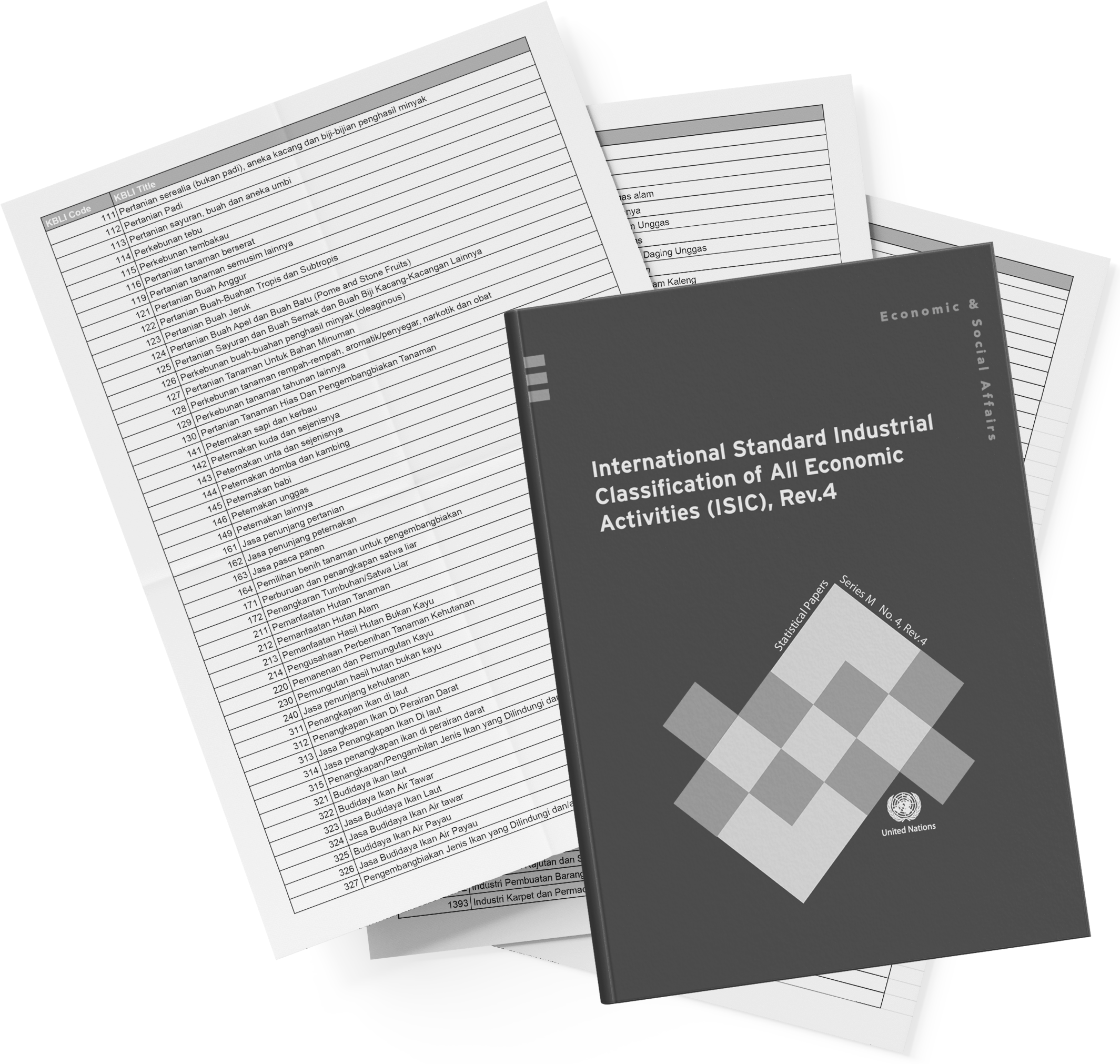
KBLI 2420 covers primary production of unwrought precious metals (gold, silver, platinum group) and non-ferrous metals (aluminum, copper, nickel, lead, zinc, tin, chromium, magnesium) from ores, concentrates, or scrap via pyrometallurgical smelting, hydrometallurgy, or electrolysis, yielding pigs, ingots, billets, or powder. Excludes downstream rolling/drawing (KBLI 243) and mining (KBLI 072).
Boundaries emphasize basic forms for resale, not end-use alloys; Indonesia variant stresses nickel processing per ESDM downstream rules.
Indonesia in Focus
Indonesia's archipelago geography creates unique distribution challenges requiring adapted logistics and storage solutions.
High humidity and tropical climate demand specific technical approaches to quality preservation and product integrity.
Industry Classification
Conceptually, industry activities sit under specific regulatory frameworks with classification by operational scale and service model.
Operators may be classified by activity type, by service delivery model, and by end-use applications.
KBLI: 2420: Precious and Non-Ferrous Metal Manufacturing Industry in Indonesia
ISIC: Reference: International Standard Industrial Classification
NAICS: Comparable: North American Industry Classification System
Industry Terms
Key terminology for understanding the Precious and Non-Ferrous Metal Manufacturing Industry in Indonesia industry.
Ferronickel
Nickel-iron alloy produced by smelting saprolite ore in rotary kilns or electric furnaces, typically 20-50% nickel content.
Primary Indonesian nickel product for stainless steel; lower purity than matte but cost-effective from abundant laterite ores.
Doré bar
Semi-refined gold-silver alloy bar from mine concentrates, ~90% gold, awaiting final electrolytic parting.
Standard input for precious refineries; enables secure transport from remote mines to Java facilities.
HPAL
High-pressure acid leach process dissolving limonite ore to produce mixed nickel-cobalt hydroxide precipitate (MHP).
Unlocks battery-grade nickel from low-grade ores; capex-intensive but aligns with EV supply chain and lower CO2 vs. pyromet.
Industry Overview – Business Types
Different business models operate within the Precious and Non-Ferrous Metal Manufacturing Industry in Indonesia industry.
Nickel pyrometallurgical smelters
Rotary kiln-electric furnace (RKEF) reduces ore with coal/coke to nickel pig iron (NPI) or ferronickel, with slag byproduct.
Scale economies in mega-parks; energy guzzlers reliant on cheap coal.
Standard industry practices apply.
Copper electrolytic refineries
Flash smelting of concentrates to matte, then anode casting and tankhouse electrolysis to 99.99% cathodes.
Sulphuric acid byproduct sales; JV tech transfers for purity.
Standard industry practices apply.
Precious metals refineries
Aqua regia dissolution of doré, electrolytic parting for gold/silver separation, and assay certification.
High security and LBMA accreditation for export premiums.
Standard industry practices apply.
Industry Performance & Outlook
Performance outlook for Precious and Non-Ferrous Metal Manufacturing Industry in Indonesia
Sector thrives on nickel export bans, with capacity doubling post-2020; volatility from LME prices offset by rupiah hedging and fixed ore contracts.
Outlook positive via battery downstreaming to 2030, but copper/gold steady; aluminum/tin face import competition.
Key performance indicators
Market growth
Industry expansion rate
Driven by domestic demand
Operational efficiency
Cost management
Key competitive factor
Outlook: what to watch
Monitor regulatory changes
Track infrastructure developments
Watch for technology adoption
Industry Growth Drivers
Key factors driving growth in Precious and Non-Ferrous Metal Manufacturing Industry in Indonesia.
Growth Driver 1
Domestic consumption growth driven by expanding middle class and rising disposable incomes
Monitor industry reports and market data for trends.
Growth Driver 2
Infrastructure development reducing logistics costs and improving market access
Monitor industry reports and market data for trends.
Growth Driver 3
Government policy support including investment incentives and industrial development programs
Monitor industry reports and market data for trends.
Growth Driver 4
Technology adoption improving productivity and enabling new business models
Monitor industry reports and market data for trends.
Growth Driver 5
Regional economic integration expanding market access and supply chain opportunities
Monitor industry reports and market data for trends.
Growth Driver 6
Urbanization creating concentrated demand centers and distribution efficiencies
Monitor industry reports and market data for trends.
Industry Trends & Development
Industry Development
Evolution of Precious and Non-Ferrous Metal Manufacturing Industry in Indonesia
From sporadic ore exporters to integrated smelters post-2014 bans; nickel capacity exploded via Chinese FDI in Sulawesi parks.
Shift to hydrometallurgy (HPAL) for high-purity nickel sulfate precursors.
Key Trends
Major trends shaping the Precious and Non-Ferrous Metal Manufacturing Industry in Indonesia industry.
Digitalization and technology adoption
Industry trend shaping market dynamics.
Operators
Investors
Policymakers
Regulatory developments
Industry trend shaping market dynamics.
Operators
Investors
Policymakers
Impact and Sustainability
Sustainability and impact considerations for the manufacture of basic precious and other non-ferrous metals industry.
Economic Impact
Contribution to national economic development.
Balancing growth with sustainability.
Environmental Considerations
Industry practices and environmental impact.
Operational costs vs sustainability.
Industry Segmentation
Industry Segmentation – Product/Service A
Primary market segments based on service type.
Segmentation by offering
Primary Segment
Core offerings
Main market
Addresses primary demand
Secondary Segment
Supporting services
Niche markets
Specialized needs
Segments may overlap based on customer needs.
Industry Segmentation – Product/Service B
Alternative segmentation perspectives.
Segmentation by characteristics
Mass Market
Broad appeal
General consumers
Volume-driven
Premium
High-value offerings
Discerning buyers
Quality-focused
Segment boundaries are fluid.
Customer Segmentation
Different customer segments and their characteristics.
Customer segments and what they value
B2B customers
Various
Multiple needs
Different channels
B2C consumers
Various
Multiple needs
Different channels
Key Players
Ecosystem Mapping
Precious and Non-Ferrous Metal Manufacturing Industry in Indonesia ecosystem includes various stakeholders.
Suppliers
Provide inputs and raw materials.
Primary producers
Input suppliers
Operators
Core industry participants.
Main industry operators
Service providers
Distribution
Channel to end customers.
Distributors
Retailers
How value flows across the ecosystem
Value is created through coordinated activities across the ecosystem.
Leading Players
Competitive landscape and key player archetypes.
Competitive archetypes
Market Leader
Dominant position
Scale, brand recognition
Market saturation
Specialist
Niche focus
Expertise, agility
Limited scale
How competition typically plays out
Competition is shaped by scale advantages, operational efficiency, and customer relationships.
Differentiation strategies vary by segment, with some players competing on price and others on service quality.
Operating Conditions
Operating Model & Cost Structure
Operating models in Precious and Non-Ferrous Metal Manufacturing Industry in Indonesia vary by business type.
Direct costs
Primary operational expenses
Input costs
Labor
Utilities
Major cost component
Overhead
Indirect operational costs
Administration
Facilities
Marketing
Scale-dependent
Cost structure summary
Direct costs
Volume and input prices
Operations
Efficiency improvements
Overhead
Scale and complexity
Administration
Process optimization
Cost structure varies by business model and scale.
Regulation & Compliance Considerations
Regulatory framework and compliance requirements.
Common compliance topics
Business licensing
Operating permits
Legal operation
Maintain valid licenses
Quality standards
Product/service requirements
Market access
Quality control systems
Stay current with regulatory changes.
FAQs & Sources
FAQs
What is Precious and Non-Ferrous Metal Manufacturing Industry in Indonesia?
Precious and Non-Ferrous Metal Manufacturing Industry in Indonesia encompasses various business activities in the Indonesian market.
Sources & Notes
This report is a synthesized overview based on industry analysis and desk research.
BPS (Statistics Indonesia)
Official statistics and industry data.
Ministry of Industry regulations
Regulatory framework and compliance requirements.
This report is for informational purposes and should not be treated as legal, regulatory, or investment advice.