Porcelain and Ceramic Product Manufacturing Industry in Indonesia
A practical guide to Porcelain and Ceramic Product Manufacturing Industry in Indonesia—market dynamics, operational realities, and strategic considerations in Indonesia
Manufacture of Other Porcelain and Ceramic Products transforms raw clay, kaolin, and feldspar through mixing, shaping via pressing, casting or extrusion, drying, glazing, and high-temperature kiln firing into finished goods like tableware, sanitary fixtures, electrical insulators, laboratory equipment, and ornamental articles. This process achieves the vitrification that gives ceramics durability, impermeability, and aesthetic appeal while excluding structural items like tiles or bricks. Core operations focus on quality control during firing to prevent defects like warping or cracking, with finishing steps like polishing or decoration adding value for consumer and industrial markets.
Clear industry definition and scope of activities
Operational realities across Indonesia's regions
Market segmentation and customer analysis
Ecosystem mapping and competitive dynamics
Cost structure and unit economics
Regulatory and compliance considerations
Executive Summary
Manufacture of Other Porcelain and Ceramic Products transforms raw clay, kaolin, and feldspar through mixing, shaping via pressing, casting or extrusion, drying, glazing, and high-temperature kiln firing into finished goods like tableware, sanitary fixtures, electrical insulators, laboratory equipment, and ornamental articles. This process achieves the vitrification that gives ceramics durability, impermeability, and aesthetic appeal while excluding structural items like tiles or bricks.
Core operations focus on quality control during firing to prevent defects like warping or cracking, with finishing steps like polishing or decoration adding value for consumer and industrial markets.
Energy costs from gas or electric kilns dominate expenses, pushing operators toward efficient tunnel kilns over intermittent batch types.
SNI certification is mandatory for market access, ensuring product safety and quality compliance in construction and household use.
Product fragility requires specialized packaging, inflating logistics costs especially for inter-island shipments.
Raw material sourcing mixes local ball clay with imported high-purity kaolin for porcelain grades.
Labor-intensive hand-finishing persists for premium lines, contrasting automated pressing in high-volume sanitary ware.
Why this industry matters in Indonesia
Supports Indonesia's economic growth and development objectives.
Creates employment opportunities across diverse skill levels.
Critical for service delivery and value chain integration.
Enables Indonesia's competitiveness in regional and global markets.
So what: Practical implications
Operators: Focus on quality consistency and process standardization
Buyers: Evaluate supplier capabilities beyond pricing
Investors: Look for operational efficiency and scalability
Policymakers: Support infrastructure development
Indonesia at a Glance
Republic of Indonesia: Large and fragmented market
Indonesia dominates ASEAN non-building ceramics production, driven by urbanization boosting sanitary ware for mid-tier housing and apartments in Java megacities.
Tableware segment supports hospitality recovery post-pandemic, with steady exports from specialized producers amid competitive imports from China.
Market dynamics continue to evolve with changing economic conditions.
Hyperlocalization is key to navigate Indonesia's market
West Java clusters like Surya Cipta in Karawang host sanitary ware giants benefiting from toll roads to Jabodetabek builders, while Bali's Jenggala leverages cultural motifs for tourist souvenirs.
Yogyakarta's artisan hubs supply decorative ceramics to domestic retailers, trading scale for customized, high-margin niche products.
Opportunities extend beyond cities
Tier-2 cities like Semarang and Surabaya host mid-sized plants serving regional construction, relying on Java's clay belts but facing higher transport to Sumatra markets.
Outer islands like Sulawesi have small-scale operators for local household needs, limited by logistics and power reliability for kilns.
Growing middle class driving premiumization trends across product categories and services
Digital adoption accelerating with mobile-first consumer behavior creating new channel opportunities
Infrastructure investment improving connectivity and reducing logistics costs across the archipelago
Government initiatives supporting domestic industry development and foreign investment attraction
Regional economic integration through ASEAN creating expanded market access and trade opportunities
Sustainability and ESG considerations creating differentiation opportunities for responsible businesses
Distribution realities: logistics, infrastructure, and channel reach
Trucking dominates Java distribution with padded pallets minimizing breakage; sea containers for exports and inter-island via Pelni lines handle bulk sanitary ware.
Just-in-time delivery pressures from builders require buffer stocks near ports like Tanjung Priok, balancing inventory costs against stockouts.
Establish robust distribution partnerships covering both modern trade and traditional channels
Invest in localized supply chain capabilities to navigate logistics complexities and reduce costs
Develop region-specific market entry strategies accounting for local competitive dynamics
Build flexibility into operations to adapt to regulatory changes and infrastructure variations
Industry Definition
What is Porcelain and Ceramic Product Manufacturing Industry in Indonesia?
Industry Definition
KBLI 2393 encompasses manufacturing porcelain and ceramic products excluding building materials (2391-92), refractories, or abrasives, covering items like household tableware, sanitary ware (washbasins, toilets), ornamental pottery, flower pots, laboratory crucibles, and electrical insulators produced via ceramic processes.
Boundaries drawn at finished goods post-firing and glazing; upstream clay mining (KBLI 081) and downstream assembly into appliances excluded, focusing on core shaping and thermal treatment.
Indonesia in Focus
Indonesia's archipelago geography creates unique distribution challenges requiring adapted logistics and storage solutions.
High humidity and tropical climate demand specific technical approaches to quality preservation and product integrity.
Industry Classification
Conceptually, industry activities sit under specific regulatory frameworks with classification by operational scale and service model.
Operators may be classified by activity type, by service delivery model, and by end-use applications.
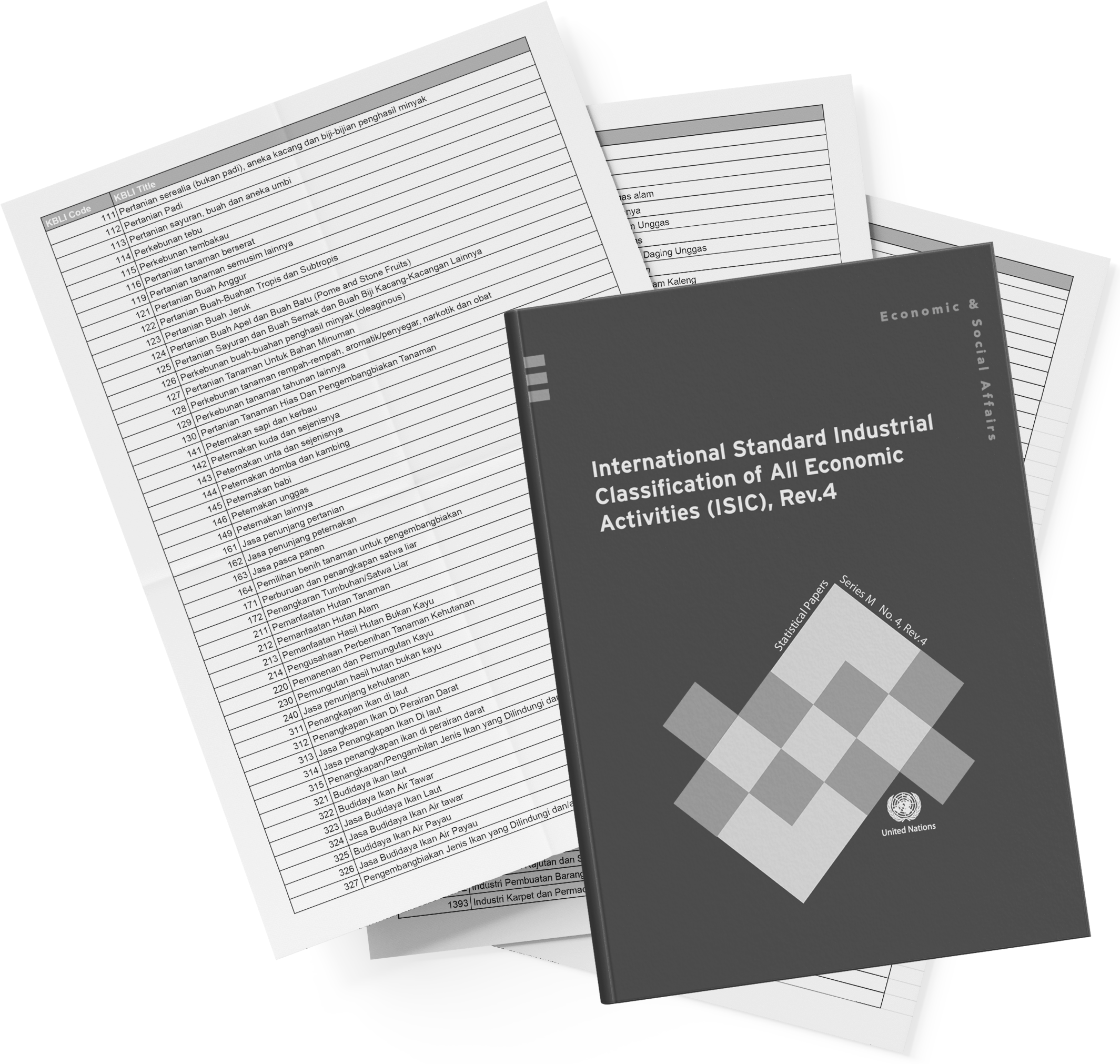
KBLI: 2393: Porcelain and Ceramic Product Manufacturing Industry in Indonesia
ISIC: Reference: International Standard Industrial Classification
NAICS: Comparable: North American Industry Classification System
Industry Terms
Key terminology for understanding the Porcelain and Ceramic Product Manufacturing Industry in Indonesia industry.
Slip casting
Pouring liquid clay slurry into plaster molds to form thin-walled complex shapes, drained and dried before firing.
Enables mass production of sanitary ware curves impossible by pressing, but mold wear raises maintenance costs in high-volume runs.
Bisque firing
Initial low-temperature kiln bake (900-1000°C) to harden unfired ware before glazing, removing organics without full vitrification.
Prevents glaze defects like crawling; critical for Indonesia's humid climate where greenware must stabilize quickly.
Vitrification
High-heat fusion (1200-1400°C) turning porous clay into glass-like impermeable body, defining porcelain translucency vs. stoneware opacity.
Drives premium pricing for export tableware; energy trade-off as higher temps spike gas consumption in archipelago power grids.
Industry Overview – Business Types
Different business models operate within the Porcelain and Ceramic Product Manufacturing Industry in Indonesia industry.
Sanitary ware producers
High-pressure pressing or casting into molds, bisque firing, glazing, and final high-fire in tunnel kilns for volume output to builders.
Scale automation and SNI compliance for large housing projects, with water resistance key for humid Indonesian bathrooms.
Standard industry practices apply.
Tableware manufacturers
Jiggering or casting for plates/cups, multi-color printing or hand-decorating, roller kilns for rapid cycles serving hospitality.
Design innovation and export certifications like FDA/LFGB, capitalizing on tourism motifs for premium hotel lines.
Standard industry practices apply.
Technical ceramics specialists
Precision extrusion or injection for insulators/labware, custom formulations, controlled atmosphere firing for properties like dielectric strength.
Engineering tolerances over volume, serving niche electronics or pharma with imported high-alumina mixes.
Standard industry practices apply.
Industry Performance & Outlook
Performance outlook for Porcelain and Ceramic Product Manufacturing Industry in Indonesia
Sector benefits from Indonesia's infrastructure push and middle-class expansion, though volatile energy prices and Chinese imports pressure margins.
Outlook buoyant with housing backlogs and ASEAN exports, favoring players investing in efficient kilns and digital inventory.
Key performance indicators
Market growth
Industry expansion rate
Driven by domestic demand
Operational efficiency
Cost management
Key competitive factor
Outlook: what to watch
Monitor regulatory changes
Track infrastructure developments
Watch for technology adoption
Industry Growth Drivers
Key factors driving growth in Porcelain and Ceramic Product Manufacturing Industry in Indonesia.
Growth Driver 1
Domestic consumption growth driven by expanding middle class and rising disposable incomes
Monitor industry reports and market data for trends.
Growth Driver 2
Infrastructure development reducing logistics costs and improving market access
Monitor industry reports and market data for trends.
Growth Driver 3
Government policy support including investment incentives and industrial development programs
Monitor industry reports and market data for trends.
Growth Driver 4
Technology adoption improving productivity and enabling new business models
Monitor industry reports and market data for trends.
Growth Driver 5
Regional economic integration expanding market access and supply chain opportunities
Monitor industry reports and market data for trends.
Growth Driver 6
Urbanization creating concentrated demand centers and distribution efficiencies
Monitor industry reports and market data for trends.
Industry Trends & Development
Industry Development
Evolution of Porcelain and Ceramic Product Manufacturing Industry in Indonesia
Evolving from labor-heavy artisan workshops to mechanized factories post-1990s, with clusters formalizing around gas infrastructure.
Digital integration now accelerates from CAD mold design to automated glazing, reducing defects in export lines.
Key Trends
Major trends shaping the Porcelain and Ceramic Product Manufacturing Industry in Indonesia industry.
Digitalization and technology adoption
Industry trend shaping market dynamics.
Operators
Investors
Policymakers
Regulatory developments
Industry trend shaping market dynamics.
Operators
Investors
Policymakers
Impact and Sustainability
Sustainability and impact considerations for the manufacture of other porcelain and ceramic products industry.
Economic Impact
Contribution to national economic development.
Balancing growth with sustainability.
Environmental Considerations
Industry practices and environmental impact.
Operational costs vs sustainability.
Industry Segmentation
Industry Segmentation – Product/Service A
Primary market segments based on service type.
Segmentation by offering
Primary Segment
Core offerings
Main market
Addresses primary demand
Secondary Segment
Supporting services
Niche markets
Specialized needs
Segments may overlap based on customer needs.
Industry Segmentation – Product/Service B
Alternative segmentation perspectives.
Segmentation by characteristics
Mass Market
Broad appeal
General consumers
Volume-driven
Premium
High-value offerings
Discerning buyers
Quality-focused
Segment boundaries are fluid.
Customer Segmentation
Different customer segments and their characteristics.
Customer segments and what they value
B2B customers
Various
Multiple needs
Different channels
B2C consumers
Various
Multiple needs
Different channels
Key Players
Ecosystem Mapping
Porcelain and Ceramic Product Manufacturing Industry in Indonesia ecosystem includes various stakeholders.
Suppliers
Provide inputs and raw materials.
Primary producers
Input suppliers
Operators
Core industry participants.
Main industry operators
Service providers
Distribution
Channel to end customers.
Distributors
Retailers
How value flows across the ecosystem
Value is created through coordinated activities across the ecosystem.
Leading Players
Competitive landscape and key player archetypes.
Competitive archetypes
Market Leader
Dominant position
Scale, brand recognition
Market saturation
Specialist
Niche focus
Expertise, agility
Limited scale
How competition typically plays out
Competition is shaped by scale advantages, operational efficiency, and customer relationships.
Differentiation strategies vary by segment, with some players competing on price and others on service quality.
Operating Conditions
Operating Model & Cost Structure
Operating models in Porcelain and Ceramic Product Manufacturing Industry in Indonesia vary by business type.
Direct costs
Primary operational expenses
Input costs
Labor
Utilities
Major cost component
Overhead
Indirect operational costs
Administration
Facilities
Marketing
Scale-dependent
Cost structure summary
Direct costs
Volume and input prices
Operations
Efficiency improvements
Overhead
Scale and complexity
Administration
Process optimization
Cost structure varies by business model and scale.
Regulation & Compliance Considerations
Regulatory framework and compliance requirements.
Common compliance topics
Business licensing
Operating permits
Legal operation
Maintain valid licenses
Quality standards
Product/service requirements
Market access
Quality control systems
Stay current with regulatory changes.
FAQs & Sources
FAQs
What is Porcelain and Ceramic Product Manufacturing Industry in Indonesia?
Porcelain and Ceramic Product Manufacturing Industry in Indonesia encompasses various business activities in the Indonesian market.
Sources & Notes
This report is a synthesized overview based on industry analysis and desk research.
BPS (Statistics Indonesia)
Official statistics and industry data.
Ministry of Industry regulations
Regulatory framework and compliance requirements.
This report is for informational purposes and should not be treated as legal, regulatory, or investment advice.