Oven, Furnace, and Furnace Burner Manufacturing Industry in Indonesia
A practical guide to Oven, Furnace, and Furnace Burner Manufacturing Industry in Indonesia—market dynamics, operational realities, and strategic considerations in Indonesia
Manufacture of Ovens, Furnaces and Furnace Burners involves engineering and fabricating equipment that delivers precise, high-temperature environments for industrial thermal processing. These systems—ranging from batch ovens for drying to continuous furnaces for metal heat treatment—enable core manufacturing steps like annealing, forging, smelting, and baking by controlling heat transfer via conduction, convection, or radiation. Core activities include designing refractory linings for heat retention, integrating burners or heating elements for fuel efficiency, and assembling control systems for temperature uniformity, making raw materials into saleable thermal solutions tailored to client specs.
Clear industry definition and scope of activities
Operational realities across Indonesia's regions
Market segmentation and customer analysis
Ecosystem mapping and competitive dynamics
Cost structure and unit economics
Regulatory and compliance considerations
Executive Summary
Manufacture of Ovens, Furnaces and Furnace Burners involves engineering and fabricating equipment that delivers precise, high-temperature environments for industrial thermal processing. These systems—ranging from batch ovens for drying to continuous furnaces for metal heat treatment—enable core manufacturing steps like annealing, forging, smelting, and baking by controlling heat transfer via conduction, convection, or radiation.
Core activities include designing refractory linings for heat retention, integrating burners or heating elements for fuel efficiency, and assembling control systems for temperature uniformity, making raw materials into saleable thermal solutions tailored to client specs.
Demand spikes with commodity cycles—nickel and steel booms strain furnace capacity, forcing operators to balance custom builds against standardized lines.
Fuel choice dictates design: gas burners dominate for cost in coal-rich regions, while electric furnaces gain for emission compliance in urban parks.
Retrofits extend equipment life but risk downtime; preventive maintenance on refractories prevents costly melt-through failures.
Export potential exists to ASEAN neighbors, but certification hurdles like SNI standards limit scale for smaller fabricators.
Skilled welders and refractory masons are bottlenecks—training investments yield loyalty in a labor-mobile industry.
Why this industry matters in Indonesia
Supports Indonesia's economic growth and development objectives.
Creates employment opportunities across diverse skill levels.
Critical for service delivery and value chain integration.
Enables Indonesia's competitiveness in regional and global markets.
So what: Practical implications
Operators: Focus on quality consistency and process standardization
Buyers: Evaluate supplier capabilities beyond pricing
Investors: Look for operational efficiency and scalability
Policymakers: Support infrastructure development
Indonesia at a Glance
Republic of Indonesia: Large and fragmented market
Indonesia's KBLI 2815 sits within the broader machinery sector, fueled by industrial parks' expansion and downstreaming mandates that multiply furnace needs for smelting and heat treatment.
Java accounts for most production due to supplier ecosystems, while end-users span Sumatra's palm oil dryers to Sulawesi's nickel furnaces, creating a fragmented demand pattern.
Market dynamics continue to evolve with changing economic conditions.
Hyperlocalization is key to navigate Indonesia's market
Customization rules: West Java fabricators tweak burner specs for local gas quality, while Eastern plants prioritize corrosion-resistant designs for humid, salty air.
Proximity matters—Karawang makers serve automotive parts heat-treaters on-site, minimizing trucking risks for oversized units.
Opportunities extend beyond cities
Remote smelters in Morowali demand modular furnaces shipped via RoRo vessels, with on-site assembly to navigate poor roads.
Palm oil refineries in Riau favor compact continuous ovens, traded off against higher import costs for non-local builds.
Growing middle class driving premiumization trends across product categories and services
Digital adoption accelerating with mobile-first consumer behavior creating new channel opportunities
Infrastructure investment improving connectivity and reducing logistics costs across the archipelago
Government initiatives supporting domestic industry development and foreign investment attraction
Regional economic integration through ASEAN creating expanded market access and trade opportunities
Sustainability and ESG considerations creating differentiation opportunities for responsible businesses
Distribution realities: logistics, infrastructure, and channel reach
Oversized units travel by low-bed trailers from Bekasi factories to ports like Tanjung Priok, then barges to outer islands—delays from bridge clearances add 20-30% to lead times.
Burner spares flow via air freight for urgency, but full furnace installs require crane-equipped sites, locking buyers into regional suppliers.
Establish robust distribution partnerships covering both modern trade and traditional channels
Invest in localized supply chain capabilities to navigate logistics complexities and reduce costs
Develop region-specific market entry strategies accounting for local competitive dynamics
Build flexibility into operations to adapt to regulatory changes and infrastructure variations
Industry Definition
What is Oven, Furnace, and Furnace Burner Manufacturing Industry in Indonesia?
Industry Definition
KBLI 2815 encompasses the manufacture of ovens, furnaces, and burners for industrial heating applications, excluding household appliances or combustion engines. It covers electric resistance/induction types (28152) and non-electric fuel-fired variants (28151), from laboratory muffle ovens to large-scale reheat furnaces.
Boundaries exclude installation services (covered under construction) and pure R&D; focus is on fabrication of shells, refractories, controls, and combustion systems, stopping at factory testing before client delivery.
Indonesia in Focus
Indonesia's archipelago geography creates unique distribution challenges requiring adapted logistics and storage solutions.
High humidity and tropical climate demand specific technical approaches to quality preservation and product integrity.
Industry Classification
Conceptually, industry activities sit under specific regulatory frameworks with classification by operational scale and service model.
Operators may be classified by activity type, by service delivery model, and by end-use applications.
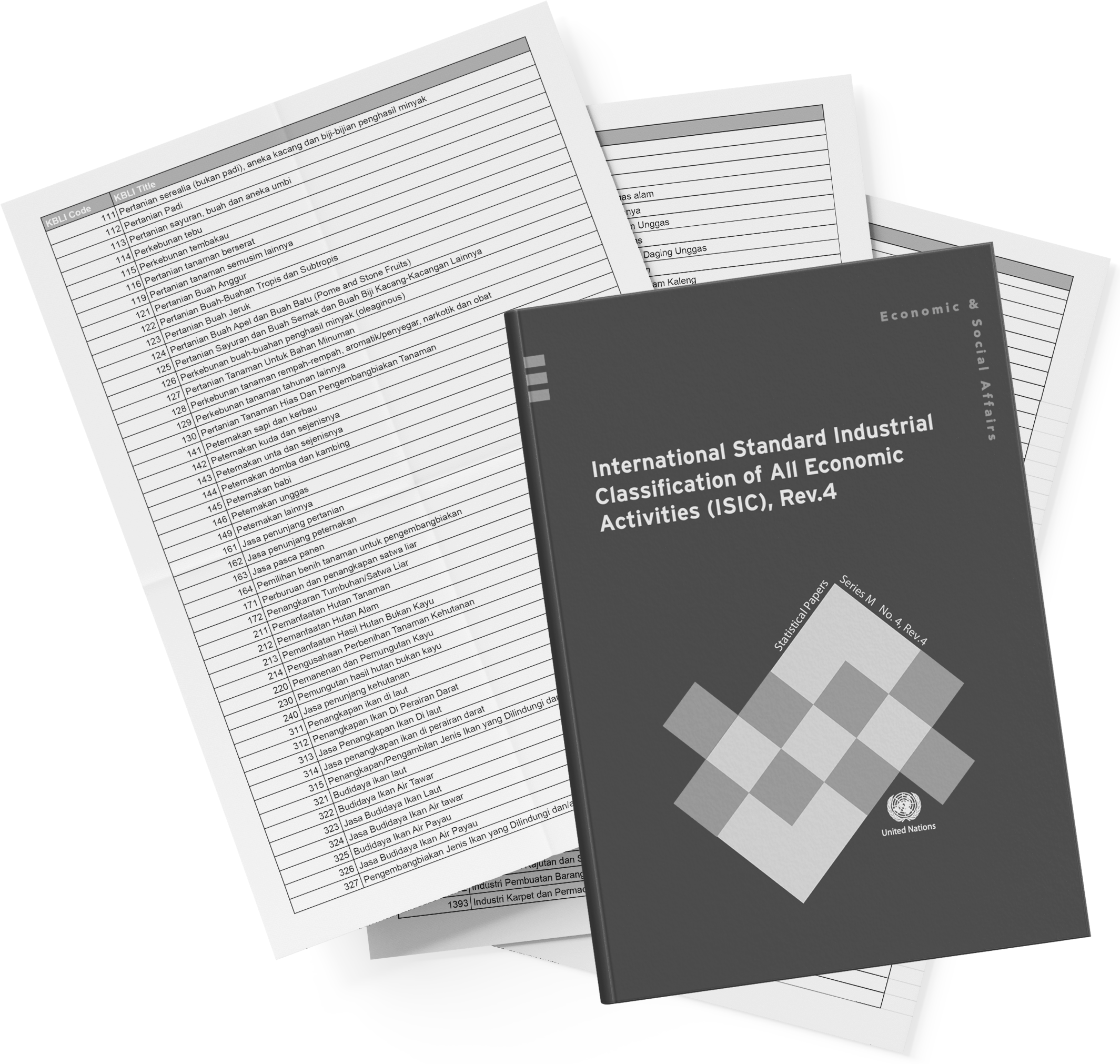
KBLI: 2815: Oven, Furnace, and Furnace Burner Manufacturing Industry in Indonesia
ISIC: Reference: International Standard Industrial Classification
NAICS: Comparable: North American Industry Classification System
Industry Terms
Key terminology for understanding the Oven, Furnace, and Furnace Burner Manufacturing Industry in Indonesia industry.
Refractory lining
Heat-resistant materials like bricks or castables lining furnace interiors to withstand 1000-1800°C without degrading.
Determines thermal efficiency and lifespan—poor choice leads to frequent rebuilds, spiking costs in high-use smelters.
Burner management system
Automated controls sequencing fuel-air mix for stable flames and minimal emissions.
Ensures compliance with KLHK emission limits; optimizes fuel use amid LPG price swings.
Heat treatment furnace
Enclosed chamber for controlled heating/cooling of metals to alter properties like hardness.
Critical for automotive/steel parts quality—uniformity prevents rejects in export-oriented factories.
Industry Overview – Business Types
Different business models operate within the Oven, Furnace, and Furnace Burner Manufacturing Industry in Indonesia industry.
Custom fabricator
Client briefs specs; engineers design via CAD, source steel/refractories, weld/assemble on-site or shop, test-fire before delivery.
Tailored to unique loads like odd-shaped nickel anodes, commanding premiums but risking delays.
Standard industry practices apply.
Standardized assembler
Produces modular ovens from imported kits, scales via batch runs for common sizes like bakery or lab units.
Volume efficiencies lower costs 20-30%, appealing to SMEs via quick delivery.
Standard industry practices apply.
Integrated service provider
Builds, installs, and maintains furnaces with performance guarantees, often bundling upgrades.
Recurring revenue from service contracts offsets lumpy capex sales.
Standard industry practices apply.
Industry Performance & Outlook
Performance outlook for Oven, Furnace, and Furnace Burner Manufacturing Industry in Indonesia
Sector rides manufacturing PMI waves, with upstream investments in nickel/steel sustaining mid-term demand despite global slowdowns.
Outlook brightens with EV supply chain localization, though energy costs and skilled labor shortages cap margins.
Key performance indicators
Market growth
Industry expansion rate
Driven by domestic demand
Operational efficiency
Cost management
Key competitive factor
Outlook: what to watch
Monitor regulatory changes
Track infrastructure developments
Watch for technology adoption
Industry Growth Drivers
Key factors driving growth in Oven, Furnace, and Furnace Burner Manufacturing Industry in Indonesia.
Growth Driver 1
Domestic consumption growth driven by expanding middle class and rising disposable incomes
Monitor industry reports and market data for trends.
Growth Driver 2
Infrastructure development reducing logistics costs and improving market access
Monitor industry reports and market data for trends.
Growth Driver 3
Government policy support including investment incentives and industrial development programs
Monitor industry reports and market data for trends.
Growth Driver 4
Technology adoption improving productivity and enabling new business models
Monitor industry reports and market data for trends.
Growth Driver 5
Regional economic integration expanding market access and supply chain opportunities
Monitor industry reports and market data for trends.
Growth Driver 6
Urbanization creating concentrated demand centers and distribution efficiencies
Monitor industry reports and market data for trends.
Industry Trends & Development
Industry Development
Evolution of Oven, Furnace, and Furnace Burner Manufacturing Industry in Indonesia
From imported knock-down kits in the 2000s to local refractory casting today, maturity hinges on welding precision and control tech adoption.
Digital twins and IoT sensors evolve basic PID controls into predictive maintenance, reducing unplanned outages.
Key Trends
Major trends shaping the Oven, Furnace, and Furnace Burner Manufacturing Industry in Indonesia industry.
Digitalization and technology adoption
Industry trend shaping market dynamics.
Operators
Investors
Policymakers
Regulatory developments
Industry trend shaping market dynamics.
Operators
Investors
Policymakers
Impact and Sustainability
Sustainability and impact considerations for the manufacture of ovens, furnaces and furnace burners industry.
Economic Impact
Contribution to national economic development.
Balancing growth with sustainability.
Environmental Considerations
Industry practices and environmental impact.
Operational costs vs sustainability.
Industry Segmentation
Industry Segmentation – Product/Service A
Primary market segments based on service type.
Segmentation by offering
Primary Segment
Core offerings
Main market
Addresses primary demand
Secondary Segment
Supporting services
Niche markets
Specialized needs
Segments may overlap based on customer needs.
Industry Segmentation – Product/Service B
Alternative segmentation perspectives.
Segmentation by characteristics
Mass Market
Broad appeal
General consumers
Volume-driven
Premium
High-value offerings
Discerning buyers
Quality-focused
Segment boundaries are fluid.
Customer Segmentation
Different customer segments and their characteristics.
Customer segments and what they value
B2B customers
Various
Multiple needs
Different channels
B2C consumers
Various
Multiple needs
Different channels
Key Players
Ecosystem Mapping
Oven, Furnace, and Furnace Burner Manufacturing Industry in Indonesia ecosystem includes various stakeholders.
Suppliers
Provide inputs and raw materials.
Primary producers
Input suppliers
Operators
Core industry participants.
Main industry operators
Service providers
Distribution
Channel to end customers.
Distributors
Retailers
How value flows across the ecosystem
Value is created through coordinated activities across the ecosystem.
Leading Players
Competitive landscape and key player archetypes.
Competitive archetypes
Market Leader
Dominant position
Scale, brand recognition
Market saturation
Specialist
Niche focus
Expertise, agility
Limited scale
How competition typically plays out
Competition is shaped by scale advantages, operational efficiency, and customer relationships.
Differentiation strategies vary by segment, with some players competing on price and others on service quality.
Operating Conditions
Operating Model & Cost Structure
Operating models in Oven, Furnace, and Furnace Burner Manufacturing Industry in Indonesia vary by business type.
Direct costs
Primary operational expenses
Input costs
Labor
Utilities
Major cost component
Overhead
Indirect operational costs
Administration
Facilities
Marketing
Scale-dependent
Cost structure summary
Direct costs
Volume and input prices
Operations
Efficiency improvements
Overhead
Scale and complexity
Administration
Process optimization
Cost structure varies by business model and scale.
Regulation & Compliance Considerations
Regulatory framework and compliance requirements.
Common compliance topics
Business licensing
Operating permits
Legal operation
Maintain valid licenses
Quality standards
Product/service requirements
Market access
Quality control systems
Stay current with regulatory changes.
FAQs & Sources
FAQs
What is Oven, Furnace, and Furnace Burner Manufacturing Industry in Indonesia?
Oven, Furnace, and Furnace Burner Manufacturing Industry in Indonesia encompasses various business activities in the Indonesian market.
Sources & Notes
This report is a synthesized overview based on industry analysis and desk research.
BPS (Statistics Indonesia)
Official statistics and industry data.
Ministry of Industry regulations
Regulatory framework and compliance requirements.
This report is for informational purposes and should not be treated as legal, regulatory, or investment advice.