Other Fabricated Metal Product Manufacturing Industry in Indonesia
A practical guide to Other Fabricated Metal Product Manufacturing Industry in Indonesia—market dynamics, operational realities, and strategic considerations in Indonesia
Manufacture of Other Fabricated Metal Products n.e.c. transforms raw metal stock—sheets, bars, wires, tubes—into functional components through stamping, bending, welding, forging, and assembly. These products serve as critical connectors in larger systems: hardware secures buildings, fasteners join machines, springs absorb shocks in vehicles, chains link loads, and household items provide everyday utility. Operations prioritize precision to tight tolerances, surface treatments for corrosion resistance in humid tropics, and scalability from custom prototypes to mass runs, enabling integration into downstream assembly lines while managing scrap recovery for cost control.
Clear industry definition and scope of activities
Operational realities across Indonesia's regions
Market segmentation and customer analysis
Ecosystem mapping and competitive dynamics
Cost structure and unit economics
Regulatory and compliance considerations
Executive Summary
Manufacture of Other Fabricated Metal Products n.e.c. transforms raw metal stock—sheets, bars, wires, tubes—into functional components through stamping, bending, welding, forging, and assembly. These products serve as critical connectors in larger systems: hardware secures buildings, fasteners join machines, springs absorb shocks in vehicles, chains link loads, and household items provide everyday utility.
Operations prioritize precision to tight tolerances, surface treatments for corrosion resistance in humid tropics, and scalability from custom prototypes to mass runs, enabling integration into downstream assembly lines while managing scrap recovery for cost control.
SME-dominated with flexible job shops filling custom needs, while mid-tier plants handle OEM volumes.
Demand cyclical with construction tenders peaking pre-monsoon, requiring inventory buffers.
SNI certification unlocks government projects and large buyers, differentiating from unregulated imports.
Scrap metal recycling loops back 20-40% of input, key to margins amid steel volatility.
Clusters enable shared logistics but amplify risks from localized power outages or strikes.
Why this industry matters in Indonesia
Supports Indonesia's economic growth and development objectives.
Creates employment opportunities across diverse skill levels.
Critical for service delivery and value chain integration.
Enables Indonesia's competitiveness in regional and global markets.
So what: Practical implications
Operators: Focus on quality consistency and process standardization
Buyers: Evaluate supplier capabilities beyond pricing
Investors: Look for operational efficiency and scalability
Policymakers: Support infrastructure development
Indonesia at a Glance
Republic of Indonesia: Large and fragmented market
Fragmented landscape of micro-SMEs producing commodity hardware alongside specialized fabricators supplying OEMs in auto and construction; growth tracks infrastructure acceleration and EV localization efforts.
End-markets split across construction (fittings/locks), machinery/auto (springs/fasteners), and consumer durables (household metal stands/trays), with exports via Batam FTZ targeting ASEAN fisheries and oil-gas.
Market dynamics continue to evolve with changing economic conditions.
Hyperlocalization is key to navigate Indonesia's market
West Java (Bekasi, Karawang) hubs specialize in precision fasteners/springs for nearby car plants like Astra, minimizing trucking delays in peak assembly schedules.
Tangerang-Banten focuses on galvanized hardware for humid coastal builds, leveraging Tanjung Priok port for billet imports and finished exports.
Opportunities extend beyond cities
Central Java (Semarang) serves furniture exporters with metal frames/handles, tapping wood-metal hybrid supply chains.
East Java (Surabaya hinterlands) and Batam FTZ cater to shipbuilding chains and offshore platforms with corrosion-resistant products.
Growing middle class driving premiumization trends across product categories and services
Digital adoption accelerating with mobile-first consumer behavior creating new channel opportunities
Infrastructure investment improving connectivity and reducing logistics costs across the archipelago
Government initiatives supporting domestic industry development and foreign investment attraction
Regional economic integration through ASEAN creating expanded market access and trade opportunities
Sustainability and ESG considerations creating differentiation opportunities for responsible businesses
Distribution realities: logistics, infrastructure, and channel reach
Road trucking dominates Java distribution to sites, with sea RoRo for Sumatra/Java inter-island; heavy weight amplifies fuel costs and monsoon road risks.
Raw inputs trucked from Cilegon/Tuban steel hubs (1-3 days), finished goods to wholesalers via 10-20 ton containers, prone to port backlogs.
Establish robust distribution partnerships covering both modern trade and traditional channels
Invest in localized supply chain capabilities to navigate logistics complexities and reduce costs
Develop region-specific market entry strategies accounting for local competitive dynamics
Build flexibility into operations to adapt to regulatory changes and infrastructure variations
Industry Definition
What is Other Fabricated Metal Product Manufacturing Industry in Indonesia?
Industry Definition
This KBLI captures secondary fabrication of metals into standalone products excluding primary shapes, machinery parts, or containers: processes like die-stamping sheets for hardware, wire-drawing/coiling for chains/springs, machining rods for fasteners.
Includes builders' ware (hinges, handles), fasteners, springs/chains, non-kitchen household metal (trays, racks), safes/filing cabinets; excludes structural beams (2511), cans/drums (2591), kitchenware (25992), electrical wire products (273).
Indonesia in Focus
Indonesia's archipelago geography creates unique distribution challenges requiring adapted logistics and storage solutions.
High humidity and tropical climate demand specific technical approaches to quality preservation and product integrity.
Industry Classification
Conceptually, industry activities sit under specific regulatory frameworks with classification by operational scale and service model.
Operators may be classified by activity type, by service delivery model, and by end-use applications.
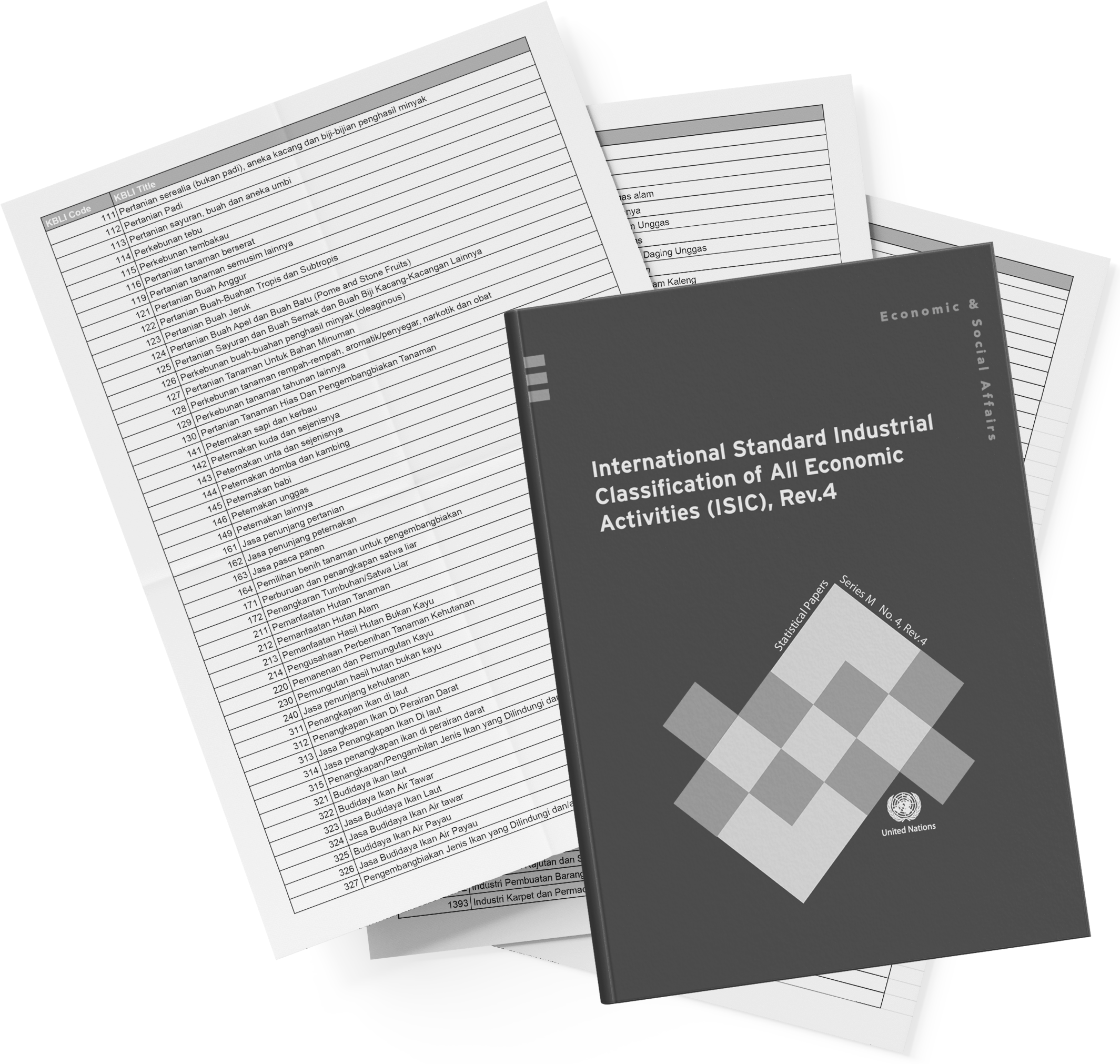
KBLI: 2599: Other Fabricated Metal Product Manufacturing Industry in Indonesia
ISIC: Reference: International Standard Industrial Classification
NAICS: Comparable: North American Industry Classification System
Industry Terms
Key terminology for understanding the Other Fabricated Metal Product Manufacturing Industry in Indonesia industry.
Builders' hardware
Metal components for building assembly like door hinges, window latches, cabinet fittings.
Volume driver from housing/infra; requires load-testing and anti-rust coatings to withstand Indonesia's rains.
Cold heading
Forming fasteners from wire via high-speed upsetting without heat.
Cost-effective for high-volume bolts/nuts, enabling SMEs to compete on price with imports.
Leaf spring
Multi-layered arched steel strips providing suspension flex in trucks/trailers.
Essential for heavy vehicles on potholed roads; localization cuts logistics for fleet operators.
Industry Overview – Business Types
Different business models operate within the Other Fabricated Metal Product Manufacturing Industry in Indonesia industry.
Commodity hardware stamper
Progressive dies punch/ form sheet runs of hinges/fittings for stockist sales.
Scale economies and fast cycles undercut import landed costs.
Standard industry practices apply.
OEM component supplier
JIT delivery of spec'd springs/fasteners with SPC quality to assembly lines.
ISO/SNI certs and tooling investment lock in auto/construction contracts.
Standard industry practices apply.
Custom fabrication shop
Multi-process (cut/bend/weld) for one-off gates/safes using versatile machines.
Rapid prototyping and site modifications for builders/property devs.
Standard industry practices apply.
Industry Performance & Outlook
Performance outlook for Other Fabricated Metal Product Manufacturing Industry in Indonesia
Sector tracks broader manufacturing with steady expansion from infra/manufacturing upticks, though margins squeezed by steel pass-through and low-end competition; capacity strains in clusters during peaks.
Positive trajectory via nickel downstream mandates boosting specialty alloys, EV suspension needs, and prefab construction modularity.
Key performance indicators
Market growth
Industry expansion rate
Driven by domestic demand
Operational efficiency
Cost management
Key competitive factor
Outlook: what to watch
Monitor regulatory changes
Track infrastructure developments
Watch for technology adoption
Industry Growth Drivers
Key factors driving growth in Other Fabricated Metal Product Manufacturing Industry in Indonesia.
Growth Driver 1
Domestic consumption growth driven by expanding middle class and rising disposable incomes
Monitor industry reports and market data for trends.
Growth Driver 2
Infrastructure development reducing logistics costs and improving market access
Monitor industry reports and market data for trends.
Growth Driver 3
Government policy support including investment incentives and industrial development programs
Monitor industry reports and market data for trends.
Growth Driver 4
Technology adoption improving productivity and enabling new business models
Monitor industry reports and market data for trends.
Growth Driver 5
Regional economic integration expanding market access and supply chain opportunities
Monitor industry reports and market data for trends.
Growth Driver 6
Urbanization creating concentrated demand centers and distribution efficiencies
Monitor industry reports and market data for trends.
Industry Trends & Development
Industry Development
Evolution of Other Fabricated Metal Product Manufacturing Industry in Indonesia
Evolution from labor-intensive manual bending to semi-automated stamping/CNC coiling, spurred by OEM precision demands and labor wage rises.
Clustering in kawasan industri with shared power/sewage enables scale while preserving SME agility.
Key Trends
Major trends shaping the Other Fabricated Metal Product Manufacturing Industry in Indonesia industry.
Digitalization and technology adoption
Industry trend shaping market dynamics.
Operators
Investors
Policymakers
Regulatory developments
Industry trend shaping market dynamics.
Operators
Investors
Policymakers
Impact and Sustainability
Sustainability and impact considerations for the manufacture of other fabricated metal products not elsewhere classified industry.
Economic Impact
Contribution to national economic development.
Balancing growth with sustainability.
Environmental Considerations
Industry practices and environmental impact.
Operational costs vs sustainability.
Industry Segmentation
Industry Segmentation – Product/Service A
Primary market segments based on service type.
Segmentation by offering
Primary Segment
Core offerings
Main market
Addresses primary demand
Secondary Segment
Supporting services
Niche markets
Specialized needs
Segments may overlap based on customer needs.
Industry Segmentation – Product/Service B
Alternative segmentation perspectives.
Segmentation by characteristics
Mass Market
Broad appeal
General consumers
Volume-driven
Premium
High-value offerings
Discerning buyers
Quality-focused
Segment boundaries are fluid.
Customer Segmentation
Different customer segments and their characteristics.
Customer segments and what they value
B2B customers
Various
Multiple needs
Different channels
B2C consumers
Various
Multiple needs
Different channels
Key Players
Ecosystem Mapping
Other Fabricated Metal Product Manufacturing Industry in Indonesia ecosystem includes various stakeholders.
Suppliers
Provide inputs and raw materials.
Primary producers
Input suppliers
Operators
Core industry participants.
Main industry operators
Service providers
Distribution
Channel to end customers.
Distributors
Retailers
How value flows across the ecosystem
Value is created through coordinated activities across the ecosystem.
Leading Players
Competitive landscape and key player archetypes.
Competitive archetypes
Market Leader
Dominant position
Scale, brand recognition
Market saturation
Specialist
Niche focus
Expertise, agility
Limited scale
How competition typically plays out
Competition is shaped by scale advantages, operational efficiency, and customer relationships.
Differentiation strategies vary by segment, with some players competing on price and others on service quality.
Operating Conditions
Operating Model & Cost Structure
Operating models in Other Fabricated Metal Product Manufacturing Industry in Indonesia vary by business type.
Direct costs
Primary operational expenses
Input costs
Labor
Utilities
Major cost component
Overhead
Indirect operational costs
Administration
Facilities
Marketing
Scale-dependent
Cost structure summary
Direct costs
Volume and input prices
Operations
Efficiency improvements
Overhead
Scale and complexity
Administration
Process optimization
Cost structure varies by business model and scale.
Regulation & Compliance Considerations
Regulatory framework and compliance requirements.
Common compliance topics
Business licensing
Operating permits
Legal operation
Maintain valid licenses
Quality standards
Product/service requirements
Market access
Quality control systems
Stay current with regulatory changes.
FAQs & Sources
FAQs
What is Other Fabricated Metal Product Manufacturing Industry in Indonesia?
Other Fabricated Metal Product Manufacturing Industry in Indonesia encompasses various business activities in the Indonesian market.
Sources & Notes
This report is a synthesized overview based on industry analysis and desk research.
BPS (Statistics Indonesia)
Official statistics and industry data.
Ministry of Industry regulations
Regulatory framework and compliance requirements.
This report is for informational purposes and should not be treated as legal, regulatory, or investment advice.