Motorcycle Manufacturing Industry in Indonesia
A practical guide to Motorcycle Manufacturing Industry in Indonesia—market dynamics, operational realities, and strategic considerations in Indonesia
This industry involves the production and assembly of motorcycles, mopeds, motorized bicycles, and their engines, primarily through local assembly of imported CKD kits. Activities focus on two- and three-wheeled vehicles tailored for Indonesia's congested urban roads and rural terrains, excluding four-wheeled vehicles or bicycles.
Clear industry definition and scope of activities
Operational realities across Indonesia's regions
Market segmentation and customer analysis
Ecosystem mapping and competitive dynamics
Cost structure and unit economics
Regulatory and compliance considerations
Executive Summary
This industry involves the production and assembly of motorcycles, mopeds, motorized bicycles, and their engines, primarily through local assembly of imported CKD kits.
Activities focus on two- and three-wheeled vehicles tailored for Indonesia's congested urban roads and rural terrains, excluding four-wheeled vehicles or bicycles.
Japanese OEMs hold over 95% market share through local joint ventures like Astra Honda and Yamaha Indonesia.
High TKDN requirements mandate 60-80% local content for tax incentives, driving ancillary supply chains.
Scooters dominate urban sales at 60%, while rugged underbones prevail in rural areas.
EV transition lags due to sparse charging infrastructure outside Java, despite government targets.
Dealer networks exceeding 20,000 outlets ensure nationwide penetration, even to remote regions.
Why this industry matters in Indonesia
Supports Indonesia's economic growth and development objectives.
Creates employment opportunities across diverse skill levels.
Critical for service delivery and value chain integration.
Enables Indonesia's competitiveness in regional and global markets.
So what: Practical implications
Operators: Focus on quality consistency and process standardization
Buyers: Evaluate supplier capabilities beyond pricing
Investors: Look for operational efficiency and scalability
Policymakers: Support infrastructure development
Indonesia at a Glance
Republic of Indonesia: Large and fragmented market
The market reached approximately USD 10 billion in 2025 with 6.4 million units sold, growing at 3-4% CAGR amid urban saturation.
Honda commands 70% share, Yamaha 25%, with Suzuki and others filling niches; Japanese brands dominate via localized production.<grok:render type="render_inline_citation"><argument name="citation_id">10</argument></grok:render><grok:render type="render_inline_citation"><argument name="citation_id">20</argument></grok:render>
Market dynamics continue to evolve with changing economic conditions.
Hyperlocalization is key to navigate Indonesia's market
Models feature elevated ground clearance and flood-resistant designs for Indonesia's monsoons and potholed roads.
Regional variants adjust for Sumatra's heat or Papua's rough tracks, with Java-centric parts optimized for cost.
Opportunities extend beyond cities
Rural markets sustain 40% of volume, favoring durable 110cc cubs for farming and inter-village travel.
Eastern Indonesia relies on sea-freighted bikes, prioritizing reliability over features.
Growing middle class driving premiumization trends across product categories and services
Digital adoption accelerating with mobile-first consumer behavior creating new channel opportunities
Infrastructure investment improving connectivity and reducing logistics costs across the archipelago
Government initiatives supporting domestic industry development and foreign investment attraction
Regional economic integration through ASEAN creating expanded market access and trade opportunities
Sustainability and ESG considerations creating differentiation opportunities for responsible businesses
Distribution realities: logistics, infrastructure, and channel reach
Tiered dealer system funnels from Java factories via trucks and ferries to 20,000+ outlets nationwide.
Just-in-time parts delivery from local suppliers minimizes inventory costs in archipelago logistics.
Establish robust distribution partnerships covering both modern trade and traditional channels
Invest in localized supply chain capabilities to navigate logistics complexities and reduce costs
Develop region-specific market entry strategies accounting for local competitive dynamics
Build flexibility into operations to adapt to regulatory changes and infrastructure variations
Industry Definition
What is Motorcycle Manufacturing Industry in Indonesia?
Industry Definition
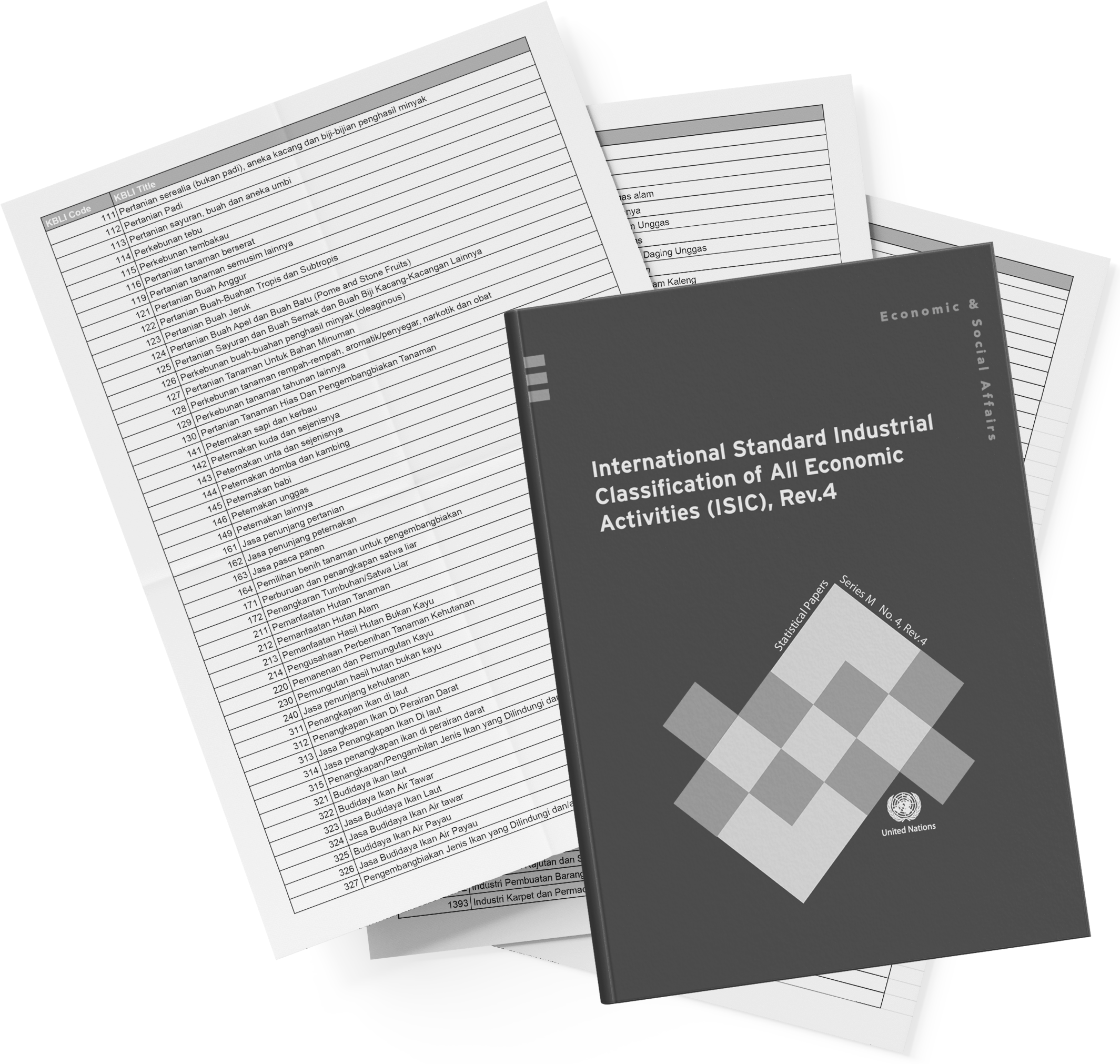
KBLI 3091 covers manufacturing of motorcycles (2-3 wheels), mopeds, auxiliary-engine cycles, and dedicated engines; excludes bicycles (3092) or auto parts (2930).
Primarily CKD assembly with progressive localization; full from-scratch production is rare due to scale economics.
Indonesia in Focus
Indonesia's archipelago geography creates unique distribution challenges requiring adapted logistics and storage solutions.
High humidity and tropical climate demand specific technical approaches to quality preservation and product integrity.
Industry Classification
Conceptually, industry activities sit under specific regulatory frameworks with classification by operational scale and service model.
Operators may be classified by activity type, by service delivery model, and by end-use applications.
KBLI: 3091: Motorcycle Manufacturing Industry in Indonesia
ISIC: Reference: International Standard Industrial Classification
NAICS: Comparable: North American Industry Classification System
Industry Terms
Key terminology for understanding the Motorcycle Manufacturing Industry in Indonesia industry.
CKD (Completely Knocked Down)
Imported semi-assembled kits locally finalized into complete motorcycles.
Reduces import duties versus CBU, enables TKDN compliance for incentives in Indonesia's protectionist regime.
TKDN (Tingkat Komponen Dalam Negeri)
Percentage of local content in vehicle bill of materials.
Mandated at 60%+ for luxury tax cuts; spurs local suppliers but raises costs if imports needed.
Underbone
Frame-under-seat design popular for cargo/utility in Indonesia.
Dominates rural sales over scooters; trade-off of versatility vs. urban style.
Industry Overview – Business Types
Different business models operate within the Motorcycle Manufacturing Industry in Indonesia industry.
High-Volume CKD Assembler
Imports kits from Japan, assembles in mega-factories with 80% local parts.
Economies of scale via 1M+ unit capacity, like AHM's Karawang plant.
Standard industry practices apply.
Niche Engine Producer
Specializes in 110cc-150cc engines with local casting/machining.
Supplies multiple OEMs, hedging brand risks.
Standard industry practices apply.
EV Pilot Assembler
Partners for battery imports, assembles low-volume electrics targeting subsidies.
First-mover in green incentives despite infra gaps.
Standard industry practices apply.
Industry Performance & Outlook
Performance outlook for Motorcycle Manufacturing Industry in Indonesia
Industry grew 1-3% in 2025 post-COVID recovery, with stable margins from localization.
Outlook moderate at 3% CAGR to 2030; EV penetration <5% short-term, accelerating post-2030 with infra buildout.
Key performance indicators
Market growth
Industry expansion rate
Driven by domestic demand
Operational efficiency
Cost management
Key competitive factor
Outlook: what to watch
Monitor regulatory changes
Track infrastructure developments
Watch for technology adoption
Industry Growth Drivers
Key factors driving growth in Motorcycle Manufacturing Industry in Indonesia.
Growth Driver 1
Domestic consumption growth driven by expanding middle class and rising disposable incomes
Monitor industry reports and market data for trends.
Growth Driver 2
Infrastructure development reducing logistics costs and improving market access
Monitor industry reports and market data for trends.
Growth Driver 3
Government policy support including investment incentives and industrial development programs
Monitor industry reports and market data for trends.
Growth Driver 4
Technology adoption improving productivity and enabling new business models
Monitor industry reports and market data for trends.
Growth Driver 5
Regional economic integration expanding market access and supply chain opportunities
Monitor industry reports and market data for trends.
Growth Driver 6
Urbanization creating concentrated demand centers and distribution efficiencies
Monitor industry reports and market data for trends.
Industry Trends & Development
Industry Development
Evolution of Motorcycle Manufacturing Industry in Indonesia
Evolved from 1990s import substitution to export-oriented hubs with 70% localization.
2020s pivot to EV amid net-zero pledges, though ICE remains 99% of production.
Key Trends
Major trends shaping the Motorcycle Manufacturing Industry in Indonesia industry.
Digitalization and technology adoption
Industry trend shaping market dynamics.
Operators
Investors
Policymakers
Regulatory developments
Industry trend shaping market dynamics.
Operators
Investors
Policymakers
Impact and Sustainability
Sustainability and impact considerations for the manufacture of motorcycles industry.
Economic Impact
Contribution to national economic development.
Balancing growth with sustainability.
Environmental Considerations
Industry practices and environmental impact.
Operational costs vs sustainability.
Industry Segmentation
Industry Segmentation – Product/Service A
Primary market segments based on service type.
Segmentation by offering
Primary Segment
Core offerings
Main market
Addresses primary demand
Secondary Segment
Supporting services
Niche markets
Specialized needs
Segments may overlap based on customer needs.
Industry Segmentation – Product/Service B
Alternative segmentation perspectives.
Segmentation by characteristics
Mass Market
Broad appeal
General consumers
Volume-driven
Premium
High-value offerings
Discerning buyers
Quality-focused
Segment boundaries are fluid.
Customer Segmentation
Different customer segments and their characteristics.
Customer segments and what they value
B2B customers
Various
Multiple needs
Different channels
B2C consumers
Various
Multiple needs
Different channels
Key Players
Ecosystem Mapping
Motorcycle Manufacturing Industry in Indonesia ecosystem includes various stakeholders.
Suppliers
Provide inputs and raw materials.
Primary producers
Input suppliers
Operators
Core industry participants.
Main industry operators
Service providers
Distribution
Channel to end customers.
Distributors
Retailers
How value flows across the ecosystem
Value is created through coordinated activities across the ecosystem.
Leading Players
Competitive landscape and key player archetypes.
Competitive archetypes
Market Leader
Dominant position
Scale, brand recognition
Market saturation
Specialist
Niche focus
Expertise, agility
Limited scale
How competition typically plays out
Competition is shaped by scale advantages, operational efficiency, and customer relationships.
Differentiation strategies vary by segment, with some players competing on price and others on service quality.
Operating Conditions
Operating Model & Cost Structure
Operating models in Motorcycle Manufacturing Industry in Indonesia vary by business type.
Direct costs
Primary operational expenses
Input costs
Labor
Utilities
Major cost component
Overhead
Indirect operational costs
Administration
Facilities
Marketing
Scale-dependent
Cost structure summary
Direct costs
Volume and input prices
Operations
Efficiency improvements
Overhead
Scale and complexity
Administration
Process optimization
Cost structure varies by business model and scale.
Regulation & Compliance Considerations
Regulatory framework and compliance requirements.
Common compliance topics
Business licensing
Operating permits
Legal operation
Maintain valid licenses
Quality standards
Product/service requirements
Market access
Quality control systems
Stay current with regulatory changes.
FAQs & Sources
FAQs
What is Motorcycle Manufacturing Industry in Indonesia?
Motorcycle Manufacturing Industry in Indonesia encompasses various business activities in the Indonesian market.
Sources & Notes
This report is a synthesized overview based on industry analysis and desk research.
BPS (Statistics Indonesia)
Official statistics and industry data.
Ministry of Industry regulations
Regulatory framework and compliance requirements.
This report is for informational purposes and should not be treated as legal, regulatory, or investment advice.