Metal Tank, Reservoir, and Container Manufacturing Industry in Indonesia
A practical guide to Metal Tank, Reservoir, and Container Manufacturing Industry in Indonesia—market dynamics, operational realities, and strategic considerations in Indonesia
Manufacture of Tanks, Reservoirs and Containers of Metal produces custom and standard metal vessels for industrial storage and containment, ranging from large above-ground oil tanks to stainless steel food-grade drums and pressure-rated chemical reservoirs. Core processes involve plasma cutting steel sheets, automated welding for seam integrity, hydro-testing for leak-proofing, and coatings to resist corrosion in harsh environments like humid coastal areas. These products enable safe handling of volatile substances in sectors like petrochemicals, mining, palm oil processing, and water utilities, where vessel failure risks environmental spills or operational downtime.
Clear industry definition and scope of activities
Operational realities across Indonesia's regions
Market segmentation and customer analysis
Ecosystem mapping and competitive dynamics
Cost structure and unit economics
Regulatory and compliance considerations
Executive Summary
Manufacture of Tanks, Reservoirs and Containers of Metal produces custom and standard metal vessels for industrial storage and containment, ranging from large above-ground oil tanks to stainless steel food-grade drums and pressure-rated chemical reservoirs. Core processes involve plasma cutting steel sheets, automated welding for seam integrity, hydro-testing for leak-proofing, and coatings to resist corrosion in harsh environments like humid coastal areas.
These products enable safe handling of volatile substances in sectors like petrochemicals, mining, palm oil processing, and water utilities, where vessel failure risks environmental spills or operational downtime.
Demand peaks with energy projects; tanks for Pertamina refineries or Adaro mines require API 650 certification, tying operators to international standards.
Stainless steel variants dominate food/palm sectors due to hygiene rules, while carbon steel suffices for water/PDAM reservoirs amid urbanization.
Fabrication hubs in Bekasi, Surabaya, and Batam benefit from FTZ incentives, exporting to ASEAN but facing 5-10% import duties on finished goods.
Welding quality dictates 80% of costs; skilled certified welders are scarce outside Java, pushing subcontracting and quality variability.
Sustainability shift favors lighter alloys and modular bolted tanks for faster assembly in remote sites like Papua LNG.
Why this industry matters in Indonesia
Supports Indonesia's economic growth and development objectives.
Creates employment opportunities across diverse skill levels.
Critical for service delivery and value chain integration.
Enables Indonesia's competitiveness in regional and global markets.
So what: Practical implications
Operators: Focus on quality consistency and process standardization
Buyers: Evaluate supplier capabilities beyond pricing
Investors: Look for operational efficiency and scalability
Policymakers: Support infrastructure development
Indonesia at a Glance
Republic of Indonesia: Large and fragmented market
Indonesia's metal tank sector supports Rp 50-70 trillion in annual downstream capacity additions across oil/gas, mining, and agro-industry, with fabrication concentrated in 200+ firms mostly under 100 employees. Growth tracks infrastructure spend (8% of GDP), but capacity utilization swings with project tenders from BUMNs like Pupuk Indonesia or PLN.
Java accounts for 70% output, exporting 20% to Philippines/Vietnam; stainless tanks for palm oil fractionation lead volumes, followed by water tanks for PDAM expansions.
Market dynamics continue to evolve with changing economic conditions.
Hyperlocalization is key to navigate Indonesia's market
Bekasi and Sidoarjo clusters specialize in petrochemical tanks, leveraging proximity to Krakatau Steel and Pertamina plants for just-in-time steel delivery and testing facilities.
Batam FTZ hosts export-focused fabricators serving Singapore refineries, while Surabaya caters to East Java's sugar refineries with food-grade vessels resistant to cane syrup corrosion.
Opportunities extend beyond cities
Sumatra's Riau and South Sumatra rely on mobile fabrication units for oilfield tanks, trucking semi-knocked-down parts to avoid overweight ferry limits.
Kalimantan and Sulawesi miners demand oversized slurry tanks shipped via barge, with on-site assembly to bypass road bridges rated for 20-ton loads.
Growing middle class driving premiumization trends across product categories and services
Digital adoption accelerating with mobile-first consumer behavior creating new channel opportunities
Infrastructure investment improving connectivity and reducing logistics costs across the archipelago
Government initiatives supporting domestic industry development and foreign investment attraction
Regional economic integration through ASEAN creating expanded market access and trade opportunities
Sustainability and ESG considerations creating differentiation opportunities for responsible businesses
Distribution realities: logistics, infrastructure, and channel reach
Products ship flat-packed or nested to cut sea freight 40%; inter-island ferries dictate max dimensions (12m length), favoring bolted designs over welded monoliths.
Local trucking uses low-bed trailers for 40-ton loads, but monsoon floods in outer islands necessitate elevated storage and crane-equipped yards.
Establish robust distribution partnerships covering both modern trade and traditional channels
Invest in localized supply chain capabilities to navigate logistics complexities and reduce costs
Develop region-specific market entry strategies accounting for local competitive dynamics
Build flexibility into operations to adapt to regulatory changes and infrastructure variations
Industry Definition
What is Metal Tank, Reservoir, and Container Manufacturing Industry in Indonesia?
Industry Definition
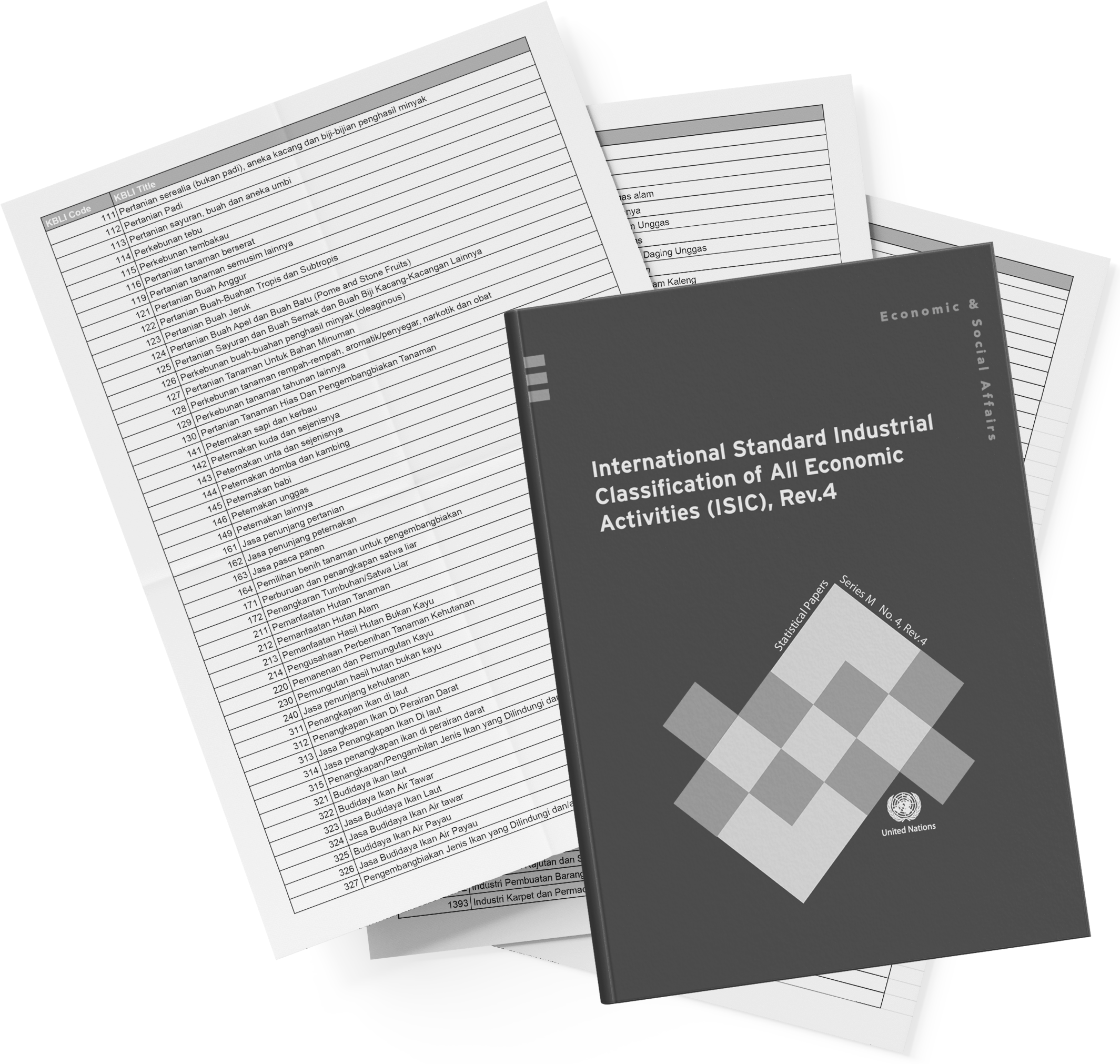
KBLI 2512 encompasses fabrication of non-pressurized and low-pressure metal tanks/reservoirs up to 15 psi, including storage vats for liquids/gases, water tandon, industrial drums/barrels, and silos excluding steam boilers (2513) or structural steel (2511). Boundaries exclude plastic/GRP tanks (2220), on-site erection without fab (4390), and transport containers/ISO tanks (3013).
Products undergo ASME/API or SNI-equivalent testing for weld integrity, hydrostatic pressure, and material traceability, serving as critical infrastructure components where failure cascades to supply chain halts.
Indonesia in Focus
Indonesia's archipelago geography creates unique distribution challenges requiring adapted logistics and storage solutions.
High humidity and tropical climate demand specific technical approaches to quality preservation and product integrity.
Industry Classification
Conceptually, industry activities sit under specific regulatory frameworks with classification by operational scale and service model.
Operators may be classified by activity type, by service delivery model, and by end-use applications.
KBLI: 2512: Metal Tank, Reservoir, and Container Manufacturing Industry in Indonesia
ISIC: Reference: International Standard Industrial Classification
NAICS: Comparable: North American Industry Classification System
Industry Terms
Key terminology for understanding the Metal Tank, Reservoir, and Container Manufacturing Industry in Indonesia industry.
Hydrostatic Testing
Filling the vessel with water to 1.3-1.5x design pressure to verify no leaks or deformation.
Mandated by SNI 7237/API 650 in Indonesia; failure rates above 5% trigger rework, delaying projects by weeks in time-sensitive oilfield installs.
Clad Plate
Steel base overlaid with corrosion-resistant alloy like SS316 via roll bonding or explosion welding.
Essential for sour gas/acid service in Cepu fields; doubles material cost but extends life 20+ years vs. coated carbon steel.
Nozzle Reinforcement
Added pads or thicker shells around pipe openings to compensate for stress concentrations.
Prevents rupture in cyclic loading; overlooked in cheap imports, leading to PDAM leaks or refinery shutdowns.
Industry Overview – Business Types
Different business models operate within the Metal Tank, Reservoir, and Container Manufacturing Industry in Indonesia industry.
Job Shop Fabricators
Custom builds from client specs using CNC plasma, GTAW welding, and in-house NDT; low-volume, high-mix for OEMs.
Flexibility for odd sizes/shapes in mining slurries, but vulnerable to payment delays from EPC contractors.
Standard industry practices apply.
Series Production Shops
Standardized water tanks/drums via progressive tooling and robotic welding lines; economies from repeat PDAM/food clients.
Price leadership through scale, but rigid to spec changes amid rupiah steel volatility.
Standard industry practices apply.
Integrated EPC Affiliates
In-house tank fab bundled with piping/install for turnkey plants; leverages parent engineering expertise.
One-stop accountability wins BUMN tenders, capturing 30% margins on services vs. 10% pure fab.
Standard industry practices apply.
Industry Performance & Outlook
Performance outlook for Metal Tank, Reservoir, and Container Manufacturing Industry in Indonesia
Sector output correlates with fixed asset investment; post-2020 recovery saw 10-15% CAGR tied to refinery expansions, projected steady through 2030 with IKN and net-zero retrofits.
Margins compress 2-5% yearly from steel imports (70% dependency), offset by premium certified vessels amid import scrutiny.
Key performance indicators
Market growth
Industry expansion rate
Driven by domestic demand
Operational efficiency
Cost management
Key competitive factor
Outlook: what to watch
Monitor regulatory changes
Track infrastructure developments
Watch for technology adoption
Industry Growth Drivers
Key factors driving growth in Metal Tank, Reservoir, and Container Manufacturing Industry in Indonesia.
Growth Driver 1
Domestic consumption growth driven by expanding middle class and rising disposable incomes
Monitor industry reports and market data for trends.
Growth Driver 2
Infrastructure development reducing logistics costs and improving market access
Monitor industry reports and market data for trends.
Growth Driver 3
Government policy support including investment incentives and industrial development programs
Monitor industry reports and market data for trends.
Growth Driver 4
Technology adoption improving productivity and enabling new business models
Monitor industry reports and market data for trends.
Growth Driver 5
Regional economic integration expanding market access and supply chain opportunities
Monitor industry reports and market data for trends.
Growth Driver 6
Urbanization creating concentrated demand centers and distribution efficiencies
Monitor industry reports and market data for trends.
Industry Trends & Development
Industry Development
Evolution of Metal Tank, Reservoir, and Container Manufacturing Industry in Indonesia
From manual welding yards to CNC-automated lines: early 2000s shops scaled with Hyundai/Japan tech transfers, enabling API certs for Pertamina quals.
Modular bolted tanks gain traction post-COVID, slashing site erection from 6 weeks to 2 via crane assembly.
Key Trends
Major trends shaping the Metal Tank, Reservoir, and Container Manufacturing Industry in Indonesia industry.
Digitalization and technology adoption
Industry trend shaping market dynamics.
Operators
Investors
Policymakers
Regulatory developments
Industry trend shaping market dynamics.
Operators
Investors
Policymakers
Impact and Sustainability
Sustainability and impact considerations for the manufacture of tanks, reservoirs and containers of metal industry.
Economic Impact
Contribution to national economic development.
Balancing growth with sustainability.
Environmental Considerations
Industry practices and environmental impact.
Operational costs vs sustainability.
Industry Segmentation
Industry Segmentation – Product/Service A
Primary market segments based on service type.
Segmentation by offering
Primary Segment
Core offerings
Main market
Addresses primary demand
Secondary Segment
Supporting services
Niche markets
Specialized needs
Segments may overlap based on customer needs.
Industry Segmentation – Product/Service B
Alternative segmentation perspectives.
Segmentation by characteristics
Mass Market
Broad appeal
General consumers
Volume-driven
Premium
High-value offerings
Discerning buyers
Quality-focused
Segment boundaries are fluid.
Customer Segmentation
Different customer segments and their characteristics.
Customer segments and what they value
B2B customers
Various
Multiple needs
Different channels
B2C consumers
Various
Multiple needs
Different channels
Key Players
Ecosystem Mapping
Metal Tank, Reservoir, and Container Manufacturing Industry in Indonesia ecosystem includes various stakeholders.
Suppliers
Provide inputs and raw materials.
Primary producers
Input suppliers
Operators
Core industry participants.
Main industry operators
Service providers
Distribution
Channel to end customers.
Distributors
Retailers
How value flows across the ecosystem
Value is created through coordinated activities across the ecosystem.
Leading Players
Competitive landscape and key player archetypes.
Competitive archetypes
Market Leader
Dominant position
Scale, brand recognition
Market saturation
Specialist
Niche focus
Expertise, agility
Limited scale
How competition typically plays out
Competition is shaped by scale advantages, operational efficiency, and customer relationships.
Differentiation strategies vary by segment, with some players competing on price and others on service quality.
Operating Conditions
Operating Model & Cost Structure
Operating models in Metal Tank, Reservoir, and Container Manufacturing Industry in Indonesia vary by business type.
Direct costs
Primary operational expenses
Input costs
Labor
Utilities
Major cost component
Overhead
Indirect operational costs
Administration
Facilities
Marketing
Scale-dependent
Cost structure summary
Direct costs
Volume and input prices
Operations
Efficiency improvements
Overhead
Scale and complexity
Administration
Process optimization
Cost structure varies by business model and scale.
Regulation & Compliance Considerations
Regulatory framework and compliance requirements.
Common compliance topics
Business licensing
Operating permits
Legal operation
Maintain valid licenses
Quality standards
Product/service requirements
Market access
Quality control systems
Stay current with regulatory changes.
FAQs & Sources
FAQs
What is Metal Tank, Reservoir, and Container Manufacturing Industry in Indonesia?
Metal Tank, Reservoir, and Container Manufacturing Industry in Indonesia encompasses various business activities in the Indonesian market.
Sources & Notes
This report is a synthesized overview based on industry analysis and desk research.
BPS (Statistics Indonesia)
Official statistics and industry data.
Ministry of Industry regulations
Regulatory framework and compliance requirements.
This report is for informational purposes and should not be treated as legal, regulatory, or investment advice.