Made-Up Textile Article Manufacturing (Except Apparel) Industry in Indonesia
A practical guide to Made-Up Textile Article Manufacturing (Except Apparel) Industry in Indonesia—market dynamics, operational realities, and strategic considerations in Indonesia
This industry produces finished textile products from fabrics, including bed linens, table linens, towels, curtains, cushions, and other household items, excluding apparel. Processes involve cutting patterns, sewing seams, adding trims, and quality finishing to create functional, decorative items for homes, hotels, and institutions.
Clear industry definition and scope of activities
Operational realities across Indonesia's regions
Market segmentation and customer analysis
Ecosystem mapping and competitive dynamics
Cost structure and unit economics
Regulatory and compliance considerations
Executive Summary
This industry produces finished textile products from fabrics, including bed linens, table linens, towels, curtains, cushions, and other household items, excluding apparel.
Processes involve cutting patterns, sewing seams, adding trims, and quality finishing to create functional, decorative items for homes, hotels, and institutions.
Labor-intensive sewing dominates, but automation in cutting and embroidery is rising in larger factories.
Raw cotton imports expose firms to global price swings, mitigated by polyester blends.
Clusters enable quick-turn custom orders for local hotels and retailers.
Sustainability focus on water-efficient dyeing due to Java's water scarcity.
E-commerce platforms like Shopee drive small-batch production for consumers.
Why this industry matters in Indonesia
Supports Indonesia's economic growth and development objectives.
Creates employment opportunities across diverse skill levels.
Critical for service delivery and value chain integration.
Enables Indonesia's competitiveness in regional and global markets.
So what: Practical implications
Operators: Focus on quality consistency and process standardization
Buyers: Evaluate supplier capabilities beyond pricing
Investors: Look for operational efficiency and scalability
Policymakers: Support infrastructure development
Indonesia at a Glance
Republic of Indonesia: Large and fragmented market
Home textiles demand grows with housing boom and middle-class expansion, supported by real estate and tourism recovery.
Export reliance persists, with Java factories shipping to international retailers amid global supply chain shifts.
Market dynamics continue to evolve with changing economic conditions.
Hyperlocalization is key to navigate Indonesia's market
Bandung specializes in curtains and upholstery for urban exporters; Solo excels in batik-infused bed linens.
Micro-factories in rural Java villages produce towels and kitchen textiles for nearby wet markets.
Opportunities extend beyond cities
Sumatra and Sulawesi see emerging workshops using local labor for institutional linens, hampered by poor road logistics.
Home-based tailors in Bali craft custom tourist linens, bypassing urban supply chains.
Growing middle class driving premiumization trends across product categories and services
Digital adoption accelerating with mobile-first consumer behavior creating new channel opportunities
Infrastructure investment improving connectivity and reducing logistics costs across the archipelago
Government initiatives supporting domestic industry development and foreign investment attraction
Regional economic integration through ASEAN creating expanded market access and trade opportunities
Sustainability and ESG considerations creating differentiation opportunities for responsible businesses
Distribution realities: logistics, infrastructure, and channel reach
Trucking from Java clusters to archipelago-wide wholesalers; container ships handle bulk exports from Surabaya port.
Last-mile via ojek and Gojek for e-commerce, reducing inventory needs for small producers.
Establish robust distribution partnerships covering both modern trade and traditional channels
Invest in localized supply chain capabilities to navigate logistics complexities and reduce costs
Develop region-specific market entry strategies accounting for local competitive dynamics
Build flexibility into operations to adapt to regulatory changes and infrastructure variations
Industry Definition
What is KBLI 1392, and where does the boundary sit?
Industry Definition
KBLI 1392 covers the manufacture of made-up textile articles other than apparel — finished textile products fabricated by cutting, sewing, embroidering, and assembling woven or non-woven fabric into ready-to-use items. Scope spans home textiles (bed linen, towels, table linen, kitchen linen, curtains, cushions, pillows, blankets, bedspreads), industrial textiles (tarpaulins, tents, sails, awnings, parachutes, flags), and packaging textiles (bags, sacks).
The defining activity is sewing and assembly value-add on fabric sourced from upstream weaving and knitting operations. The boundary excludes upstream textile manufacturing — weaving (KBLI 1311), knitting (KBLI 1391), and fabric finishing (KBLI 1313) — and downstream apparel manufacturing (KBLI 14xx). Carpets and rugs sit in KBLI 1393. Retail sale of made-up textile articles falls under Division 47.
Within scope, the industry hosts a wide product family: hospitality and household bed and bath linens, decorative home textiles, technical industrial textiles, and packaging fabrics. Operators often specialize in one product cluster because production lines, machinery, and customer channels differ sharply across them.
Indonesia in Focus
Indonesia's made-up textile sector sits inside the broader Indonesian textile industry — historically among the country's largest manufacturing employers and a meaningful export earner. Made-up articles are typically the value-added end of the chain, capturing more margin per kilogram of fabric than greige goods or commodity yarns.
Production concentrates in West Java (Bandung, Sukabumi, Karawang) and Central Java (Solo, Sukoharjo, Pekalongan), with smaller clusters in Banten, East Java (Surabaya, Sidoarjo), and Yogyakarta. These regions cluster around upstream textile mills, skilled sewing labor pools, and export logistics through Tanjung Priok and Tanjung Perak.
Indonesia's competitive position is shaped by labor cost, integrated supply (when paired with upstream weaving mills), and trade-policy dynamics with the EU, US, and Middle East destination markets. The sector has faced sustained pressure from Vietnamese, Bangladeshi, and Pakistani competition, but defends export market share where integrated quality, design capability, and ESG positioning add value beyond price.
Industry Classification
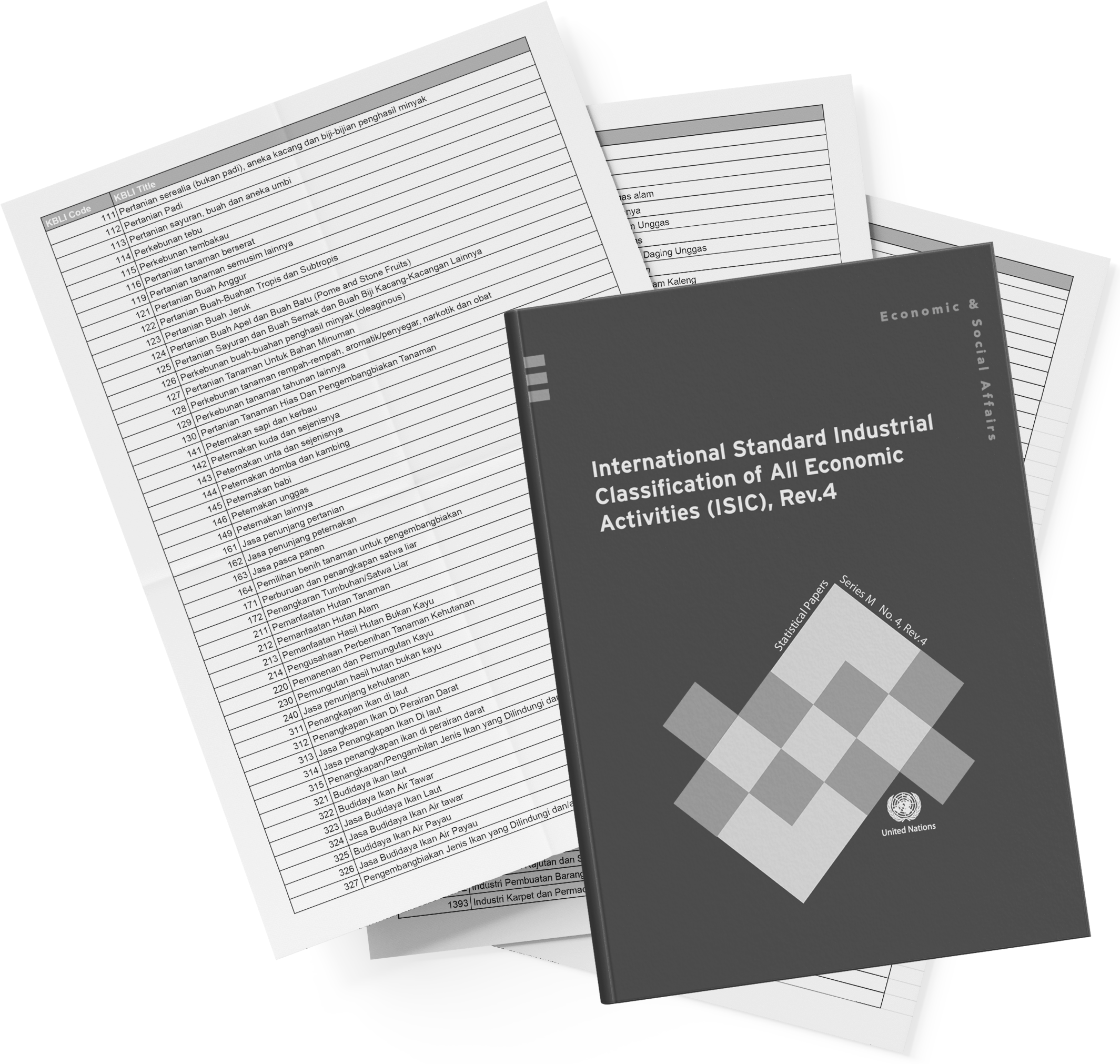
KBLI 2020 — code 1392 — Industri Barang Jadi Tekstil, Bukan untuk Pakaian. The Indonesian label deliberately separates this code from apparel manufacturing (KBLI 14xx) because the production technologies, customer channels, and competitive structures differ.
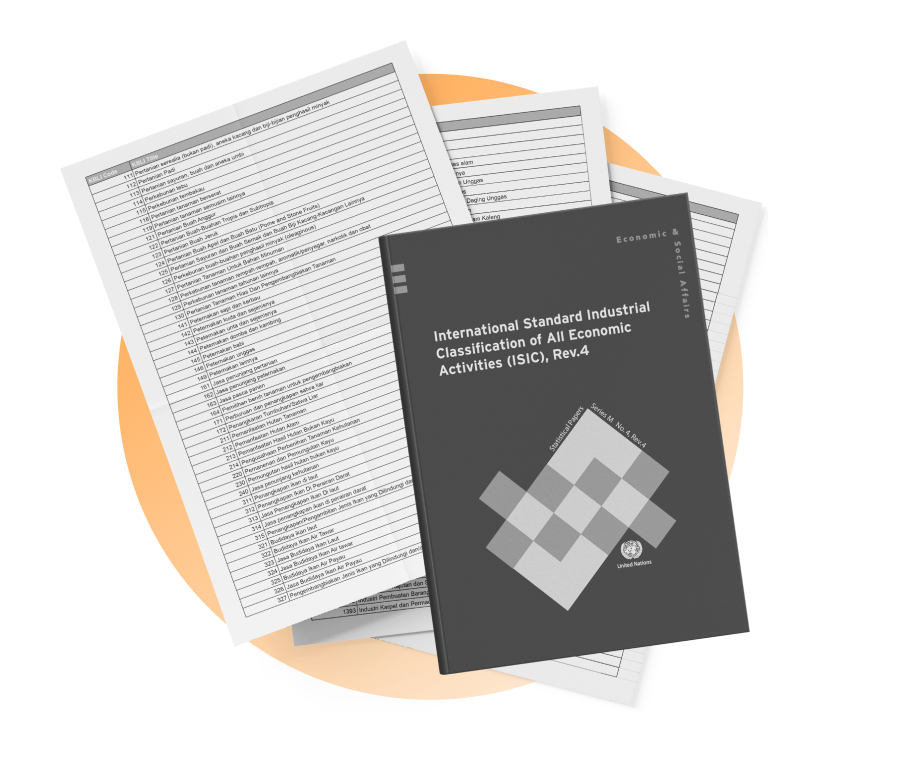
ISIC Rev.4 alignment: class 1392 — Manufacture of made-up textile articles, except apparel. The Indonesian code mirrors ISIC at the four-digit level.
NAICS analogues: 314120 (Curtain and Linen Mills) for home textiles, 314910 (Textile Bag and Canvas Mills) for industrial textiles and packaging. The US classification subdivides what KBLI 1392 consolidates.
Frequently appears alongside KBLI 1311 (textile weaving) and 1313 (textile finishing) for vertically integrated operators, and 4641 (textile wholesale) when the manufacturer also operates a distribution arm. Multi-code NIB registration is common in integrated textile groups.
Industry Terms that actually matter
Vocabulary in this industry encodes both the production technology and the customer relationship. 'Made-up' is a precise technical category, not a loose descriptor. 'CMT' versus 'FOB' defines the customer-supplier risk allocation. The terms below are the ones that change how a contract, a competitor capability statement, or an export filing should be read.
Made-Up Article
Finished textile product fabricated by cutting and sewing woven or non-woven fabric, ready for use without further processing — distinct from raw fabric, yarn, or apparel.
Defines the KBLI 1392 scope precisely. Sets boundary against fabric weaving (1311), knitting (1391), and apparel (14xx); operators must classify products correctly for customs and statistical purposes.
Greige Fabric
Unfinished woven or knitted fabric in its raw state before bleaching, dyeing, printing, or finishing.
Most domestic made-up textile manufacturers source greige from local weaving mills and outsource or in-house the finishing. Greige supply security shapes lead time and cost structure.
CMT (Cut-Make-Trim) vs FOB (Free On Board)
CMT: customer supplies fabric, manufacturer provides cutting, sewing, trimming labor at a per-unit fee. FOB: manufacturer sources fabric and ships finished goods, taking ownership of more value-add.
Defines risk and margin profile. CMT carries lower margin but minimal raw-material risk; FOB carries higher margin but exposes manufacturer to fabric price and FX risk. Most Indonesian exporters target FOB.
Home Textile
Sub-category covering bed linen, bath linen, table linen, kitchen linen, curtains, cushions, and decorative textiles for household use.
Largest sub-segment of KBLI 1392 by both domestic and export volume. Demand tracks housing construction, hotel openings, and e-commerce home-goods penetration.
Industrial Textile / Technical Textile
Tarpaulins, tents, awnings, sails, parachutes, flags, and fabric-based packaging (bags, sacks) for industrial and outdoor applications.
Smaller volume but distinct customer base (construction, military, outdoor leisure, logistics). Higher technical-spec requirements; different supply chain than home textile.
OEKO-TEX / GOTS / BSCI Certification
International certifications covering chemical safety (OEKO-TEX 100), organic textile production (GOTS), and social compliance (BSCI/SA8000).
Increasingly required by EU, US, and Japanese retailers. Indonesian exporters without these certifications are progressively excluded from premium retail accounts.
Hospitality Linen Program
Long-term supply contracts with hotel chains, resorts, and serviced apartments for bed, bath, and F&B linen — typically with quality, durability, and laundering-cycle specifications.
Stable revenue annuity with recurring replacement orders. Quality and consistency requirements are stringent; price competition is intense but loyalty compounds with chain expansion.
TPT (Tekstil dan Produk Tekstil)
Indonesian government's umbrella sector classification for textiles and textile products, used in industry policy and trade statistics.
Made-up textiles sit inside TPT and benefit (or suffer) from broader sector policy on import duties, anti-dumping, and trade promotion. TPT-related policy signals matter for the 1392 sub-sector.
Industry Overview – Business Archetypes
KBLI 1392 hosts very different businesses under one code. A vertically integrated home-textile exporter, a CMT contract sewing operation, and a regional industrial-textile fabricator share classification but run different businesses. The five archetypes below capture how value is actually created in this industry.
Vertically Integrated Home Textile Exporter (Ecosystem Anchor)
Operates the full chain from greige weaving through dyeing, printing, finishing, cutting, sewing, and packing — usually for export to major retailers (IKEA, Carrefour, Walmart, Marks & Spencer, JCPenney) and hospitality chain accounts. Capacity at scale, in-house quality control, and ESG compliance depth are the central commercial assets.
Competes on integrated quality consistency, on-time delivery against tight retail-program windows, and capability to handle complex multi-SKU programs. Customers stay loyal when the integrated supplier hits both quality and delivery — switching cost is high once a vendor is qualified into a major retailer's program.
FOB-priced export programs with major retailers, often booked 6–12 months in advance with seasonal flex
Home textile programs with hospitality chains under multi-year supply agreements
Margin uplift from value-add finishing (printing, embroidery, special weaves) versus commodity sewing
Capex-heavy across spinning, weaving, finishing, and sewing operations
FX exposed on cotton and synthetic fiber imports, balanced by FX-positive export revenue
Workforce intensity is meaningful — sewing operations remain labor-led despite automation in cutting and packing
CMT Contract Sewing Specialist (Bridge Model)
Operates cutting and sewing capacity on a contract basis, with customers (usually overseas brands or integrated retailers) supplying fabric and design specifications. Indonesian labor cost and sewing skill are the commercial proposition; the manufacturer carries minimal raw-material risk.
Competes on labor productivity, sewing quality, lead time, and willingness to handle smaller order quantities. Often used as a flex capacity supplement by larger integrated exporters running near full capacity.
Per-unit CMT fee covering cutting, sewing, trimming, and finishing labor plus operating overhead
Project-based work for seasonal programs and short-cycle promotional collections
Specialist value-add (embroidery, complex stitching, ornamentation) at premium per-unit rates
Lower capex than integrated mills; labor productivity is the central operational discipline
Vulnerable to customer-supplied fabric supply problems that idle the sewing floor
Concentration risk on a few major customers; loss of one program can destabilize utilization
Hospitality and Institutional Linen Supplier (Specialist Operator)
Specializes in bed linen, bath linen, table linen, and uniforms for hotel chains, hospitals, government accommodations, airline catering, and event-rental operators. Customer requirements emphasize durability through industrial laundering cycles, color and dimensional consistency across reorders, and reliable replenishment.
Competes on quality consistency, customer relationship continuity, and willingness to hold inventory or short-cycle replenishment. Often serves through linen rental and laundry services rather than direct hotel procurement.
Long-term supply contracts with hotel chains, resorts, and hospital networks at negotiated price points
Recurring replacement orders driven by hotel laundering wear-out cycles (typically 18–36 months for sheets and towels)
Custom embroidery and branding for chain-specific items
Working capital tied up in finished-goods inventory for short-cycle replenishment
Quality testing for laundering durability is a meaningful capability requirement
Hospitality cycle exposure — pandemic-style demand shocks hit this segment hardest
Domestic Home Textile Brand and Retail Supplier (Inclusion Engine)
Produces home textiles for Indonesian domestic retail — own-brand collections sold through modern trade (Mitra10, IKEA Indonesia, ACE Hardware, modern grocery), e-commerce (Tokopedia, Shopee, TikTok Shop), and traditional textile markets (Tanah Abang, Pasar Cipulir). Customer base spans middle-income households, gifting occasions, and event seasonality.
Competes on design relevance to Indonesian taste (motifs, color palettes, religious-occasion items), price-point coverage, and channel relationships. Often supplements production with imported finished goods for category breadth.
Margin on own-brand collections sold through retail channels at meaningfully higher per-unit price than export FOB
Seasonal collections aligned with Ramadan, Lebaran, year-end gifting, and home-decor refresh cycles
Cross-category bundling (sheet sets, bath sets, kitchen sets) at higher attach rates than single-SKU sales
Mix of own production and imported supplement creates inventory complexity
Channel relationships (modern trade, e-commerce platforms, traditional market wholesalers) are the customer-acquisition moat
Vulnerable to imported finished-goods competition from China and Vietnam at the value tier
Industrial Textile and Technical Fabric Manufacturer (Infrastructure Enabler)
Manufactures tarpaulins, tents, awnings, sails, fabric bags and sacks, flags, and other industrial textile products for construction, military, agriculture, logistics, and outdoor recreation customers. Lower volume than home textile but distinct customer base and technical requirements.
Competes on durability specification compliance, customization capability, and project-execution discipline. Customer base includes government procurement (military, disaster response), construction contractors, and industrial operators.
Project-based contracts for specific industrial textile programs (tent supply, tarpaulin programs, fabric structures)
Repeat orders for industrial consumables (woven sacks for fertilizer, cement, agricultural products)
Technical specialty work (flame-retardant, waterproof, UV-resistant fabric applications)
Different fabric and processing requirements than home textile (heavier yarns, coatings, specialty finishes)
Government procurement integration adds compliance and e-Katalog management overhead
Customer concentration in specific verticals creates revenue volatility with industry cycles
Industry Performance & Outlook
Export-led with domestic demand growth; pressured by regional competition but defended by integrated supply and design depth
The directional reading is mixed. Indonesia's made-up textile sector faces sustained competitive pressure from Vietnam, Bangladesh, Pakistan, and increasingly Cambodia in export markets — these competitors offer lower labor cost and, in some cases, preferential trade access (Vietnam's CPTPP and EU-Vietnam FTA, Bangladesh's LDC status). Indonesian exporters retain share where integrated quality, design capability, ESG compliance depth, and supplier-relationship continuity create value beyond price.
Domestic demand is more durable. Indonesian household textile consumption is rising with middle-class growth, modern trade expansion, and e-commerce home-goods penetration. Hospitality demand follows hotel build-out, which has rebounded post-pandemic and continues with the tourism push (Bali, Mandalika, Labuan Bajo, Bromo, Likupang). Religious-occasion gifting (Ramadan, Lebaran) creates seasonal demand spikes that domestic producers serve better than imports.
Cotton and synthetic fiber cost is the single largest variable. Indonesia imports the majority of its cotton, so USD-denominated cotton prices and rupiah exchange-rate movements pass through directly to fabric and finished-goods cost. Polyester prices track oil-related petrochemical cycles. Both expose exporters to margin volatility that integrated supply (in-house spinning and weaving) damps somewhat.
Forward-looking growth pockets are: hospitality linen as tourism expands, e-commerce home-textile brands serving Indonesian and ASEAN consumers, ESG-positioned exports for European retailers prioritizing supply-chain audits, and technical-textile applications for construction, disaster response, and outdoor recreation markets.
Performance indicators that matter for KBLI 1392
Export value by destination (US, EU, Middle East, Japan)
Health of exporter customer relationships and competitive position
US and EU are the largest destinations; Middle East and Japan are growing; share defense against Vietnam and Bangladesh is the main challenge
Cotton and polyester fiber prices
Raw material cost pressure on integrated and CMT operators
Cotton is mostly imported; polyester tracks regional petrochemical cycles; both pass through to HPP
Hotel occupancy and pipeline by region
Hospitality linen replacement demand
Bali, Jakarta, and resort destinations drive recurring replenishment; pipeline of new hotel openings signals 12–18 month linen demand
USD/IDR exchange rate
Export revenue and imported raw material cost — partly offsetting
Rupiah weakness is net positive for export-led operators with imported-material exposure; net negative for domestic-focused operators
ESG and OEKO-TEX certification penetration
Access to premium European retail accounts
Rising structural requirement; Indonesian exporters lag some regional peers on certification depth
E-commerce home textile category growth
Domestic channel evolution
Tokopedia, Shopee, TikTok Shop, and quick commerce expanding home-textile sales rapidly; favors brand-led producers
Outlook: what to watch over the next 24–36 months
Trade policy with EU and US — preferential access changes, anti-dumping decisions, and supply-chain due-diligence requirements (EU CSDDD) shape export economics
Hospitality recovery trajectory in tourism destinations (Bali, Lombok, Komodo, Mandalika, Likupang) driving institutional linen demand
ESG and certification penetration — OEKO-TEX, GOTS, BSCI compliance depth among Indonesian exporters
Cotton supply chain dynamics including India and US harvest conditions affecting global prices
E-commerce home-textile category growth and the rise of digital-native Indonesian textile brands
Domestic competition from imported finished goods (China, Vietnam) at the value tier
Industry Growth Drivers
Growth in KBLI 1392 is the compound of domestic middle-class demand, hospitality recovery and expansion, export market dynamics, and the slow shift toward higher-margin design-led and ESG-positioned production. The drivers below are the ones that materially move the P&L.
Domestic middle-class consumption and modern trade penetration
Indonesian middle-class households are upgrading home textiles — buying matching bed linen sets, decorative cushions, branded bath towels, and seasonal home-decor refresh items. Modern trade chains (Mitra10, ACE Hardware, IKEA Indonesia, Informa) and e-commerce platforms have made these purchases far more accessible than a decade ago.
The shift is structurally positive for domestic-focused producers who can serve Indonesian taste and price points. Foreign brands compete at the premium tier but local producers retain the mass and middle-class core.
Modern trade home-textile category sales data
E-commerce home-goods category growth rates
Hospitality industry expansion and linen replacement cycles
Hotel openings continue in Bali, Lombok, Jakarta, and emerging tourism destinations (Mandalika, Labuan Bajo, Likupang, Toba). Each new property generates 12–18 months of initial linen-fit-out demand and then recurring 18–36 month replacement cycles for sheets, towels, and pillows.
Indonesian hospitality linen producers with established chain relationships (Accor, Marriott, IHG, local chains) capture this demand most efficiently. New entrants face long qualification cycles before they reach significant volume.
Hotel pipeline announcements from major chains and Indonesian operators
Tourism arrivals data and hotel occupancy by destination
E-commerce home textile brand emergence
Digital-native Indonesian home-textile brands are emerging on Shopee, Tokopedia, TikTok Shop, and Instagram. They compete on design, brand story, and direct-to-consumer pricing — appealing to younger urban consumers who shop differently than their parents.
This creates both opportunity (new market segment for producers willing to partner with digital brands) and pressure (traditional retail-led brands face channel shift). The most agile producers are building dual channels — wholesale to traditional retail plus white-label and partnership production for digital brands.
TikTok Shop and Shopee home-textile category growth
Digital-native brand emergence and funding announcements
Export competitiveness and trade-policy positioning
Indonesian exporters compete in global home-textile markets primarily against Vietnam, Bangladesh, Pakistan, and India. Trade-policy dynamics — preferential access, anti-dumping decisions, supply-chain due diligence requirements — shape the competitive landscape as much as cost.
Indonesia's positioning improves where integrated quality, ESG compliance, and design depth outweigh raw cost competition. RCEP and ongoing IEU-CEPA negotiations are meaningful for medium-term positioning.
IEU-CEPA negotiation progress and home-textile tariff treatment
EU CSDDD (Corporate Sustainability Due Diligence Directive) implementation timeline
ESG and certification as a strategic capability
European and US retailers increasingly require OEKO-TEX, GOTS, and BSCI/SA8000 certifications, plus supply-chain traceability documentation. The capability to maintain these certifications and prove compliance is becoming a gate to premium retail accounts.
Indonesian exporters that invest in certification depth, supplier audits, and chemical management systems capture share that less-equipped competitors lose. The capability is hard to build quickly and represents a durable structural advantage.
Retailer compliance requirement updates from major European and US accounts
Indonesian exporter certification announcements
Technical and industrial textile applications
Construction tarpaulins, disaster response tents, military and government supply, agricultural fabric bags, outdoor recreation textile, and emerging applications (geotextiles, fabric solar panels, fabric architecture) are creating new revenue pools outside the traditional home-textile segment.
These segments have different competitive dynamics — more technical specialization, less labor-cost-led competition, and government and institutional procurement channels. They are smaller in absolute terms but offer higher margin and lower cyclicality.
Government procurement announcements for disaster response and military textile supply
Construction and infrastructure project pipelines requiring technical textile inputs
Industry Trends & Development
Industry Development
Evolution of Made-Up Textile Article Manufacturing (Except Apparel) Industry in Indonesia
Evolution from labor-only sewing to tech-infused factories with CAD design and auto-cutters.
Shift towards export compliance with OEKO-TEX standards amid global scrutiny.
Key Trends
Major trends shaping the Made-Up Textile Article Manufacturing (Except Apparel) Industry in Indonesia industry.
Digitalization and technology adoption
Industry trend shaping market dynamics.
Operators
Investors
Policymakers
Regulatory developments
Industry trend shaping market dynamics.
Operators
Investors
Policymakers
Impact and Sustainability
Sustainability and impact considerations for the manufacture of made-up textile articles, except apparel industry.
Economic Impact
Contribution to national economic development.
Balancing growth with sustainability.
Environmental Considerations
Industry practices and environmental impact.
Operational costs vs sustainability.
Industry Segmentation
Industry Segmentation – Product/Service A
Primary market segments based on service type.
Segmentation by offering
Primary Segment
Core offerings
Main market
Addresses primary demand
Secondary Segment
Supporting services
Niche markets
Specialized needs
Segments may overlap based on customer needs.
Industry Segmentation – Product/Service B
Alternative segmentation perspectives.
Segmentation by characteristics
Mass Market
Broad appeal
General consumers
Volume-driven
Premium
High-value offerings
Discerning buyers
Quality-focused
Segment boundaries are fluid.
Customer Segmentation
Different customer segments and their characteristics.
Customer segments and what they value
B2B customers
Various
Multiple needs
Different channels
B2C consumers
Various
Multiple needs
Different channels
Key Players
Ecosystem Mapping
Made-Up Textile Article Manufacturing (Except Apparel) Industry in Indonesia ecosystem includes various stakeholders.
Suppliers
Provide inputs and raw materials.
Primary producers
Input suppliers
Operators
Core industry participants.
Main industry operators
Service providers
Distribution
Channel to end customers.
Distributors
Retailers
How value flows across the ecosystem
Value is created through coordinated activities across the ecosystem.
Leading Players
Competitive landscape and key player archetypes.
Competitive archetypes
Market Leader
Dominant position
Scale, brand recognition
Market saturation
Specialist
Niche focus
Expertise, agility
Limited scale
How competition typically plays out
Competition is shaped by scale advantages, operational efficiency, and customer relationships.
Differentiation strategies vary by segment, with some players competing on price and others on service quality.
Operating Conditions
Operating Model & Cost Structure
Operating models in Made-Up Textile Article Manufacturing (Except Apparel) Industry in Indonesia vary by business type.
Direct costs
Primary operational expenses
Input costs
Labor
Utilities
Major cost component
Overhead
Indirect operational costs
Administration
Facilities
Marketing
Scale-dependent
Cost structure summary
Direct costs
Volume and input prices
Operations
Efficiency improvements
Overhead
Scale and complexity
Administration
Process optimization
Cost structure varies by business model and scale.
Regulation & Compliance Considerations
Regulatory framework and compliance requirements.
Common compliance topics
Business licensing
Operating permits
Legal operation
Maintain valid licenses
Quality standards
Product/service requirements
Market access
Quality control systems
Stay current with regulatory changes.
FAQs & Sources
FAQs
What is Made-Up Textile Article Manufacturing (Except Apparel) Industry in Indonesia?
Made-Up Textile Article Manufacturing (Except Apparel) Industry in Indonesia encompasses various business activities in the Indonesian market.
Sources & Notes
This report is a synthesized overview based on industry analysis and desk research.
BPS (Statistics Indonesia)
Official statistics and industry data.
Ministry of Industry regulations
Regulatory framework and compliance requirements.
This report is for informational purposes and should not be treated as legal, regulatory, or investment advice.