Machinery and Equipment Rental and Leasing (Without Operator) Industry in Indonesia
A practical guide to Machinery and Equipment Rental and Leasing (Without Operator) Industry in Indonesia—market dynamics, operational realities, and strategic considerations in Indonesia
This industry encompasses the rental and operational leasing of diverse machinery, equipment, and tangible goods without providing operators, covering items like industrial tools, office equipment, medical devices, IT hardware, and specialized production machinery. Businesses rent these assets for short-term projects or long-term use, avoiding ownership costs while gaining flexibility to scale operations based on demand fluctuations.
Clear industry definition and scope of activities
Operational realities across Indonesia's regions
Market segmentation and customer analysis
Ecosystem mapping and competitive dynamics
Cost structure and unit economics
Regulatory and compliance considerations
Executive Summary
This industry encompasses the rental and operational leasing of diverse machinery, equipment, and tangible goods without providing operators, covering items like industrial tools, office equipment, medical devices, IT hardware, and specialized production machinery.
Businesses rent these assets for short-term projects or long-term use, avoiding ownership costs while gaining flexibility to scale operations based on demand fluctuations.
High asset utilization (70-80%) is key to profitability, achieved via predictive maintenance and dynamic pricing.
Leasing terms often include maintenance clauses, shifting repair risks but requiring robust service networks.
Foreign ownership capped at 67% for most sub-sectors, favoring joint ventures with local partners.
Infrastructure boom drives 10-15% annual growth, but rupiah volatility impacts import-heavy fleets.
Digital marketplaces like SewaAlat.com streamline bookings, reducing vacancy rates by 20%.
Why this industry matters in Indonesia
Supports Indonesia's economic growth and development objectives.
Creates employment opportunities across diverse skill levels.
Critical for service delivery and value chain integration.
Enables Indonesia's competitiveness in regional and global markets.
So what: Practical implications
Operators: Focus on quality consistency and process standardization
Buyers: Evaluate supplier capabilities beyond pricing
Investors: Look for operational efficiency and scalability
Policymakers: Support infrastructure development
Indonesia at a Glance
Republic of Indonesia: Large and fragmented market
Fragmented market dominated by SMEs serving local needs, with top players holding 30-40% in heavy machinery segments.
Growth fueled by IKN development and toll road expansions, emphasizing excavators, generators, and compressors.
Market dynamics continue to evolve with changing economic conditions.
Hyperlocalization is key to navigate Indonesia's market
Java hubs supply urban construction; Sumatra focuses on palm oil machinery; Kalimantan caters to mining drills.
Customized fleets for regional climates, like corrosion-resistant gear for humid Papua.
Opportunities extend beyond cities
Rural demand from agribusiness rentals for tractors and irrigation pumps in Sulawesi plantations.
Remote mining sites rely on fly-in-fly-out leasing models with on-site storage.
Growing middle class driving premiumization trends across product categories and services
Digital adoption accelerating with mobile-first consumer behavior creating new channel opportunities
Infrastructure investment improving connectivity and reducing logistics costs across the archipelago
Government initiatives supporting domestic industry development and foreign investment attraction
Regional economic integration through ASEAN creating expanded market access and trade opportunities
Sustainability and ESG considerations creating differentiation opportunities for responsible businesses
Distribution realities: logistics, infrastructure, and channel reach
High sea freight costs for inter-island moves favor static regional fleets over centralized models.
GPS tracking and third-party haulers optimize delivery, but port delays add 2-5 days turnaround.
Establish robust distribution partnerships covering both modern trade and traditional channels
Invest in localized supply chain capabilities to navigate logistics complexities and reduce costs
Develop region-specific market entry strategies accounting for local competitive dynamics
Build flexibility into operations to adapt to regulatory changes and infrastructure variations
Industry Definition
What is KBLI 7739, and where does the boundary sit?
Industry Definition
KBLI 7739 covers the rental and operating leasing of other machinery, equipment, and tangible goods — without operator and without an option to purchase — that are not specifically classified under the more narrow rental codes. The defining act is that the lessor retains title and maintenance responsibility while the lessee takes operational control for a defined term and returns the asset.
Scope concentrates on industrial and professional equipment: gensets and power generation, compressors and pneumatic equipment, materials-handling gear (forklifts, scissor lifts, boom lifts, scaffolding when not embedded in construction service), pumps and dewatering equipment, welding and metalworking tools, broadcasting and event-staging hardware (lighting, sound, projection, LED walls), medical and laboratory equipment, and test/measurement instruments.
The boundary excludes: motor vehicle rental (KBLI 7710), recreational and personal goods rental (7721–7729), agricultural machinery rental (7731), construction machinery rental (7732), office machinery and computer rental (7733), water and air transport equipment leasing (7734–7735), financial leasing structured as a financing contract under OJK regulation (KBLI 6491/6492), and any rental where an operator is supplied with the equipment (which moves the activity into the corresponding service code).
Indonesia in Focus
Indonesia's rental-and-leasing economy under 7739 is shaped by three structural realities. First, capex-shy mid-market industrials and project-led demand cycles make 'pay-per-use' equipment access genuinely attractive — owning a 500-kVA genset that runs three months a year destroys returns when a quarterly rental contract does the same job.
Second, the archipelago makes provincial fleet positioning a strategic variable, not a logistics afterthought. A scissor lift in Surabaya is operationally a different asset from the identical unit in Balikpapan when you factor in mobilization cost, technician access, and break-fix response time. National rental players win on multi-depot footprints; regional players win on local relationships.
Third, the legal distinction between an operating lease (KBLI 7739) and a financial lease (OJK-regulated multifinance under KBLI 64) is operationally meaningful. Many Indonesian customers blur the line — calling any equipment-finance arrangement 'leasing' — but the regulatory, tax, and accounting treatment diverges sharply, and 7739 operators must be clear about which side of that line they sit on.
Industry Classification
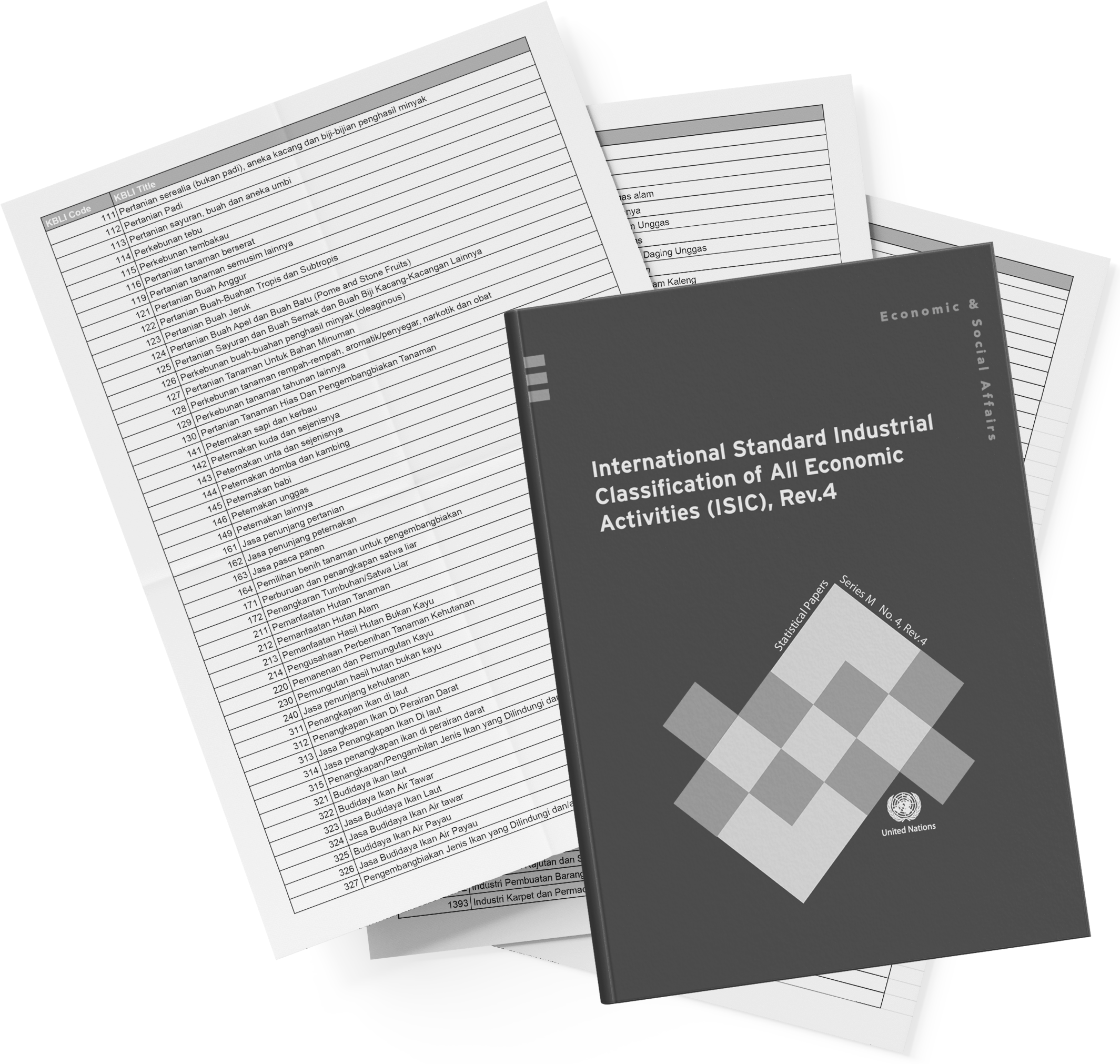
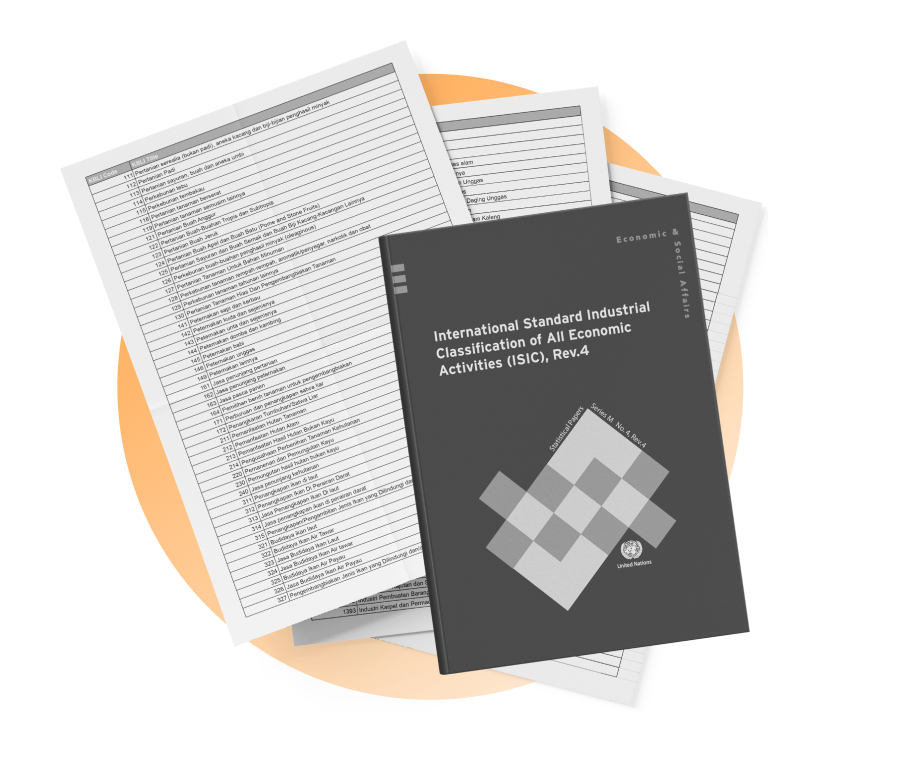
KBLI 2020 — code 7739 — Aktivitas Penyewaan dan Sewa Guna Usaha Tanpa Hak Opsi Mesin dan Peralatan Lainnya YTDL ('Yang Tidak Dapat Diklasifikasikan Lainnya' — the residual classification for machinery rental not covered by 7731–7735).
ISIC Rev.4 alignment: class 7730 — Renting and leasing of other machinery, equipment and tangible goods. The Indonesian classification adds an additional digit of granularity at the four-digit level.
NAICS analogue: 532412 (Construction, Mining, and Forestry Machinery and Equipment Rental and Leasing) for industrial-heavy fleets, 532490 (Other Commercial and Industrial Machinery and Equipment Rental and Leasing) for the broader catch-all, and 532282 (Video Tape and Disc Rental) plus 532289 (All Other Consumer Goods Rental) for non-industrial sub-segments.
Adjacent codes that frequently appear on the same NIB: KBLI 7731 (agricultural rental), 7732 (construction rental), 7733 (office/IT rental), 6491/6492 (financial leasing — only if the operator separately runs an OJK-licensed multifinance arm), and 3312 (machinery repair and maintenance, when the rental fleet's service operation has scale).
Industry Terms that actually matter
The vocabulary in this industry carries operational consequences. 'Leasing' often refers to OJK-regulated finance, not 7739 rental. 'Utilization' is the single most-cited metric but is calculated differently across operators. The terms below are the ones that change how a contract, a P&L, or a competitor disclosure should be read.
Operating Lease (Sewa Operasi)
Lessor retains title, residual-value risk, and maintenance obligation; lessee pays usage-based fee without a purchase option at term end.
Defines KBLI 7739 economically and legally. Accounting under PSAK 73 treats it differently from financial leasing; tax treatment of rental income versus finance income also differs.
Financial Lease (Sewa Pembiayaan / SGU dengan Hak Opsi)
OJK-regulated multifinance product: lessor finances acquisition, lessee gains effective ownership economics, purchase option at term end is standard.
Sits in KBLI 6491/6492, not 7739. The most common source of category confusion in customer conversations and competitor analysis.
Utilization Rate
Percentage of available fleet hours or days actually billed during a period. Calculated differently across operators (fleet-wide, by asset class, by region).
The single most important profitability indicator. Operators below 60–65% on industrial fleets typically struggle to cover fixed cost; the 70–80% band is where the unit economics work.
Mobilization and Demobilization (Mobdemob)
One-off fees and logistics for transporting equipment to and from a customer site; includes inland freight, inter-island shipping, permits, and installation/commissioning.
A meaningful share of total contract value on outer-island projects. Whether mobdemob is included or charged separately is a routine commercial negotiation.
Dry Hire (Dry Lease)
Equipment supplied without operator, fuel, consumables, or insurance; lessee bears running costs.
The default KBLI 7739 arrangement. Distinguishes 7739 operators from operator-included service providers, which sit in different KBLI codes.
Genset (Generator Set)
Diesel-powered electric generator units sized from ~25 kVA (small commercial) to ~2,000 kVA+ (industrial/mining); the highest-volume rental asset class under 7739.
Anchor category for industrial rental. Demand spans power outages, construction-site primary power, mining and oil-and-gas remote sites, event power, and grid-shortage backup.
Materials Handling Equipment (MHE)
Forklifts (diesel, electric, LPG), reach trucks, order pickers, pallet jacks, scissor and boom lifts, scaffolding, telehandlers.
Backbone of warehouse and light-industrial rental fleets. Demand correlates with logistics-property growth, manufacturing FDI, and e-commerce fulfillment build-out.
Contract Duration Tiers
Spot (daily/weekly), short-term project (1–6 months), long-term industrial (12–36 months), structured turn-key (multi-year with maintenance and replacement embedded).
Each tier has different pricing, customer acquisition cost, and asset-allocation logic. Mixing durations across a fleet is a deliberate yield-management strategy.
Fleet Age and Residual Value
Average age of fleet units and the realisable second-hand value at end of useful life; key inputs into depreciation schedules and replacement cycles.
A young fleet costs more in capex but earns higher utilization and command-price; an aging fleet drags reliability and customer satisfaction. Residual values on used Caterpillar, Komatsu, Cummins units are surprisingly resilient and underpin lessor balance sheets.
Industry Overview – Business Archetypes
KBLI 7739 hosts archetypes that share little beyond the legal classification. An industrial genset lessor running a $200m fleet, a regional forklift operator with 30 units, and an events lighting rental house run different businesses with different capex profiles, customer cycles, and competitive moats. The five archetypes below capture how value is actually created in the category.
Industrial Power and Heavy-Equipment Lessor (Ecosystem Anchor)
Operates a national fleet of large industrial gensets, compressors, dewatering pumps, and heavy materials-handling equipment serving mining, oil-and-gas, construction, manufacturing, and grid-backup customers. Trakindo Utama, Cipta Krida Bahari, United Tractors' rental arms, and Aggreko Indonesia are reference points for this archetype.
Competes on fleet scale, multi-depot reach, technician network depth, and ability to mobilize on short notice into remote sites. The principal asset on the balance sheet is the fleet itself, often financed through term loans, asset-backed lending, or multifinance structures.
Rental fees on long-duration industrial contracts, structured with monthly billing, fuel/maintenance pass-through, and mobdemob
Spot and short-term rental at premium pricing during demand spikes (mining capex cycles, grid emergencies, event seasons)
Ancillary revenue from spare parts, consumables, technician services, and used-equipment disposal
Capex-heavy and FX-exposed — most large industrial equipment is imported, so rupiah depreciation hits replacement economics directly
Utilization is the central operational metric; depot-level allocation and inter-regional fleet redeployment drive yield
Customer concentration risk on a few large mining or industrial accounts; loss of a multi-year contract can destabilize an entire region
Materials Handling and Warehouse Equipment Specialist (Bridge Model)
Focuses on forklifts (diesel, electric, LPG), reach trucks, order pickers, scissor and boom lifts, and warehouse-floor equipment for logistics operators, manufacturers, retail distribution centers, and e-commerce fulfillment.
Competes on depot density in industrial estates (Cikarang, Karawang, Surabaya, Cikande), service responsiveness, and increasingly on electric/lithium fleet credibility as customers chase ESG and indoor air-quality goals.
Monthly rental on long-term contracts with warehouse operators and logistics providers, often with embedded maintenance and operator-training packages
Short-term rental for peak-season e-commerce ramp-ups (Harbolnas, Ramadan, year-end)
Used-equipment sales as fleet ages out of rental rotation; refurbishment services for owner-operators
Geographic strategy is everything — depots within 30–60 minutes of major customer clusters are non-negotiable
Technician network and parts inventory determine service-level credibility; outsourced workshops rarely match in-house response times
Electrification (lithium-ion forklifts) is reshaping fleet replacement decisions and ESG-led customer preferences
Broadcast, Event, and Staging Equipment House (Specialist Operator)
Rents lighting, sound, projection, LED walls, generators (event-spec), staging, and trussing for concerts, corporate events, exhibitions, TV broadcasting, weddings, and increasingly TikTok and content-creator productions.
Volume is event-driven and seasonally lumpy. Brand-name equipment (L-Acoustics, d&b, Robe, Martin, Sony, Panasonic) is the visible competitive currency; backstage relationships with event producers and production houses are the invisible one.
Day and event-pack rental fees, often with crew-and-rigging packages bundled in (which sometimes pushes the activity toward service-with-operator codes)
Long-term contracts with broadcasters, religious institutions, and corporate clients with regular event calendars
Sale of used equipment as flagship gear ages out of the active fleet
Asset cycles are short — performance equipment depreciates fast and gets refreshed faster than industrial equipment
Working capital tied up in tour-cycle and event-cycle receivables; pre-event deposits are a meaningful cash management tool
Vulnerable to demand shocks (pandemic, religious-holiday adjustments, mass-event regulation)
Medical, Laboratory, and Test Equipment Lessor (Inclusion Engine)
Rents diagnostic equipment, laboratory instruments, dialysis units, oxygen concentrators, infusion pumps, calibration and test equipment to hospitals, clinics, laboratories, manufacturing QA functions, and oil-and-gas inspection contractors.
Niche but defensible. Regulatory familiarity (Kemenkes registration for medical devices, calibration traceability for test instruments) and brand-authorization relationships with Siemens Healthineers, GE Healthcare, Philips, Fortive, Fluke, and similar OEMs are the moat.
Monthly rental with embedded calibration, preventive maintenance, and consumables — often structured as 'cost per test' or 'cost per scan'
Reagent and consumables pull-through on installed bases, which is where margin concentrates
Service contracts and operator-training packages bundled into the rental
Capex per unit is high; financing structures often blur into multifinance leasing, requiring careful KBLI compliance
Regulatory burden (Kemenkes, BPOM for medical devices; KAN for calibration) is non-trivial and a barrier to entry
Sticky customer base once installed — hospitals rarely switch reagent or scanner brands mid-cycle
Mid-Market and SME Equipment Pool Operator (Infrastructure Enabler)
Smaller regional operators offering rental of welding sets, generators, pumps, scaffolding, compressors, and light industrial tools to SMEs, contractors, workshops, and event organizers. Highly fragmented; thousands of operators across Java, Sumatra, and Kalimantan industrial corridors.
Competes on local relationships, willingness to extend informal credit, and same-day mobilization within a metro area. Often family-owned, with succession risk as the founding generation steps back.
Daily and weekly rental at higher per-day pricing than long-term contracts, offset by lower utilization
Cash-flow flexibility and willingness to deal with smaller, less creditworthy customers that national lessors avoid
Cross-sell of consumables, fuel, and operator labor through informal arrangements
Low capex per unit but limited scale economies; competitive against national lessors only within a tight radius
Often under-invested in fleet refresh, leading to reliability and warranty issues
Consolidation candidates as national players push into Tier-2 cities through acquisition
Industry Performance & Outlook
Project-cycle-driven growth with structural tailwinds from manufacturing FDI, infrastructure, and capex-light operating models
The directional reading is moderately positive but cyclical. Industrial rental volume tracks construction activity, mining capex cycles, manufacturing FDI inflow, and grid-reliability conditions — none of which move in sync. A year that is strong for mining gensets can be soft for warehouse forklifts and vice versa, so portfolio mix across asset classes meaningfully damps revenue volatility.
Two structural tailwinds support multi-year growth. The first is operating-model preference: Indonesian mid-market industrials and multinational manufacturers are increasingly choosing rental over ownership to keep capex off the balance sheet and to outsource maintenance complexity. The second is infrastructure and industrial-estate build-out (IKN, JIIPE, KIT Batang, the new economic zones), which creates demand for both construction-phase rental and operational-phase warehouse and power equipment.
Headwinds are real. Rupiah depreciation directly raises fleet replacement cost since most large industrial equipment is imported. Domestic interest-rate cycles affect lessor financing economics. Coal and minerals commodity prices indirectly drive mining capex — and therefore rental demand — with a lag of one to two quarters.
Forward-looking growth pockets are: warehouse and intralogistics equipment as e-commerce fulfillment scales, medical and laboratory equipment rental as healthcare capacity expands and capex-shy clinics proliferate, electric materials-handling fleets as ESG-led customers demand cleaner indoor operations, and broadcast and event equipment as Indonesia's domestic media and music ecosystem rebuilds post-pandemic capacity.
Performance indicators that matter for KBLI 7739
Fleet utilization rate (by asset class and depot)
The fundamental profitability indicator for a rental business
70–80% is the healthy band for industrial fleets; <60% signals overcapacity; >85% sustainably implies underinvestment in fleet
Manufacturing PMI and FDI inflow
Demand pulse for warehouse, forklift, and light industrial rental
Indonesia's manufacturing FDI surge in EV, battery, and downstream nickel/aluminum is a meaningful demand pull
Construction activity (private and public)
Demand pulse for gensets, lifts, scaffolding, dewatering pumps
IKN, toll-road expansions, industrial-estate build, and private high-rise development all drive 7739 rental
Coal and minerals commodity prices
Mining capex willingness, lagged by 1–2 quarters
Mining rental demand is the most volatile sub-segment; spot rates rise sharply in coal price upcycles
USD/IDR rate and import duty trajectory
Fleet replacement and capex economics
Most large industrial equipment is imported; rupiah weakness pushes lessors toward fleet life extension and used-equipment redeployment
Grid reliability and outage frequency by region
Backup-power rental and standby-genset contract pull
Frequent outages in selected provinces create durable rental demand from commercial and small-industrial customers
Outlook: what to watch over the next 24–36 months
IKN construction pace and the equipment-rental volume routing through Balikpapan, Penajam Paser Utara, and Kalimantan logistics nodes
Manufacturing FDI commitments — especially EV/battery, downstream nickel, electronics — translating into actual factory build and warehouse buildouts
OJK leasing and finance company regulation evolution, which affects the boundary between rental (KBLI 7739) and financial leasing (KBLI 6491/6492)
ESG-led electrification of materials handling, especially in indoor warehouse contexts where lithium-ion forklift demand is rising
Domestic media and event sector recovery, which drives broadcast and staging rental volume
Mining capex cycles tied to coal, nickel, and copper price movements, which historically swing rental demand more than any other variable
Industry Growth Drivers
Growth in KBLI 7739 is not driven by aggregate GDP. It is the compound of capex-shift preferences, project cycles, commodity prices, technology refresh, and regulatory shifts at the boundary with financial leasing. The drivers below are the ones that materially move fleet utilization and rental revenue for operators.
Capex-shift toward 'as-a-service' equipment access
Indonesian industrials, multinationals operating locally, and increasingly mid-market businesses are moving from owning equipment to renting it. The reasons are commercial — preserving cash for growth investment, outsourcing maintenance complexity, matching cost to project lifecycle — and accounting (under PSAK 73, off-balance-sheet treatment is narrower but operational flexibility remains the appeal).
The strategic implication is durable demand expansion outside cyclical project peaks. Rental converts a one-time capex purchase into a multi-year revenue stream for the lessor, and that revenue base is the foundation of the industry's long-term growth.
Corporate capex commentary in mid-market industrial filings
Adoption rate of 'Equipment-as-a-Service' contracting in manufacturing and logistics
Infrastructure and industrial-estate build-out
IKN (new capital), JIIPE, KIT Batang, the upgraded toll-road network, port expansions, and new industrial estates create direct rental demand for gensets, lifts, scaffolding, pumps, compressors, and welding equipment during construction — and then secondary demand for warehouse forklifts and standby power once tenants move in.
These programs are multi-year and lumpy. Lessors with pre-positioned fleets and depot footprints in target geographies capture disproportionate share when peak demand arrives.
IKN construction phase progression and Otorita IKN procurement announcements
Industrial-estate occupancy and tenant fit-out activity
Manufacturing FDI and downstream commodity investment
EV and battery investment (LG, CATL, Hyundai, BYD partnerships), downstream nickel and aluminum projects, and broader electronics manufacturing expansion are creating warehouse, fit-out, and operating-phase equipment demand. The volume signal arrives 6–18 months ahead of operational ramp-up as factories install MHE and standby power.
This is one of the most defensible multi-year growth themes. Even if individual projects slip, the aggregate flow of manufacturing investment is structurally positive for industrial rental.
BKPM FDI realization data, especially for manufacturing and downstream metals
Major manufacturer ground-breaking and operational milestones
E-commerce fulfillment and warehouse modernization
Shopee, Tokopedia, TikTok Shop, Lazada, and large 3PL operators continue to expand fulfillment center footprints and increasingly move toward more automated, taller, denser facilities. The MHE requirements (electric forklifts, reach trucks, very-narrow-aisle trucks, order pickers) scale with this build.
Peak-season demand (Harbolnas, Ramadan, year-end sales) creates short-term rental spikes that complement the long-term contract base. Lessors with electric-fleet credibility and warehouse-floor service capability are best positioned.
Major e-commerce and 3PL warehouse expansion announcements
Logistics-property completion and absorption data (Cikarang, Karawang, Cikande, Surabaya, Greater Bandung)
Healthcare capex avoidance and medical-equipment rental growth
Indonesian hospitals, especially mid-tier and private chains, increasingly rent or use 'cost-per-test' arrangements for high-capex equipment (CT, MRI, dialysis machines, advanced laboratory instruments) to preserve capital for capacity expansion. Manufacturing QA functions also rent test and calibration equipment.
The model is win-win — clinicians and engineers get current-generation equipment without ownership risk, and lessors lock in long-term reagent and consumables pull-through. BPJS-driven hospital expansion adds an additional pull on this segment.
Hospital network expansion and capex announcements
BPJS Kesehatan claim volume by service category as a proxy for capacity demand
ESG-driven electrification and cleaner-fleet adoption
Multinational manufacturers and global 3PLs are pushing for electric materials handling indoors (warehouse forklifts, scissor lifts), lower-emission gensets (Tier 4, bi-fuel), and quieter event-power solutions. Lessors that can supply credible electric and low-emission fleets earn pricing premium and customer stickiness.
The capex-per-unit gap between diesel and electric MHE is narrowing as lithium-ion battery costs fall and total-cost-of-ownership math turns favorable. Early movers among lessors gain a defensible advantage.
ESG procurement language in multinational tenders and warehouse fit-out specifications
Lithium-ion forklift adoption rates and TCO benchmarks
Industry Trends & Development
Industry Development: how the rental channel reached its current shape
From ATPM-affiliated equipment desks to professional rental operators with digital fleet management
Indonesia's industrial rental market evolved through three structural shifts: the formalization of rental as a stand-alone business separate from equipment dealerships, the rise of multinational fleet specialists serving mining and oil-and-gas, and the recent digital-and-electric transition that is now reshaping fleet composition and customer expectations.
Each phase changed where the moat lived. Initially, principal-dealership relationships were the scarce asset. Then service-network depth and remote-site delivery became scarce. Now, telematics-enabled fleet visibility, electrified equipment, and credible ESG narratives are the new scarce capabilities.
Dealer-affiliated rental and commodity capex cycles
Equipment rental largely run as adjunct businesses by Caterpillar (Trakindo), Komatsu (United Tractors), and Cummins dealers; commodity-driven mining capex cycles drive volume swings. Materials handling rental remains highly fragmented; broadcast and event rental dominated by a handful of Jakarta-based specialists serving TV and major concerts.
Multinational entry and infrastructure-program demand
Aggreko and other multinational power-rental specialists scale in Indonesia. Infrastructure programs (toll roads, power plants under FTP I/II) create sustained demand. Mining super-cycle drives genset and dewatering rental volumes. ATPM-affiliated and independent operators professionalize; depot networks expand into Sumatra and Kalimantan.
E-commerce warehouse boom and MHE growth
Tokopedia, Shopee, and Lazada drive logistics-property buildout in Cikarang, Karawang, and Cikande; MHE rental scales rapidly. United Tractors, Trakindo, and specialists deepen warehouse-MHE fleets. Mining commodity slump compresses heavy-fleet utilization, forcing portfolio rebalancing. OJK leasing rules tighten, sharpening the boundary between operational rental and financial leasing.
Pandemic shock and demand-pattern reset
Event and broadcast rental collapses during lockdowns; many specialists exit or consolidate. Industrial rental holds up better — gensets for hospital surge capacity, MHE for grocery and pharma warehouse expansion. Mining commodity rebound (coal, nickel) revives heavy fleet utilization in H2 2021. Remote-monitoring telematics adoption accelerates as customers demand visibility without site access.
Electrification, telematics, and IKN-led infrastructure
Lithium-ion forklift adoption gains traction among multinational warehouse customers. Telematics-enabled fleet management becomes table-stakes for industrial rental. IKN construction phase begins driving genset and lift demand into Kalimantan. ESG-led customers push lessors for cleaner-fleet credentials. OJK and BI continue to refine multifinance regulation, periodically reopening rental-versus-finance-lease classification questions.
Key Trends — what's changing in the business model
The most important trends in KBLI 7739 are shifts inside specific parts of the rental business model, not macro narratives. The six below are the ones that meaningfully change how lessors earn money, what fleet they build, and which customers they win or lose.
Telematics, IoT, and predictive maintenance as Key Resources (Key Resources)
Connected equipment with telematics is shifting from a premium feature to a fleet-management necessity. Real-time utilization data, fuel-burn telemetry, remote diagnostics, and predictive maintenance signals are reshaping how depots are sized, how mobdemob is scheduled, and how fleet replacement cycles are timed.
Lessors that have invested in fleet-management software (Cat Connect, Komatsu Komtrax, third-party platforms) earn higher utilization and lower unplanned downtime than those still running on spreadsheets. The Key Resource is no longer just the asset — it is the data layer around the asset.
National industrial lessors
Mid-market regional operators (where the digital gap is widest)
Customers running large rented fleets across distributed sites
Electrification of materials handling and event power (Value Proposition)
Multinational manufacturers, large warehouse operators, and event organizers are pushing for electric forklifts, lithium-ion lift platforms, and lower-emission gensets. ESG procurement language now routinely specifies fleet electrification thresholds.
The Value Proposition is shifting from 'reliable equipment at competitive day-rate' to 'reliable, clean, certifiable equipment with verifiable emissions and noise profiles'. Lessors with credible electric fleets gain pricing premium and stickier customers; lessors stuck with aging diesel inventories face structural disadvantage in target verticals.
Warehouse and logistics operators
Multinational manufacturing customers
Event organizers and broadcasters with sustainability commitments
Bundled service models and Equipment-as-a-Service (Revenue Streams)
Pure rental is becoming the floor of the value proposition, not the ceiling. Bundled offerings — rental plus maintenance, plus consumables, plus operator training, plus telemetry-based optimization — are commanding higher contract value and locking in longer durations.
Revenue streams are shifting from day-rate billing to monthly subscription, cost-per-output models (cost-per-test in medical, cost-per-lift-cycle in MHE), and turnkey contracts. This compresses the customer's decision from a procurement event into an outsourcing relationship.
Industrial lessors building bundled-service capability
Medical and laboratory equipment specialists
Customers consolidating equipment-management decisions
OJK regulatory clarity on operating versus financial leasing (Key Partners)
OJK has continued to tighten the boundary between operational rental (KBLI 7739) and financial leasing (KBLI 6491/6492). The classification matters because financial leasing requires a multifinance license, capital adequacy, and prudential reporting; operational rental does not.
Operators that previously offered hybrid arrangements with embedded purchase economics are reassessing their KBLI scope. New entrants must be explicit from day one about which side of the line they sit on, and partnerships between rental operators and licensed multifinance firms are becoming a more formal structural pattern.
All KBLI 7739 operators
OJK-regulated multifinance companies
Customers using equipment finance in capex decisions
Vertical-specialist consolidation and SME-pool roll-ups (Customer Segments)
Fragmented regional operators are increasingly acquisition targets for national lessors pushing into Tier-2 cities. Vertical specialists in MHE, medical, and event rental are also being rolled up by financial sponsors seeking scale and depot footprint.
Strategically, this is shifting industry structure from highly fragmented to moderately concentrated within asset classes. Customer segments are bifurcating: large customers consolidate procurement to fewer national vendors; SME customers retain price-led local relationships but with fewer regional operators competing for them.
Family-owned regional operators (acquisition targets)
National lessors pursuing geographic expansion
Financial sponsors investing in equipment-rental platforms
Project-cycle rental versus structural baseload mix (Cost Structure / Revenue Streams)
Lessors are increasingly designing fleets to combine cyclical project work (mining, construction, events) with structural baseload (warehouse, hospital, telecom backup) to smooth utilization. The all-in lessor that books only short-term mining contracts faces violent utilization swings; the all-in lessor that books only long-term warehouse contracts gives up upside in cyclical peaks.
Portfolio design — what mix of contract durations, customer types, and asset classes to hold — is becoming a more deliberate strategic exercise. Capital allocation across these segments is the highest-leverage decision for fleet operators.
Industrial lessors managing portfolio mix
CFOs and capital allocators within lessors
Customers in cyclical versus structural verticals
Impact and Sustainability
Sustainability for KBLI 7739 has both an environmental dimension (fleet emissions, electrification, end-of-life disposal) and a business-durability dimension (the asset intensity of the model and its sensitivity to commodity, FX, and regulatory cycles). Reading only one half misses the full picture.
Capital efficiency and economic-cycle dampening
Rental allows customers to convert capex into opex, which is meaningful in cyclical industries (mining, construction) and capital-constrained sectors (SME manufacturing, regional hospitals). The industry's existence dampens economic-cycle amplitude by spreading equipment ownership across many more activities than direct ownership would support.
From the lessor's side, capital efficiency is the central durability question. Fleet financing structures, residual-value management, and asset redeployment across regions determine whether the business compounds or erodes capital over the long run.
Customer benefit (capex avoidance) does not automatically translate into lessor margin — competitive pricing can compress the spread
Underinvestment in fleet refresh creates short-term cash but long-term reliability erosion that damages brand
Environmental footprint and electrification path
Diesel gensets, forklifts, and lift platforms carry meaningful emissions and noise footprints. The shift to electric MHE (battery-electric forklifts, scissor lifts), Tier 4 and bi-fuel gensets, and lower-emission diesel is materially reducing fleet-level impact, but the transition is uneven across asset classes and customer segments.
End-of-life disposal — particularly battery management for electric MHE — is an emerging operational consideration. Responsible operators are building recycling and refurbishment pathways into fleet planning.
Electric fleets cost more upfront and require investment in charging infrastructure; payback depends on utilization and electricity tariff
Mining and remote-site customers often cannot accept electric alternatives because of grid access and operational duty-cycle requirements
Workforce capability and technician supply
The industry's service quality depends on a deep bench of certified technicians (mechanical, electrical, electronics, telematics). Indonesia's vocational pipeline (SMK Teknik, polytechnics) supplies the base but specialist skills — telematics integration, lithium-ion battery service, advanced diagnostics — remain in short supply.
Lessor investment in in-house training academies and technician certification programs is becoming a strategic capability. Talent retention in Jakarta and Surabaya is increasingly competitive with broader manufacturing and automotive sectors.
Technician training has multi-year payback and weak appropriability — competitors poach trained staff
Reliance on OEM-trained specialists creates dependency on the principal's ongoing support and tooling
Industry Segmentation
Industry Segmentation – Equipment asset class
KBLI 7739 segments meaningfully by asset class because each class has its own fleet economics, customer base, utilization patterns, and service requirements. Industrial power and materials handling carry the largest revenue pools. Event and broadcast operate on different cycles entirely. Medical, test, and laboratory equipment are niche but defensible. Reading a 7739 operator without identifying its asset-class mix risks misjudging the business.
Segmentation by equipment asset class
Industrial power (gensets, compressors, pumps)
Diesel and bi-fuel gensets (25 kVA to 2,000 kVA+), air compressors, dewatering pumps, water purification units; without operator
Mining sites, oil-and-gas operations, construction projects, manufacturing plants, hospitals (standby), events
Largest single revenue pool in 7739; demand spans cyclical (mining, events) and structural (hospital backup, telecom)
Materials handling equipment (MHE)
Forklifts (diesel, electric, LPG), reach trucks, order pickers, scissor and boom lifts, telehandlers, scaffolding
Warehouses, 3PL operators, manufacturing plants, retail distribution centers, e-commerce fulfillment
Fastest-growing sub-segment driven by e-commerce and manufacturing FDI; electrification reshaping fleet mix
Broadcast, event, and staging equipment
Professional lighting, sound, projection, LED walls, staging, trussing, event-spec generators, broadcast cameras
Concert promoters, corporate event organizers, broadcasters, religious institutions, wedding planners, content creators
Event-driven and seasonal; high asset turn but cyclical demand and pandemic-vulnerable
Medical and laboratory equipment
Diagnostic imaging (CT, MRI, ultrasound), dialysis units, oxygen concentrators, laboratory analyzers, infusion pumps
Hospitals (private and BPJS-aligned), clinics, diagnostic laboratories, manufacturing QA labs
Niche but high-margin; regulatory and brand-authorization barriers create defensible positions
Test, calibration, and measurement equipment
Electrical test, oil-and-gas inspection, calibration instruments, environmental monitoring, metrology equipment
Manufacturing QA, oil-and-gas inspection contractors, calibration labs, environmental consultancies
Project-cycle driven; KAN-traceability and OEM-authorization are barriers to entry
Welding, cutting, and light industrial tools
Welding sets, plasma cutters, generators (small), hydraulic tools, jacking and pulling equipment
Contractors, fabrication shops, shipyards, oil-and-gas service contractors, SMEs
Highly fragmented with many regional operators; low unit value but high transaction volume
Container and storage rental
Office containers, storage containers, refrigerated containers (non-shipping use)
Construction sites, mining camps, retail pop-ups, event venues, disaster response
Project-cycle driven; complements core industrial rental and often bundled by major operators
Revenue concentrates in industrial power and MHE; margin concentrates in medical and specialist equipment; volume turn concentrates in light industrial tools and event equipment.
Multi-asset-class operators (Trakindo, United Tractors rental arms) damp cyclical volatility; single-asset specialists earn higher margin but more volatile utilization.
Cross-asset bundling (gensets + lighting + power distribution for a single event, or MHE + dock equipment + scaffolding for a single warehouse fit-out) is increasingly common in large contracts.
Industry Segmentation – Contract structure and customer model
Beyond asset class, KBLI 7739 segments by how the rental is contracted and serviced. The same forklift can be rented daily on spot, on a 24-month operating lease, or on a turnkey fleet-management contract — each has different revenue economics, customer-acquisition cost, and competitive structure.
Segmentation by contract structure
Spot and short-term rental (daily/weekly)
Equipment rented for hours to a few weeks at premium daily rates; minimum documentation; informal credit terms common
SMEs, contractors, event organizers, emergency or surge needs
Highest per-day yield but lowest utilization; requires depot density to serve quickly
Project rental (1–12 months)
Defined-duration rental tied to a specific project (construction phase, plant turnaround, event series); mid-tier pricing with mobdemob negotiation
Construction contractors, EPC firms, oil-and-gas project owners, event promoters
Workhorse segment for industrial lessors; balanced yield-utilization-effort trade-off
Long-term operating lease (12–36 months)
Multi-year operating contracts with embedded maintenance, often with telematics-driven service-level commitments
Multinational manufacturers, warehouse operators, hospitals, telecom operators
Lowest per-day yield but highest utilization, stickiest customers; favored by large national lessors
Turnkey fleet management / Equipment-as-a-Service
Lessor manages a customer's entire equipment requirement across multiple assets, with bundled service and optimization
Large multinationals, integrated logistics operators, complex industrial sites
Strategic outsourcing model; competitive on capability rather than price; differentiates national leaders
Standby and backup contracts
Equipment positioned at customer site or on call with low utilization but availability commitment; standby fee with usage top-up
Hospitals, telecom data centers, mission-critical industrial sites, broadcasters
Reliable annuity revenue at lower yield; ties up assets but at known terms
Embedded retailer or platform rental
Rental offered via e-commerce, B2B platforms, or partner retailers; standardized terms; primarily small-ticket assets
SMEs, contractors, event organizers transacting digitally
Emerging digital-native segment; lower acquisition cost but commoditizes pricing
Contract structure mix is the primary lever for managing utilization volatility; lessors deliberately blend spot, project, and long-term volume.
Long-term operating leases create operational predictability but require disciplined credit underwriting on the customer's multi-year solvency.
Standby contracts pose a discipline challenge — assets earning low standby fees risk being mentally written off, when in fact they should be priced to reflect availability cost.
Customer Segmentation: who actually rents and what they need
KBLI 7739 customers vary as much as the equipment itself. A coal mine procurement team, a Cikarang warehouse operator, a Jakarta event producer, and a Yogyakarta hospital have very different procurement processes and decision criteria. The segments below capture the meaningful patterns.
Customer segments and what they value
Mining and oil-and-gas operators
Large industrial customers with remote sites in Kalimantan, Sumatra, Sulawesi, eastern Indonesia
Reliable power, dewatering, and heavy MHE at remote sites; 24/7 uptime; field-deployable service
Multi-depot reach, technician availability in-province, predictable mobdemob, contractual SLAs
Direct sales relationships, master service agreements, tender processes via E&P and mining procurement
Construction contractors and EPC firms
Project-led businesses with multi-month equipment requirements per site, often across multiple projects
Equipment availability matched to project schedule; flexibility on duration changes; financing terms
Project-duration pricing, fast mobilization, multi-site visibility, credit terms aligned to project payment cycles
Sales relationships, project-specific tenders, master agreements with major EPC and contracting groups
Warehouse and 3PL operators
Logistics-property operators, 3PLs, and e-commerce fulfillment center managers
Optimize warehouse operations with reliable MHE; manage peak-season surge; meet ESG and indoor air-quality goals
Electric MHE option, in-cluster depot reach, predictable maintenance, operator training, telemetry-enabled fleet visibility
Direct relationships, account managers, often through real-estate developer or 3PL operator networks
Multinational manufacturing plants
Foreign-invested factories in industrial estates with strong procurement and ESG governance
Equipment that meets global procurement standards; ESG-aligned fleet; predictable cost; minimal procurement disruption
Compliance documentation, ESG fleet credentials, global account capability, multi-asset bundling, telematics integration
Group procurement, often coordinated with regional or global rental partnerships
Hospitals and healthcare networks
Private hospital chains, BPJS-aligned hospitals, diagnostic laboratory networks
Access to current-generation diagnostic and treatment equipment without ownership risk; budget predictability
Cost-per-test models, embedded calibration and maintenance, regulatory documentation, operator training
Direct procurement, medical-equipment specialist lessors, tender processes for public-hospital networks
Event producers, broadcasters, and content creators
Concert promoters, TV production houses, religious-institution operators, corporate event teams, digital content houses
Brand-name equipment for specific events; reliable crew interface; peak-demand availability
Brand inventory (L-Acoustics, Robe, Sony, etc.), reliable rigging crews, day-rate flexibility, deposit terms
Event-industry sales relationships, production-house referrals, repeat-customer book
SMEs and small contractors
Local fabrication, construction, event, and service businesses without scale to own diversified equipment
Affordable short-term access to specific equipment; informal credit; local responsiveness
Same-day rental, flexible payment terms, local pickup, basic operator guidance
Walk-in to local depots, WhatsApp orders, informal relationships, increasingly digital B2B platforms
Key Players
Ecosystem Mapping: core, extension, and enabling actors
The KBLI 7739 ecosystem layers neatly into core lessors, extension actors that intermediate or partner with them, and enabling infrastructure (OEMs, finance, regulation, talent supply). Understanding which layer an actor sits in clarifies leverage points and vulnerabilities.
Core — rental and leasing operators
Entities that hold fleet title, carry depreciation and residual-value risk, and earn revenue from rental contracts. The Core layer is where the operational and balance-sheet risk concentrates, and where the long-term value of the industry accumulates.
Trakindo Utama (Caterpillar-affiliated rental and used-equipment business)
United Tractors group (Komatsu-affiliated rental and Tractor Nusantara, PT Multi Prima Sejahtera, and Multifinance arm Astra Sedaya Finance for adjacent financing)
Aggreko Indonesia (global power and temperature-control specialist with industrial rental fleet)
Cipta Krida Bahari (mining-focused industrial rental)
Berca Indonesia (medical and technology equipment rental)
Specialized MHE lessors (e.g. Toyota Material Handling, Mitsubishi Logisnext, Linde MH affiliates)
Event and broadcast rental houses (e.g. Mediatech, Sumber Mas, regional staging specialists)
Thousands of mid-market and regional operators across Java, Sumatra, and Kalimantan industrial corridors
Extension — channels, partners, and intermediaries
Actors that connect lessors to customers, route equipment to sites, and extend the lessor's effective reach without owning fleet themselves.
Equipment-rental brokers and procurement consultants serving large industrial customers
EPC firms and main contractors that aggregate rental requirements across sub-contractors
B2B equipment-rental digital platforms and marketplaces (emerging in Indonesia)
Logistics providers handling inter-island fleet redeployment (Pelni, container lines, specialized heavy-haul operators)
Industrial-estate operators (Jababeka, Lippo Cikarang, KIIC, JIIPE) that co-position MHE rental partners on tenant lists
OEM dealer networks that refer customers to rental rather than purchase (and vice versa) based on customer fit
Enabling — OEMs, finance, regulation, infrastructure, talent
Actors that do not transact rental directly but make the channel possible — equipment manufacturers, financing partners, regulators, and the workforce pipeline.
Equipment OEMs (Caterpillar, Komatsu, Cummins, Hitachi, Volvo, Atlas Copco, Toyota, Mitsubishi, Hyster, Linde, JLG, Genie)
Power and event-equipment OEMs (L-Acoustics, d&b audiotechnik, Robe, Martin, Sony Professional, Panasonic)
OJK-regulated multifinance companies (Astra Sedaya Finance, BCA Finance, Mandiri Tunas Finance) for financial-leasing structures complementing operating rental
Banks providing term financing and asset-backed lending to lessors
BKPM and Ministry of Investment for foreign-investment licensing and incentives
OJK for multifinance and leasing regulation
Kemenkes and BPOM for medical-equipment regulation; KAN for calibration traceability
SMK Teknik and polytechnics (Politeknik Manufaktur, Politeknik Negeri) for technician supply
Indonesian Equipment Rental Association and industry trade bodies
How value flows across the ecosystem
Fleet value flows from OEMs through lessor balance sheets, where it depreciates over a useful life of typically 5–15 years depending on asset class, with periodic refurbishment extending economic life. The lessor earns rental revenue that, in healthy operations, covers depreciation, financing cost, maintenance, mobdemob, and a return on capital — and converts the asset into recurring service revenue over the contract period.
Service value flows in a tighter loop between technicians, parts depots, and customer sites. Aftermarket service (planned maintenance, breakdown response, refurbishment) is increasingly the highest-margin activity in the lessor's P&L and the primary source of customer stickiness.
Information value — telematics data, utilization patterns, fault diagnostics, customer-cycle insights — increasingly drives both fleet management decisions and customer engagement. Lessors that turn fleet data into customer-facing insight earn premium pricing and longer renewals.
Leading Players: who shapes the market and how
Leadership in KBLI 7739 is highly sub-segmented. Industrial power and heavy fleet lessors are dominated by a small set of national players, often affiliated with major equipment-dealer groups. Materials handling is more fragmented but consolidating. Event and medical rental have their own specialist leaders. No single 'market leader' label fits the whole code — leadership must be read sub-segment by sub-segment.
Leading players by segment — positioning, strengths, and constraints
PT Trakindo Utama (Caterpillar-affiliated)
Anchor in industrial rental and used Caterpillar equipment; deep national footprint with focus on mining, oil-and-gas, and infrastructure
Caterpillar brand strength, multi-decade dealer-to-rental experience, deep service network, multi-province depot reach, used-equipment expertise
Concentrated exposure to mining capex cycles, FX on imported Caterpillar units, increasing challenge from Komatsu-affiliated and Chinese OEM rentals
United Tractors group (PT United Tractors Tbk, Komatsu-affiliated, and Astra group subsidiaries)
Komatsu-affiliated rental and adjacent finance; coverage across construction, mining, energy, and increasingly materials handling
Astra group scale, Komatsu brand pull, integrated financing through Astra Sedaya, broad asset coverage from heavy mining to MHE
Capital allocation across many competing units within Astra; mining-cycle exposure; cost of fleet refresh at scale
Aggreko Indonesia
Multinational specialist in power rental and temperature control; serves mining, events, grid-emergency, and industrial standby
Global fleet pool with rapid mobilization, deep expertise in high-spec power solutions, premium positioning on reliability
Premium pricing vulnerable in price-led tenders, dependency on parent capital allocation, limited local manufacturing integration
PT Cipta Krida Bahari and similar mining-focused industrial lessors
Specialist focus on mining-site rental — gensets, MHE, dewatering, support equipment
Mining customer relationships, remote-site service capability, dedicated fleet allocation to specific clients
Customer concentration on a handful of major mining contractors; high cyclical exposure to coal and nickel prices
Toyota Material Handling, Mitsubishi Logisnext, Linde MH affiliates and similar MHE specialists
Brand-affiliated MHE rental and operating leasing for warehouse, manufacturing, and 3PL customers
OEM brand affinity, parts and service depth, capacity to lead on electric MHE transition
MHE-only specialization limits cross-asset bundling; competition from independent operators with broader fleets
PT Berca Indonesia (and medical-equipment specialists)
Brand-authorized rental and leasing of medical, scientific, and industrial measurement equipment from global OEMs
Regulatory familiarity (Kemenkes, BPOM), brand-authorization relationships, niche but defensible position
Capex per unit high and financing-structure complex; vulnerable to regulatory shifts on medical-device classification
Event and broadcast rental specialists (regional and Jakarta-based)
Specialist houses providing audio, lighting, video, staging, and event power for concerts, broadcast, corporate, and religious events
Brand-name equipment portfolios, rigging-crew expertise, deep relationships with promoters and production houses
Cyclical demand, pandemic-vulnerable, working capital tied up in event-cycle receivables, asset depreciation faster than industrial fleets
Regional and SME-pool operators
Fragmented long tail of regional operators in welding, light industrial tools, scaffolding, gensets, and pumps serving local SMEs and contractors
Local relationships, informal credit, same-day mobilization within metro areas, family-business continuity
Limited capex for fleet refresh, scale disadvantage versus national lessors, vulnerable to consolidation
How competition typically plays out in this industry
Concentration varies sharply by sub-segment. Industrial power rental is moderately concentrated among Trakindo, United Tractors-affiliated entities, Aggreko, and a few mining-focused specialists. MHE is more fragmented but consolidating, with OEM-affiliated specialists pushing against independent regional operators. Event and broadcast is fragmented but specialist-led, with a handful of credible Jakarta houses dominating large-event work. Medical and laboratory equipment is concentrated among brand-authorized lessors with regulatory expertise.
The competitive moat that travels best across sub-segments is service depth — depot density, technician availability, parts inventory, and ability to mobilize to remote sites within 24–72 hours. Brand and product specification matter, but service reliability is what determines contract renewal and customer-level pricing power.
Competitive pressure points: large customers increasingly demand multi-asset bundling and global procurement standards, which favors national lessors and OEM-affiliated specialists. ESG procurement is a growing differentiator. Capital allocation discipline (avoiding speculative fleet build-outs and managing residual values carefully) separates lessors that compound capital from those that destroy it across cycles.
Operating Conditions
Operating Model, Cost Structure, and Competitive Intensity
Operating economics in KBLI 7739 are dominated by fleet capex and the utilization rate that converts that capex into revenue. Depreciation, financing cost, and maintenance are the largest fixed components; mobdemob and fuel pass-through vary with contract terms; sales, technician headcount, and overhead scale roughly with depot density. The Porter dynamics layer on top and shape pricing power.
Industry-level competitive intensity is Medium. Industrial rental is moderately concentrated among national lessors with depot scale; materials handling is more fragmented; event and medical are specialist-led. Customer power is highly segment-dependent. Supplier power (OEM principals) is meaningful but moderated by alternative brand options. The competitive picture varies more by asset class than by an industry-wide average.
What creates durable advantage in this industry is the combination of fleet scale and freshness, depot footprint matched to demand geography, service network depth, principal contract continuity for brand-affiliated lessors, and disciplined residual-value management. Operators that compound on all five out-earn over cycles; operators that over-invest in fleet during peaks and under-invest in service erode capital.
Fleet capex, depreciation, and financing
Equipment acquisition cost, accounting depreciation, financing cost (term loans, asset-backed lending, vendor finance), residual-value risk
USD/IDR rate on imported equipment
OEM list price and volume rebate structures
Interest rate environment and lessor credit rating
Fleet age profile and replacement cycle
By far the largest fixed-cost line; defines the lessor's break-even utilization
Residual-value management at end of useful life is a meaningful contributor to lifetime return
Service, maintenance, and parts
Technician labor, parts inventory, workshop operations, planned maintenance, breakdown response, refurbishment
Technician headcount and certification programs
Parts inventory depth across provincial depots
Maintenance cycle frequency by asset class
Warranty and goodwill repair expense
Strategic spend: under-investment here erodes utilization and customer loyalty
Brand-affiliated lessors benefit from OEM service support; independents carry more cost burden
Mobilization, demobilization, and logistics
Inland freight, inter-island shipping, customs (for any cross-border movements), permits, on-site installation and commissioning
Site geography and remoteness
Inter-island shipping rates and Pelni / commercial-shipping capacity
Permit and route-approval complexity for oversize loads
Customer's willingness to bear mobdemob versus negotiating embedded pricing
Meaningful share of total contract value for outer-island and remote-site work
Can be a profit center or a cost-recovery line depending on contract negotiation
Sales, account management, and digital
Sales force, key account managers, marketing, tender preparation, digital platforms and telematics infrastructure
Sales force headcount and territory coverage
Tender win-rate and bid preparation effort
Digital fleet-management platform investment
Customer-facing telematics and reporting capability
Digital and telematics investment is shifting from differentiator to table-stakes
Account management depth at large industrial customers is a high-leverage capability
Depots, facilities, and inventory carrying
Depot real estate (owned or leased), workshop facilities, parts inventory carrying, security, environmental compliance for fuel storage and waste
Number and geographic distribution of depots
Industrial-estate rents and land prices in target geographies
Parts and consumables inventory days
Environmental and safety compliance investment
Depot density determines responsiveness and is a structural competitive variable
Industrial estates increasingly preferred over standalone facilities for proximity to customer clusters
Regulatory, insurance, and overhead
Equipment insurance, third-party liability, customs and import compliance, OJK boundary management (vs. financial leasing), corporate overhead, ERP and systems
Fleet insurance premiums tied to asset value and claim history
Compliance overhead from OJK, BPOM, Kemenkes (for medical), Kemenperin
ERP and fleet-management software investment
Corporate-finance and treasury capability
Insurance underwriting in Indonesia for industrial equipment is concentrated; lessor scale affects rates
OJK compliance discipline is non-negotiable for operators near the rental/finance-lease boundary
Porter's Five Forces — competitive intensity in KBLI 7739
Threat of new entrants — Medium
Fleet capex and depot footprint are real barriers in industrial power and MHE; OEM principal authorization is gating for brand-affiliated rental; regulatory familiarity matters in medical. Lower barriers in SME tools, light industrial, and event rental.
Entry concentrated in less capital-intensive sub-segments (SME tools, event peripherals); industrial-power and MHE entry typically requires either acquisition or substantial greenfield investment
Build niche specialist position in defensible asset class; partner with OEMs for principal-authorized rental; acquire regional operators to reach scale
Bargaining power of customers — Medium to High
Large mining, oil-and-gas, and multinational manufacturing customers have High power on multi-year tenders; SMEs have Low power individually; modern-trade and 3PL customers have Medium-High through procurement consolidation.
Pressure visible in long-term contract pricing, mobdemob negotiation, SLA escalation, and ESG procurement requirements
Build account-management depth, differentiate on service and ESG capability, bundle multi-asset contracts, lock in long-term operating leases
Bargaining power of suppliers — Medium to High
OEM principals (Caterpillar, Komatsu, Cummins, Toyota, Mitsubishi, brand event-equipment makers) hold pricing and allocation power; Chinese OEM alternatives moderate this somewhat. Multifinance partners and banks shape financing cost.
Visible in equipment landed cost, parts pricing, technician training dependency, and brand-authorization contract terms
Multi-brand sourcing strategy, long-term volume agreements, vertical integration where feasible (e.g. in-house service capability), strategic financing partnerships
Threat of substitutes — Medium
Customer purchase rather than rent is the most direct substitute; financial leasing offers a different ownership economics; in some asset classes, refurbished used equipment substitutes for rental.
Most relevant in capex-permissive environments (commodity upcycles, low interest rates) when ownership economics improve
Compete on flexibility, service depth, and total-cost-of-ownership story versus pure ownership; differentiate via ESG and telematics capability
Rivalry among existing competitors — Medium
Rivalry is moderate at the industrial-fleet level due to concentrated structure but intense in MHE and SME segments. Cyclical capex booms intensify spot-rate competition; downturns trigger fleet over-supply and pricing pressure.
Visible in spot-rate volatility, tender pricing pressure, account-poaching at contract renewal, and depot footprint expansion
Discipline on fleet build during peaks, differentiation on service and digital, deliberate portfolio mix to balance cyclical and structural revenue
Healthy lessor utilization for industrial fleets sits in the 70–80% range; sub-60% utilization usually signals overcapacity or under-aggressive sales; >85% sustained utilization implies fleet starvation and replacement-cycle risk.
Depreciation and financing cost together typically consume the majority of revenue at the fleet-asset level; service and parts margin underpin the lessor's overall profitability.
Mobdemob can be a profit center or a cost-recovery line depending on contract structure — disciplined operators negotiate this explicitly rather than burying it in headline rates.
Used-equipment sales at fleet refresh are a non-trivial contributor to lifetime ROI; lessors that manage residual values poorly leave value on the table.
Lasting competitive advantage combines fleet scale and freshness, depot density matched to demand geography, service network depth, principal contract continuity, and residual-value discipline. Industrial rental leaders show strength on all five.
Regulation & Compliance: where rules actually bite
Regulation in KBLI 7739 is moderate but layered, with the most operationally meaningful pressure coming from OJK boundary management (rental versus financial leasing), import and customs regulation, sector-specific regulation for medical and laboratory equipment, and safety and environmental rules for industrial fleets.
Operational regulation and compliance touchpoints
Business licensing and NIB (OSS)
OSS-based business identification number under KBLI 7739 and related codes; risk-based licensing
Determines legal scope of rental activities and any adjacent service offerings
Maintain valid NIB, update KBLI coverage as fleet and customer mix evolves, comply with OSS risk-based licensing
OJK rental versus financial leasing boundary
OJK regulation of financial leasing (sewa pembiayaan) requires multifinance licensing, capital adequacy, and prudential reporting; operating rental (KBLI 7739) does not
Operators offering hybrid arrangements with purchase-option or risk-transfer elements may inadvertently trigger financial-leasing classification
Structure contracts clearly as operating leases; partner with licensed multifinance affiliates for purchase-option deals; maintain documentation of operating-lease characteristics
Import licensing and customs (API-U, Persetujuan Impor)
Importer identification and product-specific import approvals for industrial equipment, parts, and consumables
Gates ability to bring in fleet from OEMs; HS code classification affects duty rates
Hold appropriate API and import approvals, manage HS classification, document country-of-origin and OEM-authorization paperwork
TKDN and local content (for procurement-bid eligibility)
Local content rules and incentives in government and BUMN procurement, including some industrial-customer specifications
Affects competitiveness in public-sector and BUMN-related rental tenders
Pursue TKDN certification where applicable, structure local assembly or refurbishment to qualify
Medical device regulation (Kemenkes / BPOM)
AKD (Alat Kesehatan Dalam Negeri) and AKL (Alat Kesehatan Luar Negeri) registration for medical and laboratory equipment
Determines which medical SKUs can legally be rented to hospitals and clinics; non-trivial entry barrier for medical rental specialists
Maintain device registration portfolio, manage renewal cycles, comply with labeling and documentation requirements
Calibration and metrology (KAN traceability)
Komite Akreditasi Nasional traceability for calibration and measurement equipment used in industrial QA, oil-and-gas inspection, environmental monitoring
Defines acceptability of rented test and calibration equipment in customer compliance contexts
Hold KAN-traceable calibration certificates, maintain measurement-traceability documentation, partner with accredited calibration labs
Worker safety and equipment certification
Kemnaker certification (Riksa Uji) for lifting equipment, pressure vessels, and other regulated industrial assets; periodic re-inspection
Required for legal operation of cranes, forklifts in some contexts, gensets above thresholds, lift platforms
Maintain certification cycles, schedule re-inspection, document operator training and licensing where applicable
Environmental compliance (PROPER, B3 handling)
Wastewater, emissions, and hazardous-materials handling rules for workshops, fuel storage, used-oil disposal, battery handling for electric MHE
Affects depot design, waste management, and emerging EPR rules for batteries
Maintain PROPER certification where applicable, manage B3 handling, comply with emerging battery EPR rules
Insurance and third-party liability
Equipment insurance, third-party liability, professional indemnity; standard market for industrial rental
Determines underwriting cost, claim experience, and customer requirements (some MNCs require specific cover levels)
Maintain adequate cover, document risk-management practices, manage claim history through preventive maintenance
Taxation (PPN, PPh, withholding)
Indonesian VAT on rental services, corporate income tax, withholding obligations on cross-border equipment payments
Routine compliance overhead; rental PPN treatment is straightforward but cross-border financing structures can add complexity
Maintain tax invoicing discipline, manage PPN reconciliation, handle withholding on imports and cross-border payments
OJK regulation evolution on the rental/financial-leasing boundary — periodic re-interpretation can force restructuring of customer contracts.
Import duty and TKDN policy shifts that affect landed cost of imported industrial equipment and competitive position versus locally-assembled alternatives.
Battery and electric MHE end-of-life regulation — emerging EPR rules will affect total cost of ownership for electric fleets.
Medical-device regulation tightening — AKD/AKL renewal cycles and post-market surveillance requirements are an active regulatory frontier.
ESG procurement standards from multinational customers that may require specific certifications (PROPER, ISO 14001, supplier code compliance).
OJK and Bank Indonesia interest rate policy that affects lessor financing cost and competitive dynamics versus owner-operators.
FAQs & Sources
FAQs
What is Machinery and Equipment Rental and Leasing (Without Operator) Industry in Indonesia?
Machinery and Equipment Rental and Leasing (Without Operator) Industry in Indonesia encompasses various business activities in the Indonesian market.
Sources & Notes
This report is a synthesized overview based on industry analysis and desk research.
BPS (Statistics Indonesia)
Official statistics and industry data.
Ministry of Industry regulations
Regulatory framework and compliance requirements.
This report is for informational purposes and should not be treated as legal, regulatory, or investment advice.