Macaroni, Noodle, Couscous, and Similar Product Manufacturing Industry in Indonesia
A practical guide to Macaroni, Noodle, Couscous, and Similar Product Manufacturing Industry in Indonesia—market dynamics, operational realities, and strategic considerations in Indonesia
Manufacturers mix wheat flour or other starches with water and additives to form dough, which is then extruded, sheeted, cut into shapes like macaroni, noodles, or couscous, and processed via drying, steaming, frying, or boiling before packaging. Products range from dry pasta and instant noodles to fresh wet noodles and ready-to-cook variants, serving both household and foodservice needs.
Clear industry definition and scope of activities
Operational realities across Indonesia's regions
Market segmentation and customer analysis
Ecosystem mapping and competitive dynamics
Cost structure and unit economics
Regulatory and compliance considerations
Executive Summary
Manufacturers mix wheat flour or other starches with water and additives to form dough, which is then extruded, sheeted, cut into shapes like macaroni, noodles, or couscous, and processed via drying, steaming, frying, or boiling before packaging.
Products range from dry pasta and instant noodles to fresh wet noodles and ready-to-cook variants, serving both household and foodservice needs.
Instant noodles account for the bulk of production volume due to their long shelf life and affordability.
Regional flavor localization, such as spicier variants in Eastern Indonesia, drives consumer loyalty.
Halal certification is mandatory and a key competitive edge in the world's largest Muslim market.
Export growth targets markets like the Middle East and Africa, leveraging Indonesia's flavor innovation.
Urbanization increases premium segment demand, including whole wheat and low-sodium options.
Why this industry matters in Indonesia
Supports Indonesia's economic growth and development objectives.
Creates employment opportunities across diverse skill levels.
Critical for service delivery and value chain integration.
Enables Indonesia's competitiveness in regional and global markets.
So what: Practical implications
Operators: Focus on quality consistency and process standardization
Buyers: Evaluate supplier capabilities beyond pricing
Investors: Look for operational efficiency and scalability
Policymakers: Support infrastructure development
Indonesia at a Glance
Republic of Indonesia: Large and fragmented market
The pasta and noodles sector thrives on high per capita consumption, led by instant formats amid rising disposable incomes.
Production clusters in Java, especially West Java and Banten, close to ports for wheat imports.
Market dynamics continue to evolve with changing economic conditions.
Hyperlocalization is key to navigate Indonesia's market
Flavors adapt to local tastes: sambal goreng in Java, rica-rica in Sulawesi, and milder options in Sumatra.
Small producers in rural areas supply wet noodles to wet markets, customizing textures for regional dishes.
Opportunities extend beyond cities
In rural Eastern Indonesia, traditional sago-based noodles compete with wheat imports via informal supply chains.
Logistics challenges in Papua and Maluku favor shelf-stable dry products over fresh.
Growing middle class driving premiumization trends across product categories and services
Digital adoption accelerating with mobile-first consumer behavior creating new channel opportunities
Infrastructure investment improving connectivity and reducing logistics costs across the archipelago
Government initiatives supporting domestic industry development and foreign investment attraction
Regional economic integration through ASEAN creating expanded market access and trade opportunities
Sustainability and ESG considerations creating differentiation opportunities for responsible businesses
Distribution realities: logistics, infrastructure, and channel reach
Traditional trade (warungs, pasar) handles 70% volume via multi-tier distributors; modern retail grows for premium packs.
Cold chain limited to fresh noodles in urban hubs; most products ambient-stable for nationwide trucking.
Establish robust distribution partnerships covering both modern trade and traditional channels
Invest in localized supply chain capabilities to navigate logistics complexities and reduce costs
Develop region-specific market entry strategies accounting for local competitive dynamics
Build flexibility into operations to adapt to regulatory changes and infrastructure variations
Industry Definition
What is KBLI 1074, and where does the boundary sit?
Industry Definition
KBLI 1074 covers the manufacture of pasta, noodles, couscous, and similar farinaceous products — uncooked, cooked, or pre-cooked — from wheat flour or alternative starches. The defining operation is forming dough through extrusion, sheeting, or cutting, followed by a stabilization step (drying, steaming, frying, or par-boiling) and primary packaging into shelf-stable units.
The boundary is tight on three sides. Bakery products (bread, biscuits, cakes) belong to KBLI 1071, not 1074. Prepared meals built around noodles with meat or vegetable sauce are KBLI 1075 (ready meals). Pure flour milling — including the wheat flour that this industry consumes — sits in KBLI 1062, not here.
Within scope, the code houses a wide product family: instant pre-fried noodles (mie instan), dry pasta (macaroni, spaghetti, fusilli), fresh wet noodles (mie basah), dried wet-style noodles (mie kering), couscous, and increasingly rice-based and non-wheat alternatives (suun, soun, bihun, kwetiau) when manufactured as packaged finished goods.
Indonesia in Focus
Indonesia is the world's second-largest instant noodle market by volume after China, with annual per-capita consumption among the highest globally. This makes 1074 disproportionately important relative to its national GDP contribution — instant noodles are a staple, a stress hedge during income shocks, and a category that touches nearly every household.
Two structural facts shape the operating reality. First, wheat is 100% imported (Indonesia's climate does not support wheat cultivation), so flour cost is FX-exposed and dominated by a small group of millers, with Bogasari (Indofood subsidiary) holding meaningful share. Second, palm oil — used as the frying medium for pre-fried noodles — is domestic, abundant, and price-volatile based on CPO export dynamics.
The industry is two-tiered to an unusual degree. A handful of large, brand-led, fully automated factories (Indofood CBP, Wings, Mayora, Nissin) produce the vast majority of packaged volume. Alongside them, thousands of artisanal mie basah workshops in wet markets supply the bakso, mie ayam, and mie goreng kaki lima ecosystem that is invisible in industry statistics but enormous in daily consumption.
Industry Classification
KBLI 2020 — code 1074 — Industri Makaroni, Mie dan Produk Sejenisnya. The Indonesian label deliberately groups pasta and noodle production because, operationally, the same plant frequently runs both product families on adjacent extrusion lines.
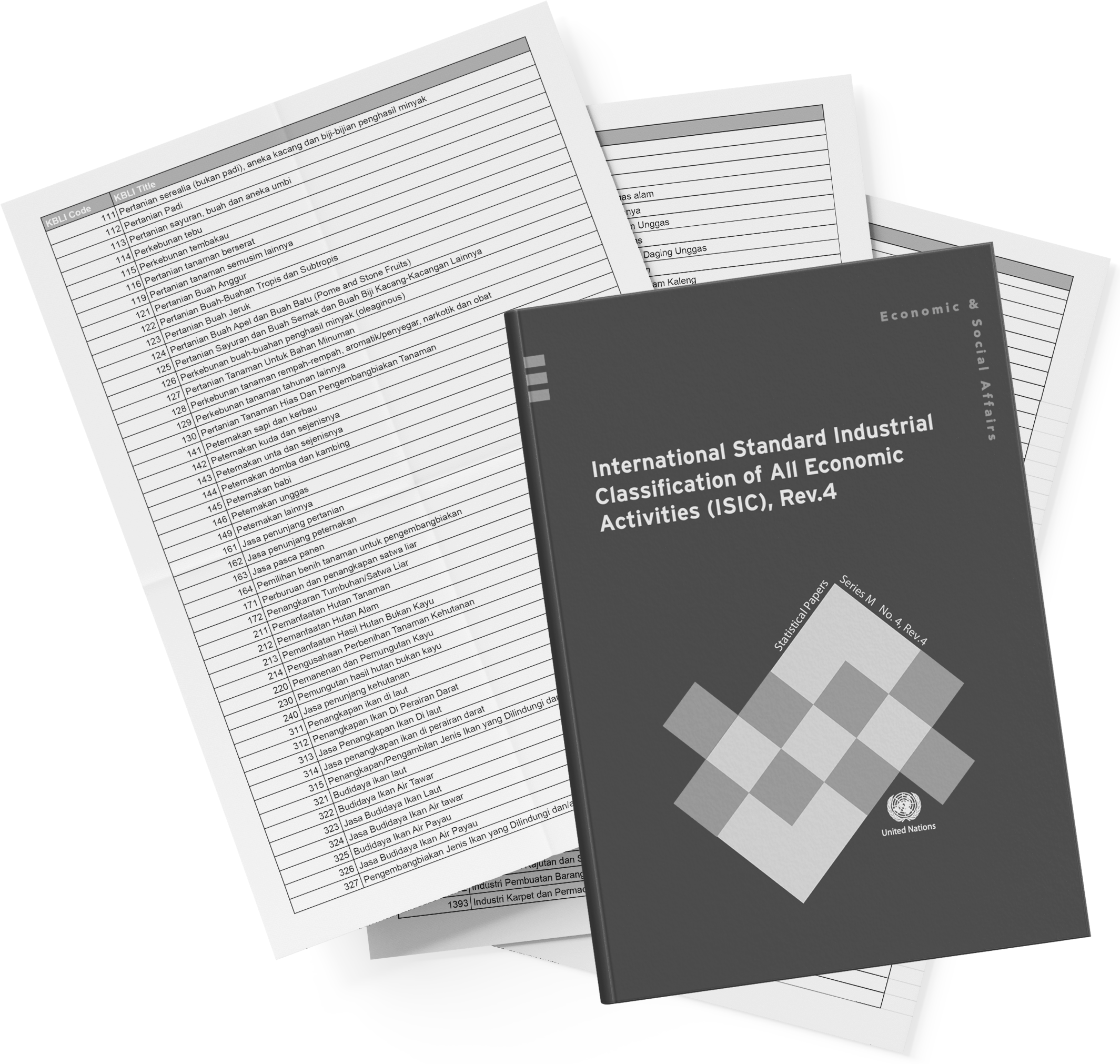
ISIC Rev.4 alignment: class 1074 — Manufacture of macaroni, noodles, couscous and similar farinaceous products. Indonesia's four-digit code mirrors ISIC for cross-border statistical comparability.
NAICS analogue: 311824 (Dry Pasta, Dough, and Flour Mixes Manufacturing from Purchased Flour). The Indonesian and US categories align closely on dry pasta but the US classification does not carry the same instant-noodle weight that defines KBLI 1074 in practice.
Frequently adjacent on the same NIB: KBLI 1075 (prepared meals — relevant if the operator sells bundled mie goreng kits with sauces and toppings), KBLI 1062 (flour milling — relevant for vertically integrated players like Indofood/Bogasari), and KBLI 4632 (wholesale of food products) when the producer also operates a captive distribution arm.
Industry Terms that actually matter
Vocabulary here is operationally loaded. "Noodle" hides enormous category differences — pre-fried, air-dried, fresh wet, rice-based — each with distinct production lines, shelf lives, channels, and cost structures. The terms below are the ones that change interpretation of a production filing, an import permit, or a competitor's product mix.
Mie Instan (Pre-fried Instant Noodle)
Wheat noodle steamed, then deep-fried in palm oil at ~140–160°C to gelatinize starch and reduce moisture below 5%, packaged with seasoning sachets for boiling-water rehydration.
Defines the dominant Indonesian format and ~80%+ of industry volume. Palm oil exposure, frying-line capex, and sachet manufacturing are the structural cost differentiators between this and air-dried noodles.
Mie Kering (Air-dried Noodle)
Noodle dehydrated by hot-air drying tunnels rather than frying; lower fat, longer cook time, often positioned as the 'healthier' format.
Smaller volume but rising share as health-led consumers shift away from fried formats. Different capex (drying tunnels), different fat profile, different shelf life behavior — operators cannot interchange lines casually.
Mie Basah (Fresh Wet Noodle)
Steamed but undried noodle, sold with high moisture content (~30%) into wet markets within 24–48 hours of production; the workhorse of bakso, mie ayam, and pasar-level foodservice.
A massive informal economy under the same KBLI code. Cold-chain absent, shelf life measured in hours, sold by weight not unit. Largely outside modern trade and BPOM-registration norms; a meaningful share of national noodle calories lives here.
Bogasari & Wheat Flour Supply
Indonesia imports ~100% of its wheat (USA, Australia, Canada, Ukraine); Bogasari Flour Mills (Indofood subsidiary) holds a dominant share of domestic milling, with Eastern Pearl, Sriboga, and Berdikari completing the field.
Flour is the single largest variable cost for 1074 manufacturers. FX exposure on wheat imports plus concentrated supplier power makes flour sourcing a strategic question, not a procurement one.
Halal Certification (BPJPH / MUI)
Mandatory halal certification for food products sold in Indonesia, administered by BPJPH (Badan Penyelenggara Jaminan Produk Halal) since 2019, with MUI providing fatwa input.
Non-negotiable for any branded packaged noodle targeting the mass market. The frying-oil sourcing (palm oil), flavor sachet composition, and supplier chain must all be audited; non-compliance functionally bars the product from modern trade.
BPOM Registration (MD/ML)
Food product registration with BPOM (Badan Pengawas Obat dan Makanan); MD numbers for domestic production, ML for imports.
Required before any branded packaged noodle can be legally sold through formal channels. Affects time-to-market for new SKUs and product reformulations; counterfeit and unregistered product is a real competitor at the lower end.
SKU (Stock Keeping Unit) Velocity
The turnover rate of a specific flavor-pack combination through trade; instant noodle SKUs are tracked closely because shelf space in warung and modern trade is finite.
Flavor innovation (rendang, soto, ayam bawang, geprek, mie goreng variants) is the primary lever for share growth. Listing fees in modern trade and slot rotation in warung are negotiated against SKU velocity data.
Traditional Trade vs. Modern Trade
Traditional trade = warung, toko kelontong, pasar tradisional, served via multi-tier distributors and grosir. Modern trade = Alfamart, Indomaret, Hypermart, Superindo, and the dominant e-commerce platforms.
Traditional trade still handles the majority of instant noodle volume in Indonesia — closer to 60–70% by tonnage. Distribution depth in warung is a competitive moat that brand spend cannot quickly replicate.
Industry Overview – Business Archetypes
KBLI 1074 hosts very different businesses under one code. A vertically integrated instant noodle giant and a back-of-pasar wet noodle workshop share classification but share almost nothing else — capex profile, working capital cycle, regulatory burden, and competitive moat all diverge. The five archetypes below capture how value is actually created in this industry.
Vertically Integrated Instant Noodle Manufacturer (Ecosystem Anchor)
Operates large, automated steaming–frying–packaging lines at scale, often co-located with or backward-integrated into flour milling (Bogasari in the Indofood case) and forward-integrated into national distribution. Indofood CBP (Indomie, Sarimi, Supermi, Pop Mie) is the archetypal example; Wings (Mie Sedaap), Mayora (Bakmi Mewah), and Nissin (Top Ramen) operate variants of this model.
Brand portfolio breadth — flavor SKUs across mass, value, and premium tiers — is the central commercial asset. Distribution depth into warung and traditional trade is the structural moat that brand spend alone cannot substitute for.
Volume-driven gross margin on instant noodles, leveraged by scale across extrusion, frying, and packaging lines and amortized brand marketing
Flavor innovation that supports premium pricing on differentiated SKUs (real meat, regional flavors, super-spicy variants targeting younger consumers)
Export revenue from established overseas markets — Indomie commands cult-brand status in Nigeria, Australia, Middle East, and parts of the US
Capex-heavy: a single high-speed line costs millions of dollars; depreciation and utilities are meaningful fixed costs
FX-exposed on wheat flour and packaging film; hedging discipline and supplier diversification differentiate operators
Distribution depth is built over decades; greenfield challengers face years of dealer-building before reaching scale
Brand-Led Challenger and Multi-Category Snack Producer (Bridge Model)
Operates noodles alongside other snack and food categories, leveraging shared distribution and brand infrastructure rather than betting the company on instant noodles. PT Mayora Indah (Bakmi Mewah, Mie Gelas) and Wings Food (Mie Sedaap as the flagship) reflect different versions of this archetype.
Competes by picking specific battles — premium real-meat positioning, value-tier price coverage, or specific regional flavors — rather than head-to-head across the full Indomie portfolio. Often willing to spend disproportionately on marketing to take 5–10 points of share in a target segment.
Cross-category scale economies on distribution, sales force, and trade marketing across noodles, snacks, biscuits, and beverages
Premium positioning on hero SKUs (e.g., Bakmi Mewah's real-chicken variant, Mie Sedaap's signature flavors) sustaining mix margin above the category average
Aggressive trade marketing and listing-fee investment to secure shelf adjacency in modern trade and visibility in warung
Capex split across multiple food categories — line utilization and capacity scheduling are bigger operational levers than category-specific scale
Brand-spend intensity is high; ATL and digital activation budgets per SKU often exceed those of the category leader on a percentage basis
Susceptible to category leader's flanker responses (Indomie has historically launched counter-SKUs against challenger innovations within a single planning cycle)
Premium and Specialty Pasta/Noodle Producer (Specialist Operator)
Manufactures dry pasta, premium ramen-style noodles, or specialty wheat/non-wheat noodles for modern trade, foodservice, and increasingly export. Includes locally manufactured pasta lines and premium noodle producers serving the urban middle-class and HoReCa channels.
Competes on quality, ingredient sourcing (durum wheat for pasta, specific wheat protein levels for ramen-style noodles), and channel fit with modern trade and foodservice rather than on mass-market price-point.
Higher gross margins than mass-market instant noodles, supported by premium pricing and lower marketing intensity per unit
Foodservice contracts with restaurant chains, hotels, and institutional buyers requiring consistent specifications
Niche export to markets where 'Indonesian noodle' carries a premium narrative (specialty stores in ASEAN, Middle East, diaspora-oriented retail in Western markets)
Lower volume but stickier customer base; product specification and consistency matter more than promotion intensity
Working capital tied up in raw material inventory (imported durum wheat, premium wheat varieties) and finished goods awaiting channel pull
Vulnerable to direct premium imports (Italian dry pasta, Korean ramyun like Samyang and Nongshim) that have established cultural cachet
Traditional Wet Noodle Workshop (Inclusion Engine)
Small to mid-sized workshop producing mie basah (fresh wet noodles) and sometimes mie kuning, kwetiau, or specialty noodles for next-day sale into wet markets, bakso vendors, and mie ayam operators. Hundreds to low thousands of these operate across Java and major secondary cities.
Run as family or local businesses, often unbranded or carrying only the producer's name; competes on freshness, texture consistency, and same-day delivery rather than national brand or shelf-life.
High turn rate on a perishable product; daily production runs sold within 24–48 hours at modest gross margin
Hyper-local relationships with bakso and mie ayam stall operators that translate into repeat orders for years or decades
Custom texture and shape variations for specific dishes (springier for bakso, finer for mie ayam, broader for kwetiau)
Low capex — basic sheeting and cutting equipment; labor-intensive rather than capital-intensive
Largely outside BPOM registration, halal certification, and modern trade — operates under wet-market norms
Vulnerable to packaged-noodle substitution in the foodservice channel as branded foodservice mie basah (Indofood, Mayora) develops
Export-Oriented Producer and Co-Manufacturer (Infrastructure Enabler)
Either an established Indonesian brand running dedicated export production lines (Indomie's export operation in Nigeria via Dufil Prima Foods, Indomie production lines configured for halal-rigorous Middle East requirements) or a contract manufacturer producing private-label noodles for retailers, foodservice chains, and overseas brand owners.
Distinct from domestic-focused producers in product specifications (different flavor profiles, larger pack sizes, longer shelf life requirements) and in compliance burden (importer country halal, FDA, EU food safety).
Export margin supported by Indonesian cost base (palm oil, labor, scale-leveraged extrusion) against import-priced shelves in destination markets
Private-label and contract manufacturing fees from retailers and brand owners that want Indonesian production economics without owning capacity
FX upside on export revenue when rupiah is weak relative to destination-market currencies
Compliance overhead is significant: multiple-jurisdiction food safety, halal regimes (JAKIM, MUI, GCC variants), and labelling rules
Customer concentration risk on key export markets — Nigeria's regulatory shifts, GCC trade dynamics, and ASEAN tariff changes all matter
Co-located or stand-alone export lines require dedicated specification management to avoid contamination of domestic production runs
Industry Performance & Outlook
Mature high-volume category with structural defensiveness and quiet premiumization underneath
The directional reading is steady. Indonesia's instant noodle market has matured to a stage where total category volume growth tracks population and modest per-capita uplift rather than category penetration — the country already has near-universal household consumption. Growth now comes from mix migration (premium variants, larger pack formats, foodservice channel) and from export expansion.
Two pricing pressures shape the near-term P&L. Wheat flour cost is FX-driven, with USD-denominated wheat imports translating directly into landed cost; rupiah depreciation forces a choice between margin compression and HPP (Harga Pokok Penjualan) pass-through that may trigger consumer pushback at the value tier. Palm oil cost is domestic but commodity-volatile, and frying represents a meaningful share of variable cost for pre-fried formats.
The category is structurally defensive in downturns — instant noodles are a textbook recession-resilient staple, with volume often holding or rising as households substitute down from prepared food. That feature is partly why Indomie's parent has historically out-earned its consumer-discretionary peers through cycles, and why the category remains attractive even at maturity.
Forward-looking growth pockets sit in four places: premium and 'real-ingredient' SKUs that command higher gross margin; air-dried and non-fried formats driven by health-conscious urban consumers; export-led volume into Nigeria, Middle East, Malaysia, and diaspora-driven Western markets where Indonesian noodles have cultural pull; and foodservice channels (HoReCa, ghost kitchens, ready-to-eat retail) as urban eating habits shift.
Performance indicators that matter for KBLI 1074
Per-capita instant noodle consumption
Category saturation and headroom
Among the highest globally (Indonesia tracks ~12+ billion servings annually); volume growth tracks population and mix shift, not penetration
USD/IDR exchange rate and wheat futures
Landed flour cost and gross margin pressure
Wheat is 100% imported; FX and CBOT wheat moves pass through to HPP within a quarter or two
CPO (crude palm oil) reference price
Frying-oil cost for pre-fried formats
Domestic but commodity-volatile; CPO export policy (DMO, biodiesel mandate) can squeeze domestic availability
Modern trade vs. traditional trade volume split
Channel shift and distribution dynamics
Traditional trade still dominant by volume; modern trade share grows faster, especially for premium SKUs
Indomie export volume to anchor markets
Health of Indonesia's flagship export brand
Nigeria, Saudi Arabia, Australia, Malaysia, and US diaspora markets are the largest external pulls
Premium and 'real-ingredient' SKU share
Mix migration and margin uplift
Rising but from a low base; visible in Indomie Real Meat, Bakmi Mewah, Pop Mie Cup formats
Outlook: what to watch over the next 24–36 months
Wheat price and rupiah trajectory — the single biggest variable in industry gross margin and HPP-passthrough decisions
BPOM and halal regulatory tightening, especially around imported premium noodle SKUs (Samyang, Nongshim) that compete with domestic premium tiers
Health-led category innovation — air-dried, lower-sodium, whole-grain, and non-fried formats moving from niche to mainstream
Indofood's strategic moves in export markets (Nigeria production expansion, Middle East depth, US ethnic-channel growth) and Wings' counter-positioning
Foodservice channel growth — ghost kitchens and HoReCa noodle demand becoming a meaningful incremental volume pool
Substitution pressure from rice-noodle and non-wheat alternatives (bihun, kwetiau, suun) as premium positioning evolves
Industry Growth Drivers
Growth in KBLI 1074 is not a single macro story. The category's domestic base is mature, so the meaningful drivers are mix migration, export pull, channel evolution, and substitution dynamics with adjacent food categories. The drivers below are the ones that materially move the P&L for producers, not generic consumer-staples narratives.
Premiumization and real-ingredient mix migration
Urban middle-class consumers are trading up within the category — moving from mass-tier sachets to premium variants featuring real meat, larger pack formats, and 'restaurant-style' flavors. Indomie Real Meat, Pop Mie cup formats, Bakmi Mewah, and Mie Sedaap's premium SKUs all reflect this dynamic.
Mix migration matters more than volume growth because premium SKUs carry meaningfully higher gross margin. A 20% share gain in premium tier delivers more profit growth than a 5% volume gain in mass tier — which is why innovation budget concentrates here.
Share of premium SKUs within each major brand portfolio
Modern trade shelf-space allocation for premium versus mass-tier variants
Export volume into anchor markets and diaspora demand
Indomie carries genuine cultural pull in Nigeria (largest export market, supported by local production via Dufil Prima Foods), Saudi Arabia, Australia, and the diaspora-driven US/UK/Netherlands ethnic-retail channels. Mi Sedaap and other Indonesian noodles have followed where channel and brand permit.
Export growth supports rupiah-positive revenue and gives producers a hedge against domestic saturation. It also rewards halal compliance depth and specification flexibility — capabilities that take years to build.
Indomie production capacity and demand signals out of Nigeria
GCC and Malaysia tariff and halal-certification developments
Foodservice and HoReCa channel growth
Ghost kitchens, mie ayam delivery operators, and chain-restaurant adoption of branded noodle bases are creating a foodservice pull that did not meaningfully exist a decade ago. Foodservice-pack formats (10kg bulk noodle bags, restaurant-grade seasoning) are emerging from major producers.
Foodservice is structurally different from retail — different SKUs, different pricing, different account management. But it monetizes the same plant capacity and brand credibility, making it an attractive incremental channel for established players.
Growth of ghost-kitchen brands and chain-restaurant noodle menus
Foodservice-pack SKU launches from established producers
Health-led format diversification (air-dried, non-fried, lower-sodium)
Urban consumers, especially younger and dual-income households, are pushing back on fried noodles for health reasons. Air-dried noodles, lower-sodium variants, whole-grain wheat, and non-wheat formats (rice, mung-bean) are gaining shelf space.
This is not yet a volume-mover but it is the most interesting innovation frontier. Producers that can build credible health-positioned sub-brands without cannibalizing their mass-tier cash cows hold a long option on category evolution.
BPOM filings for low-sodium, whole-grain, and non-fried noodle SKUs
Modern trade introduction of health-positioned noodle brands
Modern trade expansion and e-commerce penetration
Alfamart, Indomaret, and Hypermart networks continue to densify, and e-commerce (Tokopedia, Shopee, Blibli) now sells noodles in bulk household-stocking formats. Modern trade share within total category volume is rising steadily, especially for premium SKUs.
Channel shift rewards producers with disciplined trade marketing, SKU-level shelf strategy, and ability to fund listing fees and promotional cycles. It penalizes operators that rely on warung-only relationships without modern-trade investment.
Modern trade store-count growth from Alfamart and Indomaret
E-commerce category penetration data for packaged noodles
Substitution dynamics with rice and prepared meals
Instant noodles compete sideways with rice-based meal occasions, prepared frozen meals, and quick-service food delivery. As GoFood and GrabFood reduce the friction of prepared meals, the noodle category must hold its convenience advantage by improving format (cup formats, ready-to-eat lines) and flavor depth.
This is a defensive growth driver — keeping share rather than gaining it — but for incumbents holding 70%+ category share, defending share is the more important game.
Food delivery platform category growth versus instant-noodle volume
Cup-format and ready-to-eat noodle SKU launches
Industry Trends & Development
Industry Development: how the category reached its current shape
From single-flavor mass mie instan to a layered portfolio of premium, foodservice, and export-driven SKUs
Indonesia's noodle industry evolved through three structural phases: consolidation around a dominant brand-led model (Indomie's rise), challenger entry that broke single-brand complacency (Mie Sedaap, Bakmi Mewah), and the current premiumization-and-export phase that is reshaping where margin comes from.
Each phase changed what was scarce. Phase one made distribution depth the scarce resource. Phase two made flavor innovation the scarce resource. Phase three is making premium credibility and export-market access scarce — capabilities that are slower to copy than a flavor sachet.
Brand consolidation and category maturation
Indomie cements category leadership through unparalleled distribution depth in warung and traditional trade. Bogasari's integrated flour supply gives Indofood a structural cost advantage. The category reaches near-universal household penetration. Mie Sedaap (Wings) enters the market and quickly takes ~20% share by undercutting on price and matching distribution effort.
Flavor innovation arms race and challenger ramp-up
Indomie and Mie Sedaap engage in a sustained flavor-innovation contest — regional variants (rendang, soto medan, kari ayam, ayam geprek) become the share-shifting lever. Indomie's Selera Nusantara line systematizes regional flavor exploration. Cup format (Pop Mie) expands convenience-led occasions. Indomie export operation in Nigeria scales materially via Dufil Prima Foods.
Premium tier emergence and BPJPH halal framework
Premium 'real ingredient' SKUs (Indomie Real Meat, Bakmi Mewah) launch at higher price points. Mandatory halal certification migrates from MUI to BPJPH under Law 33/2014, formalizing compliance obligations across the industry. Modern trade share grows steadily. Korean ramyun (Samyang Buldak) enters culturally as a viral premium import.
Pandemic-driven volume surge and supply-chain stress
COVID-19 lockdowns drive a meaningful volume surge as households stockpile shelf-stable food; the category demonstrates its recession-resilient credentials. Wheat and palm oil price spikes (Russia-Ukraine wheat shock, CPO export policy turbulence) stress margins. Producers accelerate digital trade investments — Indomie and Mie Sedaap build deeper e-commerce and quick-commerce presence.
Export expansion, foodservice growth, and health-led innovation
Indomie continues to grow Nigeria and Middle East volumes. Foodservice and ghost-kitchen demand becomes a recognized incremental channel. Health-positioned variants (air-dried, lower-sodium, whole-grain) move from niche to mainstream-adjacent. Wings, Mayora, and Nissin invest in premium and export-specific SKUs. Modern trade share crosses key thresholds in Tier-1 cities.
Key Trends — what's changing in the business model
The trends that matter in KBLI 1074 are shifts inside specific parts of the business model, not macro narratives. The six below are the ones that meaningfully change where producers make money, who they make it from, and what assets create defensible advantage.
Premiumization with real-ingredient credibility (Value Proposition)
The value proposition is shifting from 'cheap, fast, filling' to 'cheap and fast or premium and authentic' — and the premium half is growing faster. Real-meat variants, larger pack sizes, and restaurant-style flavor systems are commanding higher gross margin and changing how shelf strategy is built.
Strategically, this rewards producers with credible sourcing stories (palm oil traceability, halal supplier audits, real-meat protein supply chains) and penalizes commoditized mass-tier-only operators who cannot trade up. The Value Proposition is bifurcating.
Mass-market instant noodle producers
Modern trade chains negotiating premium shelf space
Urban middle-class consumers shifting purchase mix
Export-led volume and overseas production (Key Resources / Channels)
Indomie's Nigeria operation (Dufil Prima Foods) and growing presence in GCC, Australia, and US ethnic retail have turned export capability into a strategic asset. Owning overseas production capacity, halal certifications across regimes, and destination-market distribution relationships is now a meaningful part of the firm's resource base.
Challenger brands (Mie Sedaap, Bakmi Mewah) and specialty producers are following but face a long gap. Export-market share is one of the few areas where the category leader still has meaningful headroom.
Indofood CBP and direct challengers
Overseas distributors and ethnic-channel retailers
Diaspora consumers and 'Indonesian cuisine' positioned brands abroad
Foodservice and HoReCa channel emergence (Customer Segments)
Ghost kitchens, mie ayam delivery operators, hotel breakfast operations, and chain-restaurant menus are creating a foodservice pull that requires different SKUs (bulk packs, restaurant-grade seasonings, custom textures) and different commercial models (account management, contract pricing, delivery scheduling).
Producers used to a retail-only model must build foodservice capability without cannibalizing the retail brand. Mayora, Indofood, and Wings are all building this in different ways.
Established instant noodle producers building foodservice arms
Ghost-kitchen operators and chain-restaurant chains
B2B foodservice distributors entering the category
Digital trade and direct-to-consumer activation (Channels)
E-commerce stockpile formats, quick commerce (Alfagift, Indomaret Klik, GoMart), and TikTok-driven viral product launches are reshaping how new SKUs enter the market. The classic flow of 'launch on modern trade, then expand to warung' is being supplemented by digital-first launches that build hype before physical distribution.
Korean ramyun's viral status (Samyang Buldak via TikTok challenges) is the template. Indonesian producers are increasingly designing SKUs with social-media-driven launch arcs in mind.
Marketing teams across major producers
E-commerce platforms and quick-commerce operators
Younger consumers driving viral product cycles
Health-positioned innovation and format diversification (Value Proposition / Customer Segments)
Lower-sodium, whole-grain, air-dried, and protein-fortified variants are moving from niche to credible portfolio components. The wedge is small but growing, driven by urban dual-income households and a slow but real reframing of noodles within Indonesian diet narratives.
The risk for incumbents is that disruptive challenger brands (boutique, often digital-native) capture this segment before category leaders defend it from a mass-tier base.
All major producers building health-positioned sub-brands
Boutique and digital-native challenger brands
Urban consumers shifting category perception
Input cost volatility and integrated supply hedge (Key Partners / Cost Structure)
Wheat-import FX exposure and palm-oil commodity volatility have made input hedging and integrated supply (Bogasari's wheat-flour scale, Indofood's CPO-related arm) a structural advantage. Independent producers without integrated supply are more exposed to margin shocks.
The strategic implication is that vertical integration — already deep at Indofood — becomes more relevant for challengers, either through long-term contracts or through equity participation in upstream supply.
Vertically integrated producers (Indofood/Bogasari)
Independent producers without supply integration
Wheat traders and CPO commodity participants
Impact and Sustainability
Sustainability in this industry is multi-dimensional. It includes the environmental footprint of palm-oil-heavy frying and wheat-import dependency, the public-health dimension of sodium-heavy diets, and the durability of the business model itself as consumer preferences and channel economics evolve.
Food security and dietary impact
Instant noodles are a near-universal staple and a meaningful caloric source for low-income households. The category therefore carries real public-health weight — sodium content, micronutrient profile, and labelling honesty are not abstract issues.
Producers face growing scrutiny on sodium reduction, fortification (iron, vitamin A, iodine in some markets), and clearer nutrition labelling. Voluntary reformulation has been slow but is accelerating under BPOM and Ministry of Health attention.
Aggressive sodium reduction risks consumer rejection — flavor is the category's hero attribute
Fortification adds cost in a price-sensitive category and may not pass through to consumer willingness-to-pay
Palm oil and wheat supply chain stewardship
Palm oil used in frying is the most visible environmental flashpoint — deforestation, peatland conversion, and labor concerns in upstream estates trace back through this industry. RSPO and ISPO certification depth varies among producers; integrated players have better traceability than independents.
Wheat import dependency is a different kind of sustainability risk — geopolitical and climatic shocks to source markets (Russia-Ukraine, Australian drought cycles, North American crop failures) flow directly into Indonesian food prices.
Certified sustainable palm oil costs more and provides limited marketing pull in domestic mass-market — sustainability investment competes with margin
Diversifying wheat sources reduces concentration risk but increases procurement complexity and quality consistency challenges
Category resilience and business-model durability
The category's recession resilience is genuine — instant noodles tend to gain share during income shocks as households substitute down from prepared food. This makes the business unusually durable through cycles.
But durability is not the same as immunity. Health-led consumer shifts, foodservice channel disruption, and substitution from rice-noodle and prepared-meal alternatives all chip at the category over multi-year horizons. Producers that fail to evolve risk a slow share erosion that is invisible quarter-to-quarter.
Defending mass-tier volume can starve premium and innovation investment that protects long-term position
Investing in health-positioned variants may cannibalize existing mass-tier sales without proportionate net gain
Industry Segmentation
Industry Segmentation – Product format and category
KBLI 1074 segments by format and processing route, and those splits matter because each carries different capex, shelf life, channel fit, and competitive structure. Pre-fried instant noodles dominate volume; mie basah dominates informal foodservice; dry pasta and premium ramen-style hold the high-margin shelves; non-wheat alternatives are a small but interesting growth frontier.
Segmentation by product format
Pre-fried instant noodles (mie instan)
Steamed and palm-oil-fried wheat noodle with seasoning sachets, packed for boiling-water rehydration; shelf life 6–12 months
Households across all income tiers, dorms, work canteens, foodservice operators, export markets
Defines ~80% of category volume; cheap, fast, shelf-stable, and culturally embedded as a staple
Air-dried instant noodles (mie kering)
Hot-air-dried rather than fried; lower fat profile and longer cook time; often positioned 'healthier'
Health-conscious urban consumers, foodservice operators wanting lower-oil bases
Growing format as health-led repositioning gains traction; requires different drying-tunnel capex
Fresh wet noodles (mie basah)
High-moisture steamed noodle sold next-day into wet markets; no shelf-life beyond 24–48 hours
Bakso, mie ayam, mie goreng kaki lima operators; pasar tradisional consumers
Workhorse of informal foodservice; thousands of artisanal workshops; largely unbranded and outside modern trade
Dry pasta (macaroni, spaghetti, fusilli, etc.)
Extruded wheat pasta dried to <12% moisture; long shelf life; cooked al dente in boiling water
Modern trade shoppers (middle/upper income), HoReCa kitchens, school canteens
Smaller volume but premium pricing; competes with imported Italian brands; foodservice channel growing
Premium and specialty noodles
Real-meat instant noodles, restaurant-style cup ramen, oversized 'meals-in-a-bowl', branded Asian-style noodle bowls
Urban middle and upper-middle households, gifting occasions, foodservice premium positioning
Margin-rich growth frontier; mix migration driver for mass-market producers
Non-wheat and alternative-starch noodles
Rice-based (bihun, kwetiau), mung-bean (suun), corn or sago-based packaged noodles
Diet-specific consumers, gluten-free markets, regional cuisine households
Smaller but structurally interesting — non-FX-exposed starch base, distinct culinary positioning
Couscous and similar minor formats
Steamed semolina-based small pellets and analogues; very small Indonesian footprint
Niche modern trade SKUs, occasional foodservice (hotel buffets, fusion restaurants)
Largely import-dependent; minimal domestic production; mostly relevant for completeness of the KBLI definition
Volume concentrates overwhelmingly in pre-fried instant noodles; margin migrates toward premium and specialty variants; the mie basah segment is largely invisible in statistics but enormous in daily foodservice consumption.
Cross-format bundling (instant noodle + ready meal kit, instant noodle + sambal sachet) is an emerging margin-uplift tactic in modern trade and e-commerce.
Imported premium noodles (Samyang, Nongshim, Italian dry pasta) compete directly with the domestic premium tier and shape category aspiration.
Industry Segmentation – Price tier and channel positioning
Beyond product format, KBLI 1074 segments meaningfully by price tier and channel positioning. The two dimensions are correlated but not identical — value-tier SKUs dominate warung; premium SKUs concentrate in modern trade and e-commerce; foodservice and export carry their own SKU architectures distinct from retail.
Segmentation by price tier and channel positioning
Value tier (mass market)
Single-serving sachet packs at the lowest defensible price points; minimal innovation, high distribution depth, focus on warung
Lower-income households, students, daily-stocking consumers across the archipelago
Defines volume; carries the brand's social license; price discipline against retail competition is non-negotiable
Mainstream tier
Established flavor variants (rendang, soto, ayam bawang) at standard price points across both warung and modern trade
Middle-income households, foodservice kaki lima, broad daily-occasion consumers
Largest contributor to gross profit pool; battleground for share between Indomie and Mie Sedaap
Premium tier
Real-meat variants, larger pack sizes, restaurant-style flavors at meaningfully higher price points; modern-trade-led shelf
Urban middle and upper-middle, gifting occasions, foodservice premium positioning
Margin-rich and growing; mix migration driver and competitive innovation battleground
Foodservice / HoReCa
Bulk pack sizes, restaurant-grade seasonings, custom textures for bakso/mie ayam/ghost-kitchen operators
Restaurant chains, hotels, catering, ghost kitchens, foodservice distributors
Distinct SKU architecture from retail; growing as urban eating habits shift toward delivery and out-of-home consumption
Export-spec SKUs
Larger pack formats, destination-market halal compliance, longer shelf life, country-specific flavor profiles (e.g., Nigeria-style Indomie Goreng)
Overseas distributors, ethnic-market retailers, diaspora consumers, anchor markets like Nigeria and GCC
Carries rupiah-positive revenue and gives producers a hedge against domestic saturation; long-cycle capability investment
Private label and co-manufactured
Retail-brand noodles manufactured under contract for Alfamart Choice, Indomaret 727, and overseas private-label customers
Modern trade chains, overseas brand owners and foodservice operators
Capacity-utilization play that monetizes plant scale; lower margin but stable volume contribution
Value-tier SKU pricing is the most politically sensitive variable in the category — HPP pass-through during wheat or palm-oil spikes is closely watched by Ministry of Trade and consumer advocacy bodies.
Premium-tier shelf strategy in modern trade increasingly depends on listing-fee discipline and digital co-marketing investment.
Foodservice and export segments are where capability gaps between the category leader and challengers are widest, and where strategic acquisitions or JVs are most likely.
Customer Segmentation: who actually buys and what they need
Reading 'noodle buyers' as one segment obscures very different jobs-to-be-done. A college student stocking dorm food, a household mother feeding a family, a bakso vendor sourcing daily mie basah, and a hotel chain procuring premium pasta all operate under different decision criteria and through different channels. The segments below capture the meaningful divisions.
Customer segments and what they value
Daily-stocking households (value tier)
Lower-to-middle income, often outside Tier-1 cities, multi-pack buying for weekly consumption
Cheap, filling meal base; flavor familiarity; reliable availability
Lowest defensible price; trusted flavors (Indomie Goreng, Soto, Ayam Bawang); availability at the nearest warung
Warung, toko kelontong, multi-pack family-size formats in modern trade
Urban middle-class households (mainstream/premium)
Tier-1 and Tier-2 urban, dual-income, increasingly health-aware but cuisine-loyal
Quick weeknight meals; comfort food; occasional premium indulgence; aspirational positioning
Flavor innovation, premium variants, health-positioned SKUs, modern trade availability
Alfamart, Indomaret, Hypermart, Shopee, Tokopedia, Alfagift, GoMart
Students, dorms, and shared households
Young, price-sensitive, convenience-driven, viral-trend-responsive
Cheap, fast, late-night, social-shareable noodle occasions
Cup formats, spicy variants, viral SKUs (Korean ramyun, super-spicy Indomie variants), cup-and-go consumption
Convenience store, e-commerce, quick commerce, university canteen
Kaki lima foodservice (bakso, mie ayam)
Informal-economy street vendors and small mie ayam operators procuring mie basah daily
Consistent texture for the specific dish, same-day delivery, trade credit
Reliable freshness, custom texture (springy for bakso, fine for mie ayam), informal payment terms
Direct from mie basah workshops, pasar tradisional bulk supply
HoReCa and chain restaurants (formal foodservice)
Hotels, restaurant chains, ghost kitchens, catering operators procuring bulk noodle and pasta
Specification consistency, quality, supply reliability, account terms
Foodservice-pack SKUs, account management, predictable supply schedule, halal/quality documentation
Foodservice distributors, direct account sales, specialist B2B channels
Export-market consumers (diaspora and anchor markets)
Nigerian, Saudi, Australian, Malaysian, Filipino, US/UK diaspora consumers and ethnic-retail shoppers
Familiar Indonesian flavors, cultural connection, accessible price in destination market
Halal certification matching destination regime, country-appropriate pack size, flavor profile localization
Overseas distributors, ethnic-market retailers, e-commerce export, destination supermarkets
Modern trade chain buyers
Category managers at Alfamart, Indomaret, Hypermart, Superindo, Lotte responsible for shelf strategy
Drive category footfall, manage margin pool, secure listing fees and trade marketing investment
Reliable supply, strong sell-through velocity, listing fee economics, promotional support, planogram compliance
Direct supplier accounts with national producers
Key Players
Ecosystem Mapping: core, extension, and enabling actors
The KBLI 1074 ecosystem is layered, not linear. Core producers depend on upstream flour and palm-oil suppliers, on extension distributors and modern-trade chains for reach, and on enabling regulators, certifiers, and infrastructure providers for license to operate. Reading which layer an actor sits in clarifies where its leverage and vulnerabilities are.
Core — manufacturers and brand owners
Entities that operate the production lines, hold the brand assets, and take title to finished goods. They carry capex risk, brand investment, working capital, and product responsibility. Concentration in this layer is structurally high — a handful of producers account for the vast majority of branded volume.
PT Indofood CBP Sukses Makmur (Indomie, Sarimi, Supermi, Pop Mie, Sakura, Indofood-specific premium lines)
PT Wings Food / Wings Group (Mie Sedaap, Mie Sedaap Korean Spicy Chicken, Mie Suksess)
PT Mayora Indah (Bakmi Mewah, Mie Gelas)
PT Nissin Foods Indonesia (Top Ramen, Cup Noodles Indonesia variants)
PT Olagafood Industri Makanan (Mie Burung Dara, Alhami)
PT ABC President Indonesia (Mie ABC, Selera Mi)
Thousands of regional and artisanal mie basah workshops in Java and major secondary cities
Extension — distribution, modern trade, and foodservice channels
Actors that move product from factory to consumer occasion. They convert producer volume into household and foodservice availability and are the layer where price, promotion, and shelf strategy actually meet the consumer.
Captive distribution arms (Indomarco Adi Prima, Wings Distribution) handling multi-tier traditional trade
Modern trade chains (Alfamart, Indomaret, Hypermart, Superindo, Hero, Lotte Grosir)
Convenience and quick-commerce platforms (Alfagift, Indomaret Klik, GoMart, GrabMart)
E-commerce platforms (Shopee, Tokopedia, Blibli, TikTok Shop) — increasingly important for premium and viral SKUs
Traditional trade ecosystem: warung, toko kelontong, pasar tradisional, sub-distributor grosir
Foodservice and HoReCa distributors serving restaurants, hotels, ghost kitchens, catering
Export distributors and overseas master importers (e.g., Dufil Prima Foods in Nigeria for Indomie)
Enabling — supply, regulation, infrastructure, and capability
Actors that do not move finished noodles but make the channel possible — wheat and palm oil supply, packaging and ingredient supply, regulatory bodies, certification regimes, and the logistics and financial infrastructure on which producers depend.
Wheat flour millers (Bogasari Flour Mills as part of Indofood, Eastern Pearl, Sriboga, Berdikari)
Palm oil refiners and CPO suppliers (Wilmar, Musim Mas, Sinar Mas/Asian Agri, Salim Group)
Packaging and flexible-film suppliers (Argha Karya, Trias Sentosa, multinational suppliers like Amcor)
Flavor and seasoning ingredient suppliers (Givaudan, Symrise, Firmenich, domestic flavor houses)
BPOM (Badan Pengawas Obat dan Makanan) — food product registration
BPJPH (Badan Penyelenggara Jaminan Produk Halal) and MUI — halal certification
Ministry of Industry (Kemenperin), Ministry of Trade (Kemendag), Ministry of Health (Kemenkes)
GAPMMI (Gabungan Pengusaha Makanan dan Minuman Indonesia) — industry association
Port infrastructure (Tanjung Priok, Tanjung Perak), inland logistics, palm-oil refineries
Banks and trade-finance providers funding wheat-import letters of credit
How value flows across the ecosystem
Physical value flows from upstream wheat and palm oil through milling and refining, into core manufacturer plants, then outward through distribution and trade to the household kitchen or foodservice operator. At each step a margin layer is added, and at each step a different competitive game is being played.
Brand value flows in a tighter loop between consumer experience and producer marketing — flavor preference, viral SKUs, halal trust, and family-tradition consumption all reinforce or erode the producer's commercial pull at the modern trade and warung shelf.
Regulatory value — meaning compliance and certification — flows downward from BPJPH, BPOM, and Ministry of Trade rule-setting, through producer compliance investment, into product specifications that determine what can be sold where. The export half of the ecosystem also routes through destination-country regulators (JAKIM, GCC standards, FDA, EFSA).
Leading Players: who shapes the market and how
Market leadership in KBLI 1074 is unusually concentrated. Indofood CBP, through the Indomie portfolio, holds a dominant share of branded volume that has held for decades. Wings (Mie Sedaap) is the most credible challenger. A handful of category-extension and niche players occupy distinct positions. Outside the formal economy, thousands of mie basah workshops collectively serve a meaningful share of national noodle calories without appearing in market-share statistics.
Leading players by segment — positioning, strengths, and constraints
PT Indofood CBP Sukses Makmur (Indomie, Sarimi, Supermi, Pop Mie)
Dominant category leader; estimated share of branded instant noodles in the ~70%+ range; reference brand for the category in Indonesia and key export markets
Unmatched distribution depth, vertically integrated wheat supply via Bogasari, deep flavor portfolio, established export beachhead in Nigeria and GCC, brand equity that approaches cultural icon status
Mature share leaves limited domestic volume headroom; brand and policy scrutiny on sodium and palm oil; FX exposure on wheat; defending value tier against rupiah passthrough is politically sensitive
PT Wings Food (Mie Sedaap)
Strongest challenger position; estimated share in the high teens to low twenties; aggressive flavor innovation and price competitiveness
Disciplined trade marketing, willingness to invest disproportionately to take share, broad portfolio leverage across Wings categories (laundry, personal care), strong Mie Sedaap Korean Spicy Chicken and other premium-spicy variants
Persistent share gap to Indomie despite multi-year investment; flanker responses from Indofood; export footprint thinner than Indomie's
PT Mayora Indah (Bakmi Mewah, Mie Gelas)
Premium-positioning challenger with multi-category food and beverage portfolio; Bakmi Mewah established the real-meat premium tier
Strong premium positioning, cross-category distribution leverage, marketing creativity in modern trade and digital
Volume share remains a fraction of category leaders; premium tier alone cannot sustain mass-market relevance
PT Nissin Foods Indonesia
Japanese-brand-led player with Top Ramen and cup-format variants; smaller domestic share but distinct product identity
Global Nissin brand association, premium positioning, technical depth in cup formats
Limited scale relative to local champions; price-point gap to mass-market SKUs constrains volume reach
PT Olagafood (Mie Burung Dara, Alhami)
Regional and Sumatra-strong producer with halal-focused premium positioning (Alhami) and traditional value brand (Mie Burung Dara)
Strong regional brand equity in Sumatra and Eastern Indonesia, halal positioning depth, niche brand stickiness
Subscale national distribution, limited modern trade leverage, vulnerable to challenger pricing
Imported premium ramyun (Samyang Buldak, Nongshim Shin Ramyun, Paldo)
Premium imported challengers riding Korean cultural wave; small volume but disproportionate cultural pull
Strong premium positioning, viral social-media activation, distinct flavor profile (extreme spicy)
Import tariff and FX exposure, halal-certification frictions for some SKUs, narrow consumer base
Mie basah workshop ecosystem
Thousands of small fresh-noodle producers serving wet-market and foodservice demand; largely informal and unbranded
Hyper-local relationships with bakso and mie ayam operators, custom textures, same-day delivery, low-cost operations
Outside BPOM and halal certification norms, vulnerable to branded foodservice mie basah substitution, succession risk in family workshops
Modern trade and private-label noodles (Alfamart Choice, Indomaret 727)
Retailer private-label SKUs produced under contract; modest share but rising with modern trade growth
Shelf-space advantage, retailer-margin economics, exposure to chain footfall
Limited brand pull, competition with leaders' value-tier SKUs, dependent on contract manufacturer quality
How competition typically plays out in this industry
Concentration at the brand level is among the highest of any Indonesian food category. Indofood's Indomie portfolio commands a share position that has proven remarkably durable across challenger waves, commodity cycles, and consumer-preference shifts. Wings' Mie Sedaap is the only sustained challenger to have taken meaningful share, and the gap between #1 and #2 remains structurally large.
The competitive moat that travels best is distribution depth into traditional trade. Modern-trade share gains by challengers tend to be visible and reversible; warung-level shelf depth and dealer trust take years to build. Flavor innovation creates short-term share movement but is quickly matched — Indomie has historically launched flanker SKUs within a single planning cycle of any meaningful Mie Sedaap innovation.
Underneath the brand-level concentration, the industry is more competitive than it looks. Premium-tier shelf is contested, foodservice and export channels are open, health-positioned innovation has multiple credible entrants, and quick commerce / e-commerce is opening windows for boutique challengers. The interesting share moves over the next five years will likely happen in these segments rather than in the mass-market center.
Operating Conditions
Operating Model, Cost Structure, and Competitive Intensity
Operating economics in KBLI 1074 are dominated by raw material cost and distribution scale. Wheat flour and palm oil together typically account for 50–60% of HPP for instant noodles. Plant scale, line utilization, and distribution reach define whether a producer earns a healthy margin or barely covers fixed cost. Marketing intensity adds a second-order cost layer that varies sharply across archetypes.
Industry-level competitive intensity is Medium to High. Brand concentration moderates rivalry at the mass-market level but does not eliminate it; supplier power on wheat is real; customer power varies sharply by channel; and substitution risk is creeping up through health-led and prepared-meal alternatives. The Porter assessment below sits alongside the cost stack because operators cannot read one without the other.
What creates durable advantage is the combination of integrated supply (wheat milling, palm oil sourcing), distribution depth (especially into traditional trade), brand portfolio breadth across price tiers, and export-market access. No single dimension is sufficient — Indomie's dominance reflects strength across all four, and challengers chip away at one dimension at a time.
Raw materials (wheat flour and palm oil)
Wheat flour for noodle base, palm oil for frying (pre-fried instant), and packaging-grade plastic film for sachet wrap. Largest single variable cost.
USD/IDR exchange rate driving wheat-import landed cost
CBOT wheat futures and crop-cycle conditions in source markets (USA, Australia, Canada, Black Sea)
CPO reference price and Indonesian domestic-market obligation (DMO) policy
Packaging-film resin prices tied to oil and petrochemical cycles
By far the largest line item; 50–60% of HPP for instant noodles
Hedging discipline and supplier diversification differentiate operators with similar plant scale
Manufacturing — energy, labor, depreciation
Steaming, extrusion, frying, drying, and packaging lines plus their depreciation, power, gas, and direct labor.
Line throughput utilization and changeover frequency between SKUs
Industrial gas and electricity tariffs
Direct labor cost in Java production clusters (UMK wage settings)
Capital intensity — high-speed lines run into millions of dollars per line
Scale-leveraged; high-capacity automated lines have meaningfully lower per-unit cost than smaller batch operations
Energy efficiency (especially in frying and drying tunnels) is a quiet but real differentiator
Packaging and seasoning sachets
Primary plastic film, seasoning powder, oil sachets, and outer carton; high SKU complexity given flavor portfolios.
Flavor sachet ingredient cost (MSG, chili, dried meat extracts, herbs)
Plastic film resin prices and substrate complexity
SKU complexity — more flavors mean more sachet variants and shorter production runs
Halal-compliant sourcing for seasoning ingredients
Seasoning is where flavor innovation manifests — and where halal compliance bites hardest
Packaging-design and merchandising decisions drive a non-trivial share of shelf appeal
Distribution and trade marketing
Multi-tier distributor margins for traditional trade, listing fees and promotional support for modern trade, freight, and warehouse network.
Distributor margin economics across sub-distributors, grosir, retail kiosks
Modern trade listing fees and slot rotation costs
Trade promotional spend (TPR, gondola, secondary placement)
Inter-island freight and warehouse footprint
Captive distribution (Indomarco) compresses this layer for Indofood; challengers pay more per unit through third-party channels
Trade marketing spend is the single largest controllable variable in competitive battles
Brand marketing and ATL/digital
Television, print, digital, influencer, sponsorship, and brand activation spend across the portfolio.
Number of active flavor SKUs and brand sub-portfolios
Competitive intensity and challenger advertising pressure
Premium-tier innovation requiring above-average launch investment
Digital and TikTok-driven viral activation cycles
Challengers (Wings, Mayora) often spend disproportionately versus their share to drive consideration
Manufacturer co-marketing with modern trade partly offsets gross spend
Compliance, certification, R&D, and overhead
Halal certification (BPJPH), BPOM registrations, R&D for new SKUs and reformulations, export-market compliance, and corporate overhead.
Number of registered SKUs and renewal cycles
Export-market certification (JAKIM, GCC, FDA) for export-spec lines
R&D for premium and health-positioned innovation
ERP, dealer management, and digital systems
Underrated entry barrier — multi-jurisdiction certification is expensive and slow
R&D and reformulation cycles are accelerating with health-led innovation pressure
Porter's Five Forces — competitive intensity in KBLI 1074
Threat of new entrants — Medium
High-speed extrusion-and-frying lines cost millions of dollars per line; distribution depth in warung takes years to build; halal and BPOM certification create regulatory friction; but contract manufacturing and private-label routes lower entry barriers for boutique brands.
Entry is feasible into premium, foodservice, and export niches; entry into the mass-market center is very difficult and rarely succeeds
Build a brand identity in a defensible niche (health, premium, regional flavor, foodservice) rather than attack the mass-market core
Bargaining power of customers — Medium to High
Household consumers individually have low power but are highly price-sensitive in the value tier; modern trade chains (Alfamart, Indomaret) have High power on listing fees and promotional terms; foodservice and export customers have Medium-High power on specifications and contract terms.
Pressure shows up in value-tier pricing discipline, modern trade promotional intensity, and B2B contract terms
Mix migration to premium, foodservice and export account development, and category captaincy at modern trade help offset
Bargaining power of suppliers — High
Wheat flour supply concentrates around Bogasari and a small group of millers; palm oil suppliers (Wilmar, Musim Mas) have meaningful pricing influence; halal-compliant ingredient suppliers can become bottlenecks for premium SKUs.
Visible in HPP volatility and the strategic value of integrated supply (Indofood/Bogasari)
Vertical integration, long-term flour contracts, multi-supplier sourcing strategy, and hedging discipline
Threat of substitutes — Medium
Rice meals, prepared frozen foods, food delivery (GoFood, GrabFood), and increasingly non-wheat noodle alternatives (bihun, kwetiau, suun) all compete for the same meal occasion; Korean ramyun substitutes for premium-spicy SKUs.
Substitution pressure is gradual but real, especially in urban middle-class meal occasions
Innovate format and flavor (cup formats, real-meat variants, restaurant-style bowls), invest in health-positioned variants, defend convenience advantage
Rivalry among existing competitors — Medium to High
Concentration moderates outright rivalry at the mass-market core, but flavor-innovation arms race, modern-trade promotional intensity, premium-tier battles, and export-market positioning all sustain meaningful competitive pressure.
Visible in continuous SKU innovation, trade marketing escalation, and digital activation cycles
Defend distribution depth, sustain flavor innovation pipeline, build premium and export options, and protect supply integration
Mass-tier instant noodle gross margins are typically in the 25–35% range; premium tier can sit meaningfully higher when mix and pricing are managed.
Distribution and trade marketing combined consume a significant chunk of net revenue — often more than direct manufacturing cost for branded producers competing for shelf.
Vertical integration matters: Indofood's effective margin advantage is amplified by Bogasari's integrated wheat flour scale, which independents cannot replicate without strategic supply contracts.
Working capital is moderate by food-manufacturing standards — wheat inventory and packaging stocks are real but receivables on modern trade and distributors are manageable.
Lasting competitive advantage in this industry combines distribution depth (especially traditional trade), brand portfolio breadth, integrated input supply, and credible export-market access. Indomie's dominance is the visible product of all four.
Regulation & Compliance: where rules actually bite
Regulation in KBLI 1074 concentrates around food safety, halal certification, and trade policy. Operators feel it most strongly through BPOM product registration cycles, BPJPH halal compliance, and the wheat-import and palm-oil policy environment. Export-oriented producers carry an additional layer of destination-country compliance that meaningfully affects what can be shipped where.
Operational regulation and compliance touchpoints
Business licensing and NIB (OSS)
OSS-based business identification number under KBLI 1074 and related codes; risk-based licensing under OSS-RBA
Determines legal scope of activities and risk classification (food manufacturing is medium-to-high risk)
Maintain valid NIB, update KBLI coverage as product mix evolves, comply with OSS risk-based licensing requirements
BPOM food product registration (MD/ML)
Pre-market registration of every SKU with BPOM; MD numbers for domestic production, ML for imports; covers ingredients, labeling, and claims
Gates legal sale through formal channels; new SKU launches require registration before national rollout; reformulations may trigger re-registration
Maintain SKU registration portfolio, manage renewal cycles, coordinate with BPOM on new product launches and label changes
Halal certification (BPJPH and MUI)
Mandatory halal certification under Law 33/2014 — BPJPH issues certificates with MUI fatwa input; covers ingredients, production lines, supplier chain
Non-negotiable for branded packaged noodles in the world's largest Muslim market; non-compliance functionally bars modern trade access
Hold valid halal certification across all SKUs, audit supplier chain including palm oil, seasoning, and meat extracts, manage renewal cycles
Wheat import licensing and customs
Import licensing under Kemendag, BULOG involvement in some periods, customs documentation and duties
Direct impact on raw material availability and landed cost; periodic policy changes (import quotas, license renewal terms) create uncertainty
Maintain importer licensing (API-U), manage customs documentation, monitor Kemendag policy signals on wheat-import frameworks
Palm oil and CPO domestic policy
Domestic market obligation (DMO), domestic price obligation (DPO), and biodiesel mandate that periodically restrict CPO availability for food use
Affects palm oil availability and cost for frying; episodic squeeze during export-bonanza periods has historically forced cost passthrough or margin compression
Maintain multi-supplier palm oil sourcing, monitor Ministry of Trade and Ministry of Energy policy on CPO allocation, hedge where possible
SNI and food safety standards
Standar Nasional Indonesia covering instant noodle quality, sodium content disclosure, contaminant limits, and labeling requirements
Sets minimum product quality and labeling baseline; affects formulation and packaging design
Comply with SNI specifications, manage in-process quality control, document compliance for audits and incident response
Labeling and nutrition disclosure
Mandatory labelling rules including nutrition facts, allergen disclosure, halal logo placement, expiry coding under BPOM and Ministry of Health rules
Affects packaging design, label artwork, and reformulation cycles; sodium disclosure and FOP (front-of-pack) developments are an active regulatory frontier
Maintain labeling design discipline, manage artwork updates with regulatory changes, monitor BPOM/Kemenkes signals on FOP labelling
Export-market certifications (JAKIM, GCC, FDA, EFSA)
Destination-country halal certification (JAKIM for Malaysia, GCC accredited schemes for the Gulf, MUI/BPJPH mutual recognition), FDA registration for US, EFSA-compliance for EU
Gates export-market access; capability gap between export-experienced producers (Indomie) and challengers is wide
Build destination-country compliance teams, manage multi-jurisdiction certification renewals, structure dedicated export-spec production lines
Environmental and waste regulations
Wastewater (PROPER), packaging waste extended producer responsibility (EPR), and air-emission compliance for frying-line operations
Adds operational and capital cost; EPR for plastic packaging is an emerging frontier under Indonesia's plastic-waste reduction policy
Maintain PROPER certification, invest in wastewater treatment, prepare for EPR rollout, coordinate with industry associations on policy
Taxation (PPN, PPh, excise considerations)
Indonesian VAT, corporate income tax, withholding obligations on transactions; sugar-and-salt excise debate could eventually touch noodles
Routine compliance overhead; any excise on high-sodium foods would reshape category economics if implemented
Maintain tax invoicing discipline, manage PPN reconciliation, engage industry-association lobbying on potential excise extensions
Sodium and front-of-pack labelling — BPOM and Ministry of Health discussions on mandatory warning labels for high-sodium products could meaningfully affect category framing and consumer perception.
Palm oil policy volatility — DMO/DPO frameworks and biodiesel mandates create episodic supply and price shocks that can squeeze gross margin within a quarter.
Wheat import regime changes — quota systems, licensing reforms, or BULOG re-entry into wheat trade would directly affect raw material economics.
BPJPH halal certification depth and renewals — audit findings on supplier chain (palm oil traceability, meat-extract sourcing) can trigger product holds.
Export-market regulatory shifts — Nigerian, GCC, and Australian tariff or food-safety changes affect anchor export volumes.
EPR for plastic packaging — emerging extended producer responsibility framework will add cost across the category if implemented as proposed.
FAQs & Sources
FAQs
What is Macaroni, Noodle, Couscous, and Similar Product Manufacturing Industry in Indonesia?
Macaroni, Noodle, Couscous, and Similar Product Manufacturing Industry in Indonesia encompasses various business activities in the Indonesian market.
Sources & Notes
This report is a synthesized overview based on industry analysis and desk research.
BPS (Statistics Indonesia)
Official statistics and industry data.
Ministry of Industry regulations
Regulatory framework and compliance requirements.
This report is for informational purposes and should not be treated as legal, regulatory, or investment advice.