International Sea Passenger Transport Industry in Indonesia
A practical guide to International Sea Passenger Transport Industry in Indonesia—market dynamics, operational realities, and strategic considerations in Indonesia
Operates vessels carrying passengers across international waters from Indonesian ports to foreign destinations, focusing on short-sea routes like ferries between Riau Islands and Singapore. Encompasses scheduled ferry services, unscheduled charters, cruise operations, and tourist boats, ensuring compliance with international maritime safety standards.
Clear industry definition and scope of activities
Operational realities across Indonesia's regions
Market segmentation and customer analysis
Ecosystem mapping and competitive dynamics
Cost structure and unit economics
Regulatory and compliance considerations
Executive Summary
Operates vessels carrying passengers across international waters from Indonesian ports to foreign destinations, focusing on short-sea routes like ferries between Riau Islands and Singapore.
Encompasses scheduled ferry services, unscheduled charters, cruise operations, and tourist boats, ensuring compliance with international maritime safety standards.
Market heavily reliant on Singapore-Batam/Bintan corridor, accounting for bulk of passenger volume.
Operators face stringent bilateral agreements on safety and immigration between Indonesia and Singapore.
Post-pandemic recovery driven by tourism rebound, but vulnerable to health restrictions.
High fixed costs from vessel maintenance and fuel make occupancy rates critical for profitability.
Integration with digital booking platforms enhances competitiveness against low-cost airlines.
Why this industry matters in Indonesia
Connects Indonesia's archipelago economy across 17,000+ islands.
Critical for supply chain efficiency and trade competitiveness.
Enables e-commerce fulfillment and last-mile delivery.
Supports economic integration and regional development.
So what: Practical implications
Operators: Focus on quality consistency and process standardization
Buyers: Evaluate supplier capabilities beyond pricing
Investors: Look for operational efficiency and scalability
Policymakers: Support infrastructure development
Indonesia at a Glance
Republic of Indonesia: Large and fragmented market
Primarily short-haul ferries dominate, with multiple daily sailings from Batam to Singapore's HarbourFront and Tanah Merah terminals.
Tourist and business travel fuels demand, with services peaking during weekends and holidays.
Market dynamics continue to evolve with changing economic conditions.
Hyperlocalization is key to navigate Indonesia's market
Batam and Bintan ports serve as hyperlocal hubs, tailored to Singapore commuters with frequent 45-60 minute crossings.
Vessels optimized for high turnover, featuring amenities like duty-free shops to cater to day visitors.
Opportunities extend beyond cities
Limited reach beyond major Riau hubs, but potential in eastern Indonesia for cruise itineraries to Australia or Pacific.
Remote island ports like those in Maluku rarely host international passenger services due to infrastructure gaps.
Growing middle class driving premiumization trends across product categories and services
Digital adoption accelerating with mobile-first consumer behavior creating new channel opportunities
Infrastructure investment improving connectivity and reducing logistics costs across the archipelago
Government initiatives supporting domestic industry development and foreign investment attraction
Regional economic integration through ASEAN creating expanded market access and trade opportunities
Sustainability and ESG considerations creating differentiation opportunities for responsible businesses
Distribution realities: logistics, infrastructure, and channel reach
Passengers access via road transfers to ferry terminals, with seamless integration to Singapore's MRT and Indonesia's airport shuttles.
Baggage handling streamlined for light travel, but larger luggage common for weekend stays requires efficient port logistics.
Establish robust distribution partnerships covering both modern trade and traditional channels
Invest in localized supply chain capabilities to navigate logistics complexities and reduce costs
Develop region-specific market entry strategies accounting for local competitive dynamics
Build flexibility into operations to adapt to regulatory changes and infrastructure variations
Industry Definition
What is International Sea Passenger Transport Industry in Indonesia?
Industry Definition
KBLI 5012 covers sea transport of passengers between Indonesian and foreign ports, excluding domestic routes (KBLI 5011) and freight-only services.
Includes sub-groups like liner/tramper passenger services (50121) and international tourist sea transport (50122), but excludes onboard hospitality if separately operated.
Indonesia in Focus
Indonesia's strategic position along major international shipping lanes creates opportunities and challenges for sea transport operators, requiring compliance with international maritime regulations while navigating domestic port capacity constraints and varying infrastructure quality across archipelagic ports.
The tropical climate with seasonal monsoons affects shipping schedules and safety, necessitating robust vessel maintenance protocols, weather routing systems, and contingency planning for delays during the wet season when rough seas are common.
Industry Classification
International sea transport operators are classified by vessel type and service: container lines operating scheduled services with standardized containers, bulk carriers transporting unpackaged cargo like coal and palm oil, and specialized vessels for refrigerated goods, vehicles, or project cargo.
Operational classifications distinguish between liner services operating fixed routes on regular schedules, tramp shipping providing charter services on demand, and hybrid operators offering both scheduled and flexible services depending on market conditions.
KBLI: 5012: International Sea Passenger Transport Industry in Indonesia
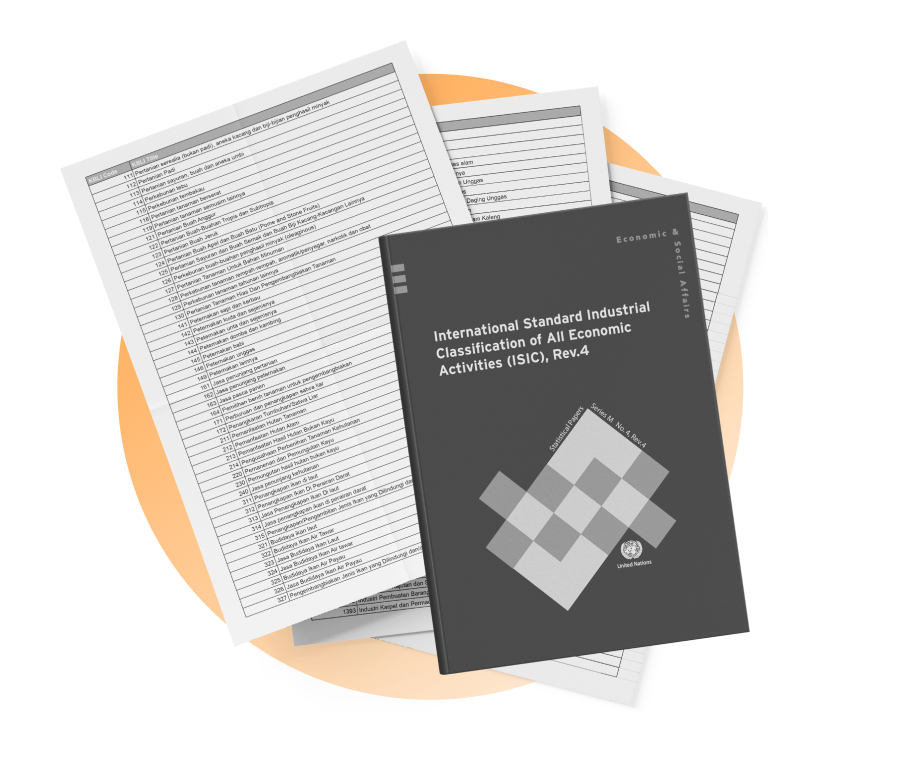
ISIC: Reference: International Standard Industrial Classification
NAICS: Comparable: North American Industry Classification System
Industry Terms
Key terminology for understanding the International Sea Passenger Transport Industry in Indonesia industry.
Liner Service
Scheduled ferry operations on fixed routes and timetables with regular departures.
Provides reliability for commuters, enabling high utilization rates essential in high-competition routes like Batam-Singapore.
Tramper Service
Unscheduled voyages based on demand, often charters for groups or events.
Offers flexibility for tourist operators, capturing peak-season surges but with higher marketing costs.
Crewed Vessel Rental
Leasing ships with full crew for private international passenger trips.
Enables bespoke tourism experiences, differentiating from mass-market ferries amid rising luxury demand.
Industry Overview – Business Types
Different business models operate within the International Sea Passenger Transport Industry in Indonesia industry.
High-Frequency Ferry Operator
Runs multiple daily fixed-schedule sailings with standardized vessels and ticketing.
Speed and reliability, competing on frequency rather than luxury.
Standard industry practices apply.
Tourist Cruise Operator
Deploys larger vessels for multi-day itineraries or day trips with onboard entertainment.
Amenities and themed experiences targeting leisure travelers.
Standard industry practices apply.
Charter and Rental Provider
Custom voyages on demand, partnering with travel agencies for groups.
Flexibility and personalization for corporate or event travel.
Standard industry practices apply.
Industry Performance & Outlook
Performance outlook for International Sea Passenger Transport Industry in Indonesia
Sector rebounded post-COVID with surging ASEAN tourism, but remains sensitive to fuel prices and regional tensions.
Outlook positive with infrastructure upgrades at Batam ports and growing middle-class cross-border travel.
Key performance indicators
Market growth
Industry expansion rate
Driven by domestic demand
Operational efficiency
Cost management
Key competitive factor
Outlook: what to watch
Monitor regulatory changes
Track infrastructure developments
Watch for technology adoption
Industry Growth Drivers
Key factors driving growth in International Sea Passenger Transport Industry in Indonesia.
Growth Driver 1
Domestic consumption growth driven by expanding middle class and rising disposable incomes
Monitor industry reports and market data for trends.
Growth Driver 2
Infrastructure development reducing logistics costs and improving market access
Monitor industry reports and market data for trends.
Growth Driver 3
Government policy support including investment incentives and industrial development programs
Monitor industry reports and market data for trends.
Growth Driver 4
Technology adoption improving productivity and enabling new business models
Monitor industry reports and market data for trends.
Growth Driver 5
Regional economic integration expanding market access and supply chain opportunities
Monitor industry reports and market data for trends.
Growth Driver 6
Urbanization creating concentrated demand centers and distribution efficiencies
Monitor industry reports and market data for trends.
Industry Trends & Development
Industry Development
Evolution of International Sea Passenger Transport Industry in Indonesia
Evolution from basic ferries to premium high-speed services mirroring air travel convenience.
Digital transformation in booking, payments, and real-time tracking amid smartphone penetration.
Key Trends
Major trends shaping the International Sea Passenger Transport Industry in Indonesia industry.
Digitalization and technology adoption
Industry trend shaping market dynamics.
Operators
Investors
Policymakers
Regulatory developments
Industry trend shaping market dynamics.
Operators
Investors
Policymakers
Impact and Sustainability
Sustainability and impact considerations for the international sea passenger transport industry.
Economic Impact
Contribution to national economic development.
Balancing growth with sustainability.
Environmental Considerations
Industry practices and environmental impact.
Operational costs vs sustainability.
Industry Segmentation
Industry Segmentation – Product/Service A
Primary market segments based on service type.
Segmentation by offering
Primary Segment
Core offerings
Main market
Addresses primary demand
Secondary Segment
Supporting services
Niche markets
Specialized needs
Segments may overlap based on customer needs.
Industry Segmentation – Product/Service B
Alternative segmentation perspectives.
Segmentation by characteristics
Mass Market
Broad appeal
General consumers
Volume-driven
Premium
High-value offerings
Discerning buyers
Quality-focused
Segment boundaries are fluid.
Customer Segmentation
Different customer segments and their characteristics.
Customer segments and what they value
B2B customers
Various
Multiple needs
Different channels
B2C consumers
Various
Multiple needs
Different channels
Key Players
Ecosystem Mapping
International Sea Passenger Transport Industry in Indonesia ecosystem includes various stakeholders.
Suppliers
Provide inputs and raw materials.
Primary producers
Input suppliers
Operators
Core industry participants.
Main industry operators
Service providers
Distribution
Channel to end customers.
Distributors
Retailers
How value flows across the ecosystem
Value is created through coordinated activities across the ecosystem.
Leading Players
Competitive landscape and key player archetypes.
Competitive archetypes
Market Leader
Dominant position
Scale, brand recognition
Market saturation
Specialist
Niche focus
Expertise, agility
Limited scale
How competition typically plays out
Competition is shaped by scale advantages, operational efficiency, and customer relationships.
Differentiation strategies vary by segment, with some players competing on price and others on service quality.
Operating Conditions
Operating Model & Cost Structure
Operating models in International Sea Passenger Transport Industry in Indonesia vary by business type.
Direct costs
Primary operational expenses
Input costs
Labor
Utilities
Major cost component
Overhead
Indirect operational costs
Administration
Facilities
Marketing
Scale-dependent
Cost structure summary
Direct costs
Volume and input prices
Operations
Efficiency improvements
Overhead
Scale and complexity
Administration
Process optimization
Cost structure varies by business model and scale.
Regulation & Compliance Considerations
Regulatory framework and compliance requirements.
Common compliance topics
Business licensing
Operating permits
Legal operation
Maintain valid licenses
Quality standards
Product/service requirements
Market access
Quality control systems
Stay current with regulatory changes.
FAQs & Sources
FAQs
What is International Sea Passenger Transport Industry in Indonesia?
International Sea Passenger Transport Industry in Indonesia encompasses various business activities in the Indonesian market.
Sources & Notes
This report is a synthesized overview based on industry analysis and desk research.
BPS (Statistics Indonesia)
Official statistics and industry data.
Ministry of Industry regulations
Regulatory framework and compliance requirements.
This report is for informational purposes and should not be treated as legal, regulatory, or investment advice.