Infrastructure Financing Services Industry in Indonesia
A practical guide to Infrastructure Financing Services Industry in Indonesia—market dynamics, operational realities, and strategic considerations in Indonesia
Infrastructure financing companies specialize in providing long-term capital to large-scale projects like toll roads, power plants, ports, and water systems, using structures such as project loans and bonds. They bridge funding gaps by offering advisory services, risk mitigation tools, and financing tenors that exceed typical bank limits, enabling projects to reach financial close.
Clear industry definition and scope of activities
Operational realities across Indonesia's regions
Market segmentation and customer analysis
Ecosystem mapping and competitive dynamics
Cost structure and unit economics
Regulatory and compliance considerations
Executive Summary
Infrastructure financing companies specialize in providing long-term capital to large-scale projects like toll roads, power plants, ports, and water systems, using structures such as project loans and bonds.
They bridge funding gaps by offering advisory services, risk mitigation tools, and financing tenors that exceed typical bank limits, enabling projects to reach financial close.
Operate under strict OJK oversight with minimum capital of IDR 10 trillion for conventional entities.
Subgroups include conventional (64941), Sharia (64942), catering to diverse investor bases.
Critical for Public-Private Partnerships (PPP), structuring deals to attract private capital.
Focus on bankable projects with strong off-takers like SOEs or government.
Challenges include execution risks from land acquisition delays in remote areas.
Why this industry matters in Indonesia
Supports Indonesia's economic growth and development objectives.
Creates employment opportunities across diverse skill levels.
Critical for service delivery and value chain integration.
Enables Indonesia's competitiveness in regional and global markets.
So what: Practical implications
Operators: Focus on quality consistency and process standardization
Buyers: Evaluate supplier capabilities beyond pricing
Investors: Look for operational efficiency and scalability
Policymakers: Support infrastructure development
Indonesia at a Glance
Republic of Indonesia: Large and fragmented market
Few specialized players like PT IIF and PT SMI dominate, channeling funds to priority sectors amid government-led infra acceleration.
Sector growth aligns with Indonesia's connectivity goals, emphasizing toll roads and renewables.
Market dynamics continue to evolve with changing economic conditions.
Hyperlocalization is key to navigate Indonesia's market
Tailored financing for Java's high-density transit versus Sumatra's resource-linked logistics projects.
Sharia-compliant options essential in provinces like Aceh, integrating local Islamic finance preferences.
Opportunities extend beyond cities
Supports rural grid extensions and irrigation in Papua and Maluku, where commercial banks avoid due to risks.
Addresses archipelago fragmentation with flexible tenors for island-specific logistics.
Growing middle class driving premiumization trends across product categories and services
Digital adoption accelerating with mobile-first consumer behavior creating new channel opportunities
Infrastructure investment improving connectivity and reducing logistics costs across the archipelago
Government initiatives supporting domestic industry development and foreign investment attraction
Regional economic integration through ASEAN creating expanded market access and trade opportunities
Sustainability and ESG considerations creating differentiation opportunities for responsible businesses
Distribution realities: logistics, infrastructure, and channel reach
Funds disbursed via project SPVs with tranche releases tied to milestones, navigating multi-island legal hurdles.
Relies on developer networks for pipeline sourcing, with OJK reporting for transparency.
Establish robust distribution partnerships covering both modern trade and traditional channels
Invest in localized supply chain capabilities to navigate logistics complexities and reduce costs
Develop region-specific market entry strategies accounting for local competitive dynamics
Build flexibility into operations to adapt to regulatory changes and infrastructure variations
Industry Definition
What is Infrastructure Financing Services Industry in Indonesia?
Industry Definition
KBLI 6494 defines non-bank institutions exclusively financing infrastructure via debt instruments, excluding general leasing or equity investments.
Boundaries limit to physical assets like energy and transport; subdivided into conventional, Sharia, and hybrid units.
Indonesia in Focus
Indonesia's infrastructure financing sector faces unique challenges from the archipelagic geography, requiring financing structures that accommodate project delays due to logistics constraints, inter-island coordination complexities, and varying regional construction capabilities.
The tropical climate creates specific project risks including monsoon season delays, flooding impacts on construction sites, and accelerated deterioration of materials, necessitating specialized risk assessment and insurance mechanisms for infrastructure projects.
Industry Classification
Infrastructure financing companies are classified by their capital structure and mandate: state-owned financing entities supporting government priority projects, private investment firms targeting commercially viable infrastructure, and multilateral development bank partners focusing on developmental impact.
Classification also distinguishes by project stage: greenfield financing for new construction, brownfield financing for existing asset acquisition or expansion, and blended finance structures combining commercial and concessional funding for complex projects.
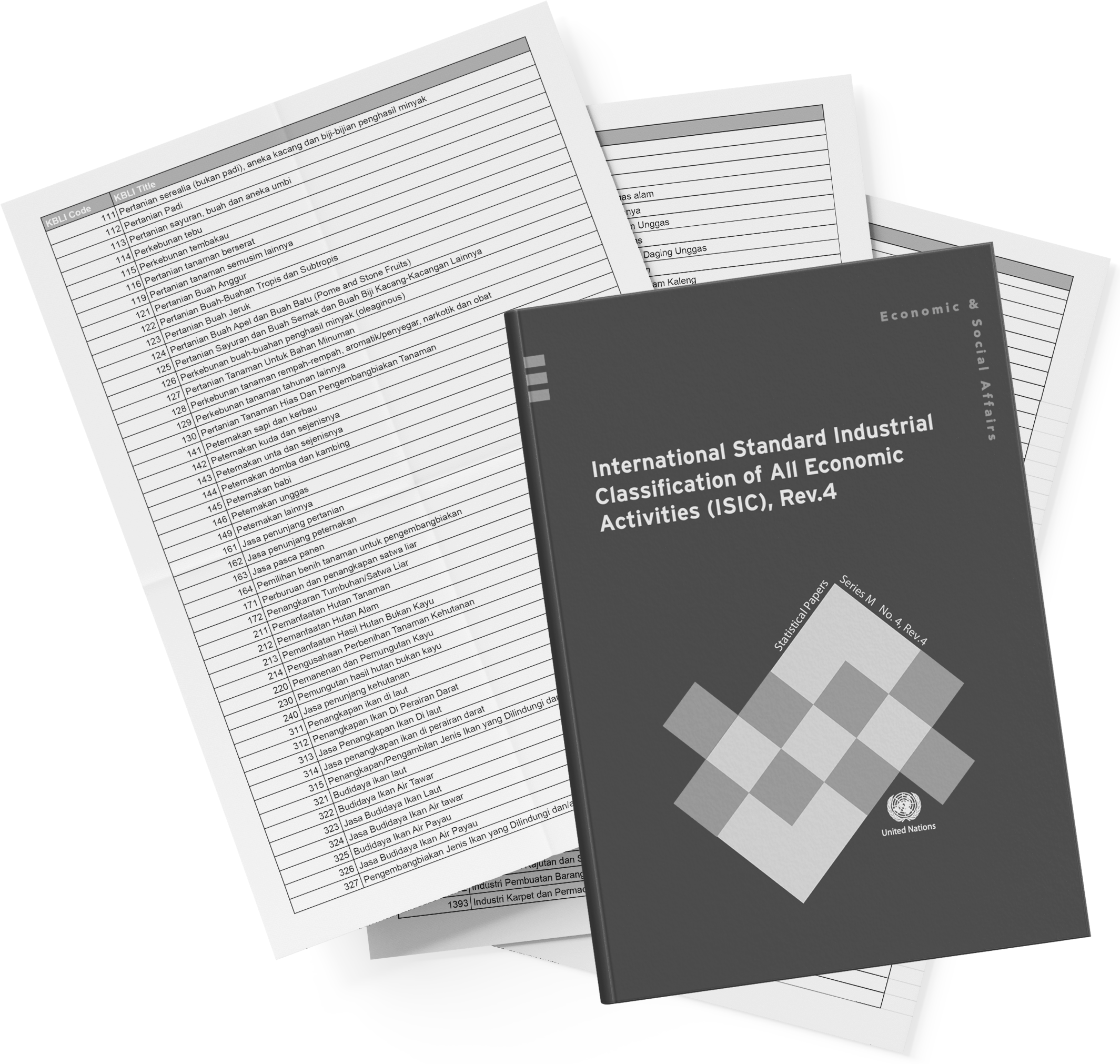
KBLI: 6494: Infrastructure Financing Services Industry in Indonesia
ISIC: Reference: International Standard Industrial Classification
NAICS: Comparable: North American Industry Classification System
Industry Terms
Key terminology for understanding the Infrastructure Financing Services Industry in Indonesia industry.
Project Finance
Financing repaid from project cash flows, with limited recourse to sponsors.
Aligns incentives for long-term infra viability, reducing bank exposure.
Securitization
Converting project receivables into tradable securities.
Recycles capital for new deals, broadening investor access.
Mezzanine Debt
Subordinated financing blending debt and equity features.
Fills senior debt gaps, enabling financial close in high-capex projects.
Industry Overview – Business Types
Different business models operate within the Infrastructure Financing Services Industry in Indonesia industry.
Conventional Financier
Syndicates term loans for toll roads and power plants, backed by govt guarantees.
Access to low-cost bank funding pools.
Standard industry practices apply.
Sharia Financier
Deploys ijara leasing and mudarabah for energy projects compliant with fatwa.
Taps Islamic investor funds underserved by banks.
Standard industry practices apply.
Advisory Financier
Structures PPP deals then provides mezzanine capital.
End-to-end expertise accelerates project timelines.
Standard industry practices apply.
Industry Performance & Outlook
Performance outlook for Infrastructure Financing Services Industry in Indonesia
Resilient amid fiscal expansions, with disbursements tied to approved pipelines.
Positive outlook from IKN development and net-zero commitments.
Key performance indicators
Market growth
Industry expansion rate
Driven by domestic demand
Operational efficiency
Cost management
Key competitive factor
Outlook: what to watch
Monitor regulatory changes
Track infrastructure developments
Watch for technology adoption
Industry Growth Drivers
Key factors driving growth in Infrastructure Financing Services Industry in Indonesia.
Growth Driver 1
Domestic consumption growth driven by expanding middle class and rising disposable incomes
Monitor industry reports and market data for trends.
Growth Driver 2
Infrastructure development reducing logistics costs and improving market access
Monitor industry reports and market data for trends.
Growth Driver 3
Government policy support including investment incentives and industrial development programs
Monitor industry reports and market data for trends.
Growth Driver 4
Technology adoption improving productivity and enabling new business models
Monitor industry reports and market data for trends.
Growth Driver 5
Regional economic integration expanding market access and supply chain opportunities
Monitor industry reports and market data for trends.
Growth Driver 6
Urbanization creating concentrated demand centers and distribution efficiencies
Monitor industry reports and market data for trends.
Industry Trends & Development
Industry Development
Evolution of Infrastructure Financing Services Industry in Indonesia
Shift from sovereign-led to blended finance models post-2009 establishment wave.
Rise of Sharia and sustainable financing amid OJK green taxonomy.
Key Trends
Major trends shaping the Infrastructure Financing Services Industry in Indonesia industry.
Digitalization and technology adoption
Industry trend shaping market dynamics.
Operators
Investors
Policymakers
Regulatory developments
Industry trend shaping market dynamics.
Operators
Investors
Policymakers
Impact and Sustainability
Sustainability and impact considerations for the infrastructure financing company industry.
Economic Impact
Contribution to national economic development.
Balancing growth with sustainability.
Environmental Considerations
Industry practices and environmental impact.
Operational costs vs sustainability.
Industry Segmentation
Industry Segmentation – Product/Service A
Primary market segments based on service type.
Segmentation by offering
Primary Segment
Core offerings
Main market
Addresses primary demand
Secondary Segment
Supporting services
Niche markets
Specialized needs
Segments may overlap based on customer needs.
Industry Segmentation – Product/Service B
Alternative segmentation perspectives.
Segmentation by characteristics
Mass Market
Broad appeal
General consumers
Volume-driven
Premium
High-value offerings
Discerning buyers
Quality-focused
Segment boundaries are fluid.
Customer Segmentation
Different customer segments and their characteristics.
Customer segments and what they value
B2B customers
Various
Multiple needs
Different channels
B2C consumers
Various
Multiple needs
Different channels
Key Players
Ecosystem Mapping
Infrastructure Financing Services Industry in Indonesia ecosystem includes various stakeholders.
Suppliers
Provide inputs and raw materials.
Primary producers
Input suppliers
Operators
Core industry participants.
Main industry operators
Service providers
Distribution
Channel to end customers.
Distributors
Retailers
How value flows across the ecosystem
Value is created through coordinated activities across the ecosystem.
Leading Players
Competitive landscape and key player archetypes.
Competitive archetypes
Market Leader
Dominant position
Scale, brand recognition
Market saturation
Specialist
Niche focus
Expertise, agility
Limited scale
How competition typically plays out
Competition is shaped by scale advantages, operational efficiency, and customer relationships.
Differentiation strategies vary by segment, with some players competing on price and others on service quality.
Operating Conditions
Operating Model & Cost Structure
Operating models in Infrastructure Financing Services Industry in Indonesia vary by business type.
Direct costs
Primary operational expenses
Input costs
Labor
Utilities
Major cost component
Overhead
Indirect operational costs
Administration
Facilities
Marketing
Scale-dependent
Cost structure summary
Direct costs
Volume and input prices
Operations
Efficiency improvements
Overhead
Scale and complexity
Administration
Process optimization
Cost structure varies by business model and scale.
Regulation & Compliance Considerations
Regulatory framework and compliance requirements.
Common compliance topics
Business licensing
Operating permits
Legal operation
Maintain valid licenses
Quality standards
Product/service requirements
Market access
Quality control systems
Stay current with regulatory changes.
FAQs & Sources
FAQs
What is Infrastructure Financing Services Industry in Indonesia?
Infrastructure Financing Services Industry in Indonesia encompasses various business activities in the Indonesian market.
Sources & Notes
This report is a synthesized overview based on industry analysis and desk research.
BPS (Statistics Indonesia)
Official statistics and industry data.
Ministry of Industry regulations
Regulatory framework and compliance requirements.
This report is for informational purposes and should not be treated as legal, regulatory, or investment advice.