Household Good Wholesale Industry in Indonesia
A practical guide to Household Good Wholesale Industry in Indonesia—market dynamics, operational realities, and strategic considerations in Indonesia
This industry encompasses the wholesale trade of diverse household goods not classified elsewhere, including household equipment and supplies (46491), sporting equipment (46492), musical instruments (46493), jewelry and watches (46494), children's toys and games (46495), and other miscellaneous goods (46499). Wholesalers buy in bulk from manufacturers or importers, store in warehouses, and distribute to retailers, institutions, and smaller traders, facilitating the supply chain for home essentials, leisure, and decorative items across Indonesia.
Clear industry definition and scope of activities
Operational realities across Indonesia's regions
Market segmentation and customer analysis
Ecosystem mapping and competitive dynamics
Cost structure and unit economics
Regulatory and compliance considerations
Executive Summary
This industry encompasses the wholesale trade of diverse household goods not classified elsewhere, including household equipment and supplies (46491), sporting equipment (46492), musical instruments (46493), jewelry and watches (46494), children's toys and games (46495), and other miscellaneous goods (46499).
Wholesalers buy in bulk from manufacturers or importers, store in warehouses, and distribute to retailers, institutions, and smaller traders, facilitating the supply chain for home essentials, leisure, and decorative items across Indonesia.
Market highly fragmented with thousands of small-to-medium traders dominating traditional channels.
E-commerce B2B platforms like Bukalapak Grosir are disrupting by enabling direct manufacturer-to-retailer links.
Logistics costs eat 15-20% of margins due to archipelago geography and poor rural infrastructure.
Import reliance for toys, jewelry, and electronics accessories exposes players to rupiah fluctuations.
Rising focus on halal-certified and locally-made goods to appeal to Muslim consumers.
Why this industry matters in Indonesia
Connects producers with Indonesia's vast consumer market.
Critical for price discovery and market efficiency.
Supports MSME distribution and market access.
Enables consumption-driven economic growth.
So what: Practical implications
Operators: Focus on quality consistency and process standardization
Buyers: Evaluate supplier capabilities beyond pricing
Investors: Look for operational efficiency and scalability
Policymakers: Support infrastructure development
Indonesia at a Glance
Republic of Indonesia: Large and fragmented market
The market supports Indonesia's expanding retail sector, with steady demand from modern chains like ACE Hardware and traditional pasar suppliers.
Growth mirrors household formation rates, boosted by government housing programs like FLPP subsidies.
Market dynamics continue to evolve with changing economic conditions.
Hyperlocalization is key to navigate Indonesia's market
Furniture wholesalers in humid Java offer rattan and teak suited to tropical climates, while Sumatra variants use local meranti wood.
Toys in Papua emphasize educational wooden crafts, contrasting plastic imports popular in urban Jakarta.
Opportunities extend beyond cities
Rural wholesalers stock durable, low-maintenance goods like plastic housewares for off-grid households.
Tier-3 city hubs emerge around palm oil boomtowns, supplying worker housing needs.
Growing middle class driving premiumization trends across product categories and services
Digital adoption accelerating with mobile-first consumer behavior creating new channel opportunities
Infrastructure investment improving connectivity and reducing logistics costs across the archipelago
Government initiatives supporting domestic industry development and foreign investment attraction
Regional economic integration through ASEAN creating expanded market access and trade opportunities
Sustainability and ESG considerations creating differentiation opportunities for responsible businesses
Distribution realities: logistics, infrastructure, and channel reach
Sea freight dominates inter-island moves via ports like Tanjung Priok, with trucking for Java intra-distribution.
Cold chain unnecessary, but humidity control critical for leather and musical instruments.
Establish robust distribution partnerships covering both modern trade and traditional channels
Invest in localized supply chain capabilities to navigate logistics complexities and reduce costs
Develop region-specific market entry strategies accounting for local competitive dynamics
Build flexibility into operations to adapt to regulatory changes and infrastructure variations
Industry Definition
What is Household Good Wholesale Industry in Indonesia?
Industry Definition
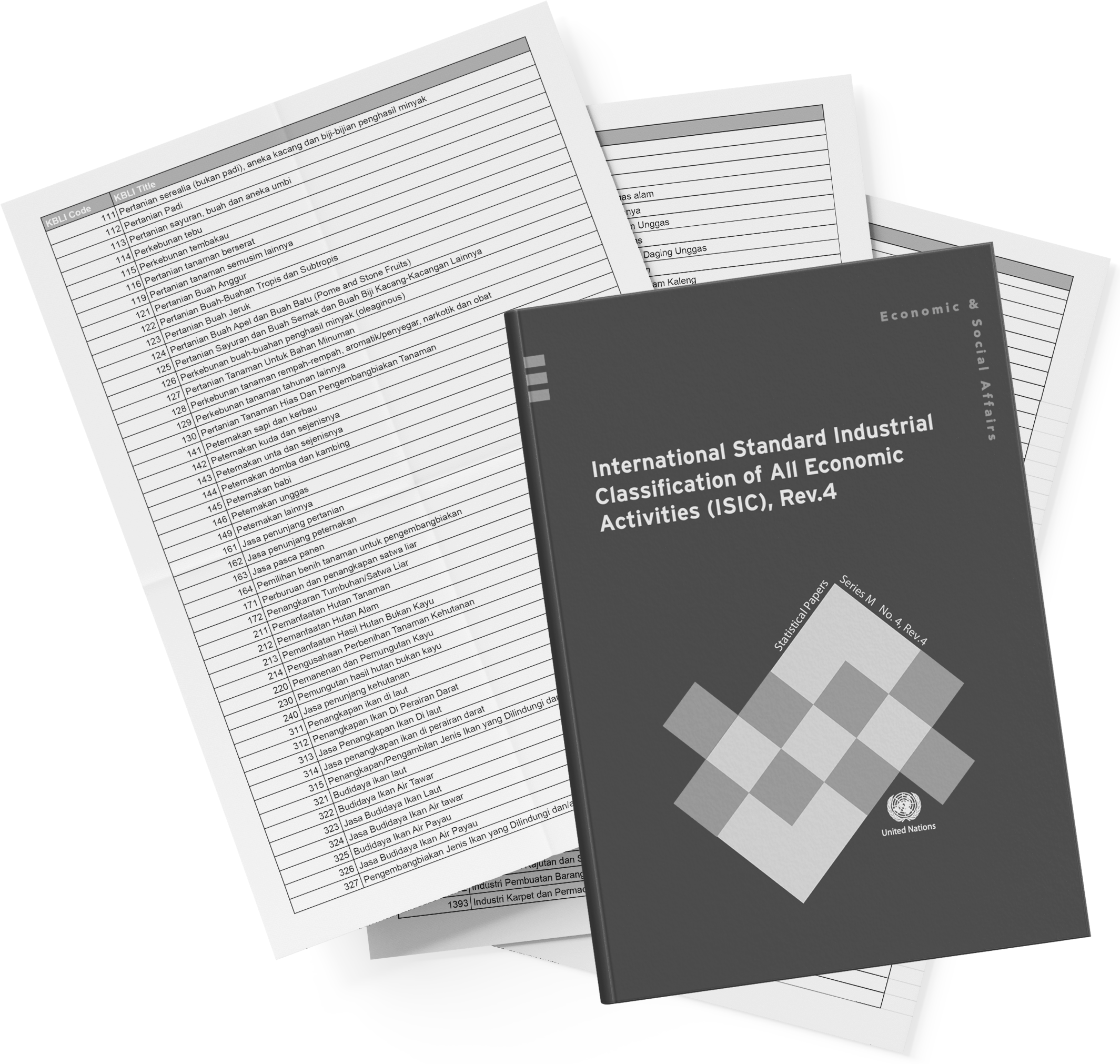
KBLI 4649 defines wholesale of non-food, non-textile household goods, bounded by 5-digit subcodes covering furniture, sports gear, instruments, jewelry, toys, and residuals; excludes electrical appliances (4652) and pharmaceuticals (4644).
Activities include bulk trading on own account or fee basis, but not manufacturing or retail sales.
Indonesia in Focus
Indonesia's archipelago geography creates unique distribution challenges requiring adapted logistics and storage solutions.
High humidity and tropical climate demand specific technical approaches to quality preservation and product integrity.
Industry Classification
Conceptually, industry activities sit under specific regulatory frameworks with classification by operational scale and service model.
Operators may be classified by activity type, by service delivery model, and by end-use applications.
KBLI: 4649: Household Good Wholesale Industry in Indonesia
ISIC: Reference: International Standard Industrial Classification
NAICS: Comparable: North American Industry Classification System
Industry Terms
Key terminology for understanding the Household Good Wholesale Industry in Indonesia industry.
Cash-and-carry
Self-service wholesale model where buyers select and pay for goods upfront without credit.
Lowers bad debt risk for wholesalers while allowing small retailers flexible volumes.
Drop-shipment
Supplier ships directly to end-retailer, bypassing wholesaler inventory.
Cuts storage costs but requires tight coordination to maintain control.
Private label goods
Unbranded products sourced and rebranded by the wholesaler for retailers.
Boosts margins by 20-30% through exclusivity and volume leverage.
Industry Overview – Business Types
Different business models operate within the Household Good Wholesale Industry in Indonesia industry.
Traditional family traders
Operate from wet markets or small godowns, offering credit to loyal retailers via personal networks.
Deep local knowledge and flexible terms in underserved areas.
Standard industry practices apply.
Modern chain suppliers
Use ERP systems for nationwide distribution to hypermarkets and specialists like Informa.
Scale economies and reliable delivery schedules.
Standard industry practices apply.
Niche importers
Focus on categories like toys or jewelry, importing from China/Vietnam and clearing customs.
Exclusive brands and trend forecasting.
Standard industry practices apply.
Industry Performance & Outlook
Performance outlook for Household Good Wholesale Industry in Indonesia
Post-2023 recovery saw volume growth from pent-up demand, stabilizing with consumer spending.
2026 outlook buoyant with 5-7% CAGR projected from housing and leisure trends.
Key performance indicators
Market growth
Industry expansion rate
Driven by domestic demand
Operational efficiency
Cost management
Key competitive factor
Outlook: what to watch
Monitor regulatory changes
Track infrastructure developments
Watch for technology adoption
Industry Growth Drivers
Key factors driving growth in Household Good Wholesale Industry in Indonesia.
Growth Driver 1
Domestic consumption growth driven by expanding middle class and rising disposable incomes
Monitor industry reports and market data for trends.
Growth Driver 2
Infrastructure development reducing logistics costs and improving market access
Monitor industry reports and market data for trends.
Growth Driver 3
Government policy support including investment incentives and industrial development programs
Monitor industry reports and market data for trends.
Growth Driver 4
Technology adoption improving productivity and enabling new business models
Monitor industry reports and market data for trends.
Growth Driver 5
Regional economic integration expanding market access and supply chain opportunities
Monitor industry reports and market data for trends.
Growth Driver 6
Urbanization creating concentrated demand centers and distribution efficiencies
Monitor industry reports and market data for trends.
Industry Trends & Development
Industry Development
Evolution of Household Good Wholesale Industry in Indonesia
Evolution from informal pasar traders to formalized entities with OSS licensing since 2018.
FDI inflows rising for logistics-integrated wholesalers post-Omnibus Law.
Key Trends
Major trends shaping the Household Good Wholesale Industry in Indonesia industry.
Digitalization and technology adoption
Industry trend shaping market dynamics.
Operators
Investors
Policymakers
Regulatory developments
Industry trend shaping market dynamics.
Operators
Investors
Policymakers
Impact and Sustainability
Sustainability and impact considerations for the wholesale of other household goods industry.
Economic Impact
Contribution to national economic development.
Balancing growth with sustainability.
Environmental Considerations
Industry practices and environmental impact.
Operational costs vs sustainability.
Industry Segmentation
Industry Segmentation – Product/Service A
Primary market segments based on service type.
Segmentation by offering
Primary Segment
Core offerings
Main market
Addresses primary demand
Secondary Segment
Supporting services
Niche markets
Specialized needs
Segments may overlap based on customer needs.
Industry Segmentation – Product/Service B
Alternative segmentation perspectives.
Segmentation by characteristics
Mass Market
Broad appeal
General consumers
Volume-driven
Premium
High-value offerings
Discerning buyers
Quality-focused
Segment boundaries are fluid.
Customer Segmentation
Different customer segments and their characteristics.
Customer segments and what they value
B2B customers
Various
Multiple needs
Different channels
B2C consumers
Various
Multiple needs
Different channels
Key Players
Ecosystem Mapping
Household Good Wholesale Industry in Indonesia ecosystem includes various stakeholders.
Suppliers
Provide inputs and raw materials.
Primary producers
Input suppliers
Operators
Core industry participants.
Main industry operators
Service providers
Distribution
Channel to end customers.
Distributors
Retailers
How value flows across the ecosystem
Value is created through coordinated activities across the ecosystem.
Leading Players
Competitive landscape and key player archetypes.
Competitive archetypes
Market Leader
Dominant position
Scale, brand recognition
Market saturation
Specialist
Niche focus
Expertise, agility
Limited scale
How competition typically plays out
Competition is shaped by scale advantages, operational efficiency, and customer relationships.
Differentiation strategies vary by segment, with some players competing on price and others on service quality.
Operating Conditions
Operating Model & Cost Structure
Operating models in Household Good Wholesale Industry in Indonesia vary by business type.
Direct costs
Primary operational expenses
Input costs
Labor
Utilities
Major cost component
Overhead
Indirect operational costs
Administration
Facilities
Marketing
Scale-dependent
Cost structure summary
Direct costs
Volume and input prices
Operations
Efficiency improvements
Overhead
Scale and complexity
Administration
Process optimization
Cost structure varies by business model and scale.
Regulation & Compliance Considerations
Regulatory framework and compliance requirements.
Common compliance topics
Business licensing
Operating permits
Legal operation
Maintain valid licenses
Quality standards
Product/service requirements
Market access
Quality control systems
Stay current with regulatory changes.
FAQs & Sources
FAQs
What is Household Good Wholesale Industry in Indonesia?
Household Good Wholesale Industry in Indonesia encompasses various business activities in the Indonesian market.
Sources & Notes
This report is a synthesized overview based on industry analysis and desk research.
BPS (Statistics Indonesia)
Official statistics and industry data.
Ministry of Industry regulations
Regulatory framework and compliance requirements.
This report is for informational purposes and should not be treated as legal, regulatory, or investment advice.