Fibre Optic Cable Manufacturing Industry in Indonesia
A practical guide to Fibre Optic Cable Manufacturing Industry in Indonesiaโmarket dynamics, operational realities, and strategic considerations in Indonesia
Manufacture of Fibre Optic Cables transforms pure silica glass preforms into ultra-thin optical fibers, then assembles them into protective cable structures that transmit data at terabit speeds over hundreds of kilometers with negligible loss. Key steps include high-temperature drawing of 125-micron clad fibers, dual-layer UV-cured coatings for handling protection, color-coding for traceability, stranding into central loose tubes or ribbons, embedding strength members like aramid yarn, and extruding multi-layer sheaths resistant to crush, moisture, rodents, and UV for aerial, duct, direct-bury, or submarine use.
Clear industry definition and scope of activities
Operational realities across Indonesia's regions
Market segmentation and customer analysis
Ecosystem mapping and competitive dynamics
Cost structure and unit economics
Regulatory and compliance considerations
Executive Summary
Manufacture of Fibre Optic Cables transforms pure silica glass preforms into ultra-thin optical fibers, then assembles them into protective cable structures that transmit data at terabit speeds over hundreds of kilometers with negligible loss.
Key steps include high-temperature drawing of 125-micron clad fibers, dual-layer UV-cured coatings for handling protection, color-coding for traceability, stranding into central loose tubes or ribbons, embedding strength members like aramid yarn, and extruding multi-layer sheaths resistant to crush, moisture, rodents, and UV for aerial, duct, direct-bury, or submarine use.
Cleanrooms with HEPA filtration are mandatory to block sub-micron dust that spikes attenuation beyond 0.2 dB/km.
TKDN certification above 40% unlocks Telkom Indonesia and Bakti contracts, calculated on local labor, assembly, and sheathing.
Capex hurdles exceed Rp 150 billion per drawing tower, tying scale to bankable off-take from towercos like Tower Bersama.
Humidity control in warehousing prevents gel migration or fiber microbending, critical for archipelago sea shipments.
Export edges emerge via ASEAN Economic Community, with Batam plants targeting Singapore data center links.
Why this industry matters in Indonesia
Supports Indonesia's economic growth and development objectives.
Creates employment opportunities across diverse skill levels.
Critical for service delivery and value chain integration.

Enables Indonesia's competitiveness in regional and global markets.
So what: Practical implications
Operators: Focus on quality consistency and process standardization
Buyers: Evaluate supplier capabilities beyond pricing
Investors: Look for operational efficiency and scalability
Policymakers: Support infrastructure development
Indonesia at a Glance
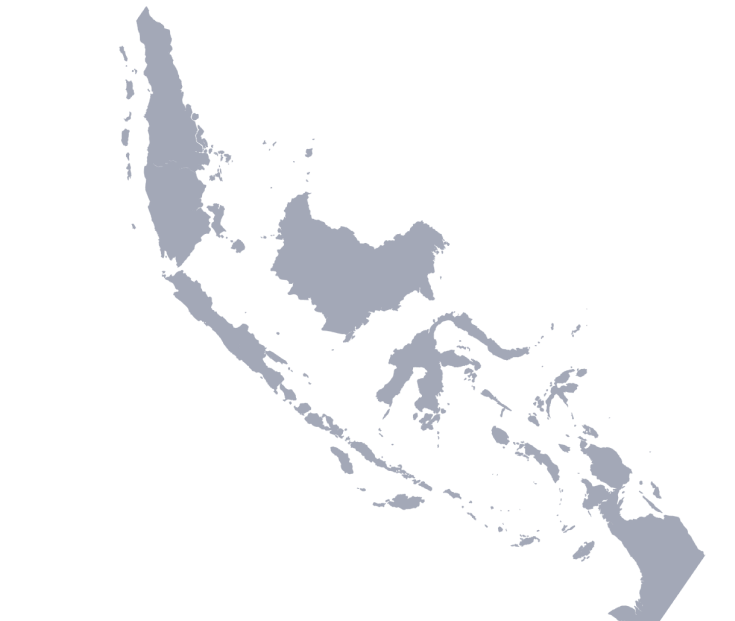
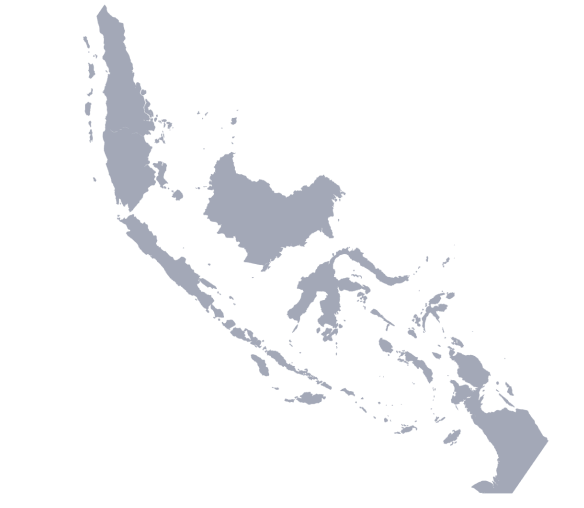
Republic of Indonesia: Large and fragmented market
Fueled by 5G backhaul and hyperscale data centers, demand tracks government broadband targets under the Golden Indonesia 2045 vision, with Palapa Ring extensions prioritizing local suppliers.
Production clusters in West Java serve national needs, while imports persist for ultra-high-count submarine cables, creating a mix of assembly-heavy locals and tech JV players.
Market dynamics continue to evolve with changing economic conditions.
Hyperlocalization is key to navigate Indonesia's market
Karawang-Bekasi factories dominate Java output, sourcing preforms via Priok port for quick Telkom deliveries; Sumatra plants like in Medan cater to regional ISPs with duct cables.
Batam free-trade zone optimizes for export-oriented high-spec cables, leveraging Singapore proximity, while Sulawesi facilities handle mining sector hardened variants.
Opportunities extend beyond cities
Outer islands like Maluku and Papua depend on fortified direct-bury cables shipped by barge, with factories pre-loading seasonal orders to beat monsoon delays.
Remote deployments favor all-dielectric self-supporting designs installable without poles, suiting uneven terrain and power line piggybacks.
Growing middle class driving premiumization trends across product categories and services
Digital adoption accelerating with mobile-first consumer behavior creating new channel opportunities
Infrastructure investment improving connectivity and reducing logistics costs across the archipelago
Government initiatives supporting domestic industry development and foreign investment attraction
Regional economic integration through ASEAN creating expanded market access and trade opportunities
Sustainability and ESG considerations creating differentiation opportunities for responsible businesses
Distribution realities: logistics, infrastructure, and channel reach
Inter-island RoRo ferries and container ships from Tanjung Perak/Priok hubs carry bulk reels, requiring desiccants and vibration damping to preserve fiber macrobend integrity.
Just-in-time trucking to urban pits contrasts with stockpiled island depots, where high humidity demands climate-controlled yards to avoid sheath cracking.
Establish robust distribution partnerships covering both modern trade and traditional channels
Invest in localized supply chain capabilities to navigate logistics complexities and reduce costs
Develop region-specific market entry strategies accounting for local competitive dynamics
Build flexibility into operations to adapt to regulatory changes and infrastructure variations
Industry Definition
What is Fibre Optic Cable Manufacturing Industry in Indonesia?
Industry Definition
KBLI 2731 encompasses the full cable assembly from imported or local-drawn optical fibers into finished transmission products, including stranding, buffering, jacketing, and testing for parameters like attenuation, bandwidth, and tensile strength.
Excludes upstream fiber preform melting (often abroad), downstream splicing/termination, or non-optical cables like copper telecom (2732) or power line insulators, focusing on dielectric lightguides for telecom/data networks.
Indonesia in Focus
Indonesia's archipelago geography creates unique distribution challenges requiring adapted logistics and storage solutions.
High humidity and tropical climate demand specific technical approaches to quality preservation and product integrity.
Industry Classification
Conceptually, industry activities sit under specific regulatory frameworks with classification by operational scale and service model.
Operators may be classified by activity type, by service delivery model, and by end-use applications.
KBLI: 2731: Fibre Optic Cable Manufacturing Industry in Indonesia
ISIC: Reference: International Standard Industrial Classification
NAICS: Comparable: North American Industry Classification System
Industry Terms
Key terminology for understanding the Fibre Optic Cable Manufacturing Industry in Indonesia industry.
G.657 Bend-Insensitive Fiber
Single-mode fiber variant with low macrobend loss at 1550nm, core ~9um for tight radius installations.
Essential for Indonesia's crowded urban ducts and FTTx drops, enabling 5m bends without >0.1dB loss versus standard G.652.
Loose Tube Construction
Fibers floated in jelly-filled or dry-block tubes within a central strength core, surrounded by ripcord-accessible sheath.
Protects against water ingress and crush in Indonesia's high-rain duct/aerial paths, outperforming tight-buffered for long-haul.
TKDN (Tingkat Komponen Dalam Negeri)
Government-mandated local content ratio, verified by Kemenperin audits on BOM value.
Thresholds (30-60%) gatekeep public tenders, incentivizing local extrusion/polymer use over full imports.
Industry Overview โ Business Types
Different business models operate within the Fibre Optic Cable Manufacturing Industry in Indonesia industry.
Full-Draw Integrated Manufacturers
Operate preform-to-cable lines with drawing towers at 2000C, in-house coloring/stranding for end-to-end control.
Achieve TKDN 70%+ via local silica processing, command premium for custom low-loss specs.
Standard industry practices apply.
Stranding Specialists
Import colored fibers, assemble tubes/strands on SZ-lay machines, extrude PE/PVC sheaths with integrated rods.
Flexible for FTTx microducts, lower Rp 50B entry vs full draw, scale via multi-line shifts.
Standard industry practices apply.
Submarine Cable Assemblers
Layer armoured steel wires over jelly tubes, embed repeaters, test for 10GPa pressure in double-crush armoring.
Niche for Palapa Ring branches, partner with Nokia for embed tech, high-margin govt sole-source.
Standard industry practices apply.
Industry Performance & Outlook
Performance outlook for Fibre Optic Cable Manufacturing Industry in Indonesia
Capacity utilization swings with telco capex, peaking Q4 for fiscal-year builds, buffered by data center steady demand.
Positive trajectory ties to Making Indonesia 4.0 digitization, with 2026 submarine upgrades and AWS expansions lifting volumes.
Key performance indicators
Market growth
Industry expansion rate
Driven by domestic demand
Operational efficiency
Cost management
Key competitive factor
Outlook: what to watch
Monitor regulatory changes
Track infrastructure developments
Watch for technology adoption
Industry Growth Drivers
Key factors driving growth in Fibre Optic Cable Manufacturing Industry in Indonesia.
Growth Driver 1
Domestic consumption growth driven by expanding middle class and rising disposable incomes
Monitor industry reports and market data for trends.
Growth Driver 2
Infrastructure development reducing logistics costs and improving market access
Monitor industry reports and market data for trends.
Growth Driver 3
Government policy support including investment incentives and industrial development programs
Monitor industry reports and market data for trends.
Growth Driver 4
Technology adoption improving productivity and enabling new business models
Monitor industry reports and market data for trends.
Growth Driver 5
Regional economic integration expanding market access and supply chain opportunities
Monitor industry reports and market data for trends.
Growth Driver 6
Urbanization creating concentrated demand centers and distribution efficiencies
Monitor industry reports and market data for trends.
Industry Trends & Development
Industry Development
Evolution of Fibre Optic Cable Manufacturing Industry in Indonesia
Evolution from fiber-import assembly to local drawing via Furukawa/CCSI tech transfers, cutting lead times from 3 months to weeks.
Shift from 48-96 core ducts to 288+ ribbon cables, enabled by blown-fiber microtube tech for urban retrofits.
Key Trends
Major trends shaping the Fibre Optic Cable Manufacturing Industry in Indonesia industry.
Digitalization and technology adoption
Industry trend shaping market dynamics.
Operators
Investors
Policymakers
Regulatory developments
Industry trend shaping market dynamics.
Operators
Investors
Policymakers
Impact and Sustainability
Sustainability and impact considerations for the manufacture of fibre optic cables industry.
Economic Impact
Contribution to national economic development.
Balancing growth with sustainability.
Environmental Considerations
Industry practices and environmental impact.
Operational costs vs sustainability.
Industry Segmentation
Industry Segmentation โ Product/Service A
Primary market segments based on service type.
Segmentation by offering
Primary Segment
Core offerings
Main market
Addresses primary demand
Secondary Segment
Supporting services
Niche markets
Specialized needs
Segments may overlap based on customer needs.
Industry Segmentation โ Product/Service B
Alternative segmentation perspectives.
Segmentation by characteristics
Mass Market
Broad appeal
General consumers
Volume-driven
Premium
High-value offerings
Discerning buyers
Quality-focused
Segment boundaries are fluid.
Customer Segmentation
Different customer segments and their characteristics.
Customer segments and what they value
B2B customers
Various
Multiple needs
Different channels
B2C consumers
Various
Multiple needs
Different channels
Key Players
Ecosystem Mapping
Fibre Optic Cable Manufacturing Industry in Indonesia ecosystem includes various stakeholders.
Suppliers
Provide inputs and raw materials.
Primary producers
Input suppliers
Operators
Core industry participants.
Main industry operators
Service providers
Distribution
Channel to end customers.
Distributors
Retailers
How value flows across the ecosystem
Value is created through coordinated activities across the ecosystem.
Leading Players
Competitive landscape and key player archetypes.
Competitive archetypes
Market Leader
Dominant position
Scale, brand recognition
Market saturation
Specialist
Niche focus
Expertise, agility
Limited scale
How competition typically plays out
Competition is shaped by scale advantages, operational efficiency, and customer relationships.
Differentiation strategies vary by segment, with some players competing on price and others on service quality.
Operating Conditions
Operating Model & Cost Structure
Operating models in Fibre Optic Cable Manufacturing Industry in Indonesia vary by business type.
Direct costs
Primary operational expenses
Input costs
Labor
Utilities
Major cost component
Overhead
Indirect operational costs
Administration
Facilities
Marketing
Scale-dependent
Cost structure summary
Direct costs
Volume and input prices
Operations
Efficiency improvements
Overhead
Scale and complexity
Administration
Process optimization
Cost structure varies by business model and scale.
Regulation & Compliance Considerations
Regulatory framework and compliance requirements.
Common compliance topics
Business licensing
Operating permits
Legal operation
Maintain valid licenses
Quality standards
Product/service requirements
Market access
Quality control systems
Stay current with regulatory changes.
FAQs & Sources
FAQs
What is Fibre Optic Cable Manufacturing Industry in Indonesia?
Fibre Optic Cable Manufacturing Industry in Indonesia encompasses various business activities in the Indonesian market.
Sources & Notes
This report is a synthesized overview based on industry analysis and desk research.
BPS (Statistics Indonesia)
Official statistics and industry data.
Ministry of Industry regulations
Regulatory framework and compliance requirements.
This report is for informational purposes and should not be treated as legal, regulatory, or investment advice.