Electromedical and Electrotherapeutic Equipment Manufacturing Industry in Indonesia
A practical guide to Electromedical and Electrotherapeutic Equipment Manufacturing Industry in Indonesiaโmarket dynamics, operational realities, and strategic considerations in Indonesia
This industry manufactures specialized equipment using irradiation for imaging and therapy, electromedical devices for diagnostics, and electrotherapeutic apparatus for treatment. Products range from X-ray generators and CT scanners to radiotherapy machines, ECG systems, ultrasound imagers, and devices like TENS units for pain relief. The focus is on integrating electronics, software, and mechanical components to deliver precise, safe medical interventions. Manufacturing entails cleanroom assembly, calibration of radiation sources, software validation for image processing, and compliance testing to mitigate risks like overexposure or electromagnetic interference. These devices turn raw technologies into hospital-ready systems that enable non-invasive procedures central to modern healthcare.
Clear industry definition and scope of activities
Operational realities across Indonesia's regions
Market segmentation and customer analysis
Ecosystem mapping and competitive dynamics
Cost structure and unit economics
Regulatory and compliance considerations
Executive Summary
This industry manufactures specialized equipment using irradiation for imaging and therapy, electromedical devices for diagnostics, and electrotherapeutic apparatus for treatment. Products range from X-ray generators and CT scanners to radiotherapy machines, ECG systems, ultrasound imagers, and devices like TENS units for pain relief. The focus is on integrating electronics, software, and mechanical components to deliver precise, safe medical interventions.
Manufacturing entails cleanroom assembly, calibration of radiation sources, software validation for image processing, and compliance testing to mitigate risks like overexposure or electromagnetic interference. These devices turn raw technologies into hospital-ready systems that enable non-invasive procedures central to modern healthcare.
Regulatory hurdles from BPOM for device registration and BAPETEN for radiation safety create long lead times but ensure quality in a market prone to counterfeits.
Demand is propelled by rising chronic diseases, with irradiation gear critical for cancer centers proliferating in tier-2 cities.
Facilities require specialized infrastructure like Faraday cages and dosimetry labs, tying up capital in underutilized assets outside peak demand.
Local content rules favor assemblers over full manufacturers, shifting competition toward partnerships with global OEMs.
After-sales service dominates profitability, as hospitals prioritize uptime over upfront costs in resource-constrained settings.
Why this industry matters in Indonesia
Ensures healthcare access for Indonesia's 270+ million population.

Critical for public health outcomes and disease prevention.

Supports quality of life and workforce productivity.
Enables Indonesia's health security and pandemic preparedness.
So what: Practical implications
Operators: Focus on quality consistency and process standardization
Buyers: Evaluate supplier capabilities beyond pricing
Investors: Look for operational efficiency and scalability
Policymakers: Support infrastructure development
Indonesia at a Glance
Republic of Indonesia: Large and fragmented market
Indonesia's irradiation and electromedical equipment market mirrors broader medical device growth, driven by JKN hospital upgrades and private clinic expansions, though high-tech segments like linear accelerators remain import-heavy. Public procurement via e-Katalog emphasizes TKDN compliance, pressuring manufacturers to localize non-core parts like cabinets and interfaces.
Production volumes are low due to economies of scale challenges, with most output serving domestic hospitals while exports target ASEAN neighbors under harmonized standards.
Market dynamics continue to evolve with changing economic conditions.
Hyperlocalization is key to navigate Indonesia's market
Devices are adapted for Indonesia's 220V/50Hz grid instability and high humidity, incorporating robust cooling and surge protection to prevent failures in non-airconditioned clinics.
Software localizes interfaces to Bahasa Indonesia and integrates with national health IT systems like SATUSEHAT for seamless diagnostics.
Opportunities extend beyond cities
Outer islands like Papua and Maluku rely on centralized Java maintenance hubs, facing delays from sea/air logistics and lack of on-site technicians.
Mobile service units emerge for remote diagnostics, but irradiation equipment stays urban due to power and shielding needs.
Growing middle class driving premiumization trends across product categories and services
Digital adoption accelerating with mobile-first consumer behavior creating new channel opportunities
Infrastructure investment improving connectivity and reducing logistics costs across the archipelago
Government initiatives supporting domestic industry development and foreign investment attraction
Regional economic integration through ASEAN creating expanded market access and trade opportunities
Sustainability and ESG considerations creating differentiation opportunities for responsible businesses
Distribution realities: logistics, infrastructure, and channel reach
High-value shipments enter via Tanjung Priok or Soekarno-Hatta, requiring radiation declarations and climate-controlled trucking to end-users.
Reverse logistics for decommissioning radioactive sources involves licensed haulers to BAPETEN facilities, adding compliance layers.
Establish robust distribution partnerships covering both modern trade and traditional channels
Invest in localized supply chain capabilities to navigate logistics complexities and reduce costs
Develop region-specific market entry strategies accounting for local competitive dynamics
Build flexibility into operations to adapt to regulatory changes and infrastructure variations
Industry Definition
What is Electromedical and Electrotherapeutic Equipment Manufacturing Industry in Indonesia?
Industry Definition
KBLI 2660 covers manufacturing of devices employing ionizing radiation (X-ray, gamma), non-ionizing fields (ultrasound, MRI magnets), and electrical stimulation for medical use, excluding household appliances or research prototypes. Boundaries exclude software-only development or repair services, focusing on physical production and integration.

Core activities include component fabrication like high-voltage generators, final assembly, functional testing, and packaging for sterile transport. It stops short of hospital installation or operator training.
Indonesia in Focus
Indonesia's archipelago geography creates unique distribution challenges requiring adapted logistics and storage solutions.
High humidity and tropical climate demand specific technical approaches to quality preservation and product integrity.
Industry Classification
Conceptually, industry activities sit under specific regulatory frameworks with classification by operational scale and service model.
Operators may be classified by activity type, by service delivery model, and by end-use applications.
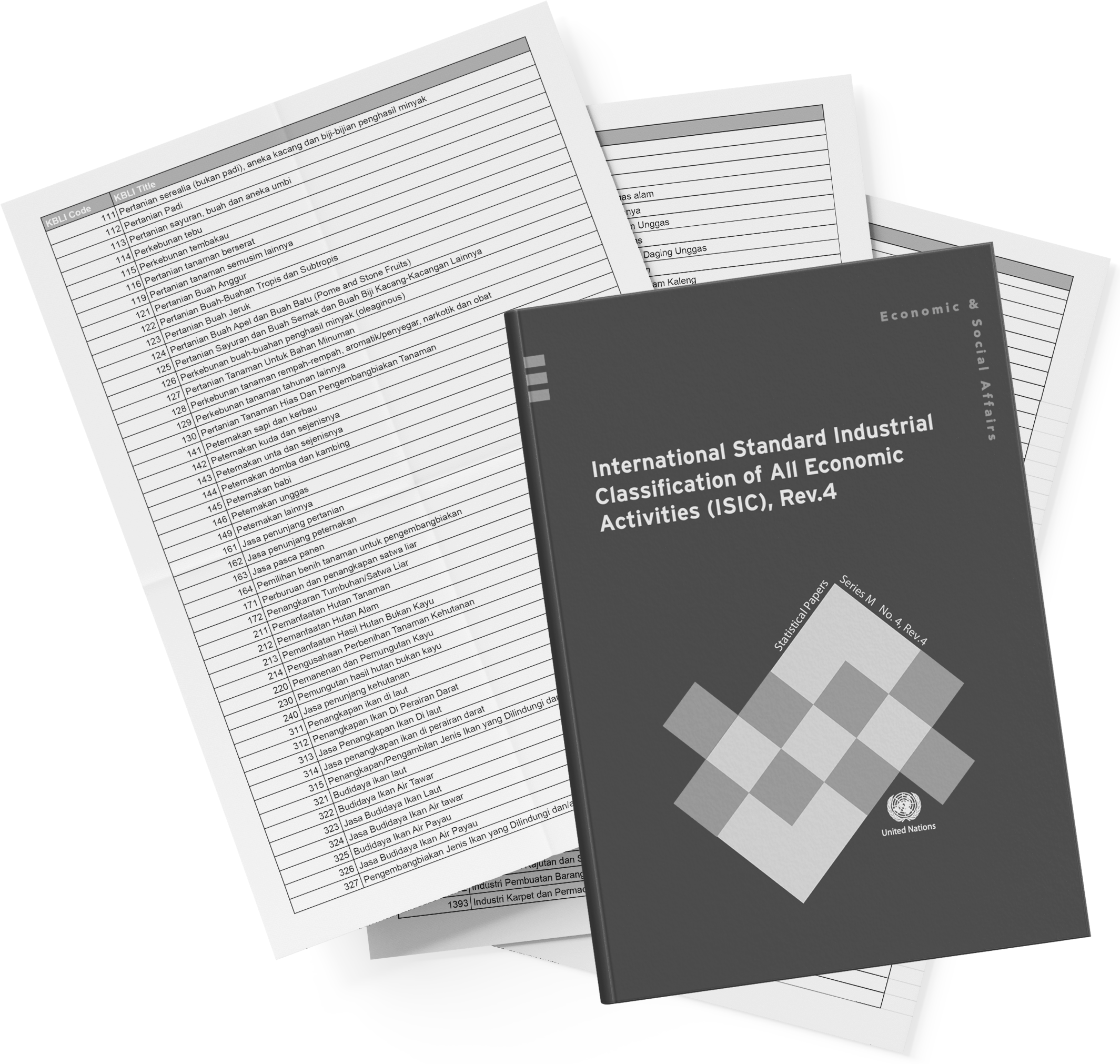
KBLI: 2660: Electromedical and Electrotherapeutic Equipment Manufacturing Industry in Indonesia
ISIC: Reference: International Standard Industrial Classification
NAICS: Comparable: North American Industry Classification System
Industry Terms
Key terminology for understanding the Electromedical and Electrotherapeutic Equipment Manufacturing Industry in Indonesia industry.
Irradiation apparatus
Equipment generating controlled radiation beams for imaging (diagnostic) or tumor destruction (therapeutic).
Distinguishes high-risk products needing BAPETEN licensing, driving compliance costs but enabling premium pricing in oncology.
Electromedical equipment
Diagnostic tools using bioelectric signals or waves, like ECG monitors and ultrasound scanners.
Powers routine checkups in primary care, with volume sales offsetting low margins in Indonesia's tiered healthcare.
Electrotherapeutic devices
Portable units delivering currents for rehab, such as interferential therapy machines.
Easiest entry for locals due to simpler tech, serving physio clinics proliferating post-COVID.
Industry Overview โ Business Types
Different business models operate within the Electromedical and Electrotherapeutic Equipment Manufacturing Industry in Indonesia industry.
Full OEM manufacturers
Design and produce end-to-end from schematics to certified units, often via licensed tech transfer.
IP control and export scalability, rare in Indonesia without foreign JV.
Standard industry practices apply.
Contract assemblers
Assemble imported kits into finished goods, adding local enclosures and testing.
TKDN compliance for tenders, lower capex via tolling models.
Standard industry practices apply.
Specialized component makers
Fabricate sub-assemblies like probes or power supplies for integration elsewhere.
Niche expertise in calibration, feeding larger ecosystems.
Standard industry practices apply.
Industry Performance & Outlook
Performance outlook for Electromedical and Electrotherapeutic Equipment Manufacturing Industry in Indonesia
Sector performance tracks healthcare capex, resilient post-pandemic but sensitive to rupiah volatility affecting imports.
Outlook positive with hospital bed targets to 1.2 per 1,000 population, spurring demand if TKDN eases.
Key performance indicators
Market growth
Industry expansion rate
Driven by domestic demand
Operational efficiency
Cost management
Key competitive factor
Outlook: what to watch
Monitor regulatory changes
Track infrastructure developments
Watch for technology adoption
Industry Growth Drivers
Key factors driving growth in Electromedical and Electrotherapeutic Equipment Manufacturing Industry in Indonesia.
Growth Driver 1
Domestic consumption growth driven by expanding middle class and rising disposable incomes
Monitor industry reports and market data for trends.
Growth Driver 2
Infrastructure development reducing logistics costs and improving market access
Monitor industry reports and market data for trends.
Growth Driver 3
Government policy support including investment incentives and industrial development programs
Monitor industry reports and market data for trends.
Growth Driver 4
Technology adoption improving productivity and enabling new business models
Monitor industry reports and market data for trends.
Growth Driver 5
Regional economic integration expanding market access and supply chain opportunities
Monitor industry reports and market data for trends.
Growth Driver 6
Urbanization creating concentrated demand centers and distribution efficiencies
Monitor industry reports and market data for trends.
Industry Trends & Development
Industry Development
Evolution of Electromedical and Electrotherapeutic Equipment Manufacturing Industry in Indonesia
Evolution from import substitution via assembly to value-added manufacturing with local R&D, spurred by post-COVID supply shocks.
Shift toward modular designs for easier upgrades, reducing total ownership costs in budget-constrained hospitals.
Key Trends
Major trends shaping the Electromedical and Electrotherapeutic Equipment Manufacturing Industry in Indonesia industry.
Digitalization and technology adoption
Industry trend shaping market dynamics.
Operators
Investors
Policymakers
Regulatory developments
Industry trend shaping market dynamics.
Operators
Investors
Policymakers
Impact and Sustainability
Sustainability and impact considerations for the manufacture of irradiation, electromedical and electrotherapeutic equipment industry.
Economic Impact
Contribution to national economic development.
Balancing growth with sustainability.
Environmental Considerations
Industry practices and environmental impact.
Operational costs vs sustainability.
Industry Segmentation
Industry Segmentation โ Product/Service A
Primary market segments based on service type.
Segmentation by offering
Primary Segment
Core offerings
Main market
Addresses primary demand
Secondary Segment
Supporting services
Niche markets
Specialized needs
Segments may overlap based on customer needs.
Industry Segmentation โ Product/Service B
Alternative segmentation perspectives.
Segmentation by characteristics
Mass Market
Broad appeal
General consumers
Volume-driven
Premium
High-value offerings
Discerning buyers
Quality-focused
Segment boundaries are fluid.
Customer Segmentation
Different customer segments and their characteristics.
Customer segments and what they value
B2B customers
Various
Multiple needs
Different channels
B2C consumers
Various
Multiple needs
Different channels
Key Players
Ecosystem Mapping
Electromedical and Electrotherapeutic Equipment Manufacturing Industry in Indonesia ecosystem includes various stakeholders.
Suppliers
Provide inputs and raw materials.
Primary producers
Input suppliers
Operators
Core industry participants.
Main industry operators
Service providers
Distribution
Channel to end customers.
Distributors
Retailers
How value flows across the ecosystem
Value is created through coordinated activities across the ecosystem.
Leading Players
Competitive landscape and key player archetypes.
Competitive archetypes
Market Leader
Dominant position
Scale, brand recognition
Market saturation
Specialist
Niche focus
Expertise, agility
Limited scale
How competition typically plays out
Competition is shaped by scale advantages, operational efficiency, and customer relationships.
Differentiation strategies vary by segment, with some players competing on price and others on service quality.
Operating Conditions
Operating Model & Cost Structure
Operating models in Electromedical and Electrotherapeutic Equipment Manufacturing Industry in Indonesia vary by business type.
Direct costs
Primary operational expenses
Input costs
Labor
Utilities
Major cost component
Overhead
Indirect operational costs
Administration
Facilities
Marketing
Scale-dependent
Cost structure summary
Direct costs
Volume and input prices
Operations
Efficiency improvements
Overhead
Scale and complexity
Administration
Process optimization
Cost structure varies by business model and scale.
Regulation & Compliance Considerations
Regulatory framework and compliance requirements.
Common compliance topics
Business licensing
Operating permits
Legal operation
Maintain valid licenses
Quality standards
Product/service requirements
Market access
Quality control systems
Stay current with regulatory changes.
FAQs & Sources
FAQs
What is Electromedical and Electrotherapeutic Equipment Manufacturing Industry in Indonesia?
Electromedical and Electrotherapeutic Equipment Manufacturing Industry in Indonesia encompasses various business activities in the Indonesian market.
Sources & Notes
This report is a synthesized overview based on industry analysis and desk research.
BPS (Statistics Indonesia)
Official statistics and industry data.
Ministry of Industry regulations
Regulatory framework and compliance requirements.
This report is for informational purposes and should not be treated as legal, regulatory, or investment advice.