Electrical Wiring Device Manufacturing Industry in Indonesia
A practical guide to Electrical Wiring Device Manufacturing Industry in Indonesiaโmarket dynamics, operational realities, and strategic considerations in Indonesia
Manufacture of Wiring Devices involves producing current-carrying and non-current-carrying components for electrical circuits at voltages up to 1,000V, such as switches, sockets, plugs, connectors, fuse boxes, lightning arresters, and terminal blocks. These products enable safe connection, control, and protection of electrical power in buildings and machinery. Operations include plastic injection molding for housings, metal stamping for contacts, assembly lines for wiring integration, and testing for arc resistance, insulation, and load capacity to ensure compliance with safety norms.
Clear industry definition and scope of activities
Operational realities across Indonesia's regions
Market segmentation and customer analysis
Ecosystem mapping and competitive dynamics
Cost structure and unit economics
Regulatory and compliance considerations
Executive Summary
Manufacture of Wiring Devices involves producing current-carrying and non-current-carrying components for electrical circuits at voltages up to 1,000V, such as switches, sockets, plugs, connectors, fuse boxes, lightning arresters, and terminal blocks. These products enable safe connection, control, and protection of electrical power in buildings and machinery.
Operations include plastic injection molding for housings, metal stamping for contacts, assembly lines for wiring integration, and testing for arc resistance, insulation, and load capacity to ensure compliance with safety norms.
SNI certification (e.g., SNI IEC 60884 for sockets) is mandatory, with non-compliance leading to market exclusion and fines up to IDR 2 billion.
Copper price volatility drives 40-50% of costs; hedging via futures or vertical integration with wire makers (KBLI 2732) is key.
Residential segment dominates (60%+ demand), but industrial parks in Batam and Cikarang boost high-spec orders.
Smart wiring integration with KNX/BACnet protocols differentiates premium players for high-rises.
Counterfeit imports evade ports, eroding 20-30% of low-end market share for uncertified locals.
Why this industry matters in Indonesia
Supports Indonesia's economic growth and development objectives.
Creates employment opportunities across diverse skill levels.
Critical for service delivery and value chain integration.

Enables Indonesia's competitiveness in regional and global markets.
So what: Practical implications
Operators: Focus on quality consistency and process standardization
Buyers: Evaluate supplier capabilities beyond pricing
Investors: Look for operational efficiency and scalability
Policymakers: Support infrastructure development
Indonesia at a Glance
Republic of Indonesia: Large and fragmented market
Demand tracks construction PMI, surging with Jakarta MRT expansions and 1.5 million annual housing units; wiring devices form 5-7% of electrical bill of materials in mid-range projects.
Java accounts for 80% production capacity, with exports to ASEAN via Batam free trade zone offsetting import competition from Vietnam and China.
Market dynamics continue to evolve with changing economic conditions.
Hyperlocalization is key to navigate Indonesia's market
West Java hubs like Karawang serve Jabodetabek's skyscrapers with just-in-time delivery via tol roads, minimizing inventory while customizing finishes for developers like Sinarmas Land.
Surabaya plants target East Java factories, adapting sockets for humid conditions with IP-rated enclosures to prevent corrosion.
Opportunities extend beyond cities
Sumatra's palm oil estates demand rugged industrial plugs; Kalimantan's mining camps favor explosion-proof switches, supplied via Balikpapan ports.
Papua and Maluku electrification projects under PLN push govt tenders for TKDN-compliant devices, creating niche for modular assembly plants.
Growing middle class driving premiumization trends across product categories and services
Digital adoption accelerating with mobile-first consumer behavior creating new channel opportunities
Infrastructure investment improving connectivity and reducing logistics costs across the archipelago
Government initiatives supporting domestic industry development and foreign investment attraction
Regional economic integration through ASEAN creating expanded market access and trade opportunities
Sustainability and ESG considerations creating differentiation opportunities for responsible businesses
Distribution realities: logistics, infrastructure, and channel reach
Urban distributors like PT. Prima Cable stockpile in Jakarta warehouses, trucking to sites; inter-island via Pelni ships or Garuda air for urgent high-value orders.
E-commerce via Tokopedia/Bukalapak grows for retail sockets, but B2B relies on dealer networks with 30-90 day credit terms tied to project cashflows.
Establish robust distribution partnerships covering both modern trade and traditional channels
Invest in localized supply chain capabilities to navigate logistics complexities and reduce costs
Develop region-specific market entry strategies accounting for local competitive dynamics
Build flexibility into operations to adapt to regulatory changes and infrastructure variations
Industry Definition
What is Electrical Wiring Device Manufacturing Industry in Indonesia?
Industry Definition
KBLI 2733 precisely covers assembly and finishing of wiring devices from molded plastics, stamped metals, and wiring harnesses into functional units for circuit control and connection, excluding raw wire extrusion (2732) or full panels (2710). Products range from household sockets to industrial busbars, tested for 10,000+ cycles.
Boundaries exclude high-voltage (>1kV) switchgear (2710), lighting fixtures (2740), or appliances (2750); focuses on modular 'point-of-use' installables compliant with PUIL 2011 electrical rules.
Indonesia in Focus
Indonesia's archipelago geography creates unique distribution challenges requiring adapted logistics and storage solutions.
High humidity and tropical climate demand specific technical approaches to quality preservation and product integrity.
Industry Classification
Conceptually, industry activities sit under specific regulatory frameworks with classification by operational scale and service model.
Operators may be classified by activity type, by service delivery model, and by end-use applications.
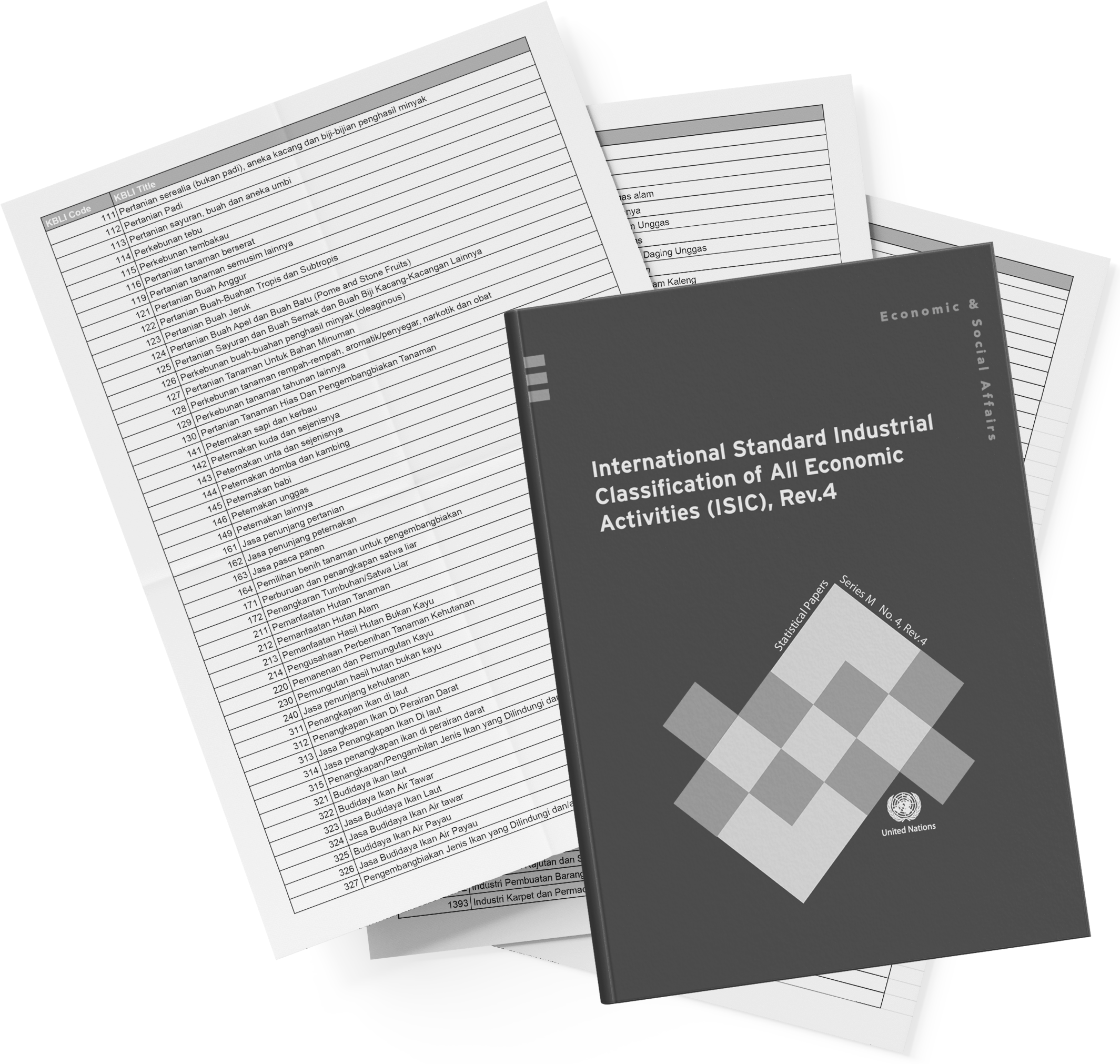
KBLI: 2733: Electrical Wiring Device Manufacturing Industry in Indonesia
ISIC: Reference: International Standard Industrial Classification
NAICS: Comparable: North American Industry Classification System
Industry Terms
Key terminology for understanding the Electrical Wiring Device Manufacturing Industry in Indonesia industry.
Wiring Device
Modular electrical component for circuit termination, switching, or protection, like a socket-outlet or rocker switch.
Defines the install-and-forget reliability layer; poor quality causes 30% of Indonesia's residential fires per BNPB data.
SNI IEC 60884
Indonesian adoption of international standard for plugs/sockets up to 250V/16A, mandating impact resistance and pin retention.

Gatekeeps market access; uncertified goods seized at Tanjung Priok, protecting locals from sub-1-year lifespan Chinese copies.
IP Rating
Ingress Protection code (e.g., IP44) quantifying dust/water resistance for sockets in humid or outdoor use.
Essential for Indonesia's monsoon climates; higher ratings command 2x premiums in factory orders.
Industry Overview โ Business Types
Different business models operate within the Electrical Wiring Device Manufacturing Industry in Indonesia industry.
Plastic-Heavy Housings
Injection molds polycarbonate casings around imported copper contacts, assembles via semi-auto lines, tests for glow-wire ignition.

Low tooling costs suit high-volume residential runs, but scales poorly for custom industrial shapes.
Standard industry practices apply.
Metal Contact Specialists
Stamps silver-plated brass terminals, rivets to mechanisms, integrates arc chutes for high-current switches.
Precision EDM for low-resistance contacts wins industrial bids, but copper volatility squeezes margins.
Standard industry practices apply.
Assembly Integrators
Sources pre-molded parts/terminals, wires modular combos like switch-socket plates, packages for dealer kits.
Fast prototyping for builders' specs, leveraging Batam FTZ for import duty savings.
Standard industry practices apply.
Industry Performance & Outlook
Performance outlook for Electrical Wiring Device Manufacturing Industry in Indonesia
Sector output ties to rupiah construction spend, resilient post-COVID with 5-8% CAGR through 2026 via IKN Nusantara builds.
Margins average 15-20% for SNI locals vs 10% assemblers; outlook brightens with EV charger socket mandates.
Key performance indicators
Market growth
Industry expansion rate
Driven by domestic demand
Operational efficiency
Cost management
Key competitive factor
Outlook: what to watch
Monitor regulatory changes
Track infrastructure developments
Watch for technology adoption
Industry Growth Drivers
Key factors driving growth in Electrical Wiring Device Manufacturing Industry in Indonesia.
Growth Driver 1
Domestic consumption growth driven by expanding middle class and rising disposable incomes
Monitor industry reports and market data for trends.
Growth Driver 2
Infrastructure development reducing logistics costs and improving market access
Monitor industry reports and market data for trends.
Growth Driver 3
Government policy support including investment incentives and industrial development programs
Monitor industry reports and market data for trends.
Growth Driver 4
Technology adoption improving productivity and enabling new business models
Monitor industry reports and market data for trends.
Growth Driver 5
Regional economic integration expanding market access and supply chain opportunities
Monitor industry reports and market data for trends.
Growth Driver 6
Urbanization creating concentrated demand centers and distribution efficiencies
Monitor industry reports and market data for trends.
Industry Trends & Development
Industry Development
Evolution of Electrical Wiring Device Manufacturing Industry in Indonesia
From basic stamped-metal switches in 1990s SOEs to today's injection-molded modular series with USB ports, driven by middle-class aesthetics.
Digital shift: ARC flash simulation software optimizes contact designs, reducing prototypes by 70%.
Key Trends
Major trends shaping the Electrical Wiring Device Manufacturing Industry in Indonesia industry.
Digitalization and technology adoption
Industry trend shaping market dynamics.
Operators
Investors
Policymakers
Regulatory developments
Industry trend shaping market dynamics.
Operators
Investors
Policymakers
Impact and Sustainability
Sustainability and impact considerations for the manufacture of wiring devices industry.
Economic Impact
Contribution to national economic development.
Balancing growth with sustainability.
Environmental Considerations
Industry practices and environmental impact.
Operational costs vs sustainability.
Industry Segmentation
Industry Segmentation โ Product/Service A
Primary market segments based on service type.
Segmentation by offering
Primary Segment
Core offerings
Main market
Addresses primary demand
Secondary Segment
Supporting services
Niche markets
Specialized needs
Segments may overlap based on customer needs.
Industry Segmentation โ Product/Service B
Alternative segmentation perspectives.
Segmentation by characteristics
Mass Market
Broad appeal
General consumers
Volume-driven
Premium
High-value offerings
Discerning buyers
Quality-focused
Segment boundaries are fluid.
Customer Segmentation
Different customer segments and their characteristics.
Customer segments and what they value
B2B customers
Various
Multiple needs
Different channels
B2C consumers
Various
Multiple needs
Different channels
Key Players
Ecosystem Mapping
Electrical Wiring Device Manufacturing Industry in Indonesia ecosystem includes various stakeholders.
Suppliers
Provide inputs and raw materials.
Primary producers
Input suppliers
Operators
Core industry participants.
Main industry operators
Service providers
Distribution
Channel to end customers.
Distributors
Retailers
How value flows across the ecosystem
Value is created through coordinated activities across the ecosystem.
Leading Players
Competitive landscape and key player archetypes.
Competitive archetypes
Market Leader
Dominant position
Scale, brand recognition
Market saturation
Specialist
Niche focus
Expertise, agility
Limited scale
How competition typically plays out
Competition is shaped by scale advantages, operational efficiency, and customer relationships.
Differentiation strategies vary by segment, with some players competing on price and others on service quality.
Operating Conditions
Operating Model & Cost Structure
Operating models in Electrical Wiring Device Manufacturing Industry in Indonesia vary by business type.
Direct costs
Primary operational expenses
Input costs
Labor
Utilities
Major cost component
Overhead
Indirect operational costs
Administration
Facilities
Marketing
Scale-dependent
Cost structure summary
Direct costs
Volume and input prices
Operations
Efficiency improvements
Overhead
Scale and complexity
Administration
Process optimization
Cost structure varies by business model and scale.
Regulation & Compliance Considerations
Regulatory framework and compliance requirements.
Common compliance topics
Business licensing
Operating permits
Legal operation
Maintain valid licenses
Quality standards
Product/service requirements
Market access
Quality control systems
Stay current with regulatory changes.
FAQs & Sources
FAQs
What is Electrical Wiring Device Manufacturing Industry in Indonesia?
Electrical Wiring Device Manufacturing Industry in Indonesia encompasses various business activities in the Indonesian market.
Sources & Notes
This report is a synthesized overview based on industry analysis and desk research.
BPS (Statistics Indonesia)
Official statistics and industry data.
Ministry of Industry regulations
Regulatory framework and compliance requirements.
This report is for informational purposes and should not be treated as legal, regulatory, or investment advice.