Electric Lighting Equipment Manufacturing Industry in Indonesia
A practical guide to Electric Lighting Equipment Manufacturing Industry in Indonesiaโmarket dynamics, operational realities, and strategic considerations in Indonesia
Manufacture of Electric Lighting Equipment under KBLI 2740 involves producing bulbs, tubes, luminaires, and fixtures powered by electricity, including incandescent, fluorescent, LED, and specialized types like UV or signaling lamps. Operations span component assembly, housing fabrication, electronic driver integration, and rigorous testing for lumens output, energy efficiency, and safety standards. This post-design production layer transforms raw components like LEDs, diffusers, and metals into functional lighting products tailored for homes, offices, streets, factories, and vehicles, ensuring compliance with electrical safety and performance norms.
Clear industry definition and scope of activities
Operational realities across Indonesia's regions
Market segmentation and customer analysis
Ecosystem mapping and competitive dynamics
Cost structure and unit economics
Regulatory and compliance considerations
Executive Summary
Manufacture of Electric Lighting Equipment under KBLI 2740 involves producing bulbs, tubes, luminaires, and fixtures powered by electricity, including incandescent, fluorescent, LED, and specialized types like UV or signaling lamps. Operations span component assembly, housing fabrication, electronic driver integration, and rigorous testing for lumens output, energy efficiency, and safety standards.
This post-design production layer transforms raw components like LEDs, diffusers, and metals into functional lighting products tailored for homes, offices, streets, factories, and vehicles, ensuring compliance with electrical safety and performance norms.
LED transition cuts energy costs by 80% versus traditional bulbs, driving 90% of new production lines.
SNI certification is non-negotiable for market access, with mandatory testing at BSN labs.
Government TKDN rules favor local assembly in public tenders, boosting mid-tier players.
Export growth to ASEAN via CEPT tariffs, but logistics delays from island shipping challenge timelines.
Supply chain vulnerabilities to global chip shortages hit driver production hardest.
Why this industry matters in Indonesia
Supports Indonesia's economic growth and development objectives.
Creates employment opportunities across diverse skill levels.
Critical for service delivery and value chain integration.

Enables Indonesia's competitiveness in regional and global markets.
So what: Practical implications
Operators: Focus on quality consistency and process standardization
Buyers: Evaluate supplier capabilities beyond pricing
Investors: Look for operational efficiency and scalability
Policymakers: Support infrastructure development
Indonesia at a Glance
Republic of Indonesia: Large and fragmented market
Demand surges from urbanization, with 1.5 million new housing units yearly needing affordable LED fixtures, plus commercial retrofits in malls and offices prioritizing energy savings. Production hubs in Java supply 70% of national needs, with rising exports offsetting domestic price pressures from imports.
Infrastructure pushโhighways, airports, IKNโamplifies street and industrial lighting orders, where durability against monsoons and voltage fluctuations differentiates local makers.
Market dynamics continue to evolve with changing economic conditions.
Hyperlocalization is key to navigate Indonesia's market
Java factories tailor products for urban high-rises with sleek designs and smart IoT integration, while Sumatra plants emphasize robust floodlights for palm oil plantations amid frequent blackouts.
Regional power grids vary: Java's stable 220V enables premium LEDs; eastern islands require voltage-tolerant bulbs to handle fluctuations, pushing hyperlocal testing protocols.
Opportunities extend beyond cities
Rural electrification via PLN's 35,000 villages program demands low-cost, solar-hybrid lanterns resilient to salt air in coastal areas and heat in NTT.
Agro-industry in Sulawesi and Kalimantan favors IP65-rated fixtures for dusty warehouses, with local assembly minimizing lead times versus imports.
Growing middle class driving premiumization trends across product categories and services
Digital adoption accelerating with mobile-first consumer behavior creating new channel opportunities
Infrastructure investment improving connectivity and reducing logistics costs across the archipelago
Government initiatives supporting domestic industry development and foreign investment attraction
Regional economic integration through ASEAN creating expanded market access and trade opportunities
Sustainability and ESG considerations creating differentiation opportunities for responsible businesses
Distribution realities: logistics, infrastructure, and channel reach
Components flow via sea from China to Priok, then trucking to Java factories; finished goods distribute nationwide via third-party logistics like JNE, with inter-island ferries bottlenecking Sulawesi shipments.
E-commerce boom sees fixtures palletized for Gojek/Sicepat last-mile, but fragile glass elements require custom foam packaging to cut damage rates below 2%.
Establish robust distribution partnerships covering both modern trade and traditional channels
Invest in localized supply chain capabilities to navigate logistics complexities and reduce costs
Develop region-specific market entry strategies accounting for local competitive dynamics
Build flexibility into operations to adapt to regulatory changes and infrastructure variations
Industry Definition
What is Electric Lighting Equipment Manufacturing Industry in Indonesia?
Industry Definition
KBLI 2740 encompasses manufacturing electric lighting from bulbs (incandescent, CFL, LED) to complete luminaires (ceiling, street, floodlights), vehicle headlights, and signaling gear, including assembly, wiring, and optics integration. It excludes glass blank production (KBLI 2310), household appliances (2750), and vehicle full assembly (2910).

Boundaries focus on electrical-powered illumination: processes like die-casting reflectors, soldering drivers, and photometric testing define core activities, stopping at ready-for-install products.
Indonesia in Focus
Indonesia's archipelago geography creates unique distribution challenges requiring adapted logistics and storage solutions.
High humidity and tropical climate demand specific technical approaches to quality preservation and product integrity.
Industry Classification
Conceptually, industry activities sit under specific regulatory frameworks with classification by operational scale and service model.
Operators may be classified by activity type, by service delivery model, and by end-use applications.
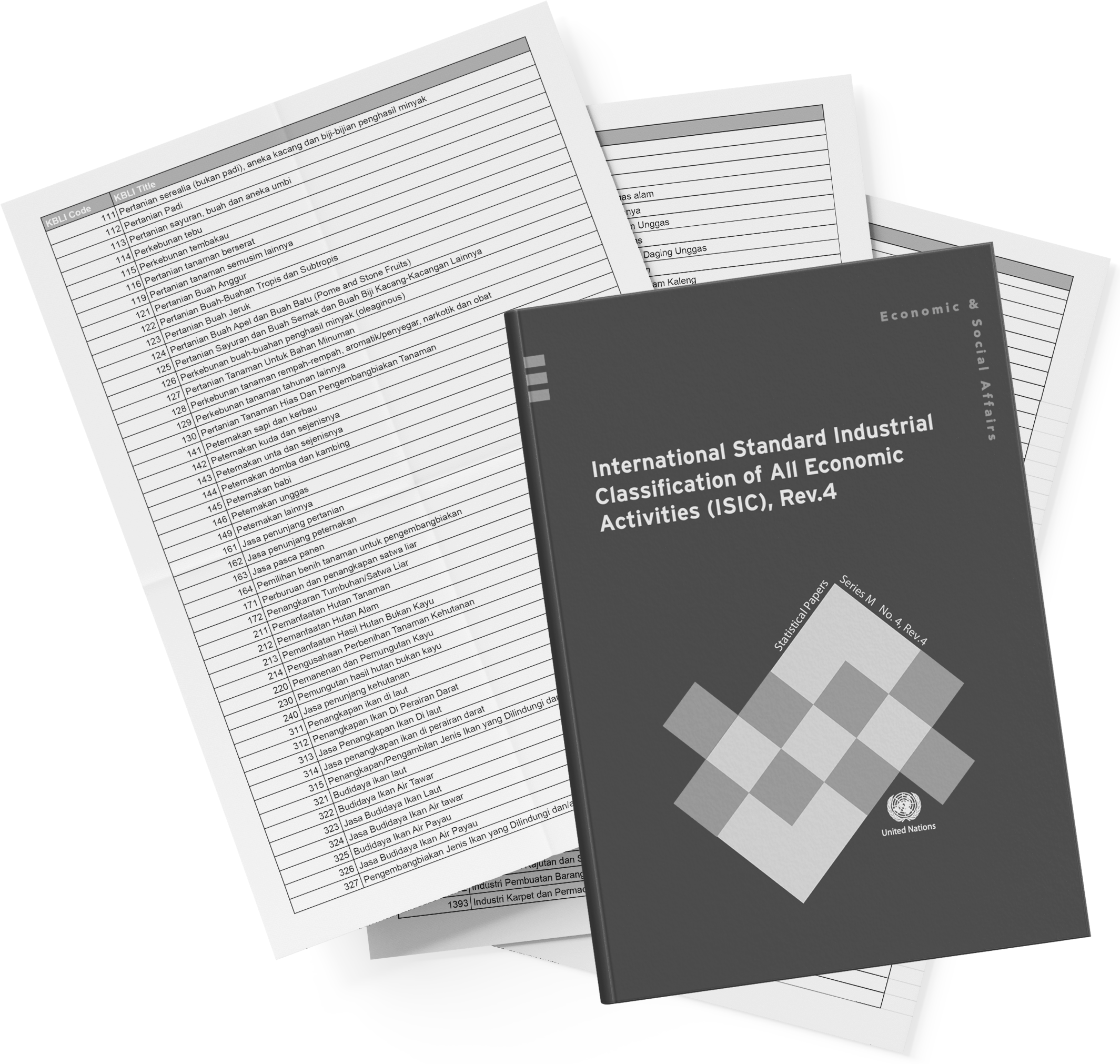
KBLI: 2740: Electric Lighting Equipment Manufacturing Industry in Indonesia
ISIC: Reference: International Standard Industrial Classification
NAICS: Comparable: North American Industry Classification System
Industry Terms
Key terminology for understanding the Electric Lighting Equipment Manufacturing Industry in Indonesia industry.
Luminaire
Complete lighting unit with bulb, reflector, housing, and wiring ready for installation.

Determines end-user performance; poor design causes glare or inefficiency, critical for Indonesia's humid environments where sealing prevents failures.
LED Driver
Electronic circuit converting AC to DC for LEDs, regulating current and dimming.
Core reliability component; failures from voltage spikes common in Indonesia spike warranty costs 20-30%.
IP Rating
Ingress Protection code (e.g., IP65) rating dust/water resistance.
Essential for tropical/monsoon durability; IP44 minimum for indoors, IP67 for outdoors to avoid corrosion claims.
Industry Overview โ Business Types
Different business models operate within the Electric Lighting Equipment Manufacturing Industry in Indonesia industry.
Bulb and Tube Producers
High-volume SMD assembly lines mount LEDs on PCBs, encapsulate in phosphor, test for CRI/lumens.
Scale economies on commodity LEDs; compete on price via Asian chip buys.
Standard industry practices apply.
Fixture Assemblers
Customize housings via stamping/plastics molding, integrate drivers/bulbs, batch-test safety.
Design flexibility for projects; rapid prototyping wins B2B contracts.
Standard industry practices apply.
Specialized Lighting Makers
Engineer UV/street/smart lights with optics simulation, certify for niche regs.
High-margin customs for factories/airports; IP protection on designs.
Standard industry practices apply.
Industry Performance & Outlook
Performance outlook for Electric Lighting Equipment Manufacturing Industry in Indonesia
Sector grows 10-12% annually through 2030, fueled by construction and LED retrofits, though margins squeeze from component inflation.
Outlook brightens with IKN projects mandating efficient lighting, but import duties on rivals sharpen competition.
Key performance indicators
Market growth
Industry expansion rate
Driven by domestic demand
Operational efficiency
Cost management
Key competitive factor
Outlook: what to watch
Monitor regulatory changes
Track infrastructure developments
Watch for technology adoption
Industry Growth Drivers
Key factors driving growth in Electric Lighting Equipment Manufacturing Industry in Indonesia.
Growth Driver 1
Domestic consumption growth driven by expanding middle class and rising disposable incomes
Monitor industry reports and market data for trends.
Growth Driver 2
Infrastructure development reducing logistics costs and improving market access
Monitor industry reports and market data for trends.
Growth Driver 3
Government policy support including investment incentives and industrial development programs
Monitor industry reports and market data for trends.
Growth Driver 4
Technology adoption improving productivity and enabling new business models
Monitor industry reports and market data for trends.
Growth Driver 5
Regional economic integration expanding market access and supply chain opportunities
Monitor industry reports and market data for trends.
Growth Driver 6
Urbanization creating concentrated demand centers and distribution efficiencies
Monitor industry reports and market data for trends.
Industry Trends & Development
Industry Development
Evolution of Electric Lighting Equipment Manufacturing Industry in Indonesia
From incandescent dominance to LED era: factories retooled post-2015 bans, slashing energy use and enabling slimmer designs.
Integration rises: standalone bulbs yield to connected luminaires with sensors for occupancy/dimming.
Key Trends
Major trends shaping the Electric Lighting Equipment Manufacturing Industry in Indonesia industry.
Digitalization and technology adoption
Industry trend shaping market dynamics.
Operators
Investors
Policymakers
Regulatory developments
Industry trend shaping market dynamics.
Operators
Investors
Policymakers
Impact and Sustainability
Sustainability and impact considerations for the manufacture of electric lighting equipment industry.
Economic Impact
Contribution to national economic development.
Balancing growth with sustainability.
Environmental Considerations
Industry practices and environmental impact.
Operational costs vs sustainability.
Industry Segmentation
Industry Segmentation โ Product/Service A
Primary market segments based on service type.
Segmentation by offering
Primary Segment
Core offerings
Main market
Addresses primary demand
Secondary Segment
Supporting services
Niche markets
Specialized needs
Segments may overlap based on customer needs.
Industry Segmentation โ Product/Service B
Alternative segmentation perspectives.
Segmentation by characteristics
Mass Market
Broad appeal
General consumers
Volume-driven
Premium
High-value offerings
Discerning buyers
Quality-focused
Segment boundaries are fluid.
Customer Segmentation
Different customer segments and their characteristics.
Customer segments and what they value
B2B customers
Various
Multiple needs
Different channels
B2C consumers
Various
Multiple needs
Different channels
Key Players
Ecosystem Mapping
Electric Lighting Equipment Manufacturing Industry in Indonesia ecosystem includes various stakeholders.
Suppliers
Provide inputs and raw materials.
Primary producers
Input suppliers
Operators
Core industry participants.
Main industry operators
Service providers
Distribution
Channel to end customers.
Distributors
Retailers
How value flows across the ecosystem
Value is created through coordinated activities across the ecosystem.
Leading Players
Competitive landscape and key player archetypes.
Competitive archetypes
Market Leader
Dominant position
Scale, brand recognition
Market saturation
Specialist
Niche focus
Expertise, agility
Limited scale
How competition typically plays out
Competition is shaped by scale advantages, operational efficiency, and customer relationships.
Differentiation strategies vary by segment, with some players competing on price and others on service quality.
Operating Conditions
Operating Model & Cost Structure
Operating models in Electric Lighting Equipment Manufacturing Industry in Indonesia vary by business type.
Direct costs
Primary operational expenses
Input costs
Labor
Utilities
Major cost component
Overhead
Indirect operational costs
Administration
Facilities
Marketing
Scale-dependent
Cost structure summary
Direct costs
Volume and input prices
Operations
Efficiency improvements
Overhead
Scale and complexity
Administration
Process optimization
Cost structure varies by business model and scale.
Regulation & Compliance Considerations
Regulatory framework and compliance requirements.
Common compliance topics
Business licensing
Operating permits
Legal operation
Maintain valid licenses
Quality standards
Product/service requirements
Market access
Quality control systems
Stay current with regulatory changes.
FAQs & Sources
FAQs
What is Electric Lighting Equipment Manufacturing Industry in Indonesia?
Electric Lighting Equipment Manufacturing Industry in Indonesia encompasses various business activities in the Indonesian market.
Sources & Notes
This report is a synthesized overview based on industry analysis and desk research.
BPS (Statistics Indonesia)
Official statistics and industry data.
Ministry of Industry regulations
Regulatory framework and compliance requirements.
This report is for informational purposes and should not be treated as legal, regulatory, or investment advice.