Domestic Appliance Manufacturing Industry in Indonesia
A practical guide to Domestic Appliance Manufacturing Industry in Indonesiaโmarket dynamics, operational realities, and strategic considerations in Indonesia
Manufacture of Domestic Appliances is the industrial process that assembles and produces electrical household goods such as refrigerators, washing machines, air conditioners, electric fans, vacuum cleaners, and cooking appliances like rice cookers and water heaters. Factories source components like compressors, motors, and sheet metal, then form, weld, paint, wire, and test units to meet safety and performance standards adapted for Indonesia's 220V grid and tropical humidity. This sector bridges raw materials and consumer-ready products, emphasizing cost-effective designs that balance affordability with features like energy savings and durability against power surges common in rural areas.
Clear industry definition and scope of activities
Operational realities across Indonesia's regions
Market segmentation and customer analysis
Ecosystem mapping and competitive dynamics
Cost structure and unit economics
Regulatory and compliance considerations
Executive Summary
Manufacture of Domestic Appliances is the industrial process that assembles and produces electrical household goods such as refrigerators, washing machines, air conditioners, electric fans, vacuum cleaners, and cooking appliances like rice cookers and water heaters. Factories source components like compressors, motors, and sheet metal, then form, weld, paint, wire, and test units to meet safety and performance standards adapted for Indonesia's 220V grid and tropical humidity.
This sector bridges raw materials and consumer-ready products, emphasizing cost-effective designs that balance affordability with features like energy savings and durability against power surges common in rural areas.
Multinationals dominate via local subsidiaries, assembling 70-90% of volume with imported high-tech parts.
Demand peaks during Lebaran bonuses and year-end, straining capacity in monsoon-disrupted supply chains.
Energy-efficient inverters are standardizing as electricity costs rise and SNI labels become mandatory.
E-commerce platforms like Tokopedia drive smaller, feature-rich models for young urban buyers.
TKDN certification unlocks subsidies but requires audited local sourcing, favoring scaled players.
Why this industry matters in Indonesia
Supports Indonesia's economic growth and development objectives.
Creates employment opportunities across diverse skill levels.
Critical for service delivery and value chain integration.

Enables Indonesia's competitiveness in regional and global markets.
So what: Practical implications
Operators: Focus on quality consistency and process standardization
Buyers: Evaluate supplier capabilities beyond pricing
Investors: Look for operational efficiency and scalability
Policymakers: Support infrastructure development
Indonesia at a Glance
Republic of Indonesia: Large and fragmented market
The sector mirrors Indonesia's consumer boom, with urban middle-class expansion fueling steady replacement and first-time buys in apartments and suburbs. Manufacturing clusters in West Java capture national demand, exporting to ASEAN amid rupiah volatility.
Production focuses on mid-range units suited to variable power quality, with assembly lines optimizing for high-volume fridges, ACs, and washers that account for bulk output.
Market dynamics continue to evolve with changing economic conditions.
Hyperlocalization is key to navigate Indonesia's market
Java factories tailor products for dense cities with compact, quiet models, while Sumatra plants emphasize ruggedness for plantation housing with dust-resistant fans and voltage stabilizers.
Sulawesi and Kalimantan operations adapt to mining camps' needs for heavy-duty washers and large fridges, navigating logistics premiums through Batam free-trade zoning.
Opportunities extend beyond cities
Rural markets lag in premium appliances but grow via credit financing for basic fans and rice cookers, distributed via traditional agents facing road access issues during rains.
Outer islands depend on inter-island ferries for bulk shipments, where delays amplify inventory costs and force higher pricing in Papua or Maluku.
Growing middle class driving premiumization trends across product categories and services
Digital adoption accelerating with mobile-first consumer behavior creating new channel opportunities
Infrastructure investment improving connectivity and reducing logistics costs across the archipelago
Government initiatives supporting domestic industry development and foreign investment attraction
Regional economic integration through ASEAN creating expanded market access and trade opportunities
Sustainability and ESG considerations creating differentiation opportunities for responsible businesses
Distribution realities: logistics, infrastructure, and channel reach
Products move from Java hubs via trucking to ports like Tanjung Priok, then container ships to regional depots, with last-mile motos for urban retail and agents for villages.
Cold-chain needs for fridge testing add complexity, while AC units' bulk requires specialized racking to prevent damage in humid transits.
Establish robust distribution partnerships covering both modern trade and traditional channels
Invest in localized supply chain capabilities to navigate logistics complexities and reduce costs
Develop region-specific market entry strategies accounting for local competitive dynamics
Build flexibility into operations to adapt to regulatory changes and infrastructure variations
Industry Definition
What is Domestic Appliance Manufacturing Industry in Indonesia?
Industry Definition
KBLI 2751 covers the manufacture of electric household appliances including refrigeration equipment, laundry machines, room air conditioners, electric fans, vacuum cleaners, irons, water heaters, and small cooking devices like rice cookers and kettles. It excludes non-electric appliances (KBLI 3290), commercial units (2790), and component production like motors (2710).
Boundaries focus on finished consumer products with casings, controls, and certifications, stopping at wholesale packagingโnot installation or after-sales service.
Indonesia in Focus
Indonesia's archipelago geography creates unique distribution challenges requiring adapted logistics and storage solutions.
High humidity and tropical climate demand specific technical approaches to quality preservation and product integrity.
Industry Classification
Conceptually, industry activities sit under specific regulatory frameworks with classification by operational scale and service model.
Operators may be classified by activity type, by service delivery model, and by end-use applications.
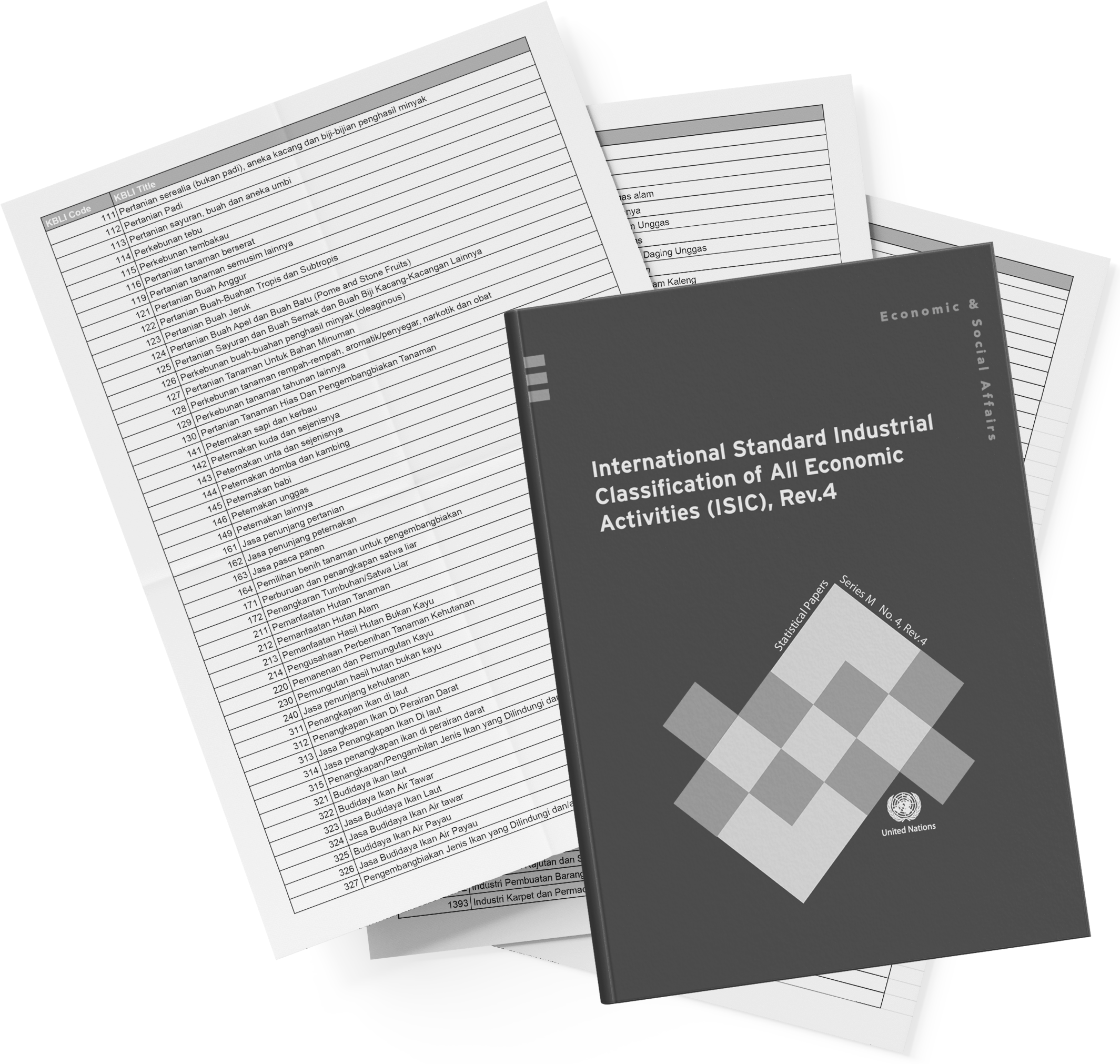
KBLI: 2751: Domestic Appliance Manufacturing Industry in Indonesia
ISIC: Reference: International Standard Industrial Classification
NAICS: Comparable: North American Industry Classification System
Industry Terms
Key terminology for understanding the Domestic Appliance Manufacturing Industry in Indonesia industry.
TKDN (Tingkat Komponen Dalam Negeri)
Minimum percentage of local content in products, verified via audits for eligibility in public procurement.
Unlocks government contracts and subsidies but raises costs if local parts underperform, forcing trade-offs in quality versus compliance.
Inverter Technology
Variable-speed compressors/motors that adjust power usage for efficiency over fixed-speed on/off cycles.
Reduces electricity bills by 30-50% in Indonesia's tiered tariffs, driving premium sales while requiring skilled assembly.
SNI Mark
Indonesian National Standard certification for safety, energy efficiency, and EMC compliance.
Mandatory for legal sales; non-compliance halts distribution, pressuring factories to invest in testing labs.
Industry Overview โ Business Types
Different business models operate within the Domestic Appliance Manufacturing Industry in Indonesia industry.
Multinational Assembly Plants
High-volume lines import cores like compressors, locally source chassis/plastics, assemble/test in 1000+ worker facilities.
Brand power and R&D access enable premium inverters, but high capex locks in scale advantages.
Standard industry practices apply.
Local Full Manufacturers
Vertical integration from stamping to wiring in mid-sized factories, targeting affordable basics with 80% TKDN.
Flexibility for regional variants and govt tenders, trading tech edge for cost leadership.
Standard industry practices apply.
OEM Subcontractors
Dedicated lines for specific models, handling overflow or niche like small fans from multinationals.
Low overhead via specialization, but vulnerable to order swings.
Standard industry practices apply.
Industry Performance & Outlook
Performance outlook for Domestic Appliance Manufacturing Industry in Indonesia
Post-pandemic recovery stabilized output, with urban demand rebounding via financing schemes amid housing growth. Export shares to ASEAN rise as FTAs ease tariffs.
Outlook brightens with middle-class expansion and green mandates, though component shortages and rupiah weakness cap margins.
Key performance indicators
Market growth
Industry expansion rate
Driven by domestic demand
Operational efficiency
Cost management
Key competitive factor
Outlook: what to watch
Monitor regulatory changes
Track infrastructure developments
Watch for technology adoption
Industry Growth Drivers
Key factors driving growth in Domestic Appliance Manufacturing Industry in Indonesia.
Growth Driver 1
Domestic consumption growth driven by expanding middle class and rising disposable incomes
Monitor industry reports and market data for trends.
Growth Driver 2
Infrastructure development reducing logistics costs and improving market access
Monitor industry reports and market data for trends.
Growth Driver 3
Government policy support including investment incentives and industrial development programs
Monitor industry reports and market data for trends.
Growth Driver 4
Technology adoption improving productivity and enabling new business models
Monitor industry reports and market data for trends.
Growth Driver 5
Regional economic integration expanding market access and supply chain opportunities
Monitor industry reports and market data for trends.
Growth Driver 6
Urbanization creating concentrated demand centers and distribution efficiencies
Monitor industry reports and market data for trends.
Industry Trends & Development
Industry Development
Evolution of Domestic Appliance Manufacturing Industry in Indonesia
From import substitution in 1990s to export platforms today: early local assembly evolved with FDI into efficient lines meeting global specs.
Digital integration marks next phase, embedding IoT in mid-range units for app control.
Key Trends
Major trends shaping the Domestic Appliance Manufacturing Industry in Indonesia industry.
Digitalization and technology adoption
Industry trend shaping market dynamics.
Operators
Investors
Policymakers
Regulatory developments
Industry trend shaping market dynamics.
Operators
Investors
Policymakers
Impact and Sustainability
Sustainability and impact considerations for the manufacture of domestic appliances industry.
Economic Impact
Contribution to national economic development.
Balancing growth with sustainability.
Environmental Considerations
Industry practices and environmental impact.
Operational costs vs sustainability.
Industry Segmentation
Industry Segmentation โ Product/Service A
Primary market segments based on service type.
Segmentation by offering
Primary Segment
Core offerings
Main market
Addresses primary demand
Secondary Segment
Supporting services
Niche markets
Specialized needs
Segments may overlap based on customer needs.
Industry Segmentation โ Product/Service B
Alternative segmentation perspectives.
Segmentation by characteristics
Mass Market
Broad appeal
General consumers
Volume-driven
Premium
High-value offerings
Discerning buyers
Quality-focused
Segment boundaries are fluid.
Customer Segmentation
Different customer segments and their characteristics.
Customer segments and what they value
B2B customers
Various
Multiple needs
Different channels
B2C consumers
Various
Multiple needs
Different channels
Key Players
Ecosystem Mapping
Domestic Appliance Manufacturing Industry in Indonesia ecosystem includes various stakeholders.
Suppliers
Provide inputs and raw materials.
Primary producers
Input suppliers
Operators
Core industry participants.
Main industry operators
Service providers
Distribution
Channel to end customers.
Distributors
Retailers
How value flows across the ecosystem
Value is created through coordinated activities across the ecosystem.
Leading Players
Competitive landscape and key player archetypes.
Competitive archetypes
Market Leader
Dominant position
Scale, brand recognition
Market saturation
Specialist
Niche focus
Expertise, agility
Limited scale
How competition typically plays out
Competition is shaped by scale advantages, operational efficiency, and customer relationships.
Differentiation strategies vary by segment, with some players competing on price and others on service quality.
Operating Conditions
Operating Model & Cost Structure
Operating models in Domestic Appliance Manufacturing Industry in Indonesia vary by business type.
Direct costs
Primary operational expenses
Input costs
Labor
Utilities
Major cost component
Overhead
Indirect operational costs
Administration
Facilities
Marketing
Scale-dependent
Cost structure summary
Direct costs
Volume and input prices
Operations
Efficiency improvements
Overhead
Scale and complexity
Administration
Process optimization
Cost structure varies by business model and scale.
Regulation & Compliance Considerations
Regulatory framework and compliance requirements.
Common compliance topics
Business licensing
Operating permits
Legal operation
Maintain valid licenses
Quality standards
Product/service requirements
Market access
Quality control systems
Stay current with regulatory changes.
FAQs & Sources
FAQs
What is Domestic Appliance Manufacturing Industry in Indonesia?
Domestic Appliance Manufacturing Industry in Indonesia encompasses various business activities in the Indonesian market.
Sources & Notes
This report is a synthesized overview based on industry analysis and desk research.
BPS (Statistics Indonesia)
Official statistics and industry data.
Ministry of Industry regulations
Regulatory framework and compliance requirements.
This report is for informational purposes and should not be treated as legal, regulatory, or investment advice.