Currency Exchange Services Industry in Indonesia
A practical guide to Currency Exchange Services Industry in Indonesiaโmarket dynamics, operational realities, and strategic considerations in Indonesia
Money changers facilitate spot transactions for buying and selling foreign banknotes and traveler's checks in exchange for Indonesian Rupiah (IDR). They provide immediate physical currency conversion primarily serving tourists, expatriates, and local businesses needing foreign cash.
Clear industry definition and scope of activities
Operational realities across Indonesia's regions
Market segmentation and customer analysis
Ecosystem mapping and competitive dynamics
Cost structure and unit economics
Regulatory and compliance considerations
Executive Summary
Money changers facilitate spot transactions for buying and selling foreign banknotes and traveler's checks in exchange for Indonesian Rupiah (IDR).
They provide immediate physical currency conversion primarily serving tourists, expatriates, and local businesses needing foreign cash.
All operators must obtain BI licenses as Kegiatan Usaha Penukaran Valuta Asing Bukan Bank (KUPVA BB).
Daily transaction reporting to BI is mandatory to monitor forex flows and prevent illicit activities.
Competition hinges on competitive rates, secure locations, and customer trust over unregulated street changers.
Airport and mall kiosks dominate, but hyperlocal demand persists in tourist enclaves.
Digital fintechs erode margins, yet physical cash remains essential for small vendors and rural areas.
Why this industry matters in Indonesia
This industry contributes to economic development and employment generation.

Quality products and services meet growing consumer and business needs.
Local production reduces import dependency and supports domestic value chains.
So what: Practical implications
Maintain high quality and service standards.
Ensure regulatory compliance and certifications.
Invest in workforce development and technology.
Build strong relationships with customers and suppliers.
Indonesia at a Glance
Republic of Indonesia: Large and fragmented market
Demand surges with international tourism recovery, concentrating activity in Java and Bali where over 80% of foreign visitors arrive.
Licensed operators number in the hundreds nationwide, with BI maintaining an updated registry to combat unlicensed fraud.
Market dynamics continue to evolve with changing economic conditions.
Hyperlocalization is key to navigate Indonesia's market
Bali accounts for disproportionate volume due to its 5+ million annual tourists seeking USD, AUD, and SGD for daily spends.
Jakarta's business districts cater to corporate travelers exchanging CNY and EUR amid trade ties.
Opportunities extend beyond cities
Emerging spots like Labuan Bajo and Lombok see pop-up licensed changers tied to Komodo tourism and yachting.
Remittance-heavy areas in Eastern Indonesia rely on informal networks, but BI pushes formalization.

Local dairy farming development programs reducing import dependency
Functional dairy products (probiotics, high-protein) commanding premium pricing
Cold chain infrastructure expansion enabling fresh product reach to tier-2 cities
Cafe and F&B sector growth driving bulk milk and cream demand
School milk program (Susu Murni Nasional) providing institutional volume stability
Aseptic packaging investments allowing ambient distribution without refrigeration
Distribution realities: logistics, infrastructure, and channel reach
Secure armored transport from BI or banks supplies foreign notes; operators hold limited inventory to minimize theft risk.
Digital rate feeds from BI ensure real-time pricing, with physical delivery challenges amplified by Indonesia's island geography.
Establish robust distribution partnerships covering both modern trade and traditional channels
Invest in localized supply chain capabilities to navigate logistics complexities and reduce costs
Develop region-specific market entry strategies accounting for local competitive dynamics
Build flexibility into operations to adapt to regulatory changes and infrastructure variations
Industry Definition
What is Currency Exchange Services Industry in Indonesia?
Industry Definition
KBLI 6616 covers non-bank businesses engaged in spot sales and purchases of foreign paper currency and traveler's checks, excluding banks and digital platforms.
Boundaries exclude forward contracts, remittances, or electronic transfers, focusing solely on physical over-the-counter exchanges.
Indonesia in Focus
Indonesia's large population and growing economy create substantial market opportunities.
Archipelagic geography presents unique distribution and logistics challenges.
Industry Classification
Primary classification: Based on core business activity
Secondary classification: Related supporting activities
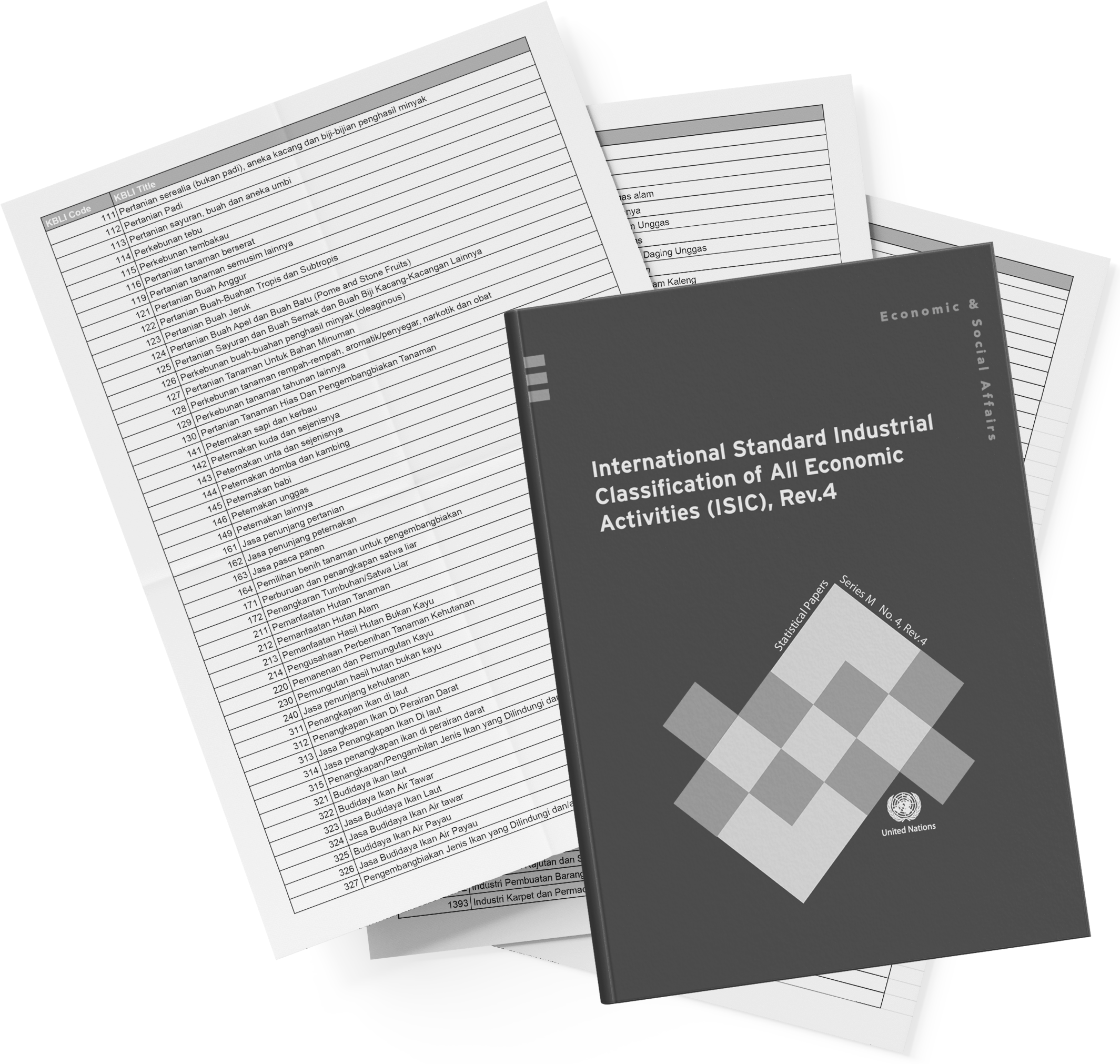
KBLI: 6616: Currency Exchange Services Industry in Indonesia
ISIC: Reference: International Standard Industrial Classification
NAICS: Comparable: North American Industry Classification System
Industry Terms
Key terminology for understanding the Currency Exchange Services Industry in Indonesia industry.
KUPVA BB
Kegiatan Usaha Penukaran Valuta Asing Bukan Bank, the official BI term for non-bank money changing operations.
Determines licensing eligibility and regulatory reporting, distinguishing formal players from illegal operators.
Spot Transaction
Immediate exchange at current market rates without future delivery obligations.
Core to the business model, limiting exposure to FX volatility while complying with BI's no-derivatives rule.
SIKUPVA
Sistem Informasi Kegiatan Usaha Penukaran Valuta Asing, BI's online portal for daily rate and transaction submissions.
Ensures transparency and enables BI oversight, with non-compliance risking license revocation.

Industry Overview โ Business Types
Different business models operate within the Currency Exchange Services Industry in Indonesia industry.
Tourist Kiosk Operator
Small outlets in resorts and streetsides handle high-volume low-value exchanges for walk-in foreigners.
Prime foot-traffic locations and visible BI licensing build instant trust.
Standard industry practices apply.
Airport Concessionaire
Fixed counters in terminals serve arriving/departing passengers with 24/7 operations and high security.
Convenience premium allows wider spreads despite regulated rates.
Standard industry practices apply.
Bank-Affiliated Changer
Subsidiaries or partners of banks leverage parent liquidity for larger transactions.
Superior inventory depth and credibility for business clients.
Standard industry practices apply.
Industry Performance & Outlook
Performance outlook for Currency Exchange Services Industry in Indonesia
Sector stability ties to tourism inflows and remittance stability, with steady demand amid Indonesia's cash economy.
Outlook positive with projected tourism growth to 18 million visitors by 2026, though digital shifts cap expansion.
Key performance indicators
Market growth
Industry expansion rate
Driven by domestic demand
Operational efficiency
Cost management
Key competitive factor
Outlook: what to watch
Monitor regulatory changes
Track infrastructure developments
Watch for technology adoption
Industry Growth Drivers
Key factors driving growth in Currency Exchange Services Industry in Indonesia.
Growth Driver 1
Domestic consumption growth driven by expanding middle class and rising disposable incomes
Monitor industry reports and market data for trends.
Growth Driver 2
Infrastructure development reducing logistics costs and improving market access
Monitor industry reports and market data for trends.
Growth Driver 3
Government policy support including investment incentives and industrial development programs
Monitor industry reports and market data for trends.
Growth Driver 4
Technology adoption improving productivity and enabling new business models
Monitor industry reports and market data for trends.
Growth Driver 5
Regional economic integration expanding market access and supply chain opportunities
Monitor industry reports and market data for trends.
Growth Driver 6
Urbanization creating concentrated demand centers and distribution efficiencies
Monitor industry reports and market data for trends.
Industry Trends & Development
Industry Development
Evolution of Currency Exchange Services Industry in Indonesia
From informal street traders to BI-regulated entities post-2016 PBI 18/20, formalizing operations amid scam crackdowns.
Integration of digital tools for rate transparency while preserving physical cash focus.
Key Trends
Major trends shaping the Currency Exchange Services Industry in Indonesia industry.
Digitalization and technology adoption
Industry trend shaping market dynamics.
Operators
Investors
Policymakers
Regulatory developments
Industry trend shaping market dynamics.
Operators
Investors
Policymakers
Impact and Sustainability
Sustainability and impact considerations for the foreign currency exchange activities (money changer) industry.
Economic Impact
Contribution to national economic development.
Balancing growth with sustainability.
Environmental Considerations
Industry practices and environmental impact.
Operational costs vs sustainability.
Industry Segmentation
Industry Segmentation โ Product/Service A
Primary market segments based on service type.
Segmentation by offering
Primary Segment
Core offerings
Main market
Addresses primary demand
Secondary Segment
Supporting services
Niche markets
Specialized needs
Segments may overlap based on customer needs.
Industry Segmentation โ Product/Service B
Alternative segmentation perspectives.
Segmentation by characteristics
Mass Market
Broad appeal
General consumers
Volume-driven
Premium
High-value offerings
Discerning buyers
Quality-focused
Segment boundaries are fluid.
Customer Segmentation
Different customer segments and their characteristics.
Customer segments and what they value
B2B customers
Various
Multiple needs
Different channels
B2C consumers
Various
Multiple needs
Different channels
Key Players
Ecosystem Mapping
Currency Exchange Services Industry in Indonesia ecosystem includes various stakeholders.
Suppliers
Provide inputs and raw materials.
Primary producers
Input suppliers
Operators
Core industry participants.
Main industry operators
Service providers
Distribution
Channel to end customers.
Distributors
Retailers
How value flows across the ecosystem
Value is created through coordinated activities across the ecosystem.
Leading Players
Competitive landscape and key player archetypes.
Competitive archetypes
Market Leader
Dominant position
Scale, brand recognition
Market saturation
Specialist
Niche focus
Expertise, agility
Limited scale
How competition typically plays out
Competition is shaped by scale advantages, operational efficiency, and customer relationships.
Differentiation strategies vary by segment, with some players competing on price and others on service quality.
Operating Conditions
Operating Model & Cost Structure
Operating models in Currency Exchange Services Industry in Indonesia vary by business type.
Direct costs
Primary operational expenses
Input costs
Labor
Utilities
Major cost component
Overhead
Indirect operational costs
Administration
Facilities
Marketing
Scale-dependent
Cost structure summary
Direct costs
Volume and input prices
Operations
Efficiency improvements
Overhead
Scale and complexity
Administration
Process optimization
Cost structure varies by business model and scale.
Regulation & Compliance Considerations
Regulatory framework and compliance requirements.
Common compliance topics
Business licensing
Operating permits
Legal operation
Maintain valid licenses
Quality standards
Product/service requirements
Market access
Quality control systems
Stay current with regulatory changes.
FAQs & Sources
FAQs
What is Currency Exchange Services Industry in Indonesia?
Currency Exchange Services Industry in Indonesia encompasses various business activities in the Indonesian market.
Sources & Notes
This report is a synthesized overview based on industry analysis and desk research.
BPS (Statistics Indonesia)
Official statistics and industry data.
Ministry of Industry regulations
Regulatory framework and compliance requirements.
This report is for informational purposes and should not be treated as legal, regulatory, or investment advice.