Computer Equipment Manufacturing Industry in Indonesia
A practical guide to Computer Equipment Manufacturing Industry in Indonesiaโmarket dynamics, operational realities, and strategic considerations in Indonesia
The Computer Equipment Manufacturing Industry in Indonesia assembles and manufactures peripheral devices that extend computer capabilities, including monitors, printers, keyboards, mice, external hard drives, scanners, and webcams. Operations transform imported components like displays, print heads, and circuit boards into tested, packaged products via surface-mount assembly lines, calibration, and burn-in testing to ensure reliability. Facilities focus on high-volume production with quality gates to meet global specs, handling mix of standard and customized runs while minimizing defects that could lead to high return rates in export markets.
Clear industry definition and scope of activities
Operational realities across Indonesia's regions
Market segmentation and customer analysis
Ecosystem mapping and competitive dynamics
Cost structure and unit economics
Regulatory and compliance considerations
Executive Summary
The Computer Equipment Manufacturing Industry in Indonesia assembles and manufactures peripheral devices that extend computer capabilities, including monitors, printers, keyboards, mice, external hard drives, scanners, and webcams. Operations transform imported components like displays, print heads, and circuit boards into tested, packaged products via surface-mount assembly lines, calibration, and burn-in testing to ensure reliability.
Facilities focus on high-volume production with quality gates to meet global specs, handling mix of standard and customized runs while minimizing defects that could lead to high return rates in export markets.
Export-oriented assembly dominates, with Batam hubs processing 24/7 shifts during peak seasons tied to global launches.
TKDN compliance drives localization efforts, favoring firms integrating Indonesian plastics or labor-intensive final assembly.
Supply chain fragility exposes operations to component shortages from Asia-Pacific disruptions.
Labor-intensive testing and packaging create jobs but pressure margins amid rising wages.
Shift to wireless/gaming peripherals boosts demand for higher-spec assembly lines.
Why this industry matters in Indonesia
Supports Indonesia's economic growth and development objectives.
Creates employment opportunities across diverse skill levels.
Critical for service delivery and value chain integration.

Enables Indonesia's competitiveness in regional and global markets.
So what: Practical implications
Operators: Focus on quality consistency and process standardization
Buyers: Evaluate supplier capabilities beyond pricing
Investors: Look for operational efficiency and scalability
Policymakers: Support infrastructure development
Indonesia at a Glance
Republic of Indonesia: Large and fragmented market
Indonesia's computer peripherals manufacturing thrives in export zones, fueled by global brands outsourcing assembly while domestic demand rises from office hybrid work and e-learning infrastructure.
Production emphasizes monitors and printers for govt tenders, with storage devices declining as cloud storage grows, creating a pivot to high-margin input devices like ergonomic keyboards.
Market dynamics continue to evolve with changing economic conditions.
Hyperlocalization is key to navigate Indonesia's market
Batam-Bintan axis handles 70%+ of output via bonded warehouses, minimizing customs delays but locking firms into export cycles over domestic customization.

Jabodetabek facilities serve local OEMs with short runs for rupiah-priced products, trading volume for flexibility amid volatile IDR.
Opportunities extend beyond cities
Outer islands like Sulawesi and Sumatra host smaller plants for regional distribution, leveraging lower land costs but challenged by power instability and skilled labor shortages.
Logistics from non-Java sites rely on inter-island ferries, inflating lead times for perishable components like batteries in peripherals.
Growing middle class driving premiumization trends across product categories and services
Digital adoption accelerating with mobile-first consumer behavior creating new channel opportunities
Infrastructure investment improving connectivity and reducing logistics costs across the archipelago
Government initiatives supporting domestic industry development and foreign investment attraction
Regional economic integration through ASEAN creating expanded market access and trade opportunities
Sustainability and ESG considerations creating differentiation opportunities for responsible businesses
Distribution realities: logistics, infrastructure, and channel reach
Bonded trucking from Batam to Singapore ports enables just-in-time exports, while domestic shipments use Pelni lines and Pos Indonesia for last-mile to SMEs.
Cold chain unnecessary but ESD-safe packaging critical; trade-off between air freight speed and sea cost for high-value monitors.
Establish robust distribution partnerships covering both modern trade and traditional channels
Invest in localized supply chain capabilities to navigate logistics complexities and reduce costs
Develop region-specific market entry strategies accounting for local competitive dynamics
Build flexibility into operations to adapt to regulatory changes and infrastructure variations
Industry Definition
What is Computer Equipment Manufacturing Industry in Indonesia?
Industry Definition
KBLI 2622 encompasses assembly and manufacture of computer peripheralsโdevices interfacing with computers for input, output, or storageโexcluding mainframes or laptops (2621) and electronic components (261). Core activities: SMT placement, soldering, firmware flashing, functional testing, and packaging.
Boundaries exclude design/R&D (6201), software loading (6202), and retail (4741); inbound from plastics molding (222), outbound to wholesalers (4651) who handle branding.
Indonesia in Focus
Indonesia's archipelago geography creates unique distribution challenges requiring adapted logistics and storage solutions.
High humidity and tropical climate demand specific technical approaches to quality preservation and product integrity.
Industry Classification
Conceptually, industry activities sit under specific regulatory frameworks with classification by operational scale and service model.
Operators may be classified by activity type, by service delivery model, and by end-use applications.
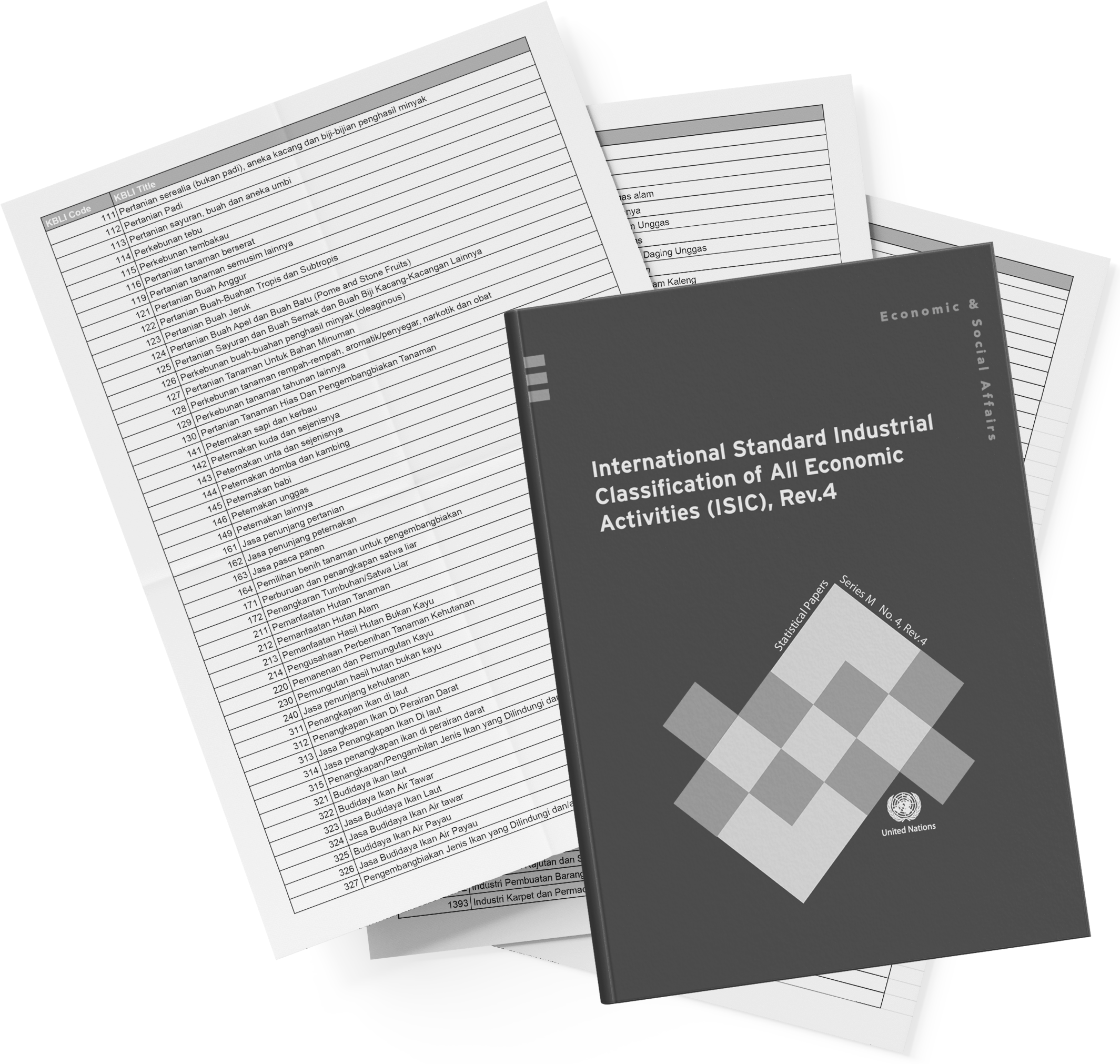
KBLI: 2622: Computer Equipment Manufacturing Industry in Indonesia
ISIC: Reference: International Standard Industrial Classification
NAICS: Comparable: North American Industry Classification System
Industry Terms
Key terminology for understanding the Computer Equipment Manufacturing Industry in Indonesia industry.
Peripheral Equipment
Hardware add-ons like monitors (display output), printers (hardcopy output), keyboards/mice (input), and HDD/SSD (storage).
Defines scope beyond core PCs, allowing specialized lines that scale independently of CPU cycles.
SMT Assembly
Surface-mount technology glues/places tiny components on PCBs using automated pick-and-place machines and reflow ovens.
Enables high-density boards for modern peripherals, but requires cleanrooms to avoid yield-killing defects in humid Indonesia.
TKDN
Tingkat Komponen Dalam Negeri, govt metric mandating minimum local content for procurement eligibility.
Forces import substitution in enclosures/labor, trading higher costs for access to lucrative public tenders.
Industry Overview โ Business Types
Different business models operate within the Computer Equipment Manufacturing Industry in Indonesia industry.
Export Assembler
High-volume runs of standard peripherals for global brands using bonded imports, shipping finished goods via sea/air.
Cost-competitive labor and zone perks for slim-margin commoditized products like basic monitors.
Standard industry practices apply.
Domestic OEM
Mid-volume production with local branding, incorporating TKDN via Indonesian casings and assembly for SME/reseller channels.
Rupiah pricing and quick customization for govt specs like bilingual keyboards.
Standard industry practices apply.
Value-Added Integrator
Low-volume, high-mix builds bundling peripherals with software/cables for enterprise or gaming markets.
Firmware tweaks and testing suites preserving premium pricing amid commoditization.

Standard industry practices apply.
Industry Performance & Outlook
Performance outlook for Computer Equipment Manufacturing Industry in Indonesia
Sector performance hinges on global PC refresh cycles and Indonesia's digital economy push, with assembly yields above 95% signaling maturity but margins squeezed by component inflation.
Outlook positive from data center builds and hybrid work, tempered by cloud erosion of storage peripherals; localization accelerates as TKDN thresholds rise.
Key performance indicators
Market growth
Industry expansion rate
Driven by domestic demand
Operational efficiency
Cost management
Key competitive factor
Outlook: what to watch
Monitor regulatory changes
Track infrastructure developments
Watch for technology adoption
Industry Growth Drivers
Key factors driving growth in Computer Equipment Manufacturing Industry in Indonesia.
Growth Driver 1
Domestic consumption growth driven by expanding middle class and rising disposable incomes
Monitor industry reports and market data for trends.
Growth Driver 2
Infrastructure development reducing logistics costs and improving market access
Monitor industry reports and market data for trends.
Growth Driver 3
Government policy support including investment incentives and industrial development programs
Monitor industry reports and market data for trends.
Growth Driver 4
Technology adoption improving productivity and enabling new business models
Monitor industry reports and market data for trends.
Growth Driver 5
Regional economic integration expanding market access and supply chain opportunities
Monitor industry reports and market data for trends.
Growth Driver 6
Urbanization creating concentrated demand centers and distribution efficiencies
Monitor industry reports and market data for trends.
Industry Trends & Development
Industry Development
Evolution of Computer Equipment Manufacturing Industry in Indonesia
From labor-heavy wiring to automated SMT lines: evolution mirrors global electronics, with Indonesia lagging in automation due to wage advantages.
Pivot from HDDs to SSDs and wireless devices reflects storage/output shifts, pressuring legacy plants to retool.
Key Trends
Major trends shaping the Computer Equipment Manufacturing Industry in Indonesia industry.
Digitalization and technology adoption
Industry trend shaping market dynamics.
Operators
Investors
Policymakers
Regulatory developments
Industry trend shaping market dynamics.
Operators
Investors
Policymakers
Impact and Sustainability
Sustainability and impact considerations for the computer equipment industry industry.
Economic Impact
Contribution to national economic development.
Balancing growth with sustainability.
Environmental Considerations
Industry practices and environmental impact.
Operational costs vs sustainability.
Industry Segmentation
Industry Segmentation โ Product/Service A
Primary market segments based on service type.
Segmentation by offering
Primary Segment
Core offerings
Main market
Addresses primary demand
Secondary Segment
Supporting services
Niche markets
Specialized needs
Segments may overlap based on customer needs.
Industry Segmentation โ Product/Service B
Alternative segmentation perspectives.
Segmentation by characteristics
Mass Market
Broad appeal
General consumers
Volume-driven
Premium
High-value offerings
Discerning buyers
Quality-focused
Segment boundaries are fluid.
Customer Segmentation
Different customer segments and their characteristics.
Customer segments and what they value
B2B customers
Various
Multiple needs
Different channels
B2C consumers
Various
Multiple needs
Different channels
Key Players
Ecosystem Mapping
Computer Equipment Manufacturing Industry in Indonesia ecosystem includes various stakeholders.
Suppliers
Provide inputs and raw materials.
Primary producers
Input suppliers
Operators
Core industry participants.
Main industry operators
Service providers
Distribution
Channel to end customers.
Distributors
Retailers
How value flows across the ecosystem
Value is created through coordinated activities across the ecosystem.
Leading Players
Competitive landscape and key player archetypes.
Competitive archetypes
Market Leader
Dominant position
Scale, brand recognition
Market saturation
Specialist
Niche focus
Expertise, agility
Limited scale
How competition typically plays out
Competition is shaped by scale advantages, operational efficiency, and customer relationships.
Differentiation strategies vary by segment, with some players competing on price and others on service quality.
Operating Conditions
Operating Model & Cost Structure
Operating models in Computer Equipment Manufacturing Industry in Indonesia vary by business type.
Direct costs
Primary operational expenses
Input costs
Labor
Utilities
Major cost component
Overhead
Indirect operational costs
Administration
Facilities
Marketing
Scale-dependent
Cost structure summary
Direct costs
Volume and input prices
Operations
Efficiency improvements
Overhead
Scale and complexity
Administration
Process optimization
Cost structure varies by business model and scale.
Regulation & Compliance Considerations
Regulatory framework and compliance requirements.
Common compliance topics
Business licensing
Operating permits
Legal operation
Maintain valid licenses
Quality standards
Product/service requirements
Market access
Quality control systems
Stay current with regulatory changes.
FAQs & Sources
FAQs
What is Computer Equipment Manufacturing Industry in Indonesia?
Computer Equipment Manufacturing Industry in Indonesia encompasses various business activities in the Indonesian market.
Sources & Notes
This report is a synthesized overview based on industry analysis and desk research.
BPS (Statistics Indonesia)
Official statistics and industry data.
Ministry of Industry regulations
Regulatory framework and compliance requirements.
This report is for informational purposes and should not be treated as legal, regulatory, or investment advice.