Computer and Peripheral Equipment Manufacturing Industry in Indonesia
A practical guide to Computer and Peripheral Equipment Manufacturing Industry in Indonesiaโmarket dynamics, operational realities, and strategic considerations in Indonesia
Manufacture of Computers and Peripheral Equipment involves the assembly and production of complete computing devices such as desktops, laptops, servers, and peripherals including monitors, printers, keyboards, mice, scanners, and storage devices. This industry focuses on integrating imported components like processors, motherboards, RAM, and displays into finished products through processes like surface-mount technology (SMT), testing, quality control, and packaging. It emphasizes achieving local content thresholds to qualify for government incentives and tenders. In practice, operations turn bulk components into market-ready units with Indonesia-specific adaptations, such as voltage compatibility, language support, and compliance labeling, enabling sales through retail, enterprise, and public sector channels.
Clear industry definition and scope of activities
Operational realities across Indonesia's regions
Market segmentation and customer analysis
Ecosystem mapping and competitive dynamics
Cost structure and unit economics
Regulatory and compliance considerations
Executive Summary
Manufacture of Computers and Peripheral Equipment involves the assembly and production of complete computing devices such as desktops, laptops, servers, and peripherals including monitors, printers, keyboards, mice, scanners, and storage devices. This industry focuses on integrating imported components like processors, motherboards, RAM, and displays into finished products through processes like surface-mount technology (SMT), testing, quality control, and packaging. It emphasizes achieving local content thresholds to qualify for government incentives and tenders.
In practice, operations turn bulk components into market-ready units with Indonesia-specific adaptations, such as voltage compatibility, language support, and compliance labeling, enabling sales through retail, enterprise, and public sector channels.
TKDN certification above 25-40% unlocks government contracts, which dominate demand but require rigorous audits and local sourcing verification.

Batam FTZ offers duty-free imports but mandates employment quotas and reinvestment, favoring labor-intensive assembly over high-tech R&D.
Component shortages from China ripple hardest here, as 80%+ inputs are imported, forcing just-in-time inventory strategies.
Retail brands drive consumer PCs, while enterprise channels favor ruggedized peripherals for banking and logistics.
E-waste regulations push recyclability, with uncertified disposals risking fines and market exclusion.
Why this industry matters in Indonesia
Supports Indonesia's economic growth and development objectives.
Creates employment opportunities across diverse skill levels.
Critical for service delivery and value chain integration.

Enables Indonesia's competitiveness in regional and global markets.
So what: Practical implications
Operators: Focus on quality consistency and process standardization
Buyers: Evaluate supplier capabilities beyond pricing
Investors: Look for operational efficiency and scalability
Policymakers: Support infrastructure development
Indonesia at a Glance
Republic of Indonesia: Large and fragmented market
Indonesia's computer and peripherals manufacturing remains assembly-dominant, supporting a burgeoning digital economy with rising PC penetration in schools and SMEs. Local production fills gaps left by imports, focusing on cost-competitive units amid global chip constraints.
Growth aligns with national digital transformation targets, where assembled units gain traction via e-procurement platforms and back-to-office trends post-pandemic.
Market dynamics continue to evolve with changing economic conditions.
Hyperlocalization is key to navigate Indonesia's market
Batam hosts high-volume export assembly for peripherals, benefiting from Singapore proximity and sea-air logistics, while Java hubs like Jababeka prioritize domestic laptops with higher TKDN.
Regional variations emerge: Sumatra factories emphasize monitors for regional banks, whereas East Java sites handle server builds for data centers in Surabaya.
Opportunities extend beyond cities
Tier-2 clusters in Semarang and Surabaya emerge for peripherals servicing local universities and factories, reducing Java-centric logistics costs.
Outer islands like Sulawesi see micro-assembly for mining peripherals, adapting to harsh environments with dust-proofing unavailable in imports.
Growing middle class driving premiumization trends across product categories and services
Digital adoption accelerating with mobile-first consumer behavior creating new channel opportunities
Infrastructure investment improving connectivity and reducing logistics costs across the archipelago
Government initiatives supporting domestic industry development and foreign investment attraction
Regional economic integration through ASEAN creating expanded market access and trade opportunities
Sustainability and ESG considerations creating differentiation opportunities for responsible businesses
Distribution realities: logistics, infrastructure, and channel reach
Finished goods flow via sea from Batam to Jakarta ports, then trucking to inland warehouses, with archipelago challenges inflating lead times by 20-30% versus mainland peers.
Enterprise orders bypass retail via direct B2B logistics, while consumer units hit e-commerce fulfillment centers in Depok and Bandung.
Establish robust distribution partnerships covering both modern trade and traditional channels
Invest in localized supply chain capabilities to navigate logistics complexities and reduce costs
Develop region-specific market entry strategies accounting for local competitive dynamics
Build flexibility into operations to adapt to regulatory changes and infrastructure variations
Industry Definition
What is Computer and Peripheral Equipment Manufacturing Industry in Indonesia?
Industry Definition
KBLI 2621 covers the manufacture or assembly of computers (mainframes, desktops, laptops, servers) and peripheral equipment (input/output devices like monitors, printers, scanners, plotters, keyboards, and drives). Activities include component integration, firmware flashing, burn-in testing, and packaging, but exclude standalone component fabrication (KBLI 261), software development (620), or repair services (951).
Boundaries emphasize final assembly value-add, where firms certify completeness for TKDN calculations, distinguishing from trading or simple repackaging.
Indonesia in Focus
Indonesia's archipelago geography creates unique distribution challenges requiring adapted logistics and storage solutions.
High humidity and tropical climate demand specific technical approaches to quality preservation and product integrity.
Industry Classification
Conceptually, industry activities sit under specific regulatory frameworks with classification by operational scale and service model.
Operators may be classified by activity type, by service delivery model, and by end-use applications.
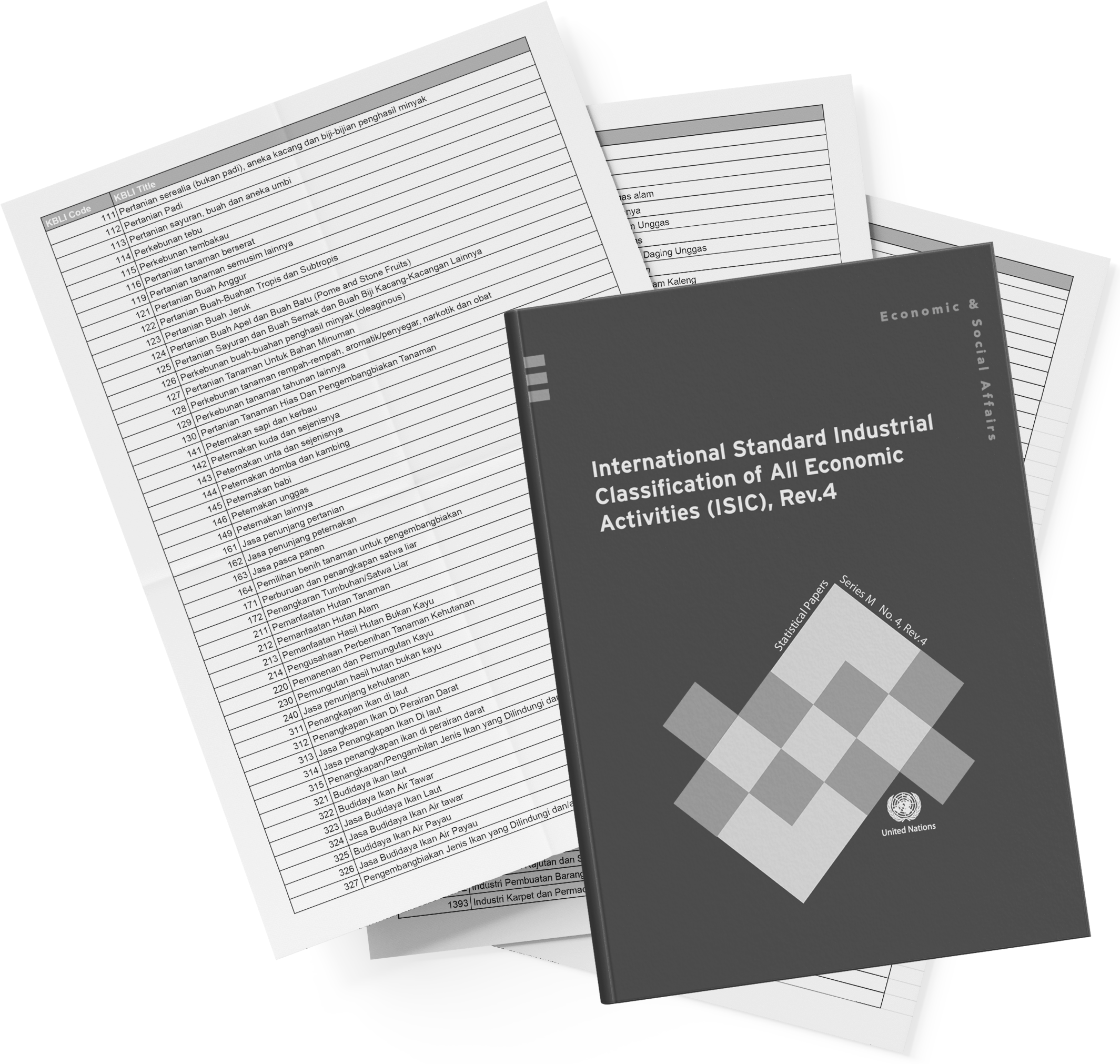
KBLI: 2621: Computer and Peripheral Equipment Manufacturing Industry in Indonesia
ISIC: Reference: International Standard Industrial Classification
NAICS: Comparable: North American Industry Classification System
Industry Terms
Key terminology for understanding the Computer and Peripheral Equipment Manufacturing Industry in Indonesia industry.
TKDN (Tingkat Komponen Dalam Negeri)
Minimum percentage of local content in products, calculated by value of domestically sourced materials, labor, and overhead.
Qualifies products for government tenders and tax incentives; non-compliance bars access to 30%+ of market demand.
OEM Assembly
Contract manufacturing where assemblers build to client specifications using provided designs and components.
Dominates Indonesia due to low capital barriers, enabling quick scaling but thin margins tied to volume guarantees.
Burn-in Testing
Extended stress-testing of assembled units under heat/load to detect early failures before shipment.
Critical for peripherals in humid tropics, reducing warranty claims and building buyer trust in local brands.
Industry Overview โ Business Types
Different business models operate within the Computer and Peripheral Equipment Manufacturing Industry in Indonesia industry.
Local Brand Assemblers
Design basic specs, source components globally, assemble in-house, brand and sell via retail/e-commerce.
Affordable pricing with Indonesia-specific features like bilingual OS and rugged casings for SMEs.
Standard industry practices apply.
Contract Manufacturers (CM)
Receive kits from multinationals, perform SMT, testing, packing per strict SOPs in FTZs.
Export scale and quality certifications (ISO, UL) attract FDI without brand risk.
Standard industry practices apply.
Enterprise Custom Builders
Configure high-end servers/workstations with modular components for banks/hotels, including integration services.
Long-term service contracts offset low volumes with high margins.
Standard industry practices apply.
Industry Performance & Outlook
Performance outlook for Computer and Peripheral Equipment Manufacturing Industry in Indonesia
Sector performance tracks digital adoption, with assembly volumes rising on education digitization and cloud migration, though margins squeeze from component inflation.

Outlook brightens with 4.0 incentives extending to 2030, projecting sustained expansion if TKDN hurdles ease via local component ecosystems.
Key performance indicators
Market growth
Industry expansion rate
Driven by domestic demand
Operational efficiency
Cost management
Key competitive factor
Outlook: what to watch
Monitor regulatory changes
Track infrastructure developments
Watch for technology adoption
Industry Growth Drivers
Key factors driving growth in Computer and Peripheral Equipment Manufacturing Industry in Indonesia.
Growth Driver 1
Domestic consumption growth driven by expanding middle class and rising disposable incomes
Monitor industry reports and market data for trends.
Growth Driver 2
Infrastructure development reducing logistics costs and improving market access
Monitor industry reports and market data for trends.
Growth Driver 3
Government policy support including investment incentives and industrial development programs
Monitor industry reports and market data for trends.
Growth Driver 4
Technology adoption improving productivity and enabling new business models
Monitor industry reports and market data for trends.
Growth Driver 5
Regional economic integration expanding market access and supply chain opportunities
Monitor industry reports and market data for trends.
Growth Driver 6
Urbanization creating concentrated demand centers and distribution efficiencies
Monitor industry reports and market data for trends.
Industry Trends & Development
Industry Development
Evolution of Computer and Peripheral Equipment Manufacturing Industry in Indonesia
From 1990s import substitution to post-2010 assembly hubs, the industry matured via Batam incentives, shifting from peripherals to full laptops as TKDN rose.
Recent evolution integrates Industry 4.0 automation, reducing labor dependency while chasing premium segments like gaming rigs.
Key Trends
Major trends shaping the Computer and Peripheral Equipment Manufacturing Industry in Indonesia industry.
Digitalization and technology adoption
Industry trend shaping market dynamics.
Operators
Investors
Policymakers
Regulatory developments
Industry trend shaping market dynamics.
Operators
Investors
Policymakers
Impact and Sustainability
Sustainability and impact considerations for the manufacture of computers and peripheral equipment industry.
Economic Impact
Contribution to national economic development.
Balancing growth with sustainability.
Environmental Considerations
Industry practices and environmental impact.
Operational costs vs sustainability.
Industry Segmentation
Industry Segmentation โ Product/Service A
Primary market segments based on service type.
Segmentation by offering
Primary Segment
Core offerings
Main market
Addresses primary demand
Secondary Segment
Supporting services
Niche markets
Specialized needs
Segments may overlap based on customer needs.
Industry Segmentation โ Product/Service B
Alternative segmentation perspectives.
Segmentation by characteristics
Mass Market
Broad appeal
General consumers
Volume-driven
Premium
High-value offerings
Discerning buyers
Quality-focused
Segment boundaries are fluid.
Customer Segmentation
Different customer segments and their characteristics.
Customer segments and what they value
B2B customers
Various
Multiple needs
Different channels
B2C consumers
Various
Multiple needs
Different channels
Key Players
Ecosystem Mapping
Computer and Peripheral Equipment Manufacturing Industry in Indonesia ecosystem includes various stakeholders.
Suppliers
Provide inputs and raw materials.
Primary producers
Input suppliers
Operators
Core industry participants.
Main industry operators
Service providers
Distribution
Channel to end customers.
Distributors
Retailers
How value flows across the ecosystem
Value is created through coordinated activities across the ecosystem.
Leading Players
Competitive landscape and key player archetypes.
Competitive archetypes
Market Leader
Dominant position
Scale, brand recognition
Market saturation
Specialist
Niche focus
Expertise, agility
Limited scale
How competition typically plays out
Competition is shaped by scale advantages, operational efficiency, and customer relationships.
Differentiation strategies vary by segment, with some players competing on price and others on service quality.
Operating Conditions
Operating Model & Cost Structure
Operating models in Computer and Peripheral Equipment Manufacturing Industry in Indonesia vary by business type.
Direct costs
Primary operational expenses
Input costs
Labor
Utilities
Major cost component
Overhead
Indirect operational costs
Administration
Facilities
Marketing
Scale-dependent
Cost structure summary
Direct costs
Volume and input prices
Operations
Efficiency improvements
Overhead
Scale and complexity
Administration
Process optimization
Cost structure varies by business model and scale.
Regulation & Compliance Considerations
Regulatory framework and compliance requirements.
Common compliance topics
Business licensing
Operating permits
Legal operation
Maintain valid licenses
Quality standards
Product/service requirements
Market access
Quality control systems
Stay current with regulatory changes.
FAQs & Sources
FAQs
What is Computer and Peripheral Equipment Manufacturing Industry in Indonesia?
Computer and Peripheral Equipment Manufacturing Industry in Indonesia encompasses various business activities in the Indonesian market.
Sources & Notes
This report is a synthesized overview based on industry analysis and desk research.
BPS (Statistics Indonesia)
Official statistics and industry data.
Ministry of Industry regulations
Regulatory framework and compliance requirements.
This report is for informational purposes and should not be treated as legal, regulatory, or investment advice.