Cement, Lime, and Plaster Manufacturing Industry in Indonesia
A practical guide to Cement, Lime, and Plaster Manufacturing Industry in Indonesiaโmarket dynamics, operational realities, and strategic considerations in Indonesia
Manufacture of cement, lime, and plaster transforms abundant mineral resources like limestone, clay, shale, and gypsum into hydraulic binders critical for construction through energy-intensive thermal processes. Cement, the dominant product, involves crushing raw materials, blending, preheating, clinkering at 1450ยฐC to form clinker, cooling, and grinding with gypsum for final cement powder. Lime production calcines limestone to quicklime or hydrates it for slaked lime used in mortars and soil amendment, while plaster mills gypsum with additives for interior finishing mixes. These products enable concrete setting, masonry binding, and surface smoothing, with cement comprising over 95% of output by volume in Indonesia due to its foundational role in buildings, roads, and dams.
Clear industry definition and scope of activities
Operational realities across Indonesia's regions
Market segmentation and customer analysis
Ecosystem mapping and competitive dynamics
Cost structure and unit economics
Regulatory and compliance considerations
Executive Summary
Manufacture of cement, lime, and plaster transforms abundant mineral resources like limestone, clay, shale, and gypsum into hydraulic binders critical for construction through energy-intensive thermal processes. Cement, the dominant product, involves crushing raw materials, blending, preheating, clinkering at 1450ยฐC to form clinker, cooling, and grinding with gypsum for final cement powder. Lime production calcines limestone to quicklime or hydrates it for slaked lime used in mortars and soil amendment, while plaster mills gypsum with additives for interior finishing mixes.
These products enable concrete setting, masonry binding, and surface smoothing, with cement comprising over 95% of output by volume in Indonesia due to its foundational role in buildings, roads, and dams.
Cement capacity exceeds domestic demand by over 50%, leading to export strategies and price competition.
Energy costs, mainly coal and petcoke, drive 40% of expenses, with shifts to alternative fuels for sustainability.
Plants cluster near raw material sources to minimize haulage, creating regional duopolies.
Environmental compliance via AMDAL permits mandates dust control, emissions monitoring, and quarry reclamation.

Government infrastructure like IKN Nusantara and toll roads sustains growth despite housing slowdowns.
Why this industry matters in Indonesia
Supports Indonesia's economic growth and development objectives.
Creates employment opportunities across diverse skill levels.
Critical for service delivery and value chain integration.

Enables Indonesia's competitiveness in regional and global markets.
So what: Practical implications
Operators: Focus on quality consistency and process standardization
Buyers: Evaluate supplier capabilities beyond pricing
Investors: Look for operational efficiency and scalability
Policymakers: Support infrastructure development
Indonesia at a Glance
Republic of Indonesia: Large and fragmented market
Indonesia's cement sector operates with installed capacity around 120 million tons annually against domestic sales hovering near 70 million tons, reflecting chronic overcapacity that fuels exports to Southeast Asia and Africa. Lime and plaster production remains marginal, focused on quicklime for industrial uses and gypsum plasters for urban finishing.
Demand pulses with public works tenders and urbanization, but weak private housing in 2025 has shifted focus to clinker exports, with producers optimizing kiln utilization through regional blending plants.
Market dynamics continue to evolve with changing economic conditions.
Hyperlocalization is key to navigate Indonesia's market
Java hosts 60% of capacity with dense plants like those in Tuban and Gresik, leveraging limestone hills and port access for efficient supply to Jakarta-Bandung megapolitan demand.
Sumatra and Sulawesi facilities target palm oil infrastructure and mining camps, where lime stabilizes soft soils for roads, adapting mixes to volcanic ash-rich local aggregates.
Opportunities extend beyond cities
Outer islands like Kalimantan and Papua drive specialized demand for sulfate-resistant cements in swampy terrains and high-plasticity plasters for humid climates.
Rural housing programs and irrigation projects pull bagged lime for traditional masonry, bypassing urban ready-mix dominance.
Growing middle class driving premiumization trends across product categories and services
Digital adoption accelerating with mobile-first consumer behavior creating new channel opportunities
Infrastructure investment improving connectivity and reducing logistics costs across the archipelago
Government initiatives supporting domestic industry development and foreign investment attraction
Regional economic integration through ASEAN creating expanded market access and trade opportunities
Sustainability and ESG considerations creating differentiation opportunities for responsible businesses
Distribution realities: logistics, infrastructure, and channel reach
Bulk cement ships 70% of inter-island volume via specialized cement carriers from Java hubs to Sumatra ports, with trucking filling last-mile gaps despite road congestion.

Lime and plaster favor bagged trucking from local mills to avoid moisture degradation in humid sea voyages, inflating costs 20-30% for remote sites.
Establish robust distribution partnerships covering both modern trade and traditional channels
Invest in localized supply chain capabilities to navigate logistics complexities and reduce costs
Develop region-specific market entry strategies accounting for local competitive dynamics
Build flexibility into operations to adapt to regulatory changes and infrastructure variations
Industry Definition
What is Cement, Lime, and Plaster Manufacturing Industry in Indonesia?
Industry Definition
KBLI 2394 encompasses the thermal processing of minerals into cement (Portland and blended types), lime (quick and hydrated), and plaster (gypsum-based), excluding downstream ready-mix or precast products under KBLI 2395. Boundaries include raw grinding to final milling/packaging, with captive power plants common for reliability.
It excludes limestone quarrying (0810), clay mining (0813), and gypsum extraction (0891), focusing on value-add transformation via kilns and mills.
Indonesia in Focus
Indonesia's archipelago geography creates unique distribution challenges requiring adapted logistics and storage solutions.
High humidity and tropical climate demand specific technical approaches to quality preservation and product integrity.
Industry Classification
Conceptually, industry activities sit under specific regulatory frameworks with classification by operational scale and service model.
Operators may be classified by activity type, by service delivery model, and by end-use applications.
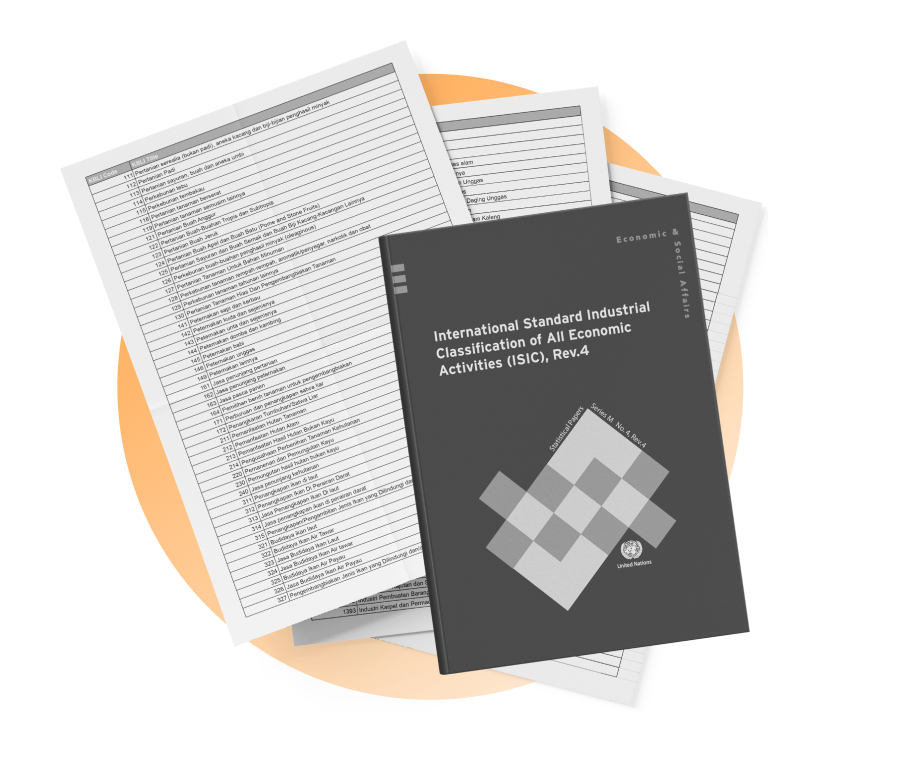
KBLI: 2394: Cement, Lime, and Plaster Manufacturing Industry in Indonesia
ISIC: Reference: International Standard Industrial Classification
NAICS: Comparable: North American Industry Classification System
Industry Terms
Key terminology for understanding the Cement, Lime, and Plaster Manufacturing Industry in Indonesia industry.
Clinker
Intermediate nodular product from sintering limestone and clay at high temperatures, ground into cement.
Clinker factor (ratio to cement) determines energy use and CO2 emissions; Indonesia blends rice husk ash to lower it below 80%.
Quicklime
Calcined limestone (CaO) before hydration, used in steelmaking flux and water treatment.
High reactivity demands precise kiln control; local demand ties to nickel smelters in Sulawesi.
AMDAL
Analisis Mengenai Dampak Lingkungan, Indonesia's mandatory environmental impact assessment.
Required for plant expansions, enforcing scrubbers and reclamation to curb dust and aquifer pollution.
Industry Overview โ Business Types
Different business models operate within the Cement, Lime, and Plaster Manufacturing Industry in Indonesia industry.
Integrated Cement Groups
Own quarries, kilns, grinding stations, and fleets for end-to-end control from mine to bagged cement.
Economies of scale via multi-plant networks, exporting clinker during low seasons.
Standard industry practices apply.
Standalone Lime Producers
Smaller rotary/shaft kilns near quarries produce quick/hydrated lime for regional industrial sales.
Flexibility for custom purity levels serving agriculture and chemicals.
Standard industry practices apply.
Plaster Mills
Import or mine gypsum, mill with accelerators/retarders for ready-mix plasters packaged for retail.
Focus on fast-setting formulas for Indonesia's humid, earthquake-prone builds.
Standard industry practices apply.
Industry Performance & Outlook
Performance outlook for Cement, Lime, and Plaster Manufacturing Industry in Indonesia
Overcapacity squeezes utilization to 60-70%, but infrastructure tenders stabilize volumes; exports offset domestic softness.
Outlook ties to IKN and toll expansions, with lime/plaster growing via industrial parks.
Key performance indicators
Market growth
Industry expansion rate
Driven by domestic demand
Operational efficiency
Cost management
Key competitive factor
Outlook: what to watch
Monitor regulatory changes
Track infrastructure developments
Watch for technology adoption
Industry Growth Drivers
Key factors driving growth in Cement, Lime, and Plaster Manufacturing Industry in Indonesia.
Growth Driver 1
Domestic consumption growth driven by expanding middle class and rising disposable incomes
Monitor industry reports and market data for trends.
Growth Driver 2
Infrastructure development reducing logistics costs and improving market access
Monitor industry reports and market data for trends.
Growth Driver 3
Government policy support including investment incentives and industrial development programs
Monitor industry reports and market data for trends.
Growth Driver 4
Technology adoption improving productivity and enabling new business models
Monitor industry reports and market data for trends.
Growth Driver 5
Regional economic integration expanding market access and supply chain opportunities
Monitor industry reports and market data for trends.
Growth Driver 6
Urbanization creating concentrated demand centers and distribution efficiencies
Monitor industry reports and market data for trends.
Industry Trends & Development
Industry Development
Evolution of Cement, Lime, and Plaster Manufacturing Industry in Indonesia
From coal-fired wet kilns to dry-process lines with preheaters, efficiency gains cut energy 30% since 2010s.
Lime shifts to vertical shaft kilns for lower emissions, plaster incorporates polymers for crack resistance.
Key Trends
Major trends shaping the Cement, Lime, and Plaster Manufacturing Industry in Indonesia industry.
Digitalization and technology adoption
Industry trend shaping market dynamics.
Operators
Investors
Policymakers
Regulatory developments
Industry trend shaping market dynamics.
Operators
Investors
Policymakers
Impact and Sustainability
Sustainability and impact considerations for the manufacture of cement, lime and plaster industry.
Economic Impact
Contribution to national economic development.
Balancing growth with sustainability.
Environmental Considerations
Industry practices and environmental impact.
Operational costs vs sustainability.
Industry Segmentation
Industry Segmentation โ Product/Service A
Primary market segments based on service type.
Segmentation by offering
Primary Segment
Core offerings
Main market
Addresses primary demand
Secondary Segment
Supporting services
Niche markets
Specialized needs
Segments may overlap based on customer needs.
Industry Segmentation โ Product/Service B
Alternative segmentation perspectives.
Segmentation by characteristics
Mass Market
Broad appeal
General consumers
Volume-driven
Premium
High-value offerings
Discerning buyers
Quality-focused
Segment boundaries are fluid.
Customer Segmentation
Different customer segments and their characteristics.
Customer segments and what they value
B2B customers
Various
Multiple needs
Different channels
B2C consumers
Various
Multiple needs
Different channels
Key Players
Ecosystem Mapping
Cement, Lime, and Plaster Manufacturing Industry in Indonesia ecosystem includes various stakeholders.
Suppliers
Provide inputs and raw materials.
Primary producers
Input suppliers
Operators
Core industry participants.
Main industry operators
Service providers
Distribution
Channel to end customers.
Distributors
Retailers
How value flows across the ecosystem
Value is created through coordinated activities across the ecosystem.
Leading Players
Competitive landscape and key player archetypes.
Competitive archetypes
Market Leader
Dominant position
Scale, brand recognition
Market saturation
Specialist
Niche focus
Expertise, agility
Limited scale
How competition typically plays out
Competition is shaped by scale advantages, operational efficiency, and customer relationships.
Differentiation strategies vary by segment, with some players competing on price and others on service quality.
Operating Conditions
Operating Model & Cost Structure
Operating models in Cement, Lime, and Plaster Manufacturing Industry in Indonesia vary by business type.
Direct costs
Primary operational expenses
Input costs
Labor
Utilities
Major cost component
Overhead
Indirect operational costs
Administration
Facilities
Marketing
Scale-dependent
Cost structure summary
Direct costs
Volume and input prices
Operations
Efficiency improvements
Overhead
Scale and complexity
Administration
Process optimization
Cost structure varies by business model and scale.
Regulation & Compliance Considerations
Regulatory framework and compliance requirements.
Common compliance topics
Business licensing
Operating permits
Legal operation
Maintain valid licenses
Quality standards
Product/service requirements
Market access
Quality control systems
Stay current with regulatory changes.
FAQs & Sources
FAQs
What is Cement, Lime, and Plaster Manufacturing Industry in Indonesia?
Cement, Lime, and Plaster Manufacturing Industry in Indonesia encompasses various business activities in the Indonesian market.
Sources & Notes
This report is a synthesized overview based on industry analysis and desk research.
BPS (Statistics Indonesia)
Official statistics and industry data.
Ministry of Industry regulations
Regulatory framework and compliance requirements.
This report is for informational purposes and should not be treated as legal, regulatory, or investment advice.