Beverage Crop Growing Industry in Indonesia
KBLI 0127 — Smallholder-led coffee, BUMN-PTPN tea and Sulawesi cocoa anchoring upstream beverage supply
Indonesia's beverage-crop industry covers coffee (Arabica and Robusta), tea, cocoa and minor beverage-related crops. Indonesia is consistently among the world's top 4 coffee producers (after Brazil, Vietnam, Colombia), with ~80–90% Robusta (lower-altitude, Lampung/South Sumatra/East Java/Bengkulu) and ~10–20% Arabica (high-altitude, Gayo-Aceh, Sumatra Mandheling, Toraja-Sulawesi, Java Ijen/Mount Halu Salak, Bali Kintamani, Flores Bajawa, Wamena-Papua). Smallholder farmers dominate (~90%+ of production); PTPN VIII (West Java) and PTPN IX have residual coffee estate operations. Tea production concentrated in Java (PTPN VIII tea estates in Ciater, Pangalengan, Gunung Mas) with declining global market share. Cocoa is concentrated in Sulawesi (Soppeng, Pinrang, Bone, Polewali Mandar), with smallholder dominance and yield challenges. Sugarcane (sometimes classified separately) is a major BUMN PTPN sub-sector (PTPN X, PTPN XI in East Java). Indonesia's specialty-coffee identity has grown internationally; certification (RA, UTZ-merged, Fairtrade, organic, Rainforest Alliance, 4C) increasingly required for export.
Indonesia is consistently among the world's top 4 coffee producers (Robusta-heavy ~80–90%)
Specialty Arabica origins: Gayo-Aceh, Sumatra Mandheling, Toraja-Sulawesi, Java Ijen, Bali Kintamani, Flores Bajawa, Wamena-Papua
Smallholder dominance (~90%+) of coffee, tea and cocoa production
PTPN VIII (BUMN, West Java tea estates Ciater/Pangalengan) leads tea
Sulawesi (Soppeng, Pinrang, Bone, Polewali Mandar) is core cocoa region
Holding BUMN under PT PerkebunanNusantara III (PTPN III) — restructured 2024 into PalmCo + SupportingCo + SugarCo
Certification (RA, Fairtrade, organic, 4C, EUDR-compliant) increasingly required for export
Executive Summary
Indonesia's beverage-crop growing industry (KBLI 0127) covers coffee, tea and cocoa cultivation — three smallholder-dominated tropical crops with global commodity and specialty export markets. Coffee is the largest sub-sector by value: Indonesia consistently ranks among the world's top 4 producers (Brazil, Vietnam, Colombia, Indonesia mix annually), with Robusta dominant (~80–90% of volume, anchored in Lampung, South Sumatra, Bengkulu, East Java lowlands) and Arabica specialty heritage (~10–20%) anchored in Gayo Aceh, Sumatra Mandheling, Toraja Sulawesi Selatan, Java (Ijen, Mount Halu Salak), Bali Kintamani, Flores Bajawa, Wamena Papua.
Tea is the legacy BUMN-anchored sub-sector — PTPN VIII (West Java) historic tea estates at Ciater, Pangalengan, Gunung Mas, Cikopo Selatan plus PTPN IX (Central Java) and PTPN XII (East Java) lead estate production; smallholder tea exists but volume modest. Indonesia's global tea share has declined as Sri Lanka, Kenya, India, Vietnam, China grow.
Cocoa is Sulawesi-anchored — Soppeng, Pinrang, Bone, Polewali Mandar (Sulawesi Selatan/Barat) plus parts of Sulawesi Tenggara, Lampung — with smallholder dominance and yield challenges driving Indonesia from top-2 producer historically toward declining production. Major cocoa downstream players (Mars Symbioscience, Cargill Indonesia, Olam, Barry Callebaut Indonesia, BT Cocoa, Bumitangerang Mesindotama) source domestically and globally.
BUMN holding: PT PerkebunanNusantara III (PTPN III) was restructured in 2024 into specialised sub-holdings — PalmCo (palm oil), SugarCo (sugarcane), SupportingCo (including tea, rubber adjacency, coffee). Certification regimes (Rainforest Alliance/UTZ merged, Fairtrade, organic, 4C, EUDR-compliant) increasingly required for export markets, especially EU under EUDR (EU Deforestation Regulation).
Indonesia top-4 coffee producer; Robusta-heavy (~80–90%); specialty Arabica diverse origins
Smallholder dominance ~90%+ of coffee, tea, cocoa production
Specialty Arabica: Gayo-Aceh, Mandheling, Toraja, Java, Bali Kintamani, Flores, Wamena
Tea: PTPN VIII (West Java) anchor; declining global share
Cocoa: Sulawesi-anchored; smallholder dominance with yield challenges
PTPN III restructured 2024 into PalmCo + SugarCo + SupportingCo
Certification: RA/UTZ-merged, Fairtrade, organic, 4C, EUDR-compliant for export
Why this industry matters in Indonesia
Beverage crops support millions of smallholder farmers across Sumatra, Java, Sulawesi, Bali, Flores, Papua.
Coffee is significant foreign-exchange earner; specialty origins anchor Indonesia's identity in global beverage culture.
Tea and cocoa BUMN PTPN sector employment is socially significant in plantation regions.
EU EUDR (deforestation-free) compliance from 2025/2026 reshapes export-market access.
So what: Practical implications
Smallholder farmers: Adopt certification (RA, organic, EUDR-compliant); improve yield
Exporters / traders (Olam, Volcafe, ECOM, Sucden, Cargill, Mars): Lock multi-year sourcing; invest in farmer training
Downstream (roasters, F&B): Build direct-trade relationships with origin cooperatives
Investors: Cocoa farmer-yield improvement programmes; specialty-coffee value capture
Policymakers: EUDR compliance support; PTPN restructuring; smallholder financing
Indonesia at a Glance
Republic of Indonesia: smallholder-led global beverage-crop producer
Indonesia produces ~10–11 million bags of coffee annually (60kg bag basis), placing it among the world's top 4 producers. Tea production ~120–140k tonnes annually (declining trend). Cocoa ~150–200k tonnes (also declining from historic 500k+ peak).
Smallholder farmers dominate (~90%+) all three crops. PTPN (BUMN PerkebunanNusantara) estates contribute residual production especially for tea (PTPN VIII West Java).
Specialty Arabica origins create premium-price segments — Gayo, Mandheling, Toraja, Java Ijen/Mount Halu Salak, Bali Kintamani, Flores Bajawa, Wamena Papua trade at premium to commodity Robusta.
Export markets: coffee to USA, Japan, Germany, Italy, EU broadly; tea to ME, Pakistan, EU; cocoa to EU, USA, ASEAN downstream processors.
Hyperlocalisation is key to navigate Indonesia's market
Origin geography is highly variable. Gayo (Aceh) — wet-hulled (giling basah) Arabica with earthy/spicy profile; Mandheling (North Sumatra) — heavy body; Java — clean profile from PTPN estates plus smallholder; Toraja (Sulawesi Selatan) — full-bodied Arabica; Bali Kintamani — citrus notes; Flores Bajawa — chocolate/nut; Wamena (Papua) — clean Arabica.
Tea: West Java PTPN VIII high-elevation gardens (Ciater, Pangalengan, Gunung Mas, Cikopo Selatan, Sukawana, Walini brand) deliver black/green/white tea.
Opportunities extend beyond cities
Specialty coffee origin tourism and farmer-direct trade (Coffee farms tours, farm-stay) emerging in Bali Kintamani, Aceh Gayo, Toraja, Java Ijen, Flores. Smallholder cooperatives (Koperasi Petani — KPK Permata Gayo, KSU Arinagata, Koperasi Petani Kopi Wahana, Kalibang Permata) consolidate smallholder export.
Cocoa yield-improvement programmes (Mars Sustainable Cocoa Programme, Cargill Cocoa Promise, Olam Cocoa Plan, government-led Gernas Kakao) try to reverse declining production.
Specialty coffee origin tourism (Bali, Aceh, Toraja, Java Ijen, Flores)
Smallholder cooperative consolidation for export
Cocoa yield-improvement programmes (Mars, Cargill, Olam, government)
EUDR (EU Deforestation Regulation) compliance support
Tea premium segment (silver tip white, single-estate)
Direct-trade with specialty roasters globally
Distribution realities: cherry to green bean to export
Coffee: cherry harvest → pulping/depulping → wet-hulled (giling basah, Indonesian distinctive) or fully-washed/honey/natural → drying → milling → grading → green bean export. Smallholder sells to collectors (pengumpul) → exporter or cooperative → roaster.
Tea: leaf harvest → withering → rolling → fermentation (oxidation) → drying → grading → packing → export.
Cocoa: pod harvest → fermentation → drying → bagging → export to processors (Mars, Cargill, Olam, Barry Callebaut, BT Cocoa, Bumitangerang Mesindotama).
Cooperatives critical for smallholder bargaining and certification
Wet-hulling (giling basah) is Indonesian distinctive but creates moisture risk
Cocoa fermentation determines flavour and price tier
EUDR traceability requires plot-level GPS data from 2025/2026
Industry Overview
What is the beverage crop growing industry?
Definition & Boundaries
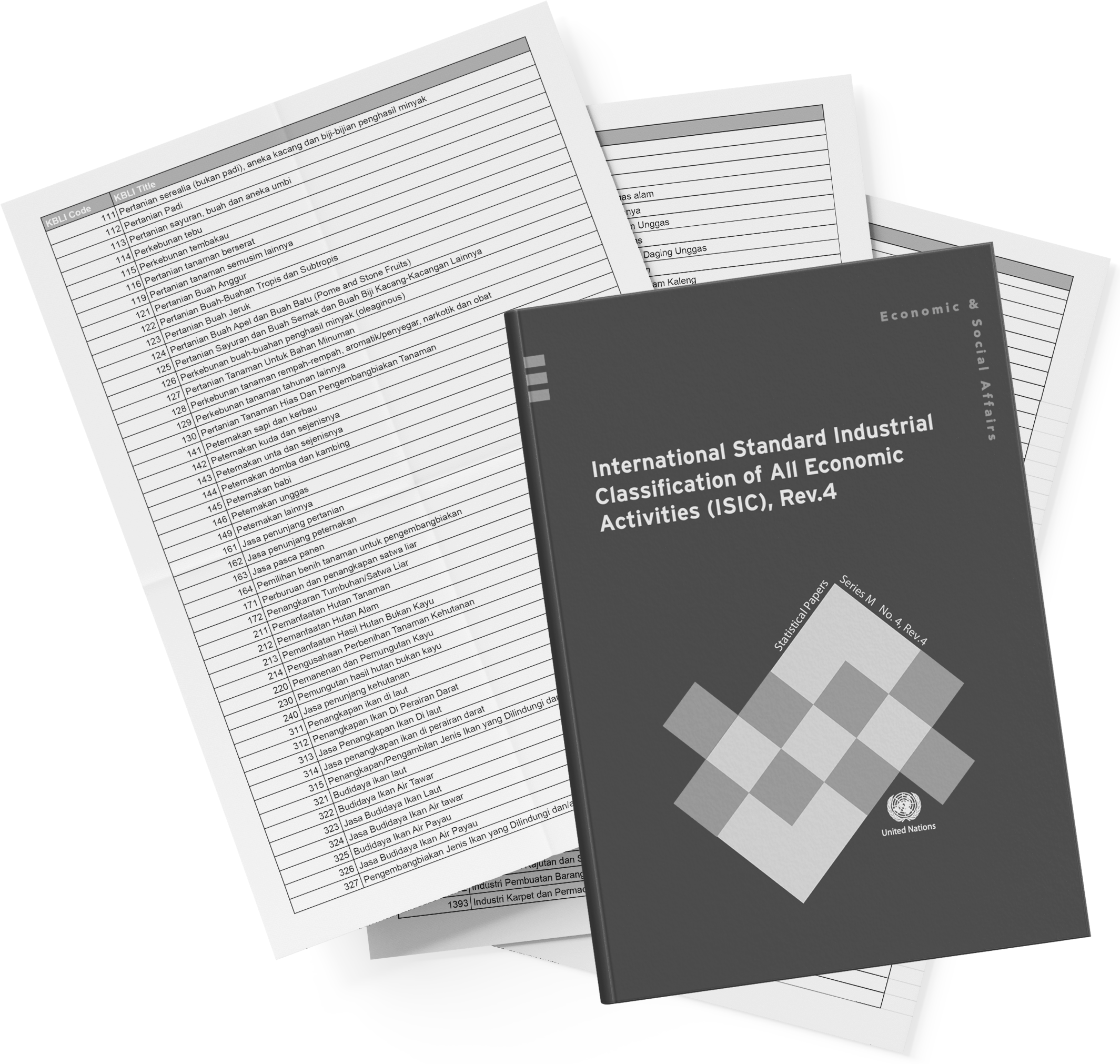
KBLI 0127 covers Perkebunan Tanaman untuk Bahan Minuman — cultivation of beverage crops including coffee (Arabica and Robusta), tea (Camellia sinensis), cocoa (Theobroma cacao), and other beverage-related crops (maté, herbal-tea adjacencies).
Included: smallholder farming, plantation-estate cultivation, primary processing (cherry to green bean for coffee; leaf to dried tea; pod to dried bean for cocoa).
Excluded: sugarcane cultivation (KBLI 0114), tobacco (KBLI 0115), ground processing/roasting beyond primary (KBLI 1079 for roasting + processing), beverage manufacturing (KBLI 1101–1104), F&B service (KBLI 5610/5630), wholesale of agricultural raw material (KBLI 4620).
Indonesia in Focus
Smallholder-led (~90%+) across coffee, tea, cocoa.
Coffee top-4 globally; Robusta-heavy with specialty Arabica diverse origins.
Tea PTPN BUMN anchored; declining global share.
Cocoa Sulawesi-anchored; declining production with yield challenges.
Classification
KBLI: 0127 — Perkebunan Tanaman untuk Bahan Minuman (coffee, tea, cocoa).
ISIC Rev. 4: 0127 — Growing of beverage crops.
NAICS comparable: 11193 (Coffee + Tea Farming) and 11199 (other crop farming for cocoa).
Industry Terms
Beverage-crop vocabulary blends agronomy with Indonesian commodity and certification terms.
Arabica
Coffea arabica — premium high-altitude coffee.
~10–20% of Indonesia coffee.
Robusta
Coffea canephora — lowland coffee.
~80–90% of Indonesia coffee.
Giling basah (wet-hulled)
Indonesian wet-hulled processing.
Distinctive Sumatran profile.
Honey / natural / washed
Coffee processing methods.
Different flavour profiles.
PTPN
PerkebunanNusantara — BUMN plantation.
PTPN III is holding; restructured 2024.
Gayo / Mandheling / Toraja
Origin Arabica indications.
Premium specialty-coffee identities.
Specialty grade (SCAA 80+)
Specialty Coffee Association quality grade.
Premium pricing tier.
Camellia sinensis
Tea plant species.
All tea derives from it.
Fermented cocoa
Cocoa post-fermentation.
Required flavour development.
EUDR
EU Deforestation Regulation.
Compliance from 2025/2026 for EU export.
RA / UTZ / Fairtrade / 4C / organic
Sustainability certifications.
Premium-market access.
Koperasi Petani
Farmer cooperative.
Aggregates smallholder for export.
Business Types & Models — how value is created
Four archetypes share KBLI 0127 — smallholder farmers (with cooperatives), PTPN BUMN estates, private estate companies, and integrated upstream supply (with downstream roaster/trader).
Smallholder farmers and cooperatives (Koperasi Permata Gayo, KSU Arinagata, KPSI Toraja, Koperasi Petani Kopi Wahana, dozens of cocoa cooperatives in Sulawesi)
Smallholder farmers (~90%+ of production) cultivate coffee, tea or cocoa on plots typically 0.5–2 hectares per household. Cooperatives aggregate, process, certify and export. Coffee cooperatives examples: Koperasi Permata Gayo (Aceh — Permata Gayo brand), KSU Arinagata (Aceh), Koperasi Petani Kopi Wahana (Toraja), Koperasi Margamulya (Java).
Cocoa cooperatives: VECO Indonesia / Rikolto-supported groups, Mars-supported Cocoa Development Centres.
Cherry / green-bean sales to traders or cooperative
Direct-trade with international specialty roasters
Certification premium (RA, Fairtrade, organic, 4C)
Cooperative-aggregation export revenue
Small-plot farming (0.5–2 ha typical)
Cooperative aggregation and certification
Cash-economy mostly; informal credit
PTPN BUMN plantation estates (PT PerkebunanNusantara III holding; PTPN VIII West Java tea anchor; PTPN IX Central Java; PTPN XII East Java)
BUMN-owned plantation estates under PerkebunanNusantara holding. PTPN VIII operates West Java tea (Ciater, Pangalengan, Gunung Mas, Cikopo Selatan, Sukawana, Walini brand) and residual coffee/rubber. PTPN IX (Central Java) and PTPN XII (East Java) operate tea and other plantation crops.
PTPN III restructured 2024 into specialised sub-holdings — PalmCo (palm oil), SugarCo (sugarcane), SupportingCo (other crops including tea, rubber, coffee, plus some asset-light businesses).
Tea bulk export (PTPN VIII Walini brand)
Domestic tea sales
Residual coffee/cocoa estate production
Plantation revenue mix with rubber, palm oil where relevant
BUMN governance under Kementerian BUMN
Restructured 2024 (PTPN III holding into PalmCo/SugarCo/SupportingCo)
Estate plantation model
Private estate companies (PT Tugu Bali, PT Sumber Cipta Multiniaga, PT Astra Agro Lestari Bina Mitra Karya Tani / private estates, PT Sumatera Specialty Coffee)
Private estate operators with managed plantation. Various private coffee, tea, cocoa estates operate in Sumatra, Java, Sulawesi, Bali, Flores. Often integrate with downstream processing (roasting, packaging) or contract-farming.
Smaller scale than PTPN but more agile and specialty-oriented.
Estate-grown specialty coffee/tea/cocoa
Direct sale to international buyers
Estate-tourism (farm stays, coffee tours)
Vertically integrated downstream
Privately owned estates
Specialty-oriented
Direct trade common
Integrated upstream-to-downstream traders and roasters (PT Volcafe Indonesia, PT Olam Indonesia, PT ECOM Indonesia, PT Sucafina Indonesia, PT Sumatra Specialty Coffee, PT Indo Cafco, PT Indokom, Mars Symbioscience Indonesia, Cargill Indonesia, Barry Callebaut Indonesia, BT Cocoa)
Multinational and large domestic traders/roasters who source from smallholders + estates and process/export. Coffee traders: Volcafe, ECOM, Olam, Sucafina, Sumatra Specialty Coffee, Indo Cafco, Indokom, Aman Java. Cocoa processors: Mars Symbioscience, Cargill Indonesia, Olam Cocoa, Barry Callebaut Indonesia, BT Cocoa, Bumitangerang Mesindotama, JB Cocoa.
Provide farmer training, certification facilitation, sustainability programmes.
Green-bean export and trade
Cocoa bean processing (cocoa butter, cocoa liquor, cocoa powder)
Coffee roasting and downstream
Certification premium
Sustainability-programme revenue
Smallholder-sourcing networks
Certification facilitation
Sustainability programmes (Mars Sustainable Cocoa, Cargill Cocoa Promise, Olam Cocoa Plan, Nestlé NESCAFÉ Plan)
Performance & Outlook
Top-4 coffee producer, smallholder-led, EUDR-compliance pivot
Indonesia produces ~10–11 million 60kg bags of coffee annually; tea ~120–140k tonnes; cocoa ~150–200k tonnes (down from historic peaks). Export earnings: coffee multi-billion-USD annually; tea hundreds of millions of USD; cocoa hundreds of millions of USD as bean (much more if downstream processing).
Forward variables: EUDR implementation (deforestation-free traceability), specialty-coffee growth, cocoa yield-improvement programme outcomes, PTPN restructuring effectiveness, climate change (Robusta heat resilience vs Arabica vulnerability), USD/IDR for export.
Key performance indicators
Annual coffee production
Industry scale
~10–11 million 60kg bags (top-4 globally)
Arabica share
Specialty mix
~10–20%
Robusta share
Commodity mix
~80–90%
Annual tea production
Tea scale
~120–140k tonnes
Annual cocoa production
Cocoa scale
~150–200k tonnes (down from peak)
Smallholder share (all crops)
Smallholder dependence
~90%+
EUDR compliance readiness
Export-market access
Phased ramp from 2025/2026
Specialty Arabica export premium
Value capture
Premium to commodity Robusta
Outlook: what to watch
EUDR (EU Deforestation Regulation) implementation milestones
PTPN III restructuring outcomes (PalmCo/SugarCo/SupportingCo)
Cocoa yield-improvement programme outcomes (Mars, Cargill, Olam, Gernas Kakao)
Specialty Arabica origin promotion (Gayo, Toraja, Java, Bali, Flores, Wamena)
Tea premium segment (Walini PTPN VIII, silver tip)
Climate change adaptation (Robusta heat resilience; Arabica altitude shift)
Growth Drivers
Six drivers — half demand-side and half structural — set medium-term direction.
Global specialty-coffee demand
Specialty coffee (SCAA 80+ grade) commands premium; Indonesia's diverse Arabica origins (Gayo, Mandheling, Toraja, Java, Bali, Flores, Wamena) benefit.
SCA specialty premiums
Direct-trade volumes
Specialty roaster offtake
Domestic coffee consumption growth (third-wave coffee shops)
Third-wave coffee shops (Kopi Kenangan, Fore, Janji Jiwa, Tomoro, Tuku, ABCD School of Coffee) drive domestic coffee consumption from cafe culture.
Coffee shop chain expansion
Domestic coffee consumption per capita
Kopi susu trend
EUDR (EU Deforestation Regulation) compliance pivot
EU requires deforestation-free traceability from end-2025 / 2026 for coffee, cocoa, palm oil; smallholders need GPS plot mapping.
EUDR implementation deadline
GPS plot mapping coverage
Trader certification programmes
Cocoa yield-improvement programmes
Mars Sustainable Cocoa Programme, Cargill Cocoa Promise, Olam Cocoa Plan, government Gernas Kakao try to reverse declining production.
Cocoa yield improvement
Programme coverage
Government Gernas budget
PTPN III restructuring (2024)
BUMN PTPN III restructured 2024 into PalmCo, SugarCo, SupportingCo; reshapes tea, coffee, rubber heritage.
PTPN III sub-holding milestones
Tea/coffee asset rationalisation
Privatisation discussion
Climate change and origin shift
Climate change pushes Arabica to higher altitudes; Robusta more heat-resilient but quality impacts; cocoa pod borer pressure.
Climate impact assessments
Higher-altitude planting
Pest pressure
Industry Trends & Development
Industry Development
From colonial cultuurstelsel to smallholder-led specialty origins
Indonesia's beverage crops have deep colonial-era roots — Dutch VOC introduced coffee in 17th century (Java), tea in 19th century, cocoa later. Cultuurstelsel forced cultivation legacy left plantation infrastructure.
Post-independence: BUMN PTPN consolidation; smallholder dominance grew. Specialty-coffee identity built since 1990s; cocoa peaked early-2000s; tea declined from 1990s onwards.
Next five years pivot on EUDR compliance, PTPN restructuring outcomes, climate adaptation, specialty growth.
Dutch colonial cultivation introduction
VOC introduces coffee (Java) 17th century; tea 19th century; cocoa later
Colonial estate expansion
Java coffee/tea estates anchor colonial export; smallholder cultivation grows alongside
Post-independence nationalisation and PTPN formation
Dutch plantations nationalised; PTPN (PerkebunanNusantara) state plantations formed
Smallholder dominance and specialty origin identity
Specialty coffee identity (Gayo, Mandheling, Toraja, Java Ijen) built; cocoa peaks; tea declines
Sustainability certification scale-up
RA, UTZ, Fairtrade, 4C, organic certification scales; Mars/Cargill/Olam cocoa programmes
EUDR pivot and PTPN restructuring
EUDR deforestation-free traceability from end-2025/2026; PTPN III restructured 2024 (PalmCo, SugarCo, SupportingCo); third-wave coffee shops drive domestic demand
Key Trends Shaping the Industry (Business Model Canvas view)
Five BMC dimensions are most active: Customer Segments, Key Activities, Key Resources, Cost Structure and Key Partners.
[Customer Segments] Specialty-coffee buyers anchor premium
SCAA 80+ grade specialty roasters (Blue Bottle, Stumptown, Counter Culture, Common Man, Kopi Kenangan house roast) pay premium for direct-trade Indonesian Arabica.
Specialty origin cooperatives (Gayo, Toraja)
Specialty roasters
Smallholders
[Key Activities] EUDR compliance reshapes traceability
EU Deforestation Regulation requires plot-level GPS data and deforestation-free proof from end-2025/2026; reshapes smallholder-trader chain.
Smallholders
Cooperatives
Traders (Volcafe, Olam, ECOM)
EU buyers
[Key Resources] Climate-adapted varieties and higher altitudes
Climate change pushes Arabica higher altitude; Robusta-Arabica hybrid varieties; pest-resistant cocoa clones.
Researchers
Farmers
Government extension
[Cost Structure] Smallholder yield improvement
Cocoa yield-improvement (Mars, Cargill, Olam, Gernas Kakao) and coffee yield programmes raise output per ha.
Smallholders
Programme operators
Government
[Key Partners] Trader and roaster direct-trade
Direct-trade between origin cooperatives and international specialty roasters bypasses traditional commodity-trade middlemen.
Cooperatives
Specialty roasters
Trader majors
[Channels] Third-wave coffee shops drive domestic consumption
Kopi Kenangan, Fore, Janji Jiwa, Tomoro, Tuku and independent roasters absorb domestic Arabica and premium Robusta.
Coffee shop chains
Domestic roasters
Smallholders
Impact and Sustainability
Impact runs through smallholder livelihoods, deforestation, climate adaptation and certification.
Smallholder livelihoods
Millions of smallholder families depend on coffee/tea/cocoa; income volatility is structural.
Premium specialty vs commodity stability
Diversification vs scale
Deforestation and EUDR
EUDR end-2025/2026 requires deforestation-free traceability; smallholder GPS mapping required for EU access.
Compliance burden for smallholders vs market access
Trader investment vs cost-pass-through
Climate adaptation
Climate change shifts Arabica zone higher altitude; Robusta heat-stress; cocoa pest pressure.
Climate-adapted varieties vs cultural-heritage
Altitude migration vs land availability
Certification (RA, Fairtrade, organic, 4C)
Sustainability certification gives premium and market access; smallholder cost and complexity barrier.
Premium vs certification cost
Group certification vs individual
Industry Segmentation
Crop Segmentation
Crops differ in altitude, region, market and processing.
Segmentation by crop
Coffee — Robusta
Coffea canephora; lowland
Lampung, South Sumatra, Bengkulu, East Java lowlands
~80–90% of coffee
Coffee — Arabica
Coffea arabica; highland
Gayo (Aceh), Sumatra Mandheling, Toraja (Sulawesi Selatan), Java Ijen / Mount Halu Salak, Bali Kintamani, Flores Bajawa, Wamena (Papua)
~10–20% of coffee
Tea — black
Camellia sinensis fermented
West Java (PTPN VIII Ciater/Pangalengan/Gunung Mas), Central Java, East Java
Majority of tea
Tea — green / oolong / white
Less-fermented tea
Selected high-elevation gardens (Walini PTPN VIII)
Premium segment
Cocoa
Theobroma cacao
Sulawesi (Soppeng, Pinrang, Bone, Polewali Mandar), Sulawesi Tenggara, Lampung, North Sumatra
Multi-100k tonnes
Other beverage crops (maté, herbal-tea-adjacent)
Various
Limited domestic
Minor
Operator/Format Segmentation
Operators differ in scale and ownership.
Segmentation by operator
Smallholder farmer
Family-owned plot 0.5–2 ha
Millions of farmers across Sumatra, Java, Sulawesi, Bali, Flores, Papua
Dominant ~90%+
Smallholder cooperative
Aggregator + processor + certifier
Koperasi Permata Gayo, KSU Arinagata, KPSI Toraja, Koperasi Petani Kopi Wahana
Aggregates smallholders
BUMN PTPN estate
State plantation
PTPN VIII (tea West Java), PTPN IX (Central Java), PTPN XII (East Java) under PTPN III holding
Residual estate share
Private estate
Privately-owned plantation
Various private coffee/tea/cocoa estates
Specialty-oriented
Integrated trader / roaster
Source + process + export
Volcafe, ECOM, Olam, Sucafina, Sumatra Specialty Coffee, Indo Cafco, Mars, Cargill, Barry Callebaut, BT Cocoa
Aggregates origin
Direct-trade roaster (foreign + domestic)
Direct-trade with origin
Blue Bottle, Stumptown, Counter Culture (foreign); Toko Kopi Tuku, Kopi Kenangan, Fore, ABCD School of Coffee (domestic)
Specialty premium
Customer Profiles
Customers vary by market segment, geography, and value tier.
Customer profiles and what they value
Domestic coffee-shop chain
Kopi Kenangan, Fore, Janji Jiwa, Tomoro, Tuku, ABCD
Specialty + Robusta supply
Quality, consistency, traceability, price
Direct from cooperative or trader
Domestic instant coffee
Kapal Api, Nescafé, ABC, Top Coffee, Luwak White Coffee
Robusta commodity supply
Volume, price, consistency
Trader-aggregated
International specialty roaster
Blue Bottle, Stumptown, Counter Culture, Common Man
Direct-trade specialty Arabica
SCAA 80+ grade, origin story
Direct-trade cooperative
International commodity trader
Volcafe, ECOM, Olam, Sucafina, Sucden, Marubeni
Bulk Robusta + Arabica
Volume, certification, EUDR-compliant
Trader-aggregated
Cocoa processor
Mars Symbioscience, Cargill, Olam, Barry Callebaut, BT Cocoa, Bumitangerang Mesindotama, JB Cocoa
Fermented dried cocoa beans
Fermentation quality, certification
Direct + cooperative + sourcing programme
Tea blender / packer
Sariwangi (Unilever), Sari Murni, Sosro (Sinar Sosro), Walini (PTPN VIII brand)
Black tea bulk
Quality, blend consistency
Estate direct + trader
Government / BUMN buyer
Bulog, BUMN procurement
Domestic procurement
Volume, domestic-content
Direct PTPN or cooperative
Export EU buyer (EUDR)
EU coffee/cocoa/tea importers
EUDR-compliant beans
Traceability, deforestation-free, certification
Trader-aggregated with traceability
Ecosystem & Key Players
Ecosystem Mapping
Ecosystem layers from farmers through cooperatives/traders to downstream and regulators.
Core (farmers, cooperatives, estates)
Entities providing KBLI 0127 cultivation.
Smallholder farmers (~millions across Sumatra, Java, Sulawesi, Bali, Flores, Papua)
Cooperatives: Koperasi Permata Gayo, KSU Arinagata (Aceh), KPSI Toraja, Koperasi Petani Kopi Wahana, Koperasi Margamulya, dozens of Sulawesi cocoa cooperatives
BUMN PTPN: PTPN III holding (restructured 2024 into PalmCo + SugarCo + SupportingCo); PTPN VIII (West Java tea), PTPN IX (Central Java), PTPN XII (East Java)
Private estates: various coffee/tea/cocoa private estates
Extension (traders, processors, downstream)
Mid-stream and downstream partners.
Coffee traders: PT Volcafe Indonesia (Volcafe / ED&F Man), PT Olam Indonesia, PT ECOM Indonesia, PT Sucafina Indonesia, PT Sumatra Specialty Coffee, PT Indo Cafco, PT Aman Java
Cocoa processors: PT Mars Symbioscience Indonesia (Mars), PT Cargill Indonesia (Cargill Cocoa), PT Olam Cocoa Indonesia, PT Barry Callebaut Comextra Indonesia (Barry Callebaut Comextra JV), PT BT Cocoa, PT Bumitangerang Mesindotama, PT JB Cocoa Indonesia
Tea blenders: Unilever Indonesia (Sariwangi), Sinar Sosro (PT Sinar Sosro), PT Sariwangi AEA, Walini (PTPN VIII brand), Tong Tji
Domestic coffee roasters/chains: Kopi Kenangan, Fore Coffee, Janji Jiwa, Tomoro, Toko Kopi Tuku, ABCD School of Coffee
International specialty roasters: Blue Bottle, Stumptown, Counter Culture, Common Man
Enabling (regulators, research, finance, certification)
Regulators, research, finance.
Regulators: Kementerian Pertanian (Kementan — agriculture), Kementerian Perdagangan (Kemendag — export licensing), Kementerian BUMN (PTPN oversight), Direktorat Jenderal Perkebunan
Research: Puslitkoka (Indonesian Coffee and Cocoa Research Institute), PPTK (Tea Research Institute)
Certification: Rainforest Alliance, Fairtrade, organic, 4C, EU EUDR compliance verifiers
Industry: AEKI (Asosiasi Eksportir Kopi Indonesia), GAEKI (Asosiasi Eksportir Kakao Indonesia), DKI (Dewan Kopi Indonesia), APTI (Asosiasi Petani Teh Indonesia)
Finance: BRI (Bank Rakyat Indonesia) for smallholder credit, KUR programme; trader pre-financing
How value flows across the ecosystem
Farmer plot → harvest → primary processing (wet/dry/honey for coffee; withering-rolling-firing for tea; fermentation-drying for cocoa) → cooperative or local collector → trader-exporter or estate → green-bean / dried-leaf / fermented-cocoa export or domestic processing.
Strategic chokepoints sit at primary processing quality, cooperative-trader relationship, EUDR traceability infrastructure, and global commodity-price cycles.
Leading Players
Named players below illustrate structural positions; figures are directional industry estimates.
Leading firms / institutions by position
Smallholder farmers (millions)
Dominant production
Volume foundation; specialty diversity
Income volatility; certification cost
Koperasi Permata Gayo, KSU Arinagata (Aceh)
Gayo cooperative anchors
Specialty Arabica scale; certification
Smallholder exposure
KPSI Toraja, Koperasi Petani Kopi Wahana (Sulawesi)
Toraja cooperatives
Toraja Arabica specialty
Smallholder exposure
PTPN III holding (restructured 2024)
BUMN plantation holding
Multi-sub-holding (PalmCo/SugarCo/SupportingCo); estate scale
Restructuring execution
PTPN VIII (West Java tea)
Tea BUMN anchor
Walini brand; Ciater/Pangalengan/Gunung Mas estates
Declining global tea share
PT Volcafe Indonesia, PT Olam Indonesia, PT ECOM Indonesia, PT Sucafina Indonesia
Coffee traders/exporters
Global commodity scale; certification facilitation
Commodity cycle exposure
PT Sumatra Specialty Coffee, PT Indo Cafco
Specialty traders
Specialty origin focus
Niche scale
PT Mars Symbioscience Indonesia (Mars Sustainable Cocoa)
Cocoa processor with sustainability programme
Mars heritage; Cocoa Development Centres
Cocoa price cycle
PT Cargill Indonesia (Cargill Cocoa Promise)
Cocoa trader/processor
Cargill scale; sustainability programme
Same as Mars
PT Olam Cocoa Indonesia (Olam Cocoa Plan)
Cocoa trader/processor
Olam scale; sustainability programme
Same as Mars
PT Barry Callebaut Comextra Indonesia (Barry Callebaut Comextra JV)
Cocoa processor
Barry Callebaut global
Niche
PT BT Cocoa, PT Bumitangerang Mesindotama, PT JB Cocoa Indonesia
Cocoa processors
Established processors
Cocoa price cycle
Unilever Indonesia (Sariwangi), Sinar Sosro (Teh Botol Sosro)
Tea blenders
Major tea consumer
Cost of leaf
Kopi Kenangan, Fore Coffee, Janji Jiwa, Tomoro, Toko Kopi Tuku, ABCD School of Coffee
Third-wave coffee chains
Domestic specialty consumption
Chain economics
Blue Bottle, Stumptown, Counter Culture
International specialty roasters
Premium direct-trade
Niche export volume
Competitive dynamics
Coffee: Smallholder + cooperative → trader (Volcafe, ECOM, Olam, Sucafina) → roaster (domestic + international); specialty Arabica direct-trade.
Tea: PTPN VIII heritage; Sariwangi/Sosro blenders; export commodity tea declining.
Cocoa: Smallholder + cooperative + Mars/Cargill/Olam/Barry Callebaut sustainability programmes; yield-improvement critical.
Operating Conditions
Concentration, Competition, Cost Structure & Economics
Market is fragmented at production (millions of smallholders) and concentrated in mid-stream trader / processor.
Labour (40–60%)
Harvest labour, planting, pruning, processing
Provincial UMR / informal rates
Harvest peak
Largest cost; harvest labour intensive
Inputs (10–20%)
Fertiliser, pesticides, seedlings, irrigation
Input subsidy
Climate-adapted varieties
Pupuk Indonesia urea/NPK + KCl + private inputs
Land/lease (5–10%)
Land cost (mostly owned by smallholder; lease at estate)
Land tenure
Provincial rates
Mostly owned at smallholder; lease at estate
Processing and storage (5–15%)
Drying, milling, fermentation, packing
Equipment cycle
Energy
Wet-hull infrastructure for Sumatra coffee
Certification (1–3%)
Rainforest Alliance, Fairtrade, organic, 4C, EUDR-compliance audit
Certification body fees
Audit frequency
Premium offsets cost
Marketing/logistics (3–8%)
Cooperative aggregation, exporter logistics
Distance to port
Bulk freight
Cooperative-aggregated
Porter's Five Forces — KBLI 0127
Threat of new entrants
Low (smallholder); High for new tropical-origin in global market
Tree crops take 3–7 years to mature; barriers
Bargaining power of customers
High
Commodity-priced; specialty premium but global trader oligopoly
Bargaining power of suppliers (fertiliser, inputs)
Medium
Pupuk Indonesia + private inputs; oligopoly
Threat of substitutes
Medium
Other origins (Vietnam, Brazil, Africa for coffee; West Africa for cocoa) compete
Rivalry among existing competitors
High global; smallholder cooperation locally
Indonesia competes with Brazil, Vietnam, Colombia for coffee; West Africa for cocoa
Smallholder coffee yields ~600–1,200 kg green-bean per ha (well below Vietnam ~3,000+)
Smallholder cocoa yields ~500–700 kg dried-bean per ha (below West African ~700+)
Specialty Arabica premium ~30–80% above commodity price
PTPN tea margins compressed by global tea oversupply
Regulation & Compliance Considerations
Regulation runs through Kementan (agriculture), Kemendag (export), Kementerian BUMN (PTPN oversight), KLHK (environmental), EU EUDR (export market).
Regulatory anchors and operational impact
UU 39/2014 Perkebunan
Plantation law
Defines plantation regulatory perimeter
Standard compliance
Kementerian Pertanian (Kementan)
Agriculture policy
Crop policy, fertiliser subsidy
Kementan compliance
Kementerian Perdagangan (Kemendag)
Export licensing
Coffee/cocoa export quota
Standard export documentation
Kementerian BUMN (PTPN oversight)
BUMN governance
PTPN III restructuring (2024 PalmCo/SugarCo/SupportingCo)
PTPN governance
KLHK environmental and EUDR
Environmental + EU deforestation-free
Required for EU export from 2025/2026
AMDAL + EUDR GPS plot mapping
Certifications (RA/UTZ, Fairtrade, organic, 4C)
Sustainability certifications
Premium-market access
Audit and certification
Indikasi Geografis (GI)
Geographical indication
Origin protection (Gayo, Toraja, etc.)
GI registration
BPS / Indonesian Coffee and Cocoa Research Institute (Puslitkoka)
Industry data and research
Variety, agronomy
Research collaboration
BPJS / Tax
Standard labour and tax
Smallholder mostly informal
Standard processes for formal
EUDR implementation timeline and smallholder traceability infrastructure
PTPN III restructuring execution and asset rationalisation
Climate adaptation cost
Cocoa yield-improvement programme outcomes
Specialty Arabica premium sustainability
FAQs & Sources
FAQs
How large is Indonesia's coffee industry?
Indonesia produces ~10–11 million 60kg bags of coffee annually, making it consistently among the world's top 4 producers (after Brazil, Vietnam, Colombia). Robusta is dominant (~80–90%) anchored in Lampung, South Sumatra, Bengkulu, East Java lowlands; Arabica (~10–20%) is specialty-anchored in Gayo Aceh, Mandheling, Toraja, Java Ijen, Bali Kintamani, Flores Bajawa, Wamena Papua.
Who leads tea and cocoa?
Tea: PTPN VIII (West Java BUMN — Ciater, Pangalengan, Gunung Mas, Walini brand) anchors estate production. Cocoa: Sulawesi-anchored smallholder dominance with Mars Symbioscience, Cargill, Olam, Barry Callebaut, BT Cocoa, Bumitangerang Mesindotama leading sourcing and processing.
What is PTPN III restructuring?
PT PerkebunanNusantara III (PTPN III) BUMN holding was restructured in 2024 into specialised sub-holdings — PalmCo (palm oil), SugarCo (sugarcane), SupportingCo (including tea, rubber, coffee, ancillary). Aims to focus operations by commodity.
What is EUDR and why does it matter?
EU Deforestation Regulation (EUDR) requires deforestation-free traceability for coffee, cocoa, palm oil, rubber, wood and beef from end-2025/2026 for EU import. Smallholders need plot-level GPS data and proof of no deforestation since 2020. Critical for Indonesia's EU export markets.
How concentrated is the industry?
Fragmented at production (millions of smallholders) and concentrated in mid-stream trader/processor (Volcafe, ECOM, Olam, Sucafina for coffee; Mars, Cargill, Olam, Barry Callebaut for cocoa; PTPN VIII anchors tea).
What about specialty coffee?
Indonesia has rich specialty Arabica diversity — Gayo (Aceh), Mandheling (North Sumatra), Toraja (Sulawesi Selatan), Java Ijen, Bali Kintamani, Flores Bajawa, Wamena Papua. SCAA 80+ grade attracts premium pricing. Domestic third-wave coffee chains (Kopi Kenangan, Fore, Janji Jiwa, Tomoro, Tuku) drive domestic specialty demand.
Sources & Notes
This report synthesises publicly available regulatory and industry information, BUMN disclosures and Ravenry analyst commentary. Where exact figures are unavailable, directional and approximate ranges are used.
Kementerian Pertanian (Kementan) Direktorat Jenderal Perkebunan
Plantation policy
Kementerian Perdagangan (Kemendag)
Export licensing
Kementerian BUMN
PTPN holding oversight
Puslitkoka (Indonesian Coffee and Cocoa Research Institute)
Variety, agronomy research
Badan Pusat Statistik (BPS) plantation statistics
Production data
AEKI (Asosiasi Eksportir Kopi Indonesia), GAEKI (Asosiasi Eksportir Kakao Indonesia), DKI (Dewan Kopi Indonesia), APTI (Asosiasi Petani Teh Indonesia)
Industry voice
Rainforest Alliance, Fairtrade, organic, 4C, EU EUDR
Sustainability certification
This report is for informational purposes and does not constitute legal, regulatory or investment advice. Figures are directional unless otherwise indicated.