Battery and Accumulator Manufacturing Industry in Indonesia
KBLI 2720 — Heritage SLI lead-acid, dry-cell, and the EV lithium-ion capacity wave
Indonesia's battery industry has two distinct layers. First, the established SLI (starting-lighting-ignition) lead-acid automotive battery and dry-cell consumer battery segment — led by PT GS Battery (Astra International + GS Yuasa Corporation Japan JV), PT Yuasa Battery Indonesia (separate GS Yuasa-related entity), PT Astra Otoparts Tbk subsidiary PT Incoe Astra Otoparts (manufacturer of Aspira and Incoe brands), PT Trimitra Baterai Prakasa (Motobatt), and primary-cell players Eveready Battery (now Energizer-affiliated), ABC Battery (PT International Chemical Industry — ABC and ALKALINE), Panasonic Indonesia (Panasonic batteries). Second, the rapidly emerging electric-vehicle (EV) lithium-ion battery cell and pack manufacturing wave — anchored by HLI Green Power (Hyundai Motor Group + LG Energy Solution JV, the first NCM cell plant in ASEAN at Karawang, operating from 2024) and Indonesia Battery Corporation (IBC — a BUMN consortium of MIND ID, Pertamina, PLN and Antam) plus emerging projects with CATL-Brunp-Antam, Foxconn-Vale, BTR New Energy, Eve Energy. Battery-grade nickel and cobalt intermediate from HPAL plants (Lygend HPL Obi, QMB IMIP, Huayou-led, Sumitomo Pomalaa) anchor upstream integration.
PT GS Battery — heritage Astra International + GS Yuasa JV; leading SLI automotive lead-acid
PT Incoe Astra Otoparts (subsidiary of Astra Otoparts AUTO) — Aspira and Incoe SLI brands
PT Yuasa Battery Indonesia and PT Trimitra Baterai Prakasa (Motobatt) compete in SLI
Primary cells: PT International Chemical Industry (ABC, ALKALINE), Panasonic Indonesia, Eveready/Energizer-affiliated
HLI Green Power (Hyundai Motor Group + LG Energy Solution JV) — first NCM lithium-ion cell plant in ASEAN at Karawang (operating from 2024)
Indonesia Battery Corporation (IBC) — BUMN consortium (MIND ID, Pertamina, PLN, Antam) anchors EV-battery downstream integration
Upstream battery-grade nickel/cobalt from HPAL plants at IMIP, Obi, Pomalaa, Halmahera
Executive Summary
Indonesia's battery and accumulator manufacturing industry (KBLI 2720) splits into two layers with very different growth profiles. The heritage layer covers SLI (starting-lighting-ignition) lead-acid automotive batteries, stationary lead-acid (telecom, UPS, solar-home), and primary dry-cell consumer batteries — dominated by PT GS Battery (joint venture between PT Astra International and GS Yuasa Corporation Japan, brand GS Astra), PT Yuasa Battery Indonesia, PT Incoe Astra Otoparts (subsidiary of PT Astra Otoparts Tbk — IDX: AUTO — producing Aspira and Incoe brands), PT Trimitra Baterai Prakasa (Motobatt), plus the primary-cell players PT International Chemical Industry (ABC dry cells, ALKALINE alkaline), Panasonic Manufacturing Indonesia and Eveready Indonesia (now part of Energizer holdings).
The emergent layer is EV lithium-ion battery cell and pack manufacturing. Anchored by HLI Green Power (a joint venture between Hyundai Motor Group and LG Energy Solution of Korea), Indonesia's first NCM (nickel-cobalt-manganese) lithium-ion cell plant began operations in Karawang from 2024, supplying Hyundai Motor Manufacturing Indonesia (HMMI) Ioniq 5 BEV. State-backed Indonesia Battery Corporation (IBC) — a holding consortium of PT MIND ID, Pertamina, PLN and PT Aneka Tambang (Antam) — anchors BUMN downstream integration with multiple EV-battery and precursor JVs (with CATL-Brunp-Antam, Foxconn-Vale, Stellantis, LG-Hyundai). Battery-grade nickel sulphate, cobalt sulphate and precursor MHP/MSP feed in from HPAL plants at IMIP (Morowali, QMB), Obi (Lygend HPL — Harita), Pomalaa (Sumitomo-led), and Halmahera/Halmahera Persada Lygend. Downstream pack assembly, BMS (battery management system), and battery swapping infrastructure also emerging.
Heritage SLI lead-acid leader: GS Battery (Astra + GS Yuasa Japan JV; brand GS Astra)
Astra Otoparts subsidiary Incoe Astra Otoparts produces Aspira/Incoe brands
Other SLI/MF: Yuasa Battery Indonesia, Trimitra Baterai Prakasa (Motobatt)
Primary cells: ABC dry cells (PT International Chemical Industry), Panasonic, Eveready/Energizer-affiliated
EV lithium-ion: HLI Green Power (Hyundai Motor Group + LG Energy Solution JV) — Karawang, first NCM plant in ASEAN from 2024
Indonesia Battery Corporation (IBC, BUMN consortium MIND ID/Pertamina/PLN/Antam) anchors downstream integration
EV-battery precursor JVs: CATL-Brunp-Antam, Foxconn-Vale, BTR, Eve Energy
Upstream battery-grade nickel/cobalt from HPAL plants (IMIP QMB, Obi Lygend HPL, Pomalaa Sumitomo)
Why this industry matters in Indonesia
Indonesia's nickel resource endowment (~25% of global reserves) underpins a national EV-battery industrial strategy — from ore through HPAL through cathode to cell.
EV adoption (BEV cars, e-bikes, ride-share fleet, e-bus) needs domestic battery capacity to meet TKDN local-content rules.
Heritage SLI lead-acid demand remains substantial — ~150 million motor vehicles in Indonesia need SLI replacement every 2–4 years.
Battery is critical for grid storage (ESS) supporting renewables integration under PLN energy-transition agenda.
So what: Practical implications
Operators (heritage): GS Battery, Incoe Astra Otoparts maintain dominance in SLI; develop EV cell partnerships
Operators (EV): HLI Green Power, IBC consortium and partners build cell/pack capacity; scale BMS
Buyers (automotive, EV, telecom, UPS): Lock multi-year supply; manage TKDN compliance
Investors: HPAL-to-cathode integration; cell-plant JVs; battery recycling emergent
Policymakers: TKDN for EV; battery-recycling regulation; HPAL tailings; grid-storage tariff
Indonesia at a Glance
Republic of Indonesia: heritage SLI scale plus emerging EV lithium-ion capacity wave
Indonesia's battery industry serves ~150 million registered vehicles (cars + motorcycles), millions of telecom and UPS installations, plus a fast-growing EV adoption (BEV cars from Hyundai Ioniq 5/Kona, Wuling Air EV, BYD Atto/Dolphin, Chery, Neta, plus electric motorcycle and e-bus pilots). Total annual battery production runs in the tens of millions of units for SLI and dry cells, with EV lithium-ion units rising from low base since 2024.
Nickel ore endowment (~25% of global reserves) is structural advantage — Indonesia produces battery-grade nickel sulphate, cobalt sulphate and precursor MHP/MSP from HPAL plants for cathode precursor.
Heritage SLI plants: Karawang, Cikarang, Cibitung industrial corridor (GS Battery, Incoe Astra Otoparts, Yuasa, Trimitra). Primary cells: Indonesian-based (ABC) plus Panasonic Cikarang. EV cell: HLI Green Power Karawang.
Upstream HPAL battery-grade nickel: IMIP (QMB, Morowali), Obi Island (Lygend HPL, Harita group), Pomalaa (Sumitomo-led), Halmahera Tengah (IWIP).
Hyperlocalisation is key to navigate Indonesia's market
EV-battery industrial policy is anchored in coordinated Kementerian Investasi (BKPM), Kementerian Perindustrian, Kementerian ESDM, and Kementerian BUMN coordination. TKDN (Tingkat Komponen Dalam Negeri) rules require domestic content (40%+ for EV cars) by phased dates; this is the structural binding factor.
SLI lead-acid is mature with stable replacement demand; EV lithium-ion is capex-heavy and policy-driven; primary cells are mature consumer FMCG.
Opportunities extend beyond cities
EV-battery investment extends to nickel clusters in Sulawesi Tengah (Morowali — IMIP, QMB cathode precursor), Halmahera Tengah (IWIP), Maluku Utara (Obi Island — Lygend HPL with Harita group), Sulawesi Tenggara (Pomalaa — Sumitomo-led). MIND ID/Antam anchors BUMN equity participation.
Battery swapping infrastructure (Volta, SWAP Indonesia, Gogoro partnerships for electric motorcycles) and grid-storage (ESS for renewables) emergent.
HLI Green Power cell plant scaling to second phase under Hyundai-LG JV
Indonesia Battery Corporation (IBC) cathode and cell projects with CATL-Brunp-Antam, Foxconn-Vale
EV-battery precursor (NCM, NCA, LFP) JVs with HPAL nickel intermediate suppliers
Battery swapping infrastructure (Volta, SWAP, Smoot, Gogoro)
Grid-storage ESS for PLN renewables integration
Battery recycling emergent (battery-to-precursor circular)
Distribution realities: OEM lines, AAM, modern trade, swap stations
SLI distribution: OEM lines (direct to Toyota, Daihatsu, Honda, Mitsubishi, Hyundai, Suzuki assembly), aftermarket (AAM) via distributor networks (Astra Otoparts AAM, Astra International network, modern auto-parts retail), modern trade (Indomaret/Alfamart limited).
EV cells: direct to HMMI Hyundai Motor Manufacturing Indonesia for Ioniq 5 pack assembly; second-life and swap-station distribution emerging.
Primary cells: modern trade (Indomaret/Alfamart/Hypermart) plus traditional trade (warung).
OEM line + AAM critical for SLI; long-term contracts with Astra/Toyota anchors
EV cell supply tied to HMMI assembly and Indonesian EV-OEM commitments
Battery swap stations (Volta, SWAP, Smoot) emerge for two-wheeler segment
Recycling logistics need development
Industry Overview
What is the battery and accumulator manufacturing industry?
Definition & Boundaries
KBLI 2720 covers Industri Akumulator Listrik dan Batu Baterai — manufacture of batteries and accumulators including primary cells (zinc-carbon dry cells, alkaline, button cells), secondary batteries (lead-acid SLI/MF, lead-acid stationary, NiMH, lithium-ion in various chemistries), battery pack assembly and battery management systems (BMS).
Included: SLI automotive lead-acid (12V), maintenance-free lead-acid, stationary lead-acid (telecom, UPS, solar), Ni-MH, lithium-ion (NCM, NCA, LFP) cells, EV battery packs, BMS hardware, battery swapping cells.
Excluded: nickel and cobalt mining (KBLI 0729), HPAL nickel-cobalt intermediate (typically classified under KBLI 2410 or 2420 basic metals), cathode material (KBLI 2011 or 2029 specialty chemicals depending on classification), battery wholesale (KBLI 4659), battery recycling (KBLI 3830 waste recovery), EV vehicle assembly (KBLI 2910/2930).
Indonesia in Focus
Two layers: heritage SLI/dry-cell mature segment + emerging EV lithium-ion capacity wave.
EV-battery industrial policy is national priority via TKDN, BKPM tax holidays, IBC consortium downstream integration.
Upstream nickel resource advantage drives full-chain ambition (mine → HPAL → precursor → cathode → cell → pack → vehicle).
Classification
KBLI: 2720 — Industri Akumulator Listrik dan Batu Baterai.
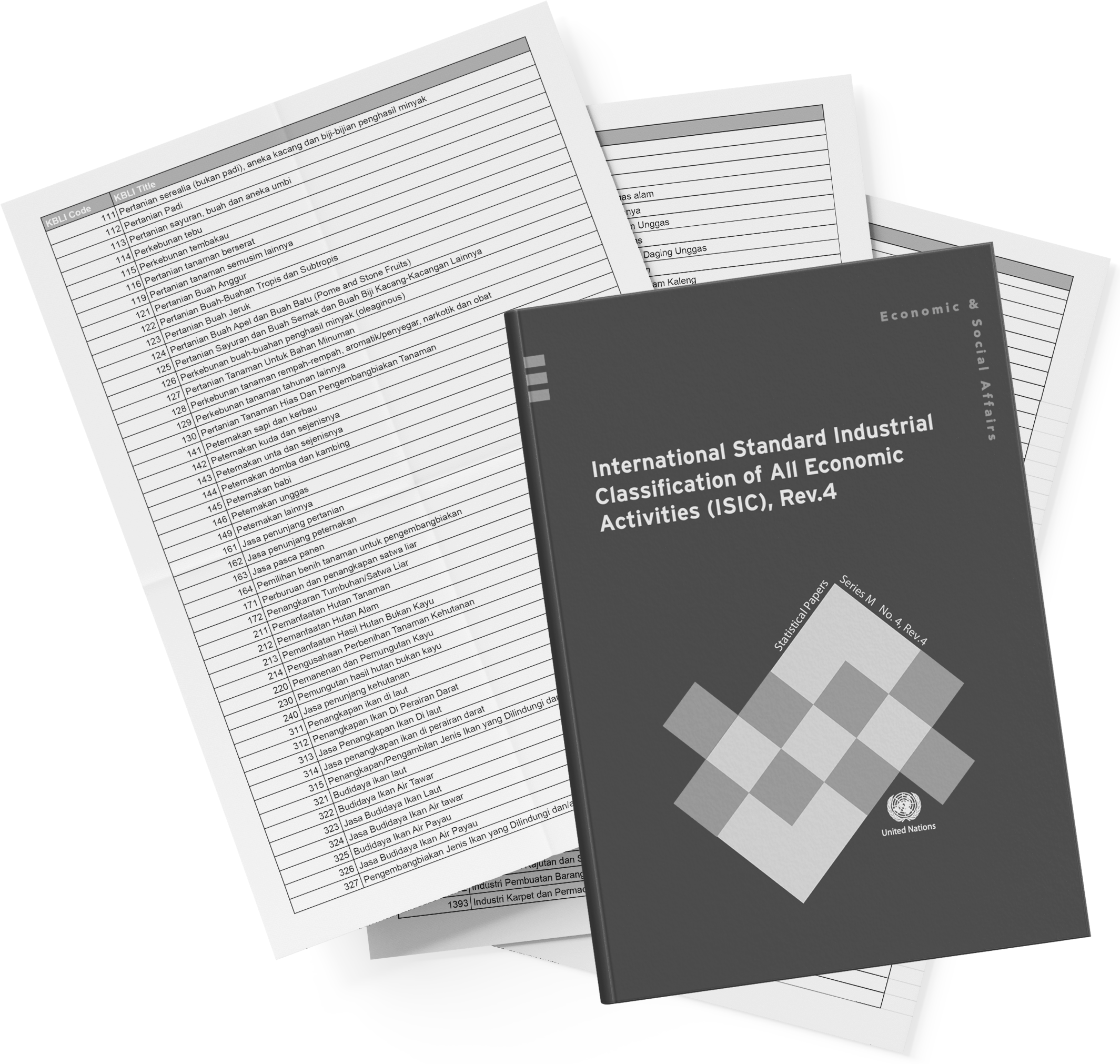
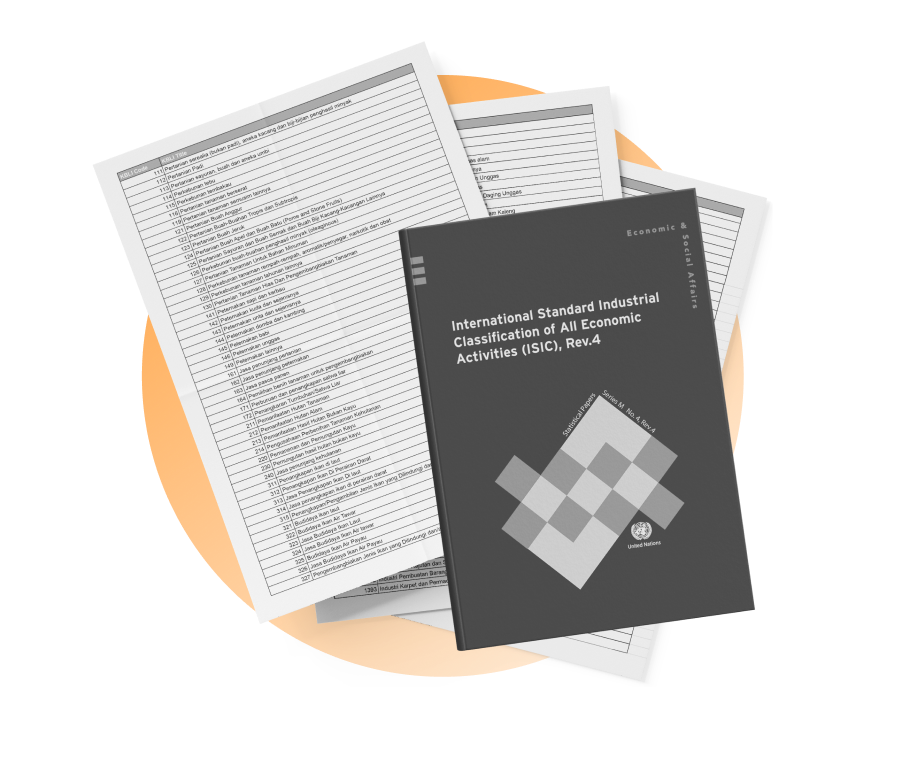
ISIC Rev. 4: 2720 — Manufacture of batteries and accumulators.
NAICS comparable: 33591 — Battery Manufacturing.
Industry Terms
Battery vocabulary blends electrochemistry with Indonesian regulatory and EV-policy anchors.
SLI
Starting-lighting-ignition (12V lead-acid automotive).
Heritage volume product.
MF
Maintenance-free (sealed lead-acid).
Modern SLI variant.
VRLA / AGM / Gel
Valve-regulated lead-acid / absorbent glass mat / gel — sealed lead-acid.
Stationary, marine, premium SLI.
NCM / NCA / LFP
Nickel-cobalt-manganese / nickel-cobalt-aluminium / lithium-iron-phosphate.
EV battery chemistries.
MHP / MSP
Mixed hydroxide / mixed sulphide precipitate — HPAL nickel intermediate.
Cathode precursor feed.
BMS
Battery management system — electronic controller.
Essential for lithium-ion safety.
TKDN
Tingkat Komponen Dalam Negeri — local content level.
Reserves market for domestic content.
IBC
Indonesia Battery Corporation — BUMN consortium.
MIND ID + Pertamina + PLN + Antam.
HLI Green Power
Hyundai-LG JV cell plant at Karawang.
First NCM cell plant in ASEAN.
HPAL
High-pressure acid leach.
Battery-grade nickel intermediate.
Battery swapping (BSS)
Battery swap station for electric motorcycle.
Distribution channel for two-wheeler EV.
LiPo / Li-ion polymer
Lithium polymer (consumer electronics).
Phone, laptop chemistry.
Business Types & Models — how value is created
Five archetypes share KBLI 2720 — SLI lead-acid automotive, stationary lead-acid, primary cells, EV lithium-ion cell + pack, and battery management/recycling adjacency.
SLI lead-acid automotive batteries (PT GS Battery, PT Incoe Astra Otoparts, PT Yuasa Battery Indonesia, PT Trimitra Baterai Prakasa, PT Selco Battery)
Dominant segment by volume. PT GS Battery — joint venture between PT Astra International Tbk and GS Yuasa Corporation Japan, marketing under GS Astra brand — is the leading SLI manufacturer with plants in Karawang and Sunter (Jakarta). PT Incoe Astra Otoparts (subsidiary of PT Astra Otoparts Tbk — IDX: AUTO) produces under Aspira and Incoe brands. PT Yuasa Battery Indonesia (separate GS Yuasa-related entity), PT Trimitra Baterai Prakasa (Motobatt brand), PT Selco Battery, PT Century Batteries Indonesia (Century brand) compete.
Replacement market (AAM aftermarket) volume runs in tens of millions of units annually; OEM share substantial to Toyota, Daihatsu, Honda, Mitsubishi, Hyundai, Suzuki assembly plants.
OEM line sales to automakers
Aftermarket (AAM) replacement via distributor
Motorcycle SLI batteries (massive volume)
Export to ASEAN, Middle East, Africa
TKDN-compliance value for OEM
Karawang/Cikarang/Sunter cluster
Lead recycling integration (closed-loop)
GS Astra/Aspira/Incoe brand network
Stationary lead-acid (telecom, UPS, solar-home)
PT Century Batteries Indonesia, PT GS Battery (stationary line), PT Yuasa (stationary line) and others produce VRLA, AGM, gel batteries for telecom (Telkomsel, Indosat, XL, Tri towers), UPS (data centre, hospital, retail), solar-home (PLN PV-mini-grid programmes, off-grid solar).
Demand stable from telecom and UPS; solar-home demand growing with rural electrification.
Telecom tower battery contracts (Telkomsel, Indosat, XL, Tri, Mitratel, Tower Bersama, Protelindo)
UPS contracts (data centre, hospital, retail)
Solar-home system batteries (rural electrification)
Marine/UPS specialty
Larger-format batteries
Telecom long-term contracts
Premium positioning vs SLI
Primary cells / dry cells (PT International Chemical Industry — ABC, Panasonic Manufacturing Indonesia, Eveready/Energizer)
Primary (non-rechargeable) consumer batteries. PT International Chemical Industry (ICI) produces ABC zinc-carbon and ALKALINE alkaline; Panasonic Manufacturing Indonesia produces Panasonic-brand AA/AAA/9V/D; Eveready Indonesia (now linked to Energizer Holdings) produces Eveready brand.
Modern trade (Alfamart, Indomaret, hypermarkets) + traditional trade reach. Mature category facing decline as devices shift to rechargeable lithium-ion.
Modern + traditional trade sales (consumer)
Government/military procurement
Industrial primary cells (specialty)
Export ASEAN
Mature FMCG category
Brand-anchored
Volume + thin margins
EV lithium-ion cell and pack manufacturing (HLI Green Power Hyundai-LG, Indonesia Battery Corporation IBC consortium and partners)
Emergent layer. HLI Green Power — joint venture between Hyundai Motor Group (Korea) and LG Energy Solution (Korea) — operates Indonesia's first NCM lithium-ion cell plant in Karawang (operating from 2024), supplying Hyundai Motor Manufacturing Indonesia (HMMI) for Ioniq 5 and follow-on BEVs. Phase-2 expansion under discussion.
Indonesia Battery Corporation (IBC) — BUMN consortium of PT MIND ID, Pertamina, PLN and PT Aneka Tambang (Antam) — anchors downstream integration via JVs and equity participation. Key projects: CATL-Brunp-Antam (cathode + cell + recycling), Foxconn-Vale (Foxconn EV-battery + Indonesian nickel), Stellantis cell partnership, BTR New Energy precursor, Eve Energy cell.
Pack assembly and BMS done at HMMI Karawang and partner sites.
Cell sales to automotive OEM (HMMI, Wuling, BYD partners, Stellantis)
Pack assembly margins
BMS hardware (often imported)
Future export to ASEAN OEMs
Government industrial-policy support (BKPM tax holiday)
Multi-billion-USD capex per plant
Korean technology transfer (LG, Hyundai)
BUMN equity participation via IBC
Tied to HPAL nickel intermediate upstream
Battery management systems and recycling (BMS hardware integrators, battery recyclers)
BMS hardware integration (often imported chip + local PCB assembly) by automotive electronics partners and direct cell-maker affiliates. Battery recycling emergent under KLHK B3 framework; CATL-Brunp-Antam recycling capability planned at IMIP; Lygend/Harita recycling pilot.
Battery swapping (BSS) for electric motorcycles emerging via Volta, SWAP Indonesia, Smoot, with Gogoro-partner network discussions.
BMS hardware integration fees
Battery recycling fees and recovered metal value
Battery swap subscription (Volta, SWAP)
Second-life battery for ESS
Niche but growing
Capex-heavy recycling
Swap station infrastructure capex
Performance & Outlook
Heritage SLI stable, EV lithium-ion capacity wave from 2024 base
Heritage SLI lead-acid produces tens of millions of units annually for OEM + AAM aftermarket; primary cells produce hundreds of millions of units annually. EV cell production ramped from 2024 with HLI Green Power Karawang start-up; IBC consortium adds capacity progressively over 2025–2028.
Forward variables: EV adoption (Hyundai Ioniq 5/Kona, Wuling Air EV, BYD, Chery, Neta, electric motorcycles, e-bus), TKDN policy enforcement, HPAL nickel intermediate output timing, BUMN-led IBC project decisions, battery-recycling regulation.
Key performance indicators
GS Battery + Incoe Astra Otoparts SLI capacity
Heritage leadership
Tens of millions of units annually
Stationary lead-acid market size
Telecom/UPS demand
Multi-trillion-rupiah category
Primary cell production
Consumer scale
Hundreds of millions of cells annually
HLI Green Power cell capacity (phase 1)
First EV cell plant
~10 GWh initial phase
IBC consortium cell capacity (planned)
BUMN-led EV
Tens of GWh planned
EV vehicle production (BEV)
Cell demand driver
Growing from low base; Hyundai Ioniq 5/Kona, Wuling Air EV, BYD
HPAL nickel intermediate output
Cell upstream
Multi-100k-tonne nickel content
Battery recycling capacity
Circular economy
Pilot scale; growing
Outlook: what to watch
HLI Green Power phase-2 expansion timing
IBC consortium project FIDs (CATL-Brunp-Antam, Foxconn-Vale, Stellantis, BTR, Eve)
EV adoption (Hyundai, Wuling, BYD, Chery, Neta + motorcycles)
TKDN policy enforcement for EV
Battery-recycling regulation and capacity
Battery-grade nickel sulphate supply from HPAL
Growth Drivers
Six drivers — half demand, half structural — set medium-term direction.
Heritage vehicle population SLI demand
~150 million registered vehicles need SLI replacement every 2–4 years; stable demand for GS Battery, Incoe Astra Otoparts, Yuasa, Trimitra.
Vehicle population growth
Replacement cycle
AAM aftermarket
EV adoption (BEV cars, motorcycles, e-bus)
Hyundai Ioniq 5/Kona, Wuling Air EV, BYD Atto/Dolphin, Chery, Neta plus electric motorcycle (Volta, Smoot, Selis, Gesits, Polytron Fox-R) and e-bus pilots drive cell demand.
BEV registrations
Hyundai HMMI production
Electric motorcycle adoption
PLN ESS pilots
TKDN EV policy
TKDN 40%+ requirement for EV cars by phased dates; tax-benefit gating for EV with local-battery content.
TKDN policy updates
Kemenperin certification
EV tax-benefit announcements
Indonesia Battery Corporation (IBC) downstream integration
BUMN consortium drives cathode-cell-pack JVs with CATL-Brunp-Antam, Foxconn-Vale, Stellantis, BTR, Eve.
IBC project FIDs
BUMN equity participation
JV announcements
HPAL nickel intermediate supply
Battery-grade nickel sulphate from HPAL (IMIP QMB, Obi Lygend HPL, Pomalaa Sumitomo) anchors upstream integration.
HPAL output
Battery-grade nickel sulphate capacity
Cathode plant capacity
Telecom and UPS demand for stationary lead-acid
Telecom tower (Mitratel, Tower Bersama, Protelindo, STP, Centratama), UPS, data centre demand sustains stationary lead-acid.
Tower deployment
Data centre build-out
ESS pilot projects
Industry Trends & Development
Industry Development
From GS Astra heritage to HLI Green Power EV cell start-up
Indonesia's batteries evolved from 1970s–80s GS Astra and ICI ABC dry-cell founding, through Yuasa/Trimitra/Selco SLI expansion, to 2014 nickel ore ban, 2020 reinstated ban, IBC formation 2021, HLI Green Power JV announcement 2020 and commissioning 2024.
Next five years pivot on EV adoption, IBC project completions, HPAL nickel-sulphate-to-cathode integration, battery recycling regulation.
GS Astra and ABC dry-cell founding
PT GS Battery (Astra + GS Yuasa JV) founded 1976; PT International Chemical Industry (ABC) founded earlier; Yuasa Battery Indonesia and Trimitra later
Astra Otoparts (AUTO) scales
Astra Otoparts (IDX: AUTO) lists 2009; Incoe Aspira brands consolidate; export markets expand
Nickel ore export ban (first)
Indonesia bans nickel ore export; downstream investment begins
Nickel ore ban reinstated; HLI Green Power JV
Permanent ban; Hyundai Motor Group + LG Energy Solution announce $1.1B+ Karawang JV; IBC (Indonesia Battery Corporation) consortium formed
HLI Green Power construction
Plant construction at Karawang; CATL-Brunp-Antam framework agreement; Foxconn-Vale partnership announcement
HLI Green Power operations
First NCM lithium-ion cells produced in Indonesia (ASEAN-first); supply to HMMI for Ioniq 5
IBC projects mature; HPAL ramp
IBC consortium JV FIDs advance; QMB cathode precursor at IMIP scales; Lygend HPL Obi expansion; Foxconn-Vale and Stellantis decisions
Key Trends Shaping the Industry (Business Model Canvas view)
Five BMC dimensions are most active: Key Activities, Key Resources, Customer Segments, Key Partners and Revenue Streams.
[Key Activities] EV lithium-ion cell manufacture emerges from low base
HLI Green Power Karawang 2024 commissioning is start; IBC consortium projects extend capacity progressively. Cell + pack + BMS integration with HMMI Ioniq 5 anchors initial demand.
HLI Green Power
IBC and BUMN partners
Hyundai Motor Manufacturing Indonesia
Other EV-OEMs
[Key Resources] Battery-grade nickel intermediate from HPAL
HPAL nickel sulphate (Lygend HPL Obi, QMB IMIP, Sumitomo Pomalaa, Huayou-led, Halmahera) feeds cathode precursor. Indonesia nickel resource is structural advantage.
HPAL operators
Cathode precursor JVs
EV cell makers
[Customer Segments] EV-OEMs and BUMN partners anchor demand
Hyundai Motor Manufacturing Indonesia, Wuling, BYD, Chery, Neta, and BUMN-related IBC partners (Pertamina, PLN, Antam) anchor EV-cell demand.
Cell makers
EV-OEMs
BUMN consortium
[Key Partners] BUMN consortium (IBC) and Korean/Chinese JVs
IBC consortium (MIND ID, Pertamina, PLN, Antam) coordinates BUMN equity in JVs with LG-Hyundai (HLI Green Power), CATL-Brunp, Foxconn-Vale, Stellantis, BTR, Eve.
IBC
Foreign cell-makers
Government policy
[Revenue Streams] Heritage SLI replacement vs EV cell ramp diversification
Heritage SLI (GS Battery, Incoe Astra Otoparts) maintains stable replacement revenue; EV cell (HLI Green Power) and pack assembly add new revenue stream tied to EV adoption.
Astra group (GS Battery + Incoe Astra Otoparts)
EV-cell entrants
Customers
[Channels] Battery swapping and recycling channels emerge
Battery swapping (Volta, SWAP Indonesia, Smoot, Gogoro partnerships) for electric motorcycles; battery recycling under KLHK B3 framework with CATL-Brunp-Antam pilot.
Swap-station operators
Recyclers
EV-2W riders
KLHK
Impact and Sustainability
Impact runs through downstream value capture, EV transition, lead recycling and HPAL tailings.
Downstream value capture from nickel resource
EV-battery industrial policy moves value capture downstream from nickel ore exports to cell, cathode and pack manufacture.
Foreign technology JV vs domestic capability
Speed of build vs technology dependence
EV transition and emissions
Domestic EV-cell supply enables EV adoption and tailpipe emissions reduction; but grid mix (PLN coal-heavy) reduces well-to-wheel benefit.
EV tailpipe gain vs grid coal
Local content vs global emissions accounting
Lead recycling and closed-loop SLI
Lead-acid SLI industry has long-established closed-loop recycling; GS Battery, Incoe Astra Otoparts operate lead smelting and reuse.
Recycling cost vs disposal risk
Informal lead recovery hazards
HPAL tailings and battery recycling
HPAL nickel intermediate creates tailings; deep-sea tailings disposal (DSTD) considered. EV-battery recycling regulation under KLHK B3 framework develops.
DSTD vs dry stack costs
Recycling infrastructure capex vs landfill risk
Industry Segmentation
Product Segmentation
Products differ in chemistry, application and lifecycle.
Segmentation by product
SLI lead-acid (car, motorcycle)
12V starter battery
GS Battery (GS Astra), Incoe Astra Otoparts (Aspira, Incoe), Yuasa, Trimitra (Motobatt), Century, Selco
300k–2M+ per unit
MF / VRLA lead-acid
Maintenance-free / valve-regulated lead-acid
GS Battery, Incoe Astra Otoparts, Yuasa
Premium tier vs standard SLI
Stationary lead-acid (AGM, gel, OPzS)
Telecom, UPS, solar-home
Century Batteries Indonesia, GS Battery stationary, Yuasa stationary
Multi-million per unit for large
Primary zinc-carbon (AA/AAA/D/9V)
Standard dry cell
ABC (PT International Chemical Industry), Panasonic, Eveready
2k–8k per cell
Primary alkaline (AA/AAA/D/9V)
Alkaline dry cell
ABC ALKALINE, Panasonic Alkaline, Eveready, Energizer-affiliated
5k–20k per cell
Button cells (LR, CR)
Coin/button cells for watches/electronics
Panasonic, imported
5k–30k per cell
Lithium-ion NCM (EV-grade)
Nickel-cobalt-manganese for EV
HLI Green Power (Hyundai-LG)
Cell-level pricing; pack billion-IDR scale
Lithium-ion LFP (EV-grade)
Lithium-iron-phosphate
Planned via IBC partners (CATL-Brunp, BTR, Eve)
Cell-level pricing
Lithium-ion consumer (LiPo)
Phone, laptop, power bank
Mostly imported; some local pack assembly
Pack-level pricing
EV battery pack (BEV)
Assembled pack with BMS
HLI Green Power + HMMI; planned IBC partners
Tens to hundreds of millions IDR per pack
E-motorcycle pack (swap or fixed)
LFP or NCM pack for two-wheeler
Volta, Smoot, Selis, Gesits, Polytron Fox-R
Millions IDR per pack
Heritage SLI dominates volume; EV lithium-ion grows from low base.
Primary zinc-carbon declining; alkaline growing.
EV pack assembly tied to BEV vehicle assembly.
Chemistry/Format Segmentation
Chemistry and format define capex, supply chain and downstream use.
Segmentation by chemistry/format
Flooded lead-acid SLI
Conventional lead-acid
GS Battery, Incoe Astra Otoparts, Yuasa
Mature
Maintenance-free lead-acid (MF)
Sealed lead-acid
GS Battery, Incoe Astra Otoparts, Yuasa
Mature
VRLA / AGM / Gel (stationary)
Telecom/UPS/solar-home
Century, GS Battery, Yuasa
Mature
Zinc-carbon (primary)
Standard dry cell
ABC, Panasonic, Eveready
Mature, declining
Alkaline (primary)
Higher-energy dry cell
ABC ALKALINE, Panasonic, Eveready/Energizer
Mature, growing
Lithium-ion NCM (EV-grade)
Nickel-cobalt-manganese cells
HLI Green Power Karawang
Operating from 2024
Lithium-ion LFP (EV-grade)
Lithium-iron-phosphate cells
Planned via IBC consortium partners (CATL-Brunp, BTR, Eve)
Under FID
Lithium-ion consumer
LiPo for phone/laptop
Mostly imported
Limited local
Battery pack assembly
Pack + BMS for EV
HLI Green Power, HMMI, swap-station partners
Operating + ramping
Battery recycling
Lead recycling + lithium recovery
GS Battery + Incoe Astra Otoparts (lead); CATL-Brunp-Antam (lithium pilot)
Mature for lead; pilot for lithium
Customer Profiles
Customers vary by vehicle/device, channel and procurement type.
Customer profiles and what they value
Automotive OEM (ICE)
Toyota, Daihatsu, Honda, Mitsubishi, Hyundai, Suzuki ICE assembly
SLI/MF for new vehicles
Quality, OEM cert, TKDN
Direct from GS Battery, Incoe Astra Otoparts, Yuasa
Motorcycle OEM
Honda Astra Motor, Yamaha, Suzuki, Kawasaki
Motorcycle SLI
Quality, volume, OEM cert
Direct
Aftermarket (AAM) consumer
Car/motorcycle owner replacement
Replacement SLI
Brand recognition, availability, price
Astra Otoparts AAM, auto-parts retail
EV-OEM (BEV)
Hyundai HMMI Ioniq 5, Wuling Air EV, BYD, Chery, Neta
EV battery pack (NCM/LFP)
Cell quality, BMS, TKDN, supply
Direct from HLI Green Power, IBC partners, imports
Electric motorcycle OEM/operator
Volta, Smoot, Selis, Gesits, Polytron, Gojek e-fleet, Grab e-fleet
E-motorcycle pack (swap or fixed)
Cost, swap-compatibility, BMS
Direct + swap-station integration
Telecom tower operator
Telkomsel/Indosat/XL/Tri, Mitratel, Tower Bersama, Protelindo
Stationary lead-acid
VRLA cycle life, capacity, reliability
Direct from Century, GS Battery
UPS / data centre
Data centre, hospital, retail UPS
VRLA UPS battery
Cycle life, reliability, certification
Direct + specialised distributor
Solar-home / off-grid
PLN PV-mini-grid, off-grid solar customer
Solar-home battery (lead-acid or LFP)
Cycle life, depth-of-discharge
Solar installer + distributor
Consumer (dry cells)
Household consumer of AA/AAA/9V/D
Disposable battery for clock/remote/torch
Brand, availability, price
Modern + traditional trade
Industrial / military
Defence, government, industrial specialty
Specialty primary or secondary
Specification, certification
Direct procurement
Ecosystem & Key Players
Ecosystem Mapping
Ecosystem layers from upstream metals through cells to vehicles/devices and regulators.
Core (battery manufacturers)
Entities providing KBLI 2720 services.
SLI heritage: PT GS Battery (Astra + GS Yuasa JV; GS Astra brand), PT Incoe Astra Otoparts (Astra Otoparts AUTO subsidiary; Aspira/Incoe brands), PT Yuasa Battery Indonesia, PT Trimitra Baterai Prakasa (Motobatt), PT Century Batteries Indonesia, PT Selco Battery
Primary cells: PT International Chemical Industry (ABC dry cells, ALKALINE), Panasonic Manufacturing Indonesia, Eveready Indonesia (Energizer-affiliated)
EV lithium-ion: HLI Green Power (Hyundai Motor Group + LG Energy Solution JV)
BUMN consortium: Indonesia Battery Corporation (IBC — MIND ID + Pertamina + PLN + Antam)
Emerging EV partners: CATL-Brunp-Antam (cathode/cell/recycling), Foxconn-Vale, Stellantis, BTR New Energy, Eve Energy
Electric motorcycle pack: Volta, Smoot, Selis, Gesits, Polytron Fox-R, Wim Cycle
Extension (upstream, downstream, swap, recycling)
Upstream and downstream partners.
Upstream HPAL: Lygend HPL (Harita, Obi), QMB (Tsingshan-CATL-CMOC at IMIP), Huayou-led HPAL, Sumitomo-led Pomalaa, Halmahera Persada Lygend
Nickel mining: Antam (MIND ID), Vale Indonesia (INCO), Harita, private miners
Cobalt: by-product of HPAL
Lead: domestic + imports for SLI; Indonesian lead recyclers
Downstream: Hyundai Motor Manufacturing Indonesia (HMMI), Wuling Motors Indonesia, BYD Indonesia, Astra International OEM line, motorcycle OEMs
Swap-station: Volta, SWAP Indonesia, Smoot, Gogoro-partner networks
Telecom/UPS: Telkomsel, Indosat, XL, Tri, Mitratel, Tower Bersama, Protelindo, data centres
Enabling (regulators, finance, standards)
Regulators, finance, standards.
Regulators: Kementerian Perindustrian (Kemenperin — TKDN, SNI), Kementerian Investasi (BKPM), Kementerian ESDM, Kementerian Lingkungan Hidup dan Kehutanan (KLHK — B3 hazardous waste, AMDAL), Kementerian BUMN (MIND ID, Pertamina, PLN oversight)
Standards: SNI for SLI mandatory, IEC for lithium-ion, ISO 9001/14001, IATF 16949 for automotive, UN38.3 for lithium transport
Finance: BNI, Mandiri, BCA, syndication; HLI Green Power finance via Korean policy banks; IBC via BUMN
Industry: Indonesian Battery Industry Association
How value flows across the ecosystem
Upstream nickel/cobalt ore → HPAL nickel intermediate (MHP/MSP) → cathode precursor → cathode active material → cell manufacturer (HLI Green Power, IBC partners) → pack assembly (HMMI + partners) → EV-OEM. Heritage lead-acid: lead (mined + recycled) → smelting → plate → cell → SLI battery → OEM/AAM customer.
Strategic chokepoints sit at HPAL battery-grade nickel supply, BMS hardware (often imported), and EV-OEM commitment to lock domestic cell offtake.
Leading Players
Named players below illustrate structural positions; figures are directional industry estimates.
Leading firms by position
PT GS Battery (Astra + GS Yuasa JV; GS Astra brand)
Leading SLI manufacturer
Karawang/Sunter plants; OEM + AAM dominance; GS Yuasa Japan technology
Lead price volatility; EV transition headwind for lead-acid mid-term
PT Incoe Astra Otoparts (Astra Otoparts subsidiary)
Aspira/Incoe SLI
Astra Otoparts (IDX: AUTO) network; OEM + AAM
Same lead-acid headwinds; EV transition
PT Yuasa Battery Indonesia
SLI competitor
GS Yuasa Japan technology
Scale below GS Battery
PT Trimitra Baterai Prakasa (Motobatt)
Motorcycle SLI specialist
Motorcycle-focused brand
Smaller scale
PT Century Batteries Indonesia
Stationary lead-acid leader
Telecom/UPS focus; Century brand
Stationary niche scale
PT Selco Battery
SLI
Established
Smaller scale
PT International Chemical Industry (ABC, ALKALINE)
Primary cell leader
ABC dry-cell brand; mass distribution
Mature category; alkaline shift
Panasonic Manufacturing Indonesia (primary cells)
Primary cell major
Panasonic brand; Cikarang plant
Mature category
Eveready Indonesia (Energizer-affiliated)
Primary cell legacy
Eveready brand
Smaller share than ABC/Panasonic
HLI Green Power (Hyundai Motor Group + LG Energy Solution JV)
First EV cell plant in ASEAN
NCM technology; LG Energy Solution heritage; HMMI integration; Karawang
Multi-billion-USD capex; ramp execution
Indonesia Battery Corporation (IBC; MIND ID + Pertamina + PLN + Antam)
BUMN consortium anchor
BUMN equity participation; multi-JV strategy
Coordination across BUMN; project execution
CATL-Brunp-Antam JV (cathode/cell/recycling)
Chinese cell + recycling
CATL technology; integrated with Antam nickel
Capex; technology transfer
Foxconn-Vale JV (Foxconn EV-battery)
EV-battery + nickel partnership
Foxconn EV ecosystem; Vale nickel
Project FID timing
BTR New Energy, Eve Energy (Chinese partners)
Cathode/cell partners
Chinese technology
Capex; market timing
Volta, Smoot, Selis, Gesits, Polytron Fox-R
E-motorcycle pack and BSS
Local e-motorcycle ecosystem
EV-2W adoption pace
Competitive dynamics
Heritage SLI: GS Battery dominant; Incoe Astra Otoparts and Yuasa compete; Trimitra/Century/Selco fill niches.
Primary cells: ABC, Panasonic, Eveready/Energizer compete in mature consumer FMCG.
EV cells: HLI Green Power first-mover; IBC consortium and Chinese partners (CATL-Brunp, BTR, Eve) build progressively; Foxconn-Vale potential entrant.
Pack assembly tied to EV-OEM commitments (HMMI Hyundai Ioniq 5; Wuling Air EV; BYD).
Operating Conditions
Concentration, Competition, Cost Structure & Economics
Market is concentrated in heritage SLI (GS Battery + Incoe Astra Otoparts dominant); primary cells multi-player; EV cell currently single-anchor (HLI Green Power) with IBC and partners adding.
Active materials (40–65% — varies by chemistry)
Lead (SLI), zinc-manganese (dry cell), nickel sulphate/cobalt sulphate/manganese/lithium carbonate (lithium-ion), cathode active material
LME lead price
Battery-grade nickel/cobalt prices
Lithium carbonate price
USD/IDR
Largest cost; commodity-cycle-driven; lithium-ion most volatile
Other materials (5–15%)
Plates, separators, electrolyte, casing, BMS hardware
Specialty supplier prices
BMS chip availability
Separator, electrolyte often imported for lithium
Energy (5–15%)
Electricity, gas, heat
PLN industrial tariff
Captive power options
Higher at cell-making vs pack assembly
Capex amortisation (10–20%)
Cell line, pack assembly, formation, testing
Asset life
Multi-billion-USD lithium-ion plant
Heavy at lithium-ion; lighter at SLI
Labour (4–8%)
Operators, engineers, QA
Provincial UMR
Engineering skills
Lower share at automated lithium-ion lines
Logistics and packaging (3–6%)
Battery transport (UN38.3 dangerous goods for lithium), customer delivery
UN38.3 compliance
Pack format
Lithium DG transport adds cost
Porter's Five Forces — KBLI 2720
Threat of new entrants
Medium for SLI (mature), Very Low for lithium-ion cell (multi-billion-USD capex + technology)
SLI accessible to existing players; lithium-ion needs Korean/Chinese/Japanese partner
Bargaining power of customers
Medium-High
Automotive OEMs negotiate volume contracts; EV-OEMs concentrate demand
Bargaining power of suppliers
Medium-High
Battery-grade nickel/cobalt/lithium chemical supply oligopoly; BMS chips imported
Threat of substitutes
Medium for SLI (lithium-ion replacement in vehicles), Low for EV (only lithium-ion at scale)
Solid-state, sodium-ion emerge longer term
Rivalry among existing competitors
Medium for SLI (Astra/Yuasa intra-group), Low-Medium for EV (HLI first-mover)
Heritage SLI mature; EV cell early-stage
GS Battery and Incoe Astra Otoparts SLI margins stable (mid-teens EBITDA typical)
Stationary lead-acid telecom/UPS margins solid with long-term contracts
Primary cells thin margins on consumer FMCG model
HLI Green Power lithium-ion margins ramp with utilisation; multi-billion-USD capex amortisation drag in early years
EV-cell unit economics improve with HPAL nickel intermediate cost advantage
Regulation & Compliance Considerations
Regulation runs through Kemenperin (TKDN, SNI), KLHK (B3 hazardous waste), Kementerian Investasi (BKPM tax holiday), and Kemenhub (transport).
Regulatory anchors and operational impact
TKDN (Tingkat Komponen Dalam Negeri)
Local content for EV tax-benefit
EV-cell domestic content reserves market
TKDN scoring; supplier development
SNI Wajib (mandatory) for SLI
Mandatory SNI for SLI lead-acid
Required for sale
SNI certification
KLHK B3 / Limbah B3
Lead and lithium-ion as B3 hazardous waste
Mandatory waste handling and reporting
Closed-loop recycling for lead; lithium recycling regulation developing
KLHK AMDAL
Environmental impact assessment
Required for new plants and expansions
AMDAL submission
BKPM investment incentives
Tax holiday for EV battery and HPAL
Capex economics
BKPM submissions
IATF 16949 (automotive)
Automotive quality system
Required by OEM
IATF 16949 certification
UN38.3 lithium transport
Dangerous goods transport for lithium
Logistics and export
UN38.3 testing and compliance
EV tax-benefit policy
PPnBM and other EV incentives
EV adoption pull
Coordinate with Kemenperin and Kemenkeu
BPJS / Standard tax
Standard labour and tax
Cost base
Standard processes
TKDN policy strengthens; EV-cell domestic content increasingly mandatory
Lithium-ion battery recycling regulation forthcoming
HPAL tailings/effluent under increasing scrutiny
IBC consortium project execution risk
BMS hardware import dependence and chip-supply
FAQs & Sources
FAQs
Who leads Indonesia's battery industry?
Heritage SLI: PT GS Battery (Astra International + GS Yuasa Japan JV; GS Astra brand) leads; PT Incoe Astra Otoparts (Astra Otoparts subsidiary; Aspira/Incoe brands), PT Yuasa Battery Indonesia, PT Trimitra Baterai Prakasa (Motobatt), PT Century Batteries Indonesia compete. Primary cells: PT International Chemical Industry (ABC), Panasonic, Eveready/Energizer-affiliated.
What is HLI Green Power?
Joint venture between Hyundai Motor Group and LG Energy Solution of Korea, operating Indonesia's first NCM lithium-ion EV battery cell plant at Karawang (operating from 2024). Supplies Hyundai Motor Manufacturing Indonesia (HMMI) for Ioniq 5 BEV; phase-2 expansion under discussion.
What is Indonesia Battery Corporation (IBC)?
BUMN consortium formed 2021 — equity by MIND ID (mining holding), Pertamina, PLN and Antam (PT Aneka Tambang). Anchors BUMN downstream integration with multiple JVs: CATL-Brunp-Antam (cathode/cell/recycling), Foxconn-Vale, Stellantis, BTR New Energy precursor, Eve Energy cell.
How does the nickel resource advantage flow into batteries?
Battery-grade nickel sulphate, cobalt sulphate and precursor MHP/MSP come from HPAL plants (Lygend HPL Obi, QMB IMIP, Huayou-led, Sumitomo Pomalaa, Halmahera Persada Lygend). These feed cathode precursor (NCM, NCA) → cathode → cell → pack → EV. Indonesia is positioning across the full nickel-to-EV value chain.
How concentrated is the industry?
Concentrated in heritage SLI (GS Battery + Incoe Astra Otoparts dominant); multi-player primary cells (ABC, Panasonic, Eveready); EV cell currently single-anchor (HLI Green Power) with IBC consortium and Chinese partners adding.
What about battery recycling?
Lead-acid SLI has long-established closed-loop recycling at GS Battery and Incoe Astra Otoparts. Lithium-ion recycling is emergent under KLHK B3 framework — CATL-Brunp-Antam recycling capability planned; Lygend/Harita pilot. Indonesia regulation for EV-battery recycling is developing.
Sources & Notes
This report synthesises publicly available regulatory and industry information, listed-company disclosures (Astra Otoparts AUTO) and Ravenry analyst commentary. Where exact figures are unavailable, directional and approximate ranges are used.
Kementerian Perindustrian (Kemenperin)
TKDN, SNI, industrial policy
Kementerian Investasi / BKPM
Investment incentives
Kementerian ESDM
Nickel ore policy
Kementerian Lingkungan Hidup dan Kehutanan (KLHK)
B3 hazardous waste, AMDAL
Kementerian BUMN
MIND ID, Pertamina, PLN, Antam oversight
PT Astra Otoparts Tbk (IDX: AUTO)
Heritage auto-parts benchmark including Incoe Astra Otoparts
Indonesia Battery Corporation announcements
BUMN consortium projects
Hyundai Motor Group, LG Energy Solution disclosures
HLI Green Power milestones
Indonesian Battery Industry Association
Industry voice
This report is for informational purposes and does not constitute legal, regulatory or investment advice. Figures are directional unless otherwise indicated.