Bakery Product Manufacturing Industry in Indonesia
KBLI 1071 — Sari Roti dominance, boutique chains, biscuit FMCG and the wheat-import economics
Indonesia's bakery product manufacturing industry covers fresh and packaged bread, sweet buns, cakes, pastries, biscuits, cookies, donuts and croissants. The market is structurally barbelled: mass-bakery led by PT Nippon Indosari Corpindo (Sari Roti, IDX: ROTI, JV of Indofood Sukses Makmur + Shikishima Baking + Pasco Shikishima with plants nationwide) handling industrial sliced bread and packaged buns; biscuit FMCG dominated by PT Mayora Indah (IDX: MYOR, Roma, Beng-Beng, Choki Choki), Garuda Food (Garuda kacang plus expanded biscuit/snack range), Nissin Biscuit Indonesia, Khong Guan Indonesia, Monde Nissin, Kraft Heinz; boutique and mall bakery chains (BreadTalk Indonesia, Holland Bakery, Bread Life, Levant Boulangerie, Tous Les Jours, Paris Baguette via local franchise); plus thousands of traditional toko roti and SME bakeries. Wheat import dependence (Indonesia produces no wheat domestically) is the binding cost variable.
Sari Roti (PT Nippon Indosari Corpindo, IDX: ROTI) dominates mass packaged bread with ~5,000+ wet-market and modern-trade outlets reached
Mayora (IDX: MYOR) and Garuda Food lead biscuit/snack FMCG; revenue at trillion-rupiah scale
BreadTalk, Holland Bakery, Bread Life, Levant Boulangerie, Tous Les Jours anchor boutique/mall chains
Wheat import dependence — Indonesia imports ~10+ million tonnes of wheat annually via Bogasari (Indofood), Eastern Pearl Flour Mills (FKS Group), Sriboga Raturaya
Modern trade (Alfamart, Indomaret, Hypermart, hypermarkets) is primary mass-bakery channel
Traditional toko roti and SME bakeries remain numerous in tier-2/3 cities
Executive Summary
Indonesia's bakery product manufacturing industry (KBLI 1071) is structurally barbelled. Mass-bakery is led by PT Nippon Indosari Corpindo (Sari Roti, IDX: ROTI) — a JV anchored by Indofood Sukses Makmur, Shikishima Baking and Pasco Shikishima with multi-plant operations in Cikarang, Pasuruan, Semarang, Medan, Palembang, Makassar serving modern trade nationwide. Biscuit FMCG is a billion-dollar-scale category dominated by PT Mayora Indah (IDX: MYOR, brands Roma, Beng-Beng, Choki Choki, Astor, Slai O'lai, Better, Royal Choice, Danisa), Garuda Food (Garuda kacang plus biscuits/snacks), Nissin Biscuit Indonesia, Khong Guan Indonesia, Monde Nissin (Skyflakes, Cream-O), Kraft Heinz, Yupi.
Boutique and mall bakery chains include BreadTalk Indonesia (Singaporean origin), Holland Bakery (heritage Indonesian chain), Bread Life, Levant Boulangerie (premium), Tous Les Jours (Korean franchise), Paris Baguette (Korean franchise via local partner), Roti'O, J.CO Donuts (Johnny Andrean group), Dunkin' (Indomaret-affiliated franchise), Krispy Kreme. Traditional toko roti and SME bakeries number in the thousands across tier-2/3 cities. Combined market value is estimated at multi-trillions of rupiah annually; modern trade (Alfamart, Indomaret hypermarkets and supermarkets) is the primary mass-bakery channel; mall and high-street are boutique-chain channels; bakery cafes increasingly converge with F&B.
Sari Roti (Nippon Indosari Corpindo, IDX: ROTI) dominates mass packaged bread
Mayora (IDX: MYOR) and Garuda Food lead biscuit/snack FMCG at trillion-rupiah scale
BreadTalk, Holland Bakery, Bread Life, Tous Les Jours, Paris Baguette, J.CO anchor boutique/mall chains
Indonesia imports ~10+ million tonnes of wheat annually; Bogasari (Indofood), Eastern Pearl Flour Mills, Sriboga Raturaya are anchor flour millers
Modern trade (Alfamart, Indomaret, Hypermart, Lotte Mart, Hero) is primary mass-bakery channel
Regulation by BPOM (food safety, ML/MD labelling), MUI (halal certification mandatory), Kemendag (consumer protection)
Why this industry matters in Indonesia
Mass-bakery is a staple FMCG category with daily-purchase frequency and ~280-million-strong consumer base.
Wheat import dependence (~10+ million tonnes annually) ties the category to FX, global wheat prices and palm oil (for shortening/spread inputs).
Boutique bakery cafes are an anchor mall and high-street category supporting commercial property revenue.
Halal certification (mandatory under UU Jaminan Produk Halal 33/2014 phased implementation) is universal.
So what: Practical implications
Operators: Hedge wheat and FX exposure; build cold-chain and modern-trade distribution depth; differentiate via health/premium variants
Buyers (modern trade, HORECA): Lock multi-year supply with mass-bakery majors; develop private-label
Investors: Boutique premium chains, healthier bakery, plant-based and gluten-free niche, traditional toko roti consolidation
Policymakers: Halal certification rollout, BPOM food safety enforcement, wheat-import policy continuity
Indonesia at a Glance
Republic of Indonesia: large bakery market with wheat-import dependence
Indonesia's bakery and biscuit category serves ~280 million consumers with daily-purchase frequency on mass-bakery items (sliced bread, sweet buns, donuts, biscuits). Combined retail market value is estimated in the multi-trillions of rupiah annually.
Wheat import dependence is structural — Indonesia produces no wheat domestically. ~10+ million tonnes of wheat imported annually, milled by Bogasari (Indofood group), Eastern Pearl Flour Mills (FKS Group), Sriboga Raturaya, Cerestar (Pan-Asia Industri Eka Pertiwi), Wilmar Indonesia Industri.
Mass-bakery plants concentrate in Cikarang (Sari Roti main), Pasuruan, Semarang, Medan, Palembang, Makassar. Biscuit manufacturing concentrates in Tangerang/Cikarang (Mayora), Gresik (Garuda Food), Sukabumi (Nissin Biscuit), Pasuruan (Khong Guan).
Boutique and mall chains concentrate in Jakarta (BreadTalk in Pacific Place, Plaza Indonesia; Holland Bakery nationwide), Surabaya, Bandung, Yogyakarta, Bali.
Hyperlocalisation is key to navigate Indonesia's market
Religious-calendar drives seasonal product cycles: Ramadan/Lebaran peaks for sweet buns, kue kering (dry cakes) and biscuit gift assortments; Christmas/Imlek/Galungan drive festive cake demand; gift hampers (parcel) are anchor festive products.
Regional taste preferences: Java mainstream sliced bread and biscuits; Bali and Christian-majority areas more diverse baking traditions; Medan and Manado Chinese-Indonesian baking heritage; eastern Indonesia limited mass-bakery penetration.
Opportunities extend beyond cities
Beyond Jakarta and tier-1 cities, traditional toko roti and SME bakeries dominate tier-2/3 city baking; mass-bakery extends via Alfamart/Indomaret modern-trade distribution. Biscuit FMCG reaches nationwide through traditional trade (warung) and modern trade.
Health-bakery (whole-grain, sourdough, gluten-free, plant-based) and premium boutique (Levant Boulangerie, Maison Tatsuya, La Crème) are growth segments in Jakarta and Bali.
Health-bakery (whole-grain, sourdough, gluten-free, plant-based) growth in tier-1 cities
Premium boutique bakery cafes (Levant, Maison Tatsuya, Roti'O premium) expansion
Korean/Japanese bakery brands (Tous Les Jours, Paris Baguette, J.CO) franchise expansion
Modern trade penetration in tier-2/3 cities (Alfamart, Indomaret expansion)
Halal certification mandatory rollout driving formalisation
Ramadan/Lebaran festive gift assortment cycle
Distribution realities: modern trade, traditional, foodservice, e-commerce
Channels: modern trade (Alfamart ~20,000+ stores, Indomaret ~22,000+ stores, Hypermart, Lotte Mart, Hero, Foodhall, Ranch Market), traditional trade (warung, traditional markets), foodservice/HORECA (hotels, restaurants, cafes), e-commerce (Tokopedia, Shopee, GrabMart, GoMart), boutique chain own-stores (BreadTalk, Holland, BreadLife, Tous Les Jours, Paris Baguette, J.CO).
Cold-chain and short shelf-life (mass-bakery typically 3–7 days) drive distribution complexity; biscuits have much longer shelf-life enabling wider distribution.
Build distribution depth in Alfamart/Indomaret (20,000+ stores each)
Manage cold-chain and shelf-life for fresh-bakery products
Develop biscuit category for nationwide ambient distribution
Maintain mandatory halal certification (BPJPH/MUI)
Industry Overview
What is the bakery product manufacturing industry?
Definition & Boundaries
KBLI 1071 covers Industri Produk Roti dan Kue — manufacture of bread, sweet buns, cakes, pastries, biscuits, cookies, donuts, croissants and bakery products. Includes industrial mass-bakery, in-store bakery (mall, supermarket), boutique bakery chains, traditional toko roti.
Included: industrial bread manufacturers (Sari Roti, Sari Selera), biscuit manufacturers (Mayora, Garuda Food, Nissin, Khong Guan), boutique and chain bakeries (BreadTalk, Holland, Bread Life, Tous Les Jours, Paris Baguette, J.CO, Krispy Kreme, Dunkin), traditional toko roti, donut chains.
Excluded: flour milling (KBLI 1061 — Bogasari, Eastern Pearl Flour Mills, Sriboga), sugar manufacturing (KBLI 1072), confectionery sugar candy (KBLI 1073), wheat farming (Indonesia produces no wheat), F&B service restaurants (KBLI 5610), supermarket bakery operations (KBLI 4711 if integrated as supermarket category).
Indonesia in Focus
Industry is barbelled — mass-bakery and biscuit FMCG at scale; boutique mall chains in tier-1 cities; thousands of SME traditional toko roti.
Wheat import dependence (~10+ million tonnes annually) ties cost to global wheat (Black Sea, Australia, US) and FX (USD/IDR).
Classification
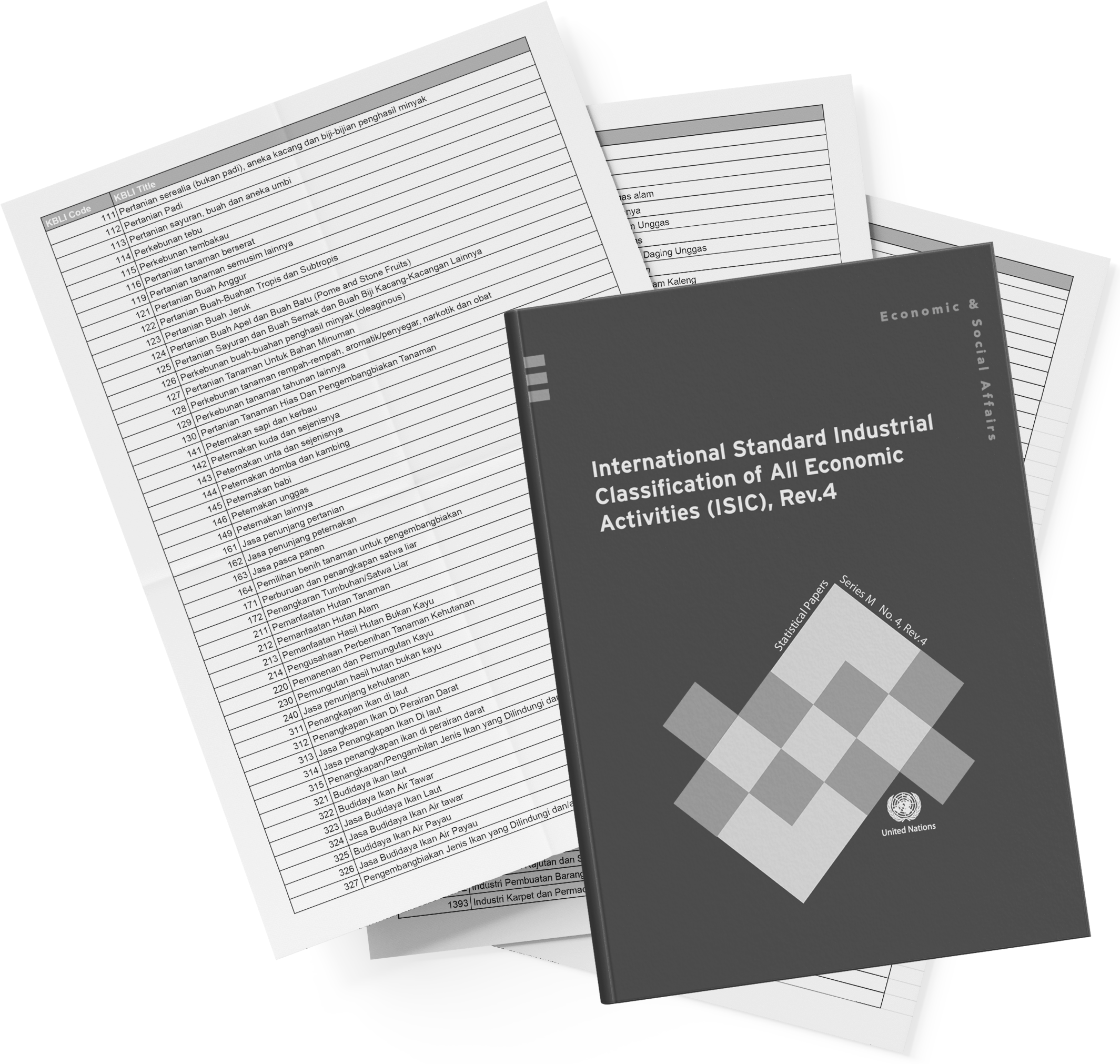
KBLI: 1071 — Industri Produk Roti dan Kue.
ISIC Rev. 4: 1071 — Manufacture of bakery products.
NAICS comparable: 3118 — Bakeries and Tortilla Manufacturing (31181 bread/bakery; 31182 cookie/cracker/pasta).
Industry Terms
Bakery vocabulary blends consumer-food terms with Indonesian regulatory and supply-chain language.
Sari Roti
Brand of PT Nippon Indosari Corpindo (IDX: ROTI); Indonesia's largest mass-bakery.
Dominant mass-bakery brand and channel-distribution model.
Mayora (IDX: MYOR)
PT Mayora Indah — major biscuit/snack FMCG.
Largest biscuit manufacturer (Roma, Beng-Beng, Choki Choki, Astor, etc.).
Garuda Food
Indonesian FMCG group with biscuit/snack range.
Major biscuit/snack player.
Bogasari (Indofood)
PT Indofood Sukses Makmur flour-milling division.
Largest flour miller in Indonesia.
BPJPH halal certification
Mandatory halal certification under UU 33/2014.
Universal requirement for bakery products.
BPOM MD/ML
BPOM registration for domestic (MD) and imported (ML) packaged foods.
Mandatory for packaged bakery.
Modern trade (MT)
Organised retail — Alfamart, Indomaret, hypermarkets, supermarkets.
Primary mass-bakery channel.
Traditional trade (TT)
Warung, traditional markets, kiosks.
Material for biscuit but limited for fresh-bakery.
HORECA
Hotels, restaurants, cafes — foodservice channel.
Premium and boutique-bakery channel.
Toko roti
Traditional bakery shop.
Thousands across tier-2/3 cities; SME category.
Business Types & Models — how value is created
Six archetypes share KBLI 1071 — industrial mass-bakery, biscuit FMCG, boutique mall chains, donut chains, traditional toko roti, and bakery-cafe convergence.
Industrial mass-bakery (PT Nippon Indosari Corpindo — Sari Roti)
PT Nippon Indosari Corpindo (IDX: ROTI) is Indonesia's dominant mass-bakery. JV anchored by Indofood Sukses Makmur, Shikishima Baking and Pasco Shikishima (Japan); founded 1995. Multi-plant operations: Cikarang (largest), Pasuruan, Semarang, Medan, Palembang, Makassar.
Brand Sari Roti covers sliced bread (white, whole grain, sandwich), sweet buns (various fillings), and packaged cakes (Cup Cake). Distribution via van/truck cold-chain to modern trade nationwide; reaches ~5,000+ outlets via direct distribution.
Mass-bakery sales through modern trade (Alfamart, Indomaret, hypermarkets)
Foodservice contracts (HORECA, schools, institutions)
Festive/seasonal product lines (Ramadan, Lebaran)
Co-branded innovations (private-label for chains)
Multi-plant production for shelf-life and freshness
Direct distribution (own van/truck fleet)
Wheat input via Bogasari (Indofood group affiliation)
Biscuit FMCG manufacturers (Mayora, Garuda Food, Nissin Biscuit Indonesia, Khong Guan Indonesia, Monde Nissin, Kraft Heinz)
Biscuit/snack manufacturers at FMCG scale. PT Mayora Indah (IDX: MYOR) — Roma, Beng-Beng, Choki Choki, Astor, Slai O'lai, Better, Royal Choice, Danisa, Le Minerale — is Indonesia's largest by volume and revenue. Garuda Food (Garuda kacang plus biscuits/snacks) is second tier; Nissin Biscuit Indonesia, Khong Guan Indonesia (Mom's Recipe), Monde Nissin (Skyflakes, Cream-O), Kraft Heinz (Ritz, Oreo via Mondelez Indonesia), Yupi gummies.
Long shelf-life enables nationwide distribution via modern and traditional trade.
Biscuit and snack sales through modern + traditional trade
Export markets (ASEAN, Middle East, Africa for Mayora)
Premium and festive variants (gift hampers)
Brand portfolio cross-sell
Scale economics in production (Tangerang, Gresik, Pasuruan, Sukabumi)
Multi-brand portfolio
Export-meaningful for Mayora (~30%+ revenue from international)
Boutique and mall bakery chains (BreadTalk, Holland Bakery, Bread Life, Levant Boulangerie, Tous Les Jours, Paris Baguette, Roti'O, Maison Tatsuya, La Crème)
Chain bakeries with mall-anchored or high-street presence. BreadTalk Indonesia (Singaporean origin via Boga Group/Hardrock Cafe affiliate); Holland Bakery (heritage Indonesian chain, multi-decade); Bread Life; Levant Boulangerie (premium); Tous Les Jours (Korean franchise via SEA Foods); Paris Baguette (Korean franchise); Roti'O (premium); Maison Tatsuya (Japanese-style premium); La Crème.
Compete on freshness, in-store baking, premium positioning.
Retail bakery sales at higher per-unit prices
In-store cafe/F&B revenue
Festive gift hampers and seasonal lines
Multi-mall location strategy
Mall-anchored locations
Daily fresh production at central kitchen or in-store
Premium-customer focus
Donut chains (J.CO Donuts, Dunkin' Donuts, Krispy Kreme, Indomilk Krimer)
Donut-specialty chains with mall-anchored or standalone presence. J.CO Donuts (Johnny Andrean group, founded 2005, ~200+ outlets); Dunkin' Donuts (franchise via Indomaret-affiliated Dunkin' Brands Indonesia, ~200+ outlets); Krispy Kreme Indonesia (franchise).
Compete on donut variety, coffee adjacency, mall traffic.
Donut retail at premium per-unit prices
Coffee and beverage adjacent revenue
Festive gift packages
Loyalty programmes (J.CO Card)
Central kitchen + retail outlet model
Mall-anchored distribution
J.CO Indonesia largest by outlet count
Traditional toko roti and SME bakeries
Thousands of small traditional bakeries (toko roti) across tier-2/3 cities — family-owned, generations-old, anchor neighbourhood bakeries.
Some examples: Toko Roti Bakery Lapis Surabaya (Spikoe Resep Kuno), Mister Bread, Sari Rasa, regional brands.
Local bakery retail with neighbourhood loyalty
Festive Lebaran/Christmas cake sales
Custom-cake commissions (weddings, birthdays)
Wholesale to local cafes and HORECA
Family-owned; multi-generational
Limited capex; low cold-chain
Cash-economy heavy
Bakery-cafe convergence (Roti'O, Maison Tatsuya, Brodo Bakery, Hokkaido Baked Cheese Tart)
Newer wave of bakery + cafe formats combining premium bakery with coffee, F&B and Instagram-friendly environments. Hokkaido Baked Cheese Tart (Asian franchise), Brodo, La Crème, Roti'O premium tiers.
Often Korean/Japanese-inspired aesthetics.
Premium bakery + coffee/F&B revenue
Instagram-driven destination footfall
Festive seasonal lines
Mall and high-street locations
Asian-inspired design and product
Mid-tier premium pricing
Performance & Outlook
Sari Roti anchor, Mayora biscuit FMCG scale, boutique premium growth
Total industry retail value estimated at multi-trillions of rupiah annually across mass-bakery, biscuit FMCG, boutique chains, donut chains and traditional toko roti. Sari Roti revenue (IDX: ROTI consolidated) and Mayora revenue (IDX: MYOR consolidated) provide capital-markets benchmarks for the listed segments.
Forward variables: wheat import cost (global wheat + FX), modern-trade penetration in tier-2/3 cities, halal certification compliance, premium/health bakery growth, foreign franchise expansion (Tous Les Jours, Paris Baguette).
Mass-bakery anchor cycles with modern-trade footfall; biscuit FMCG with consumer disposable income and festive cycles; boutique with mall traffic and tourism.
Key performance indicators
Sari Roti (IDX: ROTI) annual revenue
Mass-bakery benchmark
Multi-trillion-rupiah scale
Mayora (IDX: MYOR) annual revenue
Biscuit FMCG benchmark
Multi-trillion-rupiah scale (group total higher with adjacent categories)
Annual wheat imports
Input cost base
~10+ million tonnes
Modern trade outlets reached by Sari Roti
Mass-bakery distribution
~5,000+ outlets (Alfamart, Indomaret, hypermarkets)
BreadTalk Indonesia outlet count
Boutique chain benchmark
Multi-hundred outlets
Holland Bakery outlet count
Heritage chain benchmark
Multi-hundred outlets
J.CO Donuts outlets
Donut chain benchmark
~200+ outlets
Halal certification status
Compliance requirement
Mandatory under UU 33/2014 (phased)
Outlook: what to watch
Sari Roti (ROTI) capacity expansion and SKU innovation
Mayora (MYOR) export growth and biscuit portfolio expansion
Boutique chain expansion (BreadTalk, Holland, Tous Les Jours, Paris Baguette)
Health-bakery and premium tier growth
Wheat import cost (Black Sea, Australian, US wheat + FX)
Halal certification mandatory rollout (UU 33/2014 phased implementation)
Growth Drivers
Six drivers — half demand, half structural — set medium-term direction.
Modern-trade penetration
Alfamart (~20,000+) and Indomaret (~22,000+) expansion plus hypermarket reach drives mass-bakery distribution; Sari Roti and biscuit majors benefit.
Alfamart/Indomaret outlet growth
Hypermart/Hero footprint
Modern trade share of FMCG
Middle-class disposable income
Rising middle-class disposable income lifts mass-bakery and biscuit FMCG demand plus premium/boutique trade-up.
BPS household consumption
Middle-class population growth
FMCG category growth
Foreign franchise expansion
Korean/Japanese franchise expansion (Tous Les Jours, Paris Baguette, J.CO continued growth, Hokkaido Baked Cheese Tart, Maison Tatsuya) drives premium tier.
Franchise outlet openings
Mall tenant mix
Korean/Japanese F&B brand entries
Festive cycle (Ramadan, Lebaran, Christmas, Imlek)
Festive seasons drive sweet bun, kue kering, biscuit gift assortment peaks; Ramadan/Lebaran absorb 20–35% of annual gift-related sales.
Festive gift hamper market
Ramadan/Lebaran promotion intensity
Modern trade festive aisle
Health and premium bakery
Whole-grain, sourdough, gluten-free, plant-based grow in tier-1 cities; premium boutique (Levant, Maison Tatsuya, La Crème) expansion.
Health-bakery SKU launches
Premium boutique outlet openings
Modern-trade health-bakery aisle
Halal certification rollout
UU 33/2014 halal certification mandatory rollout drives formalisation across SME toko roti and biscuit manufacturers.
BPJPH halal certification volumes
MUI halal audit pipeline
SME bakery compliance
Industry Trends & Development
Industry Development
From traditional toko roti to industrial Sari Roti to premium boutique era
Bakery evolved from colonial-era Holland Bakery and traditional toko roti through 1990s industrialisation (Sari Roti founded 1995), 2000s mall-bakery (BreadTalk arrival), 2010s donut chains (J.CO, Dunkin'), to 2020s health/premium and foreign franchise growth.
Next five years pivot on modern-trade penetration, halal certification, health/premium tier, foreign franchise.
Heritage toko roti and Holland Bakery
Traditional toko roti and family-owned bakeries; Holland Bakery founded 1978 in Jakarta
Sari Roti and industrialisation
PT Nippon Indosari Corpindo founded 1995 (Sari Roti); Mayora consolidates biscuit FMCG; modern-trade Alfamart/Indomaret emerge
Mall-bakery era
BreadTalk Indonesia opens (2003); Bread Life; J.CO founded 2005; Sari Roti scales nationwide
Donut chains and franchise growth
Tous Les Jours, Paris Baguette enter; J.CO expands beyond Indonesia; Sari Roti IDX listing 2010 (ROTI); halal certification framework develops
Health/premium and franchise wave
Health-bakery (whole-grain, sourdough, gluten-free) grows; premium boutique expands; foreign franchise wave continues; halal certification mandatory rollout under UU 33/2014
Key Trends Shaping the Industry (Business Model Canvas view)
Five BMC dimensions are most active: Channels, Customer Segments, Cost Structure, Key Resources and Revenue Streams.
[Channels] Modern-trade depth drives mass-bakery distribution
Alfamart and Indomaret ~20,000+ outlets each give Sari Roti and biscuit majors deep reach. Direct-distribution cold-chain to modern trade is core mass-bakery moat.
Sari Roti
Biscuit majors
Alfamart/Indomaret
[Customer Segments] Health-conscious and premium consumers grow
Whole-grain, sourdough, gluten-free, plant-based bakery growing among tier-1 city consumers; premium boutique chains gain mall share.
Premium boutiques
Sari Roti health line
Biscuit healthier SKUs
[Cost Structure] Wheat import and FX exposure
Indonesia imports ~10+ million tonnes wheat annually; global wheat price (Black Sea, Australia, US) and USD/IDR flow into bakery COGS.
All bakers
Flour millers (Bogasari, Eastern Pearl Flour Mills, Sriboga, Cerestar, Wilmar)
Consumers
[Key Resources] Cold-chain and freshness logistics
Mass-bakery 3–7-day shelf-life requires cold-chain distribution; Sari Roti's direct-distribution van/truck fleet is a structural moat.
Mass-bakery
Distribution logistics
Modern trade
[Revenue Streams] Festive and gift-hamper revenue concentrates
Ramadan/Lebaran, Christmas, Imlek festive cycles drive 20–35% of annual biscuit gift assortment sales; concentrated revenue peaks.
Biscuit majors
Mass-bakery
Boutique chains
[Key Partners] Halal certification mandatory rollout
UU 33/2014 halal certification under BPJPH and MUI mandatory rollout drives formalisation; SME toko roti needs certification.
All bakers
BPJPH/MUI
SME bakeries
Impact and Sustainability
Impact runs through food security/wheat import dependence, employment, food safety and packaging waste.
Wheat import dependence
Indonesia produces no wheat; ~10+ million tonnes imported annually; major FX and food-security exposure.
Import efficiency vs food sovereignty
Wheat price exposure vs alternative grain
Employment in mass-bakery and SME
Mass-bakery and biscuit FMCG employ tens of thousands; SME toko roti employ many more across tier-2/3 cities.
Automation vs labour
Formal vs informal employment
Food safety and BPOM enforcement
BPOM MD/ML registration and inspection of packaged bakery; SME compliance variable.
Compliance cost for SME vs consumer safety
Enforcement intensity vs informality tolerance
Packaging waste and plastic
Bakery packaging (plastic film, foil) contributes to municipal waste; producer extended responsibility nascent.
Packaging cost vs sustainability
Convenience vs waste reduction
Industry Segmentation
Product Segmentation
Products differ in shelf-life, channel and ticket size.
Segmentation by product
Sliced bread (white, whole-grain, sandwich)
Industrial sliced bread
Sari Roti, Sari Selera, Hetbap
10k–30k per loaf
Sweet buns (cream, chocolate, melon, mocca)
Packaged sweet buns
Sari Roti, BreadLife, BreadTalk
5k–20k per piece
Donuts (glazed, filled, premium)
Donut chains and bakery
J.CO, Dunkin', Krispy Kreme, Roti'O
8k–25k per piece
Biscuits and cookies (mainstream)
Mass biscuit FMCG
Roma (Mayora), Beng-Beng (Mayora), Khong Guan, Mom's Recipe
5k–25k per pack
Premium biscuits (Danisa, imported)
Premium biscuit tier
Danisa (Mayora), imported Khong Guan, Walkers
30k–150k per tin
Cakes (birthday, festive, bolu)
Cake category
Holland Bakery, BreadTalk, Maison Tatsuya, traditional
50k–500k+ per cake
Pastries (croissants, danish, tarts)
Premium pastry
Levant Boulangerie, La Crème, BreadTalk premium
15k–50k per piece
Kue kering (Lebaran)
Festive Lebaran dry cakes
Mayora, Garuda Food, traditional
30k–200k per jar (festive)
Mass-bakery and biscuit dominate volume; premium pastry and cakes carry higher margin.
Kue kering / festive lines concentrate in Ramadan/Lebaran cycle.
Channel/Format Segmentation
Channel and format define economics and customer reach.
Segmentation by channel/format
Industrial mass-bakery (direct distribution)
Industrial production for modern trade
Sari Roti (Nippon Indosari Corpindo, IDX: ROTI)
Direct van/truck cold-chain to modern trade
Biscuit FMCG
Long shelf-life packaged biscuit/snack
Mayora (IDX: MYOR), Garuda Food, Nissin, Khong Guan, Monde Nissin, Mondelez (Oreo)
Modern trade + traditional trade + export
Boutique mall chains
Premium bakery chain in malls
BreadTalk, Holland Bakery, BreadLife, Levant Boulangerie, Tous Les Jours, Paris Baguette
Mall-anchored + high-street
Donut chains
Donut-specialty chains
J.CO Donuts, Dunkin', Krispy Kreme
Mall + standalone
Traditional toko roti
Family-owned local bakery
Thousands across tier-2/3 cities
Local neighbourhood + foodservice wholesale
Bakery-cafe convergence
Premium bakery + coffee/F&B
Roti'O, Maison Tatsuya, Hokkaido Baked Cheese Tart, La Crème
Mall + high-street
Supermarket in-store bakery
Bakery inside hypermarket/supermarket
Hypermart, Lotte Mart, Foodhall, Ranch Market in-house
Supermarket-integrated
E-commerce / direct order
Online/app delivery for cakes and bakery
Tokopedia, Shopee, GrabMart, GoMart, brand apps
Online + delivery
Customer Profiles
Customers vary by purchase occasion, income tier and channel preference.
Customer profiles and what they value
Daily breakfast/lunch consumer
Middle-class household
Daily mass-bakery purchase
Affordable, halal-certified, accessible
Alfamart/Indomaret/hypermart
Festive gift purchaser
Lebaran/Christmas/Imlek gift buyer
Gift hampers and assortments
Premium variety, festive packaging
Modern trade + boutique chain
Premium consumer
Tier-1 city upper-middle/HNW
Premium boutique bakery experience
Quality, premium packaging, fresh-baked
BreadTalk premium, Levant, Maison Tatsuya
Health-conscious consumer
Tier-1 health-aware consumer
Whole-grain, sourdough, gluten-free, plant-based
Healthier ingredients, certification, taste
Boutique + premium modern trade
School-age children / family
Family with kids
School snacks, biscuits, sweet treats
Affordable, kid-friendly, fun packaging
Modern + traditional trade
HORECA buyer
Hotel, restaurant, cafe purchasing
Bakery and pastry supply for foodservice
Quality, consistency, volume discount
Direct B2B from manufacturer
Foodservice / institutional
Schools, offices, institutional catering
Bulk bakery supply
Cost-effective, halal, scale
Direct B2B
Tourist (Bali, Yogyakarta)
International or domestic tourist
Premium bakery + cafe experience
Premium quality, Instagram-friendly
Boutique mall + tourism area
Ecosystem & Key Players
Ecosystem Mapping
Ecosystem layers from flour milling through bakery to retail and HORECA, with regulators and ingredient suppliers.
Core (bakery manufacturers and chains)
Entities providing KBLI 1071 manufacturing and retail.
Mass-bakery: PT Nippon Indosari Corpindo (Sari Roti, IDX: ROTI; Indofood + Shikishima + Pasco JV)
Biscuit FMCG: PT Mayora Indah (IDX: MYOR), Garuda Food, Nissin Biscuit Indonesia, Khong Guan Indonesia, Monde Nissin, Mondelez Indonesia (Oreo), Kraft Heinz
Boutique mall chains: BreadTalk Indonesia (Boga Group), Holland Bakery, Bread Life, Levant Boulangerie, Tous Les Jours (SEA Foods), Paris Baguette franchise, Roti'O, Maison Tatsuya, La Crème
Donut chains: J.CO Donuts (Johnny Andrean group), Dunkin' Donuts, Krispy Kreme
Traditional toko roti and SME bakeries (thousands)
Hokkaido Baked Cheese Tart, Brodo Bakery
Extension (flour millers, ingredient suppliers, retail, foodservice)
Upstream and downstream partners.
Flour millers: Bogasari (Indofood), Eastern Pearl Flour Mills (FKS Group), Sriboga Raturaya, Cerestar (Pan-Asia Industri Eka Pertiwi), Wilmar Indonesia Industri
Ingredient suppliers: yeast (Mauri, Lesaffre), shortening (Salim/Indofood Sukses Makmur, Wilmar Cooking Oil, Sinar Mas), dairy (Frisian Flag, Anchor, Indolakto), sugar (Pupuk Indonesia Pangan, ISI), cocoa (Cargill, Barry Callebaut, Mars)
Retail: Alfamart, Indomaret, Hypermart, Lotte Mart, Hero, Foodhall, Ranch Market, Grand Lucky, Farmers Market
Foodservice: hotel groups (Aston, Archipelago, Tauzia, Marriott, Accor), restaurant chains, cafes
E-commerce: Tokopedia, Shopee, GrabMart, GoMart
Enabling (regulators, standards, certifications)
Regulators, standards, certifications.
Regulators: BPOM (food safety, MD/ML), BPJPH (halal certification), MUI (halal audit), Kemendag (consumer protection), Kemenperin (industrial policy)
Standards: SNI Roti dan Kue, BPOM MD/ML, MUI halal, HACCP, ISO 22000 food safety
Industry associations: APROBI (bread association), GAPMMI (food and beverage industry)
Wheat import: Bea Cukai, BKPM, Kemendag, BULOG (rice not wheat)
How value flows across the ecosystem
Wheat imports → flour milling (Bogasari, Eastern Pearl, Sriboga, Cerestar, Wilmar) → bakery manufacturing (Sari Roti, Mayora, boutique chains, toko roti) → modern trade + traditional trade + HORECA + e-commerce → consumer. Halal certification under BPJPH/MUI and BPOM food safety overlay throughout.
Strategic chokepoints sit at flour-mill capacity (~90% in Bogasari/Eastern Pearl/Sriboga), modern-trade distribution (Alfamart/Indomaret), cold-chain logistics, and halal certification compliance.
Leading Players
Named players below illustrate structural positions; figures are directional industry estimates.
Leading firms by position
PT Nippon Indosari Corpindo (Sari Roti, IDX: ROTI)
Mass-bakery leader
Multi-plant nationwide; Indofood + Shikishima + Pasco JV; modern-trade direct distribution; ~5,000+ outlets
Wheat import cost; modern-trade margin pressure
PT Mayora Indah (IDX: MYOR)
Largest biscuit FMCG
Roma, Beng-Beng, Choki Choki, Astor, Slai O'lai, Danisa; multi-brand portfolio; export-meaningful
Sugar/wheat input cost; portfolio breadth complexity
Garuda Food
Second-tier biscuit/snack
Garuda kacang plus biscuit/snack range
Smaller scale than Mayora
Nissin Biscuit Indonesia, Khong Guan Indonesia, Monde Nissin, Mondelez Indonesia, Kraft Heinz, Yupi
Biscuit FMCG players
Established brands; long-tenure
Margin pressure on commoditised tier
BreadTalk Indonesia (Boga Group)
Premier boutique mall chain
Pacific Place, Plaza Indonesia, mall-anchored; Boga Group F&B affiliation
Mall-traffic dependency
Holland Bakery
Heritage Indonesian chain
Multi-decade brand (since 1978); nationwide presence
Brand modernisation challenge
Bread Life
Mid-tier boutique chain
Mall presence
Smaller scale
Levant Boulangerie, La Crème, Maison Tatsuya
Premium boutique chains
Premium positioning; Jakarta/Bali anchor
Limited scale
Tous Les Jours, Paris Baguette (Korean franchise)
Korean franchise boutique
Korean baking heritage; franchise growth
Franchise economics
J.CO Donuts (Johnny Andrean group)
Largest donut chain
~200+ outlets; donut-coffee adjacency
Donut-category dependence
Dunkin' Donuts (franchise)
Donut chain
Franchise via Indomaret-affiliated
Smaller share than J.CO
Krispy Kreme Indonesia (franchise)
Donut chain
Premium positioning
Smaller scale
Competitive dynamics
Mass-bakery: Sari Roti dominant; competing mass-bakery brands smaller. Cold-chain direct-distribution is the moat.
Biscuit FMCG: Mayora leads on brand portfolio and scale; Garuda Food second; Nissin, Khong Guan, Monde Nissin, Mondelez (Oreo) compete in sub-segments.
Boutique chains: BreadTalk, Holland Bakery, Bread Life compete in mid-tier; Levant, Maison Tatsuya, La Crème in premium; Tous Les Jours, Paris Baguette as Korean franchise entries.
Donut: J.CO leads; Dunkin' and Krispy Kreme compete on franchise model and brand recognition.
Operating Conditions
Concentration, Competition, Cost Structure & Economics
Market is moderately concentrated in mass-bakery (Sari Roti dominant) and biscuit FMCG (Mayora + 5–6 majors); fragmented in boutique chains (BreadTalk, Holland, Bread Life, premium) and highly fragmented in traditional toko roti.
Wheat flour and ingredients (35–50%)
Wheat flour (Bogasari, Eastern Pearl, Sriboga), sugar, shortening/oil, dairy, cocoa, yeast
Global wheat price
USD/IDR
Sugar and palm-oil prices
Largest cost; FX-exposed for imports
Labour (15–25%)
Bakers, packaging staff, distribution, retail staff
UMR provincial
Skill of bakers
Higher at boutique chains
Packaging (5–10%)
Plastic films, foil, boxes, trays
Global plastic prices
Packaging innovation
Sustainability pressure
Distribution and cold-chain (5–10%)
Van/truck cold-chain (mass-bakery), modern-trade logistics
Distribution density
Fuel cost
Mass-bakery direct distribution moat
Capex amortisation (5–10%)
Plant equipment, ovens, mixers, packaging lines
Asset life
Capex cycle
Heavy at industrial mass-bakery
Marketing and brand (3–10%)
Brand advertising, mall-tenant marketing, festive promotion
Brand strategy
Festive cycle
Higher for boutique premium
Porter's Five Forces — KBLI 1071
Threat of new entrants
Medium-Low
Mass-bakery scale and cold-chain are barriers; boutique entry easier; SME toko roti easiest
Bargaining power of customers
Medium-High
Modern trade (Alfamart, Indomaret) negotiate tight terms; consumer price-comparison via online
Bargaining power of suppliers
Medium-High
Flour millers (Bogasari, Eastern Pearl, Sriboga) hold pricing power; wheat imports FX-exposed; halal certifier control
Threat of substitutes
Medium
Rice-based snacks, traditional jajanan pasar, foreign snacks substitute
Rivalry among existing competitors
Medium-High
Mass-bakery Sari Roti vs smaller; biscuit Mayora vs Garuda/Nissin/Khong Guan/Monde Nissin/Mondelez; boutique chain competition intense in malls
Sari Roti EBITDA margins typically 10–20% pre-COVID, sensitive to wheat/sugar input
Mayora EBITDA margins 12–18% with brand-portfolio support
Boutique chain margins variable — mall lease and labour intensive
Donut chain margins higher than mass-bakery at retail per-unit
Traditional toko roti operates on cash-economy with thin formal margins
Regulation & Compliance Considerations
Regulation runs through BPOM, BPJPH halal, BPJS labour, MoT consumer protection.
Regulatory anchors and operational impact
BPOM MD/ML registration
Mandatory food product registration
Required for packaged bakery sale
BPOM application; renewal
UU Jaminan Produk Halal 33/2014
Mandatory halal certification under BPJPH and MUI
Universal requirement
BPJPH halal application; MUI audit
HACCP and ISO 22000
Food safety management standards
Required by major retailers and foodservice
Implementation and audit
Kemendag consumer protection
Consumer rights, labelling, advertising claims
Affects packaging and marketing
Standard compliance
Wheat import regulation (Bea Cukai, Kemendag)
Import duty and quota
Affects wheat flour cost base
Standard customs and import process
BPJS Kesehatan and Ketenagakerjaan
Health insurance and labour
Mandatory for formal employment
BPJS enrolment
Tax (PPh 25, PPN 11%, UMKM Final 0.5%)
Income, VAT, MSME final tax
Pricing structure
Standard tax processes
Kemenperin SNI bakery standards
SNI Roti dan Kue
Compulsory for selected products
SNI certification and marking
Halal certification rollout under UU 33/2014 phased — SME bakery compliance pressure
Wheat price volatility (Black Sea conflict, weather events) affects cost base
Modern trade margin negotiation pressure
Mall lease cost inflation for boutique chains
FAQs & Sources
FAQs
Who leads Indonesia's mass-bakery and biscuit markets?
Mass-bakery: PT Nippon Indosari Corpindo (Sari Roti, IDX: ROTI), a JV anchored by Indofood Sukses Makmur, Shikishima Baking and Pasco Shikishima. Biscuit: PT Mayora Indah (IDX: MYOR) leads with Roma, Beng-Beng, Choki Choki, Astor, Danisa; Garuda Food, Nissin, Khong Guan, Monde Nissin, Mondelez (Oreo) follow.
Who leads boutique and mall bakery chains?
BreadTalk Indonesia (Boga Group), Holland Bakery (heritage chain since 1978), Bread Life, Levant Boulangerie, Tous Les Jours (Korean franchise via SEA Foods), Paris Baguette (Korean franchise), Roti'O, Maison Tatsuya, La Crème. Donut chains: J.CO Donuts (Johnny Andrean group, ~200+ outlets), Dunkin' Donuts, Krispy Kreme.
How dependent is the industry on wheat imports?
Heavily — Indonesia produces no wheat domestically. ~10+ million tonnes imported annually, milled by Bogasari (Indofood), Eastern Pearl Flour Mills (FKS Group), Sriboga Raturaya, Cerestar, Wilmar Indonesia Industri. Wheat price (Black Sea, Australia, US) and USD/IDR flow into bakery COGS.
How concentrated is the industry?
Moderately concentrated in mass-bakery (Sari Roti dominant) and biscuit FMCG (Mayora + 5–6 majors); fragmented in boutique chains; highly fragmented in traditional toko roti.
How does halal certification affect the industry?
UU Jaminan Produk Halal 33/2014 mandates halal certification under BPJPH and MUI — phased rollout drives universal compliance across mass-bakery, biscuit FMCG, boutique chains and SME toko roti.
Where is growth strongest?
Premium boutique chains (Levant, Maison Tatsuya, La Crème), Korean franchise (Tous Les Jours, Paris Baguette), health-bakery (whole-grain, sourdough, gluten-free), modern-trade penetration in tier-2/3 cities, festive cycle (Ramadan, Christmas).
Sources & Notes
This report synthesises publicly available regulatory and industry information, listed-company disclosures and Ravenry analyst commentary. Where exact figures are unavailable, directional and approximate ranges are used.
BPOM (Badan Pengawas Obat dan Makanan)
Food safety, MD/ML registration
BPJPH (Badan Penyelenggara Jaminan Produk Halal) and MUI
Halal certification under UU 33/2014
Kementerian Perdagangan (Kemendag)
Consumer protection and labelling
Kementerian Perindustrian (Kemenperin)
Industrial policy and SNI
PT Nippon Indosari Corpindo (IDX: ROTI)
Mass-bakery benchmark
PT Mayora Indah (IDX: MYOR)
Biscuit FMCG benchmark
GAPMMI (Gabungan Pengusaha Makanan dan Minuman Indonesia), APROBI
Industry voice
Badan Pusat Statistik (BPS) food and beverage statistics
Macro indicators
This report is for informational purposes and does not constitute legal, regulatory or investment advice. Figures are directional unless otherwise indicated.