Air Transport Support Activities Industry in Indonesia
KBLI 5223 — InJourney Airports consolidation, AirNav, the ground handling concession map and MRO economics
Indonesia's air transport support activities sit downstream of ~280 million annual passenger movements and ~600,000–700,000 tonnes of annual airfreight, structured around InJourney Airports (BUMN consolidation of Angkasa Pura I + Angkasa Pura II completed 2023–2024) for ~75 large commercial airports, Perum Lembaga Penyelenggara Pelayanan Navigasi Penerbangan Indonesia (AirNav Indonesia) for air traffic services, and a small set of ground handling concessions led by JAS Airport Services, Gapura Angkasa and Cardig International. MRO is anchored by GMF AeroAsia (Garuda group) and Batam Aero Technic (Lion Air group). Fuelling is dominated by Pertamina Patra Niaga via PT Pertamina Aviation Services.
InJourney Airports (formed from AP I + AP II merger) operates ~75 commercial airports
AirNav Indonesia provides single-provider air navigation services nationally
Ground handling concentrated in JAS Airport Services, Gapura Angkasa (Garuda subsidiary), Cardig International
MRO led by GMF AeroAsia (CGK and SUB) and Batam Aero Technic (Batam)
Aviation fuel (Avtur) supplied by Pertamina Patra Niaga via aviation services arm
Regulation under Kemenhub DGCA (airport ops, ATS, ground handling); ICAO SARPs apply
Executive Summary
Indonesia's air transport support activities industry (KBLI 5223) is the operational fabric beneath ~280 million annual passenger movements (recovering toward pre-pandemic ~330 million peak) and ~600,000–700,000 tonnes of annual airfreight. It comprises airport operations (BUMN-led under InJourney Airports), air navigation services (Perum AirNav Indonesia), ground handling (concession-based with three dominant providers), aircraft fuelling (Pertamina Patra Niaga's aviation arm), MRO (GMF AeroAsia and Batam Aero Technic), and a range of specialised services from de-icing (rare in Indonesia) to catering and into-plane services.
Structural concentration runs high. InJourney Airports — the BUMN consolidation of Angkasa Pura I and II completed across 2023–2024 — operates the majority of large commercial airports; AirNav Indonesia is a sole provider of ATS; Pertamina Patra Niaga has near-monopoly on aviation fuel supply. Ground handling is a tighter triangle of JAS Airport Services, Gapura Angkasa (Garuda subsidiary) and Cardig International, with airline self-handling at select airports. MRO is dominated by GMF AeroAsia and Batam Aero Technic, with regional MRO clusters at Batam (Bintan Aviation Investments, Lion's BAT) and selected facilities at SUB and DPS.
InJourney Airports operates ~75 commercial airports following the 2023–2024 AP I + AP II merger
AirNav Indonesia is the single national ATS provider — non-substitutable monopoly under Perum status
Ground handling concession sits with JAS, Gapura Angkasa, Cardig International; Lion has internalised through Lion Group entities
Pertamina Patra Niaga supplies the bulk of Avtur via PT Pertamina Aviation Services
GMF AeroAsia (Garuda group) and Batam Aero Technic (Lion Air group) are the two largest MRO operations
Regulation by Kemenhub DGCA aligns to ICAO SARPs; air-side safety oversight has intensified post-2018 incidents
Why this industry matters in Indonesia
Airports are strategic infrastructure for an archipelago — CGK, DPS, SUB, KNO and UPG carry the bulk of national connectivity.
Tourism recovery to Bali, Lombok, Yogyakarta, Labuan Bajo, Likupang depends on terminal capacity and airline-side coordination.
Airfreight (KBLI 5120 demand-side) depends on cargo terminal throughput managed by Angkasa Pura Kargo and ground handlers.
MRO retention in Indonesia (vs Singapore, KL or Bangkok) determines local value capture and aviation engineering employment.
So what: Practical implications
Operators: Long-term concession alignment with InJourney Airports is the critical commercial decision; service-level KPIs are increasingly performance-linked
Buyers (airlines): Negotiate handling and fuelling on multi-year terms; explore self-handling where scale permits
Investors: Cargo terminal modernisation, regional airport upgrades and MRO scaling are the durable verticals
Policymakers: Cross-subsidy logic between commercially viable and pioneer airports remains the policy lever
Indonesia at a Glance
Republic of Indonesia: archipelagic aviation infrastructure
Indonesia operates roughly 250+ airports across its 17,000+ islands, of which ~75 are commercial airports under InJourney Airports (the BUMN consolidation of AP I + AP II completed across 2023–2024). The remainder are managed by Kemenhub UPBU (Unit Penyelenggara Bandar Udara) for smaller and pioneer airports, and a handful of private airports (Kertajati Majalengka, Banyuwangi).
Passenger traffic recovered toward ~280 million annual movements (vs ~330 million pre-pandemic peak); airfreight throughput is ~600,000–700,000 tonnes annually, ~70% at CGK.
AirNav Indonesia (Perum LPPNPI) provides air traffic services across Indonesian-flight-information-region (Jakarta FIR and Makassar FIR), a critical safety-of-flight function.
MRO infrastructure clusters at CGK (GMF AeroAsia main facility), SUB (GMF SUB hangar), Batam (Batam Aero Technic for Lion Air group; Bintan Aviation Investments), and select facilities at DPS.
Hyperlocalisation is key to navigate Indonesia's market
Concession structures differ by airport. CGK has full APK cargo terminal, multi-handler ramp competition (JAS, Gapura, Cardig International) and Pertamina fuel hydrant; DPS has Pertamina fuel and Gapura/JAS ramp; smaller airports often have a single ramp concessionaire and shared airline self-handling.
AirNav charges (RNAV approach, en-route, terminal) are set centrally; airport tariffs are also national but with InJourney commercial-vs-pioneer cross-subsidy. Service-level KPIs at major airports drive penalty-and-rebate structures with airlines.
Opportunities extend beyond cities
Beyond the top ten commercial airports, demand growth is regional: Lombok Praya (LOP) tourism recovery; Labuan Bajo (LBJ) and Likupang (MND) as super-priority destinations; Banyuwangi and Kertajati as private-airport experiments.
Pioneer (Perintis) airport operations are state-funded and not commercially competitive — they sustain remote connectivity for Papua, Maluku, NTT and inner Kalimantan.
InJourney capex on CGK East Cargo Terminal, DPS Terminal upgrade, KNO international expansion
Super-priority destinations (Bali, Borobudur/Yogyakarta YIA, Mandalika/Lombok LOP, Labuan Bajo LBJ, Likupang MND)
MRO repatriation: B737, A320, ATR work increasingly retained at GMF and Batam Aero Technic
Regional airport modernisation (Kualanamu KNO with GMR concession; Sentani DJJ upgrade)
AirNav modernisation: CNS/ATM upgrades and Realtime Surveillance
Aviation fuel SAF (sustainable aviation fuel) blending pilots by Pertamina
Distribution realities: terminal access, ramp, fuel, ATS
Each commercial airport runs a layered concession structure: terminal operator (InJourney/AP), retail/F&B concessionaires (often subsidiaries), ground handlers (JAS, Gapura, Cardig), fuelling (Pertamina Patra Niaga), catering (Aerofood ACS — Garuda group; Indofood Sukses Makmur catering for Lion Group), security, ATS (AirNav).
Performance is measured on turnaround time, on-time performance, baggage handling KPIs and aircraft availability — these flow into contract economics.
Secure long-term concessions at top-10 commercial airports to compete at scale
Build SLA-and-KPI-driven service contracts with airlines
Invest in airside equipment fleets (GSE — pushback, dollies, belt loaders) for ramp competitiveness
Maintain ICAO and ISAGO compliance for global airline acceptance
Industry Overview
What is the air transport support activities industry?
Definition & Boundaries
KBLI 5223 covers Aktivitas Penunjang Angkutan Udara — activities incidental to air transport. This includes airport operation and terminal services; ramp and ground handling (passenger and cargo); aircraft cleaning, towing and pushback; baggage handling; aircraft fuelling; air traffic control and air navigation services; meteorological services for aviation; aircraft parking and hangar services as part of airside support.
Included: BUMN airport operators (InJourney Airports), AirNav, ground handlers, fuellers, in-plane services, ATC.
Excluded: passenger air transport (KBLI 5110), freight air transport (KBLI 5120), aircraft manufacturing (KBLI 30300), aircraft MRO when classified separately as repair (KBLI 3315 in some interpretations), and air cargo forwarding (KBLI 5229).
Indonesia in Focus
Indonesia is unusual in that airport operation and ATS sit under BUMN monopolies — InJourney Airports and AirNav Indonesia — rather than private concession competition. Ground handling is concession-based but limited to a small set of providers; fuelling is near-monopoly via Pertamina Patra Niaga.
MRO is moving toward repatriation from Singapore and Malaysia as GMF AeroAsia and Batam Aero Technic scale up local hangar capacity and certifications.
Classification
KBLI: 5223 — Aktivitas Penunjang Angkutan Udara.
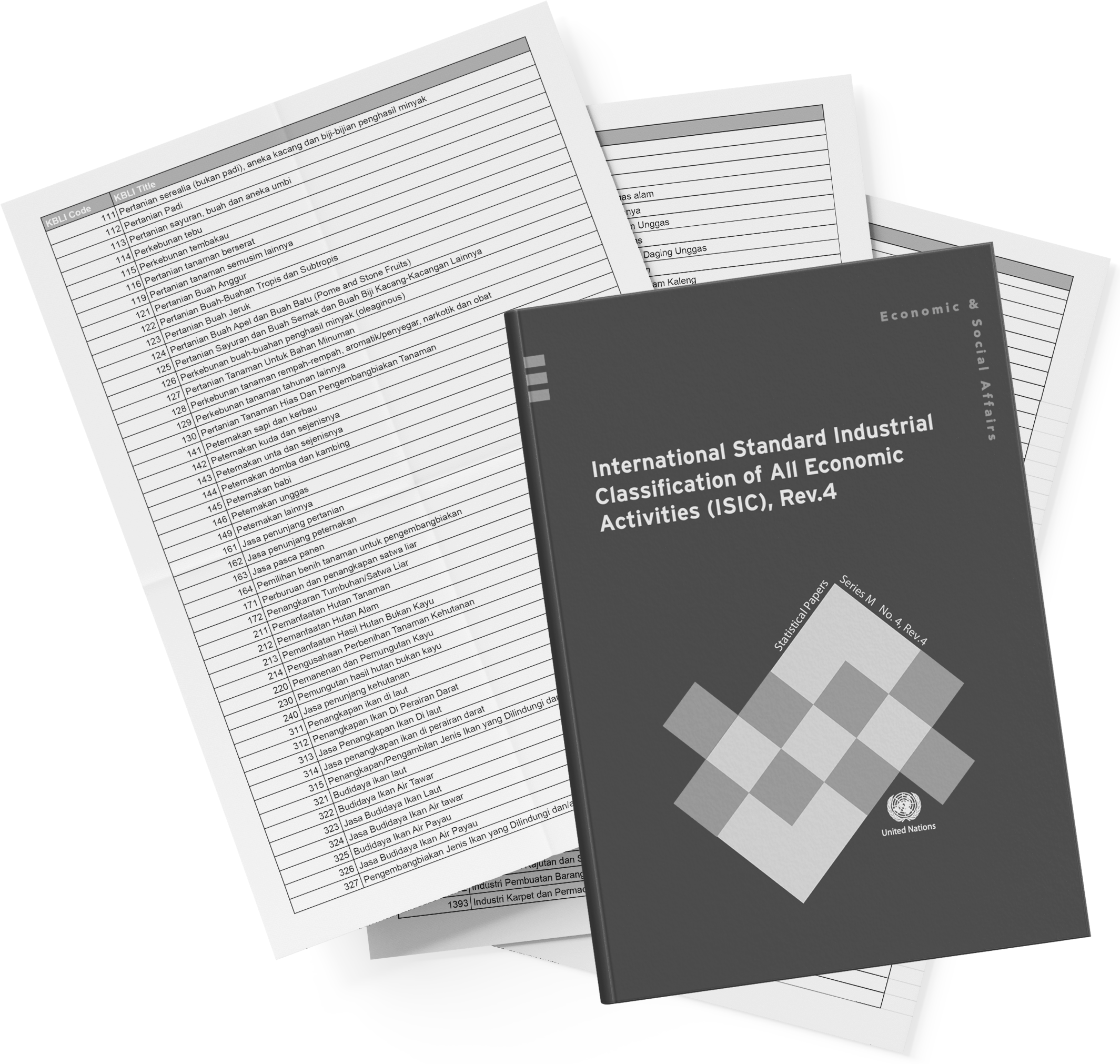
ISIC Rev. 4: 5223 — Service activities incidental to air transportation.
NAICS comparable: 488110 — Air Traffic Control; 488119 — Other Airport Operations; 488190 — Other Support Activities for Air Transportation.
Industry Terms
Indonesia-specific terms mix BUMN structures with global aviation vocabulary.
InJourney Airports
BUMN consolidating Angkasa Pura I + Angkasa Pura II (2023–2024).
Single negotiating counterparty for airport concession and operations at ~75 commercial airports.
AirNav Indonesia (Perum LPPNPI)
State-owned single provider of air navigation services.
Sole-source ATS provider; non-substitutable monopoly.
Angkasa Pura Kargo (APK)
Cargo terminal operating subsidiary at AP airports.
Concession holder at CGK East and West Cargo Terminals and other major airports.
UPBU
Unit Penyelenggara Bandar Udara — Kemenhub units managing smaller airports.
Operate smaller and pioneer airports outside InJourney.
Ground handling concession
Concession to provide ramp services at an airport.
Limited competition; JAS, Gapura, Cardig International are the dominant trio.
AOSC
Aerodrome Operator Safety Certificate.
DGCA-issued mandatory licence for airport operators.
ISAGO
IATA Safety Audit for Ground Operations.
Voluntary but increasingly mandatory for airline-acceptable ground handling.
SLA / KPI
Service Level Agreement and Key Performance Indicators in handling contracts.
Drive penalty-rebate economics.
Avtur
Aviation turbine fuel; jet kerosene.
Supplied by Pertamina Patra Niaga; key cost item for carriers.
MRO categories
Line maintenance, base maintenance, engine MRO, component MRO.
Differentiate GMF AeroAsia and BAT capabilities.
Business Types & Models — how value is created
Six archetypes share KBLI 5223; each captures a different layer of the airport-and-airside operation.
Airport operator (InJourney Airports — BUMN)
BUMN operator running the majority of Indonesia's commercial airports following the AP I + AP II merger. Charges airlines (PJP4U landing fees, parking, jetbridge), commercial concessions (retail, F&B, advertising), and cargo terminal users.
Cross-subsidises pioneer and smaller airports from large-airport profits; the cross-subsidy logic is policy-driven.
Aeronautical revenue (PJP4U from airlines)
Non-aeronautical revenue (retail, F&B, advertising, parking, real estate)
Cargo terminal access and storage fees
Concentrated capex pipeline (CGK East Cargo Terminal, DPS, KNO, SUB)
Mandate to develop pioneer airports balances commercial logic
Long-term concession horizon and high regulatory dependence
Air navigation services (AirNav Indonesia — Perum)
Sole national provider of air traffic services, communications, navigation and surveillance (CNS) and meteorological coordination for aviation. Charges airlines en-route, approach and terminal fees (RNAV, ATFM).
Safety-of-flight critical; high reliability and ICAO conformance requirement.
RNAV en-route charges
Approach and terminal fees
Service contracts for specific airports
Single-entity Perum status; sole-source provider
Capex into surveillance, ADS-B, ATM systems
DGCA oversight on safety performance
Ground handling concessionaires (JAS Airport Services, Gapura Angkasa, Cardig International)
Concession-based providers of ramp services — passenger handling, baggage, ramp, GSE operation, aircraft cleaning. JAS Airport Services (PT JAS, partly Singaporean-linked historically); Gapura Angkasa (Garuda subsidiary); Cardig International (Cardig group).
Compete on quality, KPIs and price; some airlines internalise (Lion Air group via Lion subsidiaries).
Per-flight handling fees
Hourly/per-hour-of-aircraft handling fees
Specialty services (deicing rare; loading, baggage, security, into-plane)
Capital-intensive GSE fleets
Labour-heavy; shift management critical
ISAGO certification table stakes for international flights
Fuelling (Pertamina Patra Niaga via PT Pertamina Aviation Services)
Dominant aviation fuel supplier for both domestic and international refuelling at Indonesian airports. Operates hydrant systems at major airports (CGK, DPS, SUB) and truck-fuelling at smaller airports.
Tied to global jet fuel prices and USD/IDR; some major airports allow other suppliers under bilateral arrangements but Pertamina is dominant.
Per-litre/per-USG into-plane fees
Into-plane logistics and storage fees
Service contracts with international airlines
Hydrant systems at major airports; fuel farms
Sensitive to oil price and FX
SAF blending under early experimentation
MRO (GMF AeroAsia, Batam Aero Technic, smaller MROs)
Maintenance, repair and overhaul providers for narrow-body and increasingly wide-body aircraft. GMF AeroAsia (PT Garuda Maintenance Facility AeroAsia, IDX-listed GMFI) is the largest; Batam Aero Technic (Lion Air group) is the second; Bintan Aviation Investments and other Batam-based facilities serve overflow.
Capture work from local carriers (Garuda, Lion Group, Citilink, etc.) and international airlines on a competitive basis with Singapore (ST Engineering) and Malaysia (Sepang Aircraft Engineering, AeroDarat).
Line maintenance contracts (daily checks)
Base maintenance (heavy checks, C-checks, D-checks)
Engine MRO and component MRO
EASA/FAA certifications expand addressable market
Skilled technician labour pool is the binding constraint
Hangar capacity and slot availability shape revenue
Catering and ancillary services (Aerofood ACS, Indofood catering, security, parking)
Catering for airlines and lounges (Aerofood ACS for Garuda; Indofood/PT Purantara for Lion; KLM Catering and SATS Indonesia for foreign carriers); security services; parking operators; lounge operators; airport advertising; cleaning.
These layers capture residual airport-side economics.
Per-meal catering fees
Security and cleaning contracts
Lounge access fees (Plaza Premium, Saphire)
Parking and advertising concessions
Concession-based, multi-airport spread
Labour-intensive; benefits from airline coordination
Volume sensitive to passenger recovery cycle
Performance & Outlook
BUMN consolidation, capex pipeline and post-pandemic recovery
Industry scale is set by upstream aviation traffic. Indonesia's passenger movements peaked around 330 million pre-pandemic and have recovered toward 280 million; cargo tonnage holds near 600,000–700,000 tonnes annually. These flows drive aeronautical and non-aeronautical revenue across the BUMN airport operator and concessionaires.
InJourney Airports' capex pipeline (CGK East Cargo Terminal, DPS Terminal upgrade, KNO international expansion, Lombok and Labuan Bajo super-priority works) anchors the medium-term performance trajectory. AirNav's CNS modernisation programme follows ICAO ASBU planning. MRO is benefiting from repatriation from Singapore as GMF AeroAsia and BAT scale up.
Forward, the binding variables are airline restructuring (Garuda fleet trajectory; Lion Group fleet expansion), tourism recovery (Bali, super-priority destinations), and oil/FX volatility affecting Avtur cost.
Key performance indicators
Commercial airports operated by InJourney
Network scale
~75 commercial airports
National passenger movements (annual)
Demand base
~280 million recovering toward ~330 million
National airfreight tonnage
Cargo support demand
~600,000–700,000 tonnes
AirNav coverage
ATS scope
Two FIRs: Jakarta and Makassar
Major MRO facilities (GMF, BAT)
MRO supply base
Multiple hangars at CGK, SUB, Batam; growing capacity
Top 10 airport share of national passenger movements
Hub concentration
~80%+
Ground handling concessionaires (major)
Service competition
3 dominant + airline self-handle
Avtur supply share — Pertamina
Fuel concentration
Near monopoly
Outlook: what to watch
InJourney Airports tariff structure and concession terms post-merger
AirNav CNS modernisation status and traffic growth recovery
MRO repatriation traction (GMF AeroAsia and BAT certifications)
Super-priority destination capex (Bali DPS, Mandalika LOP, Labuan Bajo LBJ, Likupang MND, Borobudur YIA)
SAF blending policy under Kementerian ESDM and Kemenhub coordination
Growth Drivers
Six drivers — three demand, three structural — set medium-term direction.
Tourism recovery and super-priority destinations
Bali DPS, Mandalika/Lombok LOP, Labuan Bajo LBJ, Likupang MND, Borobudur/Yogyakarta YIA are super-priority destinations; international and domestic tourism recovery drives passenger movements and ground service demand.
International arrivals at DPS
Tourism ministry destination spend
Hotel occupancy in priority destinations
Airline fleet expansion (Garuda + Lion Group)
Lion Air Group fleet additions and Garuda restructuring trajectory determine handling and fuelling demand. Each new aircraft adds line maintenance, handling and fuel volumes.
IDX-listed carrier announcements
DGCA aircraft registry adds
Lessor deliveries
InJourney Airports capex programme
BUMN merger consolidation drives unified capex plan including CGK East Cargo Terminal, DPS expansion, KNO international, regional airport modernisation.
InJourney capex disclosures
Tender announcements
RUPTL-equivalent infrastructure plans
MRO repatriation
Growing share of local MRO work as GMF AeroAsia and Batam Aero Technic expand hangars and certifications; reduces Singapore/Malaysia dependence.
GMFI earnings and capacity
BAT capacity announcements
EASA/FAA certifications
AirNav modernisation (CNS/ATM)
Capex into surveillance (ADS-B), ATM systems and Realtime Surveillance under ICAO ASBU planning.
AirNav capex and tender announcements
ICAO compliance reports
ATS productivity metrics
SAF and aviation decarbonisation
Pertamina SAF blending pilots (e.g. with palm-oil-derived HEFA) and CORSIA compliance obligations shape long-term fuel and operational cost paths.
Pertamina SAF announcements
ESDM blending mandates
CORSIA reporting and offsets
Industry Trends & Development
Industry Development
From dual AP era to single InJourney consolidation
The arc of the industry is one of BUMN consolidation and capex-led modernisation. Each cycle is shaped by tourism policy and airline fleet trajectories.
Next five years pivot on InJourney capex execution, MRO repatriation traction and AirNav modernisation.
AP I/AP II split era
Angkasa Pura I (East) and AP II (West) operate separately; private airport experiments begin (Kertajati, later)
Concession diversification
Ground handling and MRO concessions expand; GMF AeroAsia carved out as Garuda subsidiary (IDX-listed GMFI)
Capex acceleration
T3 CGK, KNO new airport, super-priority destination upgrades; AirNav formed (2012)
COVID shock
Passenger volumes collapse; cargo volumes hold; concession economics stressed; government support to BUMN airports
InJourney merger and recovery
AP I + AP II merge into InJourney Airports (2023–2024); CGK East Cargo Terminal modernisation; super-priority destination capex
Key Trends Shaping the Industry (Business Model Canvas view)
Five BMC dimensions are moving fastest: Key Partners, Key Resources, Revenue Streams, Cost Structure and Channels.
[Key Partners] BUMN consolidation reshapes airline negotiating dynamics
InJourney Airports provides a single counterparty for ~75 airports — concession terms, KPIs and tariffs are increasingly centralised.
Airlines
Concessionaires
Ministry of Transport
[Key Resources] MRO talent pipeline becomes binding
Skilled licensed aircraft engineers (AME-A, AME-C) are the binding constraint for MRO expansion; GMF and BAT compete with Singapore/Malaysia for talent.
MRO operators
Aviation training institutions
Airlines
[Revenue Streams] Non-aeronautical revenue grows in importance
Retail, F&B, advertising and parking grow as a share of airport revenue, partially insulating from aeronautical volatility.
Airport operator (InJourney)
Retail concessionaires
F&B operators
[Cost Structure] Avtur and FX shape fuelling economics
Pertamina Patra Niaga prices and USD/IDR drive into-plane fees and carrier P&L; SAF blending will gradually raise floor cost.
Fuelling operator
Airlines
Shippers
[Channels] Long-term concession agreements consolidate handling work
Airlines increasingly award multi-year handling contracts to JAS, Gapura or Cardig under ISAGO and SLA frameworks rather than airport-by-airport short tenders.
Ground handlers
Airlines
Airport operators
[Key Activities] Digital-twin and data-driven airport operations
InJourney pilots digital twin, predictive maintenance and OPS data integration; AirNav modernises CNS to enable ADS-B-In/Out operations.
Airport operator
AirNav
Tech vendors (Honeywell, Thales, Indra)
Impact and Sustainability
The industry's wider effects sit in connectivity, safety, employment and emissions.
Connectivity and tourism
Airport capacity at DPS, LOP, LBJ, MND, YIA shapes Indonesia's tourism trajectory and FDI to those regions.
Tourism volume vs environmental footprint
Capex burden vs cross-subsidy
Safety
Post-2018 incident lessons drove DGCA, AirNav and operator safety investment; ICAO USOAP audits set the safety floor.
Safety capex vs operational cost
Training depth vs throughput
Employment
Ground handling, MRO and airport operations employ tens of thousands; pilots and engineers are skilled-labour pillars.
Wage cost vs service quality
Local employment vs foreign expertise
Emissions and SAF
Aviation emissions per RPK remain a global decarbonisation challenge; SAF blending and CORSIA compliance shape long-term cost paths.
SAF cost vs CORSIA compliance
Carbon offset vs SAF deployment
Industry Segmentation
Service Segmentation
Services within KBLI 5223 differ on capital intensity, labour intensity and concession structure.
Segmentation by service
Airport operation
Terminal management, airside, retail concessions
InJourney Airports
Aeronautical + non-aeronautical revenue
Air navigation services
ATC, CNS, MET coordination
AirNav Indonesia
RNAV en-route + approach + terminal charges
Passenger ground handling
Check-in, gate, baggage, transport
JAS, Gapura, Cardig International, airline self-handling
Per-flight + per-passenger fees
Ramp and cargo handling
Pushback, loading, baggage make-up
JAS, Gapura, Cardig
Per-flight + per-tonne fees
Aircraft fuelling
Into-plane Avtur services
Pertamina Patra Niaga (PT Pertamina Aviation Services)
Per-litre/USG margin + storage
MRO — line maintenance
Pre/post-flight checks, minor fixes
GMF AeroAsia, Batam Aero Technic, station maintenance
Per-event or block contracts
MRO — base maintenance
C/D-checks, structural
GMF AeroAsia, Batam Aero Technic
Per-event multi-week contracts
Catering and lounge
In-flight catering, lounge operations
Aerofood ACS, Indofood/Purantara, Plaza Premium, Saphire
Per-meal + lounge access fees
Airport operation and ATS are state monopolies; the others are concession-competitive.
MRO base maintenance is the largest single contract value; line maintenance is the recurring annuity.
Airport Tier Segmentation
Airport tier defines the service mix and competitive intensity.
Segmentation by airport tier
Tier 1 international
Soekarno-Hatta (CGK), Ngurah Rai (DPS)
Full service: international, cargo terminal, multi-handler
InJourney; multi-handler ground; Pertamina fuel; AirNav
Tier 2 regional/intl
Juanda (SUB), Kualanamu (KNO), Hasanuddin (UPG), Yogyakarta (YIA)
Mid-large; international slots; cargo capability
InJourney; multi-handler; Pertamina; AirNav
Tier 3 domestic hub
Lombok (LOP), Labuan Bajo (LBJ), Sentani (DJJ), Pekanbaru (PKU)
Mid; domestic-heavy; selective international
InJourney; single/dual handlers; Pertamina; AirNav
Tier 4 secondary domestic
Maumere (MOF), Ende (ENE), Buol, Bua, regional capitals
Small commercial; limited services
InJourney or UPBU; minimal handlers
Pioneer / Perintis
Inland Papua, NTT, Maluku remote strips
Subsidised pioneer; minimal handlers
UPBU; government subsidy
Private experimental
Kertajati (KJT), Banyuwangi (BWX)
Variable service mix; lower passenger but cargo-relevant
Private operator (e.g. BIJB at Kertajati)
Customer Profiles
Customer profiles differ across airline group, foreign carrier, MRO buyer and concession user.
Customer profiles and what they value
Indonesian carrier (Garuda, Lion Group, Citilink)
Major local airline operations team
Reliable handling, fuel, MRO, ATC across network
On-time performance, SLA adherence, multi-airport contracts
Multi-year contracts with JAS/Gapura/Cardig; GMF/BAT MRO
Foreign carrier (SQ, CX, JL, NH, KL, EK)
Foreign airline Indonesia ops
Premium ground handling, customs, lounge access
ISAGO compliance, premium passenger experience
Concessionaires + premium lounges
Charter / business aviation
Charter operator or corporate flight department
Quick turnaround, customs facilitation
Flexible handling, after-hours availability
Specialist FBOs + ad-hoc handlers
Cargo / express integrator
DHL, FedEx, UPS, SF Express, freighter operators
Reliable cargo handling, customs, ULD pool
Cargo terminal access, scan-to-scan tracking
APK + ground handlers
MRO buyer (lessor, airline)
Aircraft lessor or airline maintenance head
Reliable C/D-checks, EASA/FAA-stamped work
Hangar slot, certifications, turnaround time
GMF AeroAsia, Batam Aero Technic, regional MROs
Retail/F&B concessionaire
F&B chain (KFC, McDonald's, Starbucks; local), retail (XXI, duty-free)
Airport footfall and premium location
Lease terms, foot traffic data, multi-airport reach
InJourney master lease + sub-lease
Government / military aviation
TNI AU, Polri Air, BNPB
Reliable services for state aviation
Priority handling, security
Direct service agreements
Ecosystem & Key Players
Ecosystem Mapping
Ecosystem layers from regulator through BUMN operators to concessionaires and end customers.
Core (operators and providers)
Entities delivering KBLI 5223 services directly.
Airport operator: InJourney Airports (BUMN, AP I + AP II merger)
ATS provider: AirNav Indonesia (Perum LPPNPI)
Ground handling: JAS Airport Services, Gapura Angkasa (Garuda subsidiary), Cardig International, Prathita Titiannusantara, airline self-handlers
Fuelling: Pertamina Patra Niaga via PT Pertamina Aviation Services
MRO: GMF AeroAsia (IDX: GMFI), Batam Aero Technic, Bintan Aviation Investments, Indopelita, ASCO Aerospace
Catering: Aerofood ACS (Garuda), Indofood/PT Purantara (Lion), SATS Indonesia, KLM Catering
Extension (customers and adjacent services)
Airlines and adjacent professional services.
Local carriers: Garuda Indonesia, Lion Air Group, Citilink, TransNusa, Sriwijaya Air, Pelita Air, Susi Air
Foreign carriers: SQ, CX, JL, NH, KL, EK, QF, KE, MH, TG
Cargo and integrators: DHL, FedEx, UPS, SF Express, J&T Cargo, My Indo Airlines, Cardig Air
Retail/F&B concessionaires: KFC, McDonald's, Starbucks, XXI, duty-free (DFS, Lotte, Lagardère)
Enabling (regulators, standards, training, finance)
Rule-setters, finance and training infrastructure.
Regulators: Kemenhub Ditjen Perhubungan Udara (DGCA), Kemenhub UPBU for non-AP airports
Standards: ICAO SARPs, IATA AHM, ISAGO, EASA/FAA Part-145 for MRO
Training: PPSDM Perhubungan Udara, STPI Curug, PLP Penerbang, ATKP Surabaya
Finance: BNI, Mandiri, BRI, BCA infrastructure finance; bond markets for InJourney and AirNav
How value flows across the ecosystem
Regulators set standards and licences; BUMN operators (InJourney, AirNav) run airports and ATS; concessionaires deliver ground services and fuel; MROs maintain fleet; carriers and integrators consume the services and pay aeronautical and service fees.
Strategic chokepoints sit at InJourney concession terms, AirNav availability and MRO hangar slot capacity.
Leading Players
Named players below illustrate structural positions; figures are directional industry estimates.
Leading firms by position
InJourney Airports (BUMN; AP I + AP II merger)
Dominant national airport operator
~75 commercial airports; consolidated capex and tariff power
Cross-subsidy obligations; capex execution risk
AirNav Indonesia (Perum LPPNPI)
Sole national ATS provider
Monopoly; ICAO conformance; CNS modernisation pipeline
Single-point-of-failure; capex burden
GMF AeroAsia (PT Garuda Maintenance Facility AeroAsia, IDX: GMFI)
Largest MRO
EASA/FAA certifications; CGK and SUB hangars; pharma cool-chain CEIV
Engine MRO licence breadth limited vs ST Engineering
Batam Aero Technic (BAT, Lion Air group)
Second-largest MRO
Batam location; B737/A320 capacity; Lion group anchor demand
Talent pipeline; certification breadth
JAS Airport Services
Premium ground handler
Strong ISAGO record; foreign-carrier client base
Concession dependence
Gapura Angkasa (Garuda subsidiary)
Major ground handler
Multi-airport presence; Garuda anchor
Garuda restructuring exposure
Cardig International
Major ground handler
Cargo handling depth; freighter handling capability
Smaller passenger network
Pertamina Patra Niaga (PT Pertamina Aviation Services)
Dominant Avtur supplier
Near-monopoly; hydrant systems at major airports
Oil price and FX exposure
Aerofood ACS (Garuda subsidiary)
Major catering provider
Multi-airport reach; Garuda anchor
Garuda restructuring exposure
SATS Indonesia / Purantara / Indofood catering
Catering competitors
Specialised carrier contracts
Smaller scale vs Aerofood
Plaza Premium / Saphire / Concordia lounges
Lounge operators
Multi-airport reach; foreign-carrier alliances
Passenger volume sensitivity
Bintan Aviation Investments / regional MRO clusters
Smaller MROs at Batam and other hubs
Niche scope, location advantage
Scale below GMF and BAT
How competition typically plays out
Airport operation and ATS are non-competitive (state monopolies). Ground handling is a tight triangle (JAS, Gapura, Cardig) with airline self-handling at scale (Lion Group). MRO is a duopoly anchor (GMF, BAT) with regional clusters. Fuelling is near-monopoly. Catering is multi-player.
Competition is primarily about service quality, SLA adherence, and KPIs — pricing is largely set in tariff frameworks or concession agreements.
Operating Conditions
Concentration, Competition, Cost Structure & Economics
Market structure is heavily concentrated. Airport operation and ATS are state monopolies (InJourney, AirNav). Ground handling is concentrated in three players. MRO is concentrated in two. Fuelling is near-monopoly. This is structurally one of the most concentrated infrastructure-service industries in Indonesia.
Personnel (35–50%)
Airport staff, ATC controllers, ramp staff, engineers, security
Skilled labour pipelines
Union dynamics
Shift management
Largest cost across most segments
Capex amortisation (15–25%)
Terminal, runway, CNS systems, GSE fleets, hangars
Capex pipeline
Asset useful lives
Heavy at airport operator
Equipment, maintenance and consumables (10–15%)
GSE maintenance, IT systems, navigation hardware, spare parts
GSE refresh
CNS uptime SLA
Spare parts FX-exposed
Energy and fuel (5–10%)
Terminal energy; hydrant fuel cost flow-through
PLN tariffs
Avtur cost
Avtur is a flow-through for fuelling
Compliance and certification (3–5%)
DGCA licensing, ICAO audits, ISAGO, EASA/FAA Part-145 for MRO
Audit cycles
Documentation overhead
Rises after incidents
Insurance and security (3–5%)
Hull/liability for MRO, airport security, perimeter
Risk profile
Threat environment
State-supported at airport level
Porter's Five Forces — KBLI 5223
Threat of new entrants
Low
BUMN monopolies, AOSC and EASA/FAA certifications, scale economics, slot scarcity make entry very slow
Bargaining power of customers
Medium
Airlines have leverage on handling/MRO concession competition; on ATS and airport ops they are price-takers
Bargaining power of suppliers
Medium-High
GSE OEMs, CNS vendors, EASA/FAA spare parts, fuel suppliers hold leverage
Threat of substitutes
Low
Sea/rail can substitute some passenger trips and cargo but not airfreight or international travel; ATS has no substitute
Rivalry among existing competitors
Medium
Handling and MRO tightly contested on SLA and price; airport ops and ATS non-competitive
Airport operator margins: aeronautical revenue often regulated; non-aeronautical drives EBITDA upside
Ground handlers: thin per-flight margins; scale and SLA performance drive contract renewal
MRO: base maintenance higher value-per-hangar-day than line maintenance; engine MRO highest margin
Fuelling: near-monopoly economics tempered by oil-price-pass-through and regulated tariff
Regulation & Compliance Considerations
Regulation in air transport support is dense — DGCA oversees airports, ATS and ground handling; ICAO standards apply globally; EASA/FAA approvals matter for MRO.
Regulatory anchors and operational impact
Aerodrome Operator Safety Certificate (AOSC, DGCA)
Mandatory airport operator licence
Defines what InJourney/private operators can run
AOSC maintenance and DGCA audits
ATS provider licensing (DGCA + ICAO)
AirNav single-provider authority and safety oversight
Non-substitutable monopoly
ICAO USOAP audits; safety performance
Ground handling concession (DGCA + airport operator)
Concession to provide ramp services
Limits competition; defines scope
Concession tender participation
MRO Part-145 (DGCA, EASA, FAA)
Approved Maintenance Organisation status
Determines accepted scope and customer base
Certification audits and continuous compliance
ICAO Annexes (1 to 19) and ASBU
Global aviation safety and modernisation framework
Drives capex and policy
Compliance with annex SARPs
Aviation security (DGCA + Bareskrim)
Perimeter, screening, K9, cyber
Affects cost and operations
Security training; audits
Customs and immigration
International passenger and cargo processing
Affects dwell time
Coordination with Bea Cukai and Imigrasi
Tax (PPh 25, PPN 11%)
Income tax and VAT
Pricing
Standard tax processes
InJourney tariff and concession structure post-merger is still settling
AirNav CNS modernisation is multi-year; ICAO USOAP audits raise the bar periodically
MRO certification breadth (engine, components) gates which carriers can buy local
Safety oversight has intensified post-2018 incidents and stays at high scrutiny
FAQs & Sources
FAQs
Who operates Indonesia's airports?
InJourney Airports — the BUMN consolidating Angkasa Pura I and Angkasa Pura II — operates ~75 commercial airports. Smaller and pioneer airports are run by Kemenhub UPBU; a handful are private (Kertajati Majalengka, Banyuwangi).
Who provides air traffic services?
AirNav Indonesia (Perum LPPNPI) is the sole national ATS provider. It manages the Jakarta and Makassar Flight Information Regions and is structurally a monopoly under Perum status.
Who are the largest ground handlers?
JAS Airport Services, Gapura Angkasa (Garuda subsidiary) and Cardig International dominate ground handling. Lion Air Group internalises substantial handling through Lion subsidiaries.
Who supplies aviation fuel?
Pertamina Patra Niaga via PT Pertamina Aviation Services is the dominant supplier, with hydrant systems at major airports (CGK, DPS, SUB) and truck fuelling at smaller airports.
Who are the major MRO providers?
GMF AeroAsia (Garuda group, IDX-listed GMFI) is the largest, with Batam Aero Technic (Lion Air group) the second. Smaller MROs (Bintan Aviation Investments, Indopelita, ASCO Aerospace) operate at Batam and other regional clusters. EASA/FAA certifications determine which international carriers can use local MRO.
How concentrated is the industry?
Heavily concentrated. Airport operation and ATS are state monopolies (InJourney, AirNav). Ground handling, MRO and catering are concentrated in 2–3 providers each. Fuelling is near-monopoly. This is one of the most concentrated infrastructure-service industries in Indonesia.
Sources & Notes
This report synthesises publicly available regulatory and industry information, association publications, listed-company disclosures and Ravenry analyst commentary. Where exact figures are unavailable, directional and approximate ranges are used.
Kementerian Perhubungan, Ditjen Perhubungan Udara (DGCA)
AOC, AOSC, ATS, handling regulation
InJourney Airports / Angkasa Pura I & II
Airport operations, capex plans
Perum LPPNPI (AirNav Indonesia)
ATS provision and capex
GMF AeroAsia (IDX: GMFI)
MRO capacity and certifications
Pertamina Patra Niaga (Aviation Services)
Avtur supply and infrastructure
ICAO (USOAP audits, SARPs, ASBU)
Global standards and audit results
IATA (AHM, ISAGO, IOSA)
Ground handling and safety audits
Badan Pusat Statistik (BPS) aviation statistics
Passenger and cargo movements
Annual reports of listed carriers and concession holders
Sector economics
This report is for informational purposes and does not constitute legal, regulatory or investment advice. Figures are directional unless otherwise indicated.