Agricultural Raw Material and Live Animal Wholesale Industry in Indonesia
KBLI 4620 — how grains, feeds, live cattle and poultry, palm fruit, rubber, coffee, cocoa, tobacco, and natural fibers move from farm gate and import dock to mill, feedlot, and factory
KBLI 4620 is the commodity and live-animal wholesale layer that sits between Indonesia's smallholder farmgate (and global import sources) and the country's processors, mills, feedlots, and exporters. It covers feed grains, oilseeds, animal feeds, raw industrial crops (palm, rubber, coffee, cocoa, tobacco), live animals for breeding and slaughter, hides and natural fibers, and seeds and propagation materials. This report unpacks how the channel is structured, which traders and integrators matter, where margins live, and how regulation reshapes the playing field.
Industry boundary and what 4620 includes versus excludes
Indonesia's smallholder farmgate and import-dependent feed reality
Trading archetypes from integrated agribusinesses to local collector-traders
Ecosystem layers: core traders, extension actors, enabling institutions
Porter's Five Forces and entry barriers for new operators
Cost structure, working capital intensity, and regulatory pressure points
Executive Summary
KBLI 4620 sits where Indonesian agriculture meets industry. It is the wholesale layer that aggregates smallholder output, channels imports of deficit commodities (feed corn, soybeans, beef, live cattle, raw cotton), and feeds downstream processors — palm refineries, crumb-rubber plants, coffee and cocoa exporters, feed mills, slaughterhouses, and tobacco factories. The code spans both unprocessed crop commodities and live animals, which makes it operationally heterogeneous but commercially unified by one thing: trading raw biological material at scale.
The Indonesian version of this industry has three distinctive features. First, it is heavily two-sided — half the volume is collected from millions of fragmented smallholders (palm, rubber, coffee, cocoa, tobacco) while the other half is imported in bulk through major ports (feed grains, soybeans, live feeder cattle, dairy heifers, raw cotton). Second, it is shaped more decisively by trade policy than by commercial dynamics — import quotas, reference prices, halal protocols, and SNI standards routinely redraw the competitive map. Third, integrated agribusinesses dominate the high-value segments while a long tail of regional collector-traders and pengepul handles smallholder aggregation.
Working capital intensity is the defining operating reality. Live cattle in feedlots tie up cash for 90–120 days; coffee and cocoa green-bean exporters carry inventory through volatile commodity cycles; feed importers run massive letter-of-credit programs against rupiah-dollar volatility. Traders with cheap, patient capital and effective FX hedging structurally outperform traders with equal commercial skill but thinner balance sheets.
KBLI 4620 is not one industry — it is at least five commercially distinct businesses (feed-grain importing, live-animal trading, palm/rubber/coffee/cocoa commodity trading, smallholder aggregation, and natural fiber/tobacco trading) sharing a code.
Indonesia is structurally a major exporter of palm, rubber, coffee, cocoa, and tobacco but structurally a major importer of feed corn, soybeans, beef, live cattle, dairy heifers, raw cotton, and selected fruits. Both halves run through KBLI 4620 wholesalers.
Trade and quota policy — beef import permits, soybean import allocation, live cattle ratios, SNI requirements — is the single largest competitive force in this industry. Companies with import-permit access operate a fundamentally different business from those without.
Smallholder aggregation depends on the pengepul–collector–exporter chain. Direct-from-farmer procurement is rare; traceability and quality control remain the most persistent operational challenges in palm, rubber, coffee, cocoa, and tobacco.
Working capital is the moat. Major integrated agribusinesses (Wilmar, Musim Mas, Olam, Cargill, Japfa, Charoen Pokphand) win partly because they fund 60–120 day inventory cycles at low cost, not just because they buy well.
Why this industry matters in Indonesia
This is the layer that determines whether Indonesia's smallholder palm fruit reaches a refinery before it spoils, whether feed mills have enough corn to keep poultry prices stable, and whether a beef tenderloin in a Jakarta restaurant came from Lampung, NTT, or Darwin. The choices made by traders in this code propagate directly into food prices, livelihoods, and export competitiveness.
It also intermediates between commodity volatility and the real economy. When global soybean prices spike or rupiah weakens, KBLI 4620 traders are the absorber and pass-through — they decide what gets hedged, what gets passed to feed mills, and what gets eaten by trading margin.
Finally, the industry is a primary instrument of Indonesia's food security and trade policy. Beef quotas, sugar imports, soybean allocations, and rice procurement (via Bulog as a quasi-wholesaler) are negotiated, allocated, and executed through this layer.
So what: Practical implications
Operators: Match your archetype to your capital base — feedlot and feed-grain importing demand institutional balance sheets; smallholder aggregation rewards local trust and patience, not scale.
Buyers (mills, processors, exporters): Diversify procurement across multiple trader archetypes; over-reliance on one integrated supplier creates pricing and continuity risk.
Investors: Read trade-policy exposure carefully — quota access can be the entire business, and policy reform can collapse or unlock margins overnight.
Policymakers: The quota-permit system creates rent and concentration; smoother, predictable import calendars would reduce price volatility downstream.
Indonesia at a Glance
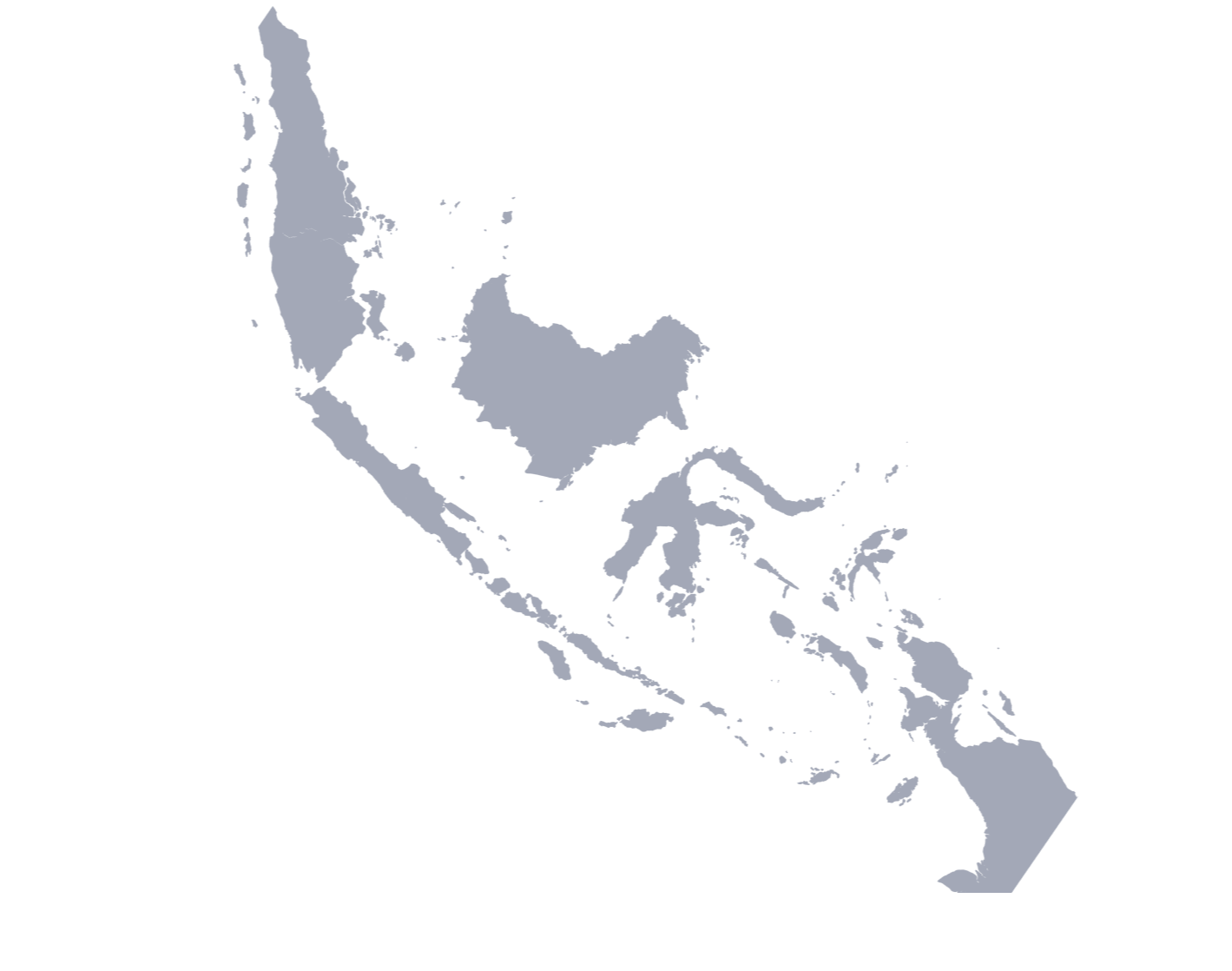
Republic of Indonesia: A smallholder farmgate stitched to global commodity markets
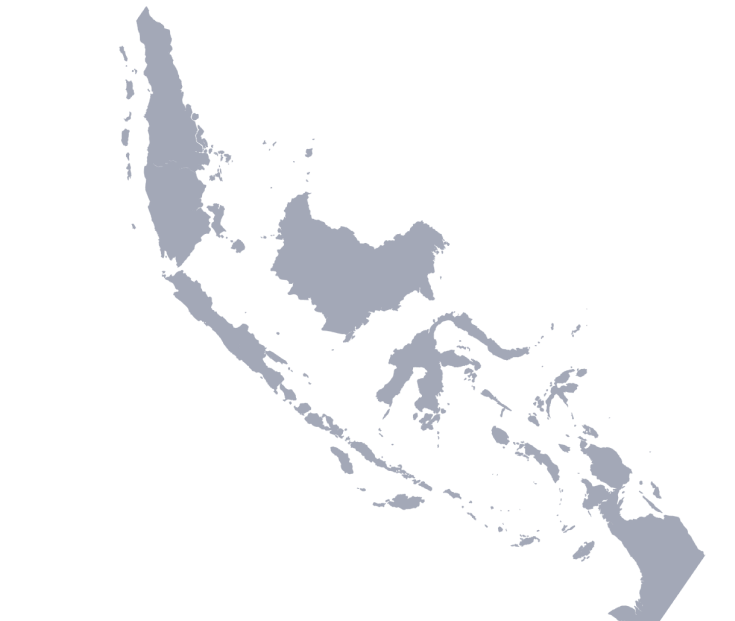
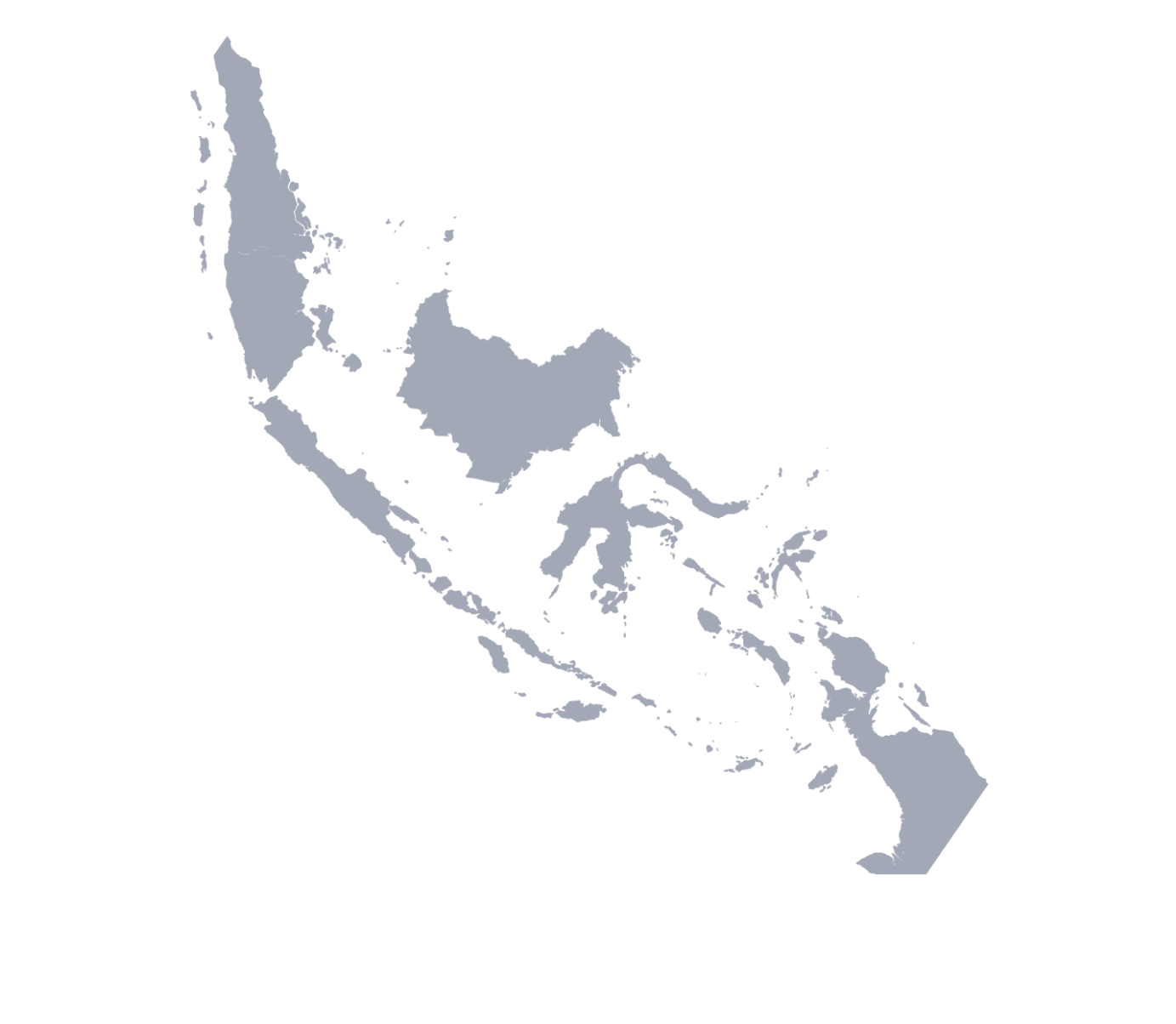
Indonesia is simultaneously the world's largest palm oil producer, the second-largest natural rubber producer, the fourth-largest coffee producer, the third-largest cocoa producer, and a top-tier producer of tobacco and selected horticulture. These export-oriented commodities mostly originate from smallholder farms — roughly 40% of palm area, the majority of rubber and coffee, and almost all cocoa.
Smallholder dominance changes everything about the wholesale layer. It means traders must operate dense, local collection networks rather than dealing with a handful of large estates. It means quality control happens at thousands of farmgate points, not in a few centralized facilities. And it means traceability — increasingly demanded by EU, US, and Japanese buyers — is a real operational challenge, not a paperwork exercise.
At the same time, Indonesia is structurally a net importer of feed grains and animal protein inputs. Feed corn demand outpaces domestic supply in tight years, soybeans for tempeh and soybean meal for feed are overwhelmingly imported, beef supply gaps are filled by live feeder cattle and frozen beef imports, and the dairy industry depends on imported heifers and skim milk powder.
This duality — export-strong on plantation commodities, import-dependent on feed and protein — defines the wholesale book. A single large agribusiness often runs both: exporting palm and importing soybean meal through the same trading operation, with FX exposure on both legs.
Hyperlocalization: each commodity has its own geography
Palm fruit (FFB) and CPO trading concentrates in Sumatra and Kalimantan, with mills, refineries, and bulking terminals clustered around Riau, North Sumatra, Jambi, South Sumatra, West Kalimantan, Central Kalimantan, and East Kalimantan. The wholesale layer here is dominated by integrated agribusinesses (Wilmar, Musim Mas, Sinar Mas, Astra Agro, Salim, Indofood Agri) running their own collection and refining.
Rubber wholesale follows similar geography but with more independent smallholder bokar (slab) traders and crumb-rubber processors in North Sumatra, South Sumatra, Jambi, and West Kalimantan. Coffee splits between Sumatra (Aceh, North Sumatra, Lampung — robusta and arabica) and Sulawesi (Toraja arabica), with secondary origins in Bali (Kintamani), Flores (Bajawa), and Papua (Wamena). Cocoa concentrates in Sulawesi (West, Central, South), with smaller volumes in Sumatra and West Papua.
Live cattle and beef move from NTT, NTB, and South Sulawesi (domestic breeding regions) and from Australia (feeder imports landing primarily at Tanjung Priok, Tanjung Perak, and Cilegon) toward Java's slaughterhouses and feedlots. Tobacco leaf flows from East Java (Madura, Bondowoso, Jember), Central Java (Temanggung, Klaten), and West Nusa Tenggara (Lombok). Feed corn and soybean imports land at Tanjung Priok, Tanjung Perak, Belawan, Cigading, and Lampung, then move inland to feed mills clustered around Java, Lampung, and North Sumatra.
The wholesale layer lives almost entirely outside major metros
Apart from headquarters and trading desks (Jakarta, Surabaya, Medan), the real activity of KBLI 4620 happens at port-side bulking terminals, upcountry collection points, feedlots near Java's industrial corridors, and crumb-rubber and coffee-processing towns. The economic geography is rural and peri-urban, not metropolitan.
Growth pockets follow specific commodity logics. Palm bulking and tank-terminal capacity continues to expand in Kalimantan as production catches up with Sumatra. Coffee specialty-grade aggregation is growing in Sulawesi, Bali, and Flores as the specialty-coffee export channel matures. Live cattle finishing and feedlot capacity is expanding in Lampung and Banten as Australian feeder imports remain a structural pillar of beef supply.
The pengepul–collector–exporter chain that connects farmer to wholesaler is itself a local economic institution in many regions. In coffee-producing Aceh Gayo or cocoa-producing Polewali Mandar, the local pengepul is part of the credit, social, and quality-grading system, not just a price-taking middleman.
EU Deforestation Regulation (EUDR) and similar traceability requirements are driving investment in farmer-level data and certified supply chains — a structural opportunity for traders who can build traceability infrastructure
Growing domestic demand for animal protein continues to expand feed grain imports and live cattle finishing capacity
Specialty coffee and single-origin cocoa channels open higher-margin niches above commodity-grade trading
Replanting of aging palm and rubber smallholder areas creates supply discontinuity that benefits traders with strong farmer relationships and financing capacity
Domestic processing investment in palm (refined products), cocoa (grinding), and coffee (instant) is shifting volume from raw exports toward intermediate processing — changing what 4620 wholesalers sell
Live cattle and frozen beef substitution dynamics continue to evolve with import-policy cycles and rupiah fluctuations
Distribution realities: ports, feedlots, mills, and the perishability clock
Logistics in KBLI 4620 is dominated by two challenges. The first is perishability: palm fresh fruit bunches (FFB) must reach a mill within 24 hours of harvest before free fatty acid (FFA) levels degrade the oil. Live cattle and live poultry must be moved with welfare and biosecurity controls under Indonesian halal and veterinary regulations. Coffee cherries must be processed within hours of picking. The clock dominates the cost structure.
The second challenge is bulk handling and inter-island movement. Feed corn and soybean imports require deep-water ports, conveyor systems, and silo capacity at landing terminals. CPO and crumb rubber move through tank terminals and bulking stations. Live cattle move through specialized livestock vessels (Australia-Indonesia trade) and registered land transport. The wholesalers who own or control these chokepoints earn rent on top of trading margin.
Inter-island shipping costs (compounded by the archipelago) and port congestion are recurring frictions. Tanjung Priok dwell times, Tanjung Perak congestion during Ramadan and harvest peaks, and the smaller-port capacity of eastern Indonesia all directly affect trader inventory carry and pricing decisions.
Position infrastructure where the commodity bottleneck sits — tank terminals for palm, feedlots near Java demand centers, drying floors in coffee origin, controlled-atmosphere storage for specialty cocoa
Build farmer-financing and quality-grading capability rather than relying on pure spot purchasing; this is where smallholder loyalty and traceability are won
Hedge FX systematically — soybean and corn import margins can be wiped out by a 5% rupiah move, and few mid-sized traders hedge with discipline
Read trade policy as a primary input to commercial strategy, not as background noise; quota access redefines competitive position
Industry Definition
What is KBLI 4620, and where does the boundary sit?
Industry Definition
KBLI 4620 covers wholesale of agricultural raw materials and live animals. The boundary includes unprocessed crop commodities (grains, oilseeds, palm fruit and CPO at wholesale, raw rubber, raw coffee and cocoa beans, raw tobacco, sugar cane, raw natural fibers), live animals (cattle, buffalo, sheep, goats, pigs, poultry, fish, day-old chicks), animal feeds and feed ingredients, hides and skins not yet tanned, and seeds, bulbs, and propagation material for agricultural production.
Excluded: processed food and beverages (KBLI Division 10–11 manufacturing, KBLI 463x wholesale of food and beverages), tanned leather (KBLI 467x or 4663 depending on form), agricultural machinery and inputs like fertilizer and agrochemicals (KBLI 4653), retail sale to households (KBLI Division 47), and processed wood and forestry products.
The defining activity is wholesale trading of biological commodities and live animals in raw or minimally processed form, as inputs to downstream processing rather than consumption.
Indonesia in Focus
Indonesia's version of KBLI 4620 is unusually large and economically central because the country is a major producer of several globally-traded soft commodities and a major importer of feed and protein inputs.
The smallholder origin of most plantation commodities means the wholesale layer is unusually dense at the collection end — thousands of pengepul, hundreds of mid-tier traders, and a smaller layer of integrated exporters and importers.
Trade policy plays an outsized role: quotas, import permits, reference prices, and bilateral arrangements (especially the Australia-Indonesia live cattle trade) shape who can operate, at what volume, and with what margin.
Industry Classification
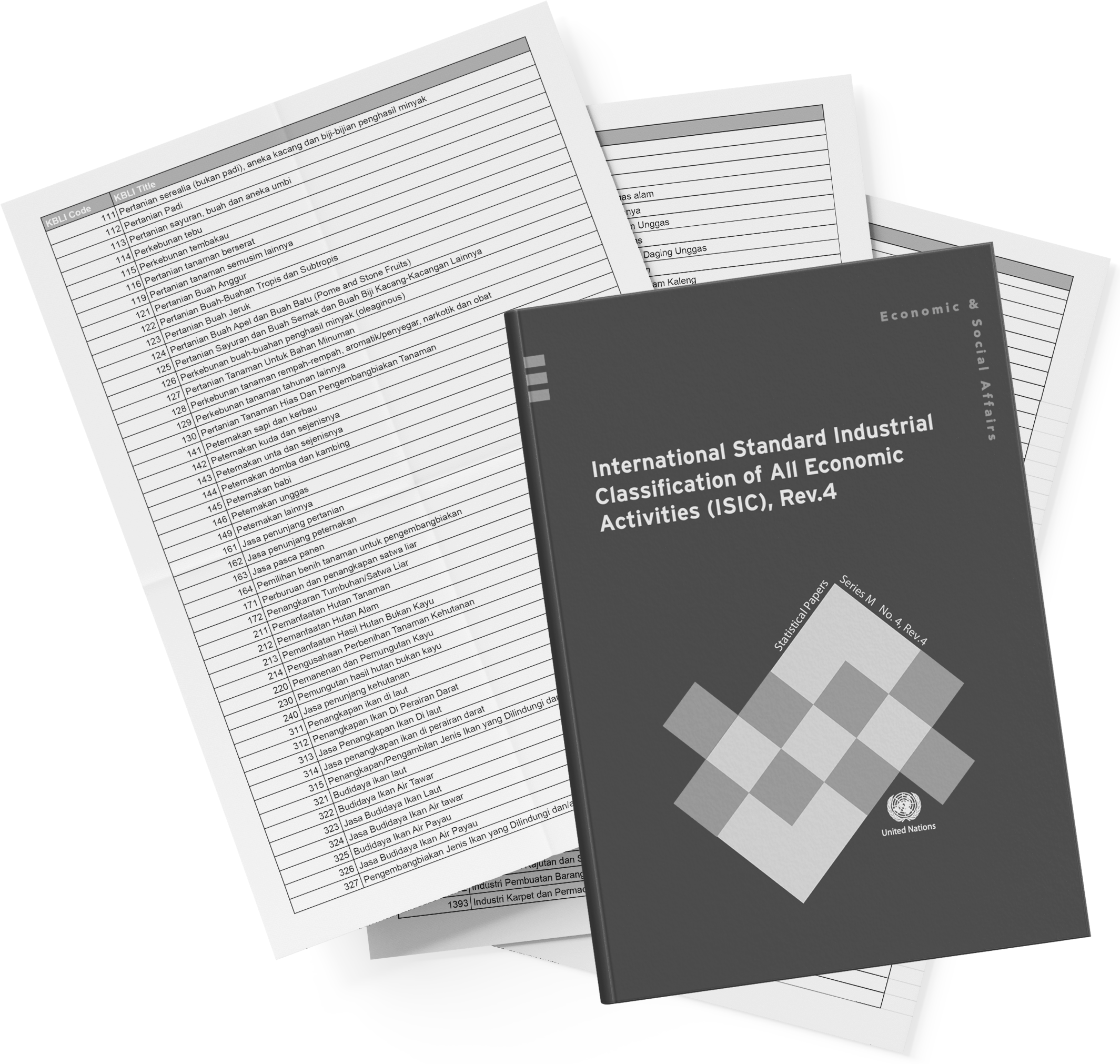
KBLI 4620 (2020 revision) — Perdagangan Besar Hasil Pertanian dan Hewan Hidup, encompassing wholesale of agricultural raw materials, live animals, and related inputs.
Closest ISIC mapping: ISIC Rev.4 4620 — Wholesale of agricultural raw materials and live animals, aligned at the four-digit level.
NAICS comparable: split across 4244 (selected sub-codes), 42452 (Livestock Merchant Wholesalers), 42459 (Other Farm Product Raw Material Merchant Wholesalers).
Operators often hold KBLI 4620 alongside narrower KBLI 4621 (raw materials) or KBLI 4622 (live animals), or downstream codes for processing if they own integrated operations.
Industry Terms that actually matter
The vocabulary of KBLI 4620 spans commodity trading, livestock husbandry, and Indonesian regulatory practice. Tight definitions matter because the same English word (e.g., "cattle") hides very different commercial categories in Indonesian trade policy.
FFB (Fresh Fruit Bunch)
Freshly harvested oil palm fruit bunches; the input to crude palm oil milling.
Defines the wholesale unit at smallholder palm collection; 24-hour perishability determines collection geography and pricing.
CPO (Crude Palm Oil)
Mill-output unrefined palm oil, traded in bulk through tank terminals.
Standard wholesale unit for refining and export; reference for DMO/DPO policy and global price discovery.
Bokar / Crumb Rubber / SIR-20
Bokar = raw smallholder slab; SIR-20 = dominant tire-grade Standard Indonesian Rubber export.
Bokar quality and moisture directly affect SIR-20 yield and price; crumb processors are the largest bokar buyers.
Green Bean (Coffee / Cocoa)
Dried, hulled, unroasted coffee or fermented and dried cocoa beans — export-grade wholesale unit.
Price reference for the entire chain; specialty grading and traceability premiums emerge here.
Feeder Cattle / Bakalan
Young cattle (250–350 kg) for feedlot finishing before slaughter.
Core wholesale unit of live-cattle import business; Australia dominant, permit-driven.
Day-Old Chick (DOC)
Newly hatched broiler or layer chicks supplied by breeding companies to commercial farms.
Entry point of poultry value chain; concentrated among CPI, Japfa, Malindo, Sierad.
Pengepul / Pengumpul
Local collector or village-level aggregator buying directly from smallholders.
First node of the wholesale chain in palm, rubber, coffee, cocoa, tobacco.
Bulog
Indonesia's state logistics body (Perum Bulog).
Quasi-wholesaler intervening in rice, sugar, and selected commodity markets.
DMO / DPO
Domestic Market Obligation and Domestic Price Obligation for palm.
Re-routes palm wholesale flows during cooking-oil shortage episodes; compresses export margin.
SNI
Standar Nasional Indonesia.
Mandatory or voluntary SNI status on feed ingredients and selected commodities affects import eligibility.
Quota / Import Permit (Persetujuan Impor)
Government-issued allocations for beef, live cattle, soybeans, sugar, selected fruits.
Defines who can import; often the most valuable single asset for a commodity importer.
Industry Overview – Business Archetypes
Within KBLI 4620 sit several commercially distinct archetypes. They share a code and broadly similar logistics, but capital intensity, regulatory exposure, supplier base, and competitive moat differ meaningfully. Reading a company without identifying its archetype leads to misjudged comparables and missed risk concentrations.
Integrated Plantation Agribusiness (Ecosystem Anchor)
Owns plantation acreage and mills, but also buys smallholder FFB and operates as a major wholesaler of CPO, palm kernel, and palm derivatives. Examples include Wilmar International, Musim Mas, Sinar Mas / Golden Agri-Resources, Astra Agro Lestari, Indofood Agri, and Salim group palm interests.
The wholesale function inside these groups handles both internal estate output and external smallholder purchases, routing volumes between mills, refineries, tank terminals, and export buyers. The trading desk is institutional and globally connected, often co-located with the group's refining and downstream operations.
Spread between farmgate / mill-gate FFB cost and CPO sale price, supplemented by integration margin in refining, fractionation, and biodiesel
Premium capture on certified (RSPO, ISPO, ISCC) and traceable supply for export buyers
Trading-desk margin from physical and paper positions on regional palm benchmarks
Capital-intensive across mills, tank terminals, and refining; balance sheet depth is a competitive moat
Smallholder relationships are increasingly strategic under EUDR and certification pressure
Regulatory exposure to DMO/DPO, export levy (BPDPKS), and palm-specific policy is permanent
Independent Commodity Trader and Exporter (Bridge Model)
Aggregates from smallholders and mid-tier collectors and exports to global buyers without owning upstream plantations or downstream processing. Common in coffee (Olam, ECOM, Volcafe, Indo Cafco, Sucafina), cocoa (Olam, Cargill, Barry Callebaut, JB Foods), rubber (Halcyon Agri / Corrie MacColl, Kirana Megatara), and tobacco (Sadhana Arifnusa, Alliance One, Universal Leaf via local entity).
Competes on origination depth, quality grading, and ability to deliver against international buyer specifications. The trading desk is often connected to a global parent's trading book, with Indonesia as one origin among many.
Trading margin on physical flows from smallholder gate to export, often hedged on global futures (ICE, LIFFE)
Quality and certification premium (specialty coffee grades, single-origin cocoa, traceable rubber)
Origin-specific arbitrage and structured forward contracts with downstream brand and processor buyers
Working capital intensive — inventory cycles of 30–90 days at origin, plus shipping
Vulnerable to smallholder side-selling and pengepul loyalty erosion in tight supply
Compliance overhead rising with traceability and deforestation regulation
Feed Grain and Oilseed Importer (Infrastructure Enabler)
Imports feed corn, soybeans, soybean meal, wheat, and selected oilseeds in bulk through deep-water ports, then resells to feed mills, crushers, and tempeh/tofu industry. Examples include Cargill Indonesia, Bunge Agribusiness Indonesia, Louis Dreyfus, and selected domestic importers under soybean allocations.
Volume-driven, FX-exposed, and infrastructure-heavy. The competitive game is sourcing, freight, and timing — winning the right origin (US, Brazil, Argentina, Ukraine) and basis at the right moment, against rupiah-dollar volatility.
Trading margin on imported volumes, supplemented by basis and freight optimization
Storage and handling margin on silo and port-side terminal infrastructure
Forward and structured sales to feed mills and crushers
Letter-of-credit capacity and bank relationships are core competitive assets
Soybean imports for tempeh/tofu industry are partially routed through state-supported allocation
Permanent policy exposure to import-permit timing, tariffs, and SNI
Live Cattle Feedlot and Beef Importer (Specialist Operator)
Imports feeder cattle (predominantly Australian under the bilateral framework) and breeders into Indonesian feedlots, fattens them for 90–120 days, and supplies slaughterhouses, modern trade, and HORECA. Major players include PT Santosa Agrindo (Santori), PT Great Giant Livestock, Japfa Santori, PT Berdikari, PT Tanjung Unggul Mandiri, and Indo Prima Beef.
Frozen beef wholesale (under separate permits) is a parallel channel, often operated by overlapping groups plus dedicated importers, supplying processors, modern retail, and food service.
Margin between landed feeder cost and slaughterhouse/wholesale sale price after feedlot finishing
Feedlot operating efficiency — feed conversion ratio, mortality, days on feed
Frozen beef trading margin against domestic fresh slaughter premium
Quota and import-permit exposure is structural; permit cycles drive commercial planning
Halal slaughter, ESCAS (Australian export compliance) and animal welfare protocols are non-negotiable
Capital intensive — feedlot infrastructure, working capital for cattle on feed, FX exposure
Poultry Integrator Wholesale Function (Inclusion Engine)
Vertically integrated poultry groups (Charoen Pokphand Indonesia, Japfa Comfeed, Malindo Feedmill, Sierad Produce) operate a KBLI 4620–adjacent wholesale function in DOC sales to commercial farmers, live broiler and layer trading, and feed and breeder input distribution.
Pure-play live poultry traders also exist at regional level, aggregating from contract farms and selling into wet markets, modern trade, and processors.
DOC sales margin to non-integrated commercial farmers (a major revenue line for integrators)
Live broiler trading margin into wet markets and slaughterhouses
Vertical integration spread between feed cost and finished poultry product
Biosecurity, disease management, and avian-influenza protocols are critical risk factors
Government supply-management interventions (DOC culling, parent-stock allocation) periodically reshape the playing field
Closely linked to feed-grain importing on the input side
Smallholder Collector and Regional Pengepul (Specialist Operator)
Local and regional aggregators buying directly from smallholders in palm, rubber, coffee, cocoa, tobacco, and minor commodities. Often family-owned, embedded in the local credit and social fabric, operating across one or several sub-districts.
Sells onward to mid-tier collectors, mills, and exporters. Profitability depends on quality grading skill, working capital, and farmer loyalty.
Per-unit trading margin on aggregated volume
Quality-grading arbitrage and moisture/weight management
Farmer financing margin (advances against harvest) where applicable
Highly fragmented, informally organized, often under-banked
Increasingly under traceability pressure from downstream buyers
Critical and underappreciated infrastructure of the entire industry
Industry Performance & Outlook
Structural growth in protein demand and traceability investment, with persistent policy and FX volatility
The directional reading is positive but commodity-specific. Domestic protein demand continues to grow with population, urbanization, and middle-class formation, which steadily expands feed-grain imports, live cattle finishing, and poultry integrator volumes. The plantation commodities (palm, rubber, coffee, cocoa, tobacco) face mature export demand and increasing buyer-side requirements around sustainability and traceability.
Margin pressure is uneven. Feed-grain importing is volume-large but margin-thin, with profitability tied to FX discipline and logistics efficiency. Live cattle finishing operates with thicker margins but real quota and welfare-compliance risk. Plantation commodity trading margins compress as certified and traceable supply becomes the norm — though traders who build that capability early capture the share.
FX and global commodity cycles are persistent backdrops. A 5% rupiah weakening can wipe out a quarter's importer margin; a soft-commodity price collapse can strand inventory across coffee and cocoa exporters. Risk management discipline differentiates institutional traders from undercapitalized challengers.
Forward-looking, the most credible growth pockets are EUDR-compliant supply chains in palm and coffee, specialty grade arbitrage in coffee and cocoa, modern feedlot expansion as beef demand grows, and integrated traceability platforms that mid-size traders can adopt without building from scratch.
Performance indicators that matter for KBLI 4620
Domestic protein consumption per capita
Pull-through demand for feed grains, live cattle, poultry
Rising with middle-class growth; below regional peers, leaving runway
Rupiah-USD exchange rate
Landed cost on imports and FOB realization on exports
Direct margin impact; hedging discipline differentiates institutional traders
Palm CPO and PKO benchmarks (Rotterdam, Bursa Malaysia)
Export realization and DMO trigger conditions
Drives integrated agribusiness margin; DMO/DPO reshapes flows during tension
Global coffee and cocoa futures (ICE, LIFFE)
Export realization and inventory valuation
Indonesian origin differentials determine premium capture
Australian feeder cattle landed cost
Feedlot input cost and beef pricing pressure
Tied to A$/rupiah, feeder availability, shipping
Quota and import permit calendar
Defines who can import what, and when
Major source of trader volatility and policy-driven price spikes
Outlook: what to watch over the next 24–36 months
Implementation pace of EUDR and similar traceability regulations — the largest structural shift in plantation-commodity wholesale in a decade
Evolution of beef and live cattle import policy, including any reopening of additional source countries
Domestic palm DMO/DPO and export-levy framework adjustments
Soybean import allocation and the role of state-supported importers for tempeh/tofu supply
Avian influenza and African swine fever biosecurity events — episodic but high-impact
Specialty and direct-trade coffee/cocoa channel growth as a margin-protection avenue
Industry Growth Drivers
Growth in KBLI 4620 is not driven by a single tailwind but by the compound of domestic protein demand, export-buyer requirements, smallholder economics, and trade-policy cycles. The drivers below are the ones that meaningfully shape volumes and margins.
Domestic animal protein demand and feed-grain pull-through
Per-capita meat, egg, and dairy consumption continues to rise with middle-class formation. The protein chain runs through KBLI 4620 at multiple points: feed-grain imports, DOC supply, live cattle finishing, dairy heifer imports, and live poultry trading.
This is the most durable demand driver in the code. Even cyclical protein-price softness has not historically reversed the underlying consumption trend.
BPS per-capita consumption series for meat, egg, dairy
Feed mill output and DOC placement statistics
Smallholder replanting and yield-improvement cycles
Aging palm, rubber, coffee, and cocoa smallholdings are entering replanting cycles, often supported by government and donor programs (PSR for palm). Replanting creates a supply-discontinuity window — followed by yield uplift — that benefits wholesalers with farmer relationships and financing capacity.
Wholesalers who finance and support replanting secure long-term supply at the cost of short-term carrying capital.
BPDPKS PSR disbursement and replanting hectares
Coffee and cocoa replanting program activities
Export-buyer traceability and sustainability requirements
EU Deforestation Regulation, US import requirements, Japanese buyer protocols, and brand-level commitments (Nestlé, Mars, Unilever, Mondelez) increasingly require traceable, verified-deforestation-free, and certified supply. This raises the cost of doing business but rewards traders that invested early in farmer-level data.
The shift is structural: the wholesale layer is being asked to provide traceability and assurance, not just physical aggregation.
EUDR implementation milestones and equivalence determinations
RSPO, ISPO, Rainforest Alliance, UTZ certification volumes
Trade policy and quota-cycle dynamics
Beef and live cattle import permits, soybean allocations, sugar imports, and selected fruit and vegetable quotas reshape the playing field with each cycle. Policy is not background — it is one of the central drivers of trader volumes and margins.
Holders of well-positioned import permits and Bulog relationships often capture the largest share of cyclical opportunity.
Ministry of Trade and Ministry of Agriculture import-permit announcements
Bulog tender activity and buffer-stock policy
Downstream processing investment shifting wholesale mix
Domestic refining, palm derivative manufacturing, cocoa grinding, instant coffee production, and crumb-rubber expansion continue to attract investment. This shifts what KBLI 4620 wholesalers sell — from raw exports toward intermediate-processed forms that move through different infrastructure.
Wholesalers integrated with domestic processors capture more of the value chain; pure-export traders lose share unless they build certified or specialty positioning.
BKPM investment announcements in palm derivatives, cocoa grinding, instant coffee, crumb rubber
Capacity addition at refineries and crushers
Working-capital cost and access
Interest rates, bank appetite for commodity finance, and access to letter-of-credit and supply-chain financing fundamentally shape who can operate at scale. Cheap, patient capital is itself a competitive moat in commodity wholesale.
Recent global commodity-finance retrenchment by some international banks has shifted share toward integrated agribusinesses with internal financing capacity.
OJK commodity-finance lending series
Bank Indonesia policy rates and FX intervention activity
Industry Trends & Development
Industry Development: how the channel reached its current shape
From colonial-era trading houses and pengepul networks to integrated, certified, increasingly digital supply chains
Indonesia's commodity and live-animal wholesale layer evolved through several structural shifts: post-independence nationalization and the rise of state-trading bodies, the entrenchment of integrated agribusinesses through the 1980s–2000s, the live-cattle import era beginning in earnest in the 1990s, and the certification-and-traceability wave from the 2010s onward.
Each shift redefined where margin lived. State trading set prices but limited efficiency; integrated agribusinesses captured value through mill-to-port control; live-animal imports created a new feedlot-and-quota economy; and the certification wave is now turning data and traceability into competitive moats.
Integrated agribusiness entrenchment and export-led growth
Palm and rubber expansion drives integrated agribusiness consolidation. Coffee and cocoa exporter consolidation begins (Olam, ECOM, Cargill build origin operations). Live cattle imports from Australia institutionalize. Poultry integrators (CPI, Japfa) cement DOC and feed-mill positions.
Certification wave and downstream processing push
RSPO, ISPO, Rainforest Alliance, UTZ certifications gain traction. Government accelerates downstream processing through palm-export tax differentials and cocoa-bean export taxes. Live cattle import policy tightens with breeder-to-feeder ratios. Soybean allocation policy formalizes.
Policy intensification and quota-driven volatility
Beef import quota cycles become a primary commercial variable. DMO/DPO mechanisms become a recurring feature of palm policy. Smallholder palm replanting program (PSR) launches via BPDPKS. Coffee specialty-grade channel scales significantly.
Pandemic disruption and commodity super-cycle
Supply-chain shocks, container shortages, and freight spikes test trader resilience. Soft commodities experience a price super-cycle. Cooking-oil tension triggers DMO/DPO invocation. Live cattle and feed-grain supply chains demonstrate strategic importance.
Traceability regulation and digital transformation
EUDR drives traceability investment across palm and coffee. Direct trade and specialty channels gain share in coffee and cocoa. Digital farmer-data platforms emerge from major traders and tech-enabled startups. Avian influenza and disease-control protocols tighten across the live-animal trade.
Key Trends — what's changing in the business model
The most important trends in KBLI 4620 are not macro narratives — they are shifts inside specific Business Model Canvas dimensions. The six below are reshaping how the wholesale layer actually earns money.
Traceability data becoming a Key Resource, not a compliance cost (Key Resources)
Farmer-level polygon data, GPS-verified plot boundaries, and verifiable transaction histories are moving from compliance exercise to core asset. EUDR makes them mandatory for palm and coffee exporters into the EU; brand commitments make them de facto mandatory in cocoa and selected segments of rubber and tobacco.
Data infrastructure (farmer apps, GIS overlays, traceability platforms) is becoming a competitive moat. Traders without it lose access to premium buyers; traders with it capture certified premium and command farmer loyalty.
Plantation commodity traders and exporters
Smallholder collectors and pengepul
Certification bodies and assurance providers
Direct farmer financing emerging as a procurement strategy (Key Partners / Customer Relationships)
Traders are increasingly extending input credit, replanting finance, and harvest advances directly to smallholders — partly to secure supply, partly to enable traceability. This converts the traditional pengepul-mediated relationship into a deeper, lower-leakage arrangement.
The trade-off is real: farmer financing requires balance-sheet capacity and credit-risk management that traditional commodity traders did not historically build.
Integrated agribusinesses and independent exporters
Smallholder farmers and cooperatives
Agri-fintech and rural banks
Specialty and direct-trade channels carving margin away from commodity grades (Value Proposition / Revenue Streams)
In coffee especially — and increasingly in cocoa, single-origin spices, and selected horticulture — direct trade between origin and roaster/brand has scaled enough to redirect meaningful volume away from commodity-grade trading. Premium realization is materially higher, but origination depth, quality consistency, and storytelling are required.
This rewards specialist trader-exporters and a new generation of origin-based aggregators operating closer to the farm.
Specialty coffee and cocoa exporters
Smallholder cooperatives and regional aggregators
Roaster and brand procurement teams
Trade policy and quota predictability becoming a primary commercial variable (Cost Structure / Customer Segments)
Beef and live cattle import permit cycles, soybean allocations, sugar imports, and selected fruit/vegetable quotas swing trader volumes and margins more sharply than commercial dynamics. Companies with strong government affairs capability operate a different business from those without.
Predictability — or its absence — drives inventory decisions, FX hedging, and customer commitments throughout the year.
Beef and live cattle importers
Feed-grain and soybean importers
Feed mills and food processors downstream
Vertical integration with downstream processing (Channels / Value Proposition)
Integrated agribusinesses (palm, poultry) and large independent traders are pushing further into refining, crushing, grinding, and finished-product processing. The wholesale function shifts from external trading toward intra-group supply.
The addressable market for independent raw-commodity sales is shrinking as more output gets captured inside integrated chains.
Independent traders and exporters
Mid-tier collectors selling to integrators
Downstream processors deciding make-or-buy
Biosecurity and disease-control overhead as a structural cost (Cost Structure)
Avian influenza, African swine fever, foot-and-mouth disease, and lumpy skin disease outbreaks impose recurring biosecurity costs on the live-animal trade. Compliance with halal slaughter, animal-welfare protocols (ESCAS in the live-cattle import chain), and veterinary oversight is now a permanent cost line, not an episodic event.
Operators who built biosecurity discipline are positioned to grow share when an outbreak displaces weaker competitors; those who underinvested are episodically destroyed.
Live cattle feedlots and importers
Poultry integrators and live poultry traders
Slaughterhouses and downstream meat processors
Impact and Sustainability
Sustainability in KBLI 4620 spans environment, livelihoods, and channel durability. It is also the dimension on which the industry is most visibly judged by international buyers, regulators, and civil society — particularly in palm, rubber, and cocoa.
Smallholder livelihoods and inclusion
The wholesale layer directly determines what share of the export price reaches the farmer. Pengepul-mediated chains have historically captured significant margin from smallholders, partly as compensation for credit and grading services, partly as rent.
Traceable and direct procurement models can increase farmer share, but only if implementation pairs price transparency with the credit, training, and quality services that pengepul traditionally provided.
Direct procurement can disintermediate pengepul but disrupts the credit and grading services they provide; transition design matters
Certification premium can fail to reach farmers if intermediated value capture absorbs it
Deforestation, land-use, and certification
Palm, rubber, cocoa, and to a lesser extent coffee carry persistent deforestation and land-use concerns. KBLI 4620 wholesalers are the practical gateway through which any deforestation-free commitment is implemented (or fails).
EUDR is forcing a step-change: by the implementation date, palm and coffee exporters into the EU must demonstrate plot-level deforestation-free status. The cost burden is significant, but the moat for early movers is real.
Traceability investment is real opex with multi-year payback; smaller traders without scale may exit certain export channels
Smallholder exclusion risk if compliance cost cannot be absorbed
Animal welfare and biosecurity
Live-animal trade carries explicit welfare and biosecurity obligations. The Australian ESCAS framework for feeder cattle, halal slaughter protocols, avian-influenza monitoring, and disease-control responses are operational realities, not optional commitments.
Failures are highly visible and commercially destructive. A welfare incident in the feedlot chain can trigger Australian export suspension; an avian-influenza outbreak can collapse a poultry integrator's regional sales.
Welfare-and-biosecurity investment carries no immediate revenue return but failure can be existentially costly
Smaller operators struggle to match integrator-level biosecurity, creating consolidation pressure
Industry Segmentation
Industry Segmentation – Plantation commodities and natural fibers
The plantation-commodity side of KBLI 4620 segments by commodity, processing stage, and certification status. Palm and rubber are dominated by integrated agribusinesses; coffee and cocoa by independent trader-exporters; tobacco by a smaller set of leaf-trading specialists. Certification and traceability increasingly create a parallel segmentation layer cutting across all of these.
Segmentation by commodity category
Palm — FFB, CPO, PKO, PKE
Fresh fruit bunches at smallholder gate, crude palm oil at mill gate, palm kernel oil and meal
Refineries, biodiesel plants, oleochemical producers, export tank terminals
Largest commodity by value in Indonesian agriculture; defines integrated agribusiness wholesale economics
Rubber — bokar and SIR-20
Smallholder slab rubber and processed Standard Indonesian Rubber
Tire manufacturers (domestic and export), rubber goods makers
Second-largest plantation export; SIR-20 dominant in tire supply chains
Coffee — robusta and arabica green bean
Dried, hulled, unroasted beans by defect count and origin
Domestic roasters, instant-coffee makers, global exporters and brands
Origin diversity supports both commodity and specialty channels
Cocoa — fermented and dried beans
Fermented sun-dried beans, primarily from Sulawesi
Domestic grinders (Cargill, JB Foods, Bumitangerang, Asia Cocoa) and export buyers
Major producer; domestic grinding expanded substantially
Tobacco leaf
Cured leaf from Madura, Bondowoso, Jember, Temanggung, Lombok
Kretek manufacturers (Gudang Garam, Djarum, Sampoerna, Bentoel), global leaf merchants
Distinctive kretek blends; specialized sub-industry with strict grading
Natural fibers — kapok, sisal, abaca, raw cotton (imported)
Raw plant fibers including domestic kapok and imported cotton
Spinning mills, textile manufacturers
Domestic raw cotton small; wholesale dominated by cotton importers
Spices and minor commodities — pepper, nutmeg, cloves, vanilla, sago, rattan
Smallholder-origin spice and minor commodity volumes
Domestic processors, exporters, food and pharma industries
Important origins for global niche markets via specialized regional traders
Certification and traceability status (RSPO, ISPO, Rainforest Alliance, UTZ, organic, single-origin) now cuts across all of these as a parallel segmentation dimension.
Domestic processing capacity (palm refining, cocoa grinding, instant coffee, kretek) determines how much of each commodity is exported raw versus in intermediate-processed form.
Industry Segmentation – Live animals, feeds, and oilseeds
The animal-protein and feed-input side of KBLI 4620 segments by species, supply origin (domestic versus imported), and stage in the value chain (breeder, feeder, finished, processed-bound). Quota and permit regimes structurally shape several of these categories.
Segmentation by animal and feed category
Live feeder cattle (imported)
Young Australian feeder cattle for feedlot finishing
Indonesian feedlots, integrated beef operators
Defines the live-cattle wholesale business; permit-driven and FX-sensitive
Live breeder cattle and dairy heifers
Imported breeders and dairy heifers under separate permits
Breeder operations, dairy farms, government programs
Long-term genetic improvement and dairy expansion
Domestic live cattle
Cattle bred and finished in NTT, NTB, South Sulawesi, Bali, Lampung, East Java
Slaughterhouses, traditional meat traders, modern processors
Strategic for food sovereignty narrative; insufficient for total demand
Frozen beef (imported)
Frozen cuts under separate quota; Australia, India (buffalo), and others
Modern retail, food service, processors
Parallel channel to live cattle; quota-cycle sensitive
Live poultry and DOC
Day-old chicks, parent stock, live broilers and layers
Commercial poultry farms, slaughterhouses, wet-market traders
Anchored by integrators (CPI, Japfa, Malindo, Sierad)
Feed corn (imported and domestic)
Yellow corn for feed mills; imported when domestic supply falls short
Feed mills serving poultry, aquaculture, ruminant industries
Largest single feed-grain volume; FX-exposed
Soybean and soybean meal
Imported soybeans (tempeh/tofu) and meal (feed)
Tempeh/tofu processors, feed mills, food manufacturers
Almost entirely imported; tempeh partially state-supported allocation
Animal feed (compound)
Compound feed by mills; wholesale serves non-integrated farmers
Independent broiler/layer/aquaculture/ruminant farmers
Integrators sell internally; wholesale serves independents
Live fish and aquaculture inputs
Live fish, fingerlings, broodstock, aquaculture-grade feeds
Aquaculture farmers, hatcheries, broodstock operations
Growing segment tied to expanding aquaculture
Hides, skins, animal by-products
Raw hides and skins from slaughterhouses
Tanneries, leather goods manufacturers
Smaller but strategic input for leather industry
Quota and import permit allocations are a primary structural divide: who holds them defines who can play.
Disease and biosecurity events (HPAI, ASF, FMD, LSD) periodically restructure flows by origin and species.
Compound feed wholesale to non-integrated farmers is a smaller but distinct segment from integrator captive supply.
Customer Segmentation: who buys from KBLI 4620 wholesalers
Customers of the KBLI 4620 wholesale layer are predominantly industrial buyers — mills, refineries, feedlots, slaughterhouses, exporters, and processors — not consumers. The exception is the live-animal trade, where wet-market traders and slaughterhouses serve as the proximate downstream channel.
Customer segments and what they value
Palm refineries and biodiesel plants
Large industrial buyers of CPO, often integrated within agribusiness groups
Secure consistent CPO supply at competitive landed cost with required certification
Volume reliability, certification (RSPO, ISCC), tank-terminal logistics, hedging support
Direct from integrated agribusiness, forward contracts, terminal flows
Tire manufacturers
Industrial buyers of SIR-20 and selected rubber grades
Procure consistent grade and moisture-specified rubber
Quality consistency, traceability for sustainability, reliable shipment timing
Direct from crumb-rubber processors, exporter contracts
Coffee roasters and instant-coffee makers
Domestic and global brand and private-label buyers
Procure specific origin profiles and grades at consistent quality
Cupping consistency, specialty grading, traceability, origin storytelling
Direct trade, exporter relationships, broker-mediated commodity contracts
Cocoa grinders and chocolate makers
Domestic grinding (Cargill, JB Foods, Bumitangerang) and export buyers
Procure fermented dried beans of consistent flavor profile
Bean quality, fermentation standard, traceability, certification
Direct from cocoa traders, cooperatives, regional aggregators
Kretek and tobacco manufacturers
Major kretek producers and global leaf merchants
Source distinctive tobacco profiles
Leaf quality, blend consistency, traceability, contract farming relationships
Leaf merchants, contract farming through dedicated intermediaries
Feed mills (poultry, aquaculture, ruminant)
Mid-to-large mills, integrated and independent
Procure feed corn, soybean meal, minor ingredients at competitive landed cost
Volume reliability, FX-hedged pricing, quality consistency, terminal logistics
Direct from importers, structured contracts, occasional spot purchases
Slaughterhouses and meat processors
Domestic abattoirs (RPH) and modern processors
Procure live cattle (domestic and imported feedlot-finished) and frozen beef
Animal welfare compliance, halal certification, weight/grade specification, timing
Direct from feedlots, importer contracts, traditional cattle traders
Independent commercial farmers
Farmers not integrated into a major group
Procure DOC, feed, breeder stock, selected inputs
Affordable pricing, financing terms, technical support, biosecurity advice
Distributor networks, direct from integrators, regional wholesalers
Tempeh and tofu industry
MSME-scale processors across Java
Procure imported soybeans at predictable prices
Price stability, supply continuity, accessible distribution to small-scale processors
State-supported allocation channels and commercial importers
Spinning mills and textile manufacturers
Domestic spinning capacity buying imported raw cotton
Procure cotton at quality and price competitive in global yarn markets
Quality consistency, timely shipment, hedged pricing
Direct from cotton importers, exchange-mediated contracts
Key Players
Ecosystem Mapping: core, extension, and enabling actors
The KBLI 4620 ecosystem layers a small number of large institutional players over a vast base of smallholder-facing aggregators, all connected to enabling state, policy, and financing bodies. Understanding which layer an actor sits in clarifies its leverage and its dependencies.
Core — wholesale traders, integrated agribusinesses, importers, feedlots
Entities that take title to commodities and live animals and resell to processors, exporters, and downstream industry. Carry inventory, FX risk, working capital, and (in live-animal cases) biosecurity obligations.
Integrated palm agribusinesses (Wilmar International, Musim Mas, Sinar Mas / Golden Agri-Resources, Astra Agro Lestari, Indofood Agri, Salim group palm interests, First Resources)
Independent commodity traders and exporters (Olam, ECOM, Cargill Indonesia, Sucafina / Volcafe, Indo Cafco, Louis Dreyfus, Bunge, Halcyon Agri / Corrie MacColl, Kirana Megatara)
Cocoa grinders and traders (Cargill Cocoa, Barry Callebaut, JB Foods, Bumitangerang Mestakaindo, Asia Cocoa)
Live cattle feedlots and beef importers (PT Santosa Agrindo / Santori, PT Great Giant Livestock, Japfa Santori, PT Berdikari, PT Tanjung Unggul Mandiri, Indo Prima Beef)
Poultry integrators (Charoen Pokphand Indonesia, Japfa Comfeed, Malindo Feedmill, Sierad Produce, Wonokoyo Jaya Corporindo)
Tobacco leaf merchants (Sadhana Arifnusa, Alliance One Indonesia, Universal Leaf via Indonesian entity)
Cotton and natural fiber importers serving the textile industry
Regional pengepul and mid-tier collectors operating at smallholder origin
Extension — collectors, cooperatives, slaughterhouses, wet-market traders
Actors that connect the core wholesale layer to the farmer or the downstream consumer. Convert wholesale flows into accessible local supply or aggregate fragmented smallholder output upward.
Smallholder collectors (pengepul) in palm, rubber, coffee, cocoa, tobacco regions
Farmer cooperatives (KUD, coffee and cocoa cooperatives in Aceh Gayo, Sulawesi)
Slaughterhouses (RPH) and modern abattoirs across Java and major cities
Wet-market live-poultry and live-cattle traders
Specialty exporter cooperatives in single-origin coffee and cocoa regions
Independent feed and DOC distributors serving non-integrated farmers
Enabling — policy, finance, certification, infrastructure
Actors that do not move commodities but shape who can trade, at what price, and under what conditions. Provide capital, regulatory permissions, certification, and the infrastructure on which the trade depends.
Ministry of Trade (Kementerian Perdagangan) — import permits, quotas, reference prices
Ministry of Agriculture (Kementerian Pertanian) — veterinary health, plant quarantine, breeder programs
Karantina Pertanian (Indonesian Agricultural Quarantine Agency) — SPS controls
BPDPKS — palm oil fund, smallholder replanting, biodiesel mandate
Bulog — buffer stocks and selected commodity intervention
ID FOOD (BUMN holding) — selected food and protein supply roles
OJK and commodity-finance banks — letters of credit, supply-chain financing
Bank Indonesia — FX policy and intervention
RSPO, ISPO, Rainforest Alliance, UTZ, organic certifiers
Pelindo and port operators — bulking, tank terminals, livestock facilities
ESCAS framework counterparts for the live-cattle trade
How value flows across the ecosystem
Commodity value flows from smallholder farmgate (or import dock) upward through collectors and traders to processors and exporters. At each stage, value is added through aggregation, quality grading, drying, storage, certification, or processing. The wholesale layer typically captures a margin between farmgate and FOB or mill-gate, with the size of that margin reflecting service, risk-bearing, and financing.
Live-animal value flows similarly — feeder cattle from Australia, breeders and dairy from various origins, domestic cattle from NTT/NTB/Sulawesi — all converging on Java's feedlot, slaughterhouse, and wet-market system, with feed-grain imports as the parallel input flow.
Information and trust flow in both directions. Smallholder loyalty, certification credibility, and government affairs reputation all feed back through the chain and shape future allocation, permit access, and buyer relationships.
Leading Players: who shapes the market and how
Leadership in KBLI 4620 is segment-specific. Palm is concentrated among a handful of integrated agribusinesses with global reach. Coffee and cocoa are led by global commodity houses with deep Indonesian origin operations. Live cattle and beef are dominated by a small set of feedlot-and-importer groups holding permits. Poultry integrators anchor the live-bird and feed-grain ecosystem. The smallholder collection layer is fragmented across thousands of pengepul.
Leading players by segment — positioning, strengths, and constraints
Wilmar International (Indonesian operations)
Among the largest integrated palm wholesalers globally; deep refining, trading, and downstream footprint
Scale, global trading network, refining and oleochemical integration, traceability investment, RSPO presence
Sustainability scrutiny, policy exposure (DMO, export levy), large balance-sheet commitments
Musim Mas Group
Major palm integrated agribusiness with significant refining and downstream operations
Refining capacity, smallholder engagement programs, sustainability initiatives, global customer relationships
Traceability execution under EUDR, smallholder operational complexity
Sinar Mas / Golden Agri-Resources
Integrated palm group with substantial plantation and downstream presence
Plantation acreage, integrated processing, brand recognition (Filma in downstream)
Sustainability scrutiny, governance and traceability requirements
Astra Agro Lestari
Listed integrated palm agribusiness, part of Astra International group
Disciplined operating model, listed-company governance, regional plantation footprint
Acreage growth constraints, smallholder traceability complexity
Indofood Agri Resources
Palm and sugar arm of Indofood group, integrated across plantation, refining, and consumer products
Vertical integration into Indofood consumer brands, scale, financial backing
Sustainability scrutiny, sugar-policy exposure
Olam (ofi and Olam Agri) — Indonesia
Major coffee, cocoa, and selected commodity origination and trading
Global trading network, origin depth, traceability infrastructure
Commodity price volatility, working capital intensity
ECOM and Sucafina/Volcafe — Indonesian coffee
Specialist coffee origination across Sumatran and Sulawesi origins
Specialty coffee positioning, direct-trade capability, roaster relationships
Commodity exposure, smallholder traceability requirements
Cargill Indonesia
Diversified across cocoa grinding, feed grain importing, animal nutrition
Multi-commodity platform, global supply network, infrastructure ownership
Multi-category regulatory exposure
Bunge and Louis Dreyfus — Indonesia
Major feed grain and oilseed importers serving mills and crushers
Global sourcing network, FX and freight optimization, structured finance
FX and basis volatility, policy exposure on import permits
PT Charoen Pokphand Indonesia
Largest integrated poultry group; major DOC, feed, and live-bird wholesaler alongside processed products
Scale across DOC, feed, breeding, processing; brand strength; rural distribution depth
Government supply-management interventions, biosecurity, commodity input volatility
PT Japfa Comfeed Indonesia
Diversified integrated agribusiness across poultry, aquaculture, and beef cattle
Diversification across protein categories, vertical integration, scale
Multi-segment exposure to commodity and disease risks
PT Malindo Feedmill
Integrated poultry and feed group with DOC and broiler businesses
Mid-sized integrator scale, regional focus, listed governance
Smaller relative scale than CPI and Japfa
Santori, Great Giant Livestock, Tanjung Unggul Mandiri, Berdikari
Leading live cattle feedlots and importers under Australia-Indonesia feeder framework
Feedlot scale and operating discipline, import-permit track record, slaughterhouse relationships
Quota-cycle exposure, FX volatility, welfare and biosecurity compliance
Kirana Megatara, Halcyon Agri / Corrie MacColl
Leading crumb-rubber processors and natural rubber wholesalers
Smallholder bokar relationships, processing scale, tire-customer relationships
Rubber price volatility, smallholder supply consistency, traceability
Sadhana Arifnusa, Alliance One Indonesia, Universal Leaf (via local entity)
Tobacco leaf merchants and contract-farming intermediaries
Leaf grading expertise, contract farming relationships, kretek manufacturer ties
Demand uncertainty as tobacco regulation tightens
Regional pengepul and smallholder collectors
Highly fragmented base of village and sub-district aggregators across all smallholder commodities
Local relationships, credit and grading services, coverage no integrator can match
Working capital constraints, traceability pressure, potential disintermediation
How competition typically plays out in this industry
Concentration is high in palm (a few large integrated agribusinesses), live cattle feedlots (a small permit-holding cohort), poultry integration (CPI and Japfa together dominate), and feed-grain importing (a small set of global traders plus local players). It is moderate in rubber and coffee where global merchants compete with local groups, and low in smallholder aggregation where thousands of pengepul operate.
The competitive moat that travels best across segments is the combination of working-capital depth, origination network, and regulatory/permit access. Trading skill on its own is insufficient — without low-cost capital and government affairs, traders cannot operate at scale through commodity and policy cycles.
Traceability and certification are emerging as a new competitive variable, particularly in palm and coffee. Traders that invested early in farmer-level data are now widening the gap; latecomers face higher cost-to-comply with weaker farmer relationships to build on.
Operating Conditions
Operating Model, Cost Structure, and Competitive Intensity
Operating economics in KBLI 4620 vary materially by archetype, but every operator faces a common set of forces: working-capital intensity, FX exposure, commodity-price volatility, policy and quota cycles, biosecurity for live animals, and rising traceability requirements. Competitive intensity at the industry level is Medium-High.
The defining cost driver in commodity wholesale is not gross margin per se but cost of working capital. A trader funding 60–120 day inventory cycles at 50 basis points cheaper than competitors enjoys structural advantage independent of trading skill. This is why integrated agribusinesses and global commodity houses dominate — they bring institutional balance sheets to a business that rewards balance-sheet depth.
What creates lasting advantage: origination depth (especially smallholder relationships), permit and quota access, FX-and-commodity hedging discipline, infrastructure ownership at logistical chokepoints (tank terminals, silos, port-side cattle facilities), and increasingly, traceability and certification infrastructure. Operators with three of these five generally outperform operators with one or two.
Cost of goods (origination / import landed cost)
Farmgate or smallholder purchase price plus collection logistics, OR imported commodity landed cost including duties, freight, and inland transport
Commodity benchmark prices (CPO Rotterdam, ICE coffee, LIFFE cocoa, CBOT corn/soy)
FX rate and currency volatility
Origination network density
Import duty and trade-policy treatment
By far the largest line item; trading margin is the spread on this cost line
Origination depth in smallholder commodities is itself a cost-advantage moat
Working capital and inventory carry
Cash tied up in farmgate purchases, in-transit inventory, port storage, feedlot finishing, and receivables to processors and exporters
Inventory days at origin and in-transit
Letter-of-credit costs and bank facility pricing
Cattle days-on-feed in feedlots
Receivables aging on processor and export customers
Working-capital cost is the second-largest line item for many traders
Cheap, patient capital is itself a competitive moat
Logistics, infrastructure, and bulk handling
Transport from farmgate or port to processor; tank terminal, silo, feedlot, and port-side cattle facility costs; inter-island shipping
Inland transport and port logistics costs
Infrastructure depreciation and operating costs
Inter-island shipping availability and freight rates
Port congestion and dwell-time costs
Infrastructure ownership at chokepoints earns rent on top of trading margin
Inter-island shipping costs compound for eastern Indonesia origins
Hedging and risk management
FX hedging programs, commodity futures hedging on global benchmarks, biosecurity insurance, and operational risk management
Volatility on FX and commodity benchmarks
Trader risk appetite and hedging policy
Bank and broker counterparty costs
Discipline differentiates institutional traders from undercapitalized challengers
Hedging cost is real but typically smaller than the unhedged losses it prevents
Certification, traceability, and compliance
RSPO, ISPO, Rainforest Alliance, UTZ, organic certification; farmer-level data systems; audit and assurance; halal and welfare compliance
Certification volume and renewal cycles
Farmer-data platform investment
Audit and assurance fees
Welfare and biosecurity compliance
Rising structurally with EUDR and buyer requirements
Early movers convert this cost into a moat; late movers absorb it as pure overhead
Government affairs, permits, and regulatory overhead
Import permit applications, quota management, customs and tax compliance, veterinary and quarantine documentation, regulatory liaison
Volume of regulated commodities in the book
Permit cycle frequency
Compliance staffing
Often underestimated by newcomers; quota access can be the whole business
Higher for animal protein and selected food commodities than for export plantation commodities
Corporate overhead and trading infrastructure
Trading desk staffing, IT and risk systems, treasury, finance, legal, and corporate functions
Trading desk headcount and seniority
ERP and risk-system investments
Treasury and FX management capability
Scale-sensitive; small traders run lean, large traders build institutional infrastructure
Porter's Five Forces — competitive intensity in KBLI 4620
Threat of new entrants
Low to Medium
Capital intensity, origination network depth, permit/quota access, and infrastructure ownership are real barriers in core segments. Smallholder pengepul-tier aggregation has lower barriers but limited scale. New entrants typically need a global-trader sponsor or substantial local capital.
Bargaining power of customers
Medium to High
Large industrial buyers (refineries, tire manufacturers, kretek manufacturers, feed mills, slaughterhouses) have High structural power and often dictate quality, certification, and pricing terms. Smaller buyers have Lower power. The mix is increasingly weighted toward institutional buyers.
Bargaining power of suppliers
Medium
Smallholder suppliers individually have Low power but collectively control supply continuity. Foreign exporters (Australian cattle producers, US/Brazilian grain exporters) have moderate power tempered by quota structures. Bulog plays an analogous state-supplier role in selected commodities.
Threat of substitutes
Medium
Frozen beef substitutes for live cattle; imported buffalo meat for traditional beef; commodity substitution between feed corn, wheat, and DDGS; specialty channels substituting for commodity trading in coffee and cocoa. Substitution is constant within commodity categories.
Rivalry among existing competitors
Medium to High
Intense in palm wholesale among integrated agribusinesses, in feed-grain importing, and in poultry integration between CPI and Japfa. Less intense in regulated quota-driven segments where permit holders operate within structured allocations. Smallholder aggregation is fragmented and locally intense.
Trading margins on commodity flows typically run thin — often single-digit percentages on physical volumes — with profitability coming from velocity, scale, and risk-management spread rather than per-unit margin.
Live cattle feedlot margins are thicker but exposed to the feeder-cost / feed-cost / beef-price triangle, plus quota-cycle risk.
Certified and traceable commodity premium can run several percentage points above commodity-grade, but realization depends on direct buyer relationships and consistent delivery.
Profitability is most resilient for diversified, integrated, well-capitalized traders and most fragile for single-commodity, undercapitalized, or single-permit operators.
What creates lasting competitive advantage: origination depth, working capital scale, permit/quota access, hedging discipline, infrastructure at chokepoints, and increasingly, traceability infrastructure.
Regulation & Compliance: where rules actually bite
Regulation in KBLI 4620 is operationally heavy and commercially decisive. Quota and permit regimes determine who can trade what; veterinary and quarantine controls determine how live animals and plant material move; sustainability and traceability rules determine which export channels remain open; and tax and customs rules determine how landed cost is computed.
Operational regulation and compliance touchpoints
Import permits (Persetujuan Impor)
Ministry of Trade and Ministry of Agriculture approvals for beef, live cattle, soybeans, sugar, selected fruits
Defines who can import in a given cycle; permit access is often the most valuable trader asset
Maintain track record, manage application cycles, comply with allocation and reporting
Animal quarantine and veterinary (Karantina Pertanian)
Sanitary controls on live animals, breeder imports, animal products
Determines port-of-entry choices, vessel and facility requirements, disease-response protocols
Approved facilities, certified vets, vessel and feedlot compliance, disease surveillance
Plant quarantine and SPS controls
Phytosanitary controls on plant material imports and exports
Affects seed, propagation, fresh produce, and selected commodity flows
Pre-shipment inspections, phytosanitary certificates, treatment facility certification
Halal slaughter and certification (BPJPH)
Halal framework for meat, animal products, and selected food inputs
Mandatory for meat and selected products entering Indonesian consumer chain
Halal-certified slaughterhouse partnerships, supervisor training, supply-chain segregation
Australian ESCAS framework (live cattle import)
Exporter Supply Chain Assurance System for live exports
Operational requirements through to slaughter in destination feedlots and abattoirs
ESCAS-approved supply chain, welfare compliance, traceability through to slaughter
DMO / DPO and palm export policy
Domestic Market and Price Obligations; palm export levy via BPDPKS
Reshapes palm flows during cooking-oil tension; structural levy cost
DMO ratio compliance when invoked, levy payment, allocation documentation
SNI standards
Standar Nasional Indonesia covering feed ingredients, fertilizers, selected commodities
Mandatory or voluntary SNI status affects import eligibility and downstream acceptance
Product testing, SNI certification where applicable, labeling compliance
EUDR and export-buyer sustainability requirements
EU Deforestation Regulation and buyer-side sustainability commitments
Required for many export channels; cost of compliance is significant
Farmer-level data, polygon mapping, traceability platforms, due-diligence statements
Certification programs (RSPO, ISPO, Rainforest Alliance, UTZ, organic)
Voluntary and increasingly de facto mandatory third-party certification
Determines buyer access and price premium realization in many export segments
Maintain certified supply, segregation, audit compliance
Tax and customs (PPN, PPh, BMAD, import duty)
VAT, corporate income, anti-dumping duties, import duties
Routine compliance overhead; anti-dumping periodically restructures flows
Invoicing discipline, withholding compliance, BMAD reporting, customs documentation
Tobacco-specific regulation (excise, advertising, plain packaging)
Excise tax structure and tobacco-product regulation
Affects leaf demand and trader contracting with kretek manufacturers
Compliance with cukai reporting and contract-farming documentation
Beef and live cattle quota cycles — permit allocation reshapes the playing field each cycle; ill-timed inventory builds can be catastrophic
DMO/DPO invocation in palm — sharply compresses export-trader margin during cooking-oil tension episodes
EUDR implementation milestones — traders into the EU need plot-level traceability at scale within a defined window
Disease outbreaks — HPAI, ASF, FMD, LSD can suspend trade and force inventory disposal
Anti-dumping investigations — periodic restructuring of selected commodity flows
FX volatility — rupiah moves can wipe out margin on import-heavy positions; hedging discipline is a competitive variable
Smallholder traceability — EUDR and buyer-side requirements expose traders without farmer-level data to losing export channel access
FAQs & Sources
FAQs
What exactly does KBLI 4620 cover, and what is excluded?
KBLI 4620 covers wholesale of agricultural raw materials and live animals — unprocessed crop commodities (grains, oilseeds, palm fruit and CPO at wholesale, raw rubber, raw coffee and cocoa, raw tobacco, sugar cane, natural fibers), live animals, feeds, hides and skins, and seeds/propagation material. Excluded: processed food and beverages (KBLI 10–11 and 463x), tanned leather, agricultural inputs like fertilizer (KBLI 4653), and retail to households (KBLI 47).
How concentrated is the market?
Concentration varies sharply. High in palm (a few large integrated agribusinesses), in live cattle feedlots (a small permit-holding cohort), in poultry integration (CPI and Japfa together dominate), and in feed-grain importing. Moderate in rubber, coffee, and cocoa where global merchants compete with local groups. Highly fragmented in smallholder aggregation across thousands of pengepul.
Why is import-permit access such a strategic asset?
Because for beef, live cattle, soybeans, sugar, and selected commodities, the permit determines whether a company can import at all in a given cycle. Without the permit, the trader cannot participate; with it, they have access to a quota-bounded market with predictable demand. Permit allocation reflects government track record and relationships built over years. In regulated commodity segments, the permit is the business.
How does smallholder aggregation actually work?
Through the pengepul chain. Village-level pengepul buy from individual smallholders, often providing input credit, harvest advances, or quality grading. Mid-tier collectors aggregate from multiple pengepul. Exporters and mills buy from the mid-tier or directly from larger pengepul. The chain is informal but functions on local trust, credit, and grading reputation. Traceability programs are attempting to digitize this without losing the trust and credit functions.
How does EUDR change the wholesale layer?
EUDR requires that palm, coffee, rubber, cocoa, cattle, and selected other commodities placed on the EU market be verifiable as deforestation-free with plot-level traceability. For Indonesian wholesalers, this means farmer-level polygon data, GPS-verified plot boundaries, due-diligence statements, and supply-chain segregation between EUDR-compliant and non-compliant flows. The cost is real and the operational complexity is significant, especially for smallholder-sourced commodities.
What is the structure of the live cattle trade between Australia and Indonesia?
Australia exports feeder cattle (typically 250–350 kg) to Indonesian feedlots under a bilateral framework that has historically included breeder-to-feeder ratios and welfare compliance via the Australian ESCAS framework. Indonesian feedlots fatten the cattle for 90–120 days and supply slaughterhouses, modern trade, and food service. The trade is FX-sensitive, permit-driven, and welfare-compliance-intensive.
Where are the most credible growth pockets?
EUDR-compliant supply chains in palm and coffee (early movers capture both premium and continued access), specialty grade arbitrage in coffee and cocoa, modern feedlot expansion as protein demand grows, traceable rubber for tire-industry sustainability commitments, and integrated traceability platforms that mid-size traders can adopt. Aquaculture inputs are a growing niche tied to shrimp, tilapia, catfish, and grouper production.
How does Indonesia compare to neighboring markets?
Indonesia is the largest plantation-commodity exporter in Southeast Asia (palm, rubber, coffee, cocoa, tobacco) and a major net importer of feed grains, beef, dairy, and cotton. Malaysia is comparable on palm but smaller elsewhere. Thailand has more developed feed and protein chains and stronger domestic livestock. Vietnam competes in coffee (largest robusta producer globally) and rubber. The Indonesian wholesale layer is uniquely shaped by smallholder dominance, archipelago geography, and an active trade-policy regime.
What are the biggest risks for a KBLI 4620 wholesaler?
FX shocks on import-heavy positions, commodity price collapse stranding inventory, quota/permit policy reversals, biosecurity outbreaks in live-animal trade (HPAI, ASF, FMD, LSD), EUDR or other traceability non-compliance closing export channels, smallholder side-selling under price pressure, and counterparty risk on processor receivables. Diversification across commodities, channels, and geographies is the most common structural hedge.
Sources & Notes
This report is a synthesized industry analysis based on desk research, public regulatory frameworks, and structural reasoning from the KBLI 4620 definition. Where market shares, financials, or specific volumes are uncertain, the report uses qualitative phrasing rather than fabricating precision.
BPS (Statistics Indonesia)
KBLI 2020 classification; commodity production, trade, and livestock series.
Ministry of Trade (Kementerian Perdagangan)
Import permit policy, reference prices, quota allocations, trade policy announcements.
Ministry of Agriculture (Kementan) and Karantina Pertanian
Plantation and livestock statistics, quarantine and SPS controls, breeder import policy.
BPDPKS
Palm oil fund, smallholder replanting (PSR), biodiesel mandate.
Bulog and ID FOOD
Buffer stock policy, rice and sugar intervention, food protein supply role.
OJK and Bank Indonesia
Commodity-finance lending, FX policy and intervention activity.
Certification body disclosures (RSPO, ISPO, Rainforest Alliance, UTZ)
Certified volume and producer participation data.
Major company disclosures (listed agribusinesses and integrators)
Annual reports from Wilmar, Astra Agro Lestari, Indofood Agri, Charoen Pokphand Indonesia, Japfa Comfeed, Malindo Feedmill, and others.
Industry associations
GAPKI (palm), GAPKINDO (rubber), AEKI (coffee), AIKI (cocoa industry), AMPI (poultry), APPI (feed mills), and equivalent bodies.
Australian Department of Agriculture and MLA disclosures
Australia-Indonesia live cattle trade data, ESCAS framework documentation.
Credible business press
Kontan, Bisnis Indonesia, Tempo, Katadata, and selected international agricultural commodity press.
This report is for informational and strategic-context purposes. It is not legal, regulatory, or investment advice. Market structure, regulatory rules, and company positions evolve; readers should validate specific data points against primary sources before acting on them.