Agricultural Machinery and Equipment Wholesale Industry in Indonesia
KBLI 4653 — how tractors, harvesters, irrigation systems, agrochemicals, and farm supplies move from principal to plot across the Indonesian archipelago
KBLI 4653 covers the wholesale layer that channels imported and locally-assembled agricultural machinery, spare parts, agrochemicals, seeds, and fertilizers to retailers, cooperatives, plantations, and government procurement programs. This report unpacks how the channel is structured, who the meaningful actors are, where margins live, and what makes operating in Indonesia distinct from neighboring markets.
Industry boundary, KBLI scoping, and what's excluded from 4653
Indonesia's archipelago and smallholder structure as operational constraints
Business archetypes from brand-authorized principals to aftermarket specialists
Ecosystem layers: core, extension, and enabling actors
Porter's Five Forces and entry barriers for new operators
Cost structure, profitability logic, and regulatory pressure points
Executive Summary
KBLI 4653 sits at the commercial bridge between global agricultural machinery principals — predominantly Japanese, Chinese, Indian, and Western OEMs — and a domestic farming base dominated by smallholders, cooperatives, and a smaller cohort of estate operators. Wholesalers in this code import or aggregate tractors, power tillers, transplanters, combine harvesters, sprayers, irrigation kits, agrochemicals, fertilizers, seeds, and spare parts, then move them through tiered dealer networks toward the field.
The industry is structurally hybrid: heavy capital goods follow a principal–distributor–dealer model with strong after-sales obligations, while inputs like fertilizers and agrochemicals follow a higher-velocity, lower-ticket distribution logic closer to fast-moving categories. Both halves coexist under KBLI 4653, which is why operators rarely look the same — a Kubota or Yanmar distributor and a regional agrochemical wholesaler share the code but run different businesses.
Indonesia's mechanization rate remains moderate by ASEAN standards, and the runway is real but uneven. Java's rice bowl and Sumatra's palm belt absorb most of the volume; outer islands lag on roads, technicians, and parts inventory. Government programs — UPSUS, food estate initiatives, and brigade alsintan equipment grants — periodically reshape demand, while subsidized fertilizer allocations through Pupuk Indonesia structurally shape the input side.
KBLI 4653 is two businesses under one code: capital-equipment distribution (slow-moving, service-heavy) and farm inputs (high-velocity, agronomic-led). Operating models, working capital, and competitive moats differ sharply between them.
Indonesia's mechanization is smallholder-led, not estate-led. Mini-tractors, power tillers (traktor tangan), and 4-wheel compact tractors out-sell heavy machinery — which favors Japanese principals (Kubota, Yanmar, Iseki) and Chinese challengers (DongFeng, YTO) over Western full-size brands.
Government procurement via e-katalog (LKPP) and Ministry of Agriculture grant programs is a major and lumpy demand source. Winning a slot in e-katalog is closer to a regulatory event than a commercial sale.
After-sales service depth — technician network, parts availability within 48–72 hours, training for cooperative operators — is the most durable moat. Machinery downtime during planting or harvest directly destroys farmer cashflow, so service reliability beats list price.
Fertilizer wholesale is structurally bifurcated between subsidized (allocation-driven, regulated margins via Pupuk Indonesia channels) and non-subsidized (commercial, more competitive). The two halves cannot be operated identically.
Why this industry matters in Indonesia
Agriculture still employs roughly a quarter of Indonesia's workforce, and rural labor is tightening as younger workers move to manufacturing and services. Wholesale of machinery and inputs is the practical mechanism through which the country narrows its productivity gap with regional peers.
Food security is an explicit policy priority. Programs that push rice and corn self-sufficiency translate directly into procurement budgets and subsidy flows that route through this industry's wholesale layer.
The channel also determines whether smallholders can actually access modern inputs at all. A distributor's willingness to extend dealer credit, stock spares in a tier-2 city, or train cooperative mechanics is what converts policy intent into harvested yield.
So what: Practical implications
Operators: Build the service network before pushing volume — parts availability and certified technicians convert one-time buyers into a captive aftermarket annuity.
Investors: Distinguish capital-equipment distributors (asset-heavy, cyclical, principal-dependent) from input wholesalers (working-capital-heavy, regulation-shaped) before pricing.
OEM principals: Channel design matters more than product specs in Indonesia; a strong local partner with provincial reach outperforms a stronger global brand with thin distribution.
Policymakers: Procurement lumpiness via e-katalog distorts distributor behavior; smoother, predictable subsidy cycles would reduce dealer-level stockouts.
Indonesia at a Glance
Republic of Indonesia: A large, fragmented, and structurally smallholder market
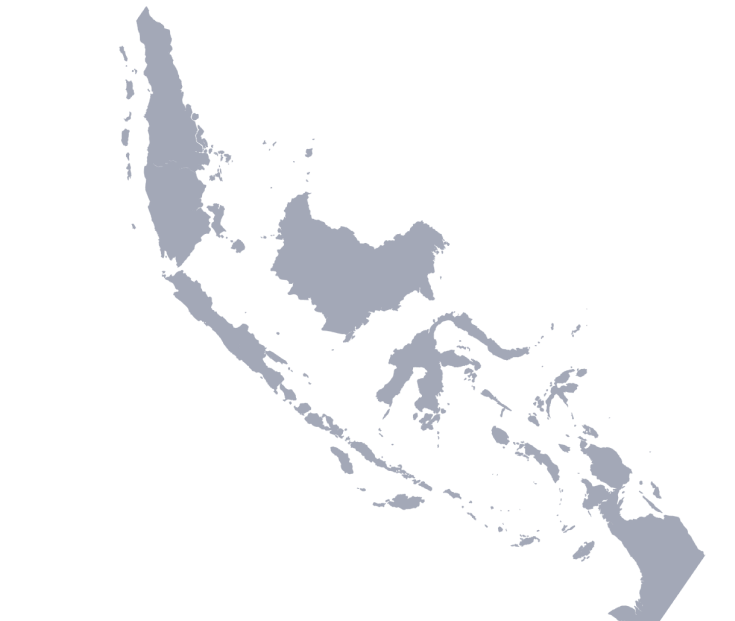
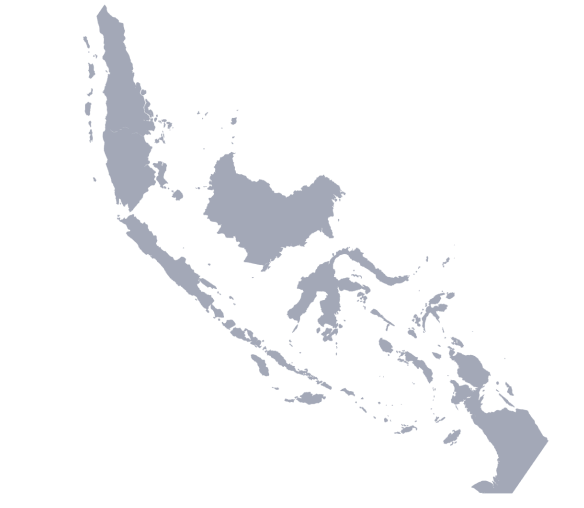
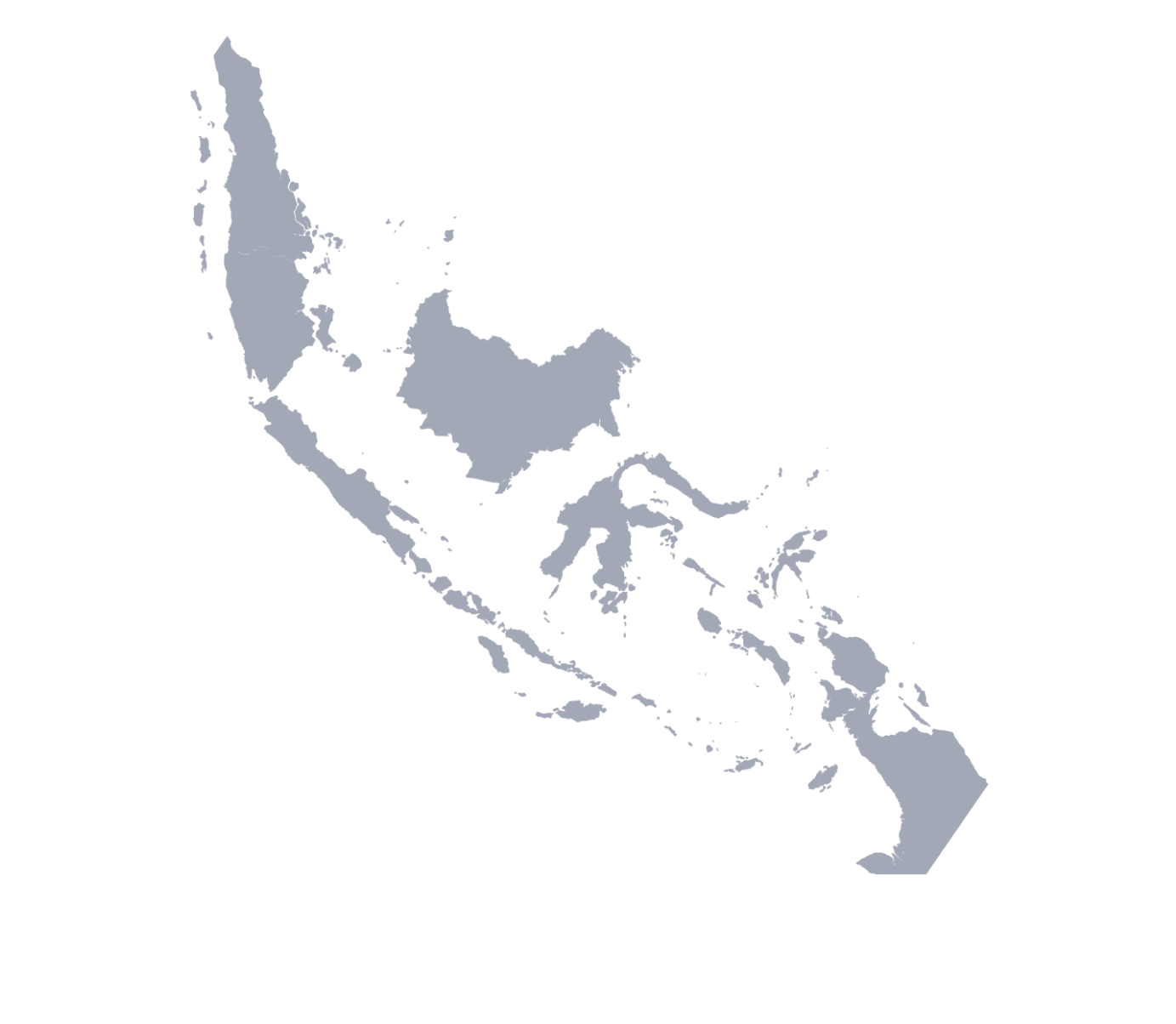
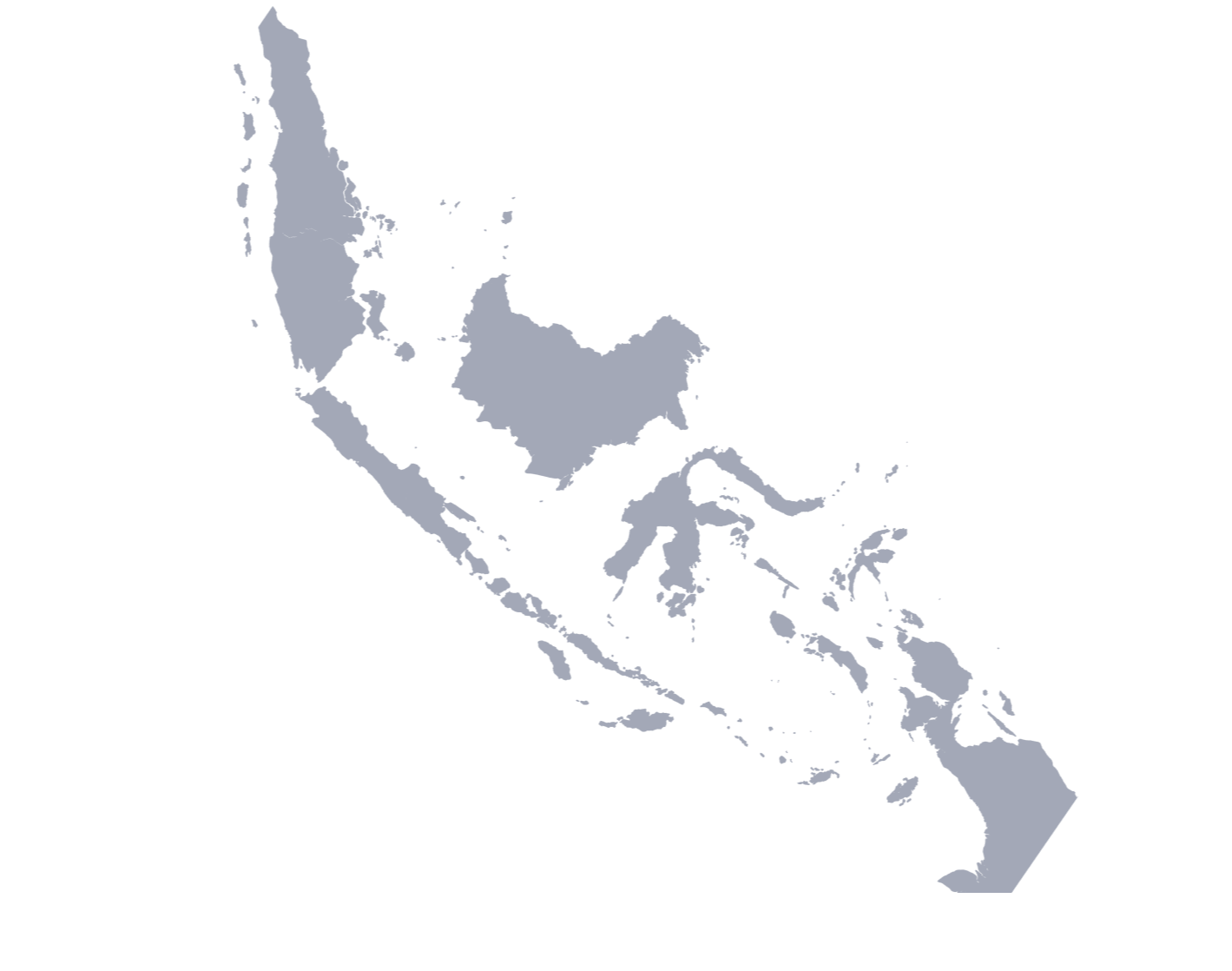
Indonesia has roughly 270 million people spread across more than 17,000 islands, with agriculture absorbing a disproportionate share of employment relative to its GDP contribution. The arable base is fragmented: the modal farm is well under one hectare, which fundamentally shapes what machinery the wholesale channel can sell.
This is not a Brazil-style large-mechanization market. Demand concentrates in compact, low-horsepower, multi-purpose equipment that fits paddy bunds, terraced fields, and intercropped smallholdings — not full-size combines or row-crop tractors.
Plantation agriculture — palm oil, rubber, sugar — sits on top of the smallholder layer as a separate, more capital-intensive sub-market with its own equipment specifications and procurement cycles.
Demand is also seasonally lumpy. Planting and harvest windows for rice (two to three cycles per year on irrigated Java land) and palm (continuous but with peak fruit-set seasons) create distinct ordering peaks that wholesalers must inventory against, often months in advance of farmer cashflow.
Hyperlocalization: one Indonesia is several agricultural geographies
Java is the rice and horticulture engine, where mini-tractors, power tillers, transplanters, and combine harvesters dominate demand. Dealer density is highest here, technician supply is deepest, and competition between Japanese principals is most intense.
Sumatra and Kalimantan run on plantation logic — palm oil, rubber, and increasingly oil-palm replanting cycles — which calls for fruit harvesters, mechanized loaders, plantation tractors, and a heavier book of agrochemicals (herbicides especially). The wholesale account base here skews toward estate procurement teams and large cooperative groupings rather than individual farmers.
Sulawesi, Nusa Tenggara, and Papua run mixed and dryland systems with thinner road networks. Demand exists but the unit economics of stocking, servicing, and warranty-supporting equipment in these regions force wholesalers to either partner with strong local distributors or accept that rental and contract-mechanization models will displace outright sales.
Opportunities extend well beyond Java's metros
Unlike most consumer industries, KBLI 4653 demand is almost entirely outside major metros. The center of gravity sits in regency capitals, rural sub-districts, and plantation belts. A wholesaler that designs around Jakarta or Surabaya logistics will miss the actual customers.
Tier-2 and tier-3 cities — Sragen, Karawang, Indramayu, Lampung, Pekanbaru, Pontianak, Makassar, Kendari — are the meaningful sales nodes. These cities anchor dealer territories that feed sub-district kiosks and cooperative procurement.
Growth pockets sit in areas combining government program intensity (food estate sites in Central Kalimantan and Papua), plantation replanting (mature palm in Riau and North Sumatra), and rising commercial horticulture (Bandung highlands, Berastagi, Malang). Each pocket rewards a different product mix.
Government food-estate and rice self-sufficiency programs continue to anchor multi-year demand for mid-horsepower tractors and combine harvesters
Palm-oil replanting cycles in Sumatra and Kalimantan drive sustained pull-through for plantation machinery, sprayers, and herbicides
Rural fintech and dealer-level credit unlock smallholder purchases that were previously cash-blocked
Mechanization of horticulture and corn farming is the next leg of growth as rice mechanization matures in Java
Brigade alsintan and cooperative-led equipment pooling create institutional buyers larger than individual farmers
Local assembly partnerships with Chinese and Indian OEMs are opening a more affordable mid-tier between full-import Japanese machines and informal alternatives
Distribution realities: ports, dealers, technicians, and the last-mile gap
Capital equipment for KBLI 4653 enters primarily through Tanjung Priok, Tanjung Perak, and Belawan, then moves to regional warehouses before fanning out to dealers. Inter-island shipping (Pelni, container lines, and Tol Laut subsidized routes) adds lead time and cost penalties that compound for outer islands.
Agrochemicals and fertilizers ride a different logistics stack. Subsidized fertilizers move through Pupuk Indonesia's regulated distribution chain with appointed distributors and kiosks; non-subsidized inputs and crop-protection products move through commercial wholesale channels that resemble FMCG distribution.
The binding constraint is rarely the truck — it is the technician and the spare part. A combine in West Sulawesi that breaks down two days into a 14-day harvest window represents a catastrophic loss for the farmer, and the wholesaler's ability to dispatch a part and a trained mechanic within 72 hours determines whether the brand survives in that province.
Stock spares forward — provincial parts depots matter more than national headquarters inventory; downtime cost on a single combine during harvest exceeds the working-capital cost of carrying parts
Treat technician networks as a strategic asset; certify local mechanics through cooperatives and vocational schools (SMK Pertanian) to densify coverage cheaply
Design financing alongside the product; smallholders and cooperatives rarely buy with own funds and dealer credit lines or bank tie-ups often decide the sale
Build dual operating models for subsidized versus commercial inputs — they have different margins, different compliance burdens, and different buyer behavior
Industry Definition
What is KBLI 4653, and where does the boundary sit?
Industry Definition
KBLI 4653 is the wholesale spine for everything a farm needs to operate at scale: traction equipment (power tillers, four-wheel tractors), in-field machinery (transplanters, seed drills, sprayers, harvesters, threshers, dryers), water and post-harvest hardware, and the running inputs that keep crops alive — fertilizers (both subsidized and commercial), agrochemicals, seeds, and the spare parts and consumables that keep machinery in the field.
The boundary explicitly excludes three adjacent activities. Manufacture of these goods sits in KBLI Section C, Division 28 (machinery) and Division 20 (agrochemicals and fertilizers). Retail sale to a household farmer at a kiosk counter belongs in Division 47 — kios saprotan retail is KBLI 4773, not 4653. And earthmoving or construction equipment, even when it shows up on a plantation, falls under KBLI 4659.
The defining act is wholesale intermediation: taking title to product from a manufacturer or principal, carrying inventory and risk, and reselling to a downstream buyer that is not the final consumer — a dealer, kiosk, cooperative, plantation procurement desk, or government program. Importers acting purely as agents without taking title sit closer to commission trade and are not the prototypical 4653 operator.
Indonesia in Focus
Three structural facts shape how 4653 actually behaves in Indonesia. First, almost no end-customer — smallholder, brigade, or even mid-sized plantation — imports or sources directly from the OEM. The wholesale layer is therefore not a back-office function; it is the visible mechanism through which mechanization happens, and channel design beats product design as a determinant of share.
Second, the demand mix is shaped by farm size, not by aggregate wealth. With the modal farm well below one hectare, two-wheel power tillers, mini four-wheel tractors, and 1–1.5 ton/hour mini combines absorb the volume; full-size Western row-crop equipment has almost no addressable market outside the largest estates. This pulls the wholesale book toward Japanese, Chinese, Indian, and local Indonesian brands that have engineered for the sub-hectare reality.
Third, the same KBLI code straddles two regulatory worlds. Subsidized fertilizer runs through Pupuk Indonesia's allocation system at HET prices with Kartu Tani eligibility checks. Commercial machinery and non-subsidized inputs move under standard import, tax, and trade rules. A wholesaler holding both books is effectively running two businesses with different P&L logic, different audit exposure, and often different sales teams.
Industry Classification
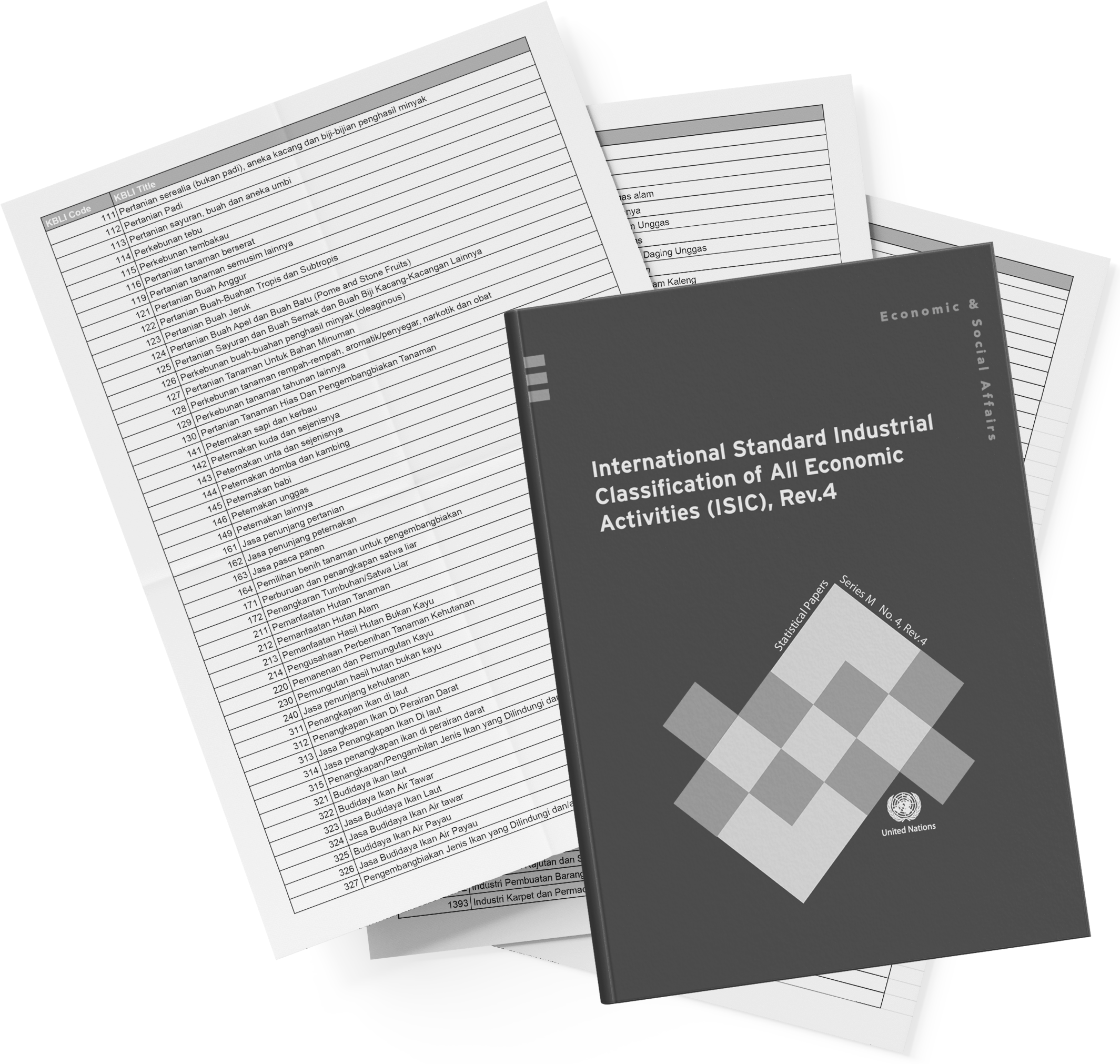
KBLI 2020 — code 4653 — Perdagangan Besar Mesin, Peralatan dan Perlengkapan Pertanian. The label intentionally bundles machinery and supplies because, in the Indonesian operating reality, the same distributor frequently carries both — separating them at the classification level would mismatch how the business is actually run.
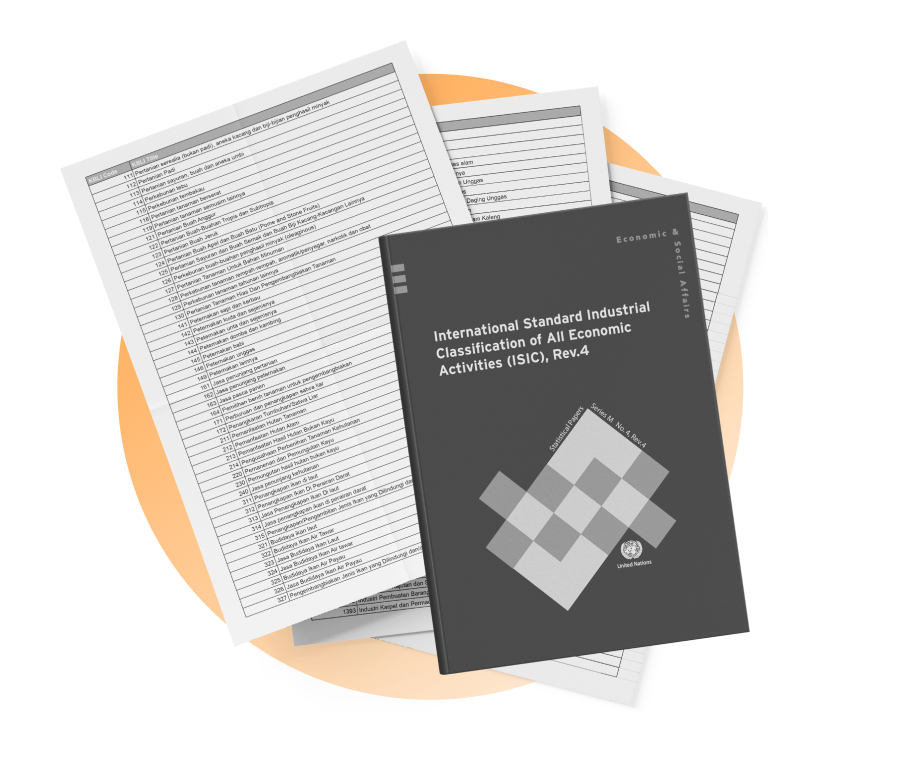
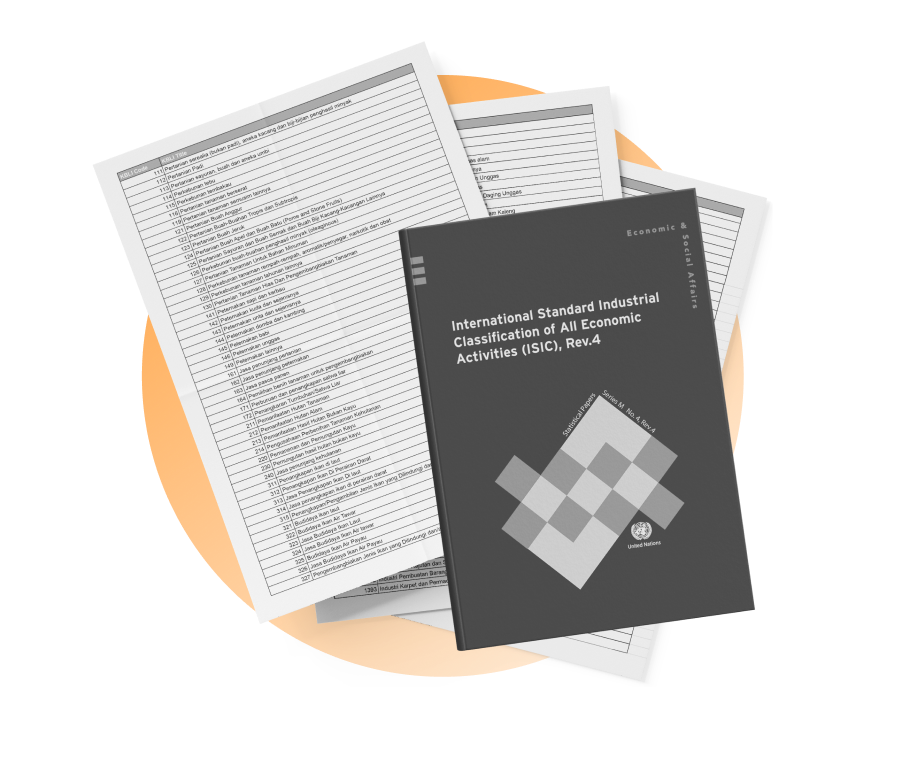
Internationally, 4653 maps directly to ISIC Rev.4 class 4653 (Wholesale of agricultural machinery, equipment and supplies). The four-digit alignment is deliberate; Indonesia's statistical agencies, customs, and OSS licensing all rely on the ISIC parity for cross-border comparison and harmonized reporting.
Useful US analogue: the activity is split in NAICS between 423820 (Farm and Garden Machinery Merchant Wholesalers) and 424910 (Farm Supplies Merchant Wholesalers). The Indonesian consolidation under one code is operationally truer — but analysts comparing US and Indonesian operators must reaggregate the NAICS pair before drawing conclusions.
Adjacent codes that frequently appear on the same NIB: KBLI 4659 (wholesale of other machinery, when the operator carries construction-adjacent equipment), KBLI 4669 (wholesale of other chemicals, when agrochemical depth is wide), and KBLI 4690 (general wholesale, used as a catch-all). Multi-KBLI registration is standard practice and a useful signal of operator scope when reading filings.
Industry Terms that actually matter
Reading this industry without its Indonesian vocabulary creates predictable misreadings. "Tractor" almost never means a US four-wheel utility unit — it usually means a two-wheel walk-behind power tiller. "Distributor" carries specific regulatory meaning when fertilizer is in scope. The terms below are the ones that meaningfully change interpretation of a contract, tender document, or competitor filing.
Alsintan (Alat dan Mesin Pertanian)
Statutory umbrella term covering all agricultural tools and machinery referenced in Indonesian government programs, subsidy schemes, and public procurement specifications.
Every Ministry of Agriculture program budget, LKPP tender line, and provincial dinas pertanian procurement uses this term. A KBLI 4653 operator that cannot map its product catalog to alsintan categories is effectively shut out of the institutional channel.
Traktor Tangan (Power Tiller)
Two-wheel walk-behind tractor in the 6–12 HP diesel range, designed for paddy puddling, small-plot tillage, and intercropped beds.
The single highest-volume machinery category in the country and the workhorse of smallholder mechanization. Volume share between Quick, Kubota, Yanmar, and Chinese challengers in this category is a leading indicator of overall channel power.
Combine Harvester (mini and full-size)
Self-propelled reaping-threshing-winnowing unit. Indonesia's volume sits in mini-combines rated 1–1.5 tons/hour; full-size machines remain plantation- and program-exclusive.
Combines are where rural wage inflation translates fastest into a purchase decision, since harvest labor is the most expensive and time-bound input. Concentrated growth pocket and a key competitive battleground.
Pupuk Bersubsidi
Government-subsidized fertilizer (Urea, NPK Phonska, ZA, SP-36, Pupuk Organik) sold at Harga Eceran Tertinggi (HET) ceiling prices through Pupuk Indonesia-appointed distributors and kiosks resmi.
Defines a regulated parallel economy: allocation quotas set the revenue ceiling, HET caps the price, Kartu Tani gates the buyer, and reporting obligations consume real opex. Operators must run it as a separate P&L from commercial fertilizer.
Brigade Alsintan
Village- or cooperative-level pooled-equipment unit, frequently seeded by Ministry-of-Agriculture grant programs, that operates shared machinery across multiple member farmers.
A single brigade purchase order can equal hundreds of individual smallholder transactions and comes with predictable service obligations. Brigades are the institutional buyer most directly created by policy and the most attractive target for distributors with service depth.
E-Katalog (LKPP)
Electronic procurement catalog operated by LKPP through which national ministries, provincial governments, and regency administrations purchase listed goods including alsintan, seeds, and inputs.
Listing in e-katalog functions closer to a regulatory event than a commercial sale. Pricing, warranty terms, and spec compliance on the catalog set the public reference point and lock in or lock out a brand for the procurement cycle.
Principal–Distributor Agreement
Contractual grant of import, marketing, and service rights — usually exclusive or semi-exclusive at the national level — from an OEM (Kubota, Yanmar, Iseki, Mahindra, DongFeng, YTO) to a domestic 4653 operator.
For premium-tier distributors, this contract is the firm's single most valuable balance-sheet item even though it does not appear on the balance sheet. Loss of the contract effectively dissolves the business; renewal terms drive most strategic decisions.
Kios Tani / Toko Saprotan
Sub-district-level retail outlet selling fertilizers, agrochemicals, seeds, hand tools, and small implements directly to farmers; functionally the last commercial node before the field.
Tens of thousands of these kiosks define the input channel's physical reach. Wholesalers compete to be the preferred supplier through replenishment speed, credit terms, and merchandising support — relationship continuity often outranks farmer-level brand preference in driving sell-through.
Industry Overview – Business Archetypes
KBLI 4653 hosts several distinct operating archetypes. They share the code but not the business — capital intensity, working capital cycle, customer concentration, and competitive moat differ materially across them. Reading a competitor or target without identifying which archetype it belongs to leads to misjudged comparables.
Brand-Authorized Principal Distributor (Ecosystem Anchor)
Holds exclusive or near-exclusive distribution rights from a major OEM — typically Japanese (Kubota, Yanmar, Iseki), Indian (Mahindra, TAFE), or Chinese (DongFeng, YTO, Foton). Manages national pricing, warranty, parts logistics, and dealer accreditation.
Operates as the de facto Indonesia franchise of the principal: builds the dealer pyramid, runs technician certification, and owns the after-sales relationship. Reputation and continuity of the principal contract is the central commercial asset.
Margin spread between landed cost and dealer price on equipment, typically supplemented by parts and accessory margin that runs higher than equipment margin
After-sales service fees, scheduled maintenance contracts for institutional buyers, and warranty-extension programs
Volume rebates from the principal tied to annual targets and market-share commitments
Heavy working capital: imported inventory plus dealer credit lines tie up significant cash; FX exposure on yen, yuan, or rupee is a structural cost driver
Service network is non-negotiable; principals audit technician coverage and parts inventory as a condition of contract renewal
Concentration risk is real — losing a principal contract can erase the business overnight
Multi-Brand Trading House (Bridge Model)
Aggregates multiple second-tier brands and white-label imports, often combining smaller Chinese and Indian OEMs with locally-assembled units. Sells across regions through a flexible dealer book rather than an exclusive pyramid.
Competes on price-point coverage and flexibility rather than brand prestige. Often serves price-sensitive cooperatives, government tenders where lower-tier specs qualify, and dealers who want to fill gaps in their Kubota or Yanmar lineup.
Higher per-unit margin than principal distributors, offset by lower volume and lower brand pull
Bundled deals combining equipment with consumables, parts, and sometimes financing arrangements
Trading and arbitrage margin on opportunistic shipments tied to seasonal demand spikes or program cycles
Lower fixed cost than a principal distributor; service is often outsourced to independent workshops
Vulnerable to brand commoditization and parts-availability complaints from farmers; reputational risk is higher
Strong fit for tier-2 cities and outer islands where Japanese principals are less aggressive
Aftermarket Parts and Service Specialist (Specialist Operator)
Focuses on spare parts, consumables (belts, blades, filters, oils), and workshop services for the installed base of agricultural equipment. Often started by former dealer mechanics or family workshops that scaled into wholesale.
Operates a high-velocity inventory model with thousands of SKUs across major brands, distinguishing itself on stockout rates and dispatch speed rather than equipment brand.
Higher gross margin than equipment wholesale (often 25–40% versus mid-teens on equipment), with much faster inventory turns
Workshop service revenue, including refurbishment of used machines for resale
Bundled maintenance subscriptions sold to brigades and cooperatives
Working capital intensity in SKU breadth, not unit value; software-led inventory management is increasingly a moat
Counterfeit and grey-market parts are a constant pricing pressure, especially from informal imports
Sticky customer base once relationships with workshops and cooperatives are established
Agrochemical and Fertilizer Wholesaler (Inclusion Engine)
Distributes crop-protection products (herbicides, pesticides, fungicides), commercial fertilizers, and seeds to retail kiosks and cooperatives. Often holds appointed-distributor status for subsidized fertilizer alongside a commercial book.
Volume-driven, agronomic-led: technical sales reps and field demonstrations are central to converting farmer demand. Closely linked to crop seasons and government program cycles.
Trading margin on commercial inputs, plus regulated distribution fee on subsidized fertilizer allocation
Manufacturer programs (Syngenta, Bayer, Corteva, FMC) paying for shelf presence, demos, and farmer-meeting activations
Seasonal credit terms to kiosks generating short-term financing margin
Dual compliance burden: pesticide registration (Komisi Pestisida), fertilizer licensing, and subsidy program reporting
Highly relationship-driven at kiosk level; switching costs at the kiosk are low but loyalty compounds over years
Weather and pest cycles create demand spikes that reward inventory courage
Government Procurement Channel Partner (Infrastructure Enabler)
A subset of any of the above archetypes that has specialized in winning and fulfilling government tenders — UPSUS programs, Ministry of Agriculture grants, food-estate equipment packages, and provincial procurement.
Reads programs months ahead, prepositions inventory, and manages e-katalog presence as a core capability. Often takes lower commercial margin in exchange for volume certainty.
Volume contracts with predictable margins but extended receivables and complex compliance documentation
Service and training packages bundled into procurement contracts
Re-engagement on consumables and parts once equipment is deployed to beneficiaries
Receivables cycle is long; financing capacity for government contracts is itself a competitive advantage
Procurement integrity rules and audit exposure are real; compliance overhead is non-trivial
Pipeline lumpiness can swing annual revenue ±30% depending on program cycles
Industry Performance & Outlook
Steady, policy-anchored growth with structural tailwinds and FX-driven headwinds
The directional reading is positive but uneven. Mechanization penetration in Indonesia remains below regional peers like Thailand and Vietnam, leaving structural runway in mini-tractors, transplanters, and harvesters. Demand growth tracks rural labor scarcity, government program intensity, and the pace of palm replanting cycles more than headline GDP.
Equipment volumes are vulnerable to two cyclical pressures. Rupiah depreciation passes through directly to landed equipment cost and erodes farmer affordability, especially in the cash-constrained smallholder segment. Commodity price swings — palm CPO, rice gabah, corn — change farmer cashflow and willingness to capex, often with a one-to-two-season lag.
Input wholesale (agrochemicals, fertilizers, seeds) is more resilient because demand is non-deferrable: a planted crop must be fertilized and protected. The subsidized fertilizer book grows roughly with planted area; the commercial book grows faster but from a smaller base.
Forward-looking, the most credible growth pockets are corn and horticulture mechanization, palm replanting equipment in Sumatra and Kalimantan, irrigation and water-management equipment in dry-season-stressed provinces, and aftermarket parts as the installed base accumulates.
Performance indicators that matter for KBLI 4653
Mechanization penetration (HP per hectare)
How far the runway is for capital equipment
Moderate and rising; well below Thailand and South Korea, with most uplift in low-HP categories
Government alsintan procurement budget
Lumpy but material demand pulse
Annual program budgets via Ministry of Agriculture and food-estate initiatives drive concentrated order spikes
Subsidized fertilizer allocation
Defines the regulated half of the input book
Allocations adjusted yearly; Kartu Tani rollout and HET changes reshape distributor economics
Rupiah-yen / rupiah-yuan exchange rate
Landed cost on imported machinery
Direct margin and affordability impact; hedging discipline differentiates principal distributors
Palm CPO and rice gabah prices
Farmer cashflow and capex willingness
Plantation procurement and smallholder upgrade cycles lag commodity prices by one to two seasons
Aftermarket parts revenue share
Maturity and stickiness of the installed base
Rising as fleet ages; parts and service increasingly carry the profitability of equipment distributors
Outlook: what to watch over the next 24–36 months
Pace and design of subsidized fertilizer reform — any move toward direct-to-farmer cash or Kartu Tani digitization rewires distributor economics
Trajectory of food-estate programs in Kalimantan and Papua, which determine institutional equipment demand outside Java
Local-assembly partnerships between Chinese OEMs and Indonesian distributors, which could compress mid-tier equipment prices
Fintech penetration into farmer and cooperative financing, expanding the addressable buyer base beyond cash-paying customers
Trade and import policy on completely-built-up versus completely-knocked-down units, which shifts where margin is captured in the value chain
Industry Growth Drivers
Growth in KBLI 4653 is not driven by a single macro tailwind. It is the compound of rural labor economics, policy intensity, commodity cycles, and the slow maturation of dealer and service infrastructure. The drivers below are the ones that meaningfully move the needle for distributors and principals.
Rural labor scarcity and rising wages
Younger workers continue to migrate from villages into manufacturing zones and urban services, leaving farm labor scarcer and more expensive. Harvest-window labor in particular has become structurally hard to source, especially in Java's rice belt.
This is the single most durable demand driver for mechanization. Where a decade ago manual transplanting and harvesting was the cheaper option, the labor-machinery break-even has crossed for many smallholders, and the wholesale channel is the path through which the substitution happens.
Rural wage indices and harvest-labor scarcity reports from BPS regional offices
Provincial out-migration trends in agricultural districts
Food-security policy and government procurement programs
Rice and corn self-sufficiency remain explicit national priorities, translating into recurring equipment grant programs (UPSUS, brigade alsintan), food-estate equipment packages, and irrigation rehabilitation budgets.
These programs are lumpy but large. A distributor positioned on e-katalog and with relationships across Ministry of Agriculture provincial offices can capture multi-year demand visibility that pure commercial channels cannot match.
Ministry of Agriculture annual program budgets and procurement plans
Food-estate site activations and milestone-linked equipment allocations
Palm and tree-crop replanting cycles
Palm-oil estates planted in the 1990s and 2000s are entering replanting cycles, especially in Sumatra and Kalimantan. Smallholder palm replanting programs (PSR) add a second wave of demand.
Replanting drives demand for site-preparation machinery, sprayers, plantation tractors, and herbicides over multi-year cycles. Wholesalers with plantation account coverage benefit disproportionately.
BPDPKS PSR disbursement and replanting hectare targets
Palm estate replanting announcements and CPO price-driven capex cycles
Maturation of the installed base and aftermarket pull-through
Two decades of accelerating equipment sales have created an installed base large enough that parts, service, and refurbishment now represent a meaningful and growing revenue stream.
This shifts profit mix away from new-unit margin (price-pressured, FX-exposed) toward aftermarket (higher-margin, sticky). Distributors that built service depth a decade ago are now compounding it.
Age profile of the deployed equipment base by region
Used-equipment trading volume and refurbishment activity
Rural fintech and embedded financing
Dealer-level credit, P2P lending, multi-finance company partnerships, and bank programs targeted at farmers and cooperatives have expanded the affordable buyer base. A power tiller that requires twelve months of harvest income upfront is unsellable; the same unit on a 24-month installment is a different product.
Wholesalers that have integrated financing into the sale (either captive or partnered) are converting demand that was previously latent.
OJK reporting on multi-finance and P2P agriculture lending
Kredit Usaha Rakyat (KUR) disbursement to the agriculture sector
Local assembly and mid-tier price-point emergence
Joint ventures and CKD-assembly arrangements with Chinese and Indian OEMs are introducing equipment at price points between informal imports and Japanese principals. This expands the affordable market without cannibalizing the premium tier.
It also creates new wholesale opportunities for distributors who can stand behind a less-known brand with credible local service — converting unit-cost advantage into commercial advantage.
BKPM investment announcements for agricultural machinery assembly facilities
TKDN (local content) requirements and incentives shaping assembly economics
Industry Trends & Development
Industry Development: how the channel reached its current shape
From import trading houses to a layered principal–distributor–dealer system
Indonesia's agricultural wholesale channel evolved through three structural shifts: the entry and entrenchment of Japanese OEMs, the formalization of subsidized fertilizer distribution under Pupuk Indonesia, and the digitization of both government procurement and dealer-level operations.
Each shift redefined where margin lived. The Japanese OEM entry forced amateur trading into a service-led franchise model. Subsidized fertilizer formalization split the input book into two parallel economies. Digitization is now compressing the distance between principal and farmer.
Foundational mechanization and Japanese OEM entrenchment
Kubota, Yanmar, and Iseki consolidate positions in mini-tractors and power tillers through appointed distributors. Local brands like Quick (PT CV Karya Hidup Sentosa) carve out the entry-tier power tiller market. Fertilizer distribution remains state-dominated under PT Pupuk Sriwidjaja and its subsidiaries.
Government program-driven volume and dealer network expansion
UPSUS Pajale and other rice-corn-soy intensification programs inject large procurement budgets. Distributors race to build provincial dealer coverage. Combine harvesters enter the Indonesian market in volume, mechanizing the harvest bottleneck. Pupuk Indonesia consolidates state fertilizer entities.
Chinese and Indian challenger entry and price-tier expansion
DongFeng, YTO, Foton, and Mahindra establish meaningful distribution; price-tier coverage widens. E-katalog (LKPP) digitization changes how public procurement is contested. Kartu Tani rollout begins, tightening subsidized fertilizer eligibility. Plantation mechanization accelerates with palm replanting programs.
Pandemic supply shocks and supply-chain resilience push
Shipping disruptions, container shortages, and FX pressure expose distributors with thin inventory buffers. Local assembly conversations accelerate. Aftermarket parts revenue becomes more strategically important as new-unit sales pause. Food-estate program announcements signal sustained institutional demand.
Digital channel maturation and financing integration
Dealer-level digital tools (inventory, CRM, WhatsApp ordering), embedded financing partnerships, and structured fertilizer subsidy reform discussions reshape distributor economics. Aftermarket emerges as a recognized profit pool. Provincial governments increasingly procure independently via e-katalog.
Key Trends — what's changing in the business model
The most important trends in KBLI 4653 are not macro narratives — they are shifts inside specific Business Model Canvas dimensions. The six below are the ones changing how money is actually made in this industry.
From transactional principal contracts to deeper joint go-to-market (Key Partners)
OEM principals are moving past arms-length distributor contracts toward joint planning on inventory, service standards, and local-assembly economics. The Japanese principals increasingly co-invest in dealer training, demo farms, and parts depots rather than leaving channel build to the distributor alone.
The strategic implication is that distributor performance is now measured on service KPIs and market-share targets, not just import volume. Distributors that cannot match this depth of partnership are losing principal contracts to competitors who can.
Principal distributors and OEMs
Aspiring multi-brand wholesalers
Dealer networks under principal pyramids
Embedded financing as a core product, not a sales add-on (Revenue Streams)
Equipment sales are increasingly bundled with financing — through multi-finance partners, KUR-linked bank facilities, P2P lending, or captive dealer credit. The unit economics now include a financing margin or referral fee alongside trading margin.
This expands the addressable buyer base from cash-rich plantations and cooperatives to a much larger pool of smallholders. Distributors who have not built financing capability are competing for a structurally smaller market.
Wholesalers and dealers
Multi-finance companies and rural banks
Smallholder farmers and cooperatives
Aftermarket and service revenue becoming the profit center (Key Resources / Value Proposition)
Parts inventory, certified technicians, and workshop capability have shifted from cost centers to the most defensible profit pool. New-unit margin is FX-exposed and procurement-pressured; parts margin is higher and stickier.
This rewards distributors who built service networks early and penalizes those who optimized only for unit sales. The Value Proposition is shifting from "we sell the cheapest tractor" to "we keep your machinery running during harvest."
Principal distributors and aftermarket specialists
Cooperative buyers and brigade alsintan operators
Independent workshops competing on parts access
Direct-to-dealer and direct-to-kiosk digital ordering (Channels)
WhatsApp-based ordering, distributor-built apps, and OEM-direct portals are compressing the layers between principal and end customer. Order frequency rises, batch sizes shrink, and information asymmetry between layers collapses.
Distributors who treat digital tools as a back-office investment are gaining share over those who treat them as marketing. The channel is becoming a logistics and credit function more than a relationship-only function.
Distributors at every tier
Kios tani retail layer
Cooperatives and brigades placing direct orders
Subsidized-fertilizer reform pressure (Customer Segments / Cost Structure)
Recurring policy debate about moving subsidies from product-price subsidy (current HET model) toward direct cash transfers to farmers or tighter Kartu Tani eligibility creates structural uncertainty for the regulated half of the wholesale book.
Appointed distributors are exposed: any move toward direct-to-farmer mechanisms could collapse the distribution margin on subsidized volumes. Distributors with strong commercial fertilizer books are better hedged than pure-subsidy operators.
Pupuk Indonesia subsidiaries and appointed distributors
Kios tani retailers dependent on subsidized volume
Farmer cooperatives operating on regulated price expectations
Cooperative and brigade aggregation reshaping the buyer (Customer Segments)
Procurement increasingly flows through cooperatives, BUMDes (village-owned enterprises), and brigades rather than individual smallholders. These are institutional buyers with procurement processes, technical evaluation, and aggregated buying power.
Wholesalers must serve a more sophisticated counterparty than the household farmer of a decade ago. Sales motion, contracting, and after-sales obligations all shift accordingly.
Wholesalers and dealer networks
Cooperatives, KUDs, and BUMDes
Government extension services facilitating aggregation
Impact and Sustainability
Sustainability in KBLI 4653 is not only about environmental footprint — it is also about the durability of the channel itself: whether the service infrastructure that the industry depends on can scale with the installed base, and whether the regulatory architecture for fertilizer and pesticides remains workable.
Productivity and rural economic impact
Mechanization through this channel directly affects yield per hectare, harvest loss rates, and rural labor income. A well-functioning wholesale layer is what converts policy intent on food security into tangible field outcomes.
The counterfactual matters: under-served regions in eastern Indonesia continue to experience higher harvest losses and lower mechanization simply because the wholesale and service infrastructure does not reach them at workable economics.
Faster mechanization in Java widens the productivity gap with eastern Indonesia unless distribution reach is deliberately built outward
Subsidized fertilizer expands access but distorts price signals and crowds out commercial product innovation
Environmental and stewardship considerations
Agrochemical and fertilizer distribution carries real environmental responsibility — runoff, soil acidification from over-fertilization, and pesticide misuse all trace back through the wholesale layer. Stewardship programs (proper storage, farmer training, container collection) increasingly differentiate responsible operators.
Equipment fuel efficiency and the shift toward smaller, more efficient diesel engines (and eventually electrified options) is a slow but real environmental dimension of the business.
Stewardship investment is real opex with no immediate revenue return; commitment varies by operator size and customer profile
Counterfeit and unregistered pesticides circulating informally undercut compliant wholesalers and shift environmental risk to farmers
Channel durability and service capacity
The installed base is growing faster than certified technician supply in many regions, especially eastern Indonesia. Without deliberate investment in vocational training (SMK Pertanian partnerships, in-house technician academies), service quality will erode and the value proposition will weaken.
Aging dealer principals in family-owned distributorships and succession planning are an underappreciated risk to channel continuity in the next decade.
Investment in technician training has multi-year payback and weak appropriability — competitors poach trained mechanics
Consolidation among family distributorships could improve scale but risks losing local relationships that anchor the channel
Industry Segmentation
Industry Segmentation – Equipment and machinery categories
Equipment within KBLI 4653 segments by power range, operation type, and crop fit. The categories below dominate volume, value, and operating-model implications in Indonesia. Mini-class power tillers and tractors carry the highest unit volume; combines and plantation machinery carry the highest per-unit ticket; irrigation and post-harvest equipment carry the strongest forward-looking growth profile.
Segmentation by equipment category
Power tillers (traktor tangan)
Two-wheel walk-behind machines, 6–12 HP diesel, for paddy puddling and small-plot tillage
Smallholder farmers, cooperatives, brigade alsintan
Single largest volume category; fits Indonesia's sub-hectare farm structure where four-wheel tractors are impractical
Compact and mid-size tractors
Four-wheel tractors typically 20–60 HP, often Kubota L-series, Yanmar EF, Mahindra small-frame
Larger smallholders, plantation cooperatives, government procurement
Bridges the gap between hand tillers and full plantation equipment; favored in food-estate and brigade procurement
Combine harvesters (mini and full)
Mini-combines (1–1.5 ton/hour) for paddy; larger units for institutional rice and corn
Cooperatives, brigade alsintan, government procurement
Mechanizes the harvest labor bottleneck; demand growth tracks rural wage inflation and government program intensity
Transplanters and seed drills
Rice transplanters (4-row and 6-row walk-behind or riding) and seed drills
Cooperatives, government program beneficiaries
Still under-penetrated relative to the rice area; an explicit growth pocket in current and future government programs
Plantation and palm equipment
Fruit harvesters, mechanized loaders, plantation tractors, sprayers
Palm estates, smallholder palm groups under PSR, rubber and sugar estates
Tied to plantation replanting cycles and CPO economics; distinct from the food-crop equipment market
Irrigation and water management
Pumps, sprinkler kits, drip-irrigation systems, water-distribution hardware
Horticulture farmers, dry-season operators, government rehabilitation programs
Strategic priority as climate variability stresses water availability; high growth pocket in eastern Indonesia
Post-harvest equipment
Dryers, rice mills, threshers, sorting equipment
Cooperatives, rice millers, BUMDes
Reduces post-harvest loss; aligned with food security policy and farmer-income improvement programs
Volume concentrates in power tillers and mini-combines; value concentrates in mid-size tractors and combines; margin concentrates in spare parts across all categories.
Cross-category bundling (tractor + implement + sprayer + parts kit) is increasingly common in government procurement and cooperative tenders.
Industry Segmentation – Agricultural inputs and supplies
The input side of KBLI 4653 segments along regulatory and agronomic lines. The most important fault line is subsidized versus commercial fertilizer — different pricing, different distribution rights, different margins, different compliance burden. The agrochemical and seed segments are commercially-driven and look closer to FMCG distribution in their channel logic.
Segmentation by input category
Subsidized fertilizer
Urea, NPK Phonska, ZA, SP-36, Organik distributed at HET via Pupuk Indonesia network
Eligible smallholders via Kartu Tani, through kios resmi
Policy instrument for food security; defines a regulated parallel economy under KBLI 4653
Commercial fertilizer
Non-subsidized urea, NPK, specialty blends, foliar fertilizers
Plantations, commercial horticulture, large commercial farms, ineligible smallholders
Commercial demand for higher-spec products and non-quota volume; less price-regulated, more competitive
Crop protection (agrochemicals)
Herbicides, insecticides, fungicides registered under Komisi Pestisida
All farm scales via kios saprotan, plantations directly
Yield-defense; demand is non-deferrable once a crop is planted, creating reliable seasonal volume
Seeds
Hybrid and certified seeds (rice, corn, vegetables, palm) plus farmer-saved seed in some categories
Cooperatives, plantations, commercial farmers, government distribution
Genetics drive yield ceilings; certified-seed share grows with mechanization and program promotion
Spare parts and consumables
OEM and aftermarket parts, belts, blades, filters, lubricants, sprayer nozzles
Workshops, cooperatives, dealers serving installed base
High-margin, high-velocity category that subsidizes equipment distributor profitability
Specialty agri-supplies
Mulch film, nets, greenhouse hardware, biostimulants, soil amendments
Horticulture and high-value-crop farmers
Smaller but faster-growing pockets tied to premium horticulture and protected agriculture
Regulated and commercial fertilizer cannot be operated as one business in practice — separate compliance, separate margin structure, and often separate sales teams.
Agrochemical demand is the most weather-sensitive sub-segment; pest and disease outbreaks (BPH, blast, leaf rust) drive sharp short-term demand swings.
Counterfeit and unregistered products are a constant pricing and trust pressure in both agrochemicals and parts.
Customer Segmentation: who actually buys and what they need
The KBLI 4653 customer base is heterogeneous in ways that matter for product mix, financing, and service. Treating "farmers" as one segment misreads the market — institutional buyers, plantations, and kiosks behave very differently from individual smallholders, and each carries distinct buying criteria.
Customer segments and what they value
Smallholder farmer (individual)
Sub-1 hectare plot, often paddy or palm in mixed cropping, cashflow tied to harvest cycles
Reduce labor dependence; protect yield; finance a one-off equipment purchase
Affordable price point, accessible financing, local repair availability, training support
Kios tani, cooperative purchasing, dealer demo days, WhatsApp-led informal sales
Cooperatives, KUDs, BUMDes
Institutional buyers aggregating member demand, often program-linked
Procure shared equipment; supply members with inputs at predictable terms
Bulk pricing, structured financing, training, predictable parts supply, audit-friendly documentation
Direct distributor relationships, dealer accounts, tender processes
Brigade alsintan
Cooperative or village-level pooled equipment operators, frequently government-grant-funded
Maintain a small fleet that serves multiple farmers across planting and harvest windows
Robust equipment, parts availability, technician access, operator training, warranty support
Government procurement (e-katalog), distributor service contracts, direct dealer relationships
Large plantations (palm, sugar, rubber)
Corporate estates with internal procurement and engineering teams
Mechanize replanting, harvesting, and field operations at scale; control input costs
Specification fit, after-sales service SLAs, parts availability, total cost of ownership
Direct principal distributor accounts, specialized plantation equipment specialists
Government procurement bodies
Ministry of Agriculture programs, provincial dinas pertanian, food-estate authorities
Distribute equipment and inputs to beneficiaries under program design
E-katalog compliance, certification, training package, beneficiary support, reporting
E-katalog, tender processes, direct contracts with appointed distributors
Kios tani / toko saprotan
Sub-district retail outlets selling inputs and small equipment to farmers
Maintain inventory across many SKUs at acceptable terms
Distributor credit, fast replenishment, sales support, demo materials, returns flexibility
Wholesaler direct sales, area sales executives, WhatsApp ordering, digital portals
Commercial horticulture and high-value-crop farmers
Small to medium operators in vegetables, fruit, ornamentals, often peri-urban
Maximize yield and quality on intensive plots
Specialty inputs, irrigation kits, protected-agriculture hardware, agronomic advice
Specialist wholesalers, dealer networks, manufacturer-led technical sales
Key Players
Ecosystem Mapping: core, extension, and enabling actors
The KBLI 4653 ecosystem is not a linear value chain — it is a layered system in which core wholesalers depend on extension actors for reach and on enabling actors for capital, compliance, and trust. Understanding which layer an actor sits in clarifies its leverage and its vulnerabilities.
Core — wholesalers and principal distributors
The primary value creators inside KBLI 4653: entities that take title to equipment and inputs and resell to dealers, cooperatives, plantations, and government bodies. They carry inventory, FX risk, working capital, and service obligations.
Principal distributors holding OEM rights (Kubota, Yanmar, Iseki, Mahindra, DongFeng, YTO)
Multi-brand trading houses aggregating second-tier brands
Aftermarket parts and service specialists
Appointed and commercial fertilizer wholesalers
Agrochemical and seed distributors
Extension — dealers, kiosks, cooperatives, brigades
Actors that extend the wholesale reach into sub-districts and onto the farm. They convert wholesale inventory into farmer-accessible products and represent the last meaningful node of trust before the field.
Authorized dealer networks under principal pyramids
Independent dealers and multi-brand retailers in regency capitals
Kios tani and toko saprotan at sub-district level
Cooperatives (KUD, Koperasi Tani) and BUMDes acting as institutional buyers
Brigade alsintan operating shared equipment fleets
Independent workshops servicing the installed base
Enabling — finance, regulation, knowledge, and infrastructure
Actors that do not move product but make the channel possible. They provide capital, regulatory approval, agronomic knowledge, and the infrastructure on which wholesalers and dealers depend.
Pupuk Indonesia and its subsidiaries (Petrokimia Gresik, Pupuk Kaltim, Pusri, Pupuk Kujang, Pupuk Iskandar Muda)
Ministry of Agriculture (Kementan), Komisi Pestisida, and provincial dinas pertanian
LKPP managing the e-katalog procurement system
Multi-finance companies, KUR-distributing banks, and P2P agriculture lenders
BPDPKS funding palm-smallholder replanting programs
OEM principals (Kubota Corporation, Yanmar, Iseki, Mahindra, Syngenta, Bayer, Corteva)
Vocational schools (SMK Pertanian) and agricultural universities supplying technical talent
Port and inter-island logistics operators (Pelindo, Pelni, Tol Laut subsidized routes)
How value flows across the ecosystem
Equipment value flows downward from principal to distributor to dealer to farmer, with each layer adding service, financing, or accessibility margin. Aftermarket parts and service flow in a tighter loop between the distributor's network and the installed base, generating the most reliable margin in the system.
Input value flows along two parallel tracks: subsidized fertilizers run through Pupuk Indonesia's regulated chain with allocations and HET pricing, while commercial inputs follow conventional wholesale economics. Both meet at the kios tani level, where farmers see them on the same shelf.
Information and trust flow upward as well as downward. Farmer experience with breakdowns, counterfeits, or training quality moves back through kiosks, cooperatives, and dealers, and ultimately shapes principal contract renewals and brand strength.
Leading Players: who shapes the market and how
Market leadership in KBLI 4653 is split across equipment and inputs and varies sharply by product sub-segment. Japanese OEMs and their Indonesian distributor arms anchor the equipment side; Pupuk Indonesia subsidiaries dominate fertilizer; multinational crop-science companies lead in registered agrochemicals; and a fragmented long tail of regional wholesalers and aftermarket specialists carries the rest of the volume.
Leading players by segment — positioning, strengths, and constraints
Kubota Indonesia (PT Kubota Indonesia)
Anchor in mini-tractors, power tillers, and combine harvesters; deep dealer network on Java
Brand reputation, certified service network, broad SKU coverage from power tillers to mini-combines, strong principal backing
FX exposure on imported units, pressure from Chinese and Indian challengers at the entry price point, dependency on Japanese supply chain
Yanmar (PT Yanmar Indonesia / Yanmar Agricultural Machinery Manufacturing Indonesia)
Core competitor to Kubota in tractors, combines, and engines; strength in mid-size segment
Engine reputation, plantation and food-crop coverage, growing local manufacturing footprint
Similar FX and challenger pressures as Kubota; balancing dealer overlap in saturated Javanese regions
Quick / PT CV Karya Hidup Sentosa
Leading local-brand power tiller manufacturer with wholesale reach across the smallholder market
Price point, local availability of parts, strong brand recognition among Indonesian smallholders, government program presence
Limited upmarket migration into larger tractors, competition from Chinese imports at similar price points
Mahindra (via Indonesian distribution partners)
Indian-tier challenger in tractors and select equipment; targets price-sensitive cooperative and program demand
Aggressive price-to-spec ratio, growing service network, leveraging Mahindra's global parts pipeline
Brand familiarity lags Japanese principals, service depth still building, dependency on local distribution partner quality
Chinese OEM presence (DongFeng, YTO, Foton via local distributors)
Mid-tier challenger position in tractors and combines, particularly in government procurement
Lowest landed cost in many specs, flexibility on customization, attractive in e-katalog price competition
After-sales perception gap, parts availability concerns in remote regions, brand reputation still developing
Pupuk Indonesia Group (Pupuk Kaltim, Petrokimia Gresik, Pusri, Pupuk Kujang, Pupuk Iskandar Muda)
State-owned holding controlling subsidized fertilizer production and distribution; dominant on the regulated input book
Allocation control, nationwide appointed-distributor network, integrated production-to-distribution scale
Subsidy reform risk, regulated margin compression, operational complexity across multiple legacy entities
Syngenta Indonesia, Bayer (Crop Science), Corteva Agriscience, FMC
Multinational crop-science principals leading in registered agrochemicals and selected seeds
R&D pipeline, regulatory registration capability, technical sales force, branded farmer-meeting activations
Counterfeit pressure on bestselling SKUs, regulatory scrutiny on active ingredients, FX exposure on imports
Regional multi-brand wholesalers and aftermarket specialists
Long tail of provincial wholesalers serving dealer and kiosk networks outside the principal pyramids
Local relationships, flexibility on credit and product mix, deep knowledge of regional crop and customer dynamics
Working capital constraint, vulnerability to principal vertical integration, exposure to counterfeit and grey-market competition
How competition typically plays out in this industry
Concentration varies by product sub-segment. Power tillers and mini-tractors are moderately concentrated between Kubota, Yanmar, Quick, and a handful of Chinese challengers, with Quick holding meaningful local market share at the entry tier. Combines are more concentrated among Japanese principals. Subsidized fertilizer is concentrated by design at Pupuk Indonesia. Agrochemicals are concentrated at the molecule and brand level but fragmented at the wholesale layer.
The competitive moat that travels best across segments is service depth, not list price. Distributors that win sustainably are those who can place a technician on a broken combine within 72 hours during harvest, and those who can keep the parts shelf stocked in a tier-3 city. Brand and price negotiate around that constant.
Government procurement is a special competitive arena: winning rests as much on e-katalog presence, certification, and ability to fulfill on credit-with-delay payment terms as on product specs. A meaningful slice of the industry's annual volume is decided here rather than in commercial sales channels.
Operating Conditions
Operating Model, Cost Structure, and Competitive Intensity
Operating economics in KBLI 4653 vary materially across archetypes, but every operator faces the same five competitive forces, the same Indonesian logistics reality, and the same currency exposure on imported product. The shape of the cost stack and the intensity of each Porter force determine whether a given operator is structurally attractive or structurally squeezed.
Competitive intensity at the industry level is Medium-High. New-entrant threat is moderated by principal contracts and capital requirements, but customer power varies sharply between segments, and supplier power on the equipment side is consistently elevated. The detailed Porter assessment below sits alongside the cost structure because the two cannot be read separately.
What creates advantage in this industry is rarely cheaper sourcing — principal pricing is broadly transparent. It is the combination of dealer network density, working capital depth, service reliability, and access to government procurement channels. Operators with three of those four can defend against operators with only one or two.
Cost of goods (landed inventory)
Imported or domestically-sourced equipment and inputs, including duties, freight, and inland logistics to regional warehouses
FX rate (yen, yuan, rupee, US dollar)
Import duty and TKDN local-content treatment
Freight, inter-island shipping, and warehouse costs
Volume rebates and principal discounts
By far the largest line item for principal distributors and trading houses
Hedging discipline and timing of letter-of-credit drawdowns differentiate operators with similar sourcing
Working capital and dealer credit
Inventory carry plus credit extended to dealers, kiosks, and institutional buyers, often net-30 to net-90
Inventory days across regional warehouses
Receivables aging on dealer and government accounts
Cost of bank facilities and supply-chain financing
Seasonal pre-positioning before planting and harvest windows
A meaningful share of distributor profitability is effectively a working-capital arbitrage
Government procurement extends receivables; operators serving the institutional channel need stronger balance sheets
Service network and aftermarket operations
Technicians, workshops, parts depots, training facilities, demo units, and warranty obligations
Technician headcount and certification programs
Provincial parts depot inventory and replenishment frequency
Demo unit fleet and field activation costs
Warranty claims and goodwill repair expense
Strategic cost: investment here is what creates the aftermarket profit pool
Underspending erodes principal contract standing and brand strength
Sales, channel management, and marketing
Area sales force, dealer development, kiosk visits, agronomic field reps, farmer-meeting activations, and trade marketing
Sales force headcount and territory coverage
Dealer incentive and promotion programs
Field demonstration and farmer-meeting activations
Brand marketing and digital channel investment
Field marketing is non-trivial in an industry where farmer trust converts at demo days rather than digital ads
Manufacturer co-funding (especially in agrochemicals) offsets a portion of this line
Compliance, certification, and regulatory overhead
Product registration (pesticides, fertilizers, seeds), distributor licensing, customs and tax compliance, subsidy reporting, e-katalog management
Number of registered SKUs and renewal cycles
Subsidized fertilizer reporting requirements
Customs and trade documentation
Audit and program-compliance staffing
Higher for input distributors than equipment distributors
Underrated barrier to entry — small operators routinely underestimate compliance overhead
Corporate overhead and capability investments
Management, finance, IT systems, ERP, dealer-management software, treasury, and capability building
Headcount and salary structure
Digital systems and dealer portal investments
Treasury and FX management capability
Strategic capability building (technician academies, agronomic teams)
Scale-sensitive; smaller wholesalers run lean overhead, larger ones run more elaborate systems
Digital investments are increasingly differentiating among mid-size distributors
Porter's Five Forces — competitive intensity in KBLI 4653
Threat of new entrants
Medium
Capital and OEM principal contracts are real barriers for the premium equipment tier; multi-brand trading and regional input wholesaling are lower-barrier and see periodic new entry. Government procurement participation adds another layer of difficulty for newcomers.
Bargaining power of customers
Medium to High
Smallholders individually have low power but aggregate through cooperatives; government procurement bodies have High power via e-katalog price discovery; plantations have High power on bulk equipment contracts. Customer power is uneven and segment-specific.
Bargaining power of suppliers
High
OEM principals control product, pricing, and contract terms; switching principals destroys distributor goodwill and service infrastructure. On the input side, multinational crop-science companies and Pupuk Indonesia have High structural power.
Threat of substitutes
Medium
Rental and contract-mechanization services substitute for outright equipment purchase in remote and capital-constrained segments; manual labor remains a substitute where wages stay low; informal and grey-market inputs substitute for branded SKUs at the kiosk shelf.
Rivalry among existing competitors
Medium to High
Intense in mini-tractors and combines among Japanese principals and Chinese challengers; intense in commercial agrochemicals; moderate in plantation specialty equipment; structurally regulated and less rivalrous in subsidized fertilizer.
Equipment gross margins typically run in the low- to mid-teens at the principal distributor level, with parts and accessories meaningfully higher (often 25–40%), which is why aftermarket carries disproportionate profit weight.
Subsidized fertilizer distribution operates on tightly regulated margins; profitability comes from volume, allocation security, and operational efficiency rather than spread.
Working capital cycle for institutional and government accounts can extend 90–180 days, which means financing capability is itself a competitive variable.
Profitability is most resilient for operators with diversified books across equipment and inputs, and most fragile for single-principal distributors during FX shocks or contract renegotiations.
What creates lasting competitive advantage: principal contract continuity, service network depth, working capital scale, government procurement access, and brand trust at the kiosk and cooperative level.
Regulation & Compliance: where rules actually bite
Regulation in KBLI 4653 is operationally heavy on the input side and procurement-heavy on the equipment side. A useful framing: equipment operators feel regulation primarily through customs, TKDN, and government procurement; input operators feel it through product registration, subsidized-fertilizer allocation, and pesticide control.
Operational regulation and compliance touchpoints
Business licensing and NIB (Nomor Induk Berusaha)
OSS-based business identification number covering KBLI 4653 and related codes
Determines legal scope of activities, including multi-code coverage for related wholesale activity
Maintain valid NIB, update KBLI coverage as product mix evolves, comply with OSS risk-based licensing requirements
Import licensing and customs (API-U, Persetujuan Impor)
Importer identification number and product-specific import approvals for machinery and inputs
Gates ability to bring in CBU equipment, parts, agrochemicals, and finished fertilizer
Hold appropriate API and product import approvals; manage HS code classification; document country-of-origin
TKDN local content rules
Local content requirements and incentives in government procurement and selected categories
Determines eligibility for many e-katalog tenders and affects landed cost competitiveness versus locally-assembled units
Pursue TKDN certification where applicable; structure assembly partnerships to qualify for local content thresholds
E-katalog (LKPP) participation
Listing on the government electronic catalog for public procurement
Gates access to a major slice of annual demand, especially for equipment and seeds in program contexts
Maintain catalog presence, manage pricing and warranty terms, comply with procurement-integrity requirements
Pesticide registration (Komisi Pestisida)
Pre-market approval and renewal of pesticide active ingredients and formulations
Determines which crop-protection SKUs can legally be sold; renewal cycles are multi-year and stringent
Maintain registration portfolio, manage renewal timelines, comply with labeling and stewardship requirements
Subsidized fertilizer distribution rules
Pupuk Indonesia appointed-distributor framework, HET pricing, Kartu Tani eligibility, allocation reporting
Defines the regulated half of the input book; allocation determines distributor revenue ceiling for subsidized SKUs
Hold appointed-distributor status, manage allocation execution, document beneficiary distribution, support audits
Seed certification (PVT and BPSB)
Plant variety protection and seed certification standards through provincial BPSB offices
Required for sale of certified seed; affects program participation and farmer trust
Source from certified producers, maintain traceability documentation, comply with labeling requirements
Taxation (PPN, PPh, withholding)
Indonesian VAT, corporate income tax, and withholding obligations on transactions
Routine compliance overhead; specific PPN treatment for subsidized goods creates additional bookkeeping load
Maintain tax invoicing discipline, manage PPN reconciliation, comply with withholding on dealer and service payments
Health, safety, and environmental rules (B3 / hazardous materials)
Storage and transport rules for hazardous agrochemicals and selected inputs
Determines warehouse design, transport licensing, and incident-response obligations
Comply with B3 storage standards, hold required handling permits, train warehouse and transport staff
Subsidized fertilizer reform: any move from product-price subsidy to direct cash transfer or tighter Kartu Tani eligibility materially rewires the regulated half of the wholesale book.
Pesticide active-ingredient bans and restrictions (paraquat, glyphosate debates) can strand inventory and require reformulation across distributor portfolios.
TKDN rule changes can shift landed-cost competitiveness and force assembly decisions on relatively short timelines.
E-katalog rule changes (pricing transparency, supplier evaluation, integrity audits) periodically reset government procurement dynamics.
Counterfeit and unregistered product enforcement is uneven across regions, creating asymmetric competitive pressure for compliant operators.
FAQs & Sources
FAQs
What exactly does KBLI 4653 cover, and what is excluded?
KBLI 4653 covers wholesale (not retail and not manufacturing) of agricultural machinery, equipment, and farm supplies — tractors, power tillers, harvesters, transplanters, sprayers, irrigation, agrochemicals, fertilizers, seeds, and associated spare parts. Manufacturing falls under KBLI Section C (especially Division 28), and retail sale to farmers and households falls under KBLI Division 47. Construction equipment, livestock, and food-grain trading sit under different codes.
How concentrated is the market?
Concentration varies sharply by sub-segment. Combine harvesters and mid-size tractors are concentrated among Japanese principals (Kubota, Yanmar). Power tillers are moderately concentrated, with Quick and Japanese brands sharing volume against Chinese challengers. Subsidized fertilizer is concentrated by regulatory design under Pupuk Indonesia. Commercial agrochemicals are concentrated at the brand level (Syngenta, Bayer, Corteva, FMC) but fragmented at the wholesale layer. The aftermarket parts segment is highly fragmented.
What does it take to enter this industry as a new operator?
It depends on which archetype. Becoming a principal distributor requires either a hard-won OEM contract or acquisition of an existing distributor — capital is necessary but not sufficient. Multi-brand trading and regional input wholesaling have lower entry barriers but tighter margins. Government procurement participation requires e-katalog access, certification, and the working capital to absorb extended receivables. Subsidized fertilizer distribution is gated by appointed-distributor status under Pupuk Indonesia.
Why is after-sales service treated as more important than list price?
Because machinery downtime during planting or harvest directly destroys farmer cashflow. A combine that breaks down two days into a 14-day harvest window can wipe out a season's income. The distributor's ability to dispatch parts and a certified technician within 72 hours is what determines whether a farmer, cooperative, or brigade buys from that brand again. List price difference of 5–10% is routinely overridden by service reliability difference.
How does government procurement actually work, and how big is it?
Public procurement runs through LKPP's e-katalog and through ministry and provincial tender processes. Volume is material but lumpy — a single annual program can move thousands of units in concentrated waves. Operators win through certification, e-katalog presence, ability to fulfill on extended payment terms, and relationships across Kementan and provincial dinas pertanian. The compliance and integrity overhead is real and routinely underestimated by newcomers.
How is subsidized fertilizer different from commercial fertilizer wholesale?
They are effectively two different businesses under one code. Subsidized fertilizer is allocated by Pupuk Indonesia to appointed distributors, sold at regulated HET prices to eligible farmers through Kartu Tani, with regulated margins and detailed reporting requirements. Commercial fertilizer is open-market, competitive on price and product, and serves plantations and ineligible commercial farmers. Trying to operate them with one playbook misreads both.
Where are the growth pockets over the next several years?
The most credible growth pockets are corn and horticulture mechanization (less mature than rice), palm replanting equipment in Sumatra and Kalimantan, irrigation and water-management hardware in dry-stressed eastern Indonesia, and aftermarket parts and service as the installed base accumulates. Mid-tier equipment introduced via Chinese and Indian assembly partnerships is opening a new price band between informal imports and Japanese premium.
How does Indonesia compare to neighboring markets like Thailand and Vietnam?
Indonesia trails Thailand and South Korea on mechanization intensity per hectare and trails Vietnam in some segments of rice mechanization, but the absolute demand base is larger because of total planted area. The smallholder-led structure makes Indonesia more weighted toward compact equipment than Thailand, where larger units have more penetration. The archipelago geography also makes distribution and service economics structurally harder than in mainland-Southeast-Asia peers.
What are the biggest risks to a wholesaler operating in KBLI 4653?
Principal contract risk for single-principal distributors, FX shocks on imported equipment, subsidized fertilizer reform risk for distributors heavily tied to that book, receivables risk on government and large cooperative accounts, counterfeit and grey-market pressure on agrochemicals and parts, and program lumpiness creating revenue volatility. Diversification across equipment and inputs is the most common structural hedge.
Sources & Notes
This report is a synthesized industry analysis based on desk research, public regulatory frameworks, and structural reasoning from the KBLI 4653 definition. Where specific market shares, financials, or unit-volume figures are uncertain, the report uses qualitative phrasing rather than fabricating precision.
BPS (Statistics Indonesia)
KBLI 2020 classification reference, agricultural sector employment and area statistics, mechanization indicators.
Ministry of Agriculture (Kementerian Pertanian)
Alsintan program reports, UPSUS and food-estate program documentation, subsidized fertilizer allocation announcements.
Pupuk Indonesia and subsidiary disclosures
Annual reports and public disclosures from Pupuk Indonesia, Petrokimia Gresik, Pupuk Kaltim, Pusri, Pupuk Kujang, and Pupuk Iskandar Muda for subsidized and commercial fertilizer context.
LKPP and e-katalog documentation
Public procurement framework, supplier participation rules, integrity and audit requirements.
Komisi Pestisida and pesticide registration releases
Active-ingredient registration, renewal cycles, and restricted-substance announcements.
BPDPKS
Palm-smallholder replanting program (PSR) disbursement and operational documentation.
OJK and KUR program data
Agricultural lending statistics, multi-finance company disclosures, P2P agriculture lending activity.
OEM principal disclosures
Public disclosures and annual reports from major principals including Kubota Corporation, Yanmar, Iseki, Mahindra, Syngenta, Bayer, and Corteva for context on Indonesian operations.
Industry associations (GAPMMI, GAPKINDO, GAPPRI, CropLife Indonesia where relevant)
Sector position statements and operating-environment commentary.
Credible business press
Kontan, Bisnis Indonesia, Tempo, and Katadata coverage of agricultural machinery distribution, fertilizer reform, and procurement programs.
This report is for informational and strategic-context purposes. It is not legal, regulatory, or investment advice. Market structure, regulatory rules, and company positions evolve; readers should validate specific data points against primary sources before acting on them.