Agricultural and Forestry Machinery Manufacturing Industry in Indonesia
KBLI 2821 — Alsintan economics, palm-oil and rice mechanisation, and the Japanese-Indian-Chinese supply chain
Indonesia's Alsintan (alat-mesin pertanian) manufacturing sits at the intersection of food-security policy, rice and palm-oil mechanisation cycles, and a triangular supply chain anchored in Japan (Yanmar, Kubota, Iseki), India (Sonalika, Mahindra, TAFE) and China (YTO, Lovol, Dongfeng). Domestic incumbents — PT Quick (CV. Karya Hidup Sentosa), Rutan, Crown, Agrindo and the SOE PT Pindad/PT Pertani — assemble, branch the dealer network and support government-led mechanisation programmes worth multiple trillions of rupiah.
Hand tractor (traktor tangan) is the workhorse — installed base in the hundreds of thousands; ~75–85% of paddy field area now mechanised in Java for land prep
Government Alsintan procurement under Kementan and APBN line items has been multi-trillion-rupiah annually
Palm-oil mechanisation lags rice mechanisation; harvesting still largely manual on smallholder plantations (~6 million ha)
Japanese brands dominate premium tractors; Indian and Chinese brands compete on price; local Quick dominates hand tractors
Production sites concentrated in Java (Yogyakarta, Karawang, Bekasi, Tangerang, Surabaya)
Regulation through SNI compulsory standards, Kementan Direktorat Alsintan, and TKDN (local content) requirements
Executive Summary
Indonesia's agricultural and forestry machinery manufacturing industry (KBLI 2821) sits at the centre of three policy and structural cycles: food security and rice mechanisation under successive Kementan administrations; the palm-oil sector's ~16 million ha planted area and its slow but rising mechanisation; and forestry concessions that consume specialised harvesting and logging equipment. The domestic market is anchored by hand tractors (traktor tangan) — a low-horsepower, two-wheel workhorse that has reached high mechanisation penetration on Java's paddy fields — and by mid-horsepower four-wheel tractors, rice mills, planters, transplanters and combine harvesters that are largely sold into Kementan procurement programmes.
The market is supplied by a triangular chain: Japanese brands (Yanmar, Kubota, Iseki) lead in premium tractors and combine harvesters and operate Indonesian assembly and distribution arms; Indian brands (Sonalika, Mahindra, TAFE, John Deere India-sourced units) compete on mid-priced tractors; Chinese brands (YTO, Lovol, Dongfeng) compete on low-priced tractors. Domestic incumbents — PT Quick (CV. Karya Hidup Sentosa, Yogyakarta), Rutan, Crown, Agrindo, PT Adi Setia Utama Jaya, PT Pindad's agri division and PT Pertani — dominate hand tractors, integrate imported engines and components, and run the dealer network. TKDN (local content) requirements under Permenperin rules drive incremental local assembly and component sourcing.
Hand tractor mechanisation in Java is at ~75–85% of paddy land prep; outer islands lag materially
Government Alsintan procurement (Kementan) has been the demand anchor for years, often IDR 2–5 trillion annually
Quick (CV. Karya Hidup Sentosa) is the dominant local hand-tractor manufacturer; Yanmar and Kubota dominate combine harvesters and 4WD tractors
Palm-oil harvesting mechanisation remains low — smallholder fragmentation and slope issues limit large-equipment use
TKDN rules and SNI standards shape import vs. local-assembly choices; PT Pindad and ICCI types provide SOE-led integration
Why this industry matters in Indonesia
Agriculture employs roughly 28–30% of Indonesia's workforce; mechanisation productivity directly affects rural incomes and rice yields.
Rice self-sufficiency targets under successive RPJMN cycles require mechanisation to offset labour cost rises and rural-to-urban migration.
Palm oil — Indonesia's largest export commodity — depends on harvesting and processing machinery to maintain productivity on ~16 million ha planted area.
Forestry concessions (HPH/HTI) on millions of hectares require specialised harvesting and skidder equipment, with localised demand pockets in Kalimantan and Papua.
So what: Practical implications
Operators: Build dealer networks beyond Java — Sulawesi, Sumatra and NTB are the demand-growth pockets
Buyers: Spec procurement to lifecycle cost including spare parts and service rather than headline price
Investors: Engine-component localisation, palm-oil mechanisation specialists and aftermarket services are under-served niches
Policymakers: Stable multi-year Alsintan budget pipelines and TKDN clarity matter more than any single procurement decision
Indonesia at a Glance
Republic of Indonesia: large agrarian market with uneven mechanisation
Indonesia farms roughly 11 million ha of paddy across multiple cycles per year, ~16 million ha of palm oil (with ~6 million ha smallholder-owned), 1.2 million ha of sugar, and millions of ha of rubber, coffee, cocoa and horticulture. Forestry concessions (HPH/HTI) span tens of millions of hectares in Kalimantan, Sumatra and Papua.
Mechanisation is concentrated in Java for rice; in Sumatra, Kalimantan and Sulawesi for plantation crops; and in Sumatra, Kalimantan and Papua for forestry. The single biggest equipment population is hand tractors, with an installed base in the hundreds of thousands.
Manufacturing is heavily Java-centred. Quick is in Yogyakarta; Yanmar and Kubota plants in Karawang and the Bekasi industrial corridor; Agrindo and Rutan in Surabaya/East Java; PT Adi Setia in Jakarta.
The Kementerian Pertanian (Kementan) Direktorat Alsintan administers the bulk of Alsintan procurement, with provincial Dinas Pertanian executing distribution to Poktan/Gapoktan (farmer groups).
Hyperlocalisation is key to navigate Indonesia's market
Crop pattern and field geometry drive equipment choice. Java's small paddy parcels (often <0.5 ha) constrain combine harvester economics — operators rely on hand tractors and small power threshers. Lampung, South Sulawesi and Aceh's larger paddy parcels enable mid-size combine harvesters. Palm-oil smallholdings (typically 2–4 ha) suit motorised cutters and small loaders but not large mechanical harvesters.
Service and spare-parts networks decide brand loyalty. Quick, Yanmar and Kubota have built dense provincial dealer networks; Indian and Chinese brands often rely on importer-led service which limits uptake on remote islands.
Opportunities extend beyond cities
Demand growth concentrates in second-tier rice provinces (NTB, South Sulawesi, Lampung, Aceh, Sumut, Jambi) where land-prep mechanisation is still under-penetrated. Smallholder palm-oil mechanisation in Riau, Sumut, Sumsel, Kalbar, Kalteng and Kaltim is a long-term opportunity blocked by fragmentation but unlocked by aggregator co-ops and replanting cycles (PSR programme).
Forestry mechanisation in Kalimantan and Papua is project-driven, dependent on HTI concession activity and pulp-and-paper investments (APP, APRIL/RGE, Marubeni).
Multi-year Alsintan procurement under Food Estate and Cetak Sawah programmes
Palm-oil PSR (peremajaan/replanting) programme creating equipment demand pulses
Rice mechanisation extension to NTB, Sulsel, Aceh and Sumatera Utara
Drone agritech adoption (already strong in Vietnam and Thailand) opening adjacent equipment market
TKDN regulations encouraging engine and gearbox localisation
Climate-resilient mechanisation (water management, dryland-rice equipment) as a policy push
Distribution realities: dealers, Poktan and government procurement
Three demand pipes coexist: (1) commercial sales through dealer networks to private farmers, estates and contractors, (2) Kementan and provincial Dinas Alsintan procurement distributed via Poktan/Gapoktan, and (3) corporate-estate procurement by palm-oil and pulp-and-paper groups.
Service and spare-parts logistics make or break adoption — Yanmar, Kubota and Quick have multi-hundred-dealer networks; Indian and Chinese brands often run thin support outside Java.
Win Kementan procurement tenders to anchor production volume; commercial sales fill margin
Build dealer presence in 5+ outer-island provinces to compete credibly outside Java
Invest in mobile service and spare-parts depots — downtime is a livelihood event for smallholders
Partner with palm-oil groups (Sinar Mas, Wilmar, Astra Agro, Salim, GAR) for plantation-machinery channels
Industry Overview
What is the agricultural and forestry machinery manufacturing industry?
Definition & Boundaries
KBLI 2821 covers manufacturing of agricultural, horticultural and forestry machinery for soil preparation, planting or cultivation, harvesting, threshing, sorting, grading; rice mills; palm-oil estate machinery (loaders, harvesting equipment) where treated as agricultural machinery; forestry harvesting, logging and skidder equipment; and related parts and accessories.
Included: hand tractors (traktor tangan / power tillers), 2WD/4WD tractors, combine harvesters, threshers, planters, transplanters, rice mills, dryers, irrigation pumps (where treated as ag machinery), palm-oil harvesting cutters and field equipment, forestry chainsaws (industrial), skidders, log loaders.
Excluded: general-purpose pumps and engines (KBLI 281x other), motor vehicles for transport (KBLI 291x), pesticide application drones at consumer scale (KBLI 30300/26511 depending on scope), food-processing machinery downstream of farm gate (KBLI 2825), and chemicals/fertilisers (KBLI 2012).
Indonesia in Focus
The local industry is structurally a Japan-Indonesia joint partnership ecosystem (Yanmar Indonesia, Kubota Indonesia, Iseki agency network) plus a strong domestic hand-tractor manufacturer (Quick by CV. Karya Hidup Sentosa in Yogyakarta), supplemented by Indian and Chinese brand imports and assembly.
PT Pindad — better known for defence manufacturing — produces agricultural products through its commercial division, and PT Pertani (SOE) historically distributed equipment alongside seeds and inputs.
Classification
KBLI: 2821 — Industri Mesin Pertanian dan Kehutanan.
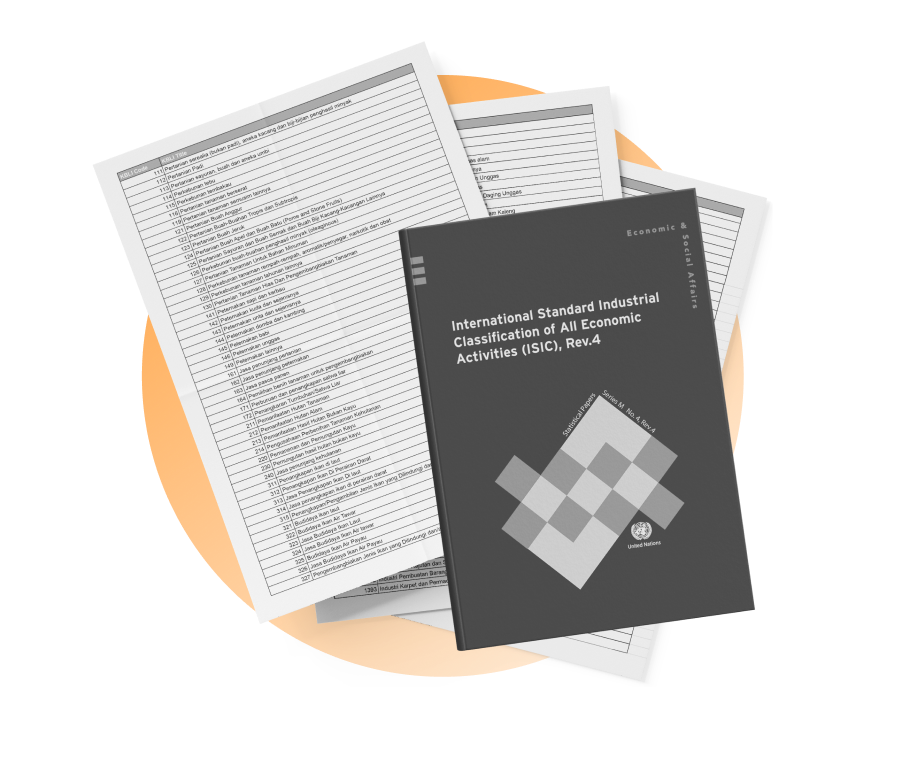
ISIC Rev. 4: 2821 — Manufacture of agricultural and forestry machinery.
NAICS comparable: 333111 — Farm Machinery and Equipment Manufacturing; 333112 — Lawn and Garden; 333120 — Construction Machinery (forestry adjacent).
Industry Terms
Indonesian Alsintan vocabulary mixes formal procurement terms with field-level operating practice — both matter for navigating tenders and dealer conversations.
Alsintan
Alat dan Mesin Pertanian — agricultural tools and machinery as defined under Kementan terminology.
Defines the scope of government procurement programmes.
Traktor Tangan / Power Tiller
Two-wheel walk-behind tractor used primarily for paddy field preparation.
The single largest Alsintan product by unit volume; the local industry workhorse.
Kementan Direktorat Alsintan
Directorate under Kementerian Pertanian responsible for Alsintan policy and procurement.
Sets specifications, runs tenders, allocates units to provinces and Poktan.
Poktan / Gapoktan
Kelompok Tani / Gabungan Kelompok Tani — farmer groups and federations used as Alsintan recipients.
Standard distribution unit for government Alsintan programmes.
TKDN
Tingkat Komponen Dalam Negeri — local-content threshold under Permenperin rules.
Determines eligibility for government procurement and tax incentives.
SNI 7607 / SNI compulsory
Standar Nasional Indonesia — compulsory standards on selected ag machinery.
Mandatory certification for sale and government procurement.
UPJA
Usaha Pelayanan Jasa Alsintan — fee-for-service Alsintan rental businesses run by farmer groups or contractors.
An adoption model that lowers per-farmer capex burden.
PSR
Peremajaan Sawit Rakyat — smallholder palm-oil replanting programme funded via BPDPKS.
Drives episodic palm-oil machinery and tools demand.
IFOAM-style organic / sustainability
Sustainability schemes (ISPO, RSPO, FSC) that influence equipment specs and chemical-use practices.
Affects design of sprayers, harvesters and processing equipment.
Business Types & Models — how value is created
Five archetypes share KBLI 2821; they differ on product breadth, sourcing strategy and government-procurement exposure.
Japanese OEM Indonesia entities (Yanmar Indonesia, Kubota Indonesia, Iseki)
Local Indonesia subsidiaries or joint ventures of Japanese OEMs. Yanmar operates PT Yanmar Indonesia and PT Yanmar Agricultural Machinery Manufacturing (Karawang); Kubota operates PT Kubota Indonesia (Cilegon/Karawang). They CKD/SKD assemble combine harvesters, mid-horsepower tractors, rice transplanters and engine systems.
Lead in mid-to-premium segments — combine harvesters, 4WD tractors, transplanters — backed by global brand reputation, dealer network depth and service economics.
Mid-to-premium machinery sales through dealer networks
Aftermarket parts and service
Engine supply to other OEMs and to local assemblers
Local content via component localisation pushed by TKDN rules
Dealer network depth is the moat — multi-hundred-outlet structures
Japan-anchored R&D with local adaptation for paddy and palm conditions
Domestic incumbent manufacturers (PT Quick / Karya Hidup Sentosa, Rutan, Crown, Agrindo, PT Adi Setia Utama Jaya, PT Pindad agri division)
Indonesian-owned manufacturers dominating hand-tractor and rice-mill segments. Quick (Karya Hidup Sentosa, Yogyakarta) is the de facto national champion in hand tractors; Rutan and Crown are major Surabaya-based players; Agrindo manufactures rice mills and processing equipment.
PT Pindad's agricultural division and PT Pertani (SOE) are smaller-scale state-owned alternatives. Frequently partner with Japanese/Indian/Chinese engine suppliers.
Hand-tractor sales to commercial dealers and to government procurement
Rice-mill and post-harvest equipment sales
Engine + chassis assembly under TKDN regimes
Heavy dependence on Kementan procurement cycles
Engine sourcing from Yanmar/Kubota/Honda/Briggs & Stratton or Chinese suppliers
Plants concentrated in Java (Yogyakarta, Surabaya, Jakarta)
Indian brand importers/assemblers (Sonalika, Mahindra, TAFE, Escorts Kubota)
Indian-brand tractors imported via distributor partnerships or assembled locally; compete on price in the 25–75 HP tractor segment.
Mahindra holds a strong global footprint and competes with Yanmar/Kubota on mid-horsepower 4WD tractors.
Mid-price tractor sales via distributor channels
Aftermarket parts where service network exists
Government tender participation where TKDN allows
Service network thinner than Japanese OEMs
TKDN constraints on procurement participation
Distribution partnerships rather than wholly owned plants
Chinese brand importers (YTO, Lovol, Dongfeng, Foton-Lovol)
Chinese-brand tractors and ag machinery distributed via Indonesian importers. Price advantage attracts smallholder dealers but service support and spare-parts logistics remain bottlenecks.
More volatile market share — gain on price cycles, lose on service issues.
Low-price tractor and small-equipment sales
Importer-led distribution margin
Selected tenders where TKDN local-content is not the binding constraint
Importer/distributor responsibility for service
Spare-parts availability often a customer pain point
Used in price-sensitive smallholder markets
Plantation and forestry specialists
Suppliers of palm-oil estate machinery (harvest baskets, grabbers, motorised cutters, mini-loaders) and forestry equipment (chainsaws, skidders) often imported from John Deere, Caterpillar, Komatsu and Tigercat.
Local agents and dealers (Trakindo, United Tractors, PT Altrak 1978, PT Saka Wira Pratama) integrate, service and sometimes localise.
Heavy equipment sales to plantation and forestry concessions
Long-term service contracts and rebuild programmes
Spare-parts margin and operator training fees
Capital-intensive demo and service infrastructure
Customers concentrate in Sinar Mas, Wilmar, Astra Agro, GAR, RGE/APRIL, Salim
Performance contracts increasingly common
Performance & Outlook
Government procurement-anchored cycle with palm-oil and outer-island upside
Annual market volume for Alsintan is dominated by hand tractors (typically tens of thousands of units annually), rice mills, threshers, transplanters and smaller numbers of combine harvesters and 4WD tractors. Government procurement under Kementan programmes anchors the cycle; commercial sales add a layer that varies with palm-oil prices, plantation profitability and rural credit availability.
Outlook depends on three things: stability of Kementan Alsintan budget envelopes, palm-oil mechanisation progress under PSR and corporate-estate productivity programmes, and the pace of dealer-network expansion outside Java.
Forestry equipment cycles correlate to pulp-and-paper investment, HTI concession activity and replanting plans by APP, APRIL/RGE, Toba Pulp, and PT Sumitomo Forestry partners.
Key performance indicators
Hand tractor installed base
Workhorse machinery population
Hundreds of thousands of units
Combine harvester installed base
Mid-tier mechanisation depth
Tens of thousands of units, concentrated in larger paddy parcels
Annual Kementan Alsintan procurement (rupiah)
Government demand anchor
IDR 2–5 trillion annually (directional)
Paddy area mechanised for land prep (Java)
Hand-tractor penetration
~75–85%
Paddy area mechanised for harvest
Combine penetration
~30–50% with regional variance
Palm-oil planted area
Plantation machinery demand base
~16 million ha (~6m ha smallholder)
Forestry concession area (HPH/HTI)
Forestry equipment demand base
Tens of millions of ha
Number of registered Alsintan manufacturers
Supply base
Dozens of registered companies; concentrated in top 10
Outlook: what to watch
Multi-year Alsintan budget envelopes and APBN allocations
PSR (palm-oil replanting) disbursement and corporate-estate equipment refresh
TKDN threshold changes and import-tariff policy
Drone-based agri spraying replacing/complementing ground equipment
Outer-island dealer-network expansion by Quick, Yanmar and Kubota
Growth Drivers
Six drivers — three policy, three structural — set medium-term direction.
Food security and rice self-sufficiency targets
RPJMN and Kementan targets keep mechanisation funding elevated; Cetak Sawah and Food Estate programmes pull equipment demand.
APBN Kementan allocations
Cetak Sawah land additions
BULOG procurement targets
Rural labour cost rise and migration
Wage rises and youth migration to urban jobs shift relative economics toward mechanised land prep, harvesting and rice milling.
Rural minimum wage trajectory
Migration data from BPS
UPJA business growth
Palm-oil mechanisation (PSR and corporate estates)
PSR funding via BPDPKS plus corporate estate productivity programmes create episodic but large equipment demand.
BPDPKS PSR disbursement
Sinar Mas, Wilmar, GAR, Astra Agro capex
Smallholder cooperative formation
TKDN-driven localisation
Local-content rules push engine, gearbox and chassis component localisation, deepening domestic value capture and reshaping supply chains.
Permenperin TKDN updates
Engine plant investment announcements
Local-component-supplier registrations
Smart-farming and agri-tech overlay
Drones (DJI Agras, XAG), precision sensors and GPS guidance are entering the market — complementing but not replacing traditional equipment.
Drone agri-deployment data
Precision-ag pilot programmes
Agri-startup funding
Forestry and HTI investment cycle
Pulp-and-paper investment by APP, APRIL/RGE, Toba Pulp Lestari drives heavy-equipment demand on cyclical plant-build and harvest schedules.
HTI concession active area
Pulp & paper capex announcements
Equipment imports by tariff code
Industry Trends & Development
Industry Development
From hand tractor mass adoption to selective combine and palm-oil mechanisation
Indonesia's Alsintan industry evolved alongside successive food-security drives. The 1970s–80s Bimas Inmas era anchored hand-tractor adoption; the 1990s saw rice-milling consolidation; the 2010s brought Japanese-led combine harvester expansion; the 2020s open palm-oil and precision-ag opportunities.
Government procurement has been the binding demand variable across decades — its scale and discipline determine the local production envelope.
Bimas/Inmas era
Mass hand-tractor adoption begins; Quick founded; Yanmar and Kubota enter the market via distribution partnerships
Rice mill consolidation
Local rice-mill manufacturing scales; Agrindo and Rutan grow; SOE PT Pertani distribution role established
Tractor and 4WD adoption
Yanmar and Kubota expand 4WD tractor sales; Indian and Chinese imports begin; TKDN rules tighten
Combine harvester expansion
Kementan procurement funds combine harvesters; Java mechanisation densifies; Sumatra and Sulawesi catch up
Food Estate, PSR and precision-ag
Food Estate programmes; palm-oil PSR cycles; drone-spraying enters mainstream; TKDN deepens
Key Trends Shaping the Industry (Business Model Canvas view)
Five BMC dimensions are moving fastest: Key Partners, Channels, Customer Segments, Cost Structure and Revenue Streams.
[Key Partners] TKDN-driven component localisation deepens
Engine, gearbox and casting localisation accelerates under tightening TKDN rules. Joint ventures and component-supplier partnerships (with Japanese parent OEMs and local foundries) become a competitive moat.
Local OEMs
Japanese parent OEMs
Component suppliers
[Channels] Outer-island dealer expansion
Yanmar, Kubota and Quick are extending dealer footprints into Sulawesi, NTB and Aceh — markets where mechanisation penetration is still rising. Distribution depth has become the structural differentiator.
Branded OEMs
Provincial dealers
Indian/Chinese importers
[Customer Segments] UPJA-led service model gains share
Fee-for-service Alsintan rental via UPJA groups lowers per-farmer capex; Kementan promotes this model in low-mechanisation regions. Shifts demand toward higher-utilisation units.
Farmer groups
Dealer networks
Equipment manufacturers
[Cost Structure] Engine and steel input volatility
Steel, casting and engine prices are major cost drivers — global steel cycles and engine-OEM pricing flow into final machine cost. Local foundry capacity is a swing variable.
All manufacturers
Component suppliers
Importers
[Revenue Streams] Aftermarket parts and service grow
With installed base in the hundreds of thousands of units, parts and service revenue is increasingly material to OEM economics — and is where Japanese OEMs significantly out-earn Indian/Chinese competitors.
Branded OEMs
Independent service shops
Spare-parts importers
[Key Activities] Smart-farming overlay (drones, sensors)
Drone spraying (DJI Agras, XAG, local AeroTerrascan), GPS guidance and precision-ag sensors are adjacent activities that complement traditional Alsintan; some OEMs partner with agri-tech startups.
Drone agri-tech
Traditional OEMs
Plantation operators
Impact and Sustainability
Mechanisation drives rural productivity, but its impact depends on whether equipment is matched to field conditions, services are maintained, and farmer-group economics are sound.
Rural productivity and incomes
Land-prep mechanisation typically halves labour days per ha and lifts effective cropping intensity. Benefits accrue most where field sizes and dealer support align.
Capex burden vs labour savings
Equipment idle time vs adoption
Smallholder palm-oil productivity
Mechanised aids (motorised cutters, mini-loaders) help smallholders close the yield gap with corporate estates if combined with replanting and inputs.
Cost of equipment vs yield uplift
Cooperative formation vs individual ownership
Forestry sustainability
Mechanised harvesting must align with FSC/SVLK/ISPO sustainability standards; equipment specs matter for slope, soil disturbance and selective cutting compliance.
Productivity vs environmental footprint
Concession economics vs certification cost
Energy and emissions
Diesel engine dominance means equipment is a meaningful diesel consumer at scale; electrification trials are nascent.
Diesel cost subsidy vs decarbonisation roadmap
Electric capex vs operating savings
Industry Segmentation
Product Segmentation
Product segmentation reflects engine size, application and unit economics.
Segmentation by product
Hand tractor (traktor tangan, 6–13 HP)
Paddy field land prep
Quick, Yanmar, Kubota, Sonalika, YTO
20–40 million
2WD tractor (15–30 HP)
Small-to-mid paddy and horticulture
Yanmar, Kubota, Mahindra, Sonalika
70–150 million
4WD tractor (40–75 HP)
Plantation and large paddy
Kubota, John Deere, Mahindra, Sonalika
300–600 million
Combine harvester (mid)
Rice harvest in larger paddy parcels
Yanmar, Kubota, Iseki
500 million – 1 billion+
Rice transplanter
Mechanised paddy transplanting
Yanmar, Kubota, Iseki
150–400 million
Rice mill (small to medium)
Post-harvest paddy processing
Agrindo, Yanmar, local fabricators
50–500 million depending on capacity
Palm-oil estate equipment
Harvesting cutters, in-field carriers, mini-loaders
Local fabricators, John Deere, Kubota, importers
5–500 million depending on type
Forestry skidder / log loader
Forestry harvesting and skidding
John Deere, Caterpillar, Komatsu, Tigercat (via Trakindo/UT)
1.5–8 billion+
Hand tractors dominate unit volume; combine harvesters dominate revenue per unit.
Palm-oil and forestry sit in heavy equipment categories often serviced by construction-machinery distributors (United Tractors, Trakindo).
Crop / Use-case Segmentation
Demand structure is best read by crop and use-case — equipment choices differ sharply across rice, palm oil, horticulture and forestry.
Segmentation by crop / use-case
Rice (Java)
Hand tractor, small combine, transplanter, rice mill
High mechanisation penetration; refresh and UPJA demand
Poktan/Gapoktan, smallholders, UPJA contractors
Rice (Sumatra, Sulawesi, NTB, Aceh)
Hand tractor, mid combine, transplanter
Growing mechanisation; Kementan procurement-driven
Kementan, Dinas Pertanian, Poktan
Palm oil — smallholders
Motorised cutters, hand tools, mini-loaders
Fragmented; PSR-driven pulses
Smallholders, koperasi (KUD), aggregators
Palm oil — corporate estates
Mid-loaders, mechanical harvesters (limited), field carriers
Capex cycles tied to corporate productivity programmes
Sinar Mas, Wilmar, Astra Agro, GAR, Salim, RGE
Horticulture & vegetables
Small tractors, sprayers, transplanters, mulchers
Niche demand
Specialist growers, agri-business players
Forestry concessions
Skidders, log loaders, harvesters, chainsaws
HTI/HPH activity-driven
APP, APRIL/RGE, Toba Pulp Lestari, Sumitomo
Sugar
Sugarcane harvesters, planters, trucks
Concentrated in BUMN sugar mills and PTPN estates
PTPN, RNI, private sugar mills
Drone agri
Spray drones (DJI Agras, XAG)
Emerging — palm, paddy, horticulture spraying
Specialist drone service providers
Customer Profiles
Customer profiles differ by ownership structure, capital access and what they expect from a dealer.
Customer profiles and what they value
Smallholder rice farmer
0.2–2 ha paddy holding, often Poktan member
Affordable mechanisation for land prep and harvest
Low capex, easy service, local language manuals
Through Poktan/Gapoktan + Dinas Pertanian; sometimes dealer credit
UPJA contractor
Farmer-group business renting Alsintan
Run profitable rental fleet for surrounding farmers
Reliable equipment, parts availability, service support
Dealer + sometimes direct OEM relationship
Mid-size commercial farmer
5–50 ha rice or horticulture
Productivity uplift, labour cost control
Mid-horsepower tractor, lifecycle cost transparency
Dealer network
Palm-oil smallholder
2–4 ha plot, KUD/aggregator member
Replanting tools, mechanical aids
Affordable cutters and mini-loaders, BPDPKS programme participation
Cooperative + dealer + BPDPKS scheme
Corporate plantation operator
Sinar Mas/Wilmar/Astra Agro/GAR/Salim/RGE estate manager
Productivity, mechanised yield uplift, FSC/RSPO compliance
Capable heavy equipment, service contracts, performance guarantees
Direct OEM/distributor relationships (UT, Trakindo)
Forestry concession manager
APP/APRIL/Toba HTI manager
Harvesting and skidding output to plant
Heavy equipment, fleet financing, training
Distributors (UT, Trakindo, Altrak)
Provincial Dinas Pertanian / Kementan
Government procurement officer
Allocate Alsintan to Poktan within budget and TKDN rules
TKDN-compliant suppliers, SNI standards, after-sales
Government tender process
Ecosystem & Key Players
Ecosystem Mapping
The ecosystem couples manufacturers, dealers, government procurement, farmer groups, plantations and finance providers.
Core (manufacturers and assemblers)
Entities producing or assembling agricultural and forestry machinery in Indonesia.
Japanese: PT Yanmar Indonesia / PT Yanmar Agricultural Machinery Manufacturing Indonesia; PT Kubota Indonesia; Iseki agency
Local: PT Quick (CV. Karya Hidup Sentosa, Yogyakarta), Rutan, Crown, Agrindo, PT Adi Setia Utama Jaya, PT Pindad agri
Indian/Chinese: Sonalika, Mahindra, TAFE, YTO, Lovol, Dongfeng (via local importers)
Extension (dealers, importers, plantation buyers, finance)
Distributors, plantation operators and finance providers.
Heavy-equipment distributors: United Tractors (Astra), Trakindo Utama, Altrak 1978, Saka Wira
Plantations: Sinar Mas, Wilmar, Astra Agro Lestari, GAR (Golden Agri-Resources), Salim, RGE/APRIL
Pulp & paper: APP/Sinarmas, APRIL/RGE, Toba Pulp Lestari
Finance: BRI KUR, Bank Mandiri agri, BCA Finance, Adira Finance, BFI Finance
Enabling (regulators, standards, cooperatives, training)
Rule-setters, standard-setters and farmer-organisation infrastructure.
Regulators: Kementerian Pertanian (Direktorat Alsintan), Kementerian Perindustrian (TKDN), BSN (SNI standards), Kemendag (import licences)
Programmes: BPDPKS (palm-oil PSR), Food Estate, Cetak Sawah, KUR (rural credit)
Cooperatives: KUD, Poktan, Gapoktan
Standards: SNI 7607 hand tractor, ISPO, RSPO, FSC, SVLK
How value flows across the ecosystem
Manufacturers produce or assemble; dealers and distributors sell into commercial and government channels; Kementan procures via tender and distributes to Poktan/Gapoktan; corporate plantations buy direct or through distributors; finance providers extend KUR and dealer credit to bridge smallholder capex.
The government remains the single largest non-corporate buyer; the corporate plantation segment is the largest non-government buyer.
Leading Players
Named players below illustrate structural positions; figures are directional industry estimates.
Leading firms by position
PT Quick (CV. Karya Hidup Sentosa)
Hand-tractor national champion
Brand recognition; dealer depth; Kementan procurement history
Engine sourcing dependence; mid-segment competition from Japanese OEMs
PT Yanmar Indonesia / Yanmar Agricultural Machinery
Combine harvester and engine leader
Brand reputation, dealer network, R&D depth, engine supply to others
Higher price point; TKDN scrutiny
PT Kubota Indonesia
Mid-to-premium tractor and combine player
Network depth; combine harvester sales
Premium pricing limits smallholder reach
Iseki Indonesia agency
Combine and transplanter niche
Quality reputation in mid-paddy
Smaller scale; selective dealer network
PT Rutan (Surabaya)
Local OEM — hand tractors and small ag equipment
East-Java footprint
Scale below Quick
PT Agrindo
Local OEM — rice mills and post-harvest
Rice-mill specialisation; long-tenure brand
Engine and component sourcing dependence
PT Crown
Local OEM — hand tractors and transplanters
Local cost base, government procurement participation
Brand awareness gap vs Quick
PT Pindad (agri division)
SOE manufacturer with agricultural product line
Government-procurement access; SOE backing
Lower civilian-market penetration
PT Pertani (SOE) — distribution role
Government distribution arm
Reach across provinces
Mostly distribution rather than manufacturing
Sonalika Indonesia (Indian)
Mid-horsepower tractor competitor
Price competitive; expanding dealer network
Service depth below Japanese
Mahindra Indonesia (Indian)
Mid-horsepower tractor competitor
Global brand presence; dealer expansion
TKDN constraints for tenders
YTO / Lovol / Dongfeng (Chinese)
Low-priced tractor segment
Price advantage; volume potential
Service and parts concerns
United Tractors / Trakindo
Heavy-equipment distributors (palm and forestry)
Strong service infrastructure; financing capability
Concentrated in heavy plantation/forestry; not core Alsintan
How competition typically plays out
Hand tractor: Quick is the local incumbent with Japanese-Indian competition at the margin. Combine harvester: Yanmar and Kubota dominate, with Iseki a niche third. 4WD tractor: Kubota, Mahindra, Sonalika and John Deere compete on price and service. Heavy plantation/forestry: distributor-led with John Deere/Caterpillar/Komatsu/Tigercat.
Government procurement tilts the playing field toward TKDN-compliant local OEMs; commercial sales reward dealer depth and service economics.
Operating Conditions
Concentration, Competition, Cost Structure & Economics
Market structure varies by sub-segment: hand tractor is concentrated around Quick + two Japanese OEMs (heavily concentrated); 4WD tractor is moderately fragmented; combine harvester is concentrated around Yanmar + Kubota; rice mills are moderately fragmented; palm/forestry heavy equipment is concentrated among global majors via Indonesian distributors.
Engine and powertrain (25–35%)
Diesel engines, gearboxes, transmissions; often imported or licensed
Engine-OEM pricing
Currency volatility
Component localisation under TKDN
Largest single input
Steel, casting and chassis (15–25%)
Plate steel, castings, sheet metal
Global steel cycle
Local foundry capacity
Sensitive to global steel
Labour (10–20%)
Assembly, machining, welding, quality
Java industrial wages
Productivity and shift utilisation
Lower than developed-market peers
Distribution and dealer margin (10–20%)
Dealer commission, transport, service training
Dealer-network reach
Logistics cost across archipelago
Investment in service depth pays off in aftermarket
Compliance, R&D and overhead (5–10%)
SNI testing, TKDN documentation, design, admin
Regulatory complexity
Product refresh cycle
Smaller for local OEMs vs Japanese
Porter's Five Forces — KBLI 2821
Threat of new entrants
Medium
Brand, TKDN, dealer network and SNI compliance are real barriers; engine technology is licensable; Chinese entrants periodically attempt entry
Bargaining power of customers
Medium
Kementan as a tender buyer has high leverage; commercial farmers are atomised; corporate plantations have strong leverage on heavy equipment
Bargaining power of suppliers
Medium-High
Engine OEMs (Yanmar, Kubota, Honda) and steel/casting suppliers have leverage; localisation reduces but does not eliminate it
Threat of substitutes
Low-Medium
Drone agri-spraying and digital advisory are complements rather than substitutes; manual labour is the substitute on the lowest end
Rivalry among existing competitors
Medium-High
Aggressive tender competition; price competition from Indian and Chinese brands; brand-anchored OEMs defend on service depth
Hand-tractor unit margins: thin at government-procurement prices, fatter at commercial sales
Combine harvester margins: higher absolute IDR per unit; service and parts make the lifetime margin
Rice mill margins: variable by capacity tier; small-mill segment is highly fragmented
Heavy plantation/forestry: margin captured by global OEMs + distributor service contracts
Regulation & Compliance Considerations
Manufacturing and selling Alsintan touches multiple compliance perimeters — industrial, agricultural, standards and import.
Regulatory anchors and operational impact
TKDN (Permenperin local-content)
Local-content thresholds for procurement eligibility
Determines tender qualification and tax incentive access
TKDN certification by Kemenperin; component localisation strategy
SNI standards (BSN)
Compulsory standards on selected ag machinery (e.g. SNI 7607 hand tractor)
Mandatory for sale and government procurement
Type testing; SNI marking; ongoing surveillance
Kementan Direktorat Alsintan
Specification of Alsintan procured; provincial allocations
Defines spec, channel and pricing
Tender registration; technical compliance
Kemendag import licensing
Import permits for parts, engines, components
Affects sourcing and inventory
Maintain valid import permits and SNI alignment
BPDPKS PSR rules
Palm-oil smallholder replanting eligibility
Drives palm-oil equipment demand pockets
Programme participation; product alignment
ISPO, RSPO, FSC, SVLK
Sustainability certifications for palm and forestry
Equipment specs and operating practices linked to compliance
Match equipment to certification requirements
Labour and safety (Kemenaker)
K3 (occupational safety) and minimum wage regimes
Affects plant cost base
K3 compliance, training
Tax (PPh 25, PPN 11%, BMDTP)
Income tax instalments, VAT and import-duty-borne-by-government schemes
Pricing and cash-flow planning
Standard tax processes; BMDTP eligibility check
TKDN scoring methodology changes can move tender eligibility quickly
Engine-import dependence creates FX exposure
Government Alsintan budget volatility can disrupt production planning
Sustainability certification scope (ISPO/RSPO/FSC) is widening — affects equipment design
FAQs & Sources
FAQs
What's the largest single product by unit volume?
Hand tractors (traktor tangan, 6–13 HP). The installed base is in the hundreds of thousands of units; Java's paddy land prep is largely mechanised this way.
Who are the leading manufacturers?
PT Quick (CV. Karya Hidup Sentosa, Yogyakarta) leads in hand tractors; PT Yanmar Indonesia and PT Kubota Indonesia lead in combine harvesters and mid-to-premium tractors; Iseki occupies a niche in transplanters and combines. PT Rutan, PT Crown, PT Agrindo, PT Adi Setia Utama Jaya and the agricultural arms of PT Pindad and PT Pertani play important local roles. Indian (Sonalika, Mahindra, TAFE) and Chinese (YTO, Lovol, Dongfeng) brands compete on price.
How concentrated is the industry?
Concentrated by sub-segment. Hand tractor — heavily concentrated around Quick and two Japanese OEMs. Combine harvester — concentrated around Yanmar and Kubota. 4WD tractor — moderately fragmented. Rice mill — moderately fragmented across local fabricators. Heavy plantation/forestry — concentrated among global OEMs via distributors (UT, Trakindo, Altrak).
What's the role of government procurement?
Kementan via the Direktorat Alsintan procures and distributes Alsintan to farmer groups (Poktan/Gapoktan) through provincial Dinas Pertanian. Annual budgets have been in the IDR 2–5 trillion range; budget stability is the binding variable for production planning.
What's the outlook for palm-oil mechanisation?
Slow but rising. Smallholder fragmentation (~6 million ha across millions of holders) and field-condition issues limit large-equipment use, but PSR replanting cycles, corporate-estate productivity programmes and motorised cutter adoption create steady opportunity. Mechanical full-tree harvesting remains rare.
How does TKDN affect competitive positioning?
TKDN (local-content) thresholds are the dominant determinant of tender eligibility and incentive access. Local OEMs and Japanese assemblers with localised components have structural advantage in government procurement; pure importers (Chinese, sometimes Indian) face procurement hurdles unless they invest in local assembly.
Sources & Notes
This report synthesises publicly available regulatory and industry information, association publications and Ravenry analyst commentary. Where exact figures are unavailable, directional and approximate ranges are used.
Kementerian Pertanian (Direktorat Alsintan)
Alsintan procurement and policy
Kementerian Perindustrian (TKDN, Permenperin)
Local-content rules
Badan Standardisasi Nasional (BSN)
SNI compulsory standards
BPDPKS
Palm-oil PSR programme
Badan Pusat Statistik (BPS)
Agricultural statistics, land area
Kementerian Lingkungan Hidup dan Kehutanan (KLHK)
HPH/HTI concession data
Asosiasi Industri Alat-Mesin Pertanian Indonesia (Alsindo) and related industry groupings
Industry voice and data
Annual reports of listed plantation groups (Astra Agro, Sinar Mas, Wilmar, GAR)
Demand-side estate equipment cycle
OEM published materials (Yanmar, Kubota, Quick) and reseller materials
Product specifications and dealer network
This report is for informational purposes and does not constitute legal, regulatory or investment advice. Figures are directional unless otherwise indicated.